Up A Tree

IMG_9088

My Take Tuesday: Up A Tree

In the early spring, when the ice and snow begin to disappear, most of the fields in Utah County are a muddy disgusting mess. A farmer would be wise to avoid calving their cattle during this time. A clean environment required for calving is impossible to find in a swampy, muddy field.

Dwane is not a typical farmer. To him, this is the perfect time of year for calving. His solution to the muddy disgusting mess in his pasture was simple: A four wheeler.

Each morning he would ride around the cow pasture to check on his pregnant stock. On this particular day, had spotted one cow calving and could see the infant’s nose and one foot exposed. Circumstances such as this require help from DocBott.

“Hey Doc, I need some help with one of my cows,” Dwane stated matter-of-factly, “She is kind of a wild one, so I don’t dare work on her by myself.”

I know better than to get myself into a situation like this. There is no way it can end well. Unfortunately, as it often goes, I gave in and headed towards Dwane’s place in Palmyra.

Dwane sat, on his Honda four wheeler at the gate. Every inch of the machine was covered in dark brown mud. As I looked into the field, I could see a few cows standing literally knee deep in mud.

“What a mess!”, I exclaimed, “Dwane, you really need to get a barn if you are going to calve out this time of year.”

“Yeah, I know,” he replied, “But you know how beef prices are this year.”

He did have a point, unpredictable and forceful influences that have negligible affect on most businesses, can dramatically alter the beef industry.  From changing product demand, rising input costs and market  fluctuations, to weather patterns and even consumer nutrition and lifestyle trends, farmers and ranchers must balance a long list of variables in order to be successful. The beef industry is not for the faint of heart.

“Where is she?,” I asked.

“Hop on, Doc, I will take you to her”

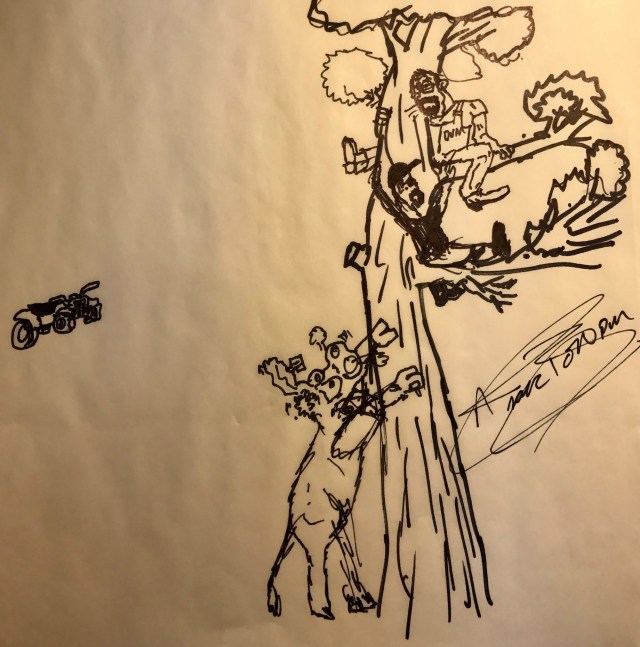
Out in the center of the field, along side a large cottonwood tree, the big Angus cow was comfortably sitting. As we approached her on the four wheeler, the wide eyed cow jumped up on her feet. Almost instantly, out popped the calf.

“Wow!” Dwane explained, that was easier than I thought it would be.

“It sure was,” I replied.

We should have just kept driving on the four wheeler at this point. The mother and newborn were both  apparently healthy. There was no reason to stay, except that Dwane felt this was an opportune time to put a tag in the calf’s ear while we were near.

We dismounted and quietly approached the new born calf. Dwane reached down and quickly placed the tag in the left ear of the calf. The small calf let out a quiet but deliberate “moooooo”.

No sooner had the calf opened its mouth, the cow charged. She hit Dwane squarely in the chest. He immediately flew backwards towards the tree. He quickly jumped up and raced behind the tree, trying to use its massive trunk as a shield from the raging bovine.

I raced behind the tree as she bellowed and snorted.  I looked at Dwane and he looked at me. We both knew there was only one way out – and that was up! We both climbed as fast as we could. Our mud covered rubber boots slid as we tried to climb the massive tree.

A large low hanging branch provided support as we held on and climbed on top of the life saving perch.

“Are you ok?” I asked

“Yeah,” Dwane replied between gasps, “I thought we were both dead!”

“Me too!” I agreed.

Fortunately, we have cell phones in today’s world, if not for that, Dwane and I would have had to stay in the tree for who knows how long.

“Just look for a four wheeler and a savage cow circling a tree,” I heard Dwane say as he grinned.

As we rode out of the pasture, he commented, “Hey Doc, I think I just might get that barn after all.”

“That sounds like a great idea,” I agreed, “I ain’t much of a tree climber!”

And that is my take.

N. Isaac Bott, DVM

Yo Quiero Bite You


My Take Tuesday: Yo quiero bite you!
Often “the question” comes up during a routine appointment. Curiosity is naturally sparked with my response.
The question is, succinctly put, “Doc, what breed of dog bites you the most?”
The answer is unequivocally the chihuahua. Of the dozens of bites that I have received, a vast majority came from chihuahuas.
Chihuahuas are comical, entertaining, and loyal little dogs, absolutely brimming with personality – often a quirky and eccentric personality unmatched by any other breed. Some of my sweetest patients are chihuahuas. They are affectionate and loving.
But every once in a while, a mean one comes along.
While a bite from a Chihuahua isn’t going to inflict the same damage as a bite from a larger dog like a pit bull or boxer, it can still leave a painful wound that’s prone to infection. There’s an old myth that a dog’s mouth is cleaner than a human’s mouth, but this isn’t a true. Whenever a pet bites, there is significant risk of infection.
While Chihuahuas are not naturally more aggressive than any other breed, they seem to be prone to react with aggression out of fear. Veterinarians are often the target of such aggression, simply because dogs are fearful of unfamiliar people and situations.
As a recent graduate, I was learning how to diagnose, treat and cure the routine cases that present daily. I had only been a veterinarian for about a month when I learned my lesson.
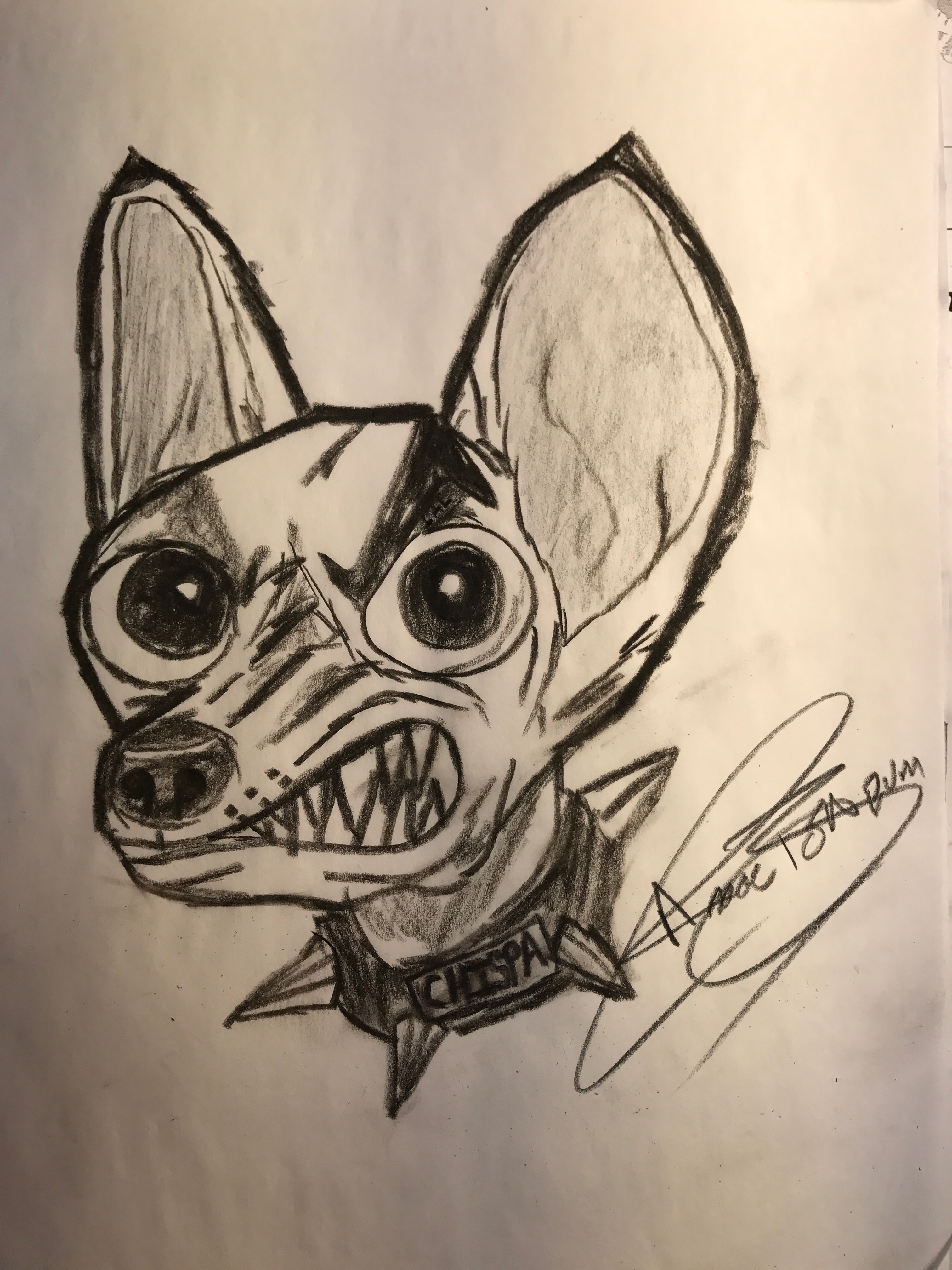
It was a routine appointment. Annual vaccinations and a wellness exam were needed. As I entered the room, Chispa, sat on the table glaring at me. As I reached down to auscult the heart and lungs, Chispa absolutely went ballistic. Within 5 seconds, she had peed and soiled all over the table top. Instinctively, I reached for a muzzle. As I attempted to place the muzzle on her, she absolutely lost it.
Just like a loud clap of thunder that follows a flash of lightning; when I am bit by a dog, imprecations are sure to follow.
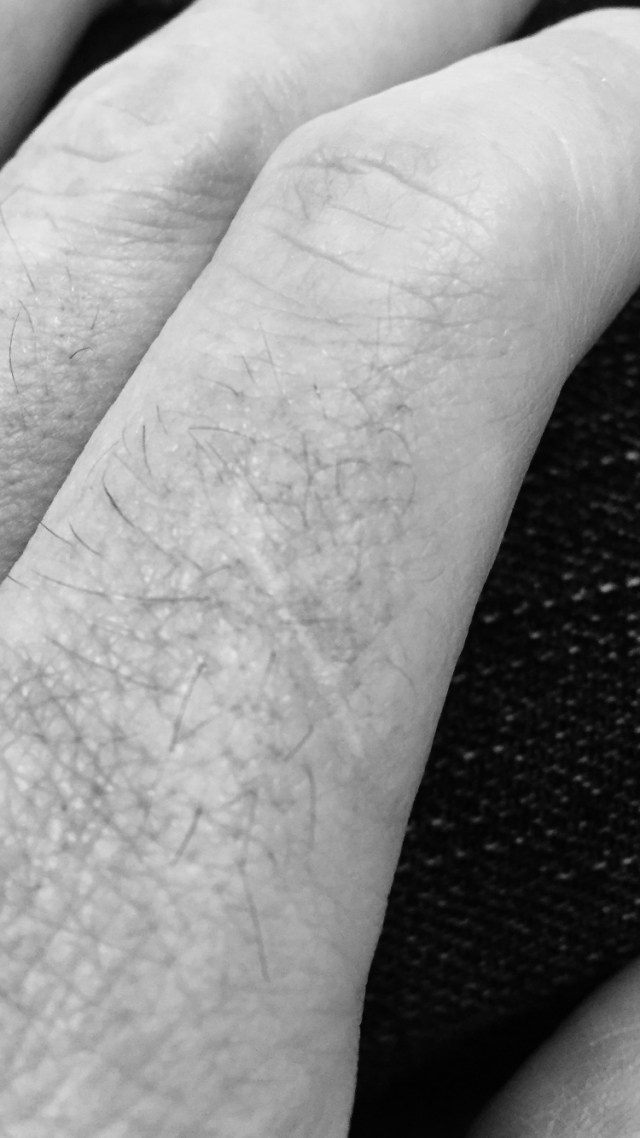
Chispa sunk her needle like teeth into my right hand and bit me again and again.
Before I could even mutter the phrase, “Oh S#*!”, this little devil had bitten me three times.
Her only goal seemed to be to inflict as much damage as possible to the man in a white coat that was reaching for her.
Blood poured down my hand. I sat stunned. I have fast reflexes; after all, I dodge bites and scratches on a daily basis.
What was different about this experience? Perhaps it was in the name. “Chispa ” is a Spanish word meaning “spark”. Certainly, the fiery personality and name fit this small canine.
The rapidity of the attack taught me a lesson. I am much more careful now when dealing with seemingly innocent small pets. I do my best to reduce the fear and anxiety that accompanies a visit to the veterinarian.
And I am especially careful with pets that have incendiary names such as Diablo, Fuego, Demonio and, believe it or not, Fluffy.
And that is my take!
N. Isaac Bott, DVM

Snowball

IMG_7155 4

My Take Tuesday: Snowball

It was a busy morning at the clinic. Mrs. Robins arrived right on time for her scheduled appointment. She was a long time client at the clinic and was always pleasant during my interactions with her. Her hair was white, and always perfectly styled. She greeted us warmly as she came through the front door. She carried a white fluffy cat inside a pink pet carrier.

Snowball was her name. Such a name is suggestive of a soft white fluff-ball, a sweet angelic and innocent kitten. She was due for her annual vaccinations and a wellness checkup.

However, this kitty’s name is what I would call a major misnomer.  Clearly, this kitty received its name long before its true nature was known.

All too often, I hear the phrase, “Doc she is an angel at home. She is just the sweetest thing.”  Mrs. Robins repeated the phrase verbatim as we entered the exam room.

Snowball was sitting peaceful in her carrier. As I peered through the door of her carrier, I noticed a couple of warning signs.

When a cat is distressed, it will crouch in a unique form with the legs and tail pulled in under the body. They will extend their neck, flattening the ears against the head.

Cat bites and scratches are painful and notoriously prone to infection. As a veterinarian, I have to be very careful and observant. A cat bite on my hand could literally make me useless – everything I do on a daily basis, from surgeries to physical examinations, requires extreme dexterity and use of my hands.

“Snowball doesn’t seem very happy today,” I observed, “We need to be careful taking her out of her carrier.”

“Don’t worry doctor,” Mrs. Robins replied, as she swung open the carrier door, “She will come right out.”

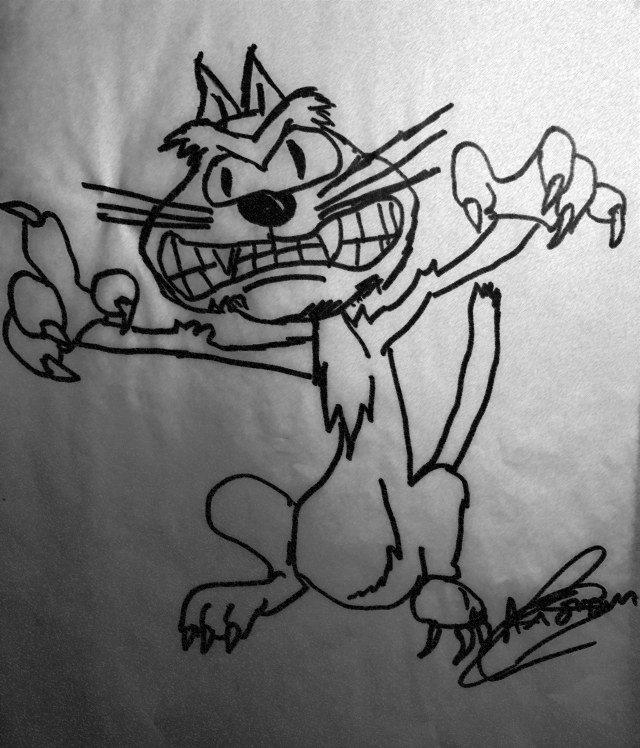
Snowballs exit from the carrier was reminiscent of a rodeo bull exiting the chute during the NFR. She came flying out, hissing and swiping at everything in her path.

She leaped from the table and landed directly on Mrs. Robin’s head. She immediately extended her claws on all four feet simultaneously and plunged them into poor Mrs. Robin’s scalp.

Almost in an instant, snowball fell from atop the terrified woman’s head. Clinging desperately to a white wig. As she hit the floor, she released the hair piece and hissed. Mrs. Robins reached down and grabbed the wig and placed it back on her head.

“Wow!” she exclaimed, “She is sure mad at you!”

Dealing with a spitting and hissing feline in a demonic rage is a dangerous predicament, and can present a formidable challenge to any individual, let alone one smelling of vet.

Snowball then looked at me, hunching her back, while aggressively growling and spitting. She leaped towards me, as I jumped back. Her trajectory was clearly aimed at my upper body, and as I moved, she adjusted her posture mid-air and redirected. Her extended claws sank into my pants. I felt her claws sink into my skin and she climbed upward and onto my lab coat. She came to a stop on top of my right shoulder. Ironically, a moment of tranquility ensued. The hissing stopped and she retracted her sharp claws.

Seeing this an an opportune time, I grabbed the rabies vaccine and removed the syringe cap. I had to be supremely careful that I wouldn’t be knocked or in some other way accidentally discharge the injection into Mrs Robins or myself. At last, I found a piece of leg and carefully thrust the needle through a felted mat of fluffy white hair and into the muscle beneath.

Snowball’s reaction was unremarkable. She did not hiss or spit. She didn’t even growl.

I gently placed her back on the examination table and finished the remainder of the vaccinations and the examination.

She purred as I looked into her eyes and examined her mouth.

She entered the carrier without any hesitation upon completion of the appointment. I stood dumbfounded, what I had just witnessed made little rational sense on any level. Aggression like this that is episodic and transient, is something even animal behavior experts don’t fully understand.

“Wow, Doc, she must have just had a little rage she needed to get out of her system,” Mrs Robins stated, “She really is such a sweet little thing.”

I smiled as I glanced at the content Snowball, as she sat purring and comfortable inside her carrier.

My legs began to sting, as I felt a trickle of blood run down the front of my knee.

As Mrs Robins left, I noticed her white hair remained immaculate, and despite having been tossed around and trampled by a wild feline, not a single piece of hair was out of place.

And that is my take!

N. Isaac Bott, DVM


The Charismatic Chameleon 

FullSizeRender 44

It was a beautiful spring morning on the Palouse. The beautiful rolling hills and contrasting colors make this region of the country so unique. As I left my apartment, I took a moment to bask in bright sun of this gorgeous brisk spring morning, permeated with the scent of recent rain. Songbirds filled the air with music that would thrill the greatest maestros, and warblers and finches flashed their dazzling colors in the bushes outside my apartment.

I was an excited 4th year veterinary student just weeks from graduation. As I drove to the veterinary school, I reflected on the past 4 years. A flood of memories entered my mind as I smiled and felt a sense of accomplishment, these were some of the most difficult years of my life and the end was in sight.

This particular weekend, it was my turn to take the emergency call at the veterinary teaching hospital. I had spoken extensively with classmates about what exactly to expect to present throughout the weekend. Each indicated that many dogs and cats would likely present with a variety of ailments. I fully expected to see a variety of routine cases dealing with the perfidious parasites, bothersome bacteria and mysterious maladies that present daily in the life of a veterinarian.

I was not prepared for what was to follow.

Throughout the weekend, a variety of cases presented, none of which were dogs or cats, and none of which I would ever consider routine.

The first case was a hairless rat. This was followed by a parakeet with a broken and bleeding blood feather. A raptor presented with a wing injury and a duck with a fish hook stuck in its bill.

Still another anomaly followed as a boa constrictor presented with a prolapsed cloaca.

At this point in my education, I had virtually no experience with exotic animals. I am terrified of snakes and absolutely did not know the first thing to do with a prolapsed cloaca. I barely knew what a cloaca was!

Fortunately, an exotic animal clinician was a phone call away and she was able to talk me through each case. I learned a lot as I treated each animal and did my best to make each owner and pet comfortable.

Just when I thought I had everything under control, a young woman walked through the front doors of the hospital caring a white box. Small circular 1” holes were cut in each side of the cardboard box.

“I have a chameleon that is sick,” she nervously said with obvious fear and concern in her voice.

I placed my face against the box and peered through one of the small holes. A huge eyeball was all that I could see. Its unflinching stare was somewhat startling.

“He is huge!”, I exclaimed.

“No he isn’t,” she replied, with her voice raising, “He is actually smaller than most.”

“I am sorry,” I replied, “I haven’t ever seen a real chameleon.”

“Oh great, go figure, not only do I have to deal with a student, but I lucked out and got one that clearly doesn’t know what he is doing!” She was clearly upset at this point, as she sighed and shook her head.

Assertiveness has its place, but it is not always a virtue when you are on the receiving end.

“I am sorry,” I began, “Although I am inexperienced, I will call someone that is very competent with chameleons and we will take care of him. I promise I will do my best.”

She seemed to calm down somewhat after this and handed me the white box. I carried the box into the treatment area and immediately opened the lid and peered in. The chameleon stood perched on a branch, clinging with each of its 4 feet. It’s deep green color mimicked the leaves that were placed throughout the box.

I gently removed the little guy and placed him in the glass aquarium type pen used to hospitalize reptilian patients.

Almost immediately, his deep greed color began to fade as he miraculously turned brown, almost identical to the ambience of his new surroundings.

I reached for the phone and dialed the number of the on call exotic expert. I immediately rattled off the details of the case (age, sex, presenting complaint, clinical signs and examination findings). I then explained that I had ZERO experience with this species and that I needed detailed instructions.

Her first question took me off guard.

“Is he pale?” she inquired.

Immediately, I thought to myself, “You’ve got to be kidding me!”

“I am not sure,” I replied. “He was green in his box and then he turned brown when I moved him into the hospital. Now he is looking like a mix of brown and gray.”

“How in the hell can you tell if a chameleon is pale?,” I inquired.

Fortunately, this clinician sensed the frustration in my voice and laughed. She was very patient as she began to explain exactly what I needed to look for.

She talked me through how to administer fluids to a reptile. This is accomplished differently that with other species. Instead of finding a vein and administering the fluids intravenously, they are administered in the common body cavity called the coelomic cavity. I spent the entire night treating this unique patient and monitoring its progress.

Somehow, the chameleon survived. I learned a great deal throughout the remainder of the weekend. Not a single dog or cat ever presented, but I gained confidence and experience with each of the exotic animals that continued to present.

But still to this day, I still have no idea how to tell if a chameleon is pale.

And that is my take!

N. Isaac Bott, DVM

Chickens

13237699_617920395039205_4564691592582687898_n13247683_617920405039204_1100035007257554881_o

My Take Tuesday: Chickens

If you attended elementary school with me, you will probably will remember my obsession with chickens. Throughout elementary school, I would draw chickens when I was bored. Given the many drawing projects that elementary age children have, I drew hundreds of mediocre pictures of my pet chickens. Fortunately, my teachers were patient and supportive. Although my artistic abilities left much to be desired, I was free to draw to my hearts content.

We would receive an annual catalog from Murray McMurray Hatchery. This catalog would depict every conceivable breed of chicken and give a short description of the desirable traits each possessed: comb type, leg feathering, silky, frizzle, bantam, standard, etc. I would spend hours and hours looking through this catalog. Each year, I was allowed to choose a single baby chick of the breed of my choosing. I took this choice seriously.

There are a range of things that one needs to consider when deciding what breed of chicken to have. These include the climate in which you live, whether you are raising backyard chickens for eggs or meat production, their temperament, foraging capability, predator awareness, and broodiness. I meticulously studied each breed and made my selection each year.

To this day, chickens remain my favorite animals. I look back with fondness on the days spent coloring and drawing with crayons.

Memories are painted optimistically with passing years. I miss the worry-free days sitting at a desk in elementary school.

I will forever treasure these pictures and the pleasant memories associated with them.

And that is my take!

N. Isaac Bott, DVM

The Red Handkerchief

17264486_778357748995468_4466598198145224487_n


My Take Tuesday: The Red Handkerchief

As a veterinarian, I all to often find myself in precarious situations.

Upon graduating from veterinary school in 2009, I moved back home here to Utah. My first job out of school was right here in Utah County.

It was not unusual for me to be called to attend a dozen or more lame and injured cows on a particular day. You might arrive to find them in a paddock with no sorting pen and therefore no means of restraining them for treatment. What are you going to do? Unfortunately, farmers often have the attitude that you’re the vet, they’ve called you out to do the job, so they expect you just to get to it. Often these cattle facilities left much to be desired. A few broken palates, some bent powder river panels and a welded together squeeze chute constitute pretty decent working conditions.

Usually some unsatisfactory compromise could be sorted out which would reinforce the fact that you were not half as good as their old vets.

Max was no exception. He stool 6’1″ and was as skinny as a bean pole. He always had a runny, drizzly nose, and he kept a red handkerchief in the front pocket of his bib overalls. Max didn’t want a new young vet working on his cows. He was used to the old school way, and had no reason to change.

I was greeted on one of these farm visits by this familiar refrain: “We used to use old Doc SoandSo. Have you heard of him? Best dairy vet in the county. Of course, you’re new and not used to dealing with dairy cows down here are you?”

Perhaps I am unduly sensitive, but being told you’re second best before you’ve even begun is either irritating or depressing—depending on how your day has been. This day tipped more toward the irritating side.

Suzy was the name of his milk cow. She was a tall Holstein crossbreed cow. On this particular day, Miss Suzy stood in the knee deep pasture staring at us as we entered the field. She was swollen up like an engorged wood tick. The left side her stomach protruding so far that she was as wide as she was long. The diagnosis, even from afar was obvious. She was bloated.

Bloat is a digestive disorder characterized by an accumulation of gas in the first two compartments of a ruminant’s stomach (the rumen and reticulum). Production of gas (primarily carbon dioxide and methane) is a normal result of fermentation processes. The gas is usually discharged by belching (erutication) but, if the animal is unable to remove the excess gas, pressure builds up in the rumen-reticulum exerting pressure on the diaphragm which prevents the animal from inhaling, and bloat occurs. The most common type of bloat is frothy bloat where gas builds up in a foam or froth above the rumen contents and the normal belching is inhibited.

Imagine a 40 gallon tub of partially digested green stomach contents. The pressure of this stomach is such that when it is alleviated, it is similar to popping a balloon, this disgusting smelly concoction will spew in a fashion similar to the Old Faithful Geyser.

Before we could even isolate her in the corner to begin treatment, Max decided he needed to blow his nose. As he pulled out his bright red handkerchief, he flipped it with his wrist and positioned it to evacuate his proboscis. Suzy caught sight of this red temptation and came charging full speed – like a freight train – straight for us. She was bellowing and blowing snot in a fit of rage.

In a situation like this, it doesn’t matter how quick you are. The only relevant assessment of speed is how fast you are in relation to the other person in the pasture.

I figured I could beat Max to the gate, but would feel guilty in so doing.

I braced myself for the impact. Max yelled, “Hey Now!”

Suzy collapsed just steps before she reached us. The massive pressure caused by the bloat had cut off her air supply. She lay in a heap in front of us.

The treatment for bloat in a case like this is to relieve the pressure as fast as possible. An incision in made through the left side of the abdomen and the rumen is decompressed. In a situation like this, you only have a few seconds to act. My surgical instruments were in my tool box over by the gate. I knew there wasn’t time to retrieve them.

I reached in my pocket and pulled out my Old Timer pocket knife. I made a quick incision with the sharp point.

Immediately, air began spewing out. It sounded like removing a valve stem from a car tire. It whistled as the massive stomach returned to normal size. Shortly thereafter, Miss Suzy was back on her feet and back to her normal self.

As I prepared to leave, Max commented, “Hey Doc, I guess you are alright after all.”

Max then pulled out the red handkerchief and blew his nose as he inquired, “How much do I owe you?”

And that is my take!

N. Isaac Bott, DVM

Spit Happens

vLlhwhI2Q8OTptPBaxr20A_thumb_df09

I received a call a few months back regarding a sick llama. It was from a new client that wanted to know if I knew anything about llamas and alpacas. Calls like this are somewhat frequent. Asking a vet if they know anything about llamas is like asking a pediatrician if they know anything about 8 year olds. I responded, that I was indeed familiar with all camelids and had worked extensively with them as a veterinarian. 

As I arrived at the farm, it was obvious that this wasn’t a typical llama ranch. It seemed as though I had traveled back in time to the 60’s. I was meandering into an apparent neighborhood of Hippie-ville. The van parked outside the gate looked just like the Mystery Machine from Scooby Doo. The bright colors were also painted on each of the barns and small buildings of the property and even covered the bases of the tall Chinese Elm trees.

One would not immediately equate going barefoot with farm life, I suppose, especially if the farm in question is shared with livestock. There are serious concerns regarding hook worm, and other parasites that could easily be transferred through the lack of shoes, and to be certain, stepping on manure barefoot has little appeal to the average person. However, a couple of barefooted and worry-free people were standing at the end of the driveway to greet me on this particular day.

One of the owners held a small white paper cup in her hands. As I greeted her, she held the cup up ad asked me to take a sip.

“What is it?”, I asked, not fully anticipating the response I received.

“It is Holy Water”, she responded. “We always make the healer drink before the llama.”

Perhaps the shock of the colorful ambience and barefoot attendants clouded my judgement, what ever the reason, I grabbed the cup and took a small drink. Immediately, I realized my mistake, but could do nothing but swallow the mysterious potion. It was the most disgusting thing I had ever ingested. I smiled, and politely asked where the sick llama was located.

The large white llama was setting in a “kush” position, a term llama farmers use for sternal recumbency. As I approached, he raised his mouth in the air and pinned his ears back against his head.

I moved cautiously, as these signs are consistent with a llama that is going to spit at you. This nasty dark green elixir is actually not spit at all, but is the regurgitated contents from the first stomach compartment. The slew is a mixture of partially digested feed, stomach juice and miscellaneous microbes.

Llamas are well aware of a veterinarian’s never-ending quest to stick needles in them; and if provoked, they will spit copiously at you with unpleasant accuracy of aim.

There is a classic sound a llama will make before spitting. The unmistakable gurgling sound is followed by a distinct “pfffffpth”, as the stomach contents spew from the mouth.

The cause of the llama’s discomfort was a large Russian Olive thorn sticking out from the back of the left elbow. I gently reached down and removed the dagger like thorn.

It appeared as though I had escaped unscathed. The llama, with its ears still pinned back, watched me closely, but did not spit.

As I turned my head slightly, I began to speak with the owners. I explained the after care that would be required for a full recovery and encouraged them to remove the large Russian Olive plants that lined the south side of their pasture. I asked if they had any questions and turned back towards the llama.

My mouth was between words then the attack happened. The trajectory and accuracy were unparalleled. The llama spit with sharp-shooter accuracy, and the stomach contents went directly into my mouth.

I immediately began to gag. I then began to dry heave uncontrollably. The owners stood in awe as I struggled to rid my mouth of the fowl taste of fermented llama feed.

There is no amount of listerine that can remove the taste of llama spit. It will stay in your mouth for days.

“Are you alright?,” the bearded man asked.

“Yeah”, I muttered, as I looked up.

“You got to learn to keep your mouth closed, Doc”, he continued, “Especially if you are going to work on llamas.”

I didn’t know how to respond. After working on literally thousands of llamas and alpacas, this was the first time spit had actually entered my mouth.

I accepted my defeat and curiously inquired, “Can I have another drink of Holy Water?”

And that is my take!

N. Isaac Bott, DVM

The Belligerent Bovine 

fullsizerender-32

January in Utah is a beautiful time of the year. The land is white. The peaks are white. The roof tops of the houses and barns are blanketed in white. All is lost in the colorless landscape in which a sense of peace takes over, the long nights settle in, the land is in a slumber and the world is put down to rest. Then suddenly, without just cause, comes a blast of bitter blizzards, and winter deepens her grip.

This particular morning was bitter cold. The air burned my face as I stepped out my front door. When temperatures reach twenty below zero, your nostrils sting and burn with each breath. Still, despite the extreme cold, there is a stillness and quiet peace that overwhelms you during these January nights. These quiet midnight journeys to respond to emergency calls provide a time for me to reflect and think. In my busy life, I often have little time alone and I cherish those infrequent moments.

The call on this particular night was a cow with a laceration. Somehow this massive Hereford had tangled herself up in a barb wire fence. As I arrived, the gaping wound was dripping with fresh red blood. Steam would rise from the scarlet stained snow beneath as the blood trickled down and alongside the squeeze chute.

It was obvious that sutures would need to be placed.

A test of a veterinarian’s ability could be most easily assessed by watching him or her suture a laceration in -20 temperatures. It is indeed one of the most arduous of tasks.

As I pulled out my box of supplies, I noticed that a majority of drugs within my medical box were completely frozen. Fortunately, the lidocaine remained aqueous. I pulled out a large syringe and began injecting the local anesthetic along the periphery of the lesion. The old cow bellowed as I injected the Lidocaine. It was clear that she was very unhappy with her predicament.

I began to place the sutures in a simple interrupted pattern. A break was necessary between each suture placement as the stinging cold weather rendered my fingers numb and stiff. In a futile attempt, I tried exhaling on my frozen fingers hoping that they regain some function. This only made the numbness much worse.

As I placed the last onerous suture, the cow lunged forward in the squeeze chute. Her massive belly pinned my fingers against the side of the squeeze chute. A sharp pain shot up my arm as I jumped and pulled my hand back. Nervous to check to see what damage was caused to my numb smashed fingers, I exclaimed, “Alright, turn her lose. We are done.”

As soon as the head gate opened, this massive Hereford jumped forward and exited the chute bellowing and swinging her head. She ran straight ahead for about 20 yards at which time she paused. She then turned around and set her focus on me.

I immediately knew I was in trouble. I quickly  grabbed my tools and began running for the fence; 1800 pounds of solid bovine came thundering toward me making me forget about anything except for escaping her wrath.

After a short run, with the bellowing cow in close pursuit, I reached the lodge pole pine fence that surrounded the corral. I dared not look back as I scampered over the fence. I could hear the angry cow snarling and could feel the sound of each hoof pounding the ground as she bounded towards me.

I made it across the fence safely. Upon reaching the other side I peered back at the massive cow. She stood facing the fence, head down, with a most bewildered look in her eyes. My heart pounded uncontrollably and I began to shake. This was one angry cow!

Immediately, my squished hand began to throb. The feeling in my fingers returned and I walked back to my truck.

As I drove away,  I was very much relived to be leaving the belligerent bovine far behind. This was a close call and I was very fortunate to have made it out of the pen without any serious harm.

As I headed down the cold frozen highway, my mind returned to my time as a student in veterinary school. In the large animal section of the Veterinary Teaching Hospital at Washington State University there was a magnetic sign that could be placed on the pen of a fractious animal. The sign read, “Fractious cow can make it to gate in 2.5 seconds. Can you?”

It would be fitting to have such a sign to hang near the squeeze chute on this particular Utah County farm.

And that is my take.

N. Isaac Bott, DVM

The Majestic Eagle

fullsizerender-18

Above the timberline, soaring above the lofty mountains of the Manti Lasal National Forest fly two bald eagles. These beautiful birds fly through the deep blue skies that surround Castle Valley.

For some unknown reason, this pair of eagles chose an unusual spot to make build their nest. Leaving behind the towering cliffs that surround Castle Dale, they instead close a small clump of Cottonwood trees located in the corner of a dry land  alfalfa patch.

I recall my father purchasing this land in the late 1980’s. We tilled the blue clay soil and planted alfalfa on the areas that were fertile enough to support crop production.

The very next year, while we were feeding cows, we noticed two bald eagles perched in the clump of Cottonwood trees at the bottom of the field. I recall thinking how unusual it was to see two bald eagles in the same tree.

During the next few months, these eagles built a massive nest. We watched as they carried sticks and bark from miles away. The nest was an engineering marvel, built high in the tree below the crown supported by large forked branches near the trunk. The nest was constructed of interwoven sticks. The interior was lined with grass, corn stalks, and other material. The bowl was filled with soft materials and the downy feathers from adults.

I recall the first eaglets born on the farm. In a rare event, one year 3 offspring were successfully raised.

Year after year, decade after decade, this process repeated itself producing many successful offspring.

Each breeding season, material was added to the nest and it’s size increased by up to a foot in height and diameter each year. The nest became visible from great distances as its size increased.

The bald eagles were a welcome sight. Each year they would appear right before Christmas. I remember seeing them consistently every year while growing up. They stood perched, looking down on my every move. A feeling of safety and security ensued as these majestic guardians stood watch.

Although we all recognize the Bald Eagle as the national symbol of the United States,  and as a proud icon of patriotism. I feel they could serve just as well or better as symbols of faithful monogamy. When one of these birds of prey finds his or her mate, the pair stays together for life.

Just this past week, the eagles returned to the farm in Castle Dale.

There is safety in constancy, and security in consistency. I am glad that high in the blue skies above Castle Dale, there is a welcoming place, where the eagles fly.

And that is my take.

N. Isaac Bott, DVM