My Take Tuesday: The Hands and Hearts Behind Veterinary Medicine
Some people make hard things look effortless.
Every day in veterinary medicine, we move between joy and heartbreak. We celebrate new life. We help ease suffering. We witness recoveries that feel miraculous. And sometimes we sit quietly with a family as they say goodbye to a friend they have loved for years.
Sometimes all before lunch.
The animals who come through our doors cannot tell us where it hurts. The people who bring them in are often scared, worried, and looking for answers.
Our job is to care for both.
And some of the very best people I know are the ones standing beside me while we do it.
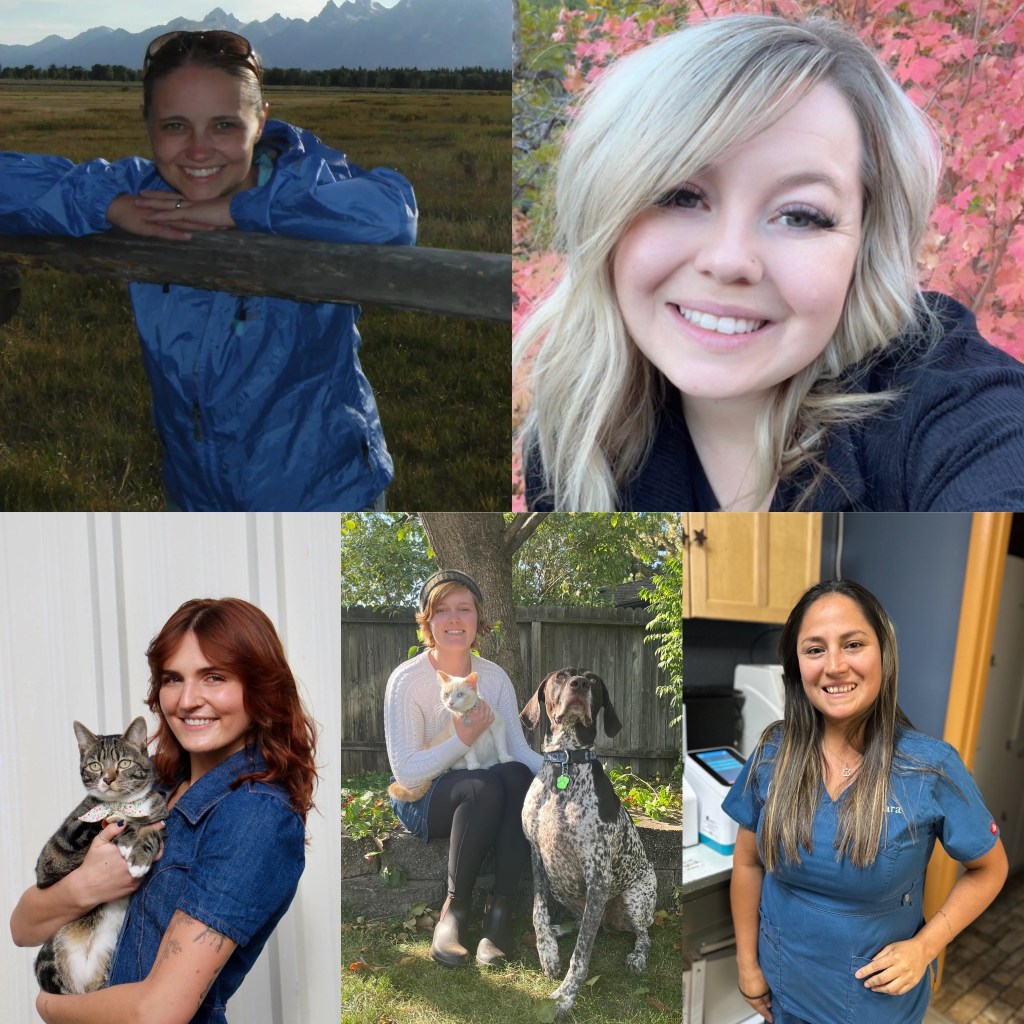
This week is National Veterinary Technician Week, and I want to recognize five women who help make Mountain West Animal Hospital what it is: Katie, Codi, Sarah F., Olivia, and Sara H.
Katie and Codi are credentialed veterinary technicians. That title represents years of education, training, and clinical skill. It represents a commitment to mastering a profession that demands both knowledge and judgment.
But what matters most about Katie and Codi cannot be captured by a credential.
I trust them.
I trust them when a patient is under anesthesia. I trust them when a case becomes complicated. I trust them when something feels wrong and needs another set of experienced eyes. I trust them with the patients people love most.
Every veterinarian knows how much that trust matters.
I am a better veterinarian because they are part of my team.
The same is true of Sarah F., Olivia, and Sara H.
They are often the first reassuring voice a worried client hears and the gentle hands that help a frightened animal feel safe. They answer phones, clean kennels, handle emergencies, juggle schedules, comfort families, and somehow keep the day moving forward when it feels like everything is coming at once.
The hospital would not function without them.
I wish every pet owner could see what happens after they leave.
I wish they could see a team member sitting on the floor beside a recovering patient, speaking softly while a groggy dog slowly wakes up from anesthesia.
I wish they could see the quiet concern when a patient isn’t progressing the way we hoped.
I wish they could see how excited we get when a critically ill animal finally turns a corner.
And I wish they could see the tears. Because there sure are tears.
Sometimes we lose patients despite everything medicine can offer. Sometimes those patients have been part of our lives for years. Sometimes saying goodbye hurts more than we would ever admit.
Then a few minutes later, another exam room door opens. The next patient needs us, too.
Most people see the puppies and kittens. The happy reunions. The wagging tails. They don’t always see the aching backs. The bites and scratches. The missed lunches. The emotional weight that comes with being responsible for lives that cannot speak for themselves.
And they certainly don’t see all the blood, urine, feces, and vomit.
There is plenty of that, too.
Veterinary medicine is messy, exhausting, humbling work.
But beneath all of it is something beautiful.
People who show up day after day and choose to care.
It certainly isn’t easy.
It is not glamorous.
But it matters.
I have been in this profession long enough to know that a veterinary hospital is not defined by its building, its equipment, or the name on the sign out front.
It is defined by its people.
Their character. Their competence. Their compassion. Their willingness to do the right thing, even when it is hard.
The doctor’s names may be on the medical record, but the care our patients receive is the work of many hands and many hearts.
I could not do this alone.
More importantly, I would not want to.
Katie, Codi, Sarah F., Olivia, and Sara H., thank you.
Thank you for the hard days, not just the good ones.
Thank you for the patience, the skill, the sacrifice, and the compassion you bring to this hospital every single day. You make a difference in the lives of animals who will never know your names and in the lives of families who may never fully realize all you did for them.
But I do.
I see the work.
I see the sacrifices.
I see the heart.
And I am deeply grateful.
To our clients: the next time you’re at Mountain West Animal Hospital, take a moment to thank these women.
They deserve it.
And to my team, there is one thing I hope you never forget:
There is no one I would rather do this work with than you.
And that is My Take.
N. Isaac Bott, DVM