
White Lightning


White Lightning
Reindeer rarely have difficulty giving birth. Fortunately, nature has provided this species with amazing vitality. Young calves stand within minutes of being born. Predation is the primary cause of death in newborn calves. To minimize this, cows synchronize their birthing. If all of the calves are born at the same time, fewer are killed by predators. Gestation length can vary as much as 45 days to accomplish this. Such synchrony is fascinating, but provides considerable challenges with domesticated herds. Occasionally, calves are born premature and lung development is not complete. Sadly, many of these calves die.
As a veterinarian, I perform a considerable number of artificial inseminations on reindeer each year. The calves produced by this procedure are especially valuable. Intense care is given to newborns to ensure the best chances of survival.
A few years back, a young male calf was born during the summer. He had a unique white marking on his nose. This calf was a charmer. We all instantly fell in love with him.
On examination, the calf showed considerable effort in his breathing. His lungs were not working as they should. Research has shown that these calves lack a chemical called Surfactant. Surfactant reduces the surface tension of fluid in the lungs and helps make the small air sacs in the lungs (alveoli) more stable. This keeps them from collapsing when an individual exhales. In preparation for breathing air, fetuses begin making surfactant while still in the the uterus. With some reindeer calves, this production is incomplete when they are born.
Treatment consists of replacement surfactant therapy. This is often not feasible in veterinary medicine because of the high cost of synthetic surfactant. When is is available, it must be administered within 6 hours of birth to be effective.
The second treatment is placing the calf in an incubator (very similar to ones used with human neonates) and administering oxygen. Some calves will improve with this treatment. We placed him inside the oxygen chamber and waited. Feeding was required every 2-3 hours. The first few hours were touch and go, but little by little, improvement was noted. His tiny lungs slowly began to function properly.
Fortunately, such was the case with this beautiful calf. We named him White Lightning, reflecting the distinctive white stripe on his nose.
Miraculously, on this hot summer day, a life was saved. As you can see in the photos, we were all happy to pose with the calf, with the exception of my youngest son, KW. He fortunately has overcome his fear of reindeer.  🙂
🙂
N. Isaac Bott, DVM
DocBott Got Ran Over by a Reindeer
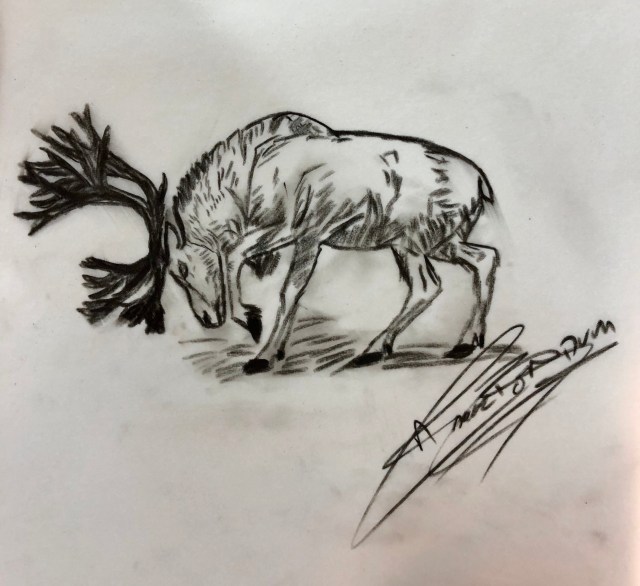
My Take Tuesday: DocBott got ran over by a reindeer!
Many of the pictures I post are of Mountain West Animal Hospital’s resident reindeer. They are very docile and love the attention. Sven and Blitzen will pose for photos and love little children. Sven even has a fondness for the color pink.
However, not all reindeer are like this. A male reindeer’s personality changes dramatically as the breeding season approaches. Circulating levels of testosterone dramatically increase in late August. This hormone will make an otherwise tame male become a raging, grunting and aggressive mess.
A couple of years ago, I received a call from a reindeer farmer in northern Utah. He had a male reindeer that has injured the base of his antler. August heat and fresh blood are a recipe for complications due to either a severe bacterial infection and/or disgusting maggots.
I arrived at the farm and immediately realized that the bull was in full rut. I had just left the office and, like a true nerd, had placed an external hard drive for my computer in my front pocket.
The bull was not very happy to be caught. It took three of us to restrain him while I treated his injury. His massive antlers could easily lift us off the ground and fling us in any direction desired.
Just as I finished the treatment, he broke lose. He immediately turned toward me. I had very little time to react. I stood there with empty syringes and iodine in my hands, helpless and very much vulnerable. His attack was swift. A single charge knocked me on the ground.
I lay there struggling to catch my breath. The sudden impact of the ground on my back left me with temporary paralysis of the diaphragm which made it difficult to take a breath. When I finally did breathe, I was bombarded with excruciating pain over the left side of my chest. I reached into my pocket and removed the external hard drive. It was shattered.
I was very much defeated and beaten, but overall ok after I got on my feet. The pain was caused from two cracked ribs. Other than that, I had no further damage from the incident.
I learned my lesson that day. rutting reindeer cannot be trusted. They are the most dangerous animal I have ever worked with. They make a Jersey dairy bull seem like a young puppy.
I am glad I had the external hard drive in my pocket. The antlers would have easily punctured my lung and inflicted life threatening injuries.
If you ever see a male reindeer grunting, snorting and peeing on itself – STAY AWAY!
You have been warned.
And that is my take!
N. Isaac Bott, DVM
The Dinner Guest
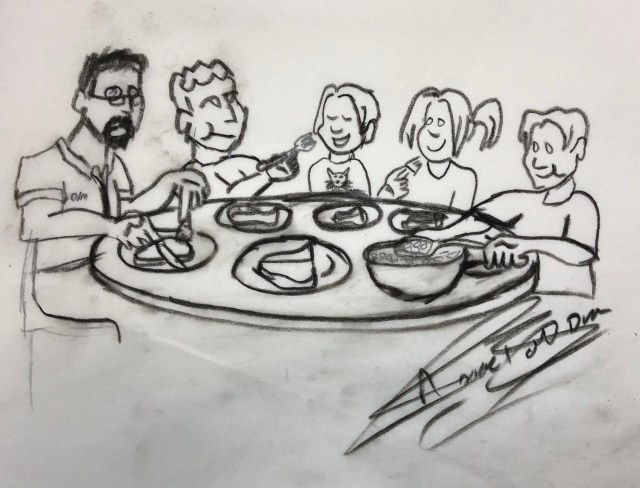
My Take Tuesday: The Dinner Guest
“Hey Doc, we would love to have you over for dinner on Sunday. We will be having some ribeye steaks and banana cream pie.”
Hearing two of my favorite foods in the same sentence excites me. Who could turn down such an invitation? John and Laura were very loyal clients and were a pleasure to be around.
“I would love to!”, I excitedly responded.
“Great! We will eat at 7”, John instructed, “you can come a little early and have some root beer and see that new shed I am building.”
“I’ll be there”, I promised.
On Sunday evening I pulled into the driveway at exactly 6:45. John was waiting for me at the gate. He held a large frosted mug of root beer in his hand.
“Here it is Doc, fresh made.”
I grabbed the mug and took a sip. The sweet vanilla taste satiated my senses.
“Now, that is good!”, I exclaimed.
John then proceeded to show me around the yard. Most of my time with John and Laura was spent on the ranch. It was a nice break to be able to see their home. The yard was perfectly manicured, as is expected from a master farmer and crop producer. The smell of the blooming purple lilacs reminded me just how beautiful this time of year is.
“Come on in Doc,” Laura continued, “dinner is on the table.”
As I entered the kitchen, the table was covered in a smorgasbord of deliciousness. Fresh potatoes, olives, bread, ribeye steak and banana cream pie awaited.
We sat down and began to eat. We laughed and joked as we finished the delicious meal.
“Hey Doc, there is another piece of steak here, would you like some more?”, John asked.
“I sure would,” I replied as I began cutting the fresh ribeye.
“Do you like it Doc?”, John inquisitively asked.
“Yes sir!” I replied
“Good. You remember that old cow that had mastitis and was prolapsed? You said we couldn’t sell her so we butchered her instead.”
News like this is never good to receive between bites.
Instantly, my voracious appetite disappeared.
All I could think in about was that nasty prolapsed cow. That cow that was now in my stomach.
“Can I have another glass of root beer?”, I politely asked, as I finished the steak.
After all, John and Laura are salt of the earth people.
However, this is the only time I will ever eat steak at their house.
And that is my take!
N. Isaac Bott, DVM
Thanksgiving in Emery, Utah
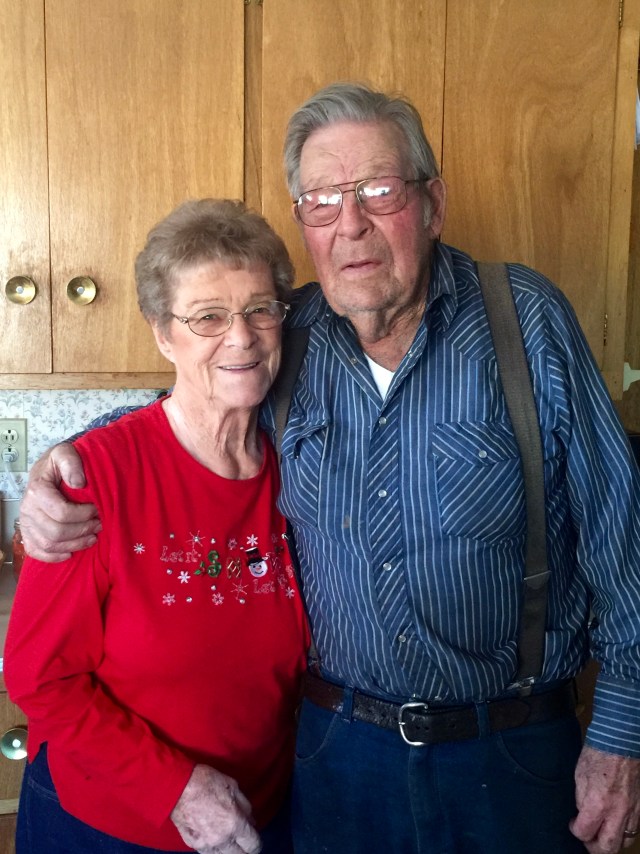
My Take Tuesday: Thanksgiving Dinner in Emery, Utah
The sense of smell is closely linked with memory, probably more so than any of our other senses. Those with full olfactory function may be able to think of smells that evoke particular memories; for me, the smell of turkey in the oven takes me back to Thanksgivings of long ago. As this homeward journey begins, I find myself seated at a table in my grandparents house in Emery, UT.
Grandma makes the best food! The fresh baked rolls, the stuffing, the potatoes, roasted butternut squash – each dish renders a unique and enticing smell. With the ever-more ready turkey roasting in the oven, these combine, creating a signature fragrance greeting guests the moment they step through the front door. We salivate as we anxiously await the assortment of generations of family recipes cooked to perfection
I remember exactly where I sat at the table, facing south, sitting across from my siblings and cousins. The sounds of the adults in the kitchen enjoying a home cooked meal as the delectable smells, good conversation, and the comfortable atmosphere make me feel at peace. As I close my eyes, I readily am able to conjure a significant mental image of Thanksgiving dinners at the home of Hugh and Shonna Peterson.
The joyous bustle and the incessant hum of conversation combine to create a warm atmosphere. The stokermatic furnace in the living room, with its gentle smell of burning coal, adds to the homey ambiance. As we reminisce and laugh, we give our diets a hall pass, stuffing ourselves in a way we would never dream of the other 364 days of the year. But more than the food we savor, it is the scent of the feast that we love and the constancy of family that makes us so complete.
After eating, I usually end up sitting with my cousins around the TV, watching a football game or laughing hysterically at the Farley Family Reunion VHS.
Later on, I return to the warm glow of the kitchen, Just in time to hear my grandpa telling a story from his younger days. I have never met anyone that can tell a story like Hugh Peterson. His excellent memory weaves a tapestry of nostalgia. With each word we move closer to the edge of our seats. With a smile on his face, and just a tad of embellishment, he tells a story like a boss. He makes us all literally laugh until we cry.
I will forever cherish these memories and conversations around the dinner table in Emery, Utah. They will forever remain a refreshing change from the chaos of everyday life. I will always remember the Peterson Family Thanksgivings as one of my most precious memories.
Since yesterdays are gone, and tomorrows are never promised, lets make this Thanksgiving count. Spend time with family and friends. Let us love and laugh and live in the moment. Be sure to spend time with the people in your life who want you to be in theirs. Cherish the people in your life who accept you for who you are, support you in the things you chose to do and, no matter what, are there for you.
And that is my take.
N. Isaac Bott, DVM
DocBott
Catch the new hit series DocBott, Fridays at 11:00 am, exclusively on Flash1TV by clicking here: https://flashtv.atlys.io/page/doc-bott
Human Blood
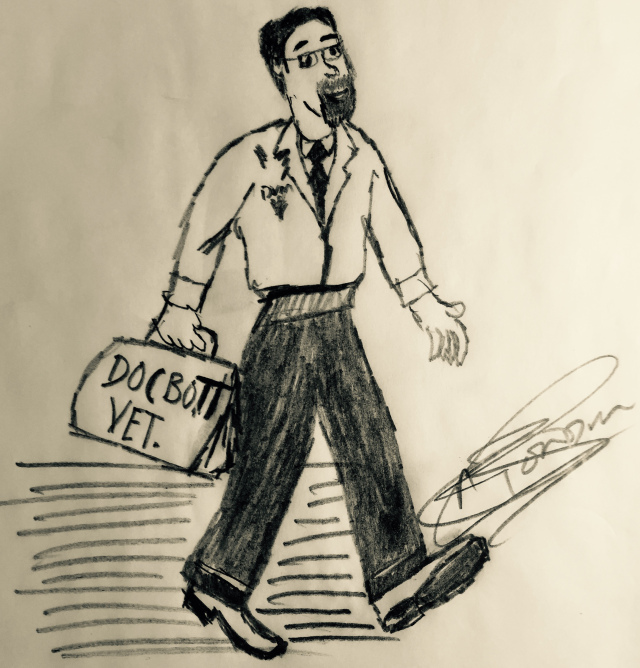
Times of severe stress, injury or fear can trigger the reflex: your blood pressure drops, your heart rate slows. This reaction is primeval stuff, buried deep within our brains. Medically, it goes by the name “vasovagal syncope.” Common folk like me simply call it fainting.
Being a veterinarian is not for the faint of heart. On any given day, I will treat a myriad of infirmities. The sight of blood, pus, maggots and trauma are part of a normal day at the clinic. I, fortunately, am not affected by this. I am able to reason and think clearly in situations like this and am able to immediately go about trying to fix the problem. I’ve seen some nasty stuff, but not once have I ever felt light headed with animal blood.
Human blood is a different story. Ironically, I cannot deal with human blood. The sight of it makes me queasy. I have fainted on a couple of occasions at the sight of my own blood. I find it strange that I am fine with animal blood but so unstable when it comes to people.
As luck would have it, on a number of occasions, clients have experienced medical emergencies as I worked on their pets. During one of these situations, I overheard a radio exchange between emergency responders and dispatch.
“He is with a veterinarian,” the dispatcher said.
“Oh good,” the emergency responder replied.
Upon hearing this, I exclaimed, “No, it’s not good! I don’t do human blood! You had better hurry up and get here!”
Keeping it together in such situations is difficult for me. Luckily, no one has died in these situations. However, I did experience a very close call a few years back.
Sheldon was a nice man. His gentle smile and blue eyes were reflective of his kind nature. He raised beautiful Charolais cattle. The pure white bulls he hauled into the clinic on this particular day were no exception. The massive 2000+ pound animals were there to be semen tested before the breeding season.
Sheldon walked with his cane along the side of the alley that led to the squeeze chute. He gently nudged the first bull as I closed the hydronic chute. He opened the side gate and stood directly behind the bull.
I asked about his farm and about the drive down to the clinic. He seemed happy and excited about the coming spring.
As I proceeded to work on the bull, I turned my back to reach for some supplies.
I then asked, “Sheldon, can you help me hold this?”
There was no reply.
“Sheldon,” I continued.
Still no response. I peered into the chute where he was standing just moments before and he was nowhere to be found. As I stood up and entered the side gate, I found Sheldon lying in the alley. His head was lying just inches from the back feet of a bull. Any sudden movements and the bull could easily crush his skull. My blood pressure skyrocketed!
Instinctively, I picked him up and carried him out the side gate. He was non-responsive. I grabbed my stethoscope and listened to his heart. The rate and rhythm were irregular. He was clearly having a heart attack. I shouted for an assistant in the clinic. I asked her to dial 911 and get an ambulance there as soon as possible. I elevated his head and began the first aid I had been taught many times.
I sat with Sheldon until the ambulance arrived. His vitals continued to be irregular, but he continued to breath. As the EMTs arrived, they loaded him in the ambulance. As they pulled out of the clinic, despite having the light on and the sirens blaring, a car nearly side swiped the ambulance.
I stood there in awe. My body trembled as the stress finally caught up. I paced around the parking lot for nearly a half an hour until my nerves were under control and I was able to return to work.
Somehow Sheldon survived the ordeal. I visited him that night in the Payson hospital. He was his normal self as we joked about how bad he had scared me.
He thanked me for helping him.
“It is a good thing you knew what to do,” he continued, “I am lucky you were there.”
If he only knew how uncomfortable I am in situations like this. It took several days for me to be able to return to normal life. The thought of seeing him in the alley with such large animals on either side of him still haunts me to this day.
Fortunately, no other heart attacks have occurred on my watch since that day.
I can quickly fix even the most gruesome lacerations on an animal without a second thought, but when it comes to people, Doc Bott is not the person you want at your side.
And that is my take!
N. Isaac Bott, DVM
My First Surgery
My Take Tuesday: My First Surgery
I was raised on a small farm in Castle Dale, UT. We raised Guernsey milk cows, Suffolk sheep and many varieties of chickens and pheasants. My daily chores included feeding the chickens and gathering the eggs.
One day after school, I walked into the barn that housed the chickens. The barn was divided into three equal rooms. The first room is where we would store stacked straw bales. The second and third rooms were where the chickens and pheasants were kept.
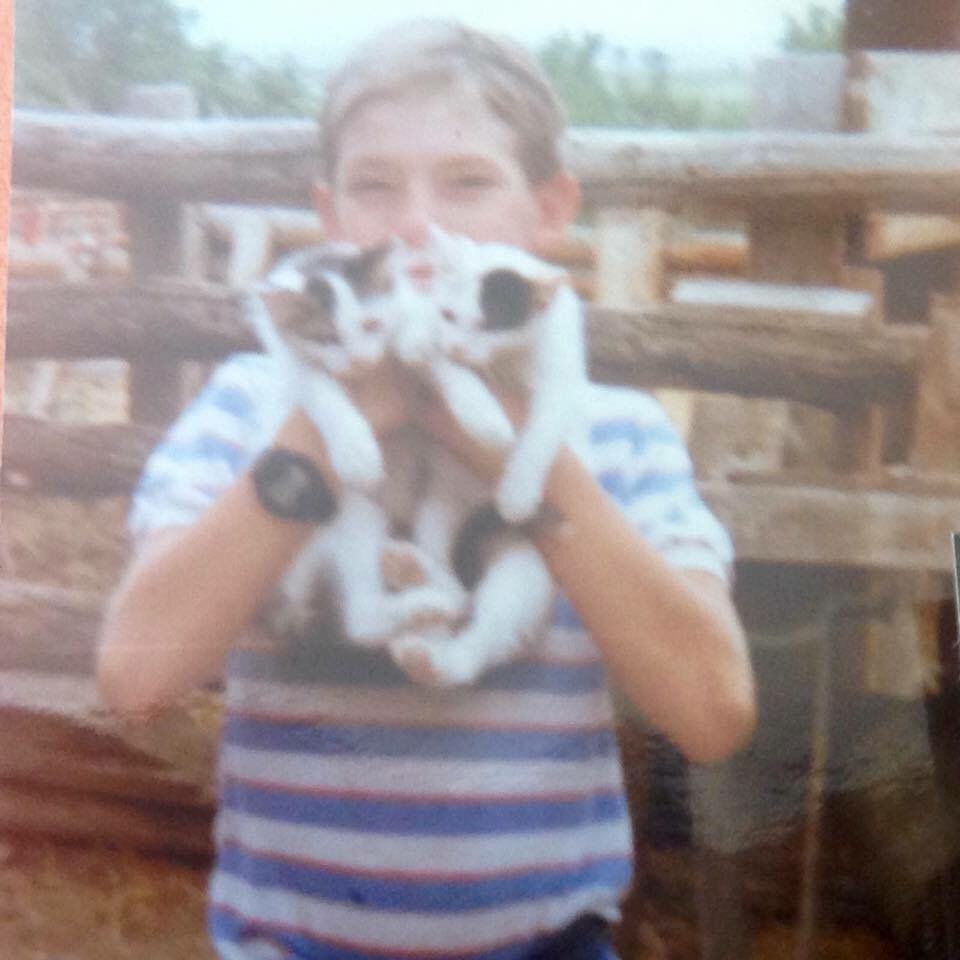
On this particular day, I found our calico cat nestled with her newborn kittens. She was lying right next to the straw stack, on the ground near the chicken coop door. There were seven in all. As an 8 year old, and still to this day, new babies of any kind are an exciting experience. I dropped down and began counting the tiny kittens. I was so thrilled! As I handled the small kittens, I noticed that something wasn’t quite right. The umbilical cord from one of kittens was wrapped tightly around a leg of each of the kittens. If I picked one kitten up, the entire litter would follow as if they were chained together. I tried to remove the cord with my fingers, but it was far too tight. Even as a little kid, I knew that something had to be done.
In Castle Dale at this time, we did not have a veterinarian. The only veterinary services available were on Thursdays when a veterinarian would travel from Richfield. It was early afternoon, so my dad was not going to be home from work for a couple of hours. I had to figure something out for myself.
I reached in my pocket and pulled out my Swiss Army knife. It was one that had a myriad of blades, nearly all of them never used, and a tooth pick and small set of tweezers in the handle. I opened the smallest cutting blade and bent down. I very carefully cut the umbilical cords from each of the kittens. I used some iodine to keep the procedure as clean as possible.
The procedure was a success. All of the kittens survived.
Fortunately, I no longer use my Swiss Army knife for surgeries. Although my surgical skills have been refined and perfected, I still have the curiosity and passion that that 8 year old displayed. I love being a veterinarian. The satisfaction I felt that day long ago is repeated every time I am able to help save a life.
I look back on my first surgical experience with fondness. It was one of the important milestones in my path to becoming who I am today.
And that is my take!
N. Isaac Bott, DVM
Pictured is Dr. Bott with kittens in 1988
Halloween
My Take Tuesday: Halloween
I love this time of year! The cool fall breeze, the crisp chill to the air, the brilliant gilded glory of the golden aspen and cottonwood leaves, the smell of the first fire in a wood burning stove, and the taste of hot apple cider. It takes me back to days of long ago. I think about my childhood, pumpkin pie, Halloween carnivals at Castle Dale Elementary, and the magic in a young boy’s hopes and dreams.
I remember one year especially well. I set out with my friend Jake Bulkley on an epic trick-or-treat adventure in the small town of Ferron, Utah. I remember walking along 500 South carrying brightly colored plastic buckets filled with what seemed like endless supplies of Sour Patch Kids, Candy Corn and Reese’s Cups. We felt like we had a successful candy haul until Jake’s younger sisters arrived home carrying pillowcases filled to the brim with candy. They followed the same route, but somehow ended up with ten-fold the amount of candy. Jake and I still laugh to this day about our mischievous fall adventures we had while attending San Rafael Junior High.
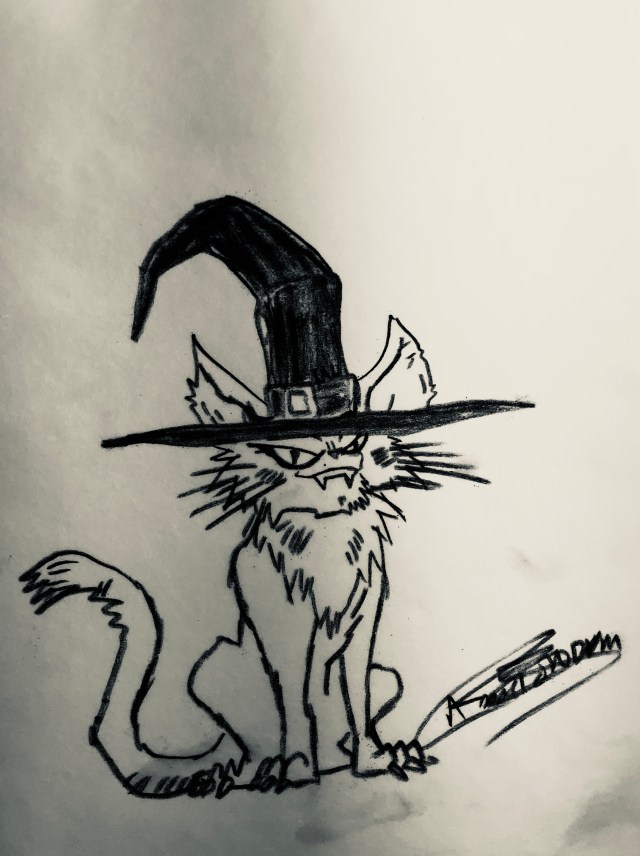
Halloween for me is still filled with unpredictable adventures. As a veterinarian, I encounter more black cats than the average person. October 31st is always a busy day at Mountain West Animal Hospital. Although this is a fun holiday for us, Halloween can be precarious for our four-legged family members. Here are a few pointers to keep your pets safe today:
1. Don’t feed your pets Halloween candy, especially if it contains chocolate or xylitol (a common sugar substitute found in sugar-free candies and gum);
2. Make sure your pet is properly identified (microchip, collar and ID tag) in case she/he escapes through the open door while you’re distracted with trick-or-treaters;
3. Keep lit candles and jack-o-lanterns out of reach of pets;
4. If you plan to put a costume on your pet, make sure it fits properly and is comfortable, doesn’t have any pieces that can easily be chewed off, and doesn’t interfere with your pet’s sight, hearing, breathing, opening its mouth, or moving. Take time to get your pet accustomed to the costume before Halloween, and never leave your pet unsupervised while he/she is wearing a costume;
5. Keep glow sticks and glow jewelry away from your pets. Although the liquid in these products isn’t likely toxic, it tastes really bad and makes pets salivate excessively and act strangely;
6. If your pet is wary of strangers or has a tendency to bite, put him/her in another room during trick-or-treating hours or provide him/her with a safe hiding place;
7. Keep your pet inside. This is the easiest way to keep them safe.
Have a safe and fun Halloween!
And that is my take!
N. Isaac Bott, DVM
Yo Quiero Bite You!
Often “the question” comes up during a routine appointment. Curiosity is naturally sparked with my response.
The question is, succinctly put, “Doc, what breed of dog bites you the most?”
The answer is unequivocally the chihuahua. Of the dozens of bites that I have received, a vast majority came from chihuahuas.
Chihuahuas are comical, entertaining, and loyal little dogs, absolutely brimming with personality – often a quirky and eccentric personality unmatched by any other breed.
Some of my sweetest patients are chihuahuas. They are affectionate and loving.
But every once in a while, a mean one comes along.
While a bite from a Chihuahua isn’t going to inflict the same damage as a bite from a larger dog like a pit bull or boxer, it can still leave a painful wound that’s prone to infection. There’s an old myth that a dog’s mouth is cleaner than a human’s mouth, but this isn’t a true. Whenever a pet bites, there is significant risk of infection.
While Chihuahuas are not naturally more aggressive than any other breed, they seem to be prone to react with aggression out of fear. Veterinarians are often the target of such aggression, simply because dogs are fearful of unfamiliar people and situations.
As a recent graduate, I was learning how to diagnose, treat and cure the routine cases that present daily. I had only been a veterinarian for about a month when I learned my lesson.
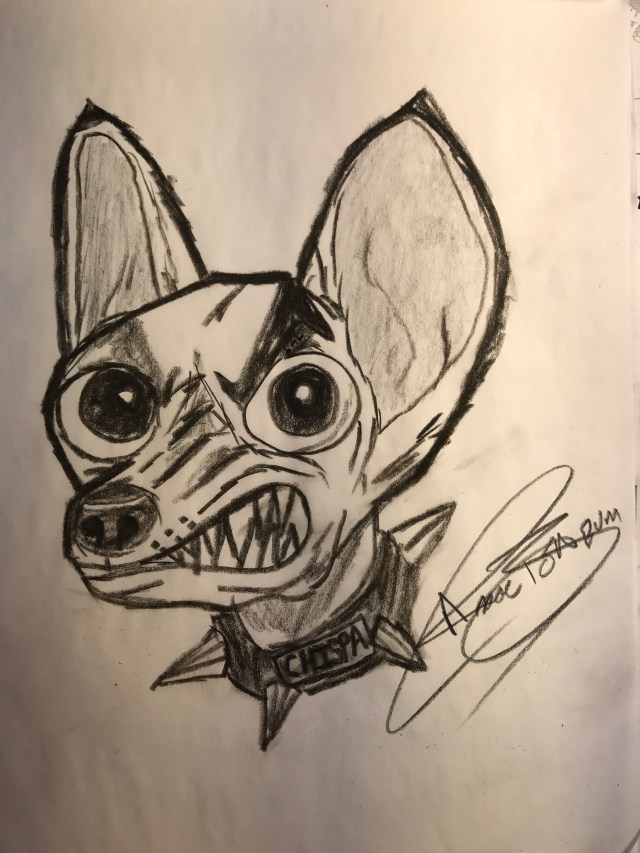
It was a routine appointment. Annual vaccinations and a wellness exam were needed. As I entered the room, Chispa, sat on the table glaring at me. As I reached down to auscult the heart and lungs, Chispa absolutely went ballistic. Within 5 seconds, she had peed and soiled all over the table top. Instinctively, I reached for a muzzle. As I attempted to place the muzzle on her, she absolutely lost it.
Just like a loud clap of thunder that follows a flash of lightning; when I am bit by a dog, imprecations are sure to follow.
Chispa sunk her needle like teeth into my right hand and bit me again and again.
Before I could even mutter the phrase, “Oh S#*!”, this little devil had bitten me three times.
Her only goal seemed to be to inflict as much damage as possible to the man in a white coat that was reaching for her.
Blood poured down my hand. I sat stunned. I have fast reflexes; after all, I dodge bites and scratches on a daily basis.
What was different about this experience? Perhaps it was in the name. “Chispa ” is a Spanish word meaning “spark”. Certainly, the fiery personality and name fit this small canine.
The rapidity of the attack taught me a lesson. I am much more careful now when dealing with seemingly innocent small pets. I do my best to reduce the fear and anxiety that accompanies a visit to the veterinarian.
And I am especially careful with pets that have incendiary names such as Diablo, Fuego, Demonio and, believe it or not, Fluffy.
And that is my take!
N. Isaac Bott, DVM
 DocBott