My Take Tuesday: The Affable Nature of Theriogenologists

My Take Tuesday: The Society for Theriogenology

Greeting from 30,000 feet! This week I am writing from the air. As I peer out the plane window, I see a limitless sky. I love flying! I am en route to Savvanah, Georgia to attend the annual conference of the Society for Theriogenology.

This is an annal event that I have attended since 2007. Each year the meeting is held in a different city around the country. I eagerly await this conference each August.

What is Theriogenology? Theriogenology is the branch of veterinary medicine concerned with reproduction, including the physiology and pathology of male and female reproductive systems of animals and the clinical practice of veterinary obstetrics, gynecology, and andrology. It is analogous to the OBGYN, Neonatologist and Andrologist of human medicine – all combined in a single broad specialization. From antelope to zebras, Theriogenologists work on all species of animals. It is a challenging, unique and rewarding discipline.

I became interested in theriogenology as an undergraduate at Southern Utah University. A professor and mentor named Dan Dail introduced me to this most unique area of veterinary medicine. I learned a lot from him. He entrusted me with a research project looking at the correlation of body condition scores and first service conception rates in heat synchronized beef cattle. His mentorship, along with this research contributed to my acceptance into veterinary school. Dan Dail passed away a few years ago.

At Washington State University, I had the privilege of working extensively with Ahmed Tibary, a world renowned theriogenologist.  He has made endless contributions in teaching, published books, chapters and scientific articles. His comparative approach taught me how to think and reason through difficult cases. He also entrusted me with the animals under his care. We published a significant amount of information on reproduction in alpacas. I remember with fondness my time working with him.

My theriogenology work has made me a better veterinarian. My clinical approach has been shaped and molded by the examples of so many mentors and teachers. What drives me is the comparative medicine; that’s what makes my brain move. Whether I am in the clinic working on dogs or cats, or out working with bighorn sheep, elk, alpacas or water buffalo, I am doing what I love.

It is my privilege to serve as the immediate past president of this organization. Upon a cabinet in the lobby of Mountain West Animal Hospital, a small statue sits. The statue depicts a bull named Nandi, the Hindu god of fertility. I am humbled to see my name on the plaque beneath the statue.

Kindness is a commonality among veterinarians who are reproductive specialists. They are approachable and humble. In a profession where arrogance often is the norm, they are a refreshing example of the best of the best. They are among the leadership at nearly every veterinary school in North America. They are leaving a lasting impression on the profession.

I am so proud to be a member of this group.

It has been a tremendous honor for me to serve as immediate-past president of this organization this year.

And that is my take.

N. Isaac Bott, DVM


My Take Tuesday: Theriogenologists

My Take Tuesday: The Society for Theriogenology

Greeting from 30,000 feet! This week I am writing from the air. As I peer out the plane window, I see a limitless sky. I love flying! I am en route to Savvanah, Georgia to attend the annual conference of the Society for Theriogenology.

This is an annal event that I have attended since 2007. Each year the meeting is held in a different city around the country. I eagerly await this conference each August.

What is Theriogenology? Theriogenology is the branch of veterinary medicine concerned with reproduction, including the physiology and pathology of male and female reproductive systems of animals and the clinical practice of veterinary obstetrics, gynecology, and andrology. It is analogous to the OBGYN, Neonatologist and Andrologist of human medicine – all combined in a single broad specialization. From antelope to zebras, Theriogenologists work on all species of animals. It is a challenging, unique and rewarding discipline.

I became interested in theriogenology as an undergraduate at Southern Utah University. A professor and mentor named Dan Dail introduced me to this most unique area of veterinary medicine. I learned a lot from him. He entrusted me with a research project looking at the correlation of body condition scores and first service conception rates in heat synchronized beef cattle. His mentorship, along with this research contributed to my acceptance into veterinary school. Dan Dail passed away a few years ago.

At Washington State University, I had the privilege of working extensively with Ahmed Tibary, a world renowned theriogenologist.  He has made endless contributions in teaching, published books, chapters and scientific articles. His comparative approach taught me how to think and reason through difficult cases. He also entrusted me with the animals under his care. We published a significant amount of information on reproduction in alpacas. I remember with fondness my time working with him.

My theriogenology work has made me a better veterinarian. My clinical approach has been shaped and molded by the examples of so many mentors and teachers. What drives me is the comparative medicine; that’s what makes my brain move. Whether I am in the clinic working on dogs or cats, or out working with bighorn sheep, elk, alpacas or water buffalo, I am doing what I love.

It is my privilege to serve as the immediate past president of this organization. Upon a cabinet in the lobby of Mountain West Animal Hospital, a small statue sits. The statue depicts a bull named Nandi, the Hindu god of fertility. I am humbled to see my name on the plaque beneath the statue.

Kindness is a commonality among veterinarians who are reproductive specialists. They are approachable and humble. In a profession where arrogance often is the norm, they are a refreshing example of the best of the best. They are among the leadership at nearly every veterinary school in North America. They are leaving a lasting impression on the profession.

I am so proud to be a member of this group.

It has been a tremendous honor for me to serve as immediate-past president of this organization this year.

And that is my take.

N. Isaac Bott, DVM


The Red Handkerchief

30710067_1006144286216812_4655043468467372032_n.jpg

My Take Tuesday: The Red Handkerchief

 
As a veterinarian, I all to often find myself in precarious situations.
 
Upon graduating from veterinary school in 2009, I moved back home here to Utah. My first job out of school was right here in Utah County.
 
It was not unusual for me to be called to attend a dozen or more lame and injured cows on a particular day. You might arrive to find them in a paddock with no sorting pen and therefore no means of restraining them for treatment. What are you going to do? Unfortunately, farmers often have the attitude that you’re the vet, they’ve called you out to do the job, so they expect you just to get to it. Often these cattle facilities left much to be desired. A few broken palates, some bent powder river panels and a welded together squeeze chute constitute pretty decent working conditions.
Usually some unsatisfactory compromise could be sorted out which would reinforce the fact that you were not half as good as their old vets.
 
Max was no exception. He stool 6’1″ and was as skinny as a bean pole. He always had a runny, drizzly nose, and he kept a red handkerchief in the front pocket of his bib overalls. Max didn’t want a new young vet working on his cows. He was used to the old school way, and had no reason to change.
 
I was greeted on one of these farm visits by this familiar refrain: “We used to use old Doc SoandSo. Have you heard of him? Best dairy vet in the county. Of course, you’re new and not used to dealing with dairy cows down here are you?”
 
Perhaps I am unduly sensitive, but being told you’re second best before you’ve even begun is either irritating or depressing—depending on how your day has been. This day tipped more toward the irritating side.
 
Suzy was the name of his milk cow. She was a tall Holstein crossbreed cow. On this particular day, Miss Suzy stood in the knee deep pasture staring at us as we entered the field. She was swollen up like an engorged wood tick. The left side her stomach protruding so far that she was as wide as she was long. The diagnosis, even from afar was obvious. She was bloated.
 
Bloat is a digestive disorder characterized by an accumulation of gas in the first two compartments of a ruminant’s stomach (the rumen and reticulum). Production of gas (primarily carbon dioxide and methane) is a normal result of fermentation processes. The gas is usually discharged by belching (erutication) but, if the animal is unable to remove the excess gas, pressure builds up in the rumen-reticulum exerting pressure on the diaphragm which prevents the animal from inhaling, and bloat occurs. The most common type of bloat is frothy bloat where gas builds up in a foam or froth above the rumen contents and the normal belching is inhibited.
 
Imagine a 40 gallon tub of partially digested green stomach contents. The pressure of this stomach is such that when it is alleviated, it is similar to popping a balloon, this disgusting smelly concoction will spew in a fashion similar to the Old Faithful Geyser.
 
Before we could even isolate her in the corner to begin treatment, Max decided he needed to blow his nose. As he pulled out his bright red handkerchief, he flipped it with his wrist and positioned it to evacuate his proboscis. Suzy caught sight of this red temptation and came charging full speed – like a freight train – straight for us. She was bellowing and blowing snot in a fit of rage.
 
In a situation like this, it doesn’t matter how quick you are. The only relevant assessment of speed is how fast you are in relation to the other person in the pasture. I figured I could beat Max to the gate, but would feel guilty in so doing.
 
I braced myself for the impact. Max yelled, “Hey Now!”
Suzy collapsed just steps before she reached us. The massive pressure caused by the bloat had cut off her air supply. She lay in a heap in front of us.
 
The treatment for bloat in a case like this is to relieve the pressure as fast as possible. An incision in made through the left side of the abdomen and the rumen is decompressed. In a situation like this, you only have a few seconds to act. My surgical instruments were in my tool box over by the gate. I knew there wasn’t time to retrieve them.
 
I reached in my pocket and pulled out my Old Timer pocket knife. I made a quick incision with the sharp point. Immediately, air began spewing out. It sounded like removing a valve stem from a car tire. It whistled as the massive stomach returned to normal size. Shortly thereafter, Miss Suzy was back on her feet and back to her normal self.
 
As I prepared to leave, Max commented, “Hey Doc, I guess you are alright after all.”
 
Max then pulled out the red handkerchief and blew his nose as he inquired, “How much do I owe you?”
 
And that is my take!
N. Isaac Bott, DVM
Spit Happens

vLlhwhI2Q8OTptPBaxr20A_thumb_df09

My Take Tuesday: Spit Happens

I received a call a few weeks back regarding a sick llama. It was from a new client that wanted to know if I knew anything about llamas and alpacas. Calls like this are somewhat frequent. Asking a vet if they know anything about llamas is like asking a pediatrician if they know anything about 8 year olds. I responded, that I was indeed familiar with all camelids and had worked extensively with them as a veterinarian.

As I arrived at the farm, it was obvious that this wasn’t a typical llama ranch. It seemed as though I had traveled back in time to the 60’s. I was meandering into an apparent neighborhood of Hippie-ville. The van parked outside the gate looked just like the Mystery Machine from Scooby Doo. The bright colors were also painted on each of the barns and small buildings of the property and even covered the bases of the tall Chinese Elm trees.

One would not immediately equate going barefoot with farm life, I suppose, especially if the farm in question is shared with livestock. There are serious concerns regarding hook worm, and other parasites that could easily be transferred through the lack of shoes, and to be certain, stepping on manure barefoot has little appeal to the average person. However, a couple of barefooted and worry-free people were standing at the end of the driveway to greet me on this particular day.

One of the owners held a small white paper cup in her hands. As I greeted her, she held the cup up ad asked me to take a sip.

“What is it?”, I asked, not fully anticipating the response I received.

“It is Holy Water”, she responded. “We always make the healer drink before the llama.”

Perhaps the shock of the colorful ambience and barefoot attendants clouded my judgement, what ever the reason, I grabbed the cup and took a small drink. Immediately, I realized my mistake, but could do nothing but swallow the mysterious potion. It was the most disgusting thing I had ever ingested. I smiled, and politely asked where the sick llama was located.

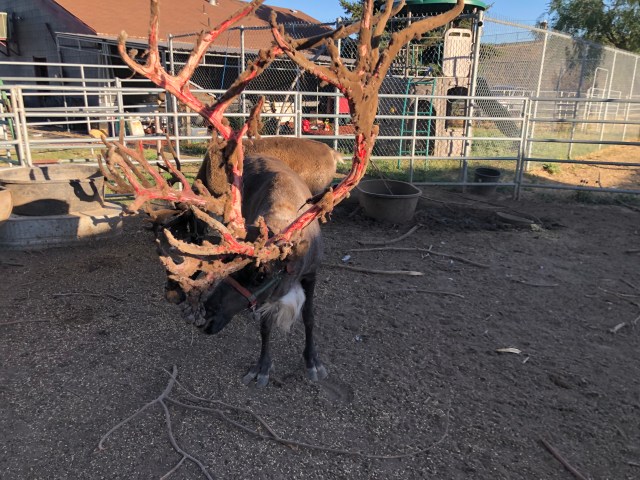
The large white llama was setting in a “kush” position, a term llama farmers use for sternal recumbency. As I approached, he raised his mouth in the air and pinned his ears back against his head.

I moved cautiously, as these signs are consistent with a llama that is going to spit at you. This nasty dark green elixir is actually not spit at all, but is the regurgitated contents from the first stomach compartment. The slew is a mixture of partially digested feed, stomach juice and miscellaneous microbes.

Llamas are well aware of a veterinarian’s never-ending quest to stick needles in them; and if provoked, they will spit copiously at you with unpleasant accuracy of aim.

There is a classic sound a llama will make before spitting. The unmistakable gurgling sound is followed by a distinct “pfffffpth”, as the stomach contents spew from the mouth.

The cause of the llama’s discomfort was a large Russian Olive thorn sticking out from the back of the left elbow. I gently reached down and removed the dagger like thorn.

It appeared as though I had escaped unscathed. The llama, with its ears still pinned back, watched me closely, but did not spit.

As I turned my head slightly, I began to speak with the owners. I explained the after care that would be required for a full recovery and encouraged them to remove the large Russian Olive plants that lined the south side of their pasture. I asked if they had any questions and turned back towards the llama.

My mouth was between words then the attack happened. The trajectory and accuracy were unparalleled. The llama spit with sharp-shooter accuracy, and the stomach contents went directly into my mouth.

I immediately began to gag. I then began to dry heave uncontrollably. The owners stood in awe as I struggled to rid my mouth of the fowl taste of fermented llama feed.

There is no amount of listerine that can remove the taste of llama spit. It will stay in your mouth for days.

“Are you alright?,” the bearded man asked.

“Yeah”, I muttered, as I looked up.

“You got to learn to keep your mouth closed, Doc”, he continued, “Especially if you are going to work on llamas.”

I didn’t know how to respond. After working on literally thousands of llamas and alpacas, this was the first time spit had actually entered my mouth.

I accepted my defeat and curiously inquired, “Can I have another drink of Holy Water?”

And that is my take!

N. Isaac Bott, DVM
The Alpine Buttercup

My Take Tuesday: The Alpine Buttercup

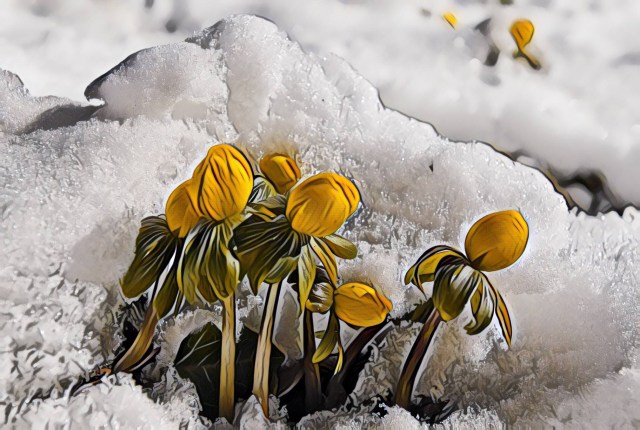
One of my favorite flowers is the Alpine Buttercup. Seen only by those who venture near or above the timberline, it follows the melting snow into the sunshine. In the early spring, it fights its way up through the cold hard earth. Along the snow banks high in the Rocky Mountains, this flower is the first to emerge, often blooming through the melting snow.

I have often wondered how this plant can be so hardy. Ranunculus acraeus is a plant of environmental extremes, hence the species name acraeus, meaning “on high”.

I often wonder what it would be like if we could switch roles with the buttercup. What if we could be as resilient as this small plant?

We would become this tender whitish-yellow chute. It hasn’t felt the suns warmth, the green is yet to come. This tender seedling pushes up through the cold hard ground.

The moment it emerges, it is subject to all of the dangers and injury that can befall anything alive and growing. A wandering deer passes by and steps on the tender plant and smashes it down. Yet, the chute pushes back up.

A hungry chipmunk discovers the plant and bites off its tender delicacy. Still out of it’s reservoir of power, the buttercup pushes up.

It struggles toward to the sun, despite the adversities that attack it.

Then one day it bursts into a tight yellow bud.

It affirms that underneath the old rotten layers of winter snow there is new good life.

My thoughts turn to an exchange in one of my favorite books, Edmond, who has suffered unspeakable torture and pain is addressing a young but courageous Albert. He says, “Life is a storm, my young friend. You will bask in the sunlight one moment, be shattered on the rocks the next. What makes you a man is what you do when that storm comes. You must look into that storm and shout… Do your worst, for I will do mine! Then the fates will know you as we know you.” (Alexandre Dumas, The Count of Monte Cristo)

The fleeting emotion we call happiness, is but a comparison of one state to another. And as such, those who have experienced extreme pain and grief, are most capable to experience supreme happiness.

Life is full of brambles and thorns. It has to be. There is no growth without challenge, and no challenge occurs without some level of uncertainty and presentation of incommodious circumstances.

A few years ago, during a severe winter storm, I passed a herd of bison standing in a large meadow on the side of the road. The storm was intense, with over 18 inches of accumulation in just a few hours. The bison, ironically, stood still in the middle of the meadow. In conditions that would kill entire herds of cattle, these majestic animals stand face first in the winter fury as the wind blows and the snow accumulates. They don’t turn their hindquarters into the wind, nor do they move with it. They stand and face the storms of life undaunted, stoic and valiant.

Perhaps we would do well to emulate the bison, as we face the uncertainties and challenges that we face in life. The storms of life will inevitably come, so why not face them? And face them with strength, determination, and power. Sure, it’ll feel uncomfortable at first, it may even be scary, but if we get comfortable with the feeling of being uncomfortable – that discomfort will begin to lessen.

I don’t know how long your storm will last or how intense it is. But I am confident we will all fare the storm better if we face it head on. Just breathe, put your head down and find a way through. We must have tough times to fully appreciate the good times that lie ahead.

Just like the Alpine Buttercup, we all contribute to the beauty of this world. We are an infinitesimal part of it. Still each of us, no matter how humble, no matter how lowly or simple, we all have a critical part to play.

We only must recognize our role and take it on.

Either we bloom, or we sadly wither away.

And that is my take.

N. Isaac Bott, DVM

The Alpine Buttercup

My Take Tuesday: The Alpine Buttercup

One of my favorite flowers is the Alpine Buttercup. Seen only by those who venture near or above the timberline, it follows the melting snow into the sunshine. In the early spring, it fights its way up through the cold hard earth. Along the snow banks high in the Rocky Mountains, this flower is the first to emerge, often blooming through the melting snow.

I have often wondered how this plant can be so hardy. Ranunculus acraeus is a plant of environmental extremes, hence the species name acraeus, meaning “on high”.

I often wonder what it would be like if we could switch roles with the buttercup. What if we could be as resilient as this small plant?

We would become this tender whitish-yellow chute. It hasn’t felt the suns warmth, the green is yet to come. This tender seedling pushes up through the cold hard ground.

The moment it emerges, it is subject to all of the dangers and injury that can befall anything alive and growing. A wandering deer passes by and steps on the tender plant and smashes it down. Yet, the chute pushes back up.

A hungry chipmunk discovers the plant and bites off its tender delicacy. Still out of it’s reservoir of power, the buttercup pushes up.

It struggles toward to the sun, despite the adversities that attack it.

Then one day it bursts into a tight yellow bud.

It affirms that underneath the old rotten layers of winter snow there is new good life.

My thoughts turn to an exchange in one of my favorite books, Edmond, who has suffered unspeakable torture and pain is addressing a young but courageous Albert. He says, “Life is a storm, my young friend. You will bask in the sunlight one moment, be shattered on the rocks the next. What makes you a man is what you do when that storm comes. You must look into that storm and shout… Do your worst, for I will do mine! Then the fates will know you as we know you.” (Alexandre Dumas, The Count of Monte Cristo)

The fleeting emotion we call happiness, is but a comparison of one state to another. And as such, those who have experienced extreme pain and grief, are most capable to experience supreme happiness.

Life is full of brambles and thorns. It has to be. There is no growth without challenge, and no challenge occurs without some level of uncertainty and presentation of incommodious circumstances.

A few years ago, during a severe winter storm, I passed a herd of bison standing in a large meadow on the side of the road. The storm was intense, with over 18 inches of accumulation in just a few hours. The bison, ironically, stood still in the middle of the meadow. In conditions that would kill entire herds of cattle, these majestic animals stand face first in the winter fury as the wind blows and the snow accumulates. They don’t turn their hindquarters into the wind, nor do they move with it. They stand and face the storms of life undaunted, stoic and valiant.

Perhaps we would do well to emulate the bison, as we face the uncertainties and challenges that we face in life. The storms of life will inevitably come, so why not face them? And face them with strength, determination, and power. Sure, it’ll feel uncomfortable at first, it may even be scary, but if we get comfortable with the feeling of being uncomfortable – that discomfort will begin to lessen.

I don’t know how long your storm will last or how intense it is. But I am confident we will all fare the storm better if we face it head on. Just breathe, put your head down and find a way through. We must have tough times to fully appreciate the good times that lie ahead.

Just like the Alpine Buttercup, we all contribute to the beauty of this world. We are an infinitesimal part of it. Still each of us, no matter how humble, no matter how lowly or simple, we all have a critical part to play.

We only must recognize our role and take it on.

Either we bloom, or we sadly wither away.

And that is my take.

N. Isaac Bott, DVM

Father’s Day

Father’s Day

The giant snowflakes gently fell in perfect rhythm. Even though it was 6:00 AM, I could see clearly through the winter whiteness. This particular winter during the 1980’s in Castle Dale was incredibly harsh. Nearly 18” of snow had fallen over the past 24 hours. The field across the street from my parents house was covered in a thick blanket of white. I bundled up as I prepared to leave the house to do the morning farm chores.

My dad led the way as we headed across the street to the corals. The deep snow proved to be a challenge for my short legs. I jumped and lengthened my stride as I placed my feet inside my father’s footprints. As long as I followed his steps, the path seemed manageable

My dad is a giant of a man. I remember attending a Cub Scout pack meeting as a young boy. At this meeting, a plank was placed on the floor and a 16 penny nail was started in the center. A competition was held where all of the father’s in the room had a chance to hit the nail as hard as they could. Some were able to drive the nail in completely with 2 or 3 hits. When my dad’s turn came around, he buried the nail with a single swing of the hammer. I remember thinking how amazing that was! He could loosen old rusty bolts with a quick flick of his wrist, he could throw a bale of hay on top of a haystack and no one could use a shovel like him. In my eyes as a young boy, he seemed to be able to do anything. My dad has been my hero as far back as I can remember.

I remember a time where he had learned that a man living in town did not have a bed in his house to sleep on. My dad went and purchased a brand new bed with his own money and delivered it to this man that he didn’t even know. Years later, this man told me that this act was the kindest thing that anyone had ever done for him in his life. My dad taught me how to care for others less fortunate time and time again through his example.

Each summer, my dad would set aside time to take each of his five children camping with him individually. We would get to chose the destination of this one on one time. I remember the cold air and the damp grass. I remember the smell of the air. I remember eating Pringles and sitting by a campfire. I remember eating small boxes of Cocoa Krispies and catching fish.

Oh how I looked forward to my annual camping trip with dad! My favorite spot was in Upper Joe’s Valley. This overnight camping trip always provided an escape from the every day chores and busy summer days.

Despite working 7-5 every day, somehow dad would find the time in his incredibly busy schedule to take each one of us individually every single year. This was dad‘s way of showing us how much he cared. Although he loved each of us equally, during these outings we all felt very special. I remember every single trip and I cherish these memories.

I remember one particular time when I was working at the cemetery. The volume of work there had overwhelmed me. There was so much to do and I couldn’t get it done. Dad, after working all day at a thankless and stressful job, came to the cemetery and cut the individual daisy flowers off of the dozen or so bushes in the flower bed. This tedious process took several hours. I was thankful that night, but now looking back, tears come to my eyes. I know how tired and worn out I am after working all day. How did he have the energy to do all that he did?

In today’s world fathers come and go. Having a stable father is a rarity. My dad was always there to work with us. I remember many times going out to the farm with dad and being so stressed I couldn’t function, and after a few hours of digging ditch anything that was bothering me would disappear. Growing up, I was taught how to do good work and to be proud of my accomplishments. My dad did this, not by leaving a list of chores to be accomplished, but by working right there alongside us,

A statue on my dad’s dresser depicts a father with a small child sitting on his knee. The inscription reads, “Any man can be a father, but it takes someone special to be a daddy.” My daddy’s example was not lost on me. His unconditional love has inspired each of his 5 children to be the best that we can be

This Father’s Day, I still find myself trying to follow my father’s footprints in the deep snow. He is my constancy and my mentor, my rock and my friend. He is my hero!

Happy Father’s Day dad!

N. Isaac Bott, DVM

Sheep On the Loose!

IMG_0267


My Take Tuesday: Sheep on the Loose! 

The morning was colder than expected. I zipped up my jacket as I climbed out of my truck ready to begin a day of veterinary appointments. The clouds scuttled across the sky, the sun breaking out in bursts as I made my way through the make-shift corrals that are a common sight in Utah County. A single tree, standing along the fence caught my eye as I crossed the fence. I marveled at the beauty of the crisp copper leaves falling off the lone tree that sway gently in the Autumn wind. 

A single golden leaf pirouetted down an invisible spiral of breeze, spinning through the air as it let itself be carried down. It shook slightly, as if it could have been whisked away any second by the grip of an icy wind, but it kept floating down the twirling course. It blew past my face and landed lightly on the ground, the shiny, vibrant color standing out against the ambers and bronzes beneath it.

Sheep are short-day breeders. The breeding season coincides with the decreasing day length each fall brings. Today’s appointment is a routine breeding soundness evaluation of a group of Rambouillet rams. 

The Rambouillet breed of sheep originated more than two centuries ago, in 1786, when Louis XVI of France purchased over 300 animals from Spain’s famed Merino flocks, which were producers of the world’s finest wool.  

The males of this breed have characteristic large curved horns that are well developed with wide spirals. They weigh around 300 pounds at maturity. 

A large horse trailer was backed up against the gate of the pen, with about two feet of space between the edge of the the fence and the trailer. I could hear the deep bleating and baaing of a dozen rams echoing from inside the aluminum trailer. 

I stood in the small gap between the fence and the trailer in an effort to stop any rams from escaping the enclosure. As the gate was opened, the the first ram paused and then ran quickly from the trailer, giving a bounding leap as he landed on the ground. The remainder of the rams followed in perfect succession, pausing and bounding in unison. 

The last ram exited the trailer and hesitated as it approached the rest of the herd. He turned his massive frame slightly as he looked in my direction. Suddenly, without warning, he lowered his stout head and neck and charged. 

I braced myself for the impact. Anticipating a blow to the legs, I lowered my body into a football stance. This massive ram, in a fit of ovine rage, leaped over my head and landed harmlessly on the gravel patch surrounding the pen. 

He then let out a low “Baaaaaaaa”, as if to beckon the remaining rams to follow his lead. This flock mentality is a sure thing, meaning that if one sheep finds an escape route then the entire flock will follow. The remainder of the herd stampeded towards me in a frenzy. The lead ram lowering his head in apparent contestation head bunting stance. I knew that an attempt to stop a charging ram of this bold carriage would be futile. I stepped aside and yielded as the rams charged through the small alley on their way to apparent freedom. 

I grew up around sheep. My family had a small flock that provided me with valuable insight into sheep behavior and husbandry. One of the valuable lessons I learned is to always have a perimeter fence in case as a backup when working with sheep. 

Sheep are a prey species, and their only defense is to flee. The flock of rams fled in unison down the gravel path. They all stoped abruptly as they arrived at the closed perimeter gate. Accepting their defeat, they turned and charged back through the alley and into their original pen. 

The remainder of the morning was uneventful. Each examination revealed a healthy ram and the group was cleared for the upcoming breeding season. 

As I walked back to my truck, I step through the golden brown carpet of leaves, as they crunch under foot and quiver in gusts of the October wind. 

The deep sound of the rams bleating in concert echoed from the horse trailer. The cool breeze scattered the leaves in all directions and sent a chill down my spine. I took a deep breath and was warmed instantly by the smell of a nearby wood burning stove. 

I sighed, relishing the feeling of fall. It was something I’d have to wait a whole year to experience again. 

And that is my take!

N. Isaac Bott, DVM
Why Did You Become a Veterinarian?

img_4976

My Take Tuesday: Why did you become a veterinarian?

I hear this question on a regular basis. Each veterinarian has a story about why he or she decided to pursue a career in veterinary medicine. Most veterinarians share a commonality – that they have always wanted to be a veterinarian as long as they can remember. My story is a little bit different. I have always loved animals, but didn’t decide to become a veterinarian until the age of 21.

To tell my story, I must start at the beginning.

I was raised on a small farm in Castle Dale, UT. My first responsibilities as a child were to feed the chickens and gather the eggs. I began this task at 6 years of age. Each year we would purchase a variety of baby chicks from Murray McMurray hatchery. They would arrive at the post office on a scheduled day. I would wait with eager anticipation for this time. To me it was just like Christmas. My dad would let each of us pick out a chick that was “ours”. I would always name mine. I first experienced the remarkable human – animal bond with my chickens. I cried when they died. As a child, chickens became my favorite animal, and remain so until today.

Even though I spent my entire childhood around animals, I did not put much thought into becoming a veterinarian. In high school, I took an aptitude test. The test results suggested that I would not make a good veterinarian. I was not introverted. According to that particular test, I could not be successful as a veterinarian. Assuming that these tests were accurate, I pushed the veterinary idea out of my head and considered a law degree.

After I graduated from high school, I spent the next two years in Peru. I was immersed in a culture so much different from the one I was used to. It took nearly a year for me to adjust and to speak fluent Spanish. I remember walking down the street in Casma, Peru one day and seeing a group of men in the process of castrating a bull. It was a sight that I will never forget. They were beating the testicles with a large stick in an effort to destroy the testicular tissue and render the bull sterile. The brutality was sickening. I remember feeling so sorry for the bull.
That night I laid in bed thinking about why they would castrate a bull in such a barbaric fashion. I realized that perhaps that was the only way they knew how. Maybe they didn’t know any better. I decided at that moment that I would do all I could to teach these farmers a better way. Having a farming background, I was very familiar with animal husbandry and felt confident that I could help educate the farmers in this part of the world.

My first patient was a pig named Walter. He was a family pet that lived in a house in Casma. Walter had an attitude and his owners needed to have him castrated. I had a friend named Duilio Davelos that owned a pharmacy in town. I visited him and purchased some lidocaine, suture, iodine and alcohol. The procedure went flawlessly. Walter recovered very quickly. News spread of the event. Soon after, I began sending my free time on Monday’s castrating pigs. Farmers actually were open to learning. The supplies were very inexpensive and my services were free.

Next came chickens. Because of my time spent as a child taking care of baby chicks, I was able to teach basic poultry care and even help make incubators to boost production. I soon began helping with llama and alpaca herds. Soon, other curious Americans participated in this. In fact, a human dermatologist raised in Provo, UT had his first surgical experience South of Trujillo, Peru castrating pigs! It was very fulfilling to be able to help people out in this fashion. I felt like I was really accomplishing something. I was giving them something that would change the way they would treat their animals. No longer would they brutally castrate their animals without local anesthetic. They also knew how to surgically prep the skin, which eliminated so many post operative infections. I was helping people by helping their pets. It made me so happy.

As my time in Peru came to a close, I boarded a plane in Lima and headed back to the USA. As I sat in my seat, I reflected on the past two years. My thoughts kept returning to the animal services I rendered. It was in that moment, high in the air, that I decided to become a veterinarian. I landed in Utah, and a few weeks later began my first college classes. After 8 1/2 years or arduous study, my goal was reached and I became a veterinarian.

I often reflect on the decision I made. I look at how happy I am now. I love what I do. I love helping people by helping their animals. I have never had a boring day, nor have I ever regretted this career decision. I really feel like it is what I was meant to do.

So much in life happens by chance. I was fortunate to have my agricultural upbringing. It prepared me for the future. It is impossible to look forward and connect the dots of the random chances in our lives, but looking back, I can see it clearly.

I am glad that I had the chance to provide animal care in a far away place and how that opportunity led me down this remarkable path I am on today. I cannot imagine doing anything else.

And that is my take!

N. Isaac Bott, DVM
My First Surgery

My Take Tuesday: My First Surgery

I was raised on a small farm in Castle Dale, UT. We raised Guernsey milk cows, Suffolk sheep and many varieties of chickens and pheasants. My daily chores included feeding the chickens and gathering the eggs.

One day after school, I walked into the barn that housed the chickens. The barn was divided into three equal rooms. The first room is where we would store stacked straw bales. The second and third rooms were where the chickens and pheasants were kept.

On this particular day, I found our calico cat nestled with her newborn kittens. She was lying right next to the straw stack, on the ground near the chicken coop door. There were seven in all. As an 8 year old, and still to this day, new babies of any kind are an exciting experience. I dropped down and began counting the tiny kittens. I was so thrilled! As I handled the small kittens, I noticed that something wasn’t quite right. The umbilical cord from one of kittens was wrapped tightly around a leg of each of the kittens. If I picked one kitten up, the entire litter would follow as if they were chained together. I tried to remove the cord with my fingers, but it was far too tight. Even as a little kid, I knew that something had to be done.

In Castle Dale at this time, we did not have a veterinarian. The only veterinary services available were on Thursdays when a veterinarian would travel from Richfield. It was early afternoon, so my dad was not going to be home from work for a couple of hours. I had to figure something out for myself.

I reached in my pocket and pulled out my Swiss Army knife. It was one that had a myriad of blades, nearly all of them never used, and a tooth pick and small set of tweezers in the handle. I opened the smallest cutting blade and bent down. I very carefully cut the umbilical cords from each of the kittens. I used some iodine to keep the procedure as clean as possible.

The procedure was a success. All of the kittens survived.

Fortunately, I no longer use my Swiss Army knife for surgeries. Although my surgical skills have been refined and perfected, I still have the curiosity and passion that that 8 year old displayed. I love being a veterinarian. The satisfaction I felt that day long ago is repeated every time I am able to help save a life.

I look back on my first surgical experience with fondness. It was one of the important milestones in my path to becoming who I am today.

And that is my take!

N. Isaac Bott, DVM

Pictured is Dr. Bott with two of the kittens from this story in 1988