The Saga of the Saiga

IMG_5553

My Take Tuesday: The Saga of the Saiga

They look like something you would read about in a Dr Seuss book. From their long exaggerated proboscis to their loud nasal roars; this species is truly unique. Their bulbous noses, which hang over their mouths, give these antelope an almost comical appearance. The nose is flexible and can be inflated, helping them to breathe warm air in the freezing winters and filter air in the arid summers as they sprint with their heads down in a cloud of dust.  Over the past few years, they have made a comeback in their native home of Kazakhstan. But this all changed recently and now they are in grave danger.

There was almost something biblical about the scene of devastation that lay across the wide-open fields in the wilderness of the Kazakhstan steppe. Dotted across the grassy plain, as far as the eye could see, were the corpses of thousands upon thousands of saiga antelope. All appeared to have fallen where they were feeding.

The saiga – whose migrations form one of the great wildlife spectacles – were victims of a mass mortality event, a single, catastrophic incident that wipes out vast numbers of a species in a short period of time. These Mass Mortality Events are among the most extreme events of nature. They affect starfish, bats, coral reefs and sardines. They can push species to the brink of extinction, or throw a spanner into the complex web of life in an ecosystem.

When this event occurred in 2015, over 200,000 (more than half the total population)  died due to a mysterious illness. This mass die off baffled both veterinarians and scientists as they scrambled to identify the cause.  The culprit was identified as a bacteria called Pasteurella multocida. This bacteria normally lives harmlessly in the tonsils of some, if not all, of the antelope. It is thought that an unusual rise in temperature and an increase in humidity above 80% in the previous few days had stimulated the bacteria to pass into the bloodstream where it caused haemorrhagic septicaemia, or simply put –  blood poisoning.

Mass mortality events are not unusual for saiga antelopes, with a case occurring as recently as 2010 with 12,000 dead animals. However, the scale of the current event is unprecedented relative to the total population size. Often these mass mortality events occur in the birth period, when Saiga females come together in vast herds to all give birth within a peak period of less than one week.

Sometimes the answer to saving a species involves exportation, sequestration and assisted reproductive technologies to enhance genetic diversity. In my opinion, this is key to save the saiga antelope.

The saiga antelope is truly unique. They existed at the same time as the sabertooth and wooly mammoth. They are a relic of the past.

I hope we can save this species. They are truly remarkable!

And that’s my take!

N. Isaac Bott, DVM


Spit Happens

vLlhwhI2Q8OTptPBaxr20A_thumb_df09

My Take Tuesday: Spit Happens

I received a call a few months back regarding a sick llama. It was from a new client that wanted to know if I knew anything about llamas and alpacas. Calls like this are somewhat frequent. Asking a vet if they know anything about llamas is like asking a pediatrician if they know anything about 8 year olds. I responded, that I was indeed familiar with all camelids and had worked extensively with them as a veterinarian.

As I arrived at the farm, it was obvious that this wasn’t a typical llama ranch. It seemed as though I had traveled back in time to the 60’s. I was meandering into an apparent neighborhood of Hippie-ville. The van parked outside the gate looked just like the Mystery Machine from Scooby Doo. The bright colors were also painted on each of the barns and small buildings of the property and even covered the bases of the tall Chinese Elm trees.

One would not immediately equate going barefoot with farm life, I suppose, especially if the farm in question is shared with livestock. There are serious concerns regarding hook worm, and other parasites that could easily be transferred through the lack of shoes, and to be certain, stepping on manure barefoot has little appeal to the average person. However, a couple of barefooted and worry-free people were standing at the end of the driveway to greet me on this particular day.

One of the owners held a small white paper cup in her hands. As I greeted her, she held the cup up and asked me to take a sip.

“What is it?”, I asked, not fully anticipating the response I received.

“It is Holy Water”, she responded. “We always make the healer drink before the llama.”

Perhaps the shock of the colorful ambience and barefoot attendants clouded my judgement, what ever the reason, I grabbed the cup and took a small drink. Immediately, I realized my mistake, but could do nothing but swallow the mysterious potion. It was the most disgusting thing I had ever ingested. I smiled, and politely asked where the sick llama was located.

The large white llama was setting in a “kush” position, a term llama farmers use for sternal recumbency. As I approached, he raised his mouth in the air and pinned his ears back against his head.

I moved cautiously, as these signs are consistent with a llama that is going to spit at you. This nasty dark green elixir is actually not spit at all, but is the regurgitated contents from the first stomach compartment. The slew is a mixture of partially digested feed, stomach juice and miscellaneous microbes.

Llamas are well aware of a veterinarian’s never-ending quest to stick needles in them; and if provoked, they will spit copiously at you with unpleasant accuracy of aim.

There is a classic sound a llama will make before spitting. The unmistakable gurgling sound is followed by a distinct “pfffffpth”, as the stomach contents spew from the mouth.

The cause of the llama’s discomfort was a large Russian Olive thorn sticking out from the back of the left elbow. I gently reached down and removed the dagger like thorn.

It appeared as though I had escaped unscathed. The llama, with its ears still pinned back, watched me closely, but did not spit.

As I turned my head slightly, I began to speak with the owners. I explained the after care that would be required for a full recovery and encouraged them to remove the large Russian Olive plants that lined the south side of their pasture. I asked if they had any questions and turned back towards the llama.

My mouth was between words then the attack happened. The trajectory and accuracy were unparalleled. The llama spit with sharp-shooter accuracy, and the stomach contents went directly into my mouth.

I immediately began to gag. I then began to dry heave uncontrollably. The owners stood in awe as I struggled to rid my mouth of the fowl taste of fermented llama feed.

There is no amount of listerine that can remove the taste of llama spit. It will stay in your mouth for days.

“Are you alright?,” the bearded man asked.

“Yeah”, I muttered, as I looked up.

“You got to learn to keep your mouth closed, Doc”, he continued, “Especially if you are going to work on llamas.”

I didn’t know how to respond. After working on literally thousands of llamas and alpacas, this was the first time spit had actually entered my mouth.

I accepted my defeat and curiously inquired, “Can I have another drink of Holy Water?”

And that is my take!

N. Isaac Bott, DVM

Where Eagles Fly

fullsizerender-18

Above the timberline, soaring over the lofty mountains of the Manti Lasal National Forest fly two bald eagles. The eagle flies higher than other birds, and its vantage point must exceed that of any other creature. An eagle’s eye is almost as large as a human’s but its sharpness is at least four times that of a person with perfect vision. The eagle can identify prey moving almost a mile away. That means that an eagle flying at an altitude of 1000 feet over open country could spot prey over an area of almost 3 square miles from a fixed position.

To glimpse the soaring splendor of a pair of majestic bald eagles is a rare and wonderful sight. These beautiful birds fly through the deep blue skies that surround Castle Valley.

For some unknown reason, this pair of eagles chose an unusual spot to call home and build their nest. Leaving behind the towering mountain cliffs and desolate desert that closely surround Castle Dale, they instead selected a small clump of Cottonwood trees located in the corner of an open dry land alfalfa patch.

I recall my father purchasing this land in the late 1980’s. We plowed the blue clay soil and planted alfalfa on the areas that were fertile enough to support crop production.

The very next year, while we were feeding cows, we noticed two bald eagles perched in the clump of Cottonwood trees at the bottom of the field. I recall thinking how unusual it was to see two bald eagles in the same tree.
During the next few months, these eagles built a massive nest. We watched as they carried sticks and bark from miles away. The nest was an engineering marvel, built high in the tree below the crown supported by large solid branch extending straight east. The nest was constructed of interwoven sticks. The interior was lined with grass, corn stalks, branches, and other material. The bowl was filled with soft materials and their own downy feathers.

I recall the first eaglets born on the farm. In a rare event, 3 offspring were hatched and successfully raised. I remember seeing the newborn eaglets. They are covered with gray down, and so light they almost appear white. It isn’t until years later that their characteristic white head feathers develop as they reach adulthood. The babies grow rapidly, adding about a half pound to a pound of body weight every week until they are about 9-10 weeks old.

Every spring, I watched as these birds hatched, learned to fly and left the nest. Year after year, decade after decade, this process repeated itself producing many successful offspring.

Each breeding season, material was added to the nest and it’s size increased by up to a foot in height and diameter each year. The nest became visible from great distances as its size increased.

The bald eagles were a welcome sight. Each year they would appear right before Christmas. I remember seeing them consistently every year while growing up. They stood perched, looking down on my every move. A feeling of safety and security ensued as these majestic guardians stood watch. Their presence inspired insight, bravery, and wisdom.

Although we all recognize the Bald Eagle as the national symbol of the United States, and as a proud icon of patriotism. I feel they could serve just as well or better as symbols of faithful monogamy. When one of these birds of prey finds his or her mate, the pair stays together for life. They are strong and independent; they are survivors. They are majestic and bold. They are a symbol of strength and determination.

February 14th coincides each year with the return of the magnificent birds to the nest in the cottonwood trees south of town.

There is safety in constancy, and measured security in consistency. I am glad that high in the blue skies above Castle Dale, there is a welcoming place, where the eagles fly.

Happy Valentine’s Day!
N. Isaac Bott, DVM

The Late Night Call

16003184_744874842343759_709761964550411298_n

My Take Tuesday: The Late Night Call

The phone rang at exactly 2:03 AM. I jumped out of bed and sleepily answered, “Hello?”.

Calls like this often come in the early morning hours. Animals, it seems, have the worst troubles while we are sleeping.

“Hey Doc, can you come out to my place?”

“What’s going on?”, I responded, wiping the sleep from my eyes.

“It is one of my ewes, Doc, she has 5 hooves sticking out of her backside!”, he explained with a dramatic tone.

“Alright, I will be right there”, I replied, as I quickly changed my clothes and dressed for the outside temperatures. Situations like this seem to always occur in January, when the temperature is below zero.

I fired up my pickup truck and headed down the road.

Mr. Johnson was a long time client and a good sheep man. He knows enough to get through most situations and is good about calling me before all hope is lost.

Farmers like Mr. Johnson are becoming more and more rare. Large corporate companies have taken over so much of the agriculture industry and have forced the small guys out, sending along the notion that each individual animal has value simply because it lives. The loss of both equates to a disappearance of my favorite part of being a mixed animal veterinarian – the interactions I have with people. The ability to help individual people through service for their animals is the hallmark and joy of being a successful veterinarian.

Bravery and survival are sojourners, and Mr Johnson still fights daily to stay afloat and continue his 100+ year family legacy of sheep farming.

As I pulled into the Johnson ranch, my headlights hit the west side of the weathered old barn. Missing slats checkered the barn wood walls and added variety to the relic that can be seen during the day from the busy interstate, I-15.

As I stepped into the barn, Mr. Johnson greeted me warmly. “Hazel is making some hot chocolate for you Doc, we sure do appreciate you coming out in the middle of the night like this.”

He pointed me to the Suffolk ewe. She was indeed in distress, and sure enough, 5 legs and small hooves were protruding from her back side.

I calmly knelt down behind her and began my work. A recent trip to Auburn University provided me with a valuable trick in a situation like this. A small dose of Epinepherine was administered intramuscularly, and almost instantaneously, her uterus relaxed.

I gently pushed each of the legs back in and blindly felt around with my hand. A head was readily palpable, as was a tail, and a second head.

“Well, we at least have three!”, I exclaimed as Mr. Johnson anxiously looked on.

I continued to palpate until I was certain that I had two front feet from the same lamb and began the delivery. The first lamb was a large buck, nearly 18 pounds and jet black. The second and third were both ewes and were smaller and lighter in color. I then reached back in, and to my amazement, pulled out a 4th lamb. The last one was a buck and was much smaller in size compared to its birthmates.

All four lambs immediately began moving after being delivered. Mr. Johnson and Hazel gently rubbed each of them with warm towels as they coaxed them to breath.

After the delivery, mother and each of the quadruplets were doing remarkable well.

“We have never had 4 babies at once!”, Hazel exclaimed, “It looks like we will be busy bottle feeding!”

I sipped on my hot chocolate as I watched the newly born lambs stand for the first time.

I thanked the Johnsons as I pulled away.

As my headlights again hit the barn wall and then the straight long driveway of the Johnson ranch, the lights hit a barren tree along the fence line. The branches were covered in small ice and snow fragments that sparkled in the headlights. As I peered out my window, the barb wire strands seemed to glisten and sparkle as I traveled down the roadway.

I sat in amazement. Here is a simple ranch with a barn that is falling apart, yet on this cold winter night, it was a quiet serene paradise.

I pondered how fortunate I am. While the rest of the world is in bed, I have the privilege of bringing life into the world and seeing the majesty of God’s creation.

In this acquisitive world we must learn that in our lives we can’t have everything. But if we have freedom of spirit: to imagine, to question, to explore; then we have everything we need. To travel hopefully is a better thing than to arrive. The journey is the reward. I love being a veterinarian!

And that is my Take!

N. Isaac Bott, DVM

Airport Security

IMG_2688
My Take Tuesday: Airport Security
 
They say hindsight is 20/20. Looking back, it was clearly a mistake.
 
I hurriedly prepared my luggage, assuring that everything would fit in a carry on. I have a perfect record, in all of my travels I have never had my luggage lost. Taking a single carry-on bag is the only way to assure your luggage gets to your destination on international flights.
 
The destination this trip, was the Philippines, and it was my first trip to Asia. I had been called to travel there to assist in establishing both Water Buffalo and deer reproduction programs in this far away country.
 
I placed my required instruments, long forceps and miscellaneous items used for freezing semen delicately in my bag. The last piece of equipment was something called an electro-ejaculator.
 
In the practice of veterinary medicine, it is common to collect semen from domestic ruminants using electro-ejaculation.
 
This instrument is an electric probe that is inserted into the rectum of an animal, adjacent to the prostate gland. The probe delivers an AC voltage, usually 12–24 volts. The probe is activated for 1–2 seconds, referred to as a stimulus cycle. Ejaculation usually occurs after 2–3 stimulus cycles. The instrument fits in your hand and runs on a traditional 9 volt battery, the exact battery most smoke alarms use. It is a valuable tool when collecting semen from agricultural and wild animals.
 
It fit, without a problem, in my suitcase.
 
Salt Lake City International Airport was busy on this particular day. The lines extended over the sky bridge and nearly to the parking garage.
 
I passed through the metal detector and my bag went through the usual belt driven scanner. As I waited for my bag to come out, the operator of the scanner lowered his head and spoke into his mouthpiece. What he said was inaudible, but the response it triggered was anything but quiet.
 
I was circled by at least 10 TSA agents and hurried off to the far right end of the security entrance. If there ever was a suspicious item, this was it.
 
A tall gruff man asked, “Sir, do you have any prohibited items in your bag?”
 
Now clearly, they know the answer to this question before they ask it. On a prior trip, I had left a small pocket knife in my bag. They asked the same thing, and I had completely forgot it was in my bag. My answer then was, “I don’t’ think so?” Fortunately, they allowed me to mail my pocket knife home and the delay was minimal.
 
Clearly today it was not going to be as easy.
 
“I have a medical device called an electro-ejaculator in my bag”, I tried to explain. One of the TSA workers removed the device. Clearly red flags were raised, and rightly so. Here is an electronic device with a push button, a red light and metal tongs protruding from the probe. The gruff man demanded, “What is this and why do you have it?”
 
“It is used to collect semen from animals,” I explained, “you insert this end in the rectum and push this button. It then applies current over the prostate, and ejaculation occurs.”
 
The gruff man’s face went from viable anger to disgust in less than two seconds.
 
“What? Ewwwww!!! Are you serious?”, he continued, “Why would you ever do that to an animal?”
 
“I am a veterinarian”, I explained, “And my expertise is in animal reproduction.”
 
“Wowzer kid, I thought my job was tough,” he replied, laughing this time.
 
Fortunately for me, the device was labeled as such and my story was collaborated. I was allowed to pass.
 
En route to Manila, we stopped in Narita, Japan. Even though it was just a connecting flight, I had to pass through a security line once again before continuing on to the Philippines. Once again, a huge mess unfolded as I tried to explain in English why I would have such a dangerous looking device in my bag.
 
There are a couple dozen airport security officers around the world who now know, albeit unwillingly, what an electro-ejaculator is and how it is used.
 
After an eventful and productive stay in the Philippines, I entered the airport in Manilla, excited to be going home. As I stepped up to the counter, the ticket agent asked, “Sir, do you have any bags you would like to check?”
 
“Yes, I sure do”, I quickly replied.
 
I made my way to the gate and sat down to await my flight. I was relieved that I didn’t have to once again explain what was in my luggage. It appeared my trip home would be uneventful.
 
All of the sudden, over the loud speaker I hear the following announcement, “Passenger Nathan Isaac Bott, please report to the security desk immediately!”…………
 
And that is my take.
 
N. Isaac Bott, DVM

Why did you become a veterinarian?

My Take Tuesday: Why did you become a veterinarian?

I hear this question on a regular basis. Each veterinarian has a story about why he or she decided to pursue a career in veterinary medicine. Most veterinarians share a commonality – that they have always wanted to be a veterinarian as long as they can remember. My story is a little bit different. I have always loved animals, but didn’t decide to become a veterinarian until the age of 21.

To tell my story, I must start at the beginning.

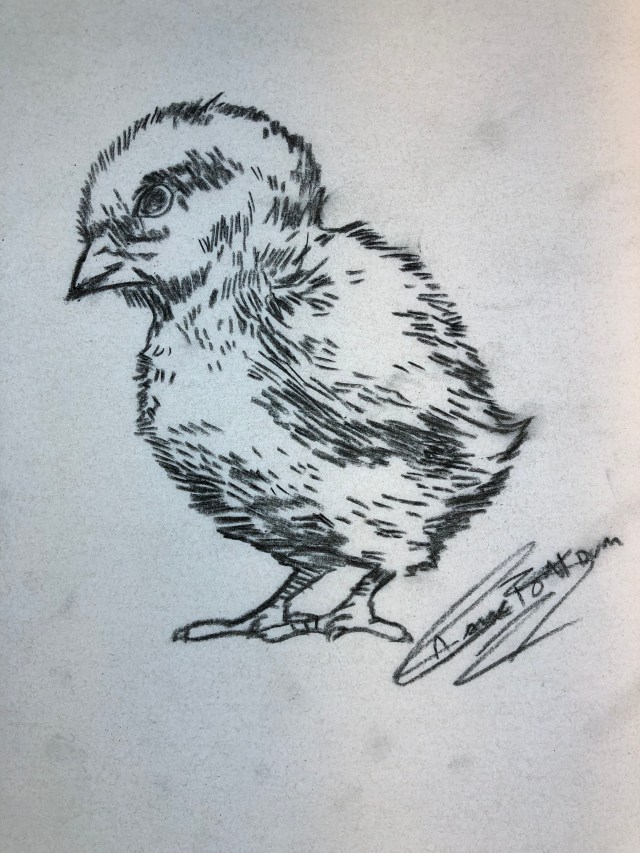
I was raised on a small farm in Castle Dale, UT. My first responsibilities as a child were to feed the chickens and gather the eggs. I began this task at 6 years of age. Each year we would purchase a variety of baby chicks from Murray McMurray hatchery. They would arrive at the post office on a scheduled day. I would wait with eager anticipation for this time. To me it was just like Christmas. My dad would let each of us pick out a chick that was “ours”. I would always name mine. I first experienced the remarkable human – animal bond with my chickens. I cried when they died. As a child, chickens became my favorite animal, and remain so until today.

Even though I spent my entire childhood around animals, I did not put much thought into becoming a veterinarian. In high school, I took an aptitude test. The test results suggested that I would not make a good veterinarian. I was not introverted. According to that particular test, I could not be successful as a veterinarian. Assuming that these tests were accurate, I pushed the veterinary idea out of my head and considered a law degree.

After I graduated from high school, I spent the next two years in Peru. I was immersed in a culture so much different from the one I was used to. It took nearly a year for me to adjust and to speak fluent Spanish. I remember walking down the street in Casma, Peru one day and seeing a group of men in the process of castrating a bull. It was a sight that I will never forget. They were beating the testicles with a large stick in an effort to destroy the testicular tissue and render the bull sterile. The brutality was sickening. I remember feeling so sorry for the bull.

That night I laid in bed thinking about why they would castrate a bull in such a barbaric fashion. I realized that perhaps that was the only way they knew how. Maybe they didn’t know any better. I decided at that moment that I would do all I could to teach these farmers a better way. Having a farming background, I was very familiar with animal husbandry and felt confident that I could help educate the farmers in this part of the world.

My first patient was a pig named Walter. He was a family pet that lived in a house in Casma. Walter had an attitude and his owners needed to have him castrated. I had a friend named Duilio Davelos that owned a pharmacy in town. I visited him and purchased some lidocaine, suture, iodine and alcohol. The procedure went flawlessly. Walter recovered very quickly. News spread of the event. Soon after, I began sending my free time on Monday’s castrating pigs. Farmers actually were open to learning. The supplies were very inexpensive and my services were free.

Next came chickens. Because of my time spent as a child taking care of baby chicks, I was able to teach basic poultry care and even help make incubators to boost production. I soon began helping with llama and alpaca herds. Soon, other curious Americans participated in this. In fact, a human dermatologist raised in Provo, UT had his first surgical experience South of Trujillo, Peru castrating pigs! It was very fulfilling to be able to help people out in this fashion. I felt like I was really accomplishing something. I was giving them something that would change the way they would treat their animals. No longer would they brutally castrate their animals without local anesthetic. They also knew how to surgically prep the skin, which eliminated so many post operative infections. I was helping people by helping their pets. It made me so happy.

As my time in Peru came to a close, I boarded a plane in Lima and headed back to the USA. As I sat in my seat, I reflected on the past two years. My thoughts kept returning to the animal services I rendered. It was in that moment, high in the air, that I decided to become a veterinarian. I landed in Utah, and a few weeks later began my first college classes. After 8 1/2 years or arduous study, my goal was reached and I became a veterinarian.

I often reflect on the decision I made. I look at how happy I am now. I love what I do. I love helping people by helping their animals. I have never had a boring day, nor have I ever regretted this career decision. I really feel like it is what I was meant to do.

So much in life happens by chance. I was fortunate to have my agricultural upbringing. It prepared me for the future. It is impossible to look forward and connect the dots of the random chances in our lives, but looking back, I can see it clearly.

I am glad that I had the chance to provide animal care in a far away place and how that opportunity led me down this remarkable path I am on today. I cannot imagine doing anything else.

And that is my take!

N. Isaac Bott, DVM

The Negative Review

My Take Tuesday: The Negative Review

When was the last time you heard of someone phone shopping for the price of their hysterectomy? Imagine being on the receiving end of such a phone call. As strange as it may sound, this is something that veterinary clinics deal with every single day.

Our policy at Mountain West Animal Hospital is not to give estimates for surgical procedures without first seeing a pet. Prices vary greatly with most medical care, especially surgery. Every animal is unique and individual. Prices vary on the need of each animal. Depending on health and condition some patients require different anesthesia, more care, different treatments to go home and so forth. There are myriads of variables that must be considered when providing an estimate for a surgical procedure and a thorough physical examination is required to provide such an estimate accurately.

Despite the misinformed general public perception, a “spay” is not a simple surgery. The ovaries are held in place, in close proximity to the kidneys, by a ligament. Arteries that branch from the aorta supply the blood to each ovary. Two additional arteries provide the blood supply to the uterus. Each of these 4 major arteries are ligated during a “routine” spay. This is a very invasive procedure. Despite this, the total cost to spay a 100 pound dog is still only around $300. In contrast, the total cost to perform an ovariohysterectomy (“spay”) on a 100 pound woman is about $40,000 – over one-hundred times as much!

As a veterinarian, I have always been interested in parallels between my profession and the human health care profession. While veterinarians, on some levels, seem to try to model what we do after “how it’s done in human medicine”, there are some things that I hope we will always do differently.

We have been able to keep our fees for most procedures relatively low compared to the same procedures in human medicine. The reasons for this difference are numerous, but in my opinion come down to mostly two things. The first is that we, as human patients, have become so dependent on insurance to cover our medical bills that we have removed competition from the equation.

Another major difference between veterinary medicine and human health care is the degree of specialization. Yes we do have a growing number of specialties in veterinary medicine, including surgeons, cardiologists, neurologists, dermatologists etc., etc., but for the most part, we as general practitioners, are still able to do what we feel we are capable and qualified to do. Therefore, we are able to treat most problems that arise in pets very efficiently and without having to refer our patients to a specialist for everything more severe than a laceration or an ear infection.

All to often in human medicine, many different specialty practitioners share in the care of a patient. As Dr. Bob Encinosa has observed, “One doctor takes care of Mary’s diabetes, while another takes care of her heart condition and yet another handles her dementia or her arthritis. It becomes very easy to overlook the question, “How is Mary?”

At Mountain West Animal Hospital, we provide individualized care. We strive to provide the best possible veterinary care for our patients by maintaining and utilizing state of the art facilities and equipment, and by employing and developing a well-trained competent and caring staff. We are dedicated to providing friendly, compassionate service to our clients in an atmosphere of professionalism, respect and concern. We advocate community and client responsibility in improving the welfare of animals. We seek to be a positive, contributing influence within the community we serve.

Unfortunately, occasional negative reviews are posted that reflect a lack of respect for our high standard of care and commitment to pets. If you appreciate our individualized care, I encourage you to provide a positive google review.

I feel that we have the best clients and patients out there. I consider myself blessed to work with such extraordinary people and to be able to help their beloved four-legged family members.

And that is my take!

N. Isaac Bott, DVM

Frank The Turtle

My Take Tuesday: Frank The Turtle

Third grade seemed to be a particularly creative time during my childhood. I remember sitting quietly in Mrs. Wikersham’s class at Castle Dale Elementary. As part of our daily routine, we would recite a poem each day. Most of the poems were short and simple and easy to remember. I still remember most of them verbatim. One of my favorites was about a little turtle, and it went like this:

“There was a little turtle.

He lived in a box.

He swam in a puddle.

He climbed on the rocks.

He snapped at a mosquito.

He snapped at a flea.

He snapped at a minnow.

And he snapped at me.

He caught the mosquito.

He caught the flea.

He caught the minnow.

But he didn’t catch me!”

I remember Mrs. Wikersham’s facial expressions vividly as she would teach us hand actions that went along with this poem.

A snapping turtle? It was something I could only dream about as a sheltered kid  in a small town.

I recently thought about Mrs. Wikersham’s class after receiving an unusual call.

Frank the turtle needed an examination and a health certificate before flying to a warmer state. His owner called and explained that she could not find a veterinarian that would look at her turtle before her afternoon flight.

I really don’t know much about exotic pets, I somewhat reluctantly agreed to see her and provide the needed travel paperwork.

I entered the exam room to see the cutest little turtle imaginable. His innocent eyes peered up at me as I held him in my hands. I quickly looked him over and filled out the needed paperwork.

I handed the paperwork to the client and wished her safe travels. I then reached down to pat Frank on the top of his shell. Without warning, Frank snapped the tip of my right pointer finger.

Immediately, pain shot up my hand and continued all the way up my arm.

“Ouch!!!” I exclaimed, “That really hurts!”

Bewilderment filled my eyes. I didn’t see this coming. Frank, it turns out isn’t quite as sweet as he appears.

He might have snapped at that mosquito and caught that flea,

But in the end, Frank the turtle also caught me!

And that is my take!

N. Isaac Bott, DVMIMG_2247 2

The Christmas Cactus

A960082C-768C-4CCB-8979-6FBE1656ECB3

The Christmas Cactus: I never did get to meet my paternal grandmother. Her name was Caroline Westover Bott. She died several years before I was born. I wish I could have gotten to know her. I have heard stories about her humorous personality and just how kind and sweet she was.

Her favorite plant was called a Christmas cactus. This plant  is a long lived plant with flat, segmented stems. Most of the year its appearance is fairly unassuming. It seems to be just a regular potted green in the corner of the living room.

Around Christmas, however, something magical happens.

With care, this plain looking plant will blossom with beautiful pink flowers. Because of this festive seasonal bloom, the Christmas cactus is a tradition in many European and North American homes during the holidays.

After my grandmother died, her husband and children continued to take care of her Christmas cactus.

Caring for this plant is much more intense than other common house plants. Despite its name, the Christmas cactus is not a desert plant, but rather has its origins in the tropical rain forests of South America.

In fall, night temperatures around 50-55 degrees will trigger Christmas cactus to form flower buds. A carefully monitored balance of darkness and sunlight will give you beautiful blooms in time for the holidays. My uncle Jerry faithfully took care of this plant year after year until he died this past year.

One of my favorite Christmas memories is setting around this plant on Christmas morning and opening presents. I will forever treasure this family time and the pleasant memories that remain.

Another unique feature of this segmented plant is its ability to propagate. By transplanting a cutting of at least three stem segments into a small pot of soil (preferably taken from the pot of the parent plant). At least one segment is then buried. With care and time the plant will take root.

A couple of years before my uncle Jerry passed away, he gave me a small transplant from this Christmas cactus that belonged to my grandma. As it brilliantly bloomed during this holiday season, I longed to spend time with my loved ones that have passed away. I am so grateful for this tangible legacy that will continue to live on and be passed on to my children. It is my own little piece of a holiday tradition that lives on all year long. I cherish my Christmas cactus and the family ties it symbolizes.

And that is my take!

N. Isaac Bott, DVM


The Charismatic Chameleon

FullSizeRender 44

My Take Tuesday: The Charismatic Chameleon

It was a beautiful spring morning on the Palouse. The beautiful rolling hills and contrasting colors make this region of the country so unique. As I left my apartment, I took a moment to bask in bright sun of this gorgeous brisk spring morning, permeated with the scent of recent rain. Songbirds filled the air with music that would thrill the greatest maestros, and warblers and finches flashed their dazzling colors in the bushes outside my apartment.

I was an excited 4th year veterinary student just weeks from graduation. As I drove to the veterinary school, I reflected on the past 4 years. A flood of memories entered my mind as I smiled and felt a sense of accomplishment, these were some of the most difficult years of my life and the end was in sight.

This particular weekend, it was my turn to take the emergency call at the veterinary teaching hospital. I had spoken extensively with classmates about what exactly to expect to present throughout the weekend. Each indicated that many dogs and cats would likely present with a variety of ailments. I fully expected to see a variety of routine cases dealing with the perfidious parasites, bothersome bacteria and mysterious maladies that present daily in the life of a veterinarian.

I was not prepared for what was to follow.

Throughout the weekend, a variety of cases presented, none of which were dogs or cats, and none of which I would ever consider routine.

The first case was a hairless rat. This was followed by a parakeet with a broken and bleeding blood feather. A raptor presented with a wing injury and a duck with a fish hook stuck in its bill.

Still another anomaly followed as a boa constrictor presented with a prolapsed cloaca.

At this point in my education, I had virtually no experience with exotic animals. I am terrified of snakes and absolutely did not know the first thing to do with a prolapsed cloaca. I barely knew what a cloaca was!

Fortunately, an exotic animal clinician was a phone call away and she was able to talk me through each case. I learned a lot as I treated each animal and did my best to make each owner and pet comfortable.

Just when I thought I had everything under control, a young woman walked through the front doors of the hospital caring a white box. Small circular 1” holes were cut in each side of the cardboard box.

“I have a chameleon that is sick,” she nervously said with obvious fear and concern in her voice.

I placed my face against the box and peered through one of the small holes. A huge eyeball was all that I could see. Its unflinching stare was somewhat startling.

“He is huge!”, I exclaimed.

“No he isn’t,” she replied, with her voice raising, “He is actually smaller than most.”

“I am sorry,” I replied, “I haven’t ever seen a real chameleon.”

“Oh great, go figure, not only do I have to deal with a student, but I lucked out and got one that clearly doesn’t know what he is doing!” She was clearly upset at this point, as she sighed and shook her head.

Assertiveness has its place, but it is not always a virtue when you are on the receiving end.

“I am sorry,” I began, “Although I am inexperienced, I will call someone that is very competent with chameleons and we will take care of him. I promise I will do my best.”

She seemed to calm down somewhat after this and handed me the white box. I carried the box into the treatment area and immediately opened the lid and peered in. The chameleon stood perched on a branch, clinging with each of its 4 feet. It’s deep green color mimicked the leaves that were placed throughout the box.

I gently removed the little guy and placed him in the glass aquarium type pen used to hospitalize reptilian patients.

Almost immediately, his deep greed color began to fade as he miraculously turned brown, almost identical to the ambience of his new surroundings.

I reached for the phone and dialed the number of the on call exotic expert. I immediately rattled off the details of the case (age, sex, presenting complaint, clinical signs and examination findings). I then explained that I had ZERO experience with this species and that I needed detailed instructions.

Her first question took me off guard.

“Is he pale?” she inquired.

Immediately, I thought to myself, “You’ve got to be kidding me!”

“I am not sure,” I replied. “He was green in his box and then he turned brown when I moved him into the hospital. Now he is looking like a mix of brown and gray.”

“How in the hell can you tell if a chameleon is pale?,” I inquired.

Fortunately, this clinician sensed the frustration in my voice and laughed. She was very patient as she began to explain exactly what I needed to look for.

She talked me through how to administer fluids to a reptile. This is accomplished differently that with other species. Instead of finding a vein and administering the fluids intravenously, they are administered in the common body cavity called the coelomic cavity. I spent the entire night treating this unique patient and monitoring its progress.

Somehow, the chameleon survived. I learned a great deal throughout the remainder of the weekend. Not a single dog or cat ever presented, but I gained confidence and experience with each of the exotic animals that continued to present.

But still to this day, I still have no idea how to tell if a chameleon is pale.

And that is my take!

N. Isaac Bott, DVM