
A Tragic Reminder: A Small Object Can Cost an Animal Its Life
A winter hat is an ordinary thing—something we wear, carry, or barely notice when it slips from our hands. Inside an animal’s enclosure, that same object can become a deadly hazard.
Fiona, the beloved hippopotamus at the Cincinnati Zoo, died after swallowing a knit hat that accidentally entered her habitat. According to the zoo’s account, a visitor tossed the hat into the air, where a ceiling fan caught it and sent it through an opening above the viewing windows. It was an accident, with devastating consequences.
The zoo later reported that a postmortem examination found the hat lodged deep in her small intestine, beyond the reach of its endoscopic equipment. Her anatomy and size left no viable surgical route to remove it.
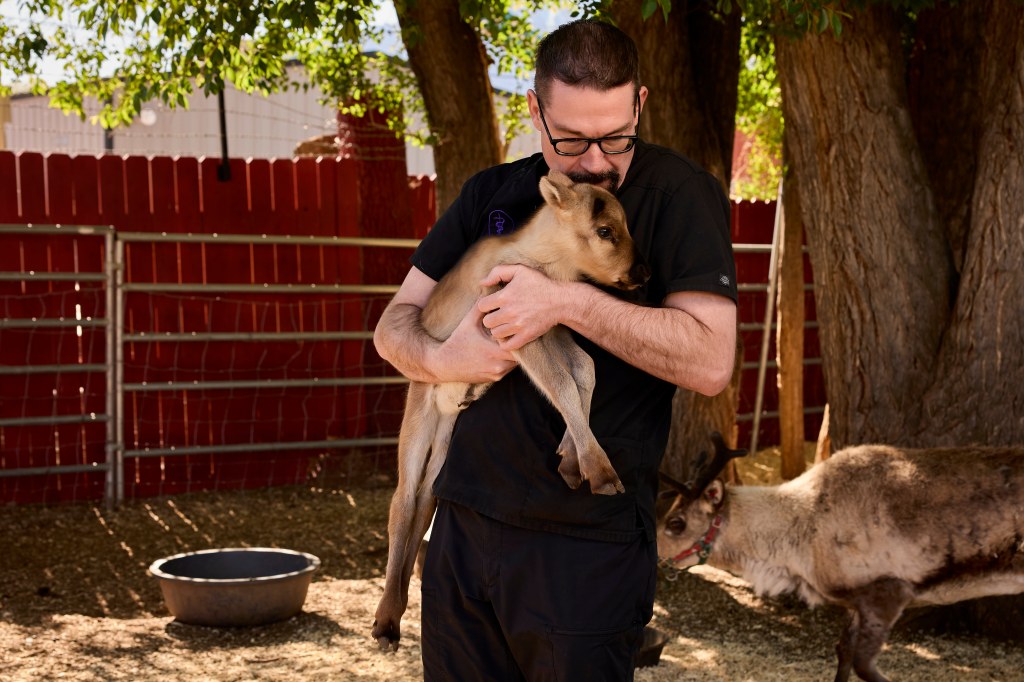
As a veterinarian who has spent years working with exotic animals, particularly reindeer, I find this loss deeply troubling. It brings me back to a warning I have shared with visitors to our own animals many times:
What doesn’t belong in an animal’s enclosure must stay out of it.
Anyone who spends time around reindeer soon learns how curious they are. A new object draws a nose, then a mouth. That curiosity is one of their most endearing qualities, but it also makes keeping loose belongings out of their reach especially important.
A glove dropped over a fence. A plastic bag carried by the wind. A toy tossed into a pen. A ribbon, a length of string, or a hat blown from someone’s head. None of these belongs where an animal can swallow it.
To us, it may be a misplaced possession. To an animal, it can become a life-threatening emergency.
We cannot rely on an animal to recognize which objects are unsafe to eat. Prevention has to happen before curiosity becomes ingestion.
A swallowed object can block the normal passage of digestive contents. Depending on the obstruction, it can also damage the intestinal wall, impair blood supply, or cause a perforation and life-threatening infection. These are medical emergencies, not simply cases of an animal eating something unusual.
An animal’s size offers no guarantee of protection. A small object can lodge where instruments cannot reach it, and a large body can make surgical access more difficult, not less. In Fiona’s case, the zoo’s findings showed just how limited the treatment options were.
Over the years, I have learned that some of the most important work in animal care happens long before an emergency: noticing a hazard, removing it, and helping others understand why it matters.
That responsibility is shared by caretakers, veterinarians, and everyone who stands on the visitor’s side of the fence.
Whether you are visiting a zoo, a farm, or a reindeer exhibit, a few simple precautions matter:
Secure your belongings. Keep hats, gloves, scarves, bags, and toys away from enclosure edges. Pay particular attention to anything a gust of wind could carry out of your hands.
Supervise children and follow the facility’s rules. Explain that nothing should be thrown into a habitat—not a toy, not a piece of litter, and not food. Offer treats only when the caretaker has specifically authorized them.
Report dropped objects immediately. If something falls into an enclosure, notify a caretaker. Do not wait to see whether the animal ignores it, and do not reach or climb past a barrier to retrieve it yourself.
With reindeer, I have learned never to dismiss something simply because it looks uninteresting to me. They notice changes in their surroundings. Their noses and mouths help them investigate, and an object we overlook may be the very thing that draws their attention.
Fiona’s story also reminds us of a painful truth about veterinary medicine: not every emergency has a solution.
An obstruction’s location, the animal’s anatomy, and the risks of an intervention can limit what is medically possible. A tragic outcome, by itself, does not tell us that a safe, effective treatment was available.
That is a difficult reality to face when an animal’s life is at stake. It is also why prevention deserves so much of our attention.
We can remember Fiona by taking that lesson seriously—not by assuming every accident can be avoided, but by reducing the risks within our control. These may seem like small acts of consideration, but an animal’s life may depend on them. Sometimes, the greatest kindness we can show an animal is simply keeping potential dangers on our side of the fence.
Secure your belongings. Supervise your children. Respect the barriers. Speak up when something falls inside.
N. Isaac Bott, DVM

