The Alpine Buttercup

IMG_7713

My Take Tuesday: The Alpine Buttercup

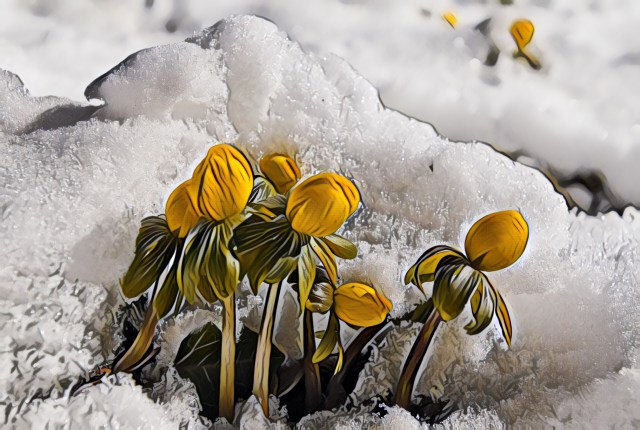
One of my favorite flowers is the Alpine Buttercup. Seen only by those who venture near or above the timberline, it follows the melting snow into the sunshine. In the early spring, it fights its way up through the cold hard earth. Along the snow banks high in the Rocky Mountains, this flower is the first to emerge, often blooming through the melting snow.

I have often wondered how this plant can be so hardy. Ranunculus acraeus is a plant of environmental extremes, hence the species name acraeus, meaning “on high”.

I often wonder what it would be like if we could switch roles with the buttercup. What if we could be as resilient as this small plant?

We would become this tender whitish-yellow chute. It hasn’t felt the suns warmth, the green is yet to come. This tender seedling pushes up through the cold hard ground.

The moment it emerges, it is subject to all of the dangers and injury that can befall anything alive and growing. A wandering deer passes by and steps on the tender plant and smashes it down. Yet, the chute pushes back up.

A hungry chipmunk discovers the plant and bites off its tender delicacy. Still out of it’s reservoir of power, the buttercup pushes up.

It struggles toward to the sun, despite the adversities that attack it.

Then one day it bursts into a tight yellow bud.

It affirms that underneath the old rotten layers of winter snow there is new good life.

My thoughts turn to an exchange in one of my favorite books, Edmond, who has suffered unspeakable torture and pain is addressing a young but courageous Albert. He says, “Life is a storm, my young friend. You will bask in the sunlight one moment, be shattered on the rocks the next. What makes you a man is what you do when that storm comes. You must look into that storm and shout… Do your worst, for I will do mine! Then the fates will know you as we know you.” (Alexandre Dumas, The Count of Monte Cristo)

The fleeting emotion we call happiness, is but a comparison of one state to another. And as such, those who have experienced extreme pain and grief, are most capable to experience supreme happiness.

Life is full of brambles and thorns. It has to be. There is no growth without challenge, and no challenge occurs without some level of uncertainty and presentation of incommodious circumstances.

A few years ago, during a severe winter storm, I passed a herd of bison standing in a large meadow on the side of the road. The storm was intense, with over 18 inches of accumulation in just a few hours. The bison, ironically, stood still in the middle of the meadow. In conditions that would kill entire herds of cattle, these majestic animals stand face first in the winter fury as the wind blows and the snow accumulates. They don’t turn their hindquarters into the wind, nor do they move with it. They stand and face the storms of life undaunted, stoic and valiant.

Perhaps we would do well to emulate the bison, as we face the uncertainties and challenges that we face in life. The storms of life will inevitably come, so why not face them? And face them with strength, determination, and power. Sure, it’ll feel uncomfortable at first, it may even be scary, but if we get comfortable with the feeling of being uncomfortable – that discomfort will begin to lessen.

I don’t know how long your storm will last or how intense it is. But I am confident we will all fare the storm better if we face it head on. Just breathe, put your head down and find a way through. We must have tough times to fully appreciate the good times that lie ahead.

Just like the Alpine Buttercup, we all contribute to the beauty of this world. We are an infinitesimal part of it. Still each of us, no matter how humble, no matter how lowly or simple, we all have a critical part to play.

We only must recognize our role and take it on.

Either we bloom, or we sadly wither away.

And that is my take.

N. Isaac Bott, DVM
Father’s Day

IMG_7397

My Take Tuesday: Father’s Day

The giant snowflakes gently fell in perfect rhythm. Even though it was 6:00 AM, I could see clearly through the winter whiteness.  This particular winter during the 1980’s in Castle Dale was incredibly harsh. Nearly 18” of snow had fallen over the past 24 hours. The field across the street from my parents house was covered in a thick blanket of white. I bundled up as I prepared to leave the house to do the morning farm chores.

My dad led the way as we headed across the street to the corals. The deep snow proved to be a challenge for my short legs. I jumped and lengthened my stride as I placed my feet inside my father’s footprints. As long as I followed his steps, the path seemed manageable

My dad is a giant of a man. I remember attending a Cub Scout pack meeting as a young boy. At this meeting, a plank was placed on the floor and a 16 penny nail was started in the center. A competition was held where all of the father’s in the room had a chance to hit the nail as hard as they could. Some were able to drive the nail in completely with 2 or 3 hits. When my dad’s turn came around, he buried the nail with a single swing of the hammer. I remember thinking how amazing that was! He could loosen old rusty bolts with a quick flick of his wrist, he could throw a bale of hay on top of a haystack and no one could use a shovel like him. In my eyes as a young boy, he seemed to be able to do anything. My dad has been my hero as far back as I can remember.

I remember a time where he had learned that a man living in town did not have a bed in his house to sleep on. My dad went and purchased a brand new bed with his own money and delivered it to this man that he didn’t even know. Years later, this man told me that this act was the kindest thing that anyone had ever done for him in his life. My dad taught me how to care for others less fortunate time and time again through his example.

Each summer, my dad would set aside time to take each of his five children camping with him individually. We would get to chose the destination of this one on one time. I remember the cold air and the damp grass. I remember the smell of the air. I remember eating Pringles and sitting by a campfire. I remember eating small boxes of Cocoa Krispies and catching fish.

Oh how I looked forward to my annual camping trip with dad! My favorite spot was in Upper Joe’s Valley. This overnight camping trip always provided an escape  from the every day chores and busy summer days.

Despite working 7-5 every day, somehow dad would find the time in his incredibly busy schedule to take each one of us individually every single year. This was dad‘s way of showing us how much he cared. Although he loved each of us equally, during these outings we all felt very special. I remember every single trip and I cherish these memories.

I remember one particular time when I was working at the cemetery. The volume of work there had overwhelmed me. There was so much to do and I couldn’t get it done. Dad, after working all day at a thankless and stressful job, came to the cemetery and cut the individual daisy flowers off of the dozen or so bushes in the flower bed. This tedious process took several hours. I was thankful that night, but now looking back, tears come to my eyes. I know how tired and worn out I am after working all day. How did he have the energy to do all that he did?

In today’s world fathers come and go. Having a stable father is a rarity. My dad was always there to work with us. I remember many times going out to the farm with dad and being so stressed I couldn’t function, and after a few hours of digging ditch anything that was bothering me would disappear. Growing up,  I was taught how to do good work and to be proud of my accomplishments. My dad did this, not by leaving a list of chores to be accomplished, but by working right there alongside us.

A statue on my dad’s dresser depicts a father with a small child sitting on his knee. The inscription reads, “Any man can be a father, but it takes someone special to be a daddy.” My daddy’s example was not lost on me. His unconditional love has inspired each of his 5 children to be the best that we can be.

As Father’s Day approaches, I still find myself trying to follow my father’s footprints in the deep snow. He is my constancy and my mentor, my rock and my friend. He is my hero!

Happy Father’s Day dad!

And that is my take!

N. Isaac Bott, DVM

Kissing a Camel

My Take Tuesday: Kissing a Camel

During the month of November a couple of years back, I had the opportunity to travel to Williams, AZ.

Nestled amongst the Ponderosa pines and Douglas-firs of Arizona’s Kaibab National Forest, Williams is a magical place this time of year. The Christmas season is already in full swing there. All of the restaurants along the historic Route 66, are decorated and lit up with colorful Christmas lights. The scenery is breathtaking and the atmosphere is most jovial.

Just 8 miles east of Williams you will find the Grand Canyon Deer Farm. Originally established in 1969, this exceptional educational treasure – owned and operated by Randy and Pat George since March 1987 – offers a terrific interactive animal experience for adults and children alike. Initially opened as a Deer Farm the business has expanded over the years and has now became a fully-fledged Petting Zoo with over 100 animals including; Bison, Camels, Goats, Llamas, Elk, Porcupines, Fallow Deer, Mule Deer, Reindeer, Coatimundis, Miniature Donkeys, A Zonkey, Pot Bellied Pigs and Wallabies.

While there, I performed two artificial insemination procedures on their female resident reindeer. We were also generously treated by Pat to a VIP experience with the animals. As  veterinarian, it will come as no surprise that I love animals. Spending time looking at different animals and watching their behavior is my favorite thing to do. The Grand Canyon Deer Farm is a unique experience, as it allows you to pet and feed myriads of these animals. My children especially enjoyed the up close interaction with the animals.

“Hey dad, I just kissed a camel!” Those were the first words I heard from my young daughter’s mouth as she came running up to me. The excitement in her voice made me pay attention. “You what? A camel?” I asked. “Yes dad,” she responded,  “You need to do it. Come here.”

The procedure is simple. Place a carrot in your mouth. Stand near the perimeter of the pen. Lean in gently. The camel will reach out and gentle take the carrot from your mouth. In the process, the camel’s lips will definitely touch yours! As camels do not have upper incisors, there is no danger of getting injured during this activity.

The months of June and July are a perfect time to visit the Grand Canyon Deer Farm this year. Baby fallow deer are being born and this summer they have something incredibly unique and special – a baby reindeer!

This is a place everyone should have on their bucket list. When visiting the Grand Canyon or even Las Vegas, making the trip to Williams to visit the Grand Canyon Deer Farm is definitely worth it!

And that is my take!

N. Isaac Bott, DVM


Freedom

15965930_741835979314312_5343828575993074771_n

My Take Tuesday: Freedom
 
As a child, I grew up in Castle Dale, Utah. My family had a small farm where we raised sheep, cattle and chickens. We had several pastures which we would rotate the sheep and feeder calves. It was always fun when we turned the animals into a new pasture. Their first response was to run and jump and frolic at their new found freedom. I experimented and found this behavior to occur even when they were moved to a smaller pasture. This behavior consistently would occur with what seemed to be only one requirement – wide open space. This freed them from their paradigm. They respond the same way with grass, mud and even snow. Wide open space makes them run and jump and seemingly find energy and happiness.
 
I find myself, all to often, enclosed in a self imposed corral whose fences limit progression and success. I built these barriers and dare not venture outside these boundaries, lest I be consumed by predators. I think many of us live out our existence in such a fashion. It feels safe. If we never risk anything, we seemingly will never lose anything.
 
I submit that it is far more dangerous for us to remain inside these fences, never challenging ourselves, never truly reaching our full potentials. This meandering in mediocrity knows no true success. As Mark Twain stated, “20 years from now you will be more disappointed by the things you didn’t do than by the ones you did”. No growth occurs without challenge, and no challenge occurs without some level of uncertainty and presentation of incommodious circumstances.
 
With that, I throw off the bowlines. I set sail away from the safe harbor with the intent of catching the trade winds in my sails. I stand on the edge of the bough, letting my toes hang over just a bit. It is time to explore, dream and discover……
 
And that is my take.
N. Isaac Bott, DVM
The Itch is On!


IMG_6996My Take Tuesday: Allergies – The Itch Is On!

Spring is a beautiful time of year at Mountain West Animal Hospital. As winter loses it overpowering grip, new life emerges. The smell of flowers, fresh green grass and the sound of birds chirping will invoke feelings of happiness in those yearning for warmer weather.

During springtime, a dichotomy of sorts is presented. While I love this time of year immensely, it’s arrival brings in the annual ritual of sniffling and sneezing,  a runny nose and itchy eyes. Atopy, the genetic predisposition to allergies, has plagued my family for generations. We all have severe allergies to grass, alfalfa and flowers.

While growing up, a rosebush outside my bedroom window would bloom beautifully this time of year. This rosebush brought me seasonal misery and debilitating symptoms and endless nights of wheezing, sniffing and itchy red eyes. I hated that rosebush! I remember having such severe attacks, that I would lay in bed with a cold washcloth over my eyes, unable to sleep or do anything productive. On the worst of these nights, I scribbled a journal entry at the height of allergy season that simply read, “Today more allergies, oh I hate them.”

I have sympathy for my veterinary patients that suffer from allergies. All to frequently, they present in complete disarray. Instead of the runny noses, itchy eyes, sneezing or wheezing allergies mean to many people, pet allergies typically show up as scratching, chewing, rubbing, head-shaking or severe ear infections. Often dogs present with bleeding paws and open sores all over their body. These lesions are caused by continuous scratching. This insatiable itch drives them crazy. Every waking hour they spend trying to scratch the itch away.

Allergies are by far the most common illness I see as a veterinarian. It is sad to see pets suffering so. When pets suffer, they are at least as miserable as we are — and likely much more.

With each case, we try to provide suggestions specific to your pet, your region and your season, but in general, you can help your pet a great deal with an allergy-prevention regimen in the home.

Concurrently, you can limit the amount of dust and other irritants pets sweep up in their coats by vacuuming and using electrostatic cleaning products (such as Swiffers) on floor surfaces as well as using room or whole house filtration systems. And while you may have heard that frequent shampooing strips the skin of essential oils, veterinary dermatologists now recommend bathing pets at least every week (up to everyday for extremely at-risk, allergic pets) during the spring and summer to help wash allergens off the coat and skin before they can be absorbed and trigger an allergic reaction. Spray-on products or wipes for a dry bath will often do the trick and may be a great deal easier than bathing for some dogs and almost all cats.

But it’s not just about airborne allergens or parasites: Pets suffer from food allergies as well. Allergy reactions to pet food are usually caused by proteins, and can include beef, egg, milk or cheese products, soy or even fish. If food allergies are suspected, your veterinarian will guide you through food-elimination trials to find the culprit, and recommend a diet that’s both nutritionally complete and contains pre-digested proteins. If your dog suffers from a food allergy but still needs to take medications, Greenies Pill Pockets Allergy Formula capsules may help. These are little pouches, made from peas and duck that put the treat into treatment, by providing a yummy pocket for a pill.

Please don’t let your pets suffer. Schedule an appointment and let’s work together to provide the life free of pain and suffering that each of your four-legged family members deserve.

With modern veterinary options and a world of new products to help, the pet with allergies can be managed better than ever before. And that means you and your pet will both sleep better, after you’ve ditched the itch.

And that is my take!

N. Isaac Bott, DVM

The Fragility of Life

IMG_6717

My Take Tuesday: The Fragility of Life

Just west of Castle Dale, Utah, the sky above Horn Mountain turns  a beautiful cinnamon on clear summer nights as the sun sets over the place I call home. These summer nights smell of freshly cut grass and alfalfa, of sagebrush and lilacs.

If you are heading west along Bott Lane, just past the tall poplar trees, lies a piece of ground that was homesteaded by my great-great grandfather. This piece of land has passed from generation to generation, from fathers to sons, and has always remained in my family.

On the east side of this piece of land, a silhouette of a Ford Tractor and a Hesston Hydroswing Swather were visible on many beautiful summer evenings during my childhood. On the tractor, sat my uncle Jerry Bott.

Jerry was a giant of a man. He stood over 6’4”. His gentle demeanor and kind heart were his most precious of character traits. His soft voice and carefully chosen words were never cross or unkind. At least two times every day, I would be able to greet my uncle as I would enter his house before milking our cows. He became my constancy, my anchor, as I grew from a small child into the man I am today.

On this particular night almost exactly 28 years ago, in 1990, my uncle Jerry was cutting the first crop of hay. The tall grass makes this cutting the most difficult on the equipment. Constant attention must be given to the rotating wheel and hay knives that were prone to clogging.

This time of year, hen Ringneck pheasants are on their nests. They sit so still that even the loud rumbling of a tractor and the ground tremors of the hay cutter leave her undeterred. Occasionally, these hens are injured or killed as they sit on their eggs. The nest, whether it be full of chirping hatchings or incubating eggs, is left to the merciless predators from the air and the nearby fortress of trees and Russian Olives that run along Cottonwood Creek.

As the sun faded behind the towering cliffs of Horn Mountain, I stood on my parents lawn, looking eagerly at the approaching two-toned tan GMC Sierra. My hero was coming home for the night.

As Jerry exited his truck, he held under his arm a brown paper grocery bag. His long stride headed towards me instead of his house across the street.

As he approached, he called my name.

“Isaac,” his low and gentle voice called, “I have something for you.”

He handed me the brown paper bag.

Inside, a green towel was wrapped gently around 8 medium sized olive colored eggs.

“These are pheasant eggs,” he continued, “and they need to be cared for.”

“Isaac, I know that you will do a good job at taking care of them.”

I looked in the sack as Jerry walked back across the street and into his house.

“How do you hatch pheasant eggs?”, I wondered as I entered my parent’s house.

My incubator was nothing special, just a Styrofoam box with a small heater inside. Knowing that peasant eggs incubate for 23 days, I set the temperature and humidity and carefully laid the eggs inside.

I faithfully turned the eggs three times a day for three weeks.

Somehow, the incubation was successful and the eggs all hatched out. The tan chicks had dark brown stripes that ran parallel along their backs.

I was overjoyed when I told my uncle Jerry about my accomplishment.

“Uncle Jerry,” I exclaimed, “I did it! The eggs hatched!”

“That is great!”, he responded, “Isaac, I knew you could do it.”

His response and validation filled my system with light and my soul with joy.

The world with all of its power and wisdom, with all the gilded glory and show, its libraries and evidence, shrink into complete insignificance when compared to the simple lesson of the fragility and value of life that my uncle Jerry taught me that warm summer evening.

Over the years, uncle Jerry repeated this phrase to me. As I graduated high school, college and eventually veterinary school, his reassurance illuminated my understanding of my potential and his unwavering love and support.

Heroes cease to exist in two ways, either through disappointment or death. If you are lucky, the later is the case.

My sweet uncle Jerry passed away in late 2016. His loss left a tear in the eye and a hole in the heart of all my family members.

There are days that change the times and there is a time to say say goodbye.

There is a place beyond the clouds, in the cinnamon sky to the west of Castle Dale, where a precious angel flies.

Somethings never change.

Yet, there are things that change us all. This experience changed me.

My uncle Jerry’s lesson, from long ago, was not lost on me.

Each and every day, I remember the precious value of life, as I attend to my four legged patients.

As lives are saved and others are lost, I remember how important it is for someone to take initiative and to tend to the responsibility to care for the helpless and those without a voice.

This is a lesson my dear uncle Jerry so effectively showed me how to apply and live, and it is a responsibility I take most sacredly.

And that is my take.

N. Isaac Bott, DVM
The Parsimonious Pyometra

FullSizeRender 62

My Take Tuesday: The Parsimonious Pyometra

Apart from preventing unwanted pregnancy, routine spaying of female dogs has been historically recommended for two reasons: 1) Reduce the incidence of mammary cancer, and 2) Prevent the female from developing pyometra later in life. This is caused by a bacterial infection of the uterus resulting in a potentially fatal infection.

The word pyometra can be divided into two root words: Pyo meaning pus and Metra referring to the uterus. A pyometra starts after a dog goes through a heat cycle, usually within about 2 to 5 weeks. A pyometra develops due to repeated prolonged exposure of the estrogen-primed uterus to progesterone (estrogen increases the number of progesterone receptors in the endometrium). Female dogs are prone to uterine disease due to the unique nature of cycling in this species. As infection develops in the uterus, the uterus fills with pus. The most common bacteria isolated in these cases is E coli. The uterus with a pyometra can be huge! I have surgically removed an infected uterus weighing over 11 pounds from a 56 pound Golden Retriever.

The clinical signs associated with this disease are anorexia, depression, drinking and urinating more frequently, abdominal distention, and sometimes a vaginal discharge is noted. Vomiting and diarrhea may also be present, especially late in the course of the disease. If any of these clinical signs are noted in your pet – immediate veterinary consultation is imperative.

Females that develop pyometra have an underlying condition called cystic endometrial hyperplasia. Most intact females older than 5-6 years have some degree of this. The vast majority of cases are treated by removing the infected uterus and ovaries. This surgery is very difficult and much more expensive than a traditional spay. There are many more post-operative complications that may arise that are not associated with a routine spay.

These include:

Peritonitis – infection of the abdomen

Disseminated intravascular coagulation – a clotting disorder that is often fatal

Sepsis – occurs when chemicals released in the bloodstream to fight an infection trigger inflammation throughout the body. This can cause a cascade of changes that damage multiple organ systems, leading them to fail, sometimes even resulting in death.

It is simple to avoid this. Females not intended for breeding should be spayed at a young age. Females used for breeding should be closely monitored by both the owner and the veterinarian.

If you are hesitant to spay your pet because of the cost of the routine surgery, you must consider the cost of an emergency pyometra surgery also. Such a surgery is at least 3-5 times higher than what a routine spay would be.

At Mountain West Animal Hospital, we discuss both the benefits and detriments of routine spays and neuters and strive to help you make the best decision for the health and well-being of your individual pet. You can count on us as a trusted partner in the care of your four legged family member.

And that is my take.

N. Isaac Bott, DVM
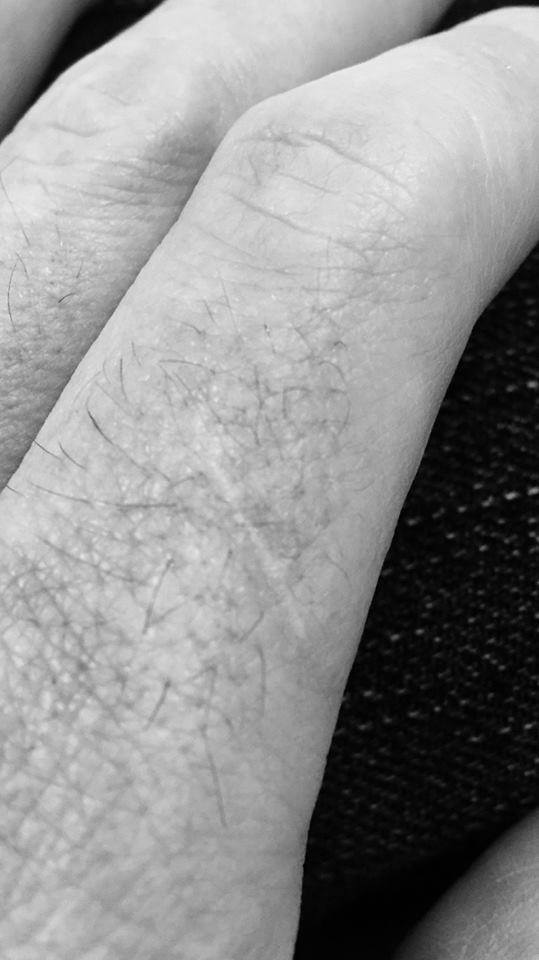
Doc, whatever she has, I’ve got the same thing too!

FullSizeRender-3


My Take Tuesday: “Doc, whatever she has, I’ve got the same thing too!”

Animals and people dictate what happens every day for me. Simple routine appointments can turn out to be complex once the unpredictable yet potent potion of human personality is added to the mix.

A few months back an elderly woman came in to the clinic. Her cat had been suffering for weeks with non-stop itching. As I examined the cat I noticed that this itch was insatiable. The poor cat had scratched and irritated nearly every inch of its body in an effort to satisfy the intense itch. The scratching was so intense, that nearly her entire body was covered with bleeding sores.

A diagnosis of mites was made after taking a skin scrape and looking at it under a microscope. This particular mite is elusive and difficult to find even for the most experienced veterinary dermatologists. However, it is highly contagious.

As I began speaking with the owner about the severity of the diagnosis and the need for immediate treatment, I could tell that her mind was wandering. She was clearly not focusing on what I was saying. I politely asked if I had said something that did not make sense or if she had any questions. Often, the open ended questions will allow a client to discuss their concerns, however, I was not prepared for what happened next.

“Doc, do you think I have what she has?”, her voice was inquisitive. “Excuse me?”, I replied, “What do you mean?” Before I could say another word, this elderly woman dropped her pants. Literally right to the floor. Her legs were covered in large red lesions. They actually looked like checker boards. I learned that day, albeit involuntarily, what “granny panties” look like.

I am easily embarrassed, and when this happens my face turns a deep red. I stammered, “I…. I’m… a… I am sorry ma’am, you will have to go to your doctor for that”. The beet-red shade on my face persisted even after I exited the room.

As crazy as this may seem, I have had worse things happen while going about my daily appointments. However, those are saved for another My Take Tuesday.

My job is never boring. The two legged creatures that come in keep it from ever being so.

And that is my take.

N. Isaac Bott, DVM
My First Surgery


My Take Tuesday: My First Surgery

I was raised on a small farm in Castle Dale, UT. We raised Guernsey milk cows, Suffolk sheep and many varieties of chickens and pheasants. My daily chores included feeding the chickens and gathering the eggs.

One day after school, I walked into the barn that housed the chickens. The barn was divided into three equal rooms. The first room is where we would store stacked straw bales. The second and third rooms were where the chickens and pheasants were kept.

On this particular day, I found our calico cat nestled with her newborn kittens. She was lying right next to the straw stack, on the ground near the chicken coop door. There were seven in all. As an 8 year old, and still to this day, new babies of any kind are an exciting experience. I dropped down and began counting the tiny kittens. I was so thrilled! As I handled the small kittens, I noticed that something wasn’t quite right. The umbilical cord from one of kittens was wrapped tightly around a leg of each of the kittens. If I picked one kitten up, the entire litter would follow as if they were chained together. I tried to remove the cord with my fingers, but it was far too tight. Even as a little kid, I knew that something had to be done.

In Castle Dale at this time, we did not have a veterinarian. The only veterinary services available were on Thursdays when a veterinarian would travel from Richfield. It was early afternoon, so my dad was not going to be home from work for a couple of hours. I had to figure something out for myself.

I reached in my pocket and pulled out my Swiss Army knife. It was one that had a myriad of blades, nearly all of them never used, and a tooth pick and small set of tweezers in the handle. I opened the smallest cutting blade and bent down. I very carefully cut the umbilical cords from each of the kittens. I used some iodine to keep the procedure as clean as possible.

The procedure was a success. All of the kittens survived.

Fortunately, I no longer use my Swiss Army knife for surgeries. Although my surgical skills have been refined and perfected, I still have the curiosity and passion that that 8 year old displayed. I love being a veterinarian. The satisfaction I felt that day long ago is repeated every time I am able to help save a life.

I look back on my first surgical experience with fondness. It was one of the important milestones in my path to becoming who I am today.

And that is my take!

N. Isaac Bott, DVM

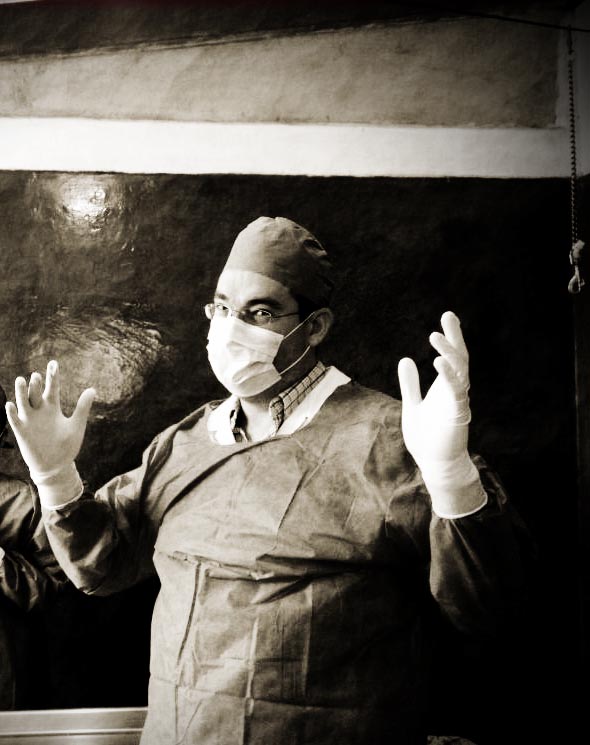
Pictured is Dr. Bott with kittens in 1988

The Red Handkerchief

My Take Tuesday: The Red Handkerchief

As a veterinarian, I all to often find myself in precarious situations.

Upon graduating from veterinary school in 2009, I moved back home here to Utah. My first job out of school was right here in Utah County.

It was not unusual for me to be called to attend a dozen or more lame and injured cows on a particular day. You might arrive to find them in a paddock with no sorting pen and therefore no means of restraining them for treatment. What are you going to do? Unfortunately, farmers often have the attitude that you’re the vet, they’ve called you out to do the job, so they expect you just to get to it. Often these cattle facilities left much to be desired. A few broken palates, some bent powder river panels and a welded together squeeze chute constitute pretty decent working conditions.

Usually some unsatisfactory compromise could be sorted out which would reinforce the fact that you were not half as good as their old vets.

Max was no exception. He stool 6’1″ and was as skinny as a bean pole. He always had a runny, drizzly nose, and he kept a red handkerchief in the front pocket of his bib overalls. Max didn’t want a new young vet working on his cows. He was used to the old school way, and had no reason to change.

I was greeted on one of these farm visits by this familiar refrain: “We used to use old Doc SoandSo. Have you heard of him? Best dairy vet in the county. Of course, you’re new and not used to dealing with dairy cows down here are you?”

Perhaps I am unduly sensitive, but being told you’re second best before you’ve even begun is either irritating or depressing—depending on how your day has been. This day tipped more toward the irritating side.

Suzy was the name of his milk cow. She was a tall Holstein crossbreed cow. On this particular day, Miss Suzy stood in the knee deep pasture staring at us as we entered the field. She was swollen up like an engorged wood tick. The left side her stomach protruding so far that she was as wide as she was long. The diagnosis, even from afar was obvious. She was bloated.

Bloat is a digestive disorder characterized by an accumulation of gas in the first two compartments of a ruminant’s stomach (the rumen and reticulum). Production of gas (primarily carbon dioxide and methane) is a normal result of fermentation processes. The gas is usually discharged by belching (erutication) but, if the animal is unable to remove the excess gas, pressure builds up in the rumen-reticulum exerting pressure on the diaphragm which prevents the animal from inhaling, and bloat occurs. The most common type of bloat is frothy bloat where gas builds up in a foam or froth above the rumen contents and the normal belching is inhibited.

Imagine a 40 gallon tub of partially digested green stomach contents. The pressure of this stomach is such that when it is alleviated, it is similar to popping a balloon, this disgusting smelly concoction will spew in a fashion similar to the Old Faithful Geyser.

Before we could even isolate her in the corner to begin treatment, Max decided he needed to blow his nose. As he pulled out his bright red handkerchief, he flipped it with his wrist and positioned it to evacuate his proboscis. Suzy caught sight of this red temptation and came charging full speed – like a freight train – straight for us. She was bellowing and blowing snot in a fit of rage.

In a situation like this, it doesn’t matter how quick you are. The only relevant assessment of speed is how fast you are in relation to the other person in the pasture. I figured I could beat Max to the gate, but would feel guilty in so doing.

I braced myself for the impact. Max yelled, “Hey Now!”

Suzy collapsed just steps before she reached us. The massive pressure caused by the bloat had cut off her air supply. She lay in a heap in front of us.

The treatment for bloat in a case like this is to relieve the pressure as fast as possible. An incision in made through the left side of the abdomen and the rumen is decompressed. In a situation like this, you only have a few seconds to act. My surgical instruments were in my tool box over by the gate. I knew there wasn’t time to retrieve them.

I reached in my pocket and pulled out my Old Timer pocket knife. I made a quick incision with the sharp point. Immediately, air began spewing out. It sounded like removing a valve stem from a car tire. It whistled as the massive stomach returned to normal size. Shortly thereafter, Miss Suzy was back on her feet and back to her normal self.

As I prepared to leave, Max commented, “Hey Doc, I guess you are alright after all.”

Max then pulled out the red handkerchief and blew his nose as he inquired, “How much do I owe you?”

And that is my take!

N. Isaac Bott, DVM