Tempus Fugit

1382419_10152088664378640_1620565877_n

My Take Tuesday: Tempus fugit

This May marks 10 years since my graduation from veterinary school. I can’t believe how fast time has flown by! 

Over the course of the past ten years, I have many accomplishments that I am proud of. It has been a most remarkable journey. I have performed veterinary work in 8 countries, 21 US states, performed reproductive work on 39 different species, seen over 50,000 small animal appointments and built a successful veterinary practice.

It seems like just last week when I was saying farewell to some of my dearest friends and colleagues. Members of my class have traveled all over the world and have already left an impressive mark on the field of veterinary medicine. Many have completed residences and internships. Some are clinical pathologists, oncologists, zoo veterinarians, cow calf specialists, internal medicine and equine specialists, mixed animal practice owners, epidemiologists and USDA food supply veterinarians. 

I am fortunate to have spent my veterinary school years surrounded by such exceptional people. Looking back at my journey, I never would have imagined what the first decade  would entail. I have been knocked down several times, but have tried to get back up and move forward. Each struggle has been followed by myriads of opportunities. Timing and chance have tremendous bearing on each of our lives and careers. I have had successes and experiences that were not in my wildest dreams when I graduated. 

I cannot think of a profession that is more rewarding. I have had the opportunity to travel to many far away places to share some of the successes I have had with today’s veterinary students. I very much enjoy the opportunity to do this. I always encourage students to be different and to follow their hearts. My advice to them is to always seek self-discovery and self-improvement. There is very little satisfaction when comparing oneself to others. So much time is wasted when trying to be better than someone else. The true test of success is measured when looking at your own improvement and progress. Are you better than you used to be? If you focus on being your best-self your potential is unlimited. When using others as a comparison, there will always be someone bigger, better or stronger. 

Each of us are unique. Look at your thumb. Your thumbprint is a testament to your uniqueness. Your individual thumbprint is different than any of the billions of individuals that are alive today. No one ever has, or ever will have the same thumbprint. Your identity is as unique as your thumbprint. Your perspective and personality are not shared by any other person. These traits are arrows in our quiver of individual contribution. Why is it so difficult to acknowledge this? Self awareness is the key to harnessing and honing this uniqueness in an effective fashion. As we become self aware, we are able to visualize, assess, nock, draw back and place a precise arrow in the bullseye of our desired target.

Thank you to my many mentors who have guided me and made me what I am today.

I look forward with optimism at the journey ahead. I have found my passion. I love what I do.

And that is my take!

N. Isaac Bott, DVM
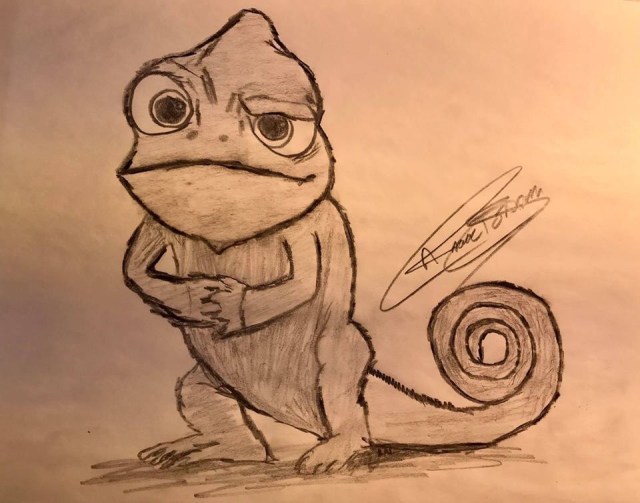
The Charismatic Chameleon

My Take Tuesday: The Charismatic Chameleon

It was a beautiful spring morning on the Palouse. The beautiful rolling hills and contrasting colors make this region of the country so unique. As I left my apartment, I took a moment to bask in bright sun of this gorgeous brisk spring morning, permeated with the scent of recent rain. Songbirds filled the air with music that would thrill the greatest maestros, and warblers and finches flashed their dazzling colors in the bushes outside my apartment.

I was an excited 4th year veterinary student just weeks from graduation. As I drove to the veterinary school, I reflected on the past 4 years. A flood of memories entered my mind as I smiled and felt a sense of accomplishment, these were some of the most difficult years of my life and the end was in sight.

This particular weekend, it was my turn to take the emergency call at the veterinary teaching hospital. I had spoken extensively with classmates about what exactly to expect to present throughout the weekend. Each indicated that many dogs and cats would likely present with a variety of ailments. I fully expected to see a variety of routine cases dealing with the perfidious parasites, bothersome bacteria and mysterious maladies that present daily in the life of a veterinarian.

I was not prepared for what was to follow.

Throughout the weekend, a variety of cases presented, none of which were dogs or cats, and none of which I would ever consider routine.

The first case was a hairless rat. This was followed by a parakeet with a broken and bleeding blood feather. A raptor presented with a wing injury and a duck with a fish hook stuck in its bill.

Still another anomaly followed as a boa constrictor presented with a prolapsed cloaca.

At this point in my education, I had virtually no experience with exotic animals. I am terrified of snakes and absolutely did not know the first thing to do with a prolapsed cloaca. I barely knew what a cloaca was!

Fortunately, an exotic animal clinician was a phone call away and she was able to talk me through each case. I learned a lot as I treated each animal and did my best to make each owner and pet comfortable.

Just when I thought I had everything under control, a young woman walked through the front doors of the hospital caring a white box. Small circular 1” holes were cut in each side of the cardboard box.

“I have a chameleon that is sick,” she nervously said with obvious fear and concern in her voice.

I placed my face against the box and peered through one of the small holes. A huge eyeball was all that I could see. Its unflinching stare was somewhat startling.

“He is huge!”, I exclaimed.

“No he isn’t,” she replied, with her voice raising, “He is actually smaller than most.”

“I am sorry,” I replied, “I haven’t ever seen a real chameleon.”

“Oh great, go figure, not only do I have to deal with a student, but I lucked out and got one that clearly doesn’t know what he is doing!” She was clearly upset at this point, as she sighed and shook her head.

Assertiveness has its place, but it is not always a virtue when you are on the receiving end.

“I am sorry,” I began, “Although I am inexperienced, I will call someone that is very competent with chameleons and we will take care of him. I promise I will do my best.”

She seemed to calm down somewhat after this and handed me the white box. I carried the box into the treatment area and immediately opened the lid and peered in. The chameleon stood perched on a branch, clinging with each of its 4 feet. It’s deep green color mimicked the leaves that were placed throughout the box.

I gently removed the little guy and placed him in the glass aquarium type pen used to hospitalize reptilian patients.

Almost immediately, his deep greed color began to fade as he miraculously turned brown, almost identical to the ambience of his new surroundings.

I reached for the phone and dialed the number of the on call exotic expert. I immediately rattled off the details of the case (age, sex, presenting complaint, clinical signs and examination findings). I then explained that I had ZERO experience with this species and that I needed detailed instructions.

Her first question took me off guard.

“Is he pale?” she inquired.

Immediately, I thought to myself, “You’ve got to be kidding me!”

“I am not sure,” I replied. “He was green in his box and then he turned brown when I moved him into the hospital. Now he is looking like a mix of brown and gray.”

“How in the hell can you tell if a chameleon is pale?,” I inquired.

Fortunately, this clinician sensed the frustration in my voice and laughed. She was very patient as she began to explain exactly what I needed to look for.

She talked me through how to administer fluids to a reptile. This is accomplished differently that with other species. Instead of finding a vein and administering the fluids intravenously, they are administered in the common body cavity called the coelomic cavity. I spent the entire night treating this unique patient and monitoring its progress.

Somehow, the chameleon survived. I learned a great deal throughout the remainder of the weekend. Not a single dog or cat ever presented, but I gained confidence and experience with each of the exotic animals that continued to present.

But still to this day, I still have no idea how to tell if a chameleon is pale.

And that is my take!

N. Isaac Bott, DVM
Don’t worry Doc, he won’t bite

My Take Tuesday: Don’t worry Doc, he won’t bite

“Don’t worry Doc, he won’t bite.” 

If ever a red flag was raised, these simple words would surely do it. I worry every time I hear the phrase. It reminds me of the required vet school class that covered the autonomic nervous system. The fight or flight impulse is part of that system. And in most cases, the fight response prevails. Invariably, when someone says this, I am going to be bitten.

It was a routine appointment, simple annual vaccinations. It should have gone smoothly.

As I administered the last vaccination, all seemed to be going smoothly. When all of the sudden, this unseeingly sweet little dog became, without warning, a biting, raging canine tornado.

This form of aggression can be defined by the word “IATROGENIC”. The definition of this fancy word is simple, it was caused by ME. This little guy was furious, and come hell or high water, he was going to let me have it.

His attack was swift. He had sunk his teeth deep into my left hand. I instinctively pulled back as he loosened his grip. I thought for a brief moment that it was over, but before I could remove my hand, he chomped down a second time.

Blood poured from my lacerated fingers.

The owner looked up, shook her head, and said, “Come to think of it, he did that to the last vet also.”

“Gee thanks,” I muttered.

If anyone ever tells you, “Don’t worry, he won’t bite.”

Take it from me – BEWARE!

You are about to be bitten!

And That is My Take

N. Isaac Bott, DVM

Airport Security

13600293_636620396502538_1658534798890608176_n

My Take Tuesday: Airport Security

They say hindsight is 20/20. Looking back, it was clearly a mistake.

I hurriedly prepared my luggage, assuring that everything would fit in a carry on. I have a perfect record, in all of my travels I have never had my luggage lost. Taking a single carry-on bag is the only way to assure your luggage gets to your destination on international flights.

The destination this trip, was the Philippines, and it was my first trip to Asia. I had been called to travel there to assist in establishing both Water Buffalo and deer reproduction programs in this far away country.

I placed my required instruments, long forceps and miscellaneous items used for freezing semen delicately in my bag. The last piece of equipment was something called an electro-ejaculator.

In the practice of veterinary medicine, it is common to collect semen from domestic ruminants using electro-ejaculation.

This instrument is an electric probe that is inserted into the rectum of an animal, adjacent to the prostate gland. The probe delivers an AC voltage, usually 12–24 volts. The probe is activated for 1–2 seconds, referred to as a stimulus cycle. Ejaculation usually occurs after 2–3 stimulus cycles. The instrument fits in your hand and runs on a traditional 9 volt battery, the exact battery most smoke alarms use. It is a valuable tool when collecting semen from agricultural and wild animals.

It fit, without a problem, in my suitcase.

Salt Lake City International Airport was busy on this particular day. The lines extended over the sky bridge and nearly to the parking garage.

I passed through the metal detector and my bag went through the usual belt driven scanner. As I waited for my bag to come out, the operator of the scanner lowered his head and spoke into his mouthpiece. What he said was inaudible, but the response it triggered was anything but quiet.

I was circled by at least 10 TSA agents and hurried off to the far right end of the security entrance. If there ever was a suspicious item, this was it.

A tall gruff man asked, “Sir, do you have any prohibited items in your bag?”

Now clearly, they know the answer to this question before they ask it. On a prior trip, I had left a small pocket knife in my bag. They asked the same thing, and I had completely forgot it was in my bag. My answer then was, “I don’t’ think so?” Fortunately, they allowed me to mail my pocket knife home and the delay was minimal.

Clearly today it was not going to be as easy.

“I have a medical device called an electro-ejaculator in my bag”, I tried to explain. One of the TSA workers removed the device. Clearly red flags were raised, and rightly so. Here is an electronic device with a push button, a red light and metal tongs protruding from the probe. The gruff man demanded, “What is this and why do you have it?”

“It is used to collect semen from animals,” I explained, “you insert this end in the rectum and push this button. It then applies current over the prostate, and ejaculation occurs.”

The gruff man’s face went from viable anger to disgust in less than two seconds.

“What? Ewwwww!!! Are you serious?”, he continued, “Why would you ever do that to an animal?”

“I am a veterinarian”, I explained, “And my expertise is in animal reproduction.”

“Man kid, I thought my job was tough,” he replied, laughing this time.

Fortunately for me, the device was labeled as such and my story was collaborated. I was allowed to pass.

En route to Manila, we stopped in Narita, Japan. Even though it was just a connecting flight, I had to pass through a security line once again before continuing on to the Philippines. Once again, a huge mess unfolded as I tried to explain in English why I would have such a dangerous looking device in my bag.

There are a couple dozen airport security officers around the world who now know, albeit unwillingly, what an electro-ejaculator is and how it is used.

After an eventful and productive stay in the Philippines, I entered the airport in Manilla, excited to be going home. As I stepped up to the counter, the ticket agent asked, “Sir, do you have any bags you would like to check?”

“Yes, I sure do”, I quickly replied.

I made my way to the gate and sat down to await my flight. I was relieved that I didn’t have to once again explain what was in my luggage. It appeared my trip home would be uneventful.

All of the sudden, over the loud speaker I hear the following announcement, “Passenger Nathan Isaac Bott, please report to the security desk immediately!”…………

And that is my take.

N. Isaac Bott, DVM

The Fragility of Life

IMG_6717

My Take Tuesday: The Fragility of Life

Just west of Castle Dale, Utah, the sky above Horn Mountain turns  a beautiful cinnamon on clear summer nights as the sun sets over the place I call home. These summer nights smell of freshly cut grass and alfalfa, of sagebrush and lilacs.

If you are heading west along Bott Lane, just past the tall poplar trees, lies a piece of ground that was homesteaded by my great-great grandfather. This piece of land has passed from generation to generation, from fathers to sons, and has always remained in my family.

On the east side of this piece of land, a silhouette of a Ford Tractor and a Hesston Hydroswing Swather were visible on many beautiful summer evenings during my childhood. On the tractor, sat my uncle Jerry Bott.

Jerry was a giant of a man. He stood over 6’4”. His gentle demeanor and kind heart were his most precious of character traits. His soft voice and carefully chosen words were never cross or unkind. At least two times every day, I would be able to greet my uncle as I would enter his house before milking our cows. He became my constancy, my anchor, as I grew from a small child into the man I am today.

On this particular night almost exactly 28 years ago, in 1990, my uncle Jerry was cutting the first crop of hay. The tall grass makes this cutting the most difficult on the equipment. Constant attention must be given to the rotating wheel and hay knives that were prone to clogging.

This time of year, hen Ringneck pheasants are on their nests. They sit so still that even the loud rumbling of a tractor and the ground tremors of the hay cutter leave her undeterred. Occasionally, these hens are injured or killed as they sit on their eggs. The nest, whether it be full of chirping hatchings or incubating eggs, is left to the merciless predators from the air and the nearby fortress of trees and Russian Olives that run along Cottonwood Creek.

As the sun faded behind the towering cliffs of Horn Mountain, I stood on my parents lawn, looking eagerly at the approaching two-toned tan GMC Sierra. My hero was coming home for the night.

As Jerry exited his truck, he held under his arm a brown paper grocery bag. His long stride headed towards me instead of his house across the street.

As he approached, he called my name.

“Isaac,” his low and gentle voice called, “I have something for you.”

He handed me the brown paper bag.

Inside, a green towel was wrapped gently around 8 medium sized olive colored eggs.

“These are pheasant eggs,” he continued, “and they need to be cared for.”

“Isaac, I know that you will do a good job at taking care of them.”

I looked in the sack as Jerry walked back across the street and into his house.

“How do you hatch pheasant eggs?”, I wondered as I entered my parent’s house.

My incubator was nothing special, just a Styrofoam box with a small heater inside. Knowing that peasant eggs incubate for 23 days, I set the temperature and humidity and carefully laid the eggs inside.

I faithfully turned the eggs three times a day for three weeks.

Somehow, the incubation was successful and the eggs all hatched out. The tan chicks had dark brown stripes that ran parallel along their backs.

I was overjoyed when I told my uncle Jerry about my accomplishment.

“Uncle Jerry,” I exclaimed, “I did it! The eggs hatched!”

“That is great!”, he responded, “Isaac, I knew you could do it.”

His response and validation filled my system with light and my soul with joy.

The world with all of its power and wisdom, with all the gilded glory and show, its libraries and evidence, shrink into complete insignificance when compared to the simple lesson of the fragility and value of life that my uncle Jerry taught me that warm summer evening.

Over the years, uncle Jerry repeated this phrase to me. As I graduated high school, college and eventually veterinary school, his reassurance illuminated my understanding of my potential and his unwavering love and support.

There are days that change the times and there is a time to say goodbye. My sweet uncle Jerry passed away in late 2016. His loss left a tear in the eye and a hole in the heart of all my family members.

There is a place beyond the clouds, in the cinnamon sky to the west of Castle Dale, where a precious angel flies.

Somethings never change. Yet, there are things that change us all. This experience changed me.

My uncle Jerry’s lesson, from long ago, was not lost on me.

Each and every day, I remember the immense value of life, as I attend to my four legged patients.

As lives are saved and others are lost, I remember how important it is for someone to take initiative and to tend to the responsibility to care for the helpless and to speak for those without a voice.

This is a lesson my dear uncle Jerry so effectively showed me how to apply and live, and it is a responsibility I take most sacredly.

And that is my take.

N. Isaac Bott, DVM

The Itch Is On!

IMG_6996
My Take Tuesday: Allergies – The Itch Is On!
 
Spring is a beautiful time of year at Mountain West Animal Hospital. As winter loses it overpowering grip, new life emerges. The smell of flowers, fresh green grass and the sound of birds chirping will invoke feelings of happiness in those yearning for warmer weather.
During springtime, a dichotomy of sorts is presented. While I love this time of year immensely, it’s arrival brings in the annual ritual of sniffling and sneezing, a runny nose and itchy eyes. Atopy, the genetic predisposition to allergies, has plagued my family for generations. We all have severe allergies to grass, alfalfa and flowers.
 
While growing up, a rosebush outside my bedroom window would bloom beautifully this time of year. This rosebush brought me seasonal misery and debilitating symptoms and endless nights of wheezing, sniffing and itchy red eyes. I hated that rosebush! I remember having such severe attacks, that I would lay in bed with a cold washcloth over my eyes, unable to sleep or do anything productive. On the worst of these nights, I scribbled a journal entry at the height of allergy season that simply read, “Today more allergies, oh I hate them.”
 
I have sympathy for my veterinary patients that suffer from allergies. All to frequently, they present in complete disarray. Instead of the runny noses, itchy eyes, sneezing or wheezing allergies mean to many people, pet allergies typically show up as scratching, chewing, rubbing, head-shaking or severe ear infections. Often dogs present with bleeding paws and open sores all over their body. These lesions are caused by continuous scratching. This insatiable itch drives them crazy. Every waking hour they spend trying to scratch the itch away.
Allergies are by far the most common illness I see as a veterinarian. It is sad to see pets suffering so. When pets suffer, they are at least as miserable as we are — and likely much more.
 
With each case, we try to provide suggestions specific to your pet, your region and your season, but in general, you can help your pet a great deal with an allergy-prevention regimen in the home.
 
Concurrently, you can limit the amount of dust and other irritants pets sweep up in their coats by vacuuming and using electrostatic cleaning products (such as Swiffers) on floor surfaces as well as using room or whole house filtration systems. And while you may have heard that frequent shampooing strips the skin of essential oils, veterinary dermatologists now recommend bathing pets at least every week (up to everyday for extremely at-risk, allergic pets) during the spring and summer to help wash allergens off the coat and skin before they can be absorbed and trigger an allergic reaction. Spray-on products or wipes for a dry bath will often do the trick and may be a great deal easier than bathing for some dogs and almost all cats.
 
But it’s not just about airborne allergens or parasites: Pets suffer from food allergies as well. Allergy reactions to pet food are usually caused by proteins, and can include beef, egg, milk or cheese products, soy or even fish. If food allergies are suspected, your veterinarian will guide you through food-elimination trials to find the culprit, and recommend a diet that’s both nutritionally complete and contains pre-digested proteins. If your dog suffers from a food allergy but still needs to take medications, Greenies Pill Pockets Allergy Formula capsules may help. These are little pouches, made from peas and duck that put the treat into treatment, by providing a yummy pocket for a pill.
 
Please don’t let your pets suffer. Schedule an appointment and let’s work together to provide the life free of pain and suffering that each of your four-legged family members deserve.
 
With modern veterinary options and a world of new products to help, the pet with allergies can be managed better than ever before. And that means you and your pet will both sleep better, after you’ve ditched the itch.
 
And that is my take!
N. Isaac Bott, DVM
Baby Chicks

IMG_6221

My Take Tuesday: Baby Chicks 


I love springtime in Utah County! The grass is leaving behind its dormant brown state and turning dark green, the flowers are blooming as if to welcome the longer days and the beautiful season filled with the sound of birds chirping and new life coming into the world. I love baby animals! From lambs to foals, from reindeer calves to baby chicks, Spring is filled with hope for the future. 

I recall days long ago in Castle Dale, UT. While growing up, we would receive day old chicks during the third week of April. I would await this day with all of the excitement a small child could muster. 

In the basement of my parents house, my dad made a make shift brooder. This was made of a large cardboard box lined with newspaper and a heat lamp placed at just the right height to provide the needed warmth for the freshly hatched chicks. They would crowd around the light bulb and nestle tightly together as they slept. There was a constant chorus of peeping. 

In a sense, I was a student as I sat and watched the starlings each morning. I learned through deliberate, diligent observation. I faithfully fed and watered the hatchlings each morning and night. I carefully placed fresh newspaper in the box with each feeding. I closely observed how they would eat selectively, picking out shiny pieces of corn before consuming the finely ground mash. As they drank, they would take just a few drops in their mouth and then lift their head upwards, pointing their beaks, and would swallow each drop of water. I learned how to tell if a chick was ill or otherwise isolated, and I would tend to these with as much care as a child could muster. I remember crying as some of the chicks didn’t make it. These experiences were my first real exposure to the frailty of life and the sting of death. 

As the chicks grew and matured, I was allowed to go to the chicken coop to collect eggs. One by one, I set them in my basket, the brightest white with the deepest red, the palest green alongside the softest brown. 

When I was a child, I frequently dreamed that I could fly. It felt so natural to come down the stairs as if on wings, swooping out the door, joining the wild birds and eagles that soar above Castle Valley. In one dream, I coasted over our chicken coop, and peered through windows of protective wire. I saw the hens, the roosters, the pheasants and the chukars all waking and stretching their wings, as if they wanted to fly alongside me.  I woke up grounded, wishing the freedom of flight could be as easy for me. 

I find that in today’s chaotic world, the simplest things are forgotten and over looked. The beauty of a sunrise, the fresh dew on a summer’s morning, the sound of a mountain creek, and the clean smell in the air after it rains: these simple things are there constantly, but we have to take the time out of our busy lives for deliberate and diligent observation. No matter our circumstances, no matter our challenges or trials, there is something each day to embrace and cherish. 

Often, our mind conflates the world and our own interpretation of it without much thought. We simply assume that the way we see is the way it is. And once that way is verbalized, put into specific words with specific meanings, it becomes all the more difficult to parse. The challenge, is to recognize and appreciate all of the little moments of joy that come along and to enjoy this unpredictable journey of life. 

When I am faced with a problem or challenge, I try to approach it like a young observant child. After all, the world never stops teaching us if we have the humility of a beginner’s mind and the generosity to share it with others. This is all we need to do. 

Everything else is inconsequential.

And that is my take!

N. Isaac Bott, DVM
The Premise of Prevention

11755276_502708883227024_418037815726716110_n-2

My Take Tuesday: The Premise of Prevention
 
Dogs and cats are living longer and healthier lives thanks to regular physical exams and preventive care. Preventive medicine, or ‘wellness,’ is something that started in humans and then went to animals (often advances in medicine work the other way around). The premise is this: if you can prevent or catch illness early on, it’s easier on the pet, the owner and the pocketbook.
 
Routine blood and urine tests are a thorough way of assessing your pet’s general health. These screen for key indicators that arise much before clinical signs are noted. I routinely diagnose kidney and liver disease in pets that are acting completely normal.
 
Dogs and cats cannot tell their family or their veterinarian the subtle signs of illness that humans express. When dogs and cats begin to show outward signs of illness, the health concerns are often so advanced that they are no longer treatable. “Survival of the fittest” is Mother Nature’s rule. Animals have an instinct that if they are weak, they succumb to predation. For that reason, in most cases your pet will often not show any signs of concern until they are very ill.
 
I believe a clinical focus on prevention is the most effective approach to pet health. Routine check-ups allow your veterinarian to diagnose, treat and protect your pet from contracting serious, costly and sometimes fatal diseases. I strive to partner with my clients to make sure their pets receive proper preventive care through:
 
Vaccinations
Dental Care
Parasite Control (heartworm, flea/tick, deworming)
Nutritional Counseling
Behavioral Counseling
Comprehensive Annual Examinations
 
It is this simple: If you want to save money on pet care, you need to work on preventing illness instead of having it treated after health problems have advanced. By practicing preventive care, you will save money, and you’ll also spare your pets a lot of suffering.
 
When a pet-lover and a veterinarian work together on preventive care for a pet, the result is a longer, happier life for your pet.
 
At Mountain West Animal Hospital, we believe a clinical focus on prevention is the most effective approach to pet health.
 
And that is my take.
N. Isaac Bott, DVM

The Late Night Call

16003184_744874842343759_709761964550411298_n-3

My Take Tuesday: Late Night Call
 
The phone rang at exactly 2:03 AM. I jumped out of bed and sleepily answered, “Hello?”.
 
Calls like this often come in the early morning hours. Animals, it seems, have the worst troubles while we are sleeping.
 
“Hey Doc, can you come out to my place?”
 
“What’s going on?”, I responded, wiping the sleep from my eyes.
 
“It is one of my ewes, Doc, she has 5 hooves sticking out of her backside!”, he explained with a dramatic tone.
 
“Alright, I will be right there”, I replied, as I quickly changed my clothes and dressed for the outside temperatures. Situations like this seem to always occur in January, when the temperature is below zero.
 
I fired up my pickup truck and headed down the road.
 
Mr. Johnson was a long time client and a good sheep man. He knows enough to get through most situations and is good about calling me before all hope is lost.
 
Farmers like Mr. Johnson are becoming more and more rare. Large corporate companies have taken over so much of the agriculture industry and have forced the small guys out, sending along the notion that each individual animal has value simply because it lives. The loss of both equates to a disappearance of my favorite part of being a mixed animal veterinarian – the interactions I have with people. The ability to help individual people through service for their animals is the hallmark and joy of being a successful veterinarian.
 
Bravery and survival are sojourners, and Mr Johnson still fights daily to stay afloat and continue his 100+ year family legacy of sheep farming.
 
As I pulled into the Johnson ranch, my headlights hit the west side of the weathered old barn. Missing slats checkered the barn wood walls and added variety to the relic that can be seen during the day from the busy interstate, I-15.
 
As I stepped into the barn, Mr. Johnson greeted me warmly. “Hazel is making some hot chocolate for you Doc, we sure do appreciate you coming out in the middle of the night like this.”
 
He pointed me to the Suffolk ewe. She was indeed in distress, and sure enough, 5 legs and small hooves were protruding from her back side.
 
I calmly knelt down behind her and began my work. A trip a couple of years back to Auburn University provided me with a valuable trick in a situation like this. A small dose of Epinepherine was administered intravenously, and almost instantaneously, her uterus relaxed.
 
I gently pushed each of the legs back in and blindly felt around with my hand. A head was readily palpable, as was a tail, and a second head.
 
“Well, we at least have three!”, I exclaimed as Mr. Johnson anxiously looked on.
 
I continued to palpate until I was certain that I had two front feet from the same lamb and began the delivery. The first lamb was a large buck, nearly 18 pounds and jet black. The second and third were both ewes and were smaller and lighter in color. I then reached back in, and to my amazement, pulled out a 4th lamb. The last one was a buck and was much smaller in size compared to its birthmates.
 
All four lambs immediately began moving after being delivered. Mr. Johnson and Hazel gently rubbed each of them with warm towels as they coaxed them to breath.
 
After the delivery, mother and each of the quadruplets were doing remarkable well.
 
“We have never had 4 babies at once!”, Hazel exclaimed, “It looks like we will be busy bottle feeding!”
 
I sipped on my hot chocolate as I watched the newly born lambs stand for the first time.
 
I thanked the Johnsons as I pulled away.
 
As my headlights again hit the barn wall and then the straight long driveway of the Johnson ranch, the lights hit a barren tree along the fence line. The branches were covered in small ice and snow fragments that sparkled in the headlights. As I peered out my window, the barb wire strands seemed to glisten and sparkle as I traveled down the roadway.
 
I sat in amazement. Here is a simple ranch with a barn that is falling apart, yet on this cold winter night, it was a quiet serene paradise.
 
I pondered how fortunate I am. While the rest of the world is in bed, I have the privilege of bringing life into the world and seeing the majesty of God’s creation.
 
In this acquisitive world we must learn that in our lives we can’t have everything. But if we have freedom of spirit: to imagine, to question, to explore; then we have everything we need. To travel hopefully is a better thing than to arrive. The journey is the reward. I love being a veterinarian!
 
And that is my Take!
 
N. Isaac Bott, DVM

The Universal Human-Animal Bond


My Take Tuesday: The Universal Human Animal Bond

A few years ago, I had the opportunity to spend several weeks in Mexico working as a veterinary ambassador. It was an incredible experience.

The first week, we traveled to the outskirts of a city called Queretaro. We sat up a set of tents and hosted an animal wellness clinic. We spent an entire day vaccinating dogs and cats.

The next two days were spent in Guadalajara. Here we also set up vaccine clinics. Over the three day period we vaccinated the pets of over 1,800 families. We spent time with each individual and answered questions about the pets they had and educated them on preventive care and how to assure a long and happy life for their 4 legged family members. These are among the longest days I have had as a veterinarian. It was exhausting to speak to so many people. However, the exhaustion was insignificant compared to the happiness I experienced by helping in these activities. 

When we look at veterinary medicine on a global basis, people everywhere are attached to their pets and want their pets to be healthy. In the villages where we held our clinics, people couldn’t imagine putting their dogs on a leash; they would consider that cruel. If they want their dogs to walk somewhere, they pick up the dog’s front legs and walk them on their hind legs. The dogs are amazingly patient with this practice.

Lines each day extended around the block. Hundreds of people stood in line for hours under the hot sun to receive the services we were providing. Dozens of children brought their beloved pets, often in a grocery bag or carried safely in their arms, to be vaccinated and dewormed. They showed the same love towards their pets as anyone I have ever seen back home. The Human-Animal Bond is the same across borders – it is the same in the hearts of people everywhere. The happiness I experienced while performing these vaccine clinics was inexplicable.

It is commensurate with service to experience reciprocity. What effort we exert is returned many fold. I find the satisfaction of such service to be rewarding beyond comparison.

Veterinary medicine is a unique profession. What motivates us is the important services that we provide. There has to be a love of service and of reaching the hearts of the people who own the pets. I concur with what Dr Seuss conveyed through the character the Lorax, “Unless someone like you cares a whole awful lot, nothing is going to get better. It’s not.”

At Mountain West Animal Hospital, we care. We value life. We are advocates for those who have no voice. We believe that all animals have the right to a life free of pain and suffering. Everything we do is centered around this principle. We strive to provide the care that pets need and deserve.

And that is my take.

N. Isaac Bott, DVM