Frank the Turtle

My Take Tuesday: Frank The Turtle

Third grade seemed to be a particularly creative time during my childhood. I remember sitting quietly in Mrs. Wikersham’s class at Castle Dale Elementary. As part of our daily routine, we would recite a poem each day. Most of the poems were short and simple and easy to remember. I still remember most of them verbatim. One of my favorites was about a little turtle, and it went like this:

“There was a little turtle.

He lived in a box.

He swam in a puddle.

He climbed on the rocks.

He snapped at a mosquito.

He snapped at a flea.

He snapped at a minnow.

And he snapped at me.

He caught the mosquito.

He caught the flea.

He caught the minnow.

But he didn’t catch me!”

I remember Mrs. Wikersham’s facial expressions vividly as she would teach us hand actions that went along with this poem.

A snapping turtle? It was something I could only dream about as a sheltered kid in a small town.

I recently thought about Mrs. Wikersham’s class after receiving an unusual call.

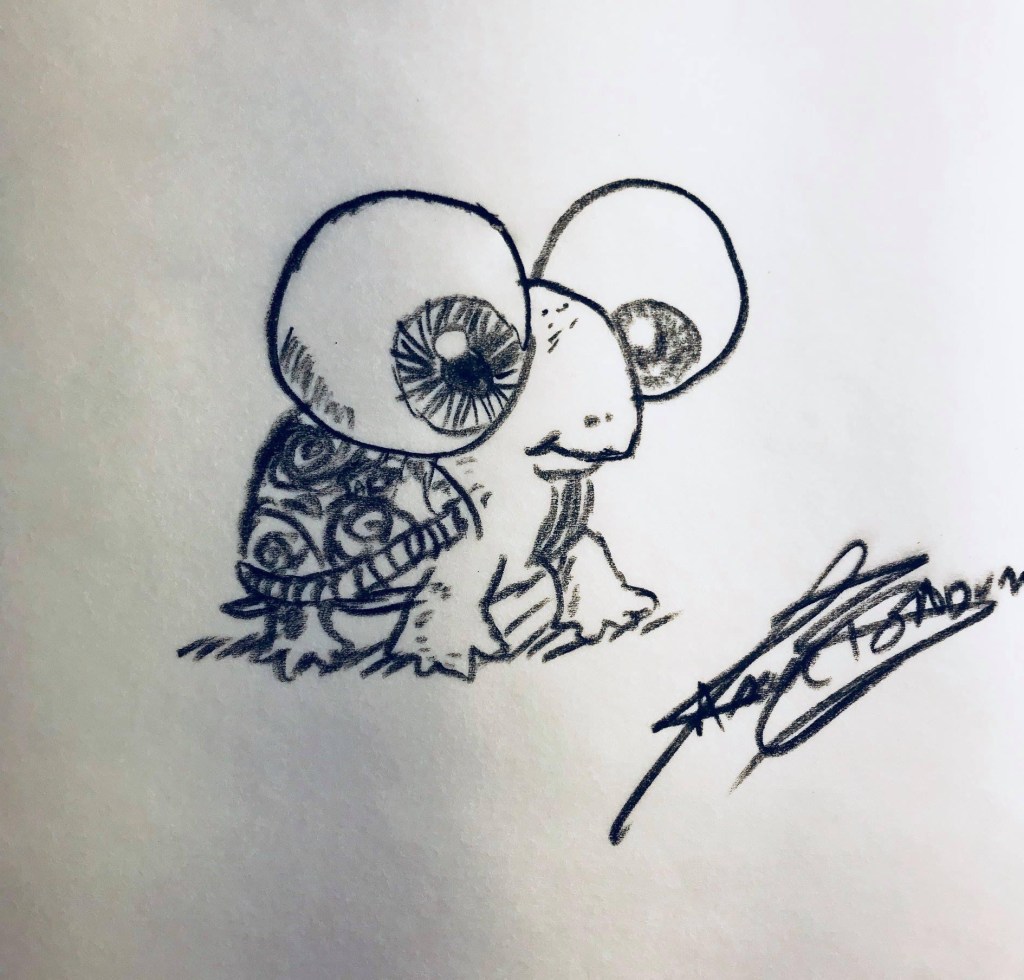
Frank the turtle needed an examination and a health certificate before flying to a warmer state. His owner called and explained that she could not find a veterinarian that would look at her turtle before her afternoon flight.

I really don’t know much about exotic pets, I somewhat reluctantly agreed to see her and provide the needed travel paperwork.

I entered the exam room to see the cutest little turtle imaginable. His innocent eyes peered up at me as I held him in my hands. I quickly looked him over and filled out the needed paperwork.

I handed the paperwork to the client and wished her safe travels. I then reached down to pat Frank on the top of his shell. Without warning, Frank snapped the tip of my right pointer finger.

Immediately, pain shot up my hand and continued all the way up my arm.

“Ouch!!!” I exclaimed, “That really hurts!”

Bewilderment filled my eyes. I didn’t see this coming. Frank, it turns out isn’t quite as sweet as he appears.

He might have snapped at that mosquito and caught that flea,

But in the end, Frank the turtle also caught me!

And that is my take!

N. Isaac Bott, DVM

Veterinary Technician Appreciation Week

My Take Tuesday: Veterinary Technician Appreciation Week

Being in the veterinary industry is hard work. Every day in filled with ups and down, happiness and sadness, and life and death situations. We end each workday exhausted and worn out emotionally.

Since our patients cannot speak for themselves, we spend a great deal of time communicating with their human owners. To an extent we are treating owners as much as patients. This requires a level of genuine empathy and professionalism that few people possess.

Behind every good veterinarian is a team of hard-working, caring individuals invested in the task of helping people help their pets. I am fortunate to be surrounded by a wonderful team of veterinary technicians at Mountain West Animal Hospital.

If you’ve ever experienced an emergency with your pets’ health or safety, you know how meaningful it is to have a knowledgeable and compassionate technician to care for them!

Veterinary technicians are the unsung heroes of your pet’s veterinary care team. Without these devoted professionals, my office would be a sea of chaos and confusion. These highly trained individuals do everything from greeting clients and answering phones to restraining pets, drawing blood, taking radiographs, assisting with surgical procedures, filling prescriptions, comforting grieving pet owners, and cleaning kennels.

I simply cannot get through the day without my dedicated team at Mountain West Animal Hospital. They provide the individualized care and compassion that make my clinic so unique.

Most people do not realize the emotional toll this job can take. They don’t see us crying after we euthanize a patient we have treated for years. They don’t see the hard work that goes on behind the scenes. They don’t know what it’s like caring for a pet who is suffering near death and the triumph of pulling it back from that edge and going on to live several more years. They don’t see the mistreated or neglected pet that we so often walk through our doors.

They don’t know about the scars and scratches, bumps and bruise, sore muscles and back pain. They don’t know about the blood, diarrhea and vomit that they daily clean up.

There are many heroes that never stand in the spot light, never hear the roar of the crowd and never receive the recognition they deserve.

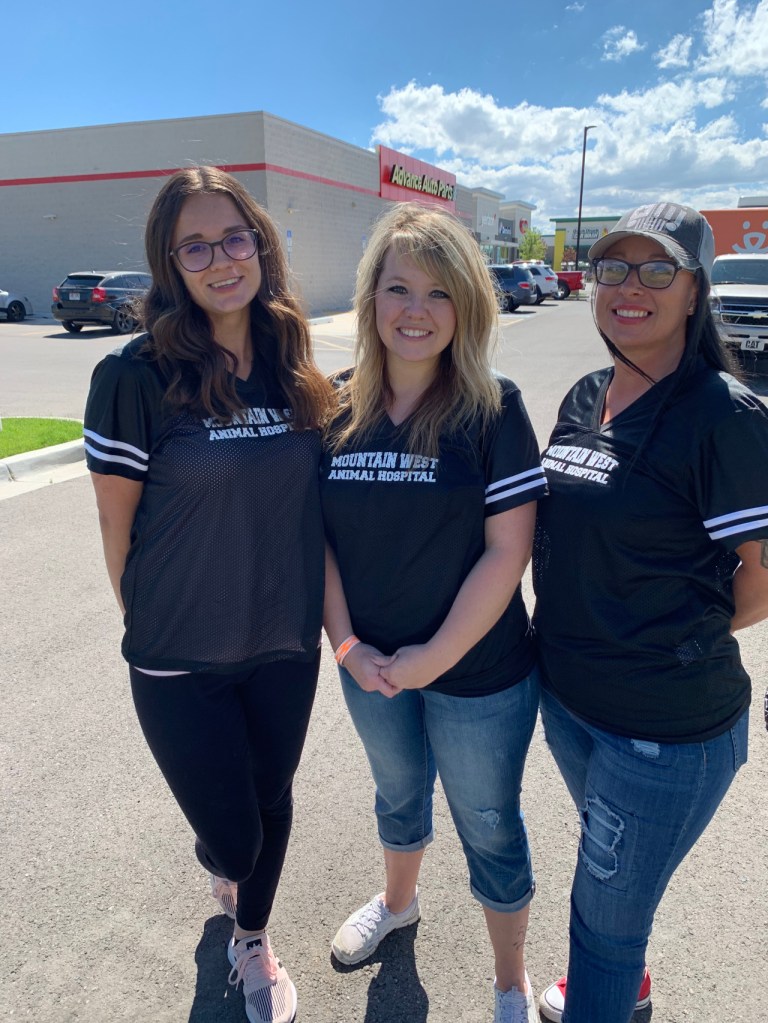
Pictured are three of my heroes. They are my right hand and my left. They work in a high-stress environment, putting in long hours, caring for ill and anxious pets, cleaning messes, and putting themselves at risk of physical harm. They do this because they care. They care about each of our clients and their four-legged family members. Thank you for putting your health and safety on the line to help increase mine. Thank you for being such amazing advocates for our patients and for being such an incredible support system for our veterinarians and our clients.

This week is National Veterinary Technician Appreciation Week. Please join me in thanking these girls for the wonderful work they do at Mountain West Animal Hospital.

They are amazing!

And that is my take!

N. Isaac Bott, DVM

Skunked

My Take Tuesday: Skunked

A few months back, a Boy Scout troop stopped by the clinic at the end of the day for a tour. As I showed them around and answered their questions, I couldn’t help but reminisce about my time as a boy scout.

The year was 1995.

Boy scout troop 306 of the Castle Dale 1st Ward embarked on a week long 50 mile hike during the month of July. The hike began on a Monday at Ferron reservoir and ended on Saturday at Indian Creek Campground in the beautiful Manti Lasal National Forest.

As a 14 year old kid, I was just like most of the other boys in my troop: wholly naive and completely unaware of my ignorance. My sense of adventure far outweighed sound logic and I was prone to encounter trouble because of my mischievous nature. My little brother Caleb and my best friend Zac were my partners in crime and were witnesses to myriads of situations that shaped our imaginative Boy Scout days working on merit badges, monthly camp outs and high adventure events that eventually led to each of us earning ours the rank Eagle Scout. These experiences consequently helped make us into the men we are today.

On the second night of this long hike, we made camp at a place called Cove Lake. This beautiful lake is just a few miles from the scenic skyline drive and is nestled in a large grove of Douglas Fir and Ponderosa pines.

As Boy Scouts do, we set out to set up camp and explore the lake. We soon found out that we were not the only species inhabiting the camp on this particular night. We shared the campsite with one of the most widely distributed mammals in North America, Mephitis mephitis, or the common striped skunk. The fecund creatures were everywhere. As we floated around the lake on a makeshift raft, we could see dozens of them around the waters edge.

We clearly had a dilemma. Almost immediately, the skunks began ransacking our tents and food supply. These smelly striped critters were endlessly curious about the bipedal invasive species that had entered their territory.

Passive in nature, skunks will avoid contact with humans and domestic animals; however, when challenged they are amply prepared to protect themselves.

If a skunk feels threatened, it will give a warning which includes hissing, stomping of feet, and elevation of the tail. Failure to heed the warning signs will result in the unlucky aggressor being sprayed with the skunk’s anal gland secretions. Skunks are highly accurate in their aim and can spray 7 to 15 feet away!

A dozen rambunctious boys were immediately perceived as a threat by the striped beast. They seemed to coordinate the invasion of the camp, approaching from all directions.

A scout watching the skunk rodeo spoke to me, “Hey Isaac, if you hold a skunk by its tail it can’t spray you.”

The notion had some truthiness to it, after all, if it can’t plant its feet it likely wouldn’t be able to empty its scent glands.

Without any further thought, I reached out and grabbed the nearest skunk by the tail. I lifted it directly in the air and held it suspended with my arms straight out.

The little guy simply twirled slightly and lined his backside to my face and fiercely sprayed with all that he had.

It went directly in my mouth and up my nose. It covered my entire face and some even got in my eyes.

I immediately began vomiting uncontrollably. By eyes burned and my vision became blurry.

What a lesson! Take my word for it, a skunk can certainly spray when it’s feet aren’t off the ground. This equivocated logic is dangerous.

As Mark Twain once observed, “It ain’t what you don’t know that gets you into trouble. It’s what you know for sure that just ain’t so.”

The odeur fetide that I experienced is actually a thick, volatile, oily liquid that obtains its pungency from sulfur-based thiols. There in nothing that smells worse than skunk spray inside your nose!

It took weeks before I stopped smelling skunk.

Frantically, I raided the food tent in search of cans of tomato juice. I found 8 cans and a can opener. I then took a tomato shower. I scrubbed my head in it, my whole body was covered in tomatoes. You haven’t lived until you take a shower in tomato sauce.

The rest of the week proved to be much less adventurous. I was forced to sleep in my own tent and I walked behind everyone else along the trails.

Now when I see a skunk, I give it plenty of space. And I tell everyone that I can that contrary to popular myth, a skunk can spray even when being held off the ground by its tail!

And that is my take!

N. Isaac Bott, DVM

Playing Possum

My Take Tuesday: Playing Possum

Fall has arrived in the Rocky Mountains. The beautiful red and yellow mountainsides that surround Utah Valley are a sign of the changing weather. The olive-green leaves of the quaking aspen groves are quickly changing to orange and brilliant yellow.

I love this time of year! The cool, crisp, fall air, the warm evenings and cold mornings signal the arrival of October. I enjoy the first day that is just chilly enough for a flannel shirt and the taste of a cup of hot apple cider, and the smell of wood-smoke beginning to billow from the chimneys.

There is much to accomplish before winter sets in. It is a busy time for me as a veterinarian. Sheep, goats, reindeer and elk breeding seasons require traveling all over the country as I provide assisted reproductive techniques on farms and ranches from Alaska to Arizona, and from Texas to Oregon.

Local farmers are bringing their cattle and sheep home from summer ranges and are preparing their horses for winter.

A recent farm call brought me to the beautiful grass pastures south of Salem, Utah. The owner, a friend of mine, met me at the beautiful wooden fence at the entrance to his pasture. A large Percheron draft horse was undergoing a routine hoof trim and the farrier was having some difficulty. This massive animal would not allow its left hindlimb to be trimmed.

I administered an intravenous sedative as soon as I arrived at the farm. This sedative works almost instantaneously. The huge draft horse’s head tilted downwards as his lower lip began to sag. Typically, this allows for quick non-painful procedures to be performed without protest from the horse.

The farrier attempted to lift the left rear limb after the sedative kicked in. Immediately, the horse angrily slammed down its massive hoof in a stubborn response. Because of the danger of such a large animal kicking and injuring all involved, I quickly made the decision to administer general anesthesia and to lay the animal down on the soft grass of the beautiful pasture.

Ketamine is commonly used in horses. It is of the cyclohexamine class of anesthetics. It is effective at rendering the animal motionless. The difficulty is safely getting a 2000 pound horse to lay down and get back up afterwards without injuring itself or landing on me. It is terrifying to stand next to an animal over 8 feet tall as it falls to the ground asleep. I take extreme caution in where I stand, how I place my hands on the halter, and how I am going to get to safety if something goes wrong.

As I administered the ketamine in the massive jugular vein, the large animal smoothly slumped and laid down as it entered a deep sleep. I positioned myself on the neck of the sleeping giant, as the farrier and my friend began the process of trimming the problematic hoof.

A group of curious pasture mates began to form in a circle around us as we worked. These inquisitive horses couldn’t figure out why this large Percheron, the alpha and bully of the herd, was sleeping in the middle of the day.

A sorrel gelding flared his nostrils as he sniffed the face of the napping equine. I reached out and touched his nose to assure him everything was alright.

Suddenly, without warning, this gelding stomped his right front hoof directly on the face of the sleeping horse. My fingers were just centimeters away from the hoof hammer as it came down. I gasped in bewilderment at what had just happened. Suddenly, I felt the giant underneath me move. Within a second, the large Percheron went from being sound asleep to standing up and alert. This rapid motion gave me little time to respond. I was flung like a rag doll from atop the neck of this huge animal. The soft grass broke my fall as I came crashing down.

The three of us looked at each other in disbelief about what had just occurred. Fortunately, we were all safe and unharmed and the horse was unaffected by the stomp on its face.

Sometimes the unpredictable is best met with humor. A roar of laughter erupted as we replayed the sight of me flying headfirst through the air.

Even though Utah is not home to the mischievous opossum, there is a large Percheron draft horse in the pastures south of Salem that can play the part extremely well!

And that is my take!

N. Isaac Bott, DVM

Fleming’s Vest-Pocket Veterinary Adviser

My Take Tuesday: Fleming’s Vest-Pocket Veterinary Adviser

The year was 1904. The town of Emery, Utah had a population of around 560 people, nearly double what it has today. Emery has always been an agricultural community. Ranching and farming are as much a part of its scenery as the towering cliffs that overlook the small town. Visitors are often taken aback by the beauty and expanse of this beautiful country on the edge of the San Rafael Swell.

Lewis W. Peterson made his living as a farmer. Life during this time could not have been easy. Lewis and his young wife experienced extreme heartbreak during their first few years together. Their only two children at the time would die from an influenza outbreak that indiscriminately killed so many in this small community in 1907.  

The remote location of the town isolated it somewhat from other communities. The town had a fine yellow church house that had a large ballroom floor that served not only for Sunday worship services, but also for social gatherings. This building still stands in the center of town today.

Information came in the form of newspapers and books. Knowledge was a valuable asset that would set certain farmers apart. When information was available, these farmers were open to reading and learning. It was during this time that LW Peterson acquired a new book called, Fleming’s Vest-Pocket Veterinary Adviser.

This now 116 year old, pocket size handbook of veterinary information pertained to diseases of horses and cattle, and was designed to help farmers and stockman. It provided 192 pages of everything from birth to aging, to caring for illnesses, to poisonous weeds, maintenance, how to feed, and recipes for concoctions to treat a variety of ailments.

This book must have helped LW. He kept the book. He passed it down to his son, Kenneth Peterson, who passed it to his son Hugh Peterson.

My grandfather, Hugh Peterson, gave it to my mother, who gave it to me. This book is displayed prominently in the museum case in the reception area of Mountain West Animal Hospital.

The well worn pages of this book are fascinating to read through. Although veterinary science was in its infancy at this time, it is still interesting to read about treatments used. Without the luxuries of modern antibiotics, antiseptics, anesthetics and anti-inflammatories, these treatments were innovative for their time. The early 1900’s provided incredible advances in hygiene practices, preventive medicine concepts evolved, the first vaccines appeared, nutrition was studied and research was beginning to show which therapeutics actually worked, and why.

Perhaps some would consider this dated literature obsolete. Much of the information contained therein certainly would be considered so. I, however, consider it a treasure. I wonder if LW realized that, more than 60 years after his death, a veterinarian, carrying 1/16th of his DNA, would appreciate this book passed from generation to generation.

I will keep this book safe and pass it on to my children. Who knows, perhaps in another 100 years, it will still be seen as a valuable piece of family and veterinary history.

And that is my take.

N. Isaac Bott, DVM

A Scar

My Take Tuesday: A Scar

Last Tuesday evening, after a long day at work, I slipped while using a knife and cut a large section of skin off the tip of my left middle finger. The pain was excruciating as I drove to the urgent care clinic. Because of the location and size of the wound, suturing it closed wasn’t an option. I am stuck wearing a large band-aid on my finger for the next few weeks. The occasional throbbing and tingling sensation remind me throughout the day to be careful as I examine pets and go about my usual routine. I will certainly have a good scar as this wound heals. 

My left hand has been injured many times during my lifetime. Each of these injuries has left a unique scar. Each represent the best healing scenario for the injury sustained. Each scar has taught me how to deal with pain, how to be strong and each leave a detailed memory about how and when each injury happened. The most prominent of these scars is on my pointer finger. 

You can definitely see it if you look close enough, each time I extend my left hand with my palm down. It runs nearly perpendicular to the axis of my index finger.

Scars are a physical reminder of our own survival. They tell a story about places that you’ve been. They are tangible roadmaps to life’s lessons learned.

Every time I notice the scar on my finger, my mind travels back to my senior year of veterinary school in 2008. My best friends from veterinary school, Dan and Travis, were with me on this wild adventure.

It was a beautiful November day in Emmett, Idaho. The crisp fall air and dark yellow leaves of the cottonwood trees reminded me why this was my favorite time of the year.

During my last year of veterinary school, an entire month was spent at the Caine Veterinary Teaching Center in Caldwell, ID. This provided hands on training in a variety of agricultural species. Our days were spent on massive dairy operations, in the classroom and at livestock auctions.

On this particular day the sale yard was full. Cattle of every breed, gender and size were being sold and sorted through the sale barn.

My tasks were simple: 1) Vaccinate the females between 4-10 months of age. 2) Diagnose pregnancy in adult females. 3) An occasional bull calf would also need to be castrated.

Often cattle are sold because of their disposition. Wild, aggressive and flighty cattle are difficult to handle. Studies have shown a lower pregnancy rate among beef cattle that are flighty. Farmers are quick to cull cows that exhibit these traits. Therefore, wild and crazy cattle are prevalent at a livestock auction. Extreme care must be taken to avoid injury.

Facilities to process cattle make all of the difference for a veterinarian. It is very dangerous to attempt to process cattle in a rickety old squeeze chute. Unfortunately, too many sale barns have cattle handling facilities that leave much to be desired.

A black Angus calf entered the chute. I had castrated many calves before this and was very comfortable with the procedure. To facilitate castration, I entered the squeeze chute behind the calf. I reached down and made an incision. The calf immediately jumped and kicked. His right hind leg hit my right hand with incredible accuracy. The knife, still held securely in my right hand, plunged downward. The blade entered the index finger of my left hand, right between the first and second knuckles. The blade sank deep, and only stopped as it hit the bone in my finger.

The pain was immediate. I quickly exited the chute, holding my left hand tightly. Blood poured down my hand and dropped on the ground. The professor asked, “What happened?”

“I cut myself,” I responded.

As I stepped away from the squeeze chute, I glanced down at my finger. The open wound gushed blood. I immediately became light headed and nearly fainted as I stumbled to the truck.

I wrapped my finger tightly and headed to the nearest urgent care clinic. The throbbing pain seems to peak with each heartbeat.

After a couple hours and a few sutures, I was back at the sale yard. The remainder of the day went smoothly.

I will forever carry a reminder of that November day in Emmett, Idaho. Although time tends to color our memories optimistically, I still remember the painful lesson I learned that day.

Such is life. The ups and downs leave us battered and scarred. But with time, things get better. The pain won’t always be there and someday we will look back at each scrape and scratch and be reminded that scars are beautiful.

And that is my take!

N. Isaac Bott, DVM

My Life: I Appreciate It

My Take Tuesday- My Life: I Appreciate It

In March of 1980, a busy young couple worked tirelessly as they went to school and managed an apartment just west of Old Main near the Utah State University campus in Logan, Utah. The mother worked endlessly in doting support of her husband. The father went so school full time and also worked long shifts at a local cheese factory. Their first child, a boy, was just beginning to walk and life seemed to be going smoothly. These lean days of struggle brought this couple even closer together as they faced the brambles and thorns, challenges and difficulties most couples experience just starting out. Their dreams of the future were one step closer with each passing day.

Early one morning, the mother began to experience significant stomach pain. This sharp pain in the lower right side of her abdomen was unbearable. The worried young father rushed her to the hospital.
A diagnosis of appendicitis was made and emergency surgery was required. The skilled surgeon performed the appendectomy without any complications.

As the surgeon explored the abdomen during the surgery, he noticed that this young mother was pregnant. This was completely unexpected. The medications used for general anesthesia were not approved for use in pregnancy, in fact studies showed that they caused birth defects when used during the first trimester.

The doctor stepped out of the surgery room to speak with the young father. He told him that his wife was pregnant and that the anesthesia used posed significant risk to the heath of the baby. Birth defects and serious developmental problems were likely to occur. The likelihood of these complications was so great that the doctor recommended that the pregnancy be terminated.

The weight of the world was on the shoulders of this young couple. They were tasked with making such a difficult decision about the pregnancy and the potential outcome. Considering the future consequences of this decision must have been so stressful for each of them. The health of the young mother and the possible complications were carefully considered.
In the end, they chose to keep the baby and face the uncertainty of what was to come.

On September 4th, 1980, a healthy baby boy was born. The baby was free from any birth defects and the young mother did well following the scheduled caesarian section.

The child grew up normally and, along with his 4 siblings, has strived to contribute positively to this world.

I catch a glimpse of that baby, born 40 years ago this Friday, each morning when I look in the mirror.

How grateful I am that my parents made the choice to continue with the pregnancy despite the risk. My very life was in their hands and, thankfully, they chose the path of uncertainty and risk.

Something that I have noticed about life is that once you begin to take note of the things you are grateful for, you begin to lose sight of the things that you lack.

My life has been filled with wonderful opportunities, beautiful friends and family and many incredible experiences. I appreciate each and every day I get to just be alive in this crazy, beautiful, chaotic and magnificent world.

And that is my take!
N. Isaac Bott, DVM

Chickens

My Take Tuesday: Chickens

If you attended elementary school with me, you will probably will remember my obsession with chickens. As a child, I would draw chickens when I was bored. Given the many drawing projects that elementary age children have, I drew hundreds of mediocre pictures of my pet chickens. Fortunately, my teachers were patient and supportive. Although my artistic abilities left much to be desired, I was free to draw to my hearts content.

We would receive an annual catalog from Murray McMurray Hatchery. This catalog would depict every conceivable breed of chicken and give a short description of the desirable traits each possessed: comb type, leg feathering, silky, frizzle, bantam, standard, etc. I would spend hours and hours looking through this catalog. Each year, I was allowed to choose a single baby chick of the breed of my choosing. I took this choice seriously.

There are a range of things that one needs to consider when deciding what breed of chicken to have. These include the climate in which you live, whether you are raising backyard chickens for eggs or meat production, their temperament, foraging capability, predator awareness, and broodiness. I meticulously studied each breed and made my selection each year.

Here in the United States, the postal system accepts boxes filled with day-old chicks and delivers them coast to coast with overnight delivery. The chicks travel by Priority Mail and often have no food or water in their cardboard carrier to sustain them. How can this happen? Just prior to hatching, a chick absorbs all the remaining nutrients from within its egg. With this nourishment, the chick can survive for up to three days without food or water. This makes it possible to ship them by mail. In the nest, this process allows the mother to wait out the hatching of other chicks in her clutch before tending to the early hatchers: If chicks required immediate attention, the mother would leave with those that hatched first and the unhatched chicks would perish. This is a fascinating adaptation!

To this day, chickens remain my favorite animals. I look back with fondness on the days spent coloring and drawing with crayons.
Memories are painted optimistically with passing years. I miss the worry-free days sitting at a desk in elementary school.

I will forever treasure these pictures and the pleasant memories associated with them.

And that is my take!
N. Isaac Bott, DVM

The Saga of the Saiga

My Take Tuesday: The Saga of the Saiga

They look like something you would read about in a Dr Seuss book. From their long exaggerated proboscis to their loud nasal roars; this species is truly unique. Their bulbous noses, which hang over their mouths, give these antelope an almost comical appearance. The nose is flexible and can be inflated, helping them to breathe warm air in the freezing winters and filter air in the arid summers as they sprint with their heads down in a cloud of dust. Two considerable populations exist today. Kazakhastan is home to the largest population and a second, smaller group resides in Mongolia. Over the past few decades, they have made a population comeback. But this all changed recently and now they are in grave danger.

There was almost something biblical about the scene of devastation that lay across the wide-open fields in the wilderness of the Kazakhstan steppe. Dotted across the grassy plain, as far as the eye could see, were the corpses of thousands upon thousands of saiga antelope. All appeared to have fallen where they were feeding.

The saiga in Kazakhstan – whose migrations form one of the great wildlife spectacles – were victims of a mass mortality event, a single, catastrophic incident that wipes out vast numbers of a species in a short period of time. These Mass Mortality Events are among the most extreme events of nature. They affect starfish, bats, coral reefs and sardines. They can push species to the brink of extinction, or throw a spanner into the complex web of life in an ecosystem.

When this event occurred in 2015, over 200,000 (more than half the total population) died due to a mysterious illness. This mass die-off baffled both veterinarians and scientists as they scrambled to identify the cause. The culprit was identified as a bacteria called Pasteurella multocida. This bacteria normally lives harmlessly in the tonsils of some, if not all, of the antelope. It is thought that an unusual rise in temperature and an increase in humidity above 80% in the previous few days had stimulated the bacteria to pass into the bloodstream where it caused haemorrhagic septicaemia, or simply put – blood poisoning. 

In 2017, the saga population in Mongolia was devastated by a viral disease. Called peste des petits ruminants virus (PPRV), this virus originated in sheep and goats and quickly spread through the Mongolian Saiga population.  

PPRV, which is also known as sheep and goat plague, is highly contagious and can infect up to 90 percent of an animal herd once introduced. After just a few days affected animals become depressed, very weak, and severely dehydrated. This devastating illness swept trough the saga population, leaving over two-thirds of the critically endangered animals dead. The remaining population in Mongolia has been vaccinated in an effort to prevent further outbreaks. 

Mass mortality events are not unusual for saiga antelope. However, the scale of the current events are unprecedented relative to the total population size. Warmer weather patterns, coupled with increased humidity, played a key role in causing the outbreak of hemorrhagic septicemia in Kazakhstan. Often these mass mortality events also occur in the birth period, when Saiga females come together in vast herds to all give birth within a peak period of less than one week.

Sometimes the answer to saving a species involves exportation, sequestration and assisted reproductive technologies to enhance genetic diversity. In my opinion, this is key to save the saiga antelope.

The saiga antelope is truly unique. They existed at the same time as the sabertooth and wooly mammoth. They are a relic of the past.

I hope we can save this species. They are truly remarkable!

And that’s my take!

N. Isaac Bott, DVM

The Vituperation of the Vaccination

My Take Tuesday: The Vituperation of the Vaccination

In case you haven’t noticed, vaccines have been in the news recently. A lot! Given the global pandemic that we are facing and the race to develop a vaccination, it seems that we hear about vaccines in some form every single day. 

Fearing vaccine-related reactions or other concerns, some people are leery not only of vaccinating their children against preventable illnesses, but also their pets. While these conversations are important, I am worried that they are being heavily influenced by what pet owners are seeing online from unreliable sources.

Protecting against something you’ve never seen can be a difficult concept for both pet owners and veterinarians. Many veterinarians who have graduated in the past 10 to 20 years have never seen a case of canine distemper. For the pet owner — add in families, friends, co-workers and acquaintances — who has also never seen or known a dog with the disease, it’s easy to begin to believe the threat doesn’t exist, isn’t serious or is overblown. I witnessed this disease first hand in Mexico City a few years ago. The disease began with green discharge from the eyes and nose, hardening of the footpads, neurological signs and death. Many deaths. We know this invisible and now infrequent killer can gain ground quickly in a community of dogs that are unvaccinated or under-vaccinated and kill indiscriminately and grotesquely.

Similarly, parvovirus outbreaks occur in shelters across the country every week because approximately half of the dogs coming in have never been vaccinated.

My take is this: If you love your dog or cat specifically, and dogs and cats in general, you’ll get your pets vaccinated not only to give them potentially life-saving protection, but also to put an invisible blanket of protection over the whole pet community. If people don’t vaccinate their pets, we risk seeing a rise in extremely unpleasant, preventable, diseases that can cause considerable animal suffering and death.

This doesn’t mean your pet needs every vaccination out there. Your pet’s vaccination program should be individualized, based on factors such as his age, health, medical history, lifestyle, and the prevalence of disease in your locale.

Proper vaccination for your puppy or kitten is one of the most important investments in your pet’s life long good health. Some people chose to purchase the least expensive products possible and administer them at home. The cheapest option is not always best. Almost anyone can follow the manufacturers’ directions for administration. However, only qualified veterinary professionals can advise you on what is best for your pet, determine if your pet is healthy enough to safely receive vaccines, effectively and promptly treat possible reactions and diagnose and treat other health problems during examination. Vaccines administered by a veterinarian are your best and safest option.

It is very important to discuss with your veterinarian a vaccination protocol that’s right for your dog. Factors that should be examined include age, medical history, environment, travel habits and lifestyle. Our vaccine protocols at Mountain West Animal Hospital vary and are based on the needs of each individual pet.

Being a pet owner is a joy and a privilege and you, and you alone, are responsible for their health and welfare. We strive to work with you in making these important decisions regarding the care of your four-legged family member.

And that is my take.

N. Isaac Bott, DVM