White Lightning

My Take Tuesday: White Lightning

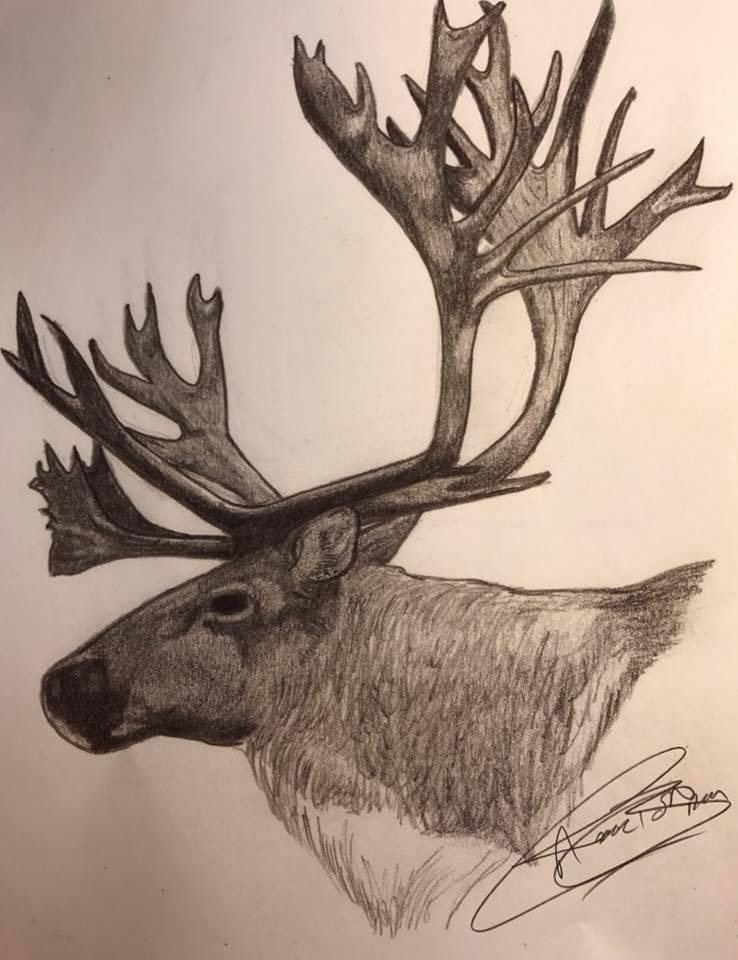
Reindeer rarely have difficulty giving birth. Fortunately, nature has provided this species with amazing vitality. Young calves stand within minutes of being born. Predation is the primary cause of death in newborn calves. To minimize this, cows synchronize their birthing. If all of the calves are born at the same time, fewer are killed by predators. Gestation length can vary as much as 45 days to accomplish this. Such synchrony is fascinating, but provides considerable challenges with domesticated herds. Occasionally, calves are born premature and lung development is not complete. Sadly, many of these calves die.

As a veterinarian, I perform a considerable number of artificial inseminations on reindeer each year. The calves produced by this procedure are especially valuable. Intense care is given to newborns to ensure the best chances of survival.

A few years back, a young male calf was born during the summer. He had a unique white marking on his nose. This calf was a charmer. We all instantly fell in love with him.

On examination, the calf showed considerable effort in his breathing. His lungs were not working as they should. Research has shown that these calves lack a chemical called Surfactant. Surfactant reduces the surface tension of fluid in the lungs and helps make the small air sacs in the lungs (alveoli) more stable. This keeps them from collapsing when an individual exhales. In preparation for breathing air, fetuses begin making surfactant while still in the the uterus. With some reindeer calves, this production is incomplete when they are born.

Treatment consists of replacement surfactant therapy. This is often not feasible in veterinary medicine because of the high cost of synthetic surfactant. When is is available, it must be administered within 6 hours of birth to be effective.

The second treatment is placing the calf in an incubator (very similar to ones used with human neonates) and administering oxygen. Some calves will improve with this treatment. We placed him inside the oxygen chamber and waited. Feeding was required every 2-3 hours. The first few hours were touch and go, but little by little, improvement was noted. His tiny lungs slowly began to function properly.

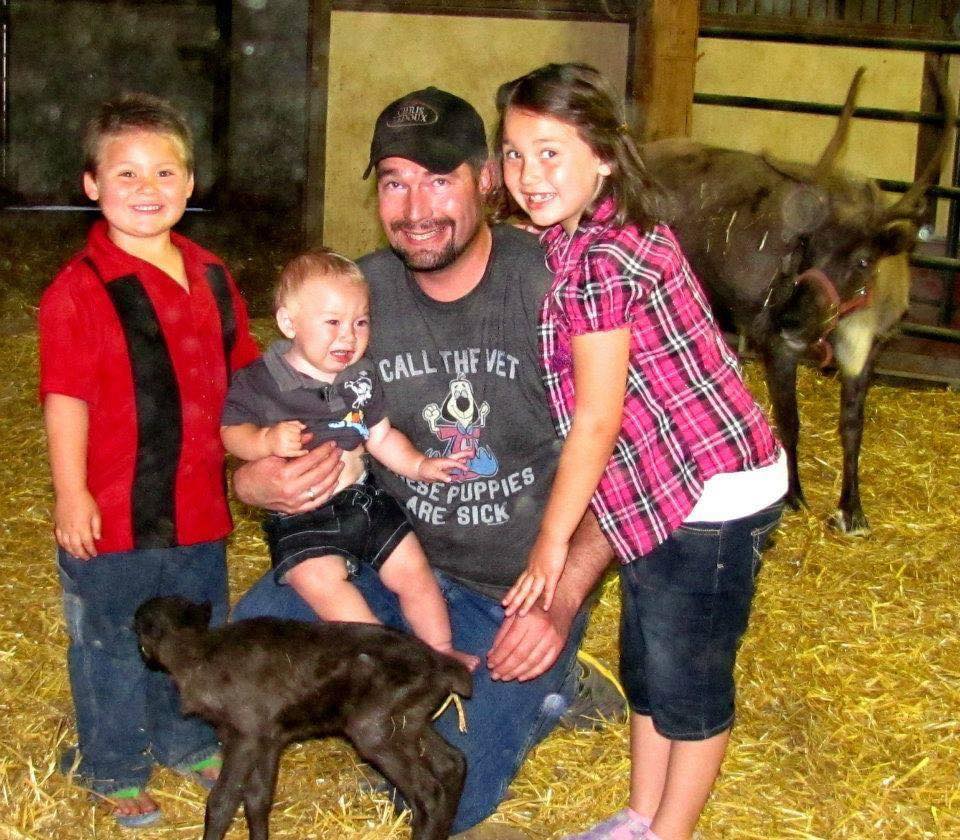
Fortunately, such was the case with this beautiful calf. We named him White Lightning, reflecting the distinctive white stripe on his nose.

Miraculously, on this hot summer day, a life was saved. As you can see in the photos, we were all happy to pose with the calf, with the exception of my youngest son, KW. He fortunately has overcome his fear of reindeer. 🙂

And that is my take!

N. Isaac Bott, DVM

The Christmas Cactus

I never did get to meet my paternal grandmother. Her name was Caroline Westover Bott. She died several years before I was born. I wish I could have gotten to know her. I have heard stories about her humorous personality and just how kind and sweet she was.

Her favorite plant was called a Christmas cactus. This plant is a long lived plant with flat, segmented stems. Most of the year its appearance is fairly unassuming. It seems to be just a regular potted green in the corner of the living room.

Around Christmas, however, something magical happens.

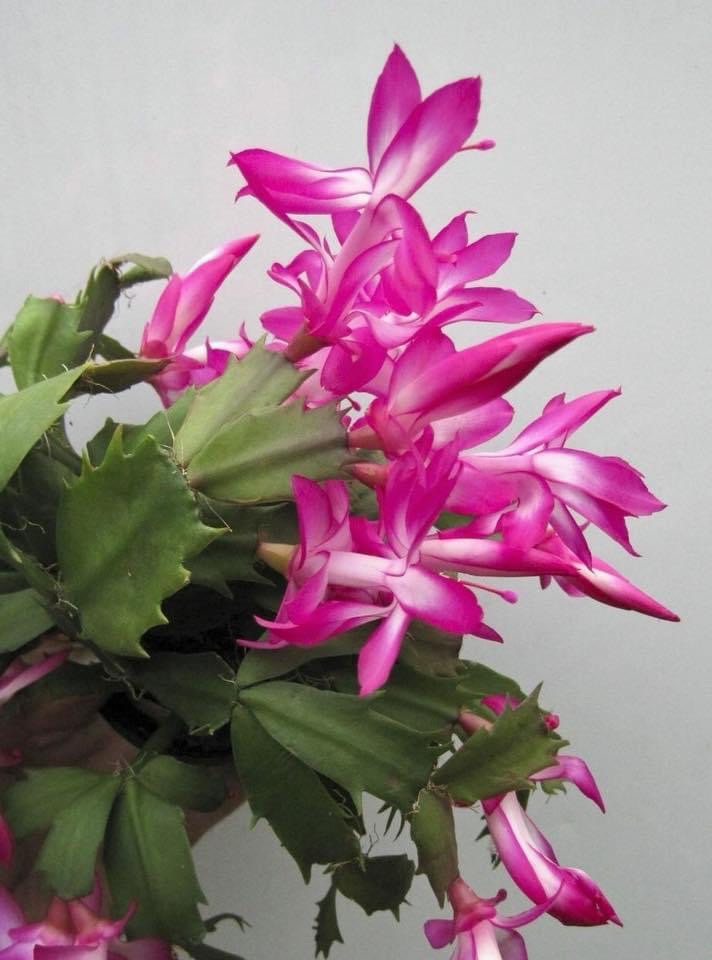
With care, this plain looking plant will blossom with beautiful pink flowers. Because of this festive seasonal bloom, the Christmas cactus is a tradition in many European and North American homes during the holidays.

After my grandmother died, her husband and children continued to take care of her Christmas cactus.

Caring for this plant is much more intense than other common house plants. Despite its name, the Christmas cactus is not a desert plant, but rather has its origins in the tropical rain forests of South America.

In fall, night temperatures around 50-55 degrees will trigger Christmas cactus to form flower buds. A carefully monitored balance of darkness and sunlight will give you beautiful blooms in time for the holidays. My uncle Jerry faithfully took care of this plant year after year until he died two years ago.

One of my favorite Christmas memories is setting around this plant on Christmas morning and opening presents. I will forever treasure this family time and the pleasant memories that remain.

Another unique feature of this segmented plant is its ability to propagate. By transplanting a cutting of at least three stem segments into a small pot of soil (preferably taken from the pot of the parent plant). At least one segment is then buried. With care and time the plant will take root.

A couple of years before my uncle Jerry passed away, he gave me a small transplant from this Christmas cactus that belonged to my grandma. As it brilliantly bloomed during this holiday season, I longed to spend time with my loved ones that have passed away. I am so grateful for this tangible legacy that will continue to live on and be passed on to my children. It is my own little piece of a holiday tradition that lives on all year long. I cherish my Christmas cactus and the family ties it symbolizes.

Merry Christmas!

N. Isaac Bott, DVM

DocBott got ran over by a reindeer!

My Take Tuesday: DocBott got ran over by a reindeer!

Many of the pictures I post are of Mountain West Animal Hospital’s resident reindeer. They are very docile and love the attention. Sven and Yuki will pose for photos and love little children. Sven even has a fondness for the color pink. 

However, not all reindeer are like this. A male reindeer’s personality changes dramatically as the breeding season approaches. Rising testosterone levels in the male reindeer are responsible for the hardening and cleaning off of the antlers. This cleaning off of the velvet has an abrupt onset. Although fresh blood is noted on the antlers as the velvet comes off, the condition is NOT PAINFUL. There is no sensation in the antlers at this point.

Testosterone will make an otherwise tame male become a raging, grunting and aggressive mess. 

A couple of years ago, I received a call from a reindeer farmer in northern Utah. He had a male reindeer that has injured the base of his antler. August heat and fresh blood are a recipe for complications due to either a severe bacterial infection and/or disgusting maggots. 

I arrived at the farm and immediately realized that the bull was in full rut. I had just left the office and, like a true nerd, had placed an external hard drive for my computer in my front pocket. 

The bull was not very happy to be caught. It took three of us to restrain him while I treated his injury. His massive antlers could easily lift us off the ground and fling us in any direction desired. 

Just as I finished the treatment, he broke lose. He immediately turned toward me. I had very little time to react. I stood there with empty syringes and iodine in my hands, helpless and very much vulnerable. His attack was swift. A single charge knocked me on the ground. 

I lay there struggling to catch my breath. The sudden impact of the ground on my back left me with temporary paralysis of the diaphragm which made it difficult to take a breath. When I finally did breathe, I was bombarded with excruciating pain over the left side of my chest. I reached into my pocket and removed the external hard drive. It was shattered. 

I was very much defeated and beaten, but overall ok after I got on my feet. The pain was caused from two cracked ribs. Other than that, I had no further damage from the incident. 

I learned my lesson that day. rutting reindeer cannot be trusted. They are the most dangerous animal I have ever worked with. They make a Jersey dairy bull seem like a young puppy. 

I am glad I had the external hard drive in my pocket. The antlers would have easily punctured my lung and inflicted life threatening injuries. 

If you ever see a male reindeer grunting, snorting and peeing on itself – STAY AWAY!

You have been warned. 

And that is my take!

N. Isaac Bott, DVM

An Enemy’s Christmas

An Enemy’s Christmas

The quarter sized snowflakes fell in unison. The rhythm and pace quickened as the precipitation accumulated. Over six inches of total snow arrived in just a few hours on that particular Christmas Eve in the small town of Castle Dale, Utah.

I was in a somewhat grumpy mood, as we loaded up the old green Chevy Suburban and headed down the road.

The destination this night was a small house on the other side of town. Boxes of presents were neatly wrapped and stacked in empty Sunkist orange boxes. With each turn, I could hear them slide gently back and forth in the back of the vehicle.

“Why them?” I asked.

In my 12 year old mind I did not understand why we were taking Christmas presents to this particular family. If someone ever had a reason to dislike another, I figured the events of the past few months would justify the bitterness I felt.

Just a few weeks prior, a scathing letter was published in the local newspaper that was critical of my father. I remember reading it one afternoon as I sat at the kitchen table.

“Mom, why would they say such mean things?” I inquired earnestly.

“I am not sure Isaac,” my mother replied, “Perhaps they just needed to vent and get what they were feeling out. It probably made them feel better writing it down.”

“Well,” I interjected, “It’s dumb. Not a word of what they said was true.”

Hating an enemy is what comes naturally. We hate in an effort to not allow them to continue to hurt us.

Inside I seethed. No one. No one. No one can say such vile things about my dad. The simple fact that Mom and Dad didn’t seem at all bothered by it made me even more upset.

Yet, here we were, delivering Christmas to this very family.

“They just don’t deserve it,” I thought to myself.

As we turned off the main road and headed up the narrow road that lead up the hill, we crept along quietly. No lights. No sound. The snowfall helped damper out any audible signal of an approaching vehicle.

“Daniel and Isaac,” my dad quietly said, “I want you two to place these and knock on the door.

He continued, “Be quick. Run and hide and come back to the car without being seen.”

Daniel and I knew this would be the easy part. We were experts at doorbell ditching.

The delivery went flawlessly. We were out of sight when the porch light turned on and the front door opened.

“WOW!”, the small child’s voice pierced the snowy solitude, “Look at what Santa Claus brought us!”

The next statement pierced my heart.

“See, I knew he wouldn’t forget us!”

Several excited young voices joined in unison as the boxes were picked up and carried into the house. Then, in the blink of an eye, the porch light turned back off and the tranquility of a beautiful winter’s night returned.

A warm feeling overcame me as we arrived back at the car. The feelings of anger and resentment I had felt just moments before were no longer there. In their place was a feeling of love and what the true meaning of Christmas really is. We talked about how important it is to help and love others as we drove back home.

I thought about a bible passage that I had read so many times. “You have heard that it was said, ‘Love your neighbor and hate your enemy.’ But I tell you, love your enemies and pray for those who persecute you.” (Matthew 5:43-44) Certainly, this is not an idea that was taught only by Christ. Buddha, Gandhi, and many other great people and religions have nearly identical teachings.

It is a funny thing that I don’t remember much about any of the presents we received that year. I do, however, remember everything about giving Christmas to someone I considered an enemy.

29 years have now passed. Not a soul, besides my parents and siblings, knew who delivered the presents on that Christmas Eve.

The lesson I learned from my parents that year was not wasted on me.

Love is what makes all the difference. Herein is love, not that we first loved God, but that he loved us. Regardless of our acts, this love is unconditional. Poor or rich, young or old, religious or agnostic, His love remains as constant as the North Star.

I can assure you this is what Jesus really meant. And those words are just as true today as they have ever been. Has there ever been a time in our society where we needed to put this into practice more than now? 

In one of the last recordings that the late Charley Pride released, he eloquently observes,

“He tells me money doesn’t matter

Nor the color of your skin

We could stumble or even fall, and still get up again

Cuz it ain’t about the deeds, good or bad that we have done

All we have to do is love to be disciples of the Son.”

May each of us take a moment to enjoy the simple things today. As long as there is a sunset, there will be always be moments of joy and gladness for each of us. May we love each other, even those that have wronged us. Giving this love will open our hearts and allow us to experience a new level of happiness.

I recollect with fondness the traditions my family shared. The presents are gone. The shoes and clothes are all worn out, but the memories remain. The true meaning of Christmas is, after all, about love. Our Christmases were centered around family. We were together. How grateful I am for that. A quick trip down memory lane rapidly brings back the joy and love I felt on that special Christmas Eve while growing up in Castle Dale.

Merry Christmas!

N. Isaac Bott, DVM

Operation Santa Claus

Operation Santa Claus

For many decades, Operation Santa Claus was home to the largest herd of domesticated reindeer in the lower 48 states. The ranch was nestled along the eastern side of Oregon’s Cascade Range, in the High Desert town of Redmond, Oregon.

The ranch dates to the early ’50s when John Zumstein of Redmond brought a small herd of reindeer from Alaska. These were the first reindeer to be imported from Alaska. The herd readily adapted well to the Oregon climate.

In the 1980’s, the ranch was acquired by Mike and Cindy Gillaspie. Through the years, the ranch has evolved from a kind of “mom and pop” operation that entered animals in local parades to reindeer supplier for such clients as Disneyland, the Los Angeles Zoo, films (“Ernest Saves Christmas,” for one) and dozens of commercials. Operation Santa Claus has served as the premier source of reindeer stock and rentals for many years.

A couple of years ago, the last of the reindeer left this historic ranch. As Mike and Cindy Gillaspie prepared for retirement, they sold the remainder of their animals and moved on to a new chapter in their lives.

The last two reindeer from the ranch in Redmond were transported to Springville to live the remainder of their lives at Mountain West Animal Hospital. They have adapted well to the Utah climate.

As the era of Operation Santa Claus closes, a new page is turned. I am so grateful to have been able to visit this iconic ranch many times and to be able to call the owners my friends.

Yuki is pregnant this winter and she will give birth in late spring. A tangible legacy of Operation Santa Claus will forever be at Mountain West Animal Hospital.

N. Isaac Bott, DVM

Why Reindeer?

My Take Tuesday: Why Reindeer?

Curiosity is often sparked when clients learn about some of my work with reindeer and also when they see the massive antlers of our resident reindeer. This always begs the question… Why reindeer?

The day was March 28, 2010. I was driving on I-15 heading up to Cottonwood Heights. The next morning I was to begin a new job at an animal hospital in West Jordan. I was as nervous as I could be about the new change. As I was driving, I received a call from a concerned individual. The caller explained that his pet was thought to be pregnant and that confirmation was needed. It was then explained to me that the said pet was a reindeer. Now, as a veterinarian, I deal with a lot of animals, everything from antelope to zebras. However, I never anticipated working with reindeer. I had never even seen a live reindeer at this point in my life. But as I often do, I thought to myself, “Why not?” I told the caller I was just a few miles away and was happy to stop by.

I arrived just in time to witness the female reindeer, named Mischief, begin her labor. I was able to then help deliver a small female calf. The baby was so fragile! It was a solid jet black. I remember thinking that was such an unusual color when compared to her mother. The calf had difficulties initially. I had to administer medication to help with heart rate and for several days, the mother had to be milked and the calf had to be fed with a bottle. Mother also had difficulties after the birth. She had retained the placenta and required several days of medical intervention. Finally, after nearly a week, mother and baby began to thrive.

Over the course of the next several weeks, I would often stop by after work to check on the new mom and baby. The owner of the reindeer and I would often talk about how fascinating the experience had been for me. One night, he approached me about beginning an artificial insemination program for his reindeer herd. He had been searching for a veterinarian to attempt assisted reproduction in reindeer for over 10 years. He had not been able to find one. The idea excited me. I readily accepted the challenge.

I began researching the possibilities. I found that this had been studied and attempted dozens of times since 1973, without any appreciable success. In fact, The University of Alaska had received an $80,000 grant to begin a program. Their success rate was less than expected, and only one live reindeer calf was ever produced.

Our budget was small. We had only $2,000 to work with. We had to find out how to not only collect reindeer semen, but also how to freeze it in liquid nitrogen. We also had to learn how to heat synchronize the females and how to perform the insemination procedure. We had our work cut out.

After many failures and setbacks, in the spring of 2011 we were successful at producing the world’s first female reindeer calf by frozen/thawed artificial insemination.

We have produced dozens of calves since then. Our program involves a novel semen collection and cryopreservation system, estrous synchronization of females and trans-cervical artificial insemination. Because of our high post thaw semen motility and artificial insemination pregnancy rates, our program is arguably the most successful program in the world.

It is fun to reflect back on that random phone call I received while driving down the road. Many opportunities have opened up for me since that day.

Much of life is a consequence of timing. Thousands of years ago, an astute observer wrote, “I returned, and saw under the sun, that the race is not to the swift, nor the battle to the strong, neither yet bread to the wise, nor yet riches to men of understanding, nor yet favour to men of skill; but time and chance happeneth to them all.” (Ecclesiastes 9:11)

Time and chance aligned perfectly in this part of my career.

And that is my take!

N. Isaac Bott, DVM

Gratitude

Gratitude – Is it uniquely human?

Anthropomorphism is the attribution of human characteristics, such as emotion, to animals. While such comparisons are often inaccurate, there is some evidence that gives some merit to these comparisons.

Impala are large antelopes native to Africa that have been observed grooming each other. These grooming exchanges among African impala are usually unsolicited: one individual grooms the neck of a second individual, and then the second individual returns the favor, and grooms the first individual for an equivalent amount of time. It is thought that this mutual grooming behavior serves to remove ticks from parts of the body that an individual can’t reach itself.

Vampire bats, as you might expect, survive only on blood, and most feed at least once every three days. And while adult vampire bats regularly miss meals, they need not worry, as other individuals will regurgitate blood to feed them.

While the impala and vampire bat examples are interesting, they can be explained by much a simpler mechanism than gratitude: researchers call it symmetry-based reciprocity. That is, if members of a species preferentially direct favors to close associates, the distribution of favors will automatically be reciprocal due to the symmetrical nature of association. In other words, the mutual back-scratching of the impala and blood-vomiting of the vampire bat could simply be correlational: individuals who hang out together will tend to engage in reciprocal interactions, but only because they tend to hang out together.

In other species, the behavior extends beyond what is described above. For example, the common exchange of food for grooming among chimpanzees. To look at this further, researchers placed bundles of leaves and branches in the chimpanzee enclosures after the they had identified the patterns of grooming on a specific day. The adult chimps were more likely to share food with individuals who had groomed them earlier that same day.

In another experiment, primatologists Seyfarth and Cheney played recordings of vervet monkey calls and measured the reaction of recently groomed individuals. The type of vocalization that they used was a call used to threaten enemies and to solicit the support of friends, in anticipation of a conflict. When the recording was of a previous grooming partner, vervet monkeys paid more attention than when the recordings were of other individuals.

Taken together, these studies indicate that some non-human primates have the long-term memory abilities required for gratitude, as well as the ability to distinguish among individuals.

Another experience was described by a separate researcher. He tells a story about how two chimps had been shut out of their shelter by mistake during a cold rain storm. They were standing dejected, water streaming down their shivering bodies, when the researcher chanced to pass. Upon opening the door for the two chimps, Dr. James Leuba recounts, “instead of scampering in without more ado, as many a child would have done, each of them delayed entering the warm shelter long enough to throw its arms around his benefactor in a frenzy of satisfaction.”

Do animals have gratitude? It is still a much debated question. However, it is clear that some animals, such as chimpanzees and other non-human primates, seem to possess at least a more basic form of proto-gratitude, based on their ability to keep track of favors given to and received from different individuals.

When pets are rescued and adopted, they seem to display a greater-than-average appreciation (e.g. tail wagging, purring) of our care and for the food we give them. I have witnessed this time and time again.

I believe gratitude is a shared emotion.

I hope each of you have a Happy Thanksgiving!

N. Isaac Bott, DVM

Thanksgiving Dinner in Emery, Utah

My Take Tuesday: Thanksgiving Dinner in Emery, Utah

This past year has been brutal. During the summer, my maternal grandparents quietly left this world just 40 days apart. They were just a few months away from their 72nd anniversary. I struggle to find the words that can adequately express the profound sadness that I feel and the immense hole that their passing has left behind. I long for one more hug, one more visit, one more meal, or even better one last Thanksgiving. 

The sense of smell is closely linked with memory, probably more so than any of our other senses. Those with full olfactory function may be able to think of smells that evoke particular memories; for me, the smell of turkey in the oven takes me back to Thanksgivings of long ago. As this homeward journey begins, I find myself seated at a table in my grandparents’ house in Emery, UT.

Grandma made the best food! The fresh baked rolls, the stuffing, the potatoes, roasted butternut squash – each dish renders a unique and enticing smell. With the ever-more ready turkey roasting in the oven, these combine, creating a signature fragrance greeting guests the moment they step through the front door. We salivate as we anxiously await the assortment of generations of family recipes cooked to perfection.

I remember exactly where I sat at the table, facing south, sitting across from my siblings and cousins. The sounds of the adults in the kitchen enjoying a home cooked meal as the delectable smells, good conversation, and the comfortable atmosphere make me feel at peace. As I close my eyes, I readily am able to conjure a significant mental image of Thanksgiving dinners at the home of Hugh and Shonna Peterson.

The joyous bustle and the incessant hum of conversation combine to create a warm atmosphere. The stokermatic furnace in the living room, with its gentle smell of burning coal, adds to the homey ambiance. As we reminisce and laugh, we give our diets a hall pass, stuffing ourselves in a way we would never dream of the other 364 days of the year. But more than the food we savor, it is the scent of the feast that we love and the constancy of family that makes us so complete.

After eating, I would usually end up playing card games with grandma or sitting with my cousins around the TV, watching a football game or laughing hysterically at the James Arrington one man show Farley Family Reunion on VHS.

Later on, I return to the warm glow of the kitchen, just in time to hear my grandpa telling a story from his younger days. I have never met anyone that can tell a story like Hugh Peterson. His excellent memory weaves a tapestry of nostalgia. With each word we move closer to the edge of our seats. With a smile on his face, and just a tad of embellishment, he tells a story like a boss. He makes us all literally laugh until we cry.

I will forever cherish these memories and conversations around the dinner table in Emery, Utah. They will forever remain a refreshing change from the chaos of everyday life. I will always remember the Peterson Family Thanksgivings as one of my most precious memories.

Life is full of little moments of joy, so fleeting, that they are often unappreciated. In today’s extremely fast-paced world, our busy lives often keep us from enjoying the simplest of life’s pleasures. Like you feel just good enough to appreciate a sunset, the smell of freshly cut grass, or the bright amber moon rising in the east above the Wasatch Mountains.

Since yesterdays are gone, and tomorrows are never promised, let’s make this Thanksgiving count. Spend time with family and friends. Let us love and laugh and live in the moment. Be sure to spend time with the people in your life who want you to be in theirs. Cherish the people in your life who accept you for who you are, support you in the things you chose to do and, no matter what, are there for you.

And that is my take.

N. Isaac Bott, DVM

Reflection

My Take Tuesday: Reflection

The wind howled, its lonesome lullaby piercing my ears as I turned up my coat collar. The desolate country lay still, with its towering stone cliffs and sage brush interrupted only occasionally by small clumps of cedar trees. The trail I was climbing was built by the CCC project (Civilian Conservation Corps) in the 1930’s during the Great Depression. The winding trail jots back and forth in a switchback as it leads to the south end of Trail Mountain.

I stood in awe as I gazed at the clear smooth reflective surface of Joe’s Valley Reservoir. The water was as smooth as glass and the towering mountains seemed to peer back from the water.

I have so many childhood memories of hiking this trail with my family, of fishing in the lake below and of family reunions with loved ones who are no longer here.

This is home. There is something about Emery County that heals my soul. This is my constancy and my serene sanctuary where I can reflect and recharge.

At its simplest, reflection is about careful thought. But the kind of reflection that is most valuable is more nuanced than that. The most useful reflection involves the conscious consideration and analysis of beliefs and actions for the purpose of learning. Reflection gives the brain an opportunity to pause amidst the chaos, untangle and sort through observations and experiences, consider multiple possible interpretations, and create meaning. This meaning becomes learning, which can then inform future mindsets and actions.

A reflective period need not be a time to be unduly harsh with ourselves, but rather to be lovingly honest. To be firm yet forgiving. After all, endless rumination and self-recrimination keeps us trapped in a past we cannot change, and no one benefits from this. An attitude of self-forgiveness can liberate us from old patterns or ways of being that we likely adopted for a reason, but that do not serve us nor adequately reflect who we are and who we’d like to be.

Taking time to reflect will most certainly help you recharge. It will help you refocus, and it will bring feelings of gratitude and purpose that are otherwise never experienced.

Try it. You will not regret it.

If you need a spot, there is a place along the CCC trail high above the world’s most beautiful reservoir just west of Castle Dale, Utah.

And that is My Take!

N. Isaac Bott, DVM

Yo Quiero Bite You

My Take Tuesday: Yo quiero bite you!


Often “the question” comes up during a routine appointment. Curiosity is naturally sparked with my response.
The question is, succinctly put, “Doc, what breed of dog bites you the most?”


The answer is unequivocally the chihuahua. Of the dozens of bites that I have received, a vast majority came from chihuahuas.
Chihuahuas are comical, entertaining, and loyal little dogs, absolutely brimming with personality – often a quirky and eccentric personality unmatched by any other breed.


Some of my sweetest patients are chihuahuas. They are affectionate and loving.But every once in a while, a mean one comes along.


While a bite from a Chihuahua isn’t going to inflict the same damage as a bite from a larger dog like a Vizsla or a Boxer, it can still leave a painful wound that’s prone to infection. There’s an old myth that a dog’s mouth is cleaner than a human’s mouth, but this isn’t true. Whenever a pet bites, there is significant risk of infection.


While Chihuahuas are not naturally more aggressive than any other breed, they seem to be prone to react with aggression out of fear. Veterinarians are often the target of such aggression, simply because dogs are fearful of unfamiliar people and situations.
As a recent graduate, I was learning how to diagnose, treat and cure the routine cases that present daily. I had only been a veterinarian for about a month when I learned my lesson.


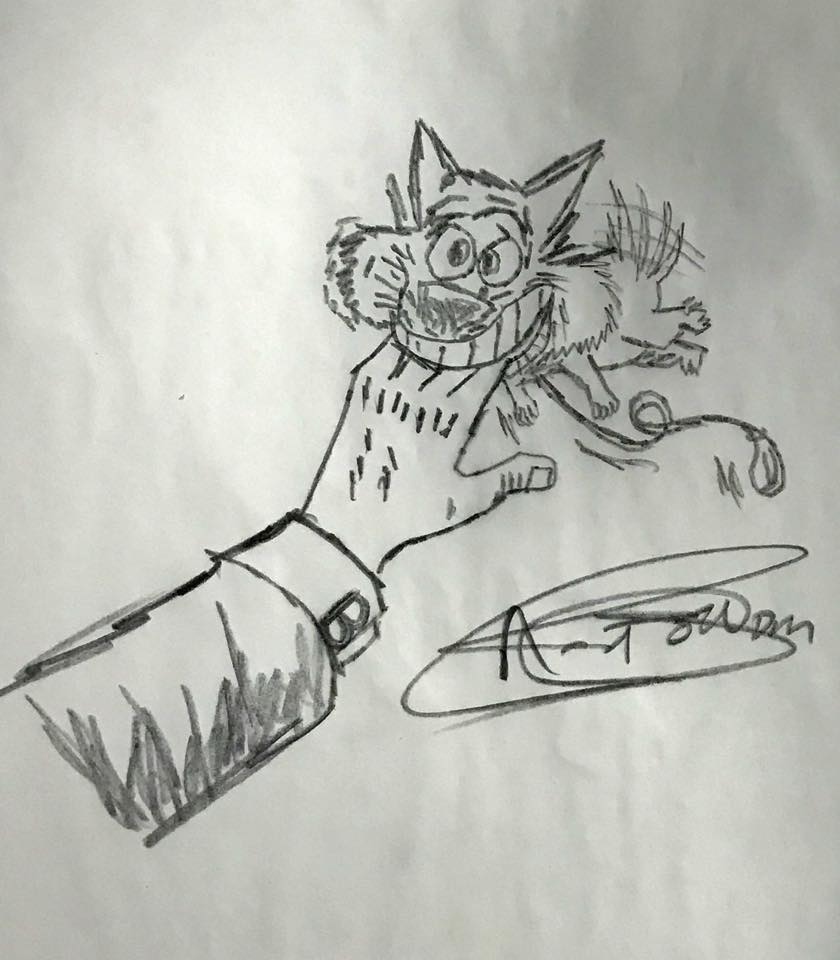
It was a routine appointment. Annual vaccinations and a wellness exam were needed. As I entered the room, Chispa, sat on the table glaring at me. As I reached down to auscultate the heart and lungs, Chispa absolutely went ballistic. Within 5 seconds, she had peed and soiled all over the tabletop. Instinctively, I reached for a muzzle. As I attempted to place the muzzle on her, she absolutely lost it.


Just like a loud clap of thunder that follows a flash of lightning; when I am bit by a dog, imprecations are sure to follow.
Chispa sunk her needle like teeth into my right hand and bit me again and again.


Before I could even mutter the phrase, “Oh S#*!”, this little devil had bitten me three times.


Her only goal seemed to be to inflict as much damage as possible to the man in a white coat that was reaching for her.
Blood poured down my hand. I sat stunned. I have fast reflexes; after all, I dodge bites and scratches on a daily basis.


What was different about this experience? Perhaps it was in the name. “Chispa” is a Spanish word meaning “spark”. Certainly, the fiery personality and name fit this small canine.


The rapidity of the attack taught me a lesson. I am much more careful now when dealing with seemingly innocent small pets. I do my best to reduce the fear and anxiety that accompanies a visit to the veterinarian.


And I am especially careful with pets that have incendiary names such as Diablo, Fuego, Demonio, Pyro, Hades, and believe it or not, Fluffy.

And that is my take!

N. Isaac Bott, DVM