The Red Handkerchief

My Take Tuesday: The Red Handkerchief

As a veterinarian, I all too often find myself in precarious situations.

Upon graduating from veterinary school in 2009, I moved back home here to Utah. My first job out of school was right here in Utah County.

It was not unusual for me to be called to attend a dozen or more lame and injured cows on a particular day. You might arrive to find them in a paddock with no sorting pen and therefore no means of restraining them for treatment. What are you going to do? Unfortunately, farmers often have the attitude that you’re the vet, they’ve called you out to do the job, so they expect you just to get to it. Often these cattle facilities left much to be desired. A few broken palates, some bent powder river panels and a welded together squeeze chute constitute pretty decent working conditions.

Usually, some unsatisfactory compromise could be sorted out which would reinforce the fact that you were not half as good as their old vets.

Max was no exception. He stood 6’1″ and was as skinny as a bean pole. He always had a runny, drizzly nose, and he kept a red handkerchief in the front pocket of his bib overalls. Max didn’t want a new young vet working on his cows. He was used to the old school way and had no reason to change.

I was greeted on one of these farm visits by this familiar refrain: “We used to use old Doc SoandSo. Have you heard of him? Best dairy vet in the county. Of course, you’re new and not used to dealing with dairy cows down here are you?”

Perhaps I am unduly sensitive but being told you’re second best before you’ve even begun is either irritating or depressing—depending on how your day has been. This day tipped more toward the irritating side.

Suzy was the name of his milk cow. She was a tall Holstein crossbreed cow. On this particular day, Miss Suzy stood in the knee-deep pasture staring at us as we entered the field. She was swollen up like an engorged wood tick. On her left side, her stomach was protruding so far that she was as wide as she was long. The diagnosis, even from afar was obvious.

She was bloated.

Bloat is a digestive disorder characterized by an accumulation of gas in the first two compartments of a ruminant’s stomach (the rumen and reticulum). Production of gas (primarily carbon dioxide and methane) is a normal result of fermentation processes. The gas is usually discharged by belching (eructation) but, if the animal is unable to remove the excess gas, pressure builds up in the rumen-reticulum exerting pressure on the diaphragm which prevents the animal from inhaling, and bloat occurs. The most common type of bloat is frothy bloat where gas builds up in a foam or froth above the rumen contents and the normal belching is inhibited.

Imagine a 40-gallon tub of partially digested green stomach contents. The pressure of this stomach is such that when it is alleviated, it is similar to popping a balloon, this disgusting smelly concoction will spew in a fashion similar to the Old Faithful Geyser.

Before we could even isolate her in the corner to begin treatment, Max decided he needed to blow his nose. As he pulled out his bright red handkerchief, he flipped it with his wrist and positioned it to evacuate his proboscis. Suzy caught sight of this red temptation and came charging full speed – like a freight train – straight for us. She was bellowing and blowing snot in a fit of rage.

In a situation like this, it doesn’t matter how quick you are. The only relevant assessment of speed is how fast you are in relation to the other person in the pasture. I figured I could beat Max to the gate but would feel guilty in so doing.

I braced myself for the impact. Max yelled, “Hey Now!”

Suzy collapsed just steps before she reached us. The massive pressure caused by the bloat had cut off her air supply. She lay in a heap in front of us.

The treatment for bloat in a case like this is to relieve the pressure as fast as possible. An incision in made through the left side of the abdomen and the rumen is decompressed. In a situation like this, you only have a few seconds to act. My surgical instruments were in my toolbox over by the gate. I knew there wasn’t time to retrieve them.

I reached in my pocket and pulled out my Old Timer pocketknife. I made a quick incision with the sharp point.

Immediately, air began spewing out. It sounded like removing a valve stem from a car tire. It whistled as the massive stomach returned to normal size. Shortly thereafter, Miss Suzy was back on her feet and back to her normal self.

As I prepared to leave, Max commented, “Hey Doc, I guess you are alright after all.”

Max then pulled out the red handkerchief and blew his nose as he inquired, “How much do I owe you?”

And that is my take!
N. Isaac Bott, DVM

9/11

My Take Tuesday: 9/11

Tomorrow marks 23 years since the fateful events of Sept. 11, 2001.

Alan Jackson’s poignant lyrics ask the simple question, “Where were you when the world stopped turning that September day?”

It was a beautiful morning in Trujillo, Peru. I was crammed inside of a small Tico model taxi. As we passed through the Monserrate neighborhood, I peered out the window at the solid brick buildings with their brilliant shades of brown and white. At this stage in my life, I was completing two years of service as a missionary for the Church of Jesus Christ of Latter-Day Saints. As we headed to the headquarters of the mission, the taxi driver turned up the radio.

After two years in Peru, I had mastered the Spanish language. This language is referred to in Peru as Castellano. I could sense urgency in the voice of the newscaster as the broadcast came across the radio. As he described the horrors that occurred that morning, he used the verb “clavar” (meaning “to nail”) in reference to the airplanes hitting the World Trade Centers. I remember the feelings of panic and despair that came over me after hearing the news.

Over the next few weeks, I would daily be approached by random people that could tell that I was from the United Sates. These wonderful people would express their heartfelt condolences about the tragic attack that occurred and about how Peru had experienced the horror of terrorism during the 1990’s.

Being on foreign soil was difficult on that day in 2001. I will forever be grateful for the kind hearts of the Peruvian people that reached out and made me feel comforted despite the uncertainty of what was going on back home.

At one extreme man is indeed a vicious killer. He has the capacity to destroy entire civilizations. He can spread the bloody dead and dying over miles of landscape without a touch of remorse. He can kill women and children for no better reason than that they differ in some trivial manner or they simply worship a different god.

Yet this mammal called man will risk his life to save a stranger’s child, or to rescue a dog who’s fallen into the river, and to save a small helpless kitten in distress. I salute those engaged in this good cause and stand with them in this dangerous world.

May we never forget the lives lost and the sacrifices made by the first responders and military personal that responded without question to the events on that September Day.

And that is my take!

N. Isaac Bott, DVM

My Life: I Appreciate It

My Take Tuesday- My Life: I Appreciate It

In February of 1980, a busy young couple worked tirelessly as they went to school and managed an apartment just west of Old Main near the Utah State University campus. The mother worked tirelessly in doting support of her husband. The father went to school full time and worked long shifts at a local cheese factory in the evenings. Their first child, a boy, was just beginning to walk and life seemed to be going smoothly. These lean days of struggle brought this couple even closer together as they faced the brambles and thorns, challenges, and difficulties most couples experience just starting out. Their dreams of the future were one step closer with each passing day.

Early one morning, the mother began to experience significant stomach pain. This sharp pain in the lower right side of her abdomen was unbearable. The worried young father rushed her to the hospital.

A diagnosis of appendicitis was made, and emergency surgery was required. The skilled surgeon performed the appendectomy without any complications.

As the surgeon explored the abdomen during the surgery, he noticed that this young mother was pregnant. This was completely unexpected. The medications used for general anesthesia were not approved for use in pregnancy, in fact studies showed that they caused birth defects when used during the first trimester.

The doctor stepped out of the surgery room to speak with the young father. He told him that his wife was pregnant, and that the anesthesia used posed significant risk to the heath of the baby. Birth defects and serious developmental problems were likely to occur. The likelihood of these complications was so great that the doctor recommended that the pregnancy be terminated.

The weight of the world was on the shoulders of this young couple. They were tasked with making such a difficult decision about the pregnancy and the potential outcome. Considering the future consequences of this decision must have been so stressful for each of them. The health of the young mother and the possible complications were carefully considered.

In the end, they chose to keep the baby and face the uncertainty of what was to come.

On September 4th, 1980, a healthy baby boy was born. The baby was free from any birth defects and the young mother did well following the scheduled caesarian section.

The child grew up normally and, along with his 4 siblings, has strived to contribute positively to this world.

I catch a glimpse of that baby born 44 years ago tomorrow, each morning when I look in the mirror.

How grateful I am that my parents made the choice continue with the pregnancy despite the risk. My very life was in their hands and, thankfully, they chose the path of uncertainty and risk.

My life has been filled with wonderful opportunities and experiences and I appreciate every day I have.

And that is my take!

N. Isaac Bott, DVM

Kaycee

My Take Tuesday: Kaycee


On June 6, 2005, my life changed forever. On that day, I became a father. This unforgettable day was filled with both joy and fear. My daughter, Kaycee, was born in the early morning hours. Soon after her arrival, doctors determined that she had a bacterial infection and subsequent septicemia. She was immediately rushed off to the NICU. This was a very scary time for her parents. You feel so helpless. We trusted in the doctors and the highly skilled nurses. After several hours, I was allowed to visit her in the NICU. 


When I first held her, I was filled with overwhelming feelings of joy, love, and fear. I was so elated to finally have my daughter in my arms. Seeing her tiny and fragile body was both miraculous and heartbreaking. She had monitors, bandage tape, IVs and wires all over. As I held her tiny fragile body and looked at her face, I fell absolutely in love.  Realizing how precious and fragile life was, I vowed to be the best father I could be.


Every subsequent night for the next few years, I would sing a Chris LeDoux song to Kaycee as she fell asleep. The song is called Daily Bread. 


The lyrics say:

“Lord I ain’t been a prayin man

I figure the whole worlds in your hands

Ask and you shall receive you say

So give me her love my daily bread


You can take everything I own

Every single seed I’ve sown

Still I know I come out ahead

If I have her love my Daily Bread


She is a raindrop in a drought.

She’s my faith when I’m in doubt

Like a river needs a riverbed

I need her love my daily bread


I don’t know why she’s chosen me

I live my life so selfishly

But I know until my dying breath

I’ll need her love my daily bread

And I know that I’m not worthy

But give me her love my daily bread”


Kaycee has grown up to be a smart, beautiful, and driven young woman. She is resilient and determined. Despite having faced more obstacles than most her age, her spirit and positive attitude continue to amaze me.


Kaycee began her missionary service this week. She will be serving in Oklahoma for the next 18 months. While I will miss her terribly, I am so proud of her and her desire to help others.


Seeing your kids grow up is a dichotomy of sorts.You are proud when they walk, scared when they run, and feel helpless when they have to go through difficult situations. Opening the gate and turning them lose into this crazy world brings happiness and profound sadness at the same time. I really do not know how else to describe the feelings I am experiencing.


Kaycee, I am so proud of you and of all of your accomplishments. You have so much to offer this world, and I am so honored to be your father. I love you!


And that is my take!

N. Isaac Bott, DVM


Kent B. McKell, DDS

My Take Tuesday: Kent B. McKell, DDS

As a young child, I absolutely hated brushing my teeth. I remember wetting my toothbrush with a small amount of water to make it appear that it had recently been used and returning it to the stand near the bathroom sink. In my four-year-old mind, I thought the idea was foolproof. My astute mother figured this ploy out rather quickly and required that my older brother observe me brushing my teeth. 

Looking back now, I think my disdain for brushing my teeth was simply that it was boring. Playing with my newest He-Man toys required every spare moment possible, and it seemed like a waste of time to have to stand in one place for 120 everlasting seconds moving a toothbrush back and forth inside my mouth.  

This all changed once I learned to read. One morning, while looking at my red Oral-B toothbrush, I saw the name, “Kent B. Mckell, DDS” engraved in gold lettering. I knew who Dr. McKell was. His dental office was located on the corner of 600 N. and Center Street in Castle Dale, UT. He was a very nice man. During a recent visit with him, he told me that it was very important for me to brush my teeth every morning and night.

This was a game changer for me; an esteemed and kind man asked me to do my best, and I wanted to be sure that I did not let him down. 

As a child, I had a significant speech impediment. I could not pronounce the letters “R” and “L”. I also stuttered horribly. I was completely unaware of these speech issues. Looking back at home videos, it is difficult to even understand anything that I said. The problem was so serious, that it took a couple of years of intense speech therapy to correct. 

Dr. McKell knew my name. He always warmly greeted me and asked how I was doing. He spoke to me, even as a 4-year-old child, like I was a friend of his. He never once grimaced or looked away as I spoke. He intently listened and made sure that in the moment that I was in his dental chair that I felt valued and respected. He heard what I said, not how I said it. He attentively and patiently responded to me with his charismatic demeanor and smile.  He had the unique ability to remember not only the names of all of his patients but also the small details of their lives. He knew the names of all of my siblings and would ask how each of them were doing at every visit. He was a hero to me. 

As I grew up, his generosity and kindness continued. After graduating from veterinary school, I had the opportunity to see him frequently and treat many animals on his farm. He was always happy to see me. He would ask about my family and would genuinely listen to everything that I said. Much of my bedside manner as a veterinarian is but a replication of the example he set for me.  

One  year ago this month, sometime in between the flicker of a beautiful orange sunrise and a crimson fire sunset in Spanish Fork, UT, God reached out His tender hand and gently pulled this wonderful man home with Him. 

Castle Dale, UT is a small town. There is no stoplight, no movie theater, no shopping center, and it has a population of less than 1500 people. It is a place where the paved roads grow ever smaller as the wide open desolate country begins. It would seem that such a small place would have little significance in the world of today. However, this notion is a prevarication. Folks like Dr. McKell prevent it from ever being so. 

Dr. McKell was one of a kind. He was a champion in my life. If you were lucky enough to know him, chances are, he was a champion and hero in your life also. 

And that is My Take!

N. Isaac Bott, DVM

The Making Of A Legend

My Take Tuesday: The Making Of A Legend

Dr Charles Leathers is the smartest person I have ever known. I had the privilege of meeting him during my first year of veterinary school. He taught the “Introduction to Pathology” class during my first spring semester in the College of Veterinary Medicine at Washington State University.

In early December of 2015, I traveled back to my alma matter as a guest lecturer. As always, I spent some time visiting with many of the professors that acted as mentors during my years as a veterinary student. I stopped in to speak with Dr Leathers on my last day at the school. He welcomed me in and spoke briefly with me. He was preparing for retirement after more than 30 years of teaching.

I cannot imagine my veterinary school experience without Dr Leathers. His class stands out for all of the veterinarians who were fortunate enough to have learned from him. He had a unique style of teaching. I still remember exam questions from his class 10 years ago. His lectures were legendary. He used an overhead projector like a boss. His style was one of a kind. His teaching inspired us. His assignments challenged us.

An example of this was shared by my entire veterinary school class. Dr Leathers spoke clearly and concisely. He desired all of his students to share in this quality. Nearly all of us use what are called fillers in our conversations. Filler can consist of words, such as “like,” or “you know,” frequently combined in the phrase “like, you know . . .” In these instances, the words are essentially meaningless except as conversation cues. A related phenomenon is speech disfluency, when one pauses in mid-sentence to try to recall the rest of the thought. Most of us are unaware of the extent we use fillers. The best way to become self-aware is to record a conversation or speech. This was Dr Leather’s way of teaching us to be better.

The task seemed simple. Prepare a 1 minute speech. Only 1 minute. It could be on anything you wanted to talk about. This 60 seconds of material needed to be memorized and presented to the 100+ member class. Each student’s speech was to be recorded.

Our assignment was to then take the tape home and play it back. We were required to write down exactly what was said (including the ums, sighs, coughs, grunts, ands, and other filler words we inadvertently use while speaking). This task is not a pleasant one. For most of us, these sounds are probably more common than the words between them. Following this, we were to correct the transcription and submit a final document stating what we should have said in the absence of filler words.

This exercise proved to be a learning experience. I became much more aware of my speech. I focused specifically on avoiding filler words. It changed the way I interacted with those around me. It helped me professionally.

Dr Leather’s has taught and influenced thousands of veterinary students over the years. His legacy is unparalleled at Washington State University. I count myself privileged to have been taught by one of the best.

My final question for this revered professor was simple. I asked, “You have had a remarkable career. What advice would you give to young veterinarians just beginning this journey?”

His response is one that I will forever remember.

“Just focus on your sphere of influence. Just do the best that you can and expect that others are doing the same.”

I think it would be wise for all to follow this cogent and concise advice from Dr. Charles Leathers.

And that is my take!
N. Isaac Bott, DVM

Sheep and Stoicism

My Take Tuesday: Sheep and Stoicism

Sheep can be stubborn. I remember as a child trying to herd our small group of ewes to a nearby pasture. Although it was only about a hundred yards away, it didn’t go well. As I turned the sheep out, they all began running in every direction. There was pure chaos. I ended up covered in sheep snot, lying on my back looking up at the blue sky. The sheep were all over town. Not one of them ended up in the desired pasture.

Not long after this, my very wise great uncle, Boyd Bott, taught me an important lesson. The trick was simple: “You can’t herd sheep. You have to lead them.” It is a lesson I will never forget.

Taking a pail of grain and walking out in front of the sheep will yield an opposite response than that described above. The sheep will literally run after you and follow where ever you want them to go. Every time I had to move the sheep from this time forward, it was easy.

Sheep have a strong instinct to follow the sheep in front of them. When one sheep decides to go somewhere, the rest of the flock usually follows, even if it is not a good decision. Humans are the same way. In the bible, humans are often compared to sheep. I find this comparison very accurate. We are stubborn. We resist when we are pushed. We follow when we are lead.

There is no better way to learn patience than having a small herd of sheep. They require much attention, protection and care.

Next time you find your patience running thin, think of exercising oversight instead of compulsion. It will most certainly yield a better result.

And that is my take.
N. Isaac Bott, DVM
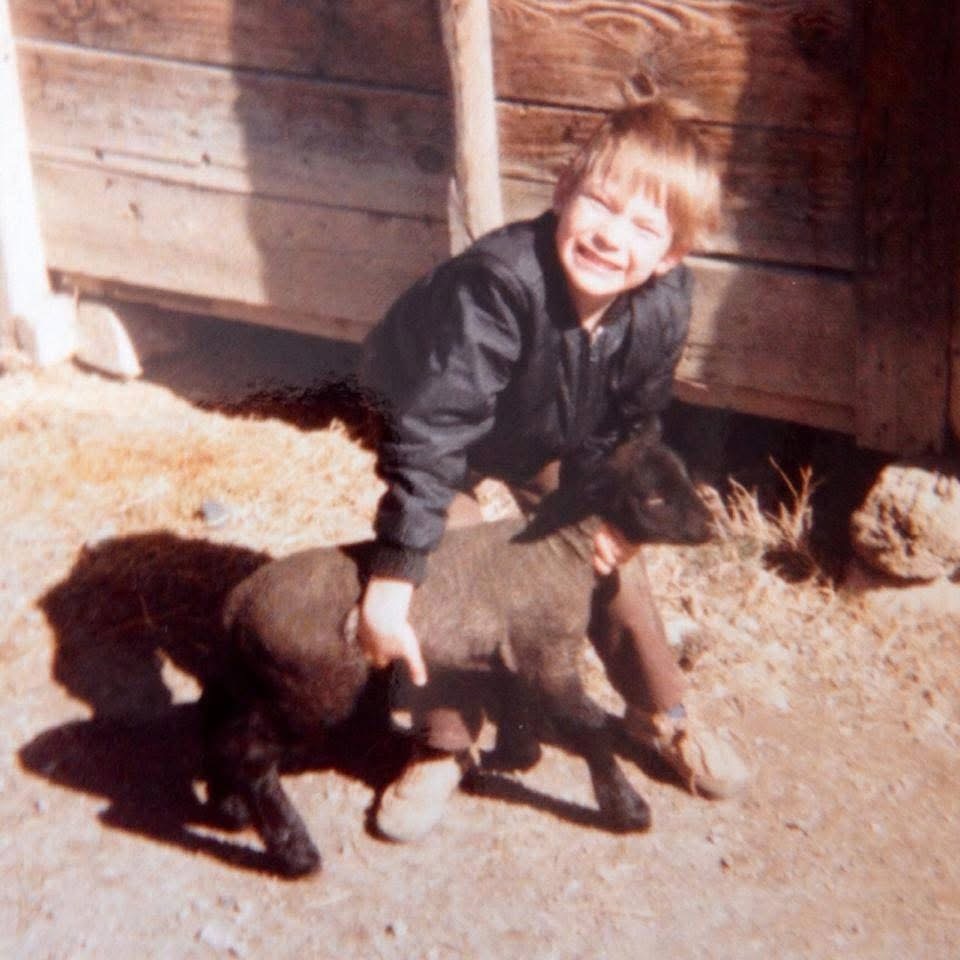
This photo is of Dr. Bott holding a newborn lamb on his family farm in 1985.

The Society for Theriogenology

My Take Tuesday: The Society for Theriogenology

Greetings from Oklahoma City! I am here to attend the annual conference of the Society for Theriogenology. This conference is an annual event that I have attended since 2007. Each year the meeting is held in a different city around the country. I eagerly await this conference each summer.

What is Theriogenology? Theriogenology is the branch of veterinary medicine concerned with reproduction, including the physiology and pathology of male and female reproductive systems of animals and the clinical practice of veterinary obstetrics, gynecology, and andrology. It is analogous to the OBGYN, Neonatologist and Andrologist of human medicine – all combined in a single broad specialization. From antelope to zebras, Theriogenologists work on all species of animals. It is a challenging, unique and rewarding discipline.

I became interested in theriogenology as an undergraduate at Southern Utah University. A professor and mentor named Dan Dail introduced me to this most unique area of veterinary medicine. I learned a lot from him. He entrusted me with a research project looking at the correlation of body condition scores and first service conception rates in heat synchronized beef cattle. His mentorship, along with this research contributed to my acceptance into veterinary school.

At Washington State University, I had the privilege of working extensively with Ahmed Tibary, a world renowned theriogenologist. He has made endless contributions in teaching, published books, chapters and scientific articles. His comparative approach taught me how to think and reason through difficult cases. He also entrusted me with the animals under his care. We published a significant amount of information on reproduction in alpacas. I remember with fondness my time working with him.

My theriogenology work has made me a better veterinarian. My clinical approach has been shaped and molded by the examples of so many mentors and teachers.

What drives me is the comparative medicine; that’s what makes my brain move. Whether I am in the clinic working on dogs or cats, or out working with bighorn sheep, elk, alpacas or water buffalo, I am doing what I love.

Upon a cabinet in the lobby of Mountain West Animal Hospital, a small statue sits. The statue depicts a bull named Nandi. Nandi is the white bull which symbolizes purity and justice in Hindu art and serves as the symbol of fertility in India. It is a Bos indicus bull anointed with gold and silver jewelry and its association in Hindu art and scriptures can be traced to the Indus Valley Civilization where dairy farming was the most important occupation. There are numerous temples in India dedicated solely to Nandi.

This statue was awarded to me after serving as president of the Society for Theriogenology in 2018. It is one of my most prized possessions. I am humbled by the opportunities that have come my way over the years as I have interacted with this unique group of veterinarians.

Kindness is a commonality among veterinarians who are reproductive specialists. They are approachable and humble. In a profession where arrogance often is the norm, they are a refreshing example of the best of the best. They are among the leadership at nearly every veterinary school in North America. They are leaving a lasting impression on the profession.

I am so proud to be a member of this group.

This is by far my favorite conference to attend. I look forward to learning from the best in the world this week and I can’t wait to apply what I learn at my own veterinary practice.

And that is my take.

N. Isaac Bott, DVM
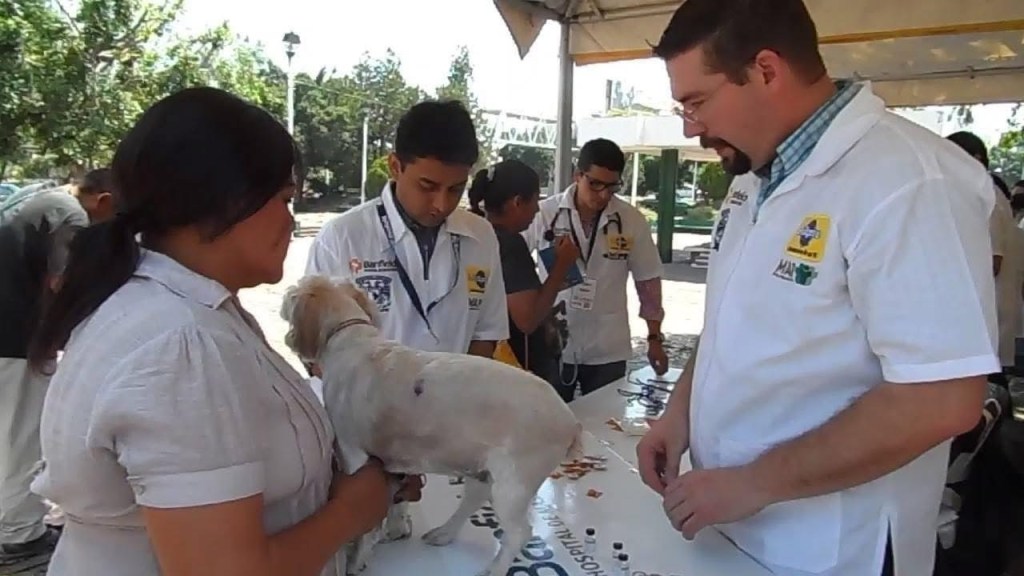
“Doc, whatever she has, I’ve got the same thing too!”

My Take Tuesday: “Doc, whatever she has, I’ve got the same thing too!”

Animals and people dictate what happens every day for me. Simple routine appointments can turn out to be complex once the unpredictable, yet potent potion of human personality is added to the mix.

A few months back an elderly woman came into the clinic. Her cat had been suffering for weeks with non-stop itching. As I examined the cat, I noticed that this itch was insatiable. The poor cat had scratched and irritated nearly every inch of its body in an effort to satisfy the intense itch. The scratching was so intense, that nearly her entire body was covered with bleeding sores.

A diagnosis of mites was made after taking a skin scrape and looking at it under a microscope. This particular mite is elusive and difficult to find even for the most experienced veterinary dermatologists. However, it is highly contagious.

As I began speaking with the owner about the severity of the diagnosis and the need for immediate treatment, I could tell that her mind was wandering. She was clearly not focusing on what I was saying. I politely asked if I had said something that did not make sense or if she had any questions. Often, the open-ended questions will allow a client to discuss their concerns, however, I was not prepared for what happened next.

“Doc, do you think I have what she has?”, her voice was inquisitive. 

“Excuse me?”, I replied, “What do you mean?” 

Before I could say another word, this elderly woman dropped her pants. Literally right to the floor. Her legs were covered in large red lesions. The marks were evenly spaced like squares on a checkerboard. 

I am easily embarrassed, and when this happens my face turns a deep red. I stammered, “I…. I’m… a… I am sorry ma’am; you will have to go to your doctor for that”. The beet-red shade on my face persisted even after I exited the room.

I learned that day, albeit involuntarily, what “granny panties” look like.

As crazy as this may seem, I have had worse things happen while going about my daily appointments. However, those are saved for another My Take Tuesday.

My job is never boring. The two-legged creatures that come in keep it from ever being so.

And that is my take.

N. Isaac Bott, DVM

Skunked

My Take Tuesday: Skunked

A few months back, a Boy Scout troop stopped by the clinic at the end of the day for a tour. As I showed them around and answered their questions, I couldn’t help but reminisce about my time as a boy scout.

The year was 1995.

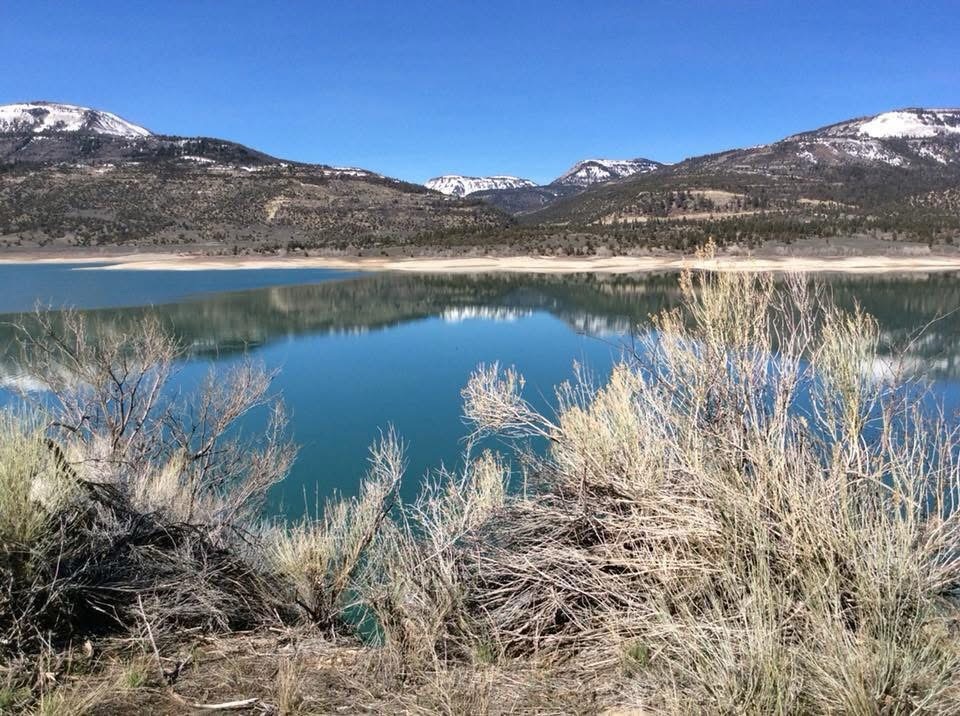
Boy scout troop 306 of the Castle Dale 1st Ward embarked on a week-long 50-mile hike during the month of July. The hike began on a Monday at Ferron reservoir and ended on Saturday at Indian Creek Campground in the beautiful Manti Lasal National Forest.

As a 14-year-old kid, I was just like most of the other boys in my troop: wholly naive and completely unaware of my ignorance. My sense of adventure far outweighed sound logic and I was prone to encounter trouble because of my mischievous nature. My little brother Caleb and my best friend Zac were my partners in crime and were witnesses to myriads of situations that shaped our imaginative Boy Scout days working on merit badges, monthly camp outs and high adventure events that eventually led to each of us earning the rank of Eagle Scout. These experiences consequently helped make us into the men we are today.

On the second night of this long hike, we made camp at a place called Cove Lake. This beautiful lake is just a few miles from the scenic skyline drive and is nestled in a large grove of Douglas Fir and Ponderosa pines.

As Boy Scouts do, we set out to set up camp and explore the lake. We soon found out that we were not the only species inhabiting the camp on this night. We shared the campsite with one of the most widely distributed mammals in North America, Mephitis mephitis, or the common striped skunk. The fecund creatures were everywhere. As we floated around the lake on a makeshift raft, we could see dozens of them around the water’s edge.

We clearly had a dilemma. Almost immediately, the skunks began ransacking our tents and food supply. These smelly striped critters were endlessly curious about the bipedal invasive species that had entered their territory.

Passive in nature, skunks will avoid contact with humans and domestic animals; however, when challenged they are amply prepared to protect themselves.

If a skunk feels threatened, it will give a warning which includes hissing, stomping of feet, and elevation of the tail. Failure to heed the warning signs will result in the unlucky aggressor being sprayed with the skunk’s anal gland secretions. Skunks are highly accurate in their aim and can spray 7 to 15 feet away!

A dozen rambunctious boys were immediately perceived as a threat by the striped beast. They seemed to coordinate the invasion of the camp, approaching from all directions.

A scout watching the skunk rodeo spoke to me, “Hey Isaac, if you hold a skunk by its tail, it can’t spray you.”

The notion had some truthiness to it, after all, if it can’t plant its feet, it likely wouldn’t be able to empty its scent glands.

Without any further thought, I reached out and grabbed the nearest skunk by the tail. I lifted it directly in the air and held it suspended with my arms straight out.

The little guy simply twirled slightly and lined his backside to my face and fiercely sprayed with all that he had.

It went directly in my mouth and up my nose. It covered my entire face, and some even got in my eyes.

I immediately began vomiting uncontrollably. By eyes burned and my vision became blurry.

What a lesson! Take my word for it, a skunk can certainly spray when its feet aren’t on the ground. This equivocated logic is dangerous.

As Mark Twain once observed, “It ain’t what you don’t know that gets you into trouble. It’s what you know for sure that just ain’t so.”

The odeur fetide that I experienced is a thick, volatile, oily liquid that obtains its pungency from sulfur-based thiols. There in nothing that smells worse than skunk spray inside your nose!

It took weeks before I stopped smelling skunk.

Frantically, I raided the food tent in search of cans of tomato juice. I found 8 cans and a can opener. I then took a tomato shower. I scrubbed my head and every inch until my whole body was covered in tomatoes. You haven’t lived until you take a shower in tomato sauce.

The rest of the week proved to be much less adventurous. I was forced to sleep in my own tent, and I walked behind everyone else along the trails.

Now when I see a skunk, I give it plenty of space. And I tell everyone that I can that contrary to popular myth, a skunk can spray even when being held off the ground by its tail!

And that is my take!

N. Isaac Bott, DVM