Sunday Stanza: A Buckskin Rodeo and a Fence with No Mercy
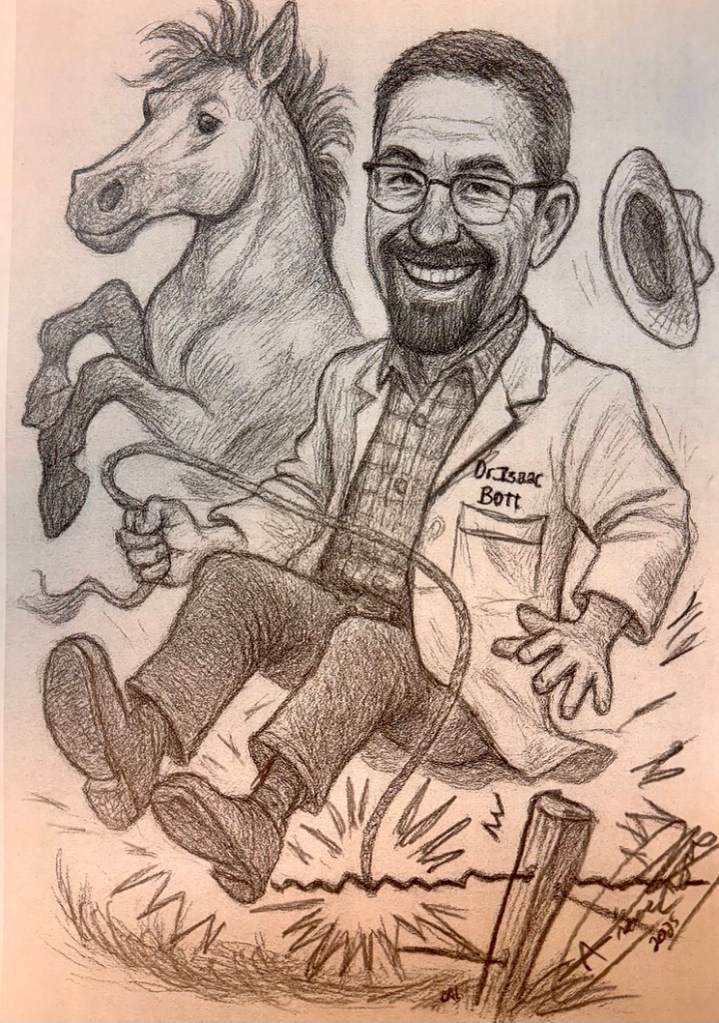
I pulled in that morning to a small country farm, With a few wiry horses, each brimming with charm. That fence was strung with a hot, buzzing line— The owner assured me, “It’s off, you’ll be fine.”
A buckskin was waiting, a spirited brute, Fifteen hands tall and impressively stout. He danced, and he snorted, no halter, no tack— Just a sarcoid to check on the side of his snout.
But the gelding, it seemed, had no plans to comply— He wheeled, and he bolted each time I got nigh. So I reached under my truck seat, cool as you please, And fetched my old orange lariat, handy with ease.
With a soft, practiced toss, the loop found his poll, But that buckskin exploded—he lost all control! He jumped to the left, I flew to the right— And landed, backside, in an electrified plight.
Zap! Crackle! Sizzle! My seat met the wire— A rhythmic assault like a live cattle fryer. I hollered, “You liar! It’s hot as can be! You said it was OFF—it just sizzled my seat!”
The owner looked sheepish, his hat in his grip. “Well shoot, Doc, I guess I forgot that last switch. Sure sorry ‘bout that,” he said with a grin, While I rubbed my poor backside, still buzzing within.
So, here’s my take, when you’re out checking steeds: Confirm the fence twice before tending their needs. ‘Cause a buckskin’s got fire, but the wire’s got bite— And a zapped veterinarian’s rump ain’t a pretty sight.
Ask any veterinarian who’s worked with large animals long enough, and they’ll usually have a story to tell—a scar they carry, a limp they’ve learned to live with, or an internal ache that flares up every now and then to remind them they’re mortal. We don’t often talk about these injuries. Maybe because they feel like the cost of doing business. Maybe because they remind us of the thin line between control and chaos in this job.
For me, that reminder lives on the right side of my body: a kidney that doesn’t sit where it used to.
It happened during a long day of pregnancy checking cattle. If you’ve never had the pleasure, here’s the glamorous rundown: you put on a long plastic sleeve, slide your arm into the rectum of a cow, and carefully palpate for fetal membranes. It’s part science, part feel, and all grit. After a few hundred cows, your arm is sore, your back is tight, and you’re starting to question your life choices. But there were only two cows left. Just two.
That’s when I made the mistake.
In my haste, I entered the side gate of the chute without closing off the alley behind me. The cow in the alley saw an opportunity—and took it. She lunged forward, pinning me between herself and the cow already restrained in the chute. Cows don’t just push. They drive. With a thousand pounds of force and not an ounce of hesitation.
I felt it immediately—an unnatural pressure deep inside me, the kind of pain that pushes the breath out of your lungs and replaces it with panic. My organs were being crushed. There was no escape, no leverage. The owners quickly released the cow in the chute and, as the other cow barreled through, the pressure let up. I collapsed in the back of the chute, dazed, hurting, and trying to convince myself I hadn’t just lost a vital organ.
The final diagnosis? A torn kidney. My right one. It had been yanked from its usual home in the retroperitoneal space and now floats—free-spirited, if not entirely cooperative—inside me. It still works. But going on spinning rides like the Gravitron at the county fair? Not recommended.
We joke sometimes about how this job takes a piece of you. For me, it took a kidney’s anchor point. But it also gave me perspective. I’m a little slower now. A little more cautious. I triple-check gates. I don’t rush the last two cows. And I carry a deep, embodied respect for the sheer power of the animals we work with—because I’ve felt it firsthand.
Veterinary medicine isn’t always glamorous. Sometimes it’s bloody, messy, painful, and humbling. But it’s also real. And honest. And worth it.
Even if it rearranges your insides a bit along the way.
It was ninety-two in the noonday sun, When I got the call: “Doc, better run!” “She’s down in the paddock, she’s pacing the pen— I think that alpaca’s tryin’ again.”
Now llamas are loud, but alpacas are sly. They’ll blink real sweet, then spit in your eye. And this one? A diva. Big lashes, small grace, Who made it real clear she disliked my face.
I arrived with a kit, sweat down my back, The air was like soup and the paddock all cracked. She groaned and she grunted and kicked at the sky, With a look that said plainly: “You touch me, you die.”
Still, in I went with my best poker face, Dodgin’ her toes in that tight little space. One leg was stuck, the head just peeked, The timing was bad, the heat at its peak.
A twist, a shift, and a careful slide, I coaxed him out from the breech inside. Tidy and lean with a mop of red fluff, He hit the ground breathing — just tough enough.
She leapt to her feet with a screech and a glare, Gave me a sniff like I’d messed up her hair. Then turned on a dime, sniffed her boy, And let out a sound that was oddly joy.
He wobbled and blinked in the summer haze, Took three wrong turns, then found his way. Latched on hard like he’d studied the plan, And I wiped my brow with a shaky hand.
There ain’t no band, no medal to pin, For coaxin’ life from where it’s been. But now and again, you get to stand— Sweaty and spit-on, covered in sand— And witness something better than pay: A cria born on a hot summer day.
Some days, I pull into the clinic parking lot and just sit there for a moment. Engine off. Hands on the steering wheel. Staring ahead at a building I know like the back of my hand. There are mornings I’m already tired before I even step through the door.
Maybe it’s the phone call from a grieving client that still echoes in my head.
Maybe it’s the patient I lost last night despite doing everything right.
Maybe it’s just the wear and tear that comes from carrying too many stories in one pair of boots.
Veterinary medicine is a calling, but some days it feels more like a crucible.
We often work through lunches. We miss birthdays. We answer frantic messages at 10:42 p.m. about a dog who “just started acting funny.” We witness the last breath of beloved companions and hear the unspoken heartbreak of owners who blame themselves. We do it all with our hearts wide open—and sometimes, they break too.
So why do we keep showing up?
We show up because of the border collie who finally walks again after weeks of therapy.
Because of the kid who hugs their kitten a little tighter after we saved it from pneumonia.
Because of the couple who brings cookies to say thank you—six months after we held their hand through goodbye.
We show up because the work is hard—but holy.
Because there’s something sacred about stitching life back together with your own two hands.
Because there’s beauty in being the one who stays calm when the world feels like it’s unraveling.
Because sometimes, against all odds, we win.
We show up for the sunrise farm calls, the miracle calves, the unexpected recoveries, and the steady rhythm of purpose that pulses through this strange, beautiful life.
I once heard someone say that resilience isn’t about being tough—it’s about being tethered. To meaning. To community. To the deep-down belief that what you do matters.
And I believe that.
Even on the hard days—especially on the hard days—I remind myself of the MMA fighter who cried when his dog made it through surgery safely. Of the child who named his kitten after me. Of the quiet nod from a client who doesn’t say much but trusts me just the same.
Sunday Stanza: The Castle Valley Pageant (1979-2018) It’s one hundred sixty miles, round trip at best, From Springville to the old homestead west. The roads aren’t paved with glory or gold— Just gravel and stories our ancestors told.
We load up the truck with a cooler and hope, Some snacks, and a prayer that the brakes can still cope. It’s a long way to travel just for a peek at the past, But the echoes out there have a voice that can last.
Out near the buttes where the blue clay will bake, You’ll find faded headstones and one leaning stake. The sagebrush is thick, and the signage is thin— Yet the memories call like a whispering wind.
It’s not written fancy. No flourish, no spin. Just truth from the page of a hand-calloused kin. Their lives weren’t loud, but their legacy grows, Like cottonwoods sprung where the old river flows.
They carved out a life in the driest of dirt, Raised babies and barns in a Caste Valley skirt. They fought off despair with hymns, hope, and a plow, And whispered their prayers through the sweat on their brow.
It’s a long way to drive just to sit and to feel, But it humbles a soul in a way that is true and real. So, I turn off the engine, just breathe and be still— As the wind whispers the tales that it’s telling me still.
We come for the pageant when summer is here, When twilight spills soft on the sandstone and deer. It’s more than a show—it’s a soul-stirring rite, The Castle Valley Pageant under blinding spotlight.
Head north out of Castle Dale, where memories load, Just drive north, on the old Des-Bee-Dove Road. Up where the hills meet the steep cliffs in a straight line, At the base of East Mountain, carved deep with time.
And Montell Seeley—God rest his kind soul— Breathed life into stories that made our hearts whole. He penned every line with the weight of their truth, A steward of memory, a giant of my youth.
The stories he wrote are our marrow and bone— Of those who made homesteads from blue clay and stone. With lines pulled from journals and truth on the stage, They breathe life once more into history’s page.
We walk where they walked, boots soft in their dust, Their journals still speak with a reverent trust. One part in the script always tightens my chest: When baby Joey dies and is then laid to rest.
Joe and Tilda, with grit in their gaze, Built dreams with bare hands in the harsh desert haze. She laughed through the dust; he prayed through the flood— Their love ran as deep as the San Rafael’s blood.
Wink and Anna, kind hearts wrapped in grace, Turned a dugout and dirt into homeplace and lace. He’d sing to the stars, she’d hum while she’d sew, And their names are still whispered where the wild grasses grow.
John and Clara, with faith firm and wide, Weathered both childbirth and cattle that died. She wrote in her journal, about the barren and desolate space, “Damn the man that would bring a woman to this God forsaken place.”
And Abe and sweet Neva, steadfast and strong, Their story still dances through pageant and song. They carved their devotion from rock and from will, And their echoes remain on that wind-silent hill.
Now children sit cross-legged, wide-eyed in the dirt, While actors in bonnets replay all the hurt, And the hope, and the heartache, the fire, and the frost— Each scene a reminder of all that was lost.
But also of courage, and kin by the score, Who dreamed of a valley and settled much more. Their names might not echo in marble or brass, But they left us a legacy rooted in grass.
So, we drive the long miles, year after year, To remember the voices, we still hold dear. It’s history, yes—but it’s family, too, In Castle Valley, beneath skies so blue.
And when lanterns are lit and the hush fills the air, I swear I can see them still standing there— Joe and Tilda, Wink, and his bride, John and Clara with Abe by Neva’s side.
No spotlight required, no grand curtain call— Just a stage in the desert where memory stands tall. And a people who honor, with hearts true and fast, That long, sweet journey into the past.
The pageant has faded, its scenery now still, No voices at dusk on the rocky orange hill. But the stories still echo in hearts that recall, And the spirit of Castle Valley still stands, after all.
Greetings from 30,000 feet! I’m en route to Sacramento, California for one of the highlights of my professional calendar—the annual conference of the Society for Theriogenology.
After years of virtual meetings and remote learning, it’s a gift to once again gather in person. There’s something irreplaceable about face-to-face conversations, hallway catch-ups, and hands-on learning that simply can’t be replicated on a screen.
This conference has been a summer tradition for me since 2007. Each year it’s hosted in a different city, but the anticipation is always the same—I count down the days until I can reconnect with friends and colleagues who share my passion for animal reproduction.
So, what exactly is Theriogenology?
It’s the branch of veterinary medicine focused on reproduction: the physiology and pathology of male and female reproductive systems across species, as well as veterinary obstetrics, gynecology, and andrology. In human medicine, it would take an OB-GYN, a neonatologist, and an andrologist to cover what a single theriogenologist does. From antelope to zebras, from embryos to parturition, this field demands curiosity, precision, and a deep understanding of comparative biology.
My own journey into theriogenology began at Southern Utah University. A mentor named Dan Dail introduced me to the discipline and entrusted me with a research project exploring the relationship between body condition scores and conception rates in synchronized beef cattle. That experience—and his mentorship—helped shape my path to veterinary school.
At Washington State University, I had the privilege of learning under Dr. Ahmed Tibary, a world-renowned theriogenologist whose influence spans textbooks, research papers, and generations of veterinarians. His comparative approach taught me how to think critically and reason through complex cases. We worked together on numerous studies, especially in camelid reproduction, and those years remain some of my most cherished.
Theriogenology has sharpened my clinical instincts and broadened my view of medicine. Whether I’m in the clinic with cats and dogs or out working with elk, alpacas, or water buffalo, the principles I apply come from this foundation. Comparative medicine is what makes my brain move—it’s where science meets curiosity, and where I feel most at home.
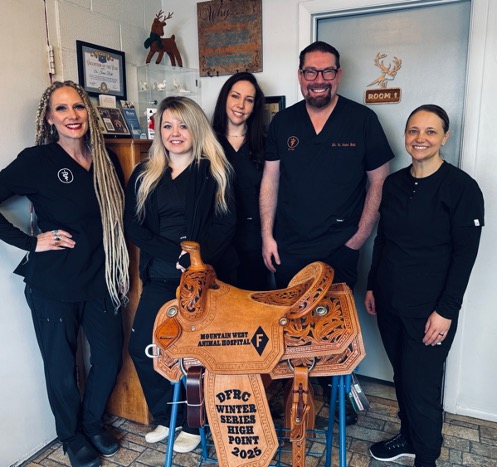
In the lobby of Mountain West Animal Hospital, a small statue rests on a cabinet—a gift from my time serving as president of the Society for Theriogenology in 2018. It’s a depiction of Nandi, the sacred bull of Hindu tradition, symbolizing purity and fertility. Nandi is a Bos indicus bull adorned with gold and silver, tracing back to the ancient Indus Valley Civilization, where dairy farming was central to life. Temples in India still honor him to this day.
That statue is one of my most treasured possessions. It reminds me daily of the journey I’ve taken and the people who’ve shaped it.
What sets reproductive specialists apart, in my experience, is kindness. They are approachable and generous with their knowledge. In a profession that can sometimes reward ego, these veterinarians lead with humility. Many serve in leadership roles at veterinary schools across North America, quietly shaping the future of our field.
I’m proud to stand among them.
This is my favorite conference of the year. I’m eager to learn, to grow, and to bring new knowledge back to my practice. And I’m grateful—for the mentors, the friendships, and the beautiful, challenging, ever-evolving world of theriogenology.
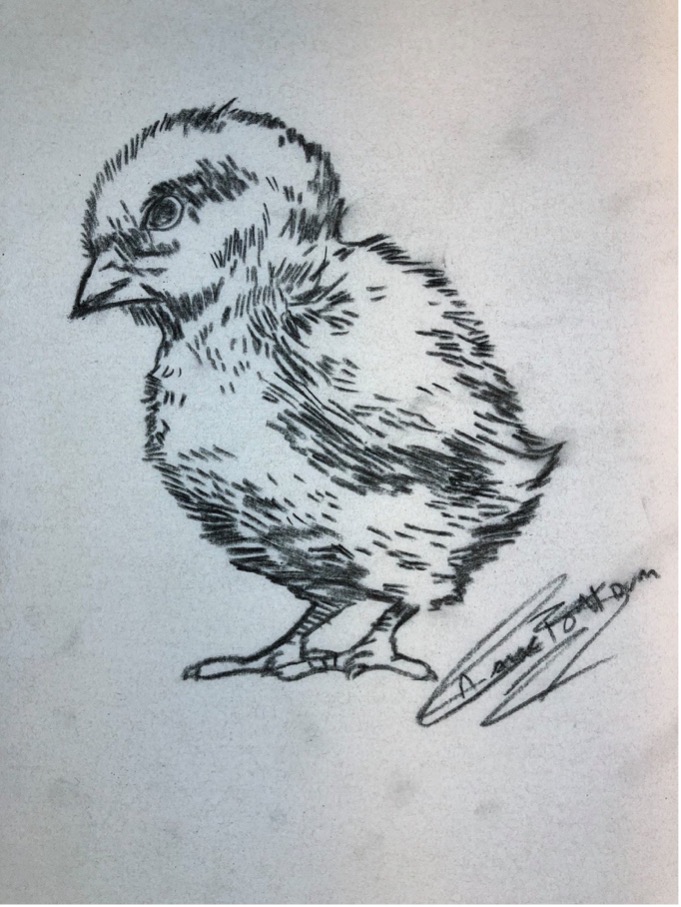
In April’s thaw, when pastures green Begin to pierce the frost between, And robins sing with springtime cheer— That’s when the baby chicks appear.
A cardboard brooder, heat lamp’s glow, Newspaper lined in tidy rows, A chorus starts—so soft, so sweet— A peeping sound beneath my feet.
Each morning, I would kneel and tend, A caretaker, a guardian, a tiny friend. I learned their ways, their fragile signs, With mash and drops and poultry rhymes.
They’d sip, then raise their heads in prayer— A skyward gulp of basement air. I’d watch, wide-eyed, with earnest grace, As feathers sprouted into place.
But some grew weak, and some grew still, And tears would come against my will. In mourning, truth came into view— Life births both joy and sorrow, too.
Soon came the eggs, in gentle hues— A basket filled with nature’s muse: Green like spring, and red like clay, Soft brown kissed by the break of day.
And in my dreams, I’d lift and glide, Above the coop, the field, the tide Of earthbound things that longed for flight— Their wings too short, their grip too tight.
I’d join the birds, the eagles proud, And soar beyond the cotton cloud, Returning at the morning light To chores and school and boots pulled tight.
But now, as years have flown their course, And time has run its steady force, I find those moments still remain— Like sunlit drops of April rain.
A chick’s soft peep, the scent of hay, A mountain creek that sings all day— These simple gifts, so often missed, Are where life’s deeper meaning twists.
So, may we greet the world once more. With open hearts and eyes that soar, With wonder, care, and ears to hear.
The peeping sound that draws us near. For in the hush where springtime starts, The world is mended—Chick by chick, And heart by heart.
I love the smell of campfire smoke clinging to a hoodie after a night under the stars. I love the thunder of hooves at the rodeo, the twang of a guitar at a county fair, and the soft splash of a fishing line hitting still water. I love that people seem to smile more in July. Maybe it’s the sun, or maybe it’s the way grilled food and celebration bring us all a little closer.
But as a veterinarian, I’ve also learned that summer carries a shadow.
Each year, I see it in the panting, trembling bodies of dogs rushed into our clinic—tongues bright red, eyes glazed, pulses pounding beneath fur that never got the chance to cool down. Heat stroke doesn’t knock—it barges in. And it doesn’t just take the old or the weak. It takes the healthy. The young. The ones who were “just going to be in the truck for a minute.” The ones who chased the ball just one time too many.
I’ll never forget a black Labrador that collapsed at a family BBQ. He’d been romping with the kids, stealing hot dogs off the grill, tail wagging and tongue lolling—until he wasn’t. By the time they brought him in, he was already slipping away. His core temperature was 107. He didn’t make it.
That’s the problem with dogs—they love too hard and stop too late. They don’t complain until it’s already too critical.
So, here’s my summertime plea:
If it’s too hot for your bare feet on the pavement, it’s too hot for their paws.
If it’s too hot for you to sit in the car with the windows cracked, it’s too hot for them to wait there—even for “just a minute.”
If your dog is panting heavily, slowing down, drooling excessively, or seeming confused—stop. Find shade. Get water. Cool them down.
And don’t be fooled by clouds or breeze. Utah heat can sneak up fast.
I want your dogs to enjoy summer just as much as you do. I want them at the fishing hole, wagging their tails beside the campfire, or curled up on the porch after a day at the lake. But I also want them alive. Safe. With you.
So be their voice when the thermometer climbs. Be their protector when they’re too happy to know better.
Sunday Stanza: Liberace, the Turkey-Hearted Peahen
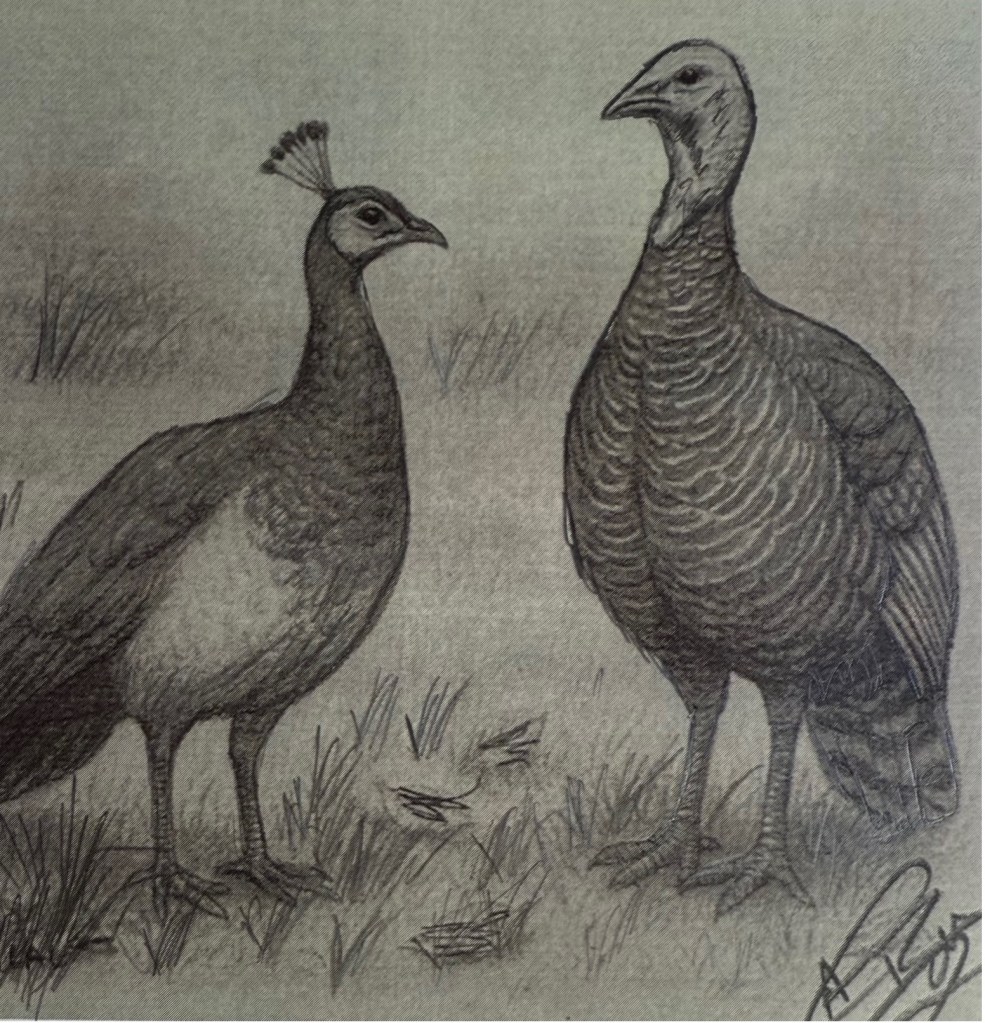
Now most backyard tales start simple and sweet, With chicks in a coop or hens on a beat— But this one begins with a turkey named Karen, Whose maternal ambition was downright declarin’.
Each spring she’d sit with unshakable will, On a nest full of nothin’, just dreamin’ her fill. She fluffed up her feathers and clucked with conviction, But year after year brought the same contradiction.
No chicks. No peeps. No proud little brood— Just disappointment beneath her good mood. But Karen, you see, ain’t the quittin’ kind. She had mothering burned into her bird-brain mind.
Then one spring morn, with a wink from above, Or perhaps just a veterinarian’s soft-hearted shove, A different egg landed in her old nest— Not turkey, but peafowl—tan-shelled and blessed.
She took to that egg like it came from her soul, Kept it warm through the chill, never losing control. And when it hatched out? Well, bless her dear heart— She welcomed a squawk with a whole different start.
She was lanky and loud, with eyes full of sass, Tail feathers twitchin’ like blades in the grass. Her call was a shriek that could rattle a barn, And her strut? She had that peahen charm.
We named her Liberace—it just felt right, With a showman’s soul and a flair for delight. She marched through the yard like a Vegas parade, While Karen kept watch in the cool morning shade.
Now Liberace, though born from a turkey’s embrace, Grew a head with a crown full of vertical grace— Those slender plumes of green and blue stood tall, Forming a feathered delicate tiara, the envy of all.
Now the tom looked puzzled, the chickens dismayed, But Karen stood proud of the child she’d made. “Doesn’t matter,” she clucked, “if she gobbles or screams— She’s mine, and she’s perfect, and born of my dreams.”
So, if ever you think love comes just one way, With feathers that match or the right DNA, Remember the tale of the turkey who believed— That love’s not in looks, but the care we conceive.
A turkey named Karen, a daughter full of flash, A tale stitched in laughter with heartstrings and hash. And though she may strut with a fan fit for kings, She learned how to love from a peahen’s colorful wings.
Reindeer calve in the spring—April and May, typically—when the days grow longer, and the earth begins to warm. There’s wisdom in that natural rhythm. Calves born during this window have the best odds: they are carried to full term, born into a world where the conditions are gently improving, where warmth and forage steadily increase. Nature, when left to its design, rarely miscalculates.
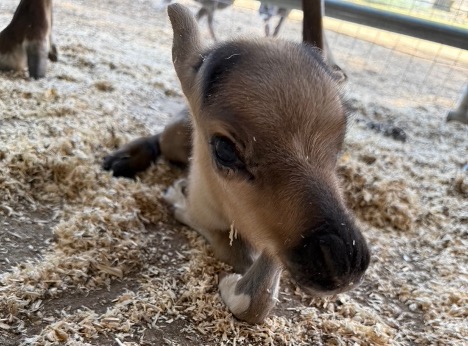
But sometimes, for reasons we don’t fully understand, things don’t follow the plan. A calf comes too early. A placenta detaches. A mother delivers before the lungs are ready, before strength has found its way into the legs. These calves enter the world not with a leap, but with a struggle. They are premature, small, quiet. Their eyes blink open with a gentleness that feels like a whisper—and yet, everything in you wants them to roar to life.
This past week, I lost a calf. A little female. She was sweet and wide-eyed, with ears like velvet and the tiniest trace of spunk, even in her weakness. We did everything we could—plasma transfusions, oxygen, heat, tube feedings every two hours. We wrapped her in blankets, lifted her gently to try and help her stand. We whispered encouragements that she didn’t understand, but that we needed to say anyway. We watched. We waited. We hoped.
But sometimes, even everything isn’t enough.
There’s a deep ache in losing an animal you’ve tried to save. It’s not just the absence they leave—it’s the stillness that settles in after the last heartbeat, the quiet heartbreak that lingers in the stall, and the way the mother circles, confused and grieving in her own silent language. I’ve seen a lot of life in this work, but death always stings. It chips away at you in small, unspoken ways.
This isn’t the part we like to talk about. When people think of animal care, they picture baby animals wobbling to their feet, warm bottles in the barn, fuzzy faces nudging your hand. And all of that is real. But so is this—the loss, the helplessness, the heavy truth that even our best efforts sometimes fall short.
And yet, we keep showing up. We keep raising animals. We keep loving them, caring for them, mourning them. We do it again and again, because the joy outweighs the grief, even if just barely sometimes. Because each life is worth it, no matter how brief. Because even a short chapter can change you.
She didn’t get to grow up. But for a few hours, she was deeply loved.





 DocBott