Category: Uncategorized
The Parsimonious Pyometra

Apart from preventing unwanted pregnancy, routine spaying of female dogs has been historically recommended for two reasons: 1) Reduce the incidence of mammary cancer, and 2) Prevent the female from developing pyometra later in life. This is caused by a bacterial infection of the uterus resulting in a potentially fatal infection.
The word pyometra can be divided into two root words: Pyo meaning pus and Metra referring to the uterus. A pyometra starts after a dog goes through a heat cycle, usually within about 2 to 5 weeks. A pyometra develops due to repeated prolonged exposure of the estrogen-primed uterus to progesterone (estrogen increases the number of progesterone receptors in the endometrium). Female dogs are prone to uterine disease due to the unique nature of cycling in this species. As infection develops in the uterus, the uterus fills with pus. The most common bacteria isolated in these cases is E coli. The uterus with a pyometra can be huge! I have surgically removed an infected uterus weighing over 11 pounds from a 56 pound Golden Retriever.
The clinical signs associated with this disease are anorexia, depression, drinking and urinating more frequently, abdominal distention, and sometimes a vaginal discharge is noted. Vomiting and diarrhea may also be present, especially late in the course of the disease. If any of these clinical signs are noted in your pet – immediate veterinary consultation is imperative.
Females that develop pyometra have an underlying condition called cystic endometrial hyperplasia. Most intact females older than 5-6 years have some degree of this. The vast majority of cases are treated by removing the infected uterus and ovaries. This surgery is very difficult and much more expensive than a traditional spay. There are many more post-operative complications that may arise that are not associated with a routine spay.
These include:
Peritonitis – infection of the abdomen
Disseminated intravascular coagulation – a clotting disorder that is often fatal
Sepsis – occurs when chemicals released in the bloodstream to fight an infection trigger inflammation throughout the body. This can cause a cascade of changes that damage multiple organ systems, leading them to fail, sometimes even resulting in death.
It is simple to avoid this. Females not intended for breeding should be spayed at a young age. Females used for breeding should be closely monitored by both the owner and the veterinarian.
If you are hesitant to spay your pet because of the cost of the routine surgery, you must consider the cost of an emergency pyometra surgery also. Such a surgery is at least 3-5 times higher than what a routine spay would be.
At Mountain West Animal Hospital, we discuss both the benefits and detriments of routine spays and neuters and strive to help you make the best decision for the health and well-being of your individual pet. You can count on us as a trusted partner in the care of your four legged family member.
N. Isaac Bott, DVM
The Attribute of Adaptability

Whatever she’s got, I’ve got the same thing too

Animals and people dictate what happens every day for me. Simple routine appointments can turn out to be complex once the unpredictable yet potent potion of human personality is added to the mix.
A few months back an elderly woman came in to the clinic. Her cat had been suffering for weeks with non-stop itching. As I examined the cat I noticed that this itch was insatiable. The poor cat had scratched and irritated nearly every inch of its body in an effort to satisfy the intense itch. The scratching was so intense, that nearly her entire body was covered with bleeding sores.
A diagnosis of mites was made after taking a skin scrape and looking at it under a microscope. This particular mite is elusive and difficult to find even for the most experienced veterinary dermatologists. However, it is highly contagious.
As I began speaking with the owner about the severity of the diagnosis and the need for immediate treatment, I could tell that her mind was wandering. She was clearly not focusing on what I was saying. I politely asked if I had said something that did not make sense or if she had any questions. Often, the open ended questions will allow a client to discuss their concerns, however, I was not prepared for what happened next.
“Doc, do you think I have what she has?”, her voice was inquisitive. “Excuse me?”, I replied, “What do you mean?” Before I could say another word, this elderly woman dropped her pants. Literally right to the floor. Her legs were covered in large red lesions. They actually looked like checker boards. I learned that day, albeit involuntarily, what “granny panties” look like.
I am easily embarrassed, and when this happens my face turns a deep red. I stammered, “I…. I’m… a… I am sorry ma’am, you will have to go to your doctor for that”. The beet-red shade on my face persisted even after I exited the room.
As crazy as this may seem, I have had worse things happen while going about my daily appointments. However, those are saved for another My Take Tuesday.
My job is never boring. The two legged creatures that come in keep it from ever being so.
And that is my take.
N. Isaac Bott, DVM
Full Circle
The sun reflected off of the windows of the busses as I stepped out of Bustad Hall. I could feel the sweat drip off the palms of my hands. As I walked across the parking lot, I lugged my suitcase behind. I was surrounded by unfamiliar faces. As I boarded the bus, I peered out the window at the long line of strangers. I nervously realized that I didn’t know a single person. As we headed north through the rolling wheat fields of the Palouse, I thought about the upcoming days. The destination was Ross Point, a beautiful camp nestled along the scenic Spokane River. The next several days were to be spent with my 100+ of my veterinary school classmates at an event called the Cougar Orientation Leadership Experience (COLE).
This program challenges incoming students to define their personal strengths and goals, build community with fellow students and faculty and consider their evolution from students to outstanding professionals. Veterinary schools across the world have modeled their orientation programs after this unique visionary experience first conceived at Washington State University.
The next several days were filled with challenge by choice activities. I remember getting to know the people that I would spend the next 4 years with. It was a pleasant experience and a time of preparation and reflection. It was so helpful to have this experience prior to beginning a rigorous four-year program of veterinary education. This camp helped acclimate me to professional school, and set the foundation for cooperation and teamwork over the next four years.
This past week, I returned to the Cougar Orientation Leadership Experience at Ross Point. I joined the class of 2021 as they kicked off their 4 years of veterinary school. I gave talks about the ups and downs of veterinary school and the opportunities that lie ahead following their graduation.
The experience was surreal. 12 years have flow by so quickly! In so many ways, it seems like just a few months ago, that I sat in the very seats the new students now occupied.
I saw the excitement in their eyes. I caught a glimpse of the dreams they have. I interacted with them late into the evening each night. It was a treasured experience and a true honor for me to be able to spend time with such a tremendous group of students.
Time moves so quickly. As I look back on the last 12 years, I see the tremendous growth that I have experienced. The thousands of long arduous hours spent studying while in school are now just a fleeting memory. The classmates who became some of my dearest friends, are now practicing all over the world.
I have been very fortunate. I have had many opportunities to learn and grow. I have had successes and failures, triumphs and defeats. It has been wonderful! I wouldn’t do anything different, as each experience has helped me become who I am.
I love what I do. I have been extremely blessed. The past 12 years have been full of adventures all over the world with animals of all types. I have followed my heart and intuition. It has been an exhilarating ride. I am excited for what the future holds.
And that is my take!
N. Isaac Bott, DVM
Snowball
It was a busy morning at the clinic. Mrs. Robins arrived right on time for her scheduled appointment. She was a long time client at the clinic and was always pleasant during my interactions with her. Her hair was white, and always perfectly styled. She greeted us warmly as she came through the front door. She carried a white fluffy cat inside a pink pet carrier.
Snowball was her name. Such a name is suggestive of a soft white fluff-ball, a sweet angelic and innocent kitten. She was due for her annual vaccinations and a wellness checkup.
However, this kitty’s name is what I would call a major misnomer. Clearly, this kitty received its name long before its true nature was known.
All too often, I hear the phrase, “Doc she is an angel at home. She is just the sweetest thing.” Mrs. Robins repeated the phrase verbatim as we entered the exam room.
Snowball was sitting peaceful in her carrier. As I peered through the door of her carrier, I noticed a couple of warning signs.
When a cat is distressed, it will crouch in a unique form with the legs and tail pulled in under the body. They will extend their neck, flattening the ears against the head.
Cat bites and scratches are painful and notoriously prone to infection. As a veterinarian, I have to be very careful and observant. A cat bite on my hand could literally make me useless – everything I do on a daily basis, from surgeries to physical examinations, requires extreme dexterity and use of my hands.
“Snowball doesn’t seem very happy today,” I observed, “We need to be careful taking her out of her carrier.”
“Don’t worry doctor,” Mrs. Robins replied, as she swung open the carrier door, “She will come right out.”
Snowballs exit from the carrier was reminiscent of a rodeo bull exiting the chute during the NFR. She came flying out, hissing and swiping at everything in her path.
She leaped from the table and landed directly on Mrs. Robin’s head. She immediately extended her claws on all four feet simultaneously and plunged them into poor Mrs. Robin’s scalp.
Almost in an instant, snowball fell from atop the terrified woman’s head. Clinging desperately to a white wig. As she hit the floor, she released the hair piece and hissed. Mrs. Robins reached down and grabbed the wig and placed it back on her head.
“Wow!” she exclaimed, “She is sure mad at you!”
Dealing with a spitting and hissing feline in a demonic rage is a dangerous predicament, and can present a formidable challenge to any individual, let alone one smelling of vet.
Snowball then looked at me, hunching her back, while aggressively growling and spitting. She leaped towards me, as I jumped back. Her trajectory was clearly aimed at my upper body, and as I moved, she adjusted her posture mid-air and redirected. Her extended claws sank into my pants. I felt her claws sink into my skin and she climbed upward and onto my lab coat. She came to a stop on top of my right shoulder. Ironically, a moment of tranquility ensued. The hissing stopped and she retracted her sharp claws.
Seeing this an an opportune time, I grabbed the rabies vaccine and removed the syringe cap. I had to be supremely careful that I wouldn’t be knocked or in some other way accidentally discharge the injection into Mrs Robins or myself. At last, I found a piece of leg and carefully thrust the needle through a felted mat of fluffy white hair and into the muscle beneath.
Snowball’s reaction was unremarkable. She did not hiss or spit. She didn’t even growl.
I gently placed her back on the examination table and finished the remainder of the vaccinations and the examination.
She purred as I looked into her eyes and examined her mouth.
She entered the carrier without any hesitation upon completion of the appointment. I stood dumbfounded, what I had just witnessed made little rational sense on any level. Aggression like this that is episodic and transient, is something even animal behavior experts don’t fully understand.
“Wow, Doc, she must have just had a little rage she needed to get out of her system,” Mrs Robins stated, “She really is such a sweet little thing.”
I smiled as I glanced at the content Snowball, as she sat purring and comfortable inside her carrier.
My legs began to sting, as I felt a trickle of blood run down the front of my knee.
As Mrs Robins left, I noticed her white hair remained immaculate, and despite having been tossed around and trampled by a wild feline, not a single piece of hair was out of place.
And that is my take!
N. Isaac Bott, DVM
Black Friday

Black Friday:
It was a beautiful Friday in late November. The animals were standing, by the thousands, crowded in the isle. The primitive fight or flight instinct had clearly pushed towards the fight response on this particular day. This mammal known as man is best avoided on the day after Thanksgiving. In years past, I stood in these massive lines just to get a good deal, after all, nothing says “America” like fighting over a TV at Walmart.
This particular Black Friday, however, was spent driving to and from farms in Utah County tending to a variety of sick animals. What began as a perfect day, quickly took a turn for the worst.
The Mare’s name was Dollar. She was a beautiful sorrel. She had recently given birth to a healthy young filly. Shortly after foaling, she developed severe lameness in all four of her feet. Her condition quickly deteriorated and she was barely able to walk when I arrived. To make matters worse, Dollar had developed severe colic, a term referring to abdominal pain in horses. Her intense pain was caused by gut spasms and every few minutes she would suddenly drop to the ground and roll.
Upon arrival, I performed a thorough physical examination. I then administered a mild intravenous sedative and passed a tube through her nose and into her stomach. I then pumped in a half-gallon of mineral oil.
The next treatment in a case like this is to administer a non-steroidal anti-inflammatory to help with the pain. The two most common drugs that veterinarians use in this case are Phenylbutazone (commonly called Bute) and Banamine.
For me on this particular day, I reached for a bottle of Banamine.
With the needle in my right hand and the syringe in my shirt pocket, I held off the jugular vein with my left hand. Dollar didn’t flinch as I quickly slipped the needle into her vein. With dark blood slowly dripping out the needle hub, I reattached the syringe and steadied my hand against her neck. Just then, a gut spasm hit, Dollar jumped up and staggered sideways. I quickly sidestepped in an effort to remain in a position where I could inject the medicine.
Without warning, and before I had injected any appreciable amount of Banamine, she reared up on her back legs. I retracted the needle immediately and instinctively stepped backwards. The momentum of her rearing up and me pulling back made me momentarily lose my balance. I pulled my right arm abruptly to the side of my body to avoid falling over. As I did so, the large bore 18 gauge needle plunged over an inch and a half straight into the right side of my abdomen. The needle entered about 6” to the right of my navel and 3” below my last rib. I felt intense pain as the needle cut through my skin, subcutaneous fat, and abdominal muscle. The hub of the needle was nestled flush against my brown Carhartt Jacket. During my split-second of inattentiveness approximately 2 mls of Banamine was injected directly into my abdominal cavity.
Immediately, I grimaced in pain. The owner of the mare looked at me as I pulled the bloody needle from my abdomen. “Are you ok?,” he inquired, “Did you just stab yourself?”
“I sure did,” I groaned.
The pain was incredible. It was so severe, that I actually laid right down in the stall and waited for the stinging to subside. It felt as though some one was burning with a branding iron.
After nearly a half an hour, I was able to stand up and walk back over to the mare and administer the Banamine properly. I then climbed in my truck and immediately headed to the doctor’s office.
There are some veterinary drugs which are fatal when injected into humans; fortunately for me Banamine isn’t one of them. Although it relieves pain when administered intravenously in horses, I learned that day that when administered outside a vein, the effects are the total opposite.
It stung far worse than any insect sting or abdominal pain I have experienced.
“You what?”, The doctor blurted out, “How much did you inject?”
My physician is unique. His father is a veterinarian. He was raised at a veterinary clinic and spend his youth helping his father in a general mixed-animal practice. Fortunately, he knew exactly what Banamine was and what he needed to do to treat me.
Afterwards, he laughed as he reminded me, “Hey Doc, keep that needle pointed away from you next time!”
I most certainly learned a painful lesson that Back Friday.
And that is my take.
N. Isaac Bott, DVM
DocBott

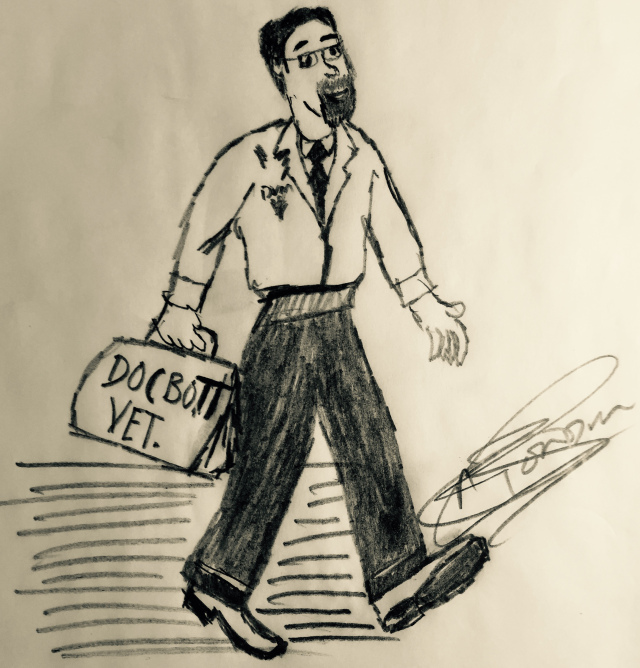
My Take Tuesday: DocBott
I have never been one to shy away from an adventure. I enjoy a good challenge. The result is an opportunity to grow, a chance to try something new and a moment to stretch the boundaries of my comfort zone.
For years, I have been approached by many media groups about putting together a television show based on my daily work as a veterinarian. I have always politely declined these offers.
But deep down, I have always wanted to share my passion for veterinary medicine and my love for animals. I have the most amazing and loyal clients at Mountain West Animal Hospital. I am so fortunate to be able to practice my own style of medicine, free from the corporate restrictions that are creeping across the profession.
Most who visit the clinic will see me in action in a white coat with a stethoscope draped around my neck. I spend my days at the clinic tending to the medical needs of dogs and cats.
But small animal practice is only part of what I do. I work on reindeer, elk, big horn sheep, water buffalo and a variety of other species. These unique projects take me all over the world and are very much a part of who I am.
During the past month, filming has began at the clinic. A TV series entitled DocBott is now in full production. We have partnered with Utah based FlashTV in making this unique and exciting show.
Many of you may be interested in this project. It will be unique. It will show the ups and downs of each day in the life of those in the veterinary profession. It will provide a realistic look into what makes Mountain West Animal Hospital so unique. You will get to know each of our team members better and will see just how difficult their jobs are. It will give you an appreciation for all that goes into providing the best veterinary care to your four legged family member.
The TV crew will also accompany me on some of my trips around the world and will catch a glimpse of my exotic animal theriogenology (animal reproduction) work and its important role in the conservation of many species. We will attend veterinary conferences and symposiums, and you will even catch some of my own scientific presentations.
I will only post minimal content about this project on this page. If you would like to follow it closer, I invite you to like https://www.facebook.com/docbott/
This is an exciting adventure. I hope that the product is one that you will enjoy. I love what I do. I love helping people by helping their animals. I have never had a boring day, nor have I ever regretted this career decision. I really feel like it is what I was meant to do.
I am so excited to share this project with you!
And that is my take!
N. Isaac Bott, DVM
The Late Night call

My Take Tuesday: The Late Night Call
The phone rang at exactly 2:03 AM. I jumped out of bed and sleepily answered, “Hello?”.
Calls like this often come in the early morning hours. Animals, it seems, have the worst troubles while we are sleeping.
“Hey Doc, can you come out to my place?”
“What’s going on?”, I responded, wiping the sleep from my eyes.
“It is one of my ewes, Doc, she has 5 hooves sticking out of her backside!”, he explained with a dramatic tone.
“Alright, I will be right there”, I replied, as I quickly changed my clothes and dressed for the outside temperatures. Situations like this seem to always occur in January, when the temperature is below zero.
I fired up my pickup truck and headed down the road.
Mr. Johnson was a long time client and a good sheep man. He knows enough to get through most situations and is good about calling me before all hope is lost.
Farmers like Mr. Johnson are becoming more and more rare. Large corporate companies have taken over so much of the agriculture industry and have forced the small guys out, sending along the notion that each individual animal has value simply because it lives. The loss of both equates to a disappearance of my favorite part of being a mixed animal veterinarian – the interactions I have with people. The ability to help individual people through service for their animals is the hallmark and joy of being a successful veterinarian.
Bravery and survival are sojourners, and Mr Johnson still fights daily to stay afloat and continue his 100+ year family legacy of sheep farming.
As I pulled into the Johnson ranch, my headlights hit the west side of the weathered old barn. Missing slats checkered the barn wood walls and added variety to the relic that can be seen during the day from the busy interstate, I-15.
As I stepped into the barn, Mr. Johnson greeted me warmly. “Hazel is making some hot chocolate for you Doc, we sure do appreciate you coming out in the middle of the night like this.”
He pointed me to the Suffolk ewe. She was indeed in distress, and sure enough, 5 legs and small hooves were protruding from her back side.
I calmly knelt down behind her and began my work. A recent trip to Auburn University provided me with a valuable trick in a situation like this. A small dose of Epinepherine was administered intramuscularly, and almost instantaneously, her uterus relaxed.
I gently pushed each of the legs back in and blindly felt around with my hand. A head was readily palpable, as was a tail, and a second head.
“Well, we at least have three!”, I exclaimed as Mr. Johnson anxiously looked on.
I continued to palpate until I was certain that I had two front feet from the same lamb and began the delivery. The first lamb was a large buck, nearly 18 pounds and jet black. The second and third were both ewes and were smaller and lighter in color. I then reached back in, and to my amazement, pulled out a 4th lamb. The last one was a buck and was much smaller in size compared to its birthmates.
All four lambs immediately began moving after being delivered. Mr. Johnson and Hazel gently rubbed each of them with warm towels as they coaxed them to breath.
After the delivery, mother and each of the quadruplets were doing remarkable well.
“We have never had 4 babies at once!”, Hazel exclaimed, “It looks like we will be busy bottle feeding!”
I sipped on my hot chocolate as I watched the newly born lambs stand for the first time.
I thanked the Johnsons as I pulled away.
As my headlights again hit the barn wall and then the straight long driveway of the Johnson ranch, the lights hit a barren tree along the fence line. The branches were covered in small ice and snow fragments that sparkled in the headlights. As I peered out my window, the barb wire strands seemed to glisten and sparkle as I traveled down the roadway.
I sat in amazement. Here is a simple ranch with a barn that is falling apart, yet on this cold winter night, it was a quiet serene paradise.
I pondered how fortunate I am. While the rest of the world is in bed, I have the privilege of bringing life into the world and seeing the majesty of God’s creation.
In this acquisitive world we must learn that in our lives we can’t have everything. But if we have freedom of spirit: to imagine, to question, to explore; then we have everything we need. To travel hopefully is a better thing than to arrive. The journey is the reward. I love being a veterinarian!
And that is my Take!
N. Isaac Bott, DVM
My First Surgery
My Take Tuesday: My First Surgery
I was raised on a small farm in Castle Dale, UT. We raised Guernsey milk cows, Suffolk sheep and many varieties of chickens and pheasants. My daily chores included feeding the chickens and gathering the eggs.
One day after school, I walked into the barn that housed the chickens. The barn was divided into three equal rooms. The first room is where we would store stacked straw bales. The second and third rooms were where the chickens and pheasants were kept.
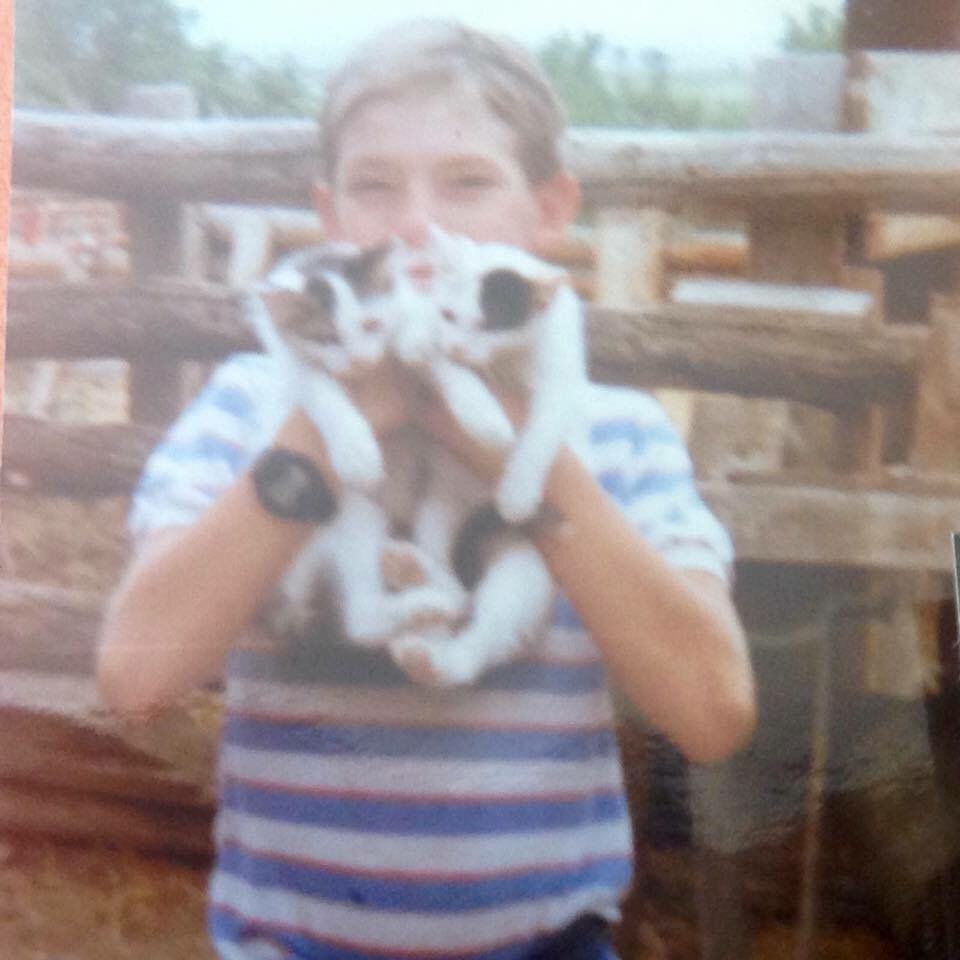
On this particular day, I found our calico cat nestled with her newborn kittens. She was lying right next to the straw stack, on the ground near the chicken coop door. There were seven in all. As an 8 year old, and still to this day, new babies of any kind are an exciting experience. I dropped down and began counting the tiny kittens. I was so thrilled! As I handled the small kittens, I noticed that something wasn’t quite right. The umbilical cord from one of kittens was wrapped tightly around a leg of each of the kittens. If I picked one kitten up, the entire litter would follow as if they were chained together. I tried to remove the cord with my fingers, but it was far too tight. Even as a little kid, I knew that something had to be done.
In Castle Dale at this time, we did not have a veterinarian. The only veterinary services available were on Thursdays when a veterinarian would travel from Richfield. It was early afternoon, so my dad was not going to be home from work for a couple of hours. I had to figure something out for myself.
I reached in my pocket and pulled out my Swiss Army knife. It was one that had a myriad of blades, nearly all of them never used, and a tooth pick and small set of tweezers in the handle. I opened the smallest cutting blade and bent down. I very carefully cut the umbilical cords from each of the kittens. I used some iodine to keep the procedure as clean as possible.
The procedure was a success. All of the kittens survived.
Fortunately, I no longer use my Swiss Army knife for surgeries. Although my surgical skills have been refined and perfected, I still have the curiosity and passion that that 8 year old displayed. I love being a veterinarian. The satisfaction I felt that day long ago is repeated every time I am able to help save a life.
I look back on my first surgical experience with fondness. It was one of the important milestones in my path to becoming who I am today.
And that is my take!
N. Isaac Bott, DVM
Pictured is Dr. Bott with kittens in 1988