Operation Santa Claus

12716113_574948979336347_5927344212850560865_o-2.jpg

My Take Tuesday: Operation Santa Claus

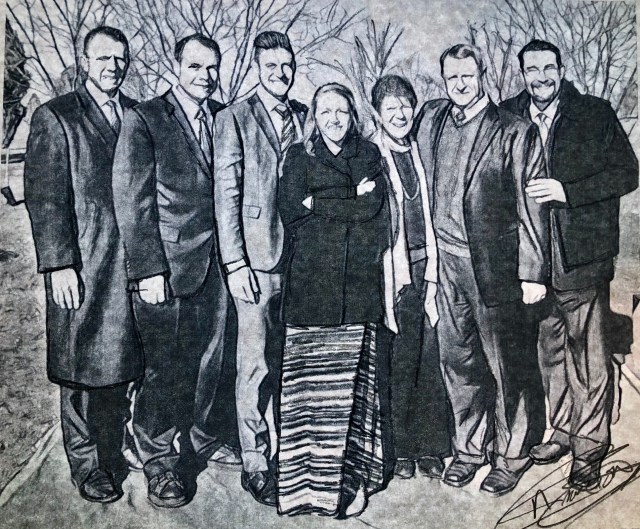
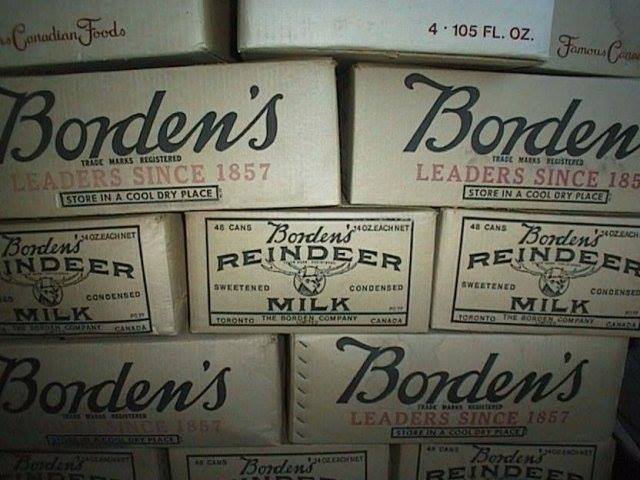
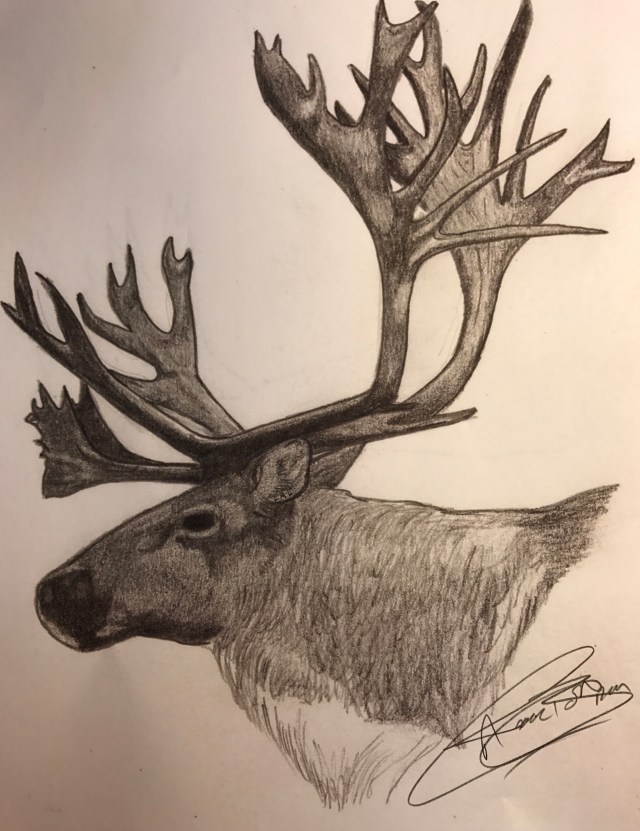
For many decades, Operation Santa Claus was home to the largest herd of domesticated reindeer in the lower 48 states. The ranch was nestled along the eastern side of Oregon’s Cascade Range, in the High Desert town of Redmond, Oregon.

The ranch dates to the early ’50s when John Zumstein of Redmond brought a small herd of reindeer from Alaska. These were the first reindeer to be imported from Alaska. The herd readily adapted well to the Oregon climate.

In the 1980’s, the ranch was acquired by Mike and Cindy Gillaspie. Through the years, the ranch has evolved from a kind of “mom and pop” operation that entered animals in local parades to reindeer supplier for such clients as Disneyland, the Los Angeles Zoo, films (“Ernest Saves Christmas,” for one) and dozens of commercials. Operation Santa Claus has served as the premier source of reindeer stock and rentals for many years.

A couple of years ago, the last of the reindeer left this historic ranch. As Mike and Cindy Gillaspie prepared for retirement, they sold the remainder of their animals and moved on to a new chapter in their lives. 

The last two reindeer from the ranch in Redmond were transported to Springville to  live the remainder of their lives at Mountain West Animal Hospital. Yuki and Maximus have adapted well to the Utah climate. 

As the era of Operation Santa Claus closes, a new page is turned. I am so grateful to have been able to visit this iconic ranch many times and to be able to call the owners my friends.

Yuki is pregnant this winter and she will give birth in late spring. A tangible legacy of Operation Santa Claus will forever be at Mountain West Animal Hospital.

And that is my take!

N. Isaac Bott, DVM
 

The Human-Reindeer Connection

img_6399-1

The Human-Reindeer Connection

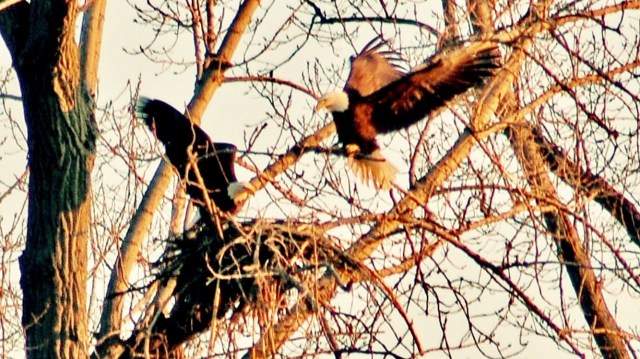
Humans have been interacting with reindeer for at least 40,000 years.

A reindeer engraved on the wall of a cave in south Wales has been confirmed as the oldest known rock art in Western Europe. It is believed to have been created at least 14,000 years ago!

A recent study on reindeer mtDNA identified at least two separate and apparently independent reindeer domestication events, in eastern Russia and Fenno-Scandia (Norway, Sweden and Finland). Substantial interbreeding of wild and domestic animals in the past obscures DNA differentiation, but even so, the data continue to support at least two or three independent domestication events, probably within the past two or three thousand years.

When people think of reindeer, they often visualize Rudolf and his friends pulling Santa’s sleigh. As cute as this image may be, there is so much more to these fascinating creatures.

Their ecology, physiology, and anatomy are very unique. They have been domesticated for thousands of years, yet we know very little about them from a veterinary standpoint. Attempts at artificial insemination, embryo transfer and other reproductive technologies have been met with considerable challenges and mixed results.

Although many sources erroneously claim that caribou and reindeer are the same – Caribou and Reindeer are different subspecies. Reindeer are classified as Rangifer tarandus tarandus and the alaskan caribou are classified as Rangifer tarandus granti. Even National Geographic and many prominent zoos in the United States are wrongly classifying these animals. A recent genetic mapping published in Nature shows the migration pattern of these mammals over the last 21,000 years, and shows that they are actually different animals — but closely related cousins.

I never considered working on reindeer while in veterinary school, yet they have become an important species to me as a practicing veterinarian. I have traveled all over North America and Asia working on this species.

Reindeer have a long history in culture and myth. That history has given way to further study to learn about how unique they are. I have been privileged to be a part of some of these scientific advancements.

White Lightning

img_6280img_6282

Theriogenology Thursday: White Lightning

Reindeer rarely have difficulty giving birth. Fortunately, nature has provided this species with amazing vitality. Young calves stand within minutes of being born. Predation is the primary cause of death in newborn calves. To minimize this, cows synchronize their birthing. If all of the calves are born at the same time, fewer are killed by predators. Gestation length can vary as much as 45 days to accomplish this. Such synchrony is fascinating, but provides considerable challenges with domesticated herds. Occasionally, calves are born premature and lung development is not complete. Sadly, many of these calves die.

As a veterinarian, I perform a considerable number of artificial inseminations on reindeer each year. The calves produced by this procedure are especially valuable. Intense care is given to newborns to ensure the best chances of survival.

A few years back, a young male calf was born during the summer. He had a unique white marking on his nose. This calf was a charmer. We all instantly fell in love with him.

On examination, the calf showed considerable effort in his breathing. His lungs were not working as they should. Research has shown that these calves lack a chemical called Surfactant. Surfactant reduces the surface tension of fluid in the lungs and helps make the small air sacs in the lungs (alveoli) more stable. This keeps them from collapsing when an individual exhales. In preparation for breathing air, fetuses begin making surfactant while still in the the uterus. With some reindeer calves, this production is incomplete when they are born.

Treatment consists of replacement surfactant therapy. This is often not feasible in veterinary medicine because of the high cost of synthetic surfactant. When is is available, it must be administered within 6 hours of birth to be effective.

The second treatment is placing the calf in an incubator (very similar to ones used with human neonates) and administering oxygen. Some calves will improve with this treatment. We placed him inside the oxygen chamber and waited. Feeding was required every 2-3 hours. The first few hours were touch and go, but little by little, improvement was noted. His tiny lungs slowly began to function properly.

Fortunately, such was the case with this beautiful calf. We named him White Lightning, reflecting the distinctive white stripe on his nose.

Miraculously, on this hot summer day, a life was saved. As you can see in the photos, we were all happy to pose with the calf, with the exception of my youngest son, KW. He fortunately has overcome his fear of reindeer.

N. Isaac Bott, DVM

DocBott got ran over by a reindeer!

IMG_3361

My Take Tuesday: DocBott got ran over by a reindeer!

Many of the pictures I post are of Mountain West Animal Hospital’s resident reindeer. They are very docile and love the attention. Sven and Yuki will pose for photos and love little children. Sven even has a fondness for the color pink. 

However, not all reindeer are like this. A male reindeer’s personality changes dramatically as the breeding season approaches. Circulating levels of testosterone dramatically increase in late August. This hormone will make an otherwise tame male become a raging, grunting and aggressive mess. 

A couple of years ago, I received a call from a reindeer farmer in northern Utah. He had a male reindeer that had injured the base of his antler. August heat and fresh blood are a recipe for complications due to either a severe bacterial infection and/or disgusting maggots. 

I arrived at the farm and immediately realized that the bull was in full rut. I had just left the office and, like a true nerd, had placed an external hard drive for my computer in my front pocket. 

The bull was not very happy to be caught. It took three of us to restrain him while I treated his injury. His massive antlers could easily lift us off the ground and fling us in any direction desired. 

Just as I finished the treatment, he broke lose. He immediately turned toward me. I had very little time to react. I stood there with empty syringes and iodine in my hands, helpless and very much vulnerable. His attack was swift. A single charge knocked me on the ground. 

I lay there struggling to catch my breath. The sudden impact of the ground on my back left me with temporary paralysis of the diaphragm which made it difficult to take a breath. When I finally did breathe, I was bombarded with excruciating pain over the left side of my chest. I reached into my pocket and removed the external hard drive. It was shattered. 

I was very much defeated and beaten, but overall ok after I got on my feet. The pain was caused from two cracked ribs. Other than that, I had no further damage from the incident. 

I learned my lesson that day. Rutting reindeer cannot be trusted. They are the most dangerous animal I have ever worked with. They make a Jersey dairy bull seem like a young puppy. 

I am glad I had the external hard drive in my pocket. The antlers would have easily punctured my lung and inflicted life threatening injuries. 

If you ever see a male reindeer grunting, snorting and peeing on itself – STAY AWAY!

You have been warned. 

And that is my take!

N. Isaac Bott, DVM 


Why Reindeer?

My Take Tuesday: Why Reindeer?

Curiosity is often sparked when clients learn about some of my work with reindeer and also when they see the massive antlers of our resident reindeer. This always begs the question… Why reindeer?

The day was March 28, 2010. I was driving on I-15 heading up to Cottonwood Heights. The next morning I was to begin a new job at an animal hospital in West Jordan. I was as nervous as I could be about the new change. As I was driving, I received a call from a concerned individual. The caller explained that his pet was thought to be pregnant and that confirmation was needed. It was then explained to me that the animal in question was a reindeer. Now, as a veterinarian, I deal with a lot of animals. However, I never anticipated working with reindeer. I had never even seen a live reindeer at this point in my life. But as I often do, I thought to myself, “Why not?” I told the caller I was just a few miles away and was happy to stop by.

I arrived just in time to witness the female reindeer, named Mischief, begin her labor. I was able to then help deliver a small female calf. The baby was so fragile! It was a solid jet black. I remember thinking that was such an unusual color when compared to her mother. The calf had difficulties initially. I had to administer medication to help with heart rate and for several days, the mother had to be milked and the calf had to be fed with a bottle. Mother also had difficulties after the birth. She had retained the placenta and required several days of medical intervention. Finally, after nearly a week, mother and baby began to thrive. We named the baby Disney.

Over the course of the next several weeks, I would often stop by after work to check on Mischief and Disney. The owner of the reindeer and I would often talk about how fascinating the experience had been for me. One night, he approached me about beginning an artificial insemination program for his reindeer herd. He had been searching for a veterinarian to attempt assisted reproduction in reindeer for over 10 years. He had not been able to find one. The idea excited me. I readily accepted the challenge.

I began researching the possibilities. I found that this had been studied and attempted dozens of times since 1973, without any appreciable success. In fact, The University of Alaska had received an $80,000 grant to begin a program. Their success rate was less than expected, and only one live reindeer calf was ever produced.

Our budget was small. We had only $2,000 to work with. We had to find out how to not only collect reindeer semen, but also how to freeze it in liquid nitrogen. We also had to learn how to heat synchronize the females and how to perform the insemination procedure. We had our work cut out.

After many failures and setbacks, in the spring of 2011 we were successful at producing the world’s first female reindeer calf by frozen/thawed artificial insemination. We named her Mira (short for miracle), a fitting name.

We have produced dozens of calves since then. Our program involves a novel semen collection and cryopreservation system, estrous synchronization of females and trans-cervical artificial insemination. Because of our high post thaw semen motility and artificial insemination pregnancy rates, our program is arguably the most successful program in the world.

It is fun to reflect back on that random phone call I received while driving down the road. Many opportunities have opened up for me since that day. I am glad I have had the chance to work with this truly unique species and for the scientific contributions I have been privileged to be a part of.

And that is my take!

N. Isaac Bott, DVM
Thanksgiving

IMG_8677

My Take Tuesday: Thanksgiving Dinner in Emery, Utah

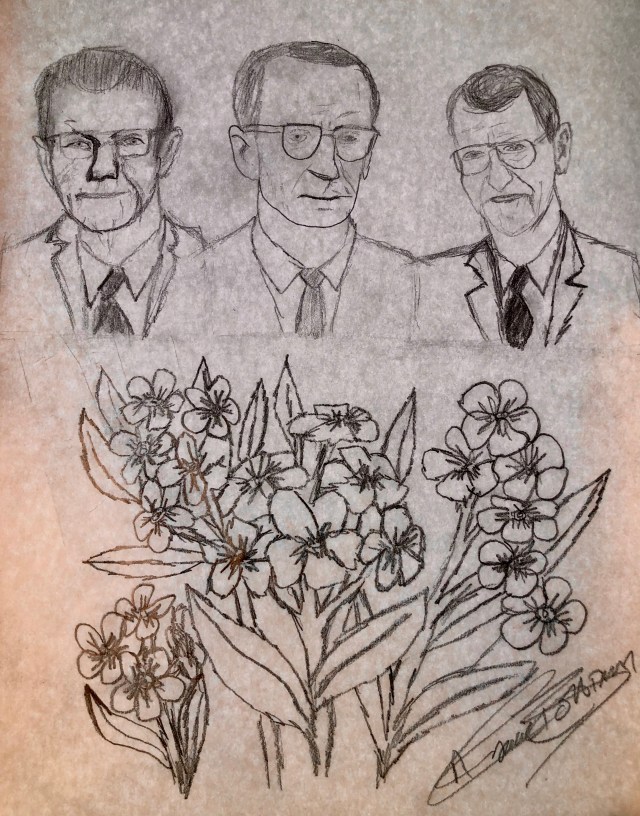
The sense of smell is closely linked with memory, probably more so than any of our other senses. Those with full olfactory function may be able to think of smells that evoke particular memories; for me, the smell of turkey in the oven takes me back to Thanksgivings of long ago. As this homeward journey begins, I find myself seated at a table in my grandparents house in Emery, UT.  

Grandma makes the best food! The fresh baked rolls, the stuffing, the potatoes, roasted butternut squash – each dish renders a unique and enticing smell. With the ever-more ready turkey roasting in the oven, these combine, creating a signature fragrance greeting guests the moment they step through our front doors. We salivate as we anxiously await the assortment of generations of family recipes cooked to perfection 

I remember exactly where I sat at the table, facing south, sitting across from my siblings and cousins. The sounds of the adults in the kitchen enjoying a home cooked meal as the delectable smells, good conversation, and the comfortable atmosphere make me feel at peace. As I close my eyes, I readily am able to conjure a significant mental image of Thanksgiving dinners at the home of Hugh and Shonna Peterson.  

The joyous bustle and the incessant hum of conversation combine to create a warm atmosphere. The stokermatic furnace in the living room, with its gentle smell of burning coal, adds to the homey ambiance. As we reminisce and laugh, we give our diets a hall pass, stuffing ourselves in a way we would never dream of the other 364 days of the year. But more than the food we savor, it is the scent of the feast that we love and the constancy of family that makes us so complete. 

After eating, I usually end up sitting with my cousins around the TV, watching a football game or laughing hysterically at the Farley Family Reunion VHS.  

Later on, I return to the warm glow of the kitchen, Just in time to hear my grandpa telling a story from his younger days. I have never met anyone that can tell a story like Hugh Peterson. His excellent memory weaves a tapestry of nostalgia. With each word we move closer to the edge of our seats. With a smile on his face, and just a tad of embellishment, he tells a story like a boss. He makes us all literally laugh until we cry. 

I will forever cherish these memories and conversations around the dinner table in Emery, Utah. They will forever remain a refreshing change from the chaos of everyday life. I will always remember the Peterson Family Thanksgivings as one of my most precious memories.

Since yesterdays are gone, and tomorrows are never promised, lets make this Thanksgiving count. Spend time with family and friends. Let us love and laugh and live in the moment. Be sure to be spend time with the people in your life who want you to be in theirs. Cherish the people in your life who accept you for who you are, support you in the things you chose to do and, no matter what, are there for you. 

And that is my take. 

N. Isaac Bott, DVM


The Dinner Guest

IMG_3356

My Take Tuesday: The Dinner Guest

“Hey Doc, we would love to have you over for dinner on Sunday. We will be having some ribeye steaks and banana cream pie.”

Hearing two of my favorite foods in the same sentence excites me. Who could turn down such an invitation? John and Laura were very loyal clients and were a pleasure to be around.

“I would love to!”, I excitedly responded.

“Great! We will eat at 7”, John instructed, “you can come a little early and have some root beer and see that new shed I am building.”

“I’ll be there”, I promised.

On Sunday evening I pulled into the driveway at exactly 6:45. John was waiting for me at the gate. He held a large frosted mug of root beer in his hand.

“Here it is Doc, fresh made.”

I grabbed the mug and took a sip. The sweet vanilla taste satiated my senses.

“Now, that is good!”, I exclaimed.

John then proceeded to show me around the yard. Most of my time with John and Laura was spent on the ranch. It was a nice break to be able to see their home. The yard was perfectly manicured, as is expected from a master farmer and crop producer. The smell of the blooming purple lilacs reminded me just how beautiful this time of year is.

“Come on in Doc,” Laura continued, “dinner is on the table.”

As I entered the kitchen, the table was covered in a smorgasbord of deliciousness. Fresh potatoes, olives, bread, ribeye steak and banana cream pie awaited.

We sat down and began to eat. We laughed and joked as we finished the delicious meal.

“Hey Doc, there is another piece of steak here, would you like some more?”, John asked.

“I sure would,” I replied as I began cutting the fresh ribeye.

“Do you like it Doc?”, John inquisitively asked.

“Yes sir!” I replied

“Good. You remember that old cow that had mastitis and was prolapsed? You said we couldn’t sell her so we butchered her instead.”

News like this is never good to receive between bites.

Instantly, my voracious appetite disappeared.

All I could think in about was that nasty prolapsed cow. That cow that was now in my stomach.

“Can I have another glass of root beer?”, I politely asked, as I finished the steak.

After all, John and Laura are salt of the earth people.

However, this is the only time I will ever eat steak at their house.

And that is my take!

N. Isaac Bott, DVM
Black Friday

IMG_3525

My Take Tuesday: Black Friday

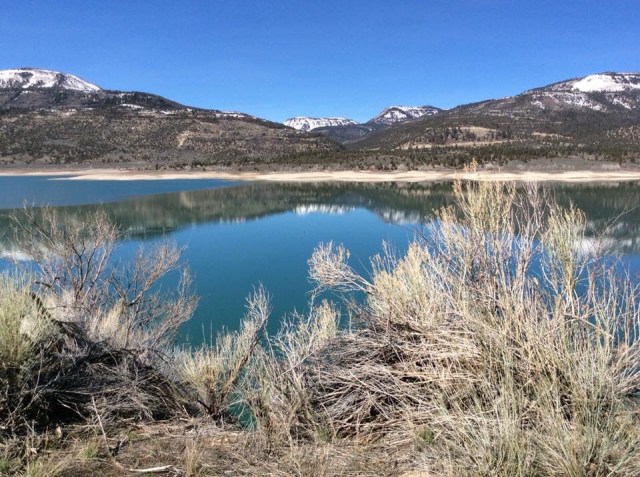
It was a beautiful Friday in late November. The animals were standing, by the thousands, crowded in the isle. The primitive fight or flight instinct had clearly pushed towards the fight response on this particular day. This mammal known as man is best avoided on the day after Thanksgiving. In years past, I stood in these massive lines just to get a good deal, after all, nothing says “America” like fighting over a TV at Walmart.

This particular Black Friday, however, was spent driving to and from farms in Utah County tending to a variety of sick animals. What began as a perfect day, quickly took a turn for the worst.

The Mare’s name was Dollar. She was a beautiful sorrel. She had recently given birth to a healthy young filly. Shortly after foaling, she developed severe lameness in all four of her feet. Her condition quickly deteriorated and she was barely able to walk when I arrived. To make matters worse, Dollar had developed severe colic, a term referring to abdominal pain in horses. Her intense pain was caused by gut spasms and every few minutes she would suddenly drop to the ground and roll.

Upon arrival, I performed a thorough physical examination. I then administered a mild intravenous sedative and passed a tube through her nose and into her stomach. I then pumped in a half-gallon of mineral oil.

The next treatment in a case like this is to administer a non-steroidal anti-inflammatory to help with the pain. The two most common drugs that veterinarians use in this case are Phenylbutazone (commonly called Bute) and Banamine.

For me on this particular day, I reached for a bottle of Banamine. With the needle in my right hand and the syringe in my shirt pocket, I held off the jugular vein with my left hand. Dollar didn’t flinch as I quickly slipped the needle into her vein. With dark blood slowly dripping out the needle hub, I reattached the syringe and steadied my hand against her neck. Just then, a gut spasm hit, Dollar jumped up and staggered sideways. I quickly sidestepped in an effort to remain in a position where I could inject the medicine.

Without warning, and before I had injected any appreciable amount of Banamine, she reared up on her back legs. I retracted the needle immediately and instinctively stepped backwards. The momentum of her rearing up and me pulling back made me momentarily lose my balance. I pulled my right arm abruptly to the side of my body to avoid falling over. As I did so, the large bore 18 gauge needle plunged over an inch and a half straight into the right side of my abdomen. The needle entered about 6” to the right of my navel and 3” below my last rib. I felt intense pain as the needle cut through my skin, subcutaneous fat, and abdominal muscle. The hub of the needle was nestled flush against my brown Carhartt Jacket. During my split-second of inattentiveness approximately 2 mls of Banamine was injected directly into my abdominal cavity.

Immediately, I grimaced in pain. The owner of the mare looked at me as I pulled the bloody needle from my abdomen. “Are you ok?,” he inquired, “Did you just stab yourself?”

“I sure did,” I groaned.

The pain was incredible. It was so severe, that I actually laid right down in the stall and waited for the stinging to subside. It felt as though some one was burning with a branding iron.

After nearly a half an hour, I was able to stand up and walk back over to the mare and administer the Banamine properly. I then climbed in my truck and immediately headed to the doctor’s office.

There are some veterinary drugs which are fatal when injected into humans; fortunately for me Banamine isn’t one of them. Although it relieves pain when administered intravenously in horses, I learned that day that when administered outside a vein, the effects are the total opposite.

It stung far worse than any insect sting or abdominal pain I have experienced.

“You what?”, The doctor blurted out, “How much did you inject?”

My physician is unique. His father is a veterinarian. He was raised at a veterinary clinic and spend his youth helping his father in a general mixed-animal practice. Fortunately, he knew exactly what Banamine was and what he needed to do to treat me.

Afterwards, he laughed as he reminded me, “Hey Doc, keep that needle pointed away from you next time!”

I most certainly learned a painful lesson that Back Friday.

And that is my take!

N. Isaac Bott, DVM
Halloween

IMG_2759

My Take Tuesday: Halloween

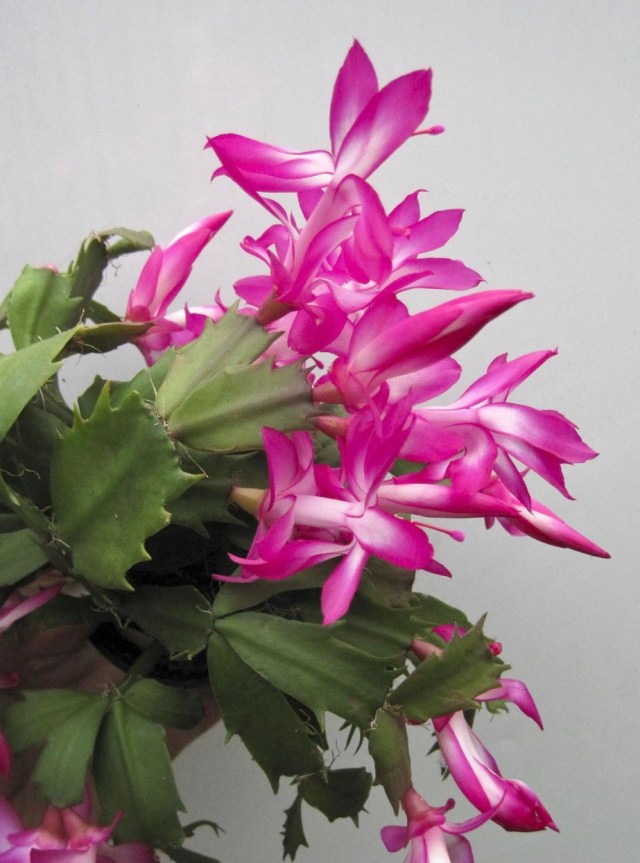
I love this time of year! The cool fall breeze, the crisp chill to the air, the brilliant gilded glory of the golden aspen and cottonwood leaves, the smell of the first fire in a wood burning stove, and the taste of hot apple cider. It takes me back to days of long ago. I think about my childhood, pumpkin pie, Halloween carnivals at Castle Dale Elementary, and the magic in a young boy’s hopes and dreams.

I remember one year especially well. I set out with my friend Jake Bulkley on an epic trick-or-treat adventure in the small town of Ferron, Utah. I remember walking along 500 South carrying brightly colored plastic buckets filled with what seemed like endless supplies of Sour Patch Kids, Candy Corn and Reese’s Cups. We felt like we had a successful candy haul until Jake’s younger sisters arrived home carrying pillowcases filled to the brim with candy. They followed the same route, but somehow ended up with ten-fold the amount of candy. Jake and I still laugh to this day about our mischievous fall adventures we had while attending San Rafael Junior High.

Halloween for me is still filled with unpredictable adventures. As a veterinarian, I encounter more black cats than the average person. October 31st is always a busy day at Mountain West Animal Hospital. Although this is a fun holiday for us, Halloween can be precarious for our four-legged family members. Here are a few pointers to keep your pets safe:

1. Don’t feed your pets Halloween candy, especially if it contains chocolate or xylitol (a common sugar substitute found in sugar-free candies and gum); or chocolate.
2. Make sure your pet is properly identified (microchip, collar and ID tag) in case s/he escapes through the open door while you’re distracted with trick-or-treaters;
3. Keep lit candles and jack-o-lanterns out of reach of pets;
4. If you plan to put a costume on your pet, make sure it fits properly and is comfortable, doesn’t have any pieces that can easily be chewed off, and doesn’t interfere with your pet’s sight, hearing, breathing, opening its mouth, or moving. Take time to get your pet accustomed to the costume before Halloween, and never leave your pet unsupervised while he/she is wearing a costume;
5. Keep glow sticks and glow jewelry away from your pets. Although the liquid in these products isn’t likely toxic, it tastes really bad and makes pets salivate excessively and act strangely;
6. If your pet is wary of strangers or has a tendency to bite, put him/her in another room during trick-or-treating hours or provide him/her with a safe hiding place;
7. Keep your pet inside. This is the easiest way to keep them safe.

Have a safe and fun Halloween!

And that is my take!
N. Isaac Bott, DVM
Fleming’s Vest-Pocket Veterinary Adviser


My Take Tuesday: Fleming’s Vest-Pocket Veterinary Adviser

The year was 1904. The town of Emery, Utah had a population of around 560 people, nearly double what it has today. Emery has always been an agricultural community. Ranching and farming are as much a part of its scenery as the towering cliffs that overlook the small town. Visitors are often taken aback by the beauty and expanse of this beautiful country on the edge of the San Rafael Swell.

Lewis W. Peterson made his living as a farmer. Life during this time could not have been easy. Lewis and his young wife experienced extreme heartbreak during their first few years together. Their only two children at the time would die from an influenza outbreak that indiscriminately killed so many in this small community in 1907.

The remote location of the town isolated it somewhat from other communities. The town had a fine yellow church house that had a large ballroom floor that served not only for Sunday worship services, but also for social gatherings. This building still stands in the center of town today.

Information came in the form of newspapers and books. Knowledge was a valuable asset that would set certain farmers apart. When information was available, these farmers were open to reading and learning. It was during this time that LW Peterson acquired a new book called, Fleming’s Vest-Pocket Veterinary Adviser.

This now 114 year old, pocket size handbook of veterinary information pertained to diseases of horses and cattle, and was designed to help farmers and stockman. It provided 192 pages of everything from birth to aging, to caring for illnesses, to poisonous weeds, maintenance, how to feed, and recipes for concoctions to treat a variety of ailments.

This book must have helped LW. He kept the book. He passed it down to his son, Kenneth Peterson, who passed it to his son Hugh Peterson.

My grandfather, Hugh Peterson, gave it to my mother, who gave it to me. This book is displayed prominently in the museum case in the reception area of Mountain West Animal Hospital.

The well worn pages of this book are fascinating to read through. Although veterinary science was in its infancy at this time, it is still interesting to read about treatments used. Without the luxuries of modern antibiotics, antiseptics, anesthetics and anti-inflammatories, these treatments were innovative for their time. The early 1900’s provided incredible advances in hygiene practices, preventive medicine concepts evolved, the first vaccines appeared, nutrition was studied and research was beginning to show which therapeutics actually worked, and why.

Perhaps some would consider this dated literature obsolete. Much of the information contained therein certainly would be considered so. I, however, consider it a treasure. I wonder if LW realized that, more than 60 years after his death, a veterinarian, carrying 1/16th of his DNA, would appreciate this book passed from generation to generation.

I will keep this book safe and pass it on to my children. Who knows, perhaps in another 100 years, it will still be seen as a valuable piece of family and veterinary history.

And that is my take.

N. Isaac Bott, DVM