The Plasticity of Parturition

My Take Tuesday: The Plasticity of Parturition

There are places in this world where the horizon rolls on forever, where the wind speaks in whispers and shouts, and where survival is written not in words, but in the hoofprints of millions.

The Mongolian gazelle (Procapra gutturosa) is one such story written across the vast pages of the Eastern Steppe. With a heart-shaped patch of white on its rump and legs built for the long haul, this medium-sized antelope travels as part of one of the last great migratory herds on Earth. Over 1.5 million strong, these gazelle roam across the largest intact grassland in the world, following forage like a compass follows north.

Herds of 100,000 are a common sight here—rivers of muscle and instinct moving across a sea of grass. But it’s during calving season, brief and explosive, that something near miraculous unfolds. Within just two weeks, as many as 400,000 females converge. And in a span of four days, the vast majority will give birth.

This is not coincidence. It’s a calculated gamble written deep into the species’ biology. By synchronizing birth, they overwhelm the predators. A jackal or wolf can only take so many. The sheer abundance of newborns creates a survival buffer. But that’s not the only purpose. The timing also gives the young enough weeks under summer sun to grow strong before the cruel winter arrives.

Some scientists believe this synchronization isn’t just about tooth and claw—it’s also tied to the land itself. To the grass. To the moment when the forage is richest when plants hit their peak in nutrition. It’s nature’s version of perfect timing, aligning birth with the buffet.

And the gazelle aren’t alone. Reindeer, caribou, alpacas, wildebeest—even banded mongooses—show similar patterns. The induction of parturition, the triggering of birth, varies from species to species, but the cast of characters remains familiar: progesterone, estrogen, prostaglandins, oxytocin. Hormones whispering when it’s time.

These adaptations serve both mother and child. Evolution, it seems, has no interest in waste. It sharpens both ends of the blade.

We’re only beginning to understand the depths of these reproductive rhythms. Over thousands of years, such traits have meant the difference between life and extinction. Now, as we seek to conserve endangered species and improve agricultural production, this knowledge becomes more than curiosity—it becomes a toolkit.

If we can better grasp the interplay of reproduction with behavior, nutrition, stress, and genetics, there’s no telling what doors it might open. Perhaps even for our own species.

And that is my take.

N. Isaac Bott, DVM

Castle Dale

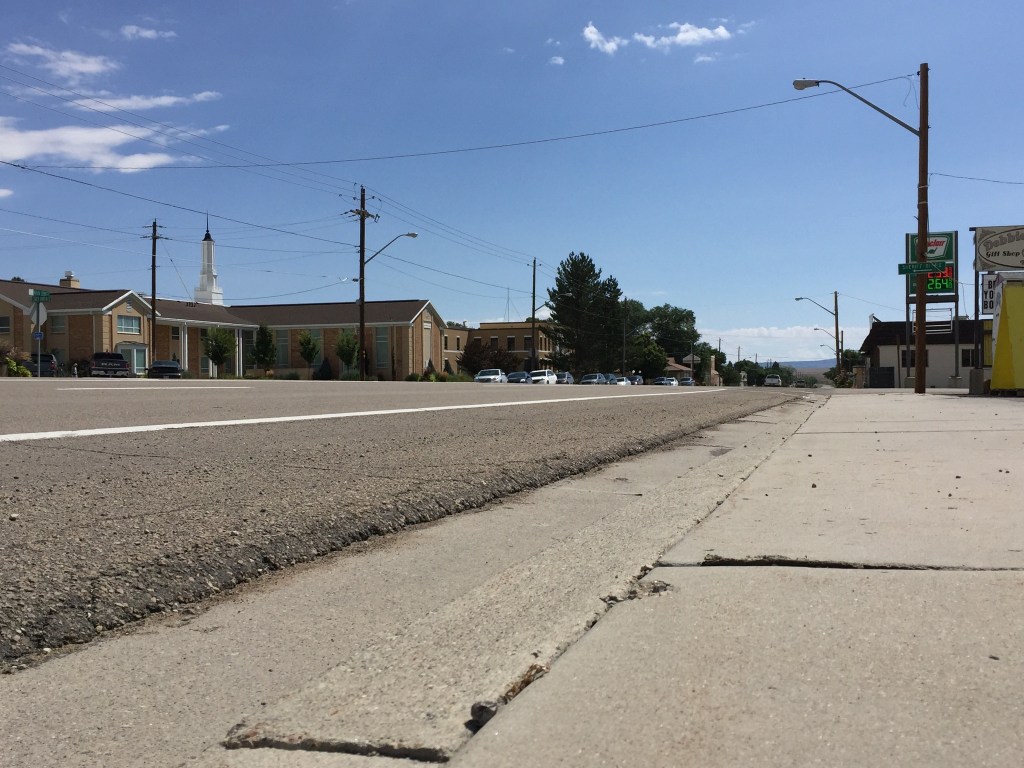
Sunday Stanza: Castle Dale

Where the San Rafael whispers to cottonwood trees,
And the wind hums tales on a warm desert breeze,
Lies a town built on shell and an honest day’s sweat—
A place that remembers, a place won’t forget.

The Wasatch Plateau stands watch in the western sky,
Snow-capped in winter, come summer, bone-dry.
Its majestic ridges catch sunsets in lavender flame,
While Cottonwood Creek gentle echoes Castle Dale’s name.

The cliffs rise like castles, in rust-red and gold,
Time-chiseled by silence, majestic and bold.
Juniper clings to the hillsides like kin,
Rooted in rock, defying the wind.

The fields are a patchwork of alfalfa and hay,
And tractors still rumble at the close of the day.
The scent of sagebrush and dry diesel smoke
Is better than perfume for Castle Dale folk.

Cottonwood Creek snakes like a sidewinder’s trail,
Just shy of defiant and too tough to fail.
It waters the cottonwoods and willows patches lazy and slow—
And teaches young kids where the rainbow trout won’t go.

The Main Street’s a page from a bygone day,
Where the post office gossip still makes its own hay.
You wave at each truck, though you might not know Jack—
But you nod just the same with a tip of your hat.

Horses still graze near the old power line,
And cattle still bellow at around quarter-past nine.
Fences lean slightly, but still do their part,
Like the people who built them—with grit and with heart.

Now I’ve seen some high places and traveled a spell,
But none quite so grounded or humble as well.
For all of life’s lessons and truths tried and true—
Castle Dale taught me most of the ones that I knew.

So, if you should wander, just slow your ol’ trot,
You’ll know you’ve arrived at the end of a thought.
Where the stars still remember each cowboy and tale—
And the Creator carved a monument and named it Castle Dale.

At dusk, when the sun dips its hat to the west,
And the stars settle in for a long evening rest,
The silence says more than a thousand loud cheers—
This town’s carved in clay and etched in my years.

Now, if Heaven’s got sagebrush, blue clay, and cows,
And fences that lean like the ones in this town,
If the sun takes its sweet time settling down,
Then Heaven’s just west of this small little town.

DocBott

Where the Stars Kiss the Mountain

My Take Tuesday: Where the Stars Kiss the Mountain

There’s a place hidden high in the Manti-La Sal National Forest, nestled quietly between East and Trail Mountains, where time slows and wonder still whispers on the wind. It’s called Flat Canyon.

The first time I stood beneath its sky, I felt the hush of something holy. The stars didn’t simply appear—they arrived. One by one, they lit the firmament like lanterns hung by angels, until the heavens burned in full chorus. In Flat Canyon, the stars don’t just sparkle—they descend. They seem to lean in and kiss the mountain crests, brushing the ridge with celestial breath.

There’s no cell reception here, no glowing streetlamp to compete with ancient starlight. Just mountain air, cool and pure, and the kind of darkness that lets light show its true brilliance. You don’t just observe the stars in Flat Canyon—you become part of the sky.

The canyon floor is silent but for the breeze in the pines, the gentle fluttering of the aspen leaves, the occasional hoot of an owl, and the bugle of a bull elk. It’s the kind of silence that isn’t empty, but full — Brimming with memory, majesty, and meaning.

We spend so much of our lives looking down—at screens, at schedules, at the next step ahead. But in Flat Canyon, surrounded by peaks and pine, you can’t help but look up. And when you do, you remember what awe feels like.

We often search for beauty in faraway places—grander, more exotic destinations. But sometimes, wonder waits right here in Utah, high above the noise, in a quiet canyon where the stars kiss the mountain.

And that is My Take!

N. Isaac Bott, DVM

In His Valley Still

In His Valley, Still

The mountains hold a silent grace,
Reflected on the water’s face,
A quiet breath, a sacred swell,
Where story, sky, and calmness dwell.

The pines remember, so does stone,
This valley never stands alone.
It speaks in echoes, soft and low,
Of those who shaped its silent glow.

So let the clouds drift where they may,
Let light and water softly play—
For Joe’s Valley is more than lake or land,
It’s memory, carved by steady hand.

The stillness here runs mountain deep,
Where sky and water fall asleep.
A mirror held in nature’s hand,
Reflecting more than sky or land.

And at its heart, a quiet name—
Not etched in glory, gold, or fame,
But one who gave, and stood, and stayed:
Oral Eugene—his mark remains.

Did he walk here in twilight’s hush,
Where cotton clouds in stillness brush?
Did he believe this work would be
A gift of calm for you and me?

The trees bear witness, so does clay,
To hands that shaped the water’s way.
This lake, this light, this sacred span—
They hold the soul of one good man.

No crowds, no clocks, no rush, no race,
Just beauty wrapped in open space,
A holy hush, a sacred view—
Joe’s Valley knows what’s real and true.

DocBott

Guided by Greatness

My Take Tuesday: Guided by Greatness

I’ve been lucky to meet many great minds in veterinary medicine. But only a few have left an imprint so lasting that I carry it with me every single day.

Dr. Ahmed Tibary is one of them.

He is a world-renowned theriogenologist — a pioneer in camelid reproduction, a brilliant clinician, and a scientific mind whose legacy will echo through generations of veterinarians. But before the accolades, before many of the textbooks, and before the Bartlett Award, he was simply… my mentor.

And then he became my friend.

I first met Dr. Tibary wide-eyed and eager, not yet realizing how much I didn’t know. He had this way of making complex things make sense — not by simplifying them, but by elevating you. He believed in what I could become long before I had any reason to believe it myself.

He introduced me to camelids — but more importantly, he introduced me to possibility.

He taught me how to approach the unknown — in science, in species, and in people. How to be precise without being rigid, confident without being arrogant, and humble enough to let the animals teach us what we didn’t yet understand. He showed me how to lead with curiosity, with compassion, and with a commitment to both the science and the soul of veterinary medicine.

And sometimes, his mentorship came in the quietest of moments.

Years ago, we shared an elevator — just the two of us. No fanfare, no audience, just that quiet space between floors. Out of nowhere, he turned to me and said:

“One day, you’ll be president of the Society for Theriogenology.”

I laughed. I didn’t believe it — not even a little. I was just a student, still finding my footing in the field. The idea felt distant. Me? President?

But he didn’t say it like a suggestion. He said it like a fact.

That’s the thing about Dr. Tibary. He sees beyond the present moment. He sees potential before it blooms.

And that passing comment — spoken in an elevator — stayed with me. It followed me through cases and conferences, setbacks, and small victories. It lit a path I didn’t know I was on.

In 2017, I stood at the podium as President of the Society for Theriogenology — the very role he saw in me a decade earlier. As I looked out across the room filled with colleagues and friends, I thought of him. I thought of that elevator. And I thought of the power of belief.

Dr. Tibary didn’t just teach me theriogenology. He taught me how to see — not just what’s in front of me, but what’s within me.

Over the years, I’ve had the privilege of walking beside this man — in lecture halls, in clinics, and in conference corridors from the Palouse to St Louis. Listening. Learning. Laughing. (And make no mistake — Dr. Tibary is funny. Quietly. Brilliantly. He once told me camels were “designed by committee,” and I’ve never looked at them the same way since.)

Beyond his guidance in traditional theriogenology, Dr. Tibary has been instrumental in helping me pioneer assisted reproduction techniques in species far outside the norm. With his encouragement and technical insight, I’ve developed protocols for artificial insemination in reindeer, white-tailed deer, mule deer, water buffalo, and even bighorn sheep. These ventures were anything but straightforward — but Dr. Tibary helped me approach each challenge with curiosity and scientific rigor, never once treating these unconventional patients as anything less than worthy of our best efforts. His mentorship gave me both the confidence and the competence to explore new frontiers in multispecies reproduction.

I hope someday I can be to someone else what Dr. Tibary has been to me. That, I believe, is the greatest tribute a mentor can receive — not just admiration, but continuation.

Thank you, Dr. Tibary. For your brilliance. For your kindness. For your quiet confidence in what I could become.

You believed in me.

And that made all the difference.

And That is My Take.

N. Isaac Bott, DVM
A Place Called Mountain West

Sunday Stanza: A Place Called Mountain West

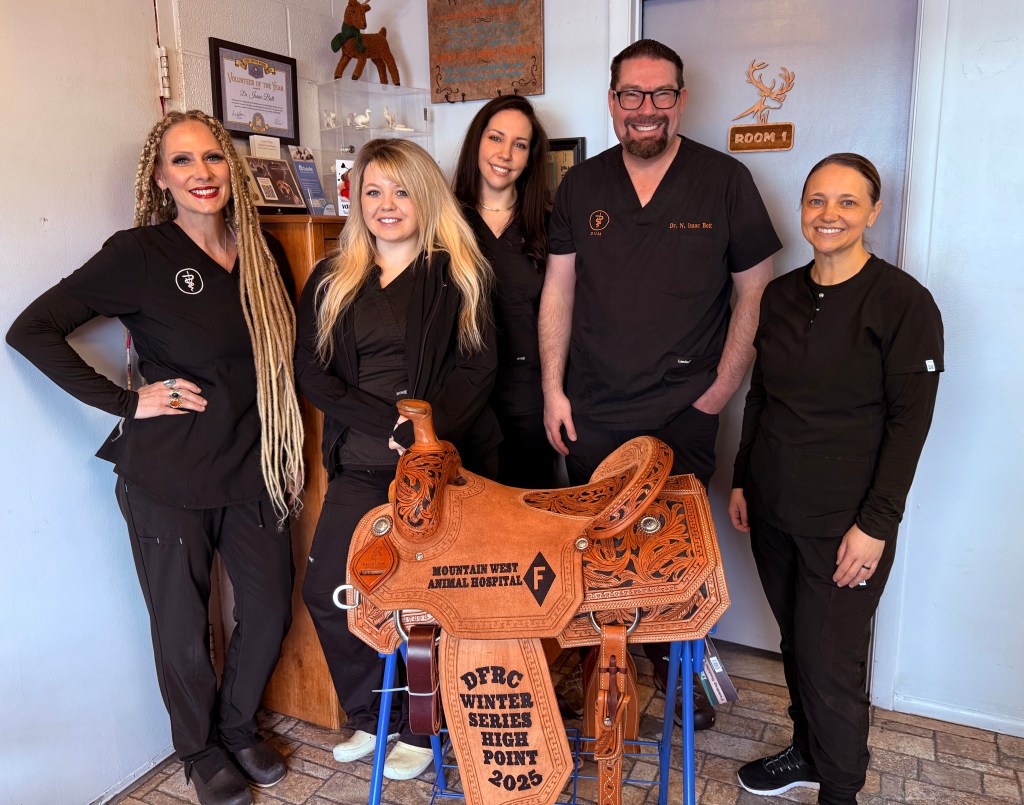
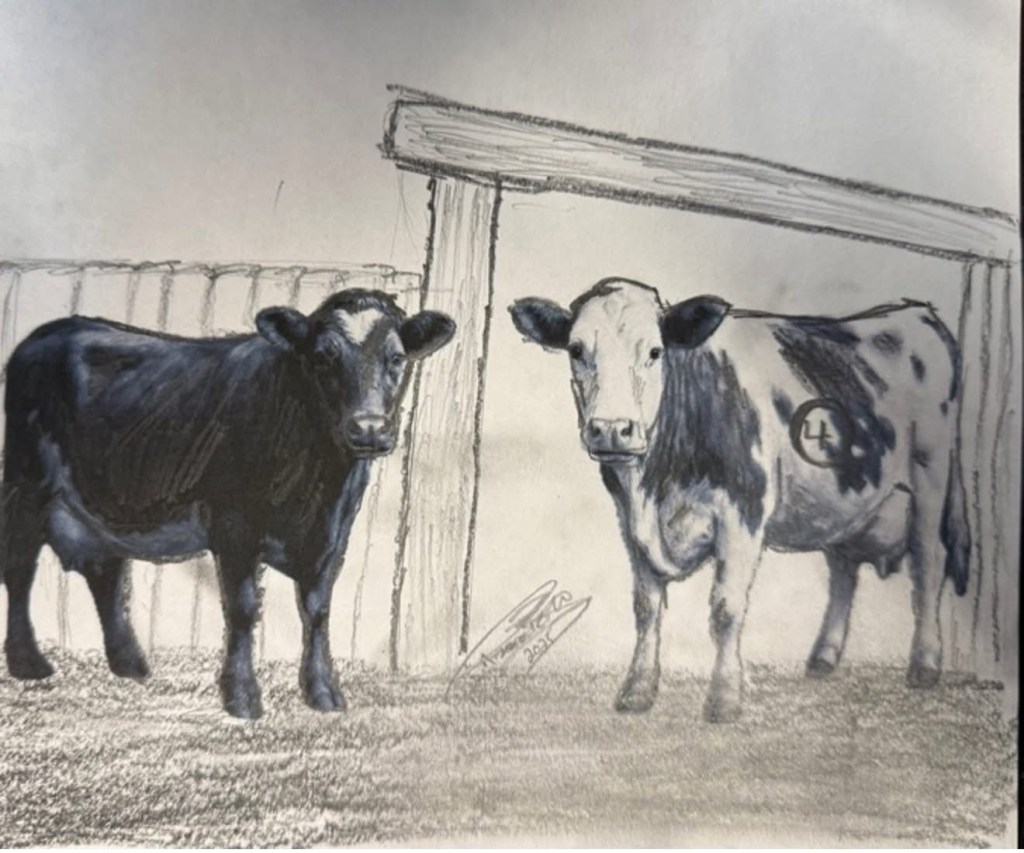
In 1977, a veterinary hospital was built—
On Springville’s edge, where sunlight spilt.
Land stretched wide and far without a sound,
Just trains and wind and lots of open ground.

On 400 South, just past the track,
No neighbors close, no houses packed.
A vet moved in with modest grace—
And healing hands to fill the place.

Dr. Harold Davis set the tone—
With quiet skill, he worked alone.
No gleaming sign, no grand façade,
Just care, commitment, and gentle nod.

The lobby carpeted and worn,
A place where lambs and pups were born.
Where collars jingled, leashes tugged,
And grateful clients cried—or hugged.

The years marched on; the skyline changed.
The green gave way to streets arranged.
But though the town grew bold and wide,
The soul of that small place survived.

In twenty-fourteen, winter air
Was crisp the day I settled there.
With keys in hand, I crossed that floor,
To take the reins and guard the core.

Since then, we’ve laughed, and we’ve endured—
Fixed broken limbs and lives assured.
We’ve birthed in barns, consoled in rooms,
And held old paws through quiet gloom.

The tools have changed, the world moves fast,
But some things root and simply last—
A vet’s resolve, a healer’s vow,
And walls still holding purpose now.

They bring us pups, then years go by—
We see those same dogs until they die.
And through the tears, a truth rings clear:
They’ve trusted us, year after year.

So, pass that place and tip your hat—
To fields now gone, but not the past.
To four decades of fur and flame,
And all the love that built its name.

For time is short, and life is fleet—
But meaning lingers on this street.
And Mountain West still does its part—
With steady hands and steadfast heart.

DocBott

The Roadie, the Rattlesnake, and the Rest of Us

My Take Tuesday: The Roadie, the Rattlesnake, and the Rest of Us

There are people in this world who walk the same road their whole life—and then there are folks like Dr. Kevin Fitzgerald, who build a few extra roads along the way just for the fun of the journey.

I first heard of Kevin not in a veterinary setting, but in a conversation about Animal Planet. Someone casually mentioned, “You know—the vet who used to be a bouncer for the Rolling Stones.” I laughed, assuming it was a joke. Then I looked him up. Turns out, it wasn’t. 

Dr. Kevin Fitzgerald, DVM, PhD, ABVP (and more letters than most veterinarians know what to do with) is a walking contradiction—in the best of ways. He’s been a roadie for Elvis. He’s stood guard for The Who. And after a well-timed suggestion from Keith Richards—yes, that Keith Richards—he decided to trade the backstage chaos of rock and roll for the well-controlled chaos of veterinary medicine.

That change of course launched a career that would span decades. Kevin earned his DVM from Colorado State University and has been a cornerstone at VCA Alameda East in Denver ever since. He’s board-certified in canine and feline practice. He’s penned over 50 scientific articles. He’s lectured across the globe, advocated for wildlife, and somehow also earned a PhD in endocrinology. And, of course, he brought emergency medicine to the living rooms of millions through Emergency Vets on Animal Planet.

But credentials alone don’t tell his story.

In the summer of 2006, I volunteered to help at the Veterinary Leadership Experience in beautiful Post Falls, Idaho. I assumed I’d be moving chairs or prepping name tags—just one of the background helpers keeping the event on track. Late one morning, I was told I’d been assigned a different task: drive to the Spokane airport and pick up that evening’s guest speaker. One small problem—we had the wrong flight information. He’d already been sitting at the airport for over three hours.

I was mortified. Nervous doesn’t begin to cover it. Being chewed out was nothing new to me, but I’d never bungled something this high-profile before.

When I arrived, I found the man sitting calmly near the baggage claim. I introduced myself, extended my hand, and apologized profusely for the wait. He stood, shook my hand warmly, and smiled.

“Don’t worry about it,” he said. “These things happen. It takes one second to be kind and two seconds to get angry. I take the shortest path.”

That man was Kevin Fitzgerald.

During the drive back, and again later as we returned him to the airport, he didn’t once mention the delay. Instead, he asked about my life—where I was from, what I liked to do, what I hoped to become after graduation. He genuinely listened. He made me feel seen. Valued.

This was a famous man. Eleven seasons on national television. A comedian with a cult following. A former head of security for the Rolling Stones and The Who. A world-renowned expert in reproductive toxicology. And yet, he treated me like I was the most interesting person in the vehicle.

I was a nobody. A peon. But Kevin made me feel important. Appreciated. Like my path mattered.

I’ve never forgotten that. What a lesson. The world needs more people like this.

What sets Kevin apart is his ability to hold space for two very different kinds of medicine: one that heals the body, and one that heals the spirit. He has a scalpel in one hand and a microphone in the other. He’s stitched wounds by day and stitched up crowds by night—using humor, storytelling, and a little mischief to remind us all that laughter belongs in the exam room too.

He’s served as a teacher, a mentor, a conservationist, and a healer. But more than any of that, he’s a model of what it means to be both brilliant and kind.

So, here’s to Kevin Fitzgerald: the roadie who became a veterinarian. The herpetologist who could handle rattlesnakes and hecklers. The man who reminded me that the shortest path is kindness—and that no matter how many letters come after your name, what really matters is how you treat the person sitting next to you in the car.

Thank you, Kev. 

And That is My Take.

N. Isaac Bott, DVM
 A Buckskin Rodeo and a Fence with No Mercy

Sunday Stanza: A Buckskin Rodeo and a Fence with No Mercy

I pulled in that morning to a small country farm,
With a few wiry horses, each brimming with charm.
That fence was strung with a hot, buzzing line—
The owner assured me, “It’s off, you’ll be fine.”

A buckskin was waiting, a spirited brute,
Fifteen hands tall and impressively stout.
He danced, and he snorted, no halter, no tack—
Just a sarcoid to check on the side of his snout.

But the gelding, it seemed, had no plans to comply—
He wheeled, and he bolted each time I got nigh.
So I reached under my truck seat, cool as you please,
And fetched my old orange lariat, handy with ease.

With a soft, practiced toss, the loop found his poll,
But that buckskin exploded—he lost all control!
He jumped to the left, I flew to the right—
And landed, backside, in an electrified plight.

Zap! Crackle! Sizzle! My seat met the wire—
A rhythmic assault like a live cattle fryer.
I hollered, “You liar! It’s hot as can be!
You said it was OFF—it just sizzled my seat!”

The owner looked sheepish, his hat in his grip.
“Well shoot, Doc, I guess I forgot that last switch.
Sure sorry ‘bout that,” he said with a grin,
While I rubbed my poor backside, still buzzing within.

So, here’s my take, when you’re out checking steeds:
Confirm the fence twice before tending their needs.
‘Cause a buckskin’s got fire, but the wire’s got bite—
And a zapped veterinarian’s rump ain’t a pretty sight.

DocBott

The Squeeze Chute Kidney Mishap

My Take Tuesday: The Squeeze Chute Kidney Mishap

Ask any veterinarian who’s worked with large animals long enough, and they’ll usually have a story to tell—a scar they carry, a limp they’ve learned to live with, or an internal ache that flares up every now and then to remind them they’re mortal. We don’t often talk about these injuries. Maybe because they feel like the cost of doing business. Maybe because they remind us of the thin line between control and chaos in this job.

For me, that reminder lives on the right side of my body: a kidney that doesn’t sit where it used to.

It happened during a long day of pregnancy checking cattle. If you’ve never had the pleasure, here’s the glamorous rundown: you put on a long plastic sleeve, slide your arm into the rectum of a cow, and carefully palpate for fetal membranes. It’s part science, part feel, and all grit. After a few hundred cows, your arm is sore, your back is tight, and you’re starting to question your life choices. But there were only two cows left. Just two.

That’s when I made the mistake.

In my haste, I entered the side gate of the chute without closing off the alley behind me. The cow in the alley saw an opportunity—and took it. She lunged forward, pinning me between herself and the cow already restrained in the chute. Cows don’t just push. They drive. With a thousand pounds of force and not an ounce of hesitation.

I felt it immediately—an unnatural pressure deep inside me, the kind of pain that pushes the breath out of your lungs and replaces it with panic. My organs were being crushed. There was no escape, no leverage. The owners quickly released the cow in the chute and, as the other cow barreled through, the pressure let up. I collapsed in the back of the chute, dazed, hurting, and trying to convince myself I hadn’t just lost a vital organ.

The final diagnosis? A torn kidney. My right one. It had been yanked from its usual home in the retroperitoneal space and now floats—free-spirited, if not entirely cooperative—inside me. It still works. But going on spinning rides like the Gravitron at the county fair? Not recommended.

We joke sometimes about how this job takes a piece of you. For me, it took a kidney’s anchor point. But it also gave me perspective. I’m a little slower now. A little more cautious. I triple-check gates. I don’t rush the last two cows. And I carry a deep, embodied respect for the sheer power of the animals we work with—because I’ve felt it firsthand.

Veterinary medicine isn’t always glamorous. Sometimes it’s bloody, messy, painful, and humbling. But it’s also real. And honest. And worth it.

Even if it rearranges your insides a bit along the way.

And that is My Take!

N. Isaac Bott, DVM

A Hot Day Along Cria Way

It was ninety-two in the noonday sun,
When I got the call: “Doc, better run!”
“She’s down in the paddock, she’s pacing the pen—
I think that alpaca’s tryin’ again.”

Now llamas are loud, but alpacas are sly.
They’ll blink real sweet, then spit in your eye.
And this one? A diva. Big lashes, small grace,
Who made it real clear she disliked my face.

I arrived with a kit, sweat down my back,
The air was like soup and the paddock all cracked.
She groaned and she grunted and kicked at the sky,
With a look that said plainly: “You touch me, you die.”

Still, in I went with my best poker face,
Dodgin’ her toes in that tight little space.
One leg was stuck, the head just peeked,
The timing was bad, the heat at its peak.

A twist, a shift, and a careful slide,
I coaxed him out from the breech inside.
Tidy and lean with a mop of red fluff,
He hit the ground breathing — just tough enough.

She leapt to her feet with a screech and a glare,
Gave me a sniff like I’d messed up her hair.
Then turned on a dime, sniffed her boy,
And let out a sound that was oddly joy.

He wobbled and blinked in the summer haze,
Took three wrong turns, then found his way.
Latched on hard like he’d studied the plan,
And I wiped my brow with a shaky hand.

There ain’t no band, no medal to pin,
For coaxin’ life from where it’s been.
But now and again, you get to stand—
Sweaty and spit-on, covered in sand—
And witness something better than pay:
A cria born on a hot summer day.

DocBott