The Christmas Cactus

My Take Tuesday: The Christmas Cactus

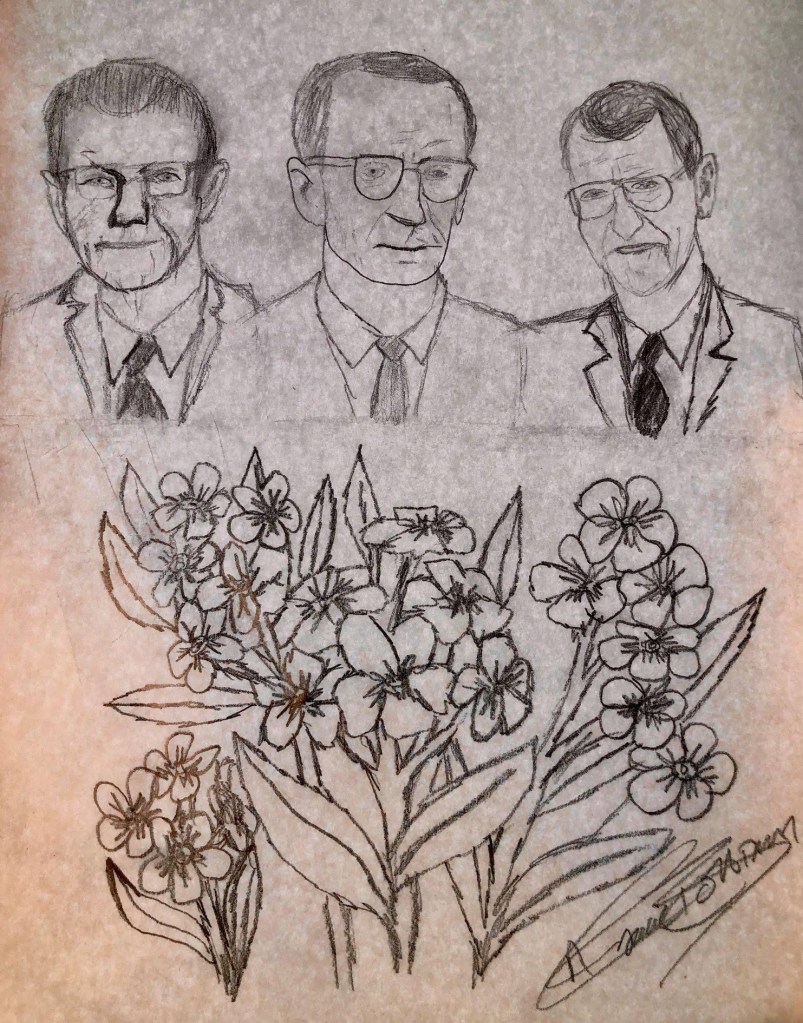
I never did get to meet my paternal grandmother. Her name was Caroline Westover Bott. She died several years before I was born. I wish I could have gotten to know her. I have heard stories about her humorous personality and just how kind and sweet she was.

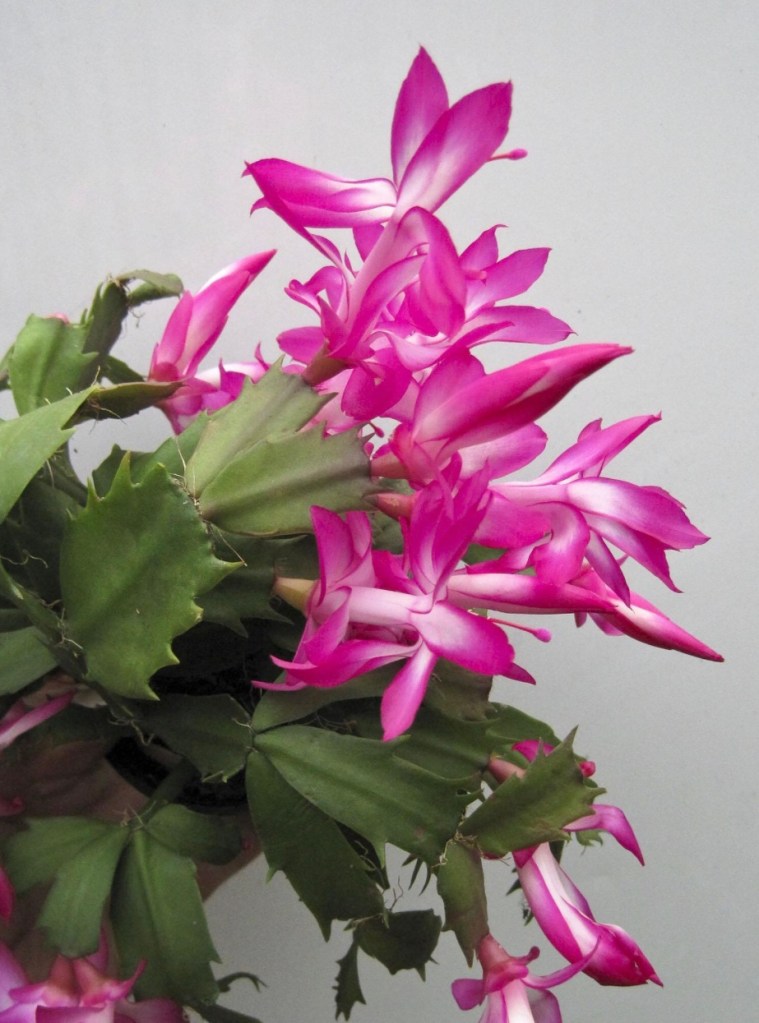
Her favorite plant was called a Christmas cactus. This plant is a long lived plant with flat, segmented stems. Most of the year its appearance is fairly unassuming. It seems to be just a regular potted green in the corner of the living room.

Around Christmas, however, something magical happens.

With care, this plain looking plant will blossom with beautiful pink flowers. Because of this festive seasonal bloom, the Christmas cactus is a tradition in many European and North American homes during the holidays.

After my grandmother died, her husband and children continued to take care of her Christmas cactus.

Caring for this plant is much more intense than other common house plants. Despite its name, the Christmas cactus is not a desert plant, but rather has its origins in the tropical rain forests of South America.

In fall, night temperatures around 50-55 degrees will trigger Christmas cactus to form flower buds. A carefully monitored balance of darkness and sunlight will give you beautiful blooms in time for the holidays. My uncle Jerry faithfully took care of this plant year after year until he died in 2016.

One of my favorite Christmas memories is setting around this plant on Christmas morning and opening presents. I will forever treasure this family time and the pleasant memories that remain.

Another unique feature of this segmented plant is its ability to propagate. By transplanting a cutting of at least three stem segments into a small pot of soil (preferably taken from the pot of the parent plant). At least one segment is then buried. With care and time the plant will take root.

A couple of years before my uncle Jerry passed away, he gave me a small transplant from this Christmas cactus that belonged to my grandma. As it brilliantly bloomed during this holiday season, I longed to spend time with my loved ones that have passed away. I am so grateful for this tangible legacy that will continue to live on and be passed on to my children. It is my own little piece of a holiday tradition that lives on all year long. I cherish my Christmas cactus and the family ties it symbolizes.

And that is my take!

N. Isaac Bott, DVM

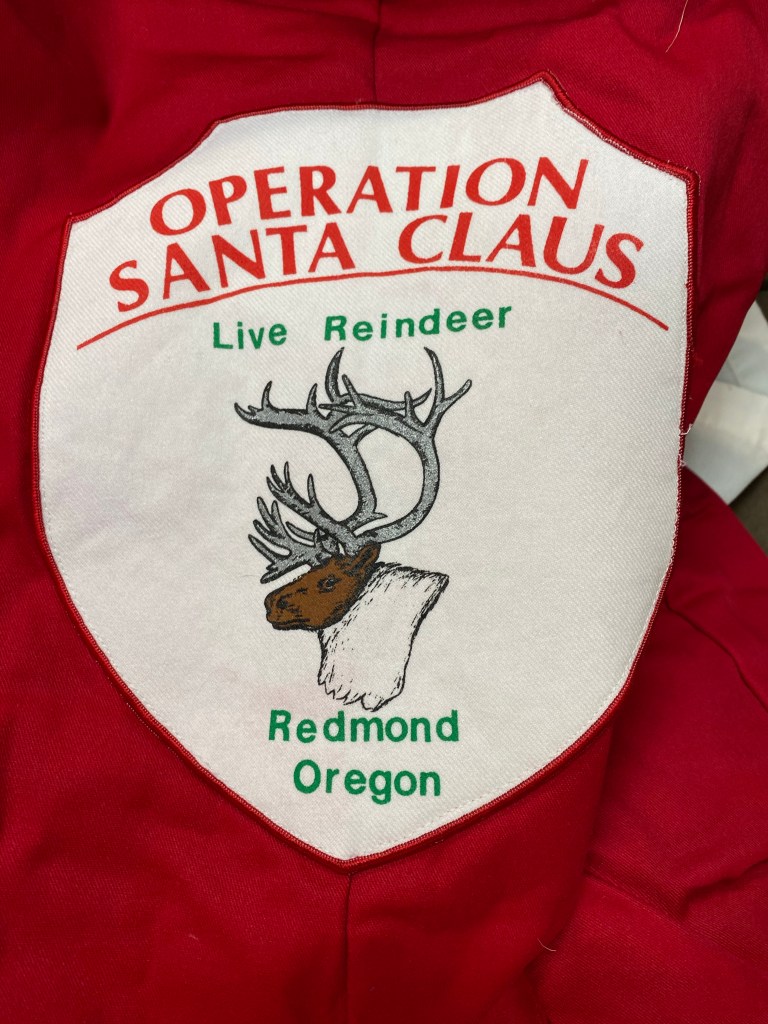
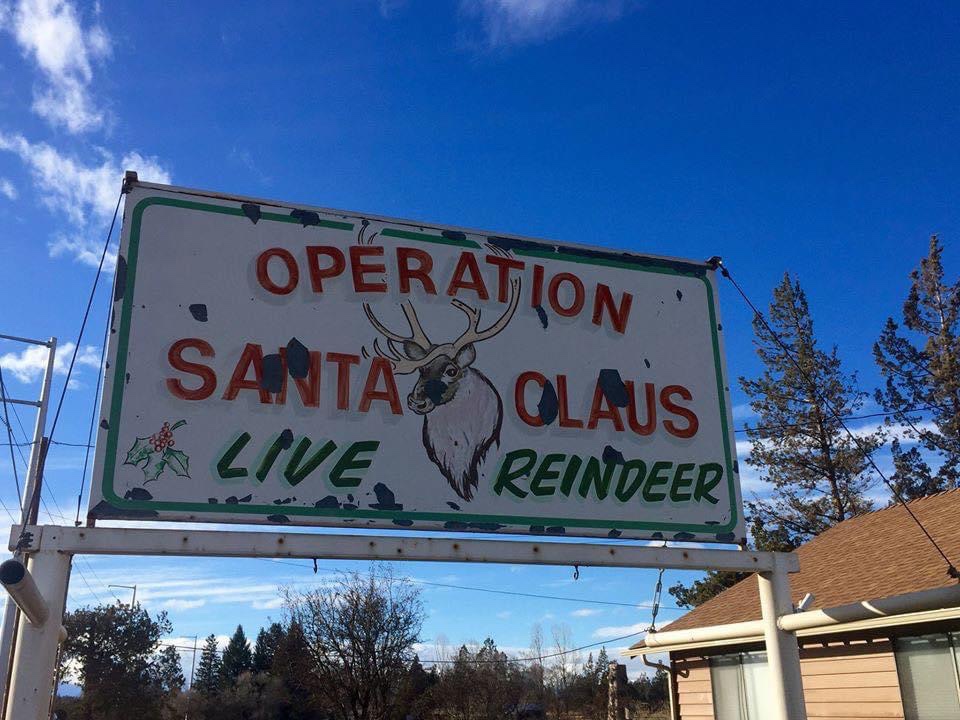
Operation Santa Claus

Operation Santa Claus

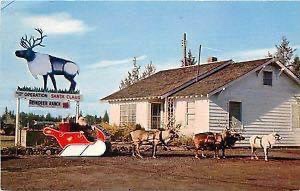
For many decades, Operation Santa Claus was home to the largest herd of domesticated reindeer in the lower 48 states. The ranch was nestled along the eastern side of Oregon’s Cascade Range, in the High Desert town of Redmond, Oregon.

The ranch dates to the early ’50s when John Zumstein of Redmond brought a small herd of reindeer from Alaska. These were the first reindeer to be imported from Alaska. The herd readily adapted well to the Oregon climate.

In the 1980’s, the ranch was acquired by Mike and Cindy Gillaspie. Through the years, the ranch has evolved from a kind of “mom and pop” operation that entered animals in local parades to reindeer supplier for such clients as Disneyland, the Los Angeles Zoo, films (“Ernest Saves Christmas,” for one) and dozens of commercials. Operation Santa Claus has served as the premier source of reindeer stock and rentals for many years.

A couple of years ago, the last of the reindeer left this historic ranch. As Mike and Cindy Gillaspie prepared for retirement, they sold the remainder of their animals and moved on to a new chapter in their lives.

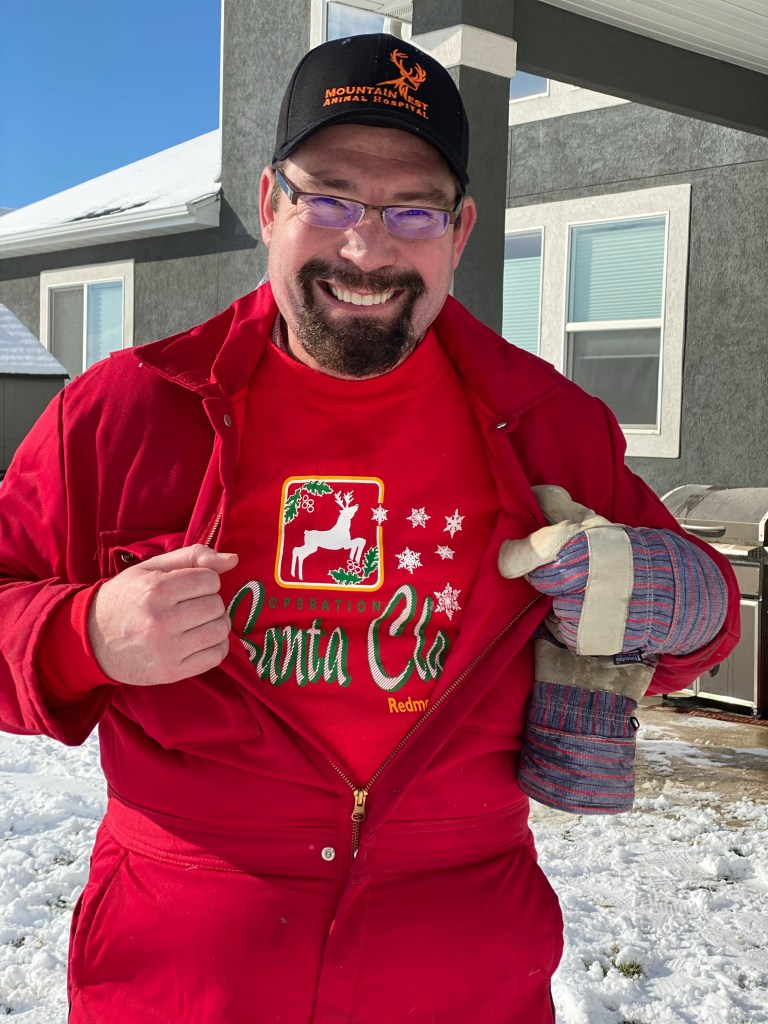
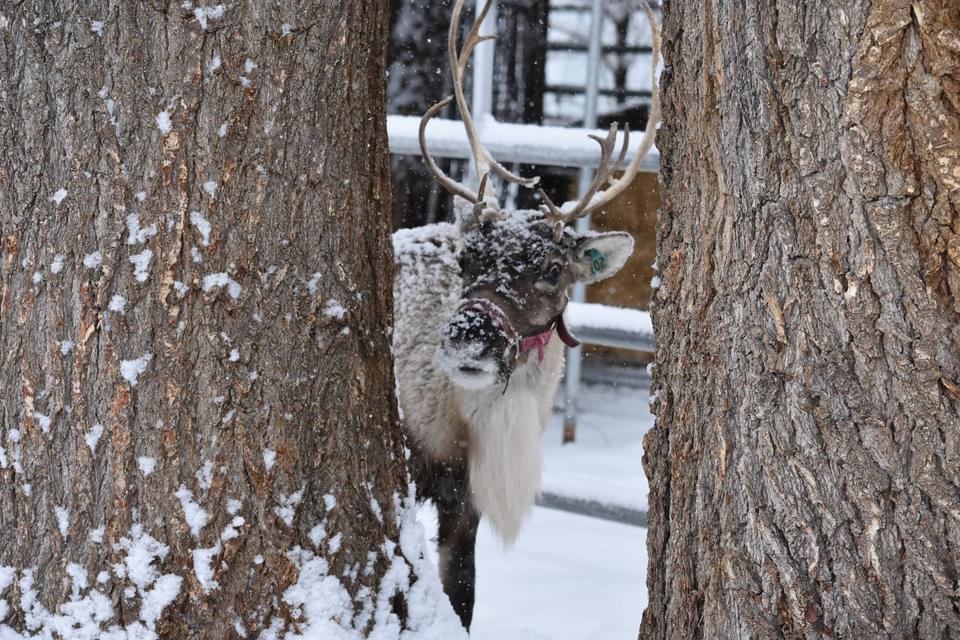
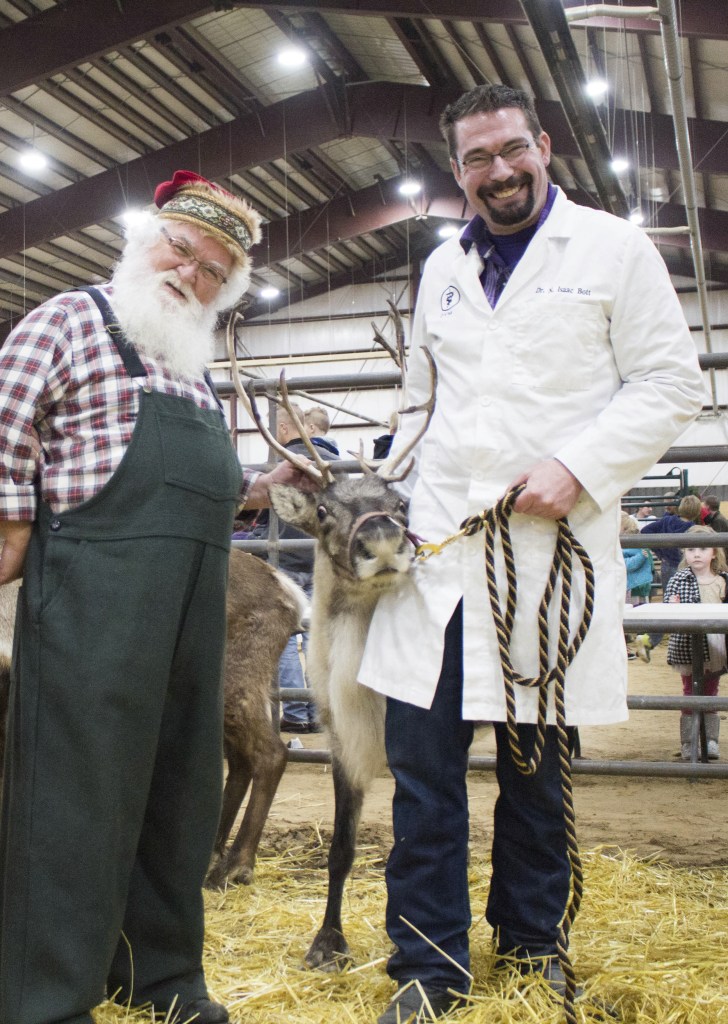
The last two reindeer from the ranch in Redmond were transported to Springville to live the remainder of their lives at Mountain West Animal Hospital. They have adapted well to the Utah climate.

As the era of Operation Santa Claus closes, a new page is turned. I am so grateful to have been able to visit this iconic ranch many times and to be able to call the owners my friends.

Yuki is pregnant this winter and she will give birth in late spring. A tangible legacy of Operation Santa Claus will forever be at Mountain West Animal Hospital.

N. Isaac Bott, DVM

Why Reindeer?

My Take Tuesday: Why Reindeer?

Curiosity is often sparked when clients learn about some of my work with reindeer and also when they see the massive antlers of our resident reindeer. This always begs the question… Why reindeer?

The day was March 28, 2010. I was driving on I-15 heading up to Cottonwood Heights. The next morning I was to begin a new job at an animal hospital in West Jordan. I was as nervous as I could be about the new change. As I was driving, I received a call from a concerned individual. The caller explained that his pet was thought to be pregnant and that confirmation was needed. It was then explained to me that the said pet was a reindeer. Now, as a veterinarian, I deal with a lot of animals, everything from antelope to zebras. However, I never anticipated working with reindeer. I had never even seen a live reindeer at this point in my life. But as I often do, I thought to myself, “Why not?” I told the caller I was just a few miles away and was happy to stop by.

I arrived just in time to witness the female reindeer, named Mischief, begin her labor. I was able to then help deliver a small female calf. The baby was so fragile! It was a solid jet black. I remember thinking that was such an unusual color when compared to her mother. The calf had difficulties initially. I had to administer medication to help with heart rate and for several days, the mother had to be milked and the calf had to be fed with a bottle. Mother also had difficulties after the birth. She had retained the placenta and required several days of medical intervention. Finally, after nearly a week, mother and baby began to thrive.

Over the course of the next several weeks, I would often stop by after work to check on the new mom and baby. The owner of the reindeer and I would often talk about how fascinating the experience had been for me. One night, he approached me about beginning an artificial insemination program for his reindeer herd. He had been searching for a veterinarian to attempt assisted reproduction in reindeer for over 10 years. He had not been able to find one. The idea excited me. I readily accepted the challenge.

I began researching the possibilities. I found that this had been studied and attempted dozens of times since 1973, without any appreciable success. In fact, The University of Alaska had received an $80,000 grant to begin a program. Their success rate was less than expected, and only one live reindeer calf was ever produced.

Our budget was small. We had only $2,000 to work with. We had to find out how to not only collect reindeer semen, but also how to freeze it in liquid nitrogen. We also had to learn how to heat synchronize the females and how to perform the insemination procedure. We had our work cut out.

After many failures and setbacks, in the spring of 2011 we were successful at producing the world’s first female reindeer calf by frozen/thawed artificial insemination.

We have produced dozens of calves since then. Our program involves a novel semen collection and cryopreservation system, estrous synchronization of females and trans-cervical artificial insemination. Because of our high post thaw semen motility and artificial insemination pregnancy rates, our program is arguably the most successful program in the world.

It is fun to reflect back on that random phone call I received while driving down the road. Many opportunities have opened up for me since that day.

Much of life is a consequence of timing. Thousands of years ago, an astute observer wrote, “I returned, and saw under the sun, that the race is not to the swift, nor the battle to the strong, neither yet bread to the wise, nor yet riches to men of understanding, nor yet favour to men of skill; but time and chance happeneth to them all.” (Ecclesiastes 9:11)

Time and chance aligned perfectly in this part of my career.

And that is my take!

N. Isaac Bott, DVM

Black Friday

My Take Tuesday: Black Friday

It was a beautiful Friday in late November. The animals were standing, by the thousands, crowded in the isle. The primitive fight or flight instinct had clearly pushed towards the fight response on this particular day. This mammal known as man is best avoided on the day after Thanksgiving. In years past, I stood in these massive lines just to get a good deal, after all, nothing says “America” like fighting over a TV at Walmart.

This particular Black Friday, however, was spent driving to and from farms in Utah County tending to a variety of sick animals. What began as a perfect day, quickly took a turn for the worst.

The Mare’s name was Dollar. She was a beautiful sorrel. She had recently given birth to a healthy young filly. Shortly after foaling, she developed severe lameness in all four of her feet. Her condition quickly deteriorated and she was barely able to walk when I arrived. To make matters worse, Dollar had developed severe colic, a term referring to abdominal pain in horses. Her intense pain was caused by gut spasms and every few minutes she would suddenly drop to the ground and roll.

Upon arrival, I performed a thorough physical examination. I then administered a mild intravenous sedative and passed a tube through her nose and into her stomach. I then pumped in a half-gallon of mineral oil.

The next treatment in a case like this is to administer a non-steroidal anti-inflammatory to help with the pain. The two most common drugs that veterinarians use in this case are Phenylbutazone (commonly called Bute) and Banamine.

For me on this particular day, I reached for a bottle of Banamine. With the needle in my right hand and the syringe in my shirt pocket, I held off the jugular vein with my left hand. Dollar didn’t flinch as I quickly slipped the needle into her vein. With dark blood slowly dripping out the needle hub, I reattached the syringe and steadied my hand against her neck. Just then, a gut spasm hit, Dollar jumped up and staggered sideways. I quickly sidestepped in an effort to remain in a position where I could inject the medicine.

Without warning, and before I had injected any appreciable amount of Banamine, she reared up on her back legs. I retracted the needle immediately and instinctively stepped backwards. The momentum of her rearing up and me pulling back made me momentarily lose my balance. I pulled my right arm abruptly to the side of my body to avoid falling over. As I did so, the large bore 18 gauge needle plunged over an inch and a half straight into the right side of my abdomen. The needle entered about 6” to the right of my navel and 3” below my last rib. I felt intense pain as the needle cut through my skin, subcutaneous fat, and abdominal muscle. The hub of the needle was nestled flush against my brown Carhartt Jacket. During my split-second of inattentiveness approximately 2 mls of Banamine was injected directly into my abdominal cavity.

Immediately, I grimaced in pain. The owner of the mare looked at me as I pulled the bloody needle from my abdomen. “Are you ok?,” he inquired, “Did you just stab yourself?”

“I sure did,” I groaned.

The pain was incredible. It was so severe, that I actually laid right down in the stall and waited for the stinging to subside. It felt as though some one was burning with a branding iron.

After nearly a half an hour, I was able to stand up and walk back over to the mare and administer the Banamine properly. I then climbed in my truck and immediately headed to the doctor’s office.

There are some veterinary drugs which are fatal when injected into humans; fortunately for me Banamine isn’t one of them. Although it relieves pain when administered intravenously in horses, I learned that day that when administered outside a vein, the effects are the total opposite.

It stung far worse than any insect sting or abdominal pain I have experienced.

“You what?”, The doctor blurted out, “How much did you inject?”

My physician is unique. His father is a veterinarian. He was raised at a veterinary clinic and spend his youth helping his father in a general mixed-animal practice. Fortunately, he knew exactly what Banamine was and what he needed to do to treat me.

Afterwards, he laughed as he reminded me, “Hey Doc, keep that needle pointed away from you next time!”

I most certainly learned a painful lesson that Back Friday.

And that is my take.

N. Isaac Bott, DVM
Thanksgiving Dinner in Emery, Utah

My Take Tuesday: Thanksgiving Dinner in Emery, Utah

The sense of smell is closely linked with memory, probably more so than any of our other senses. Those with full olfactory function may be able to think of smells that evoke particular memories; for me, the smell of turkey in the oven takes me back to Thanksgivings of long ago. As this homeward journey begins, I find myself seated at a table in my grandparents house in Emery, UT.

Grandma makes the best food! The fresh baked rolls, the stuffing, the potatoes, roasted butternut squash – each dish renders a unique and enticing smell. With the ever-more ready turkey roasting in the oven, these combine, creating a signature fragrance greeting guests the moment they step through the front door. We salivate as we anxiously await the assortment of generations of family recipes cooked to perfection.

I remember exactly where I sat at the table, facing south, sitting across from my siblings and cousins. The sounds of the adults in the kitchen enjoying a home cooked meal as the delectable smells, good conversation, and the comfortable atmosphere make me feel at peace. As I close my eyes, I readily am able to conjure a significant mental image of Thanksgiving dinners at the home of Hugh and Shonna Peterson.

The joyous bustle and the incessant hum of conversation combine to create a warm atmosphere. The stokermatic furnace in the living room, with its gentle smell of burning coal, adds to the homey ambiance. As we reminisce and laugh, we give our diets a hall pass, stuffing ourselves in a way we would never dream of the other 364 days of the year. But more than the food we savor, it is the scent of the feast that we love and the constancy of family that makes us so complete.

After eating, I usually end up sitting with my cousins around the TV, watching a football game or laughing hysterically at the Farley Family Reunion VHS.

Later on, I return to the warm glow of the kitchen, Just in time to hear my grandpa telling a story from his younger days. I have never met anyone that can tell a story like Hugh Peterson. His excellent memory weaves a tapestry of nostalgia. With each word we move closer to the edge of our seats. With a smile on his face, and just a tad of embellishment, he tells a story like a boss. He makes us all literally laugh until we cry.

I will forever cherish these memories and conversations around the dinner table in Emery, Utah. They will forever remain a refreshing change from the chaos of everyday life. I will always remember the Peterson Family Thanksgivings as one of my most precious memories.

Since yesterdays are gone, and tomorrows are never promised, lets make this Thanksgiving count. Spend time with family and friends. Let us love and laugh and live in the moment. Be sure to spend time with the people in your life who want you to be in theirs. Cherish the people in your life who accept you for who you are, support you in the things you chose to do and, no matter what, are there for you.

And that is my take.

N. Isaac Bott, DVM
Why did you become a veterinarian?

My Take Tuesday: Why did you become a veterinarian?

I hear this question on a regular basis. Each veterinarian has a story about why he or she decided to pursue a career in veterinary medicine. Most veterinarians share a commonality – that they have always wanted to be a veterinarian as long as they can remember. My story is a little bit different. I have always loved animals, but didn’t decide to become a veterinarian until the age of 21.

To tell my story, I must start at the beginning.

I was raised on a small farm in Castle Dale, UT. My first responsibilities as a child were to feed the chickens and gather the eggs. I began this task at 6 years of age. Each year we would purchase a variety of baby chicks from Murray McMurray hatchery. They would arrive at the post office on a scheduled day. I would wait with eager anticipation for this time. To me it was just like Christmas. My dad would let each of us pick out a chick that was “ours”. I would always name mine. I first experienced the remarkable human – animal bond with my chickens. I cried when they died. As a child, chickens became my favorite animal, and remain so until today.

Even though I spent my entire childhood around animals, I did not put much thought into becoming a veterinarian. On one occasion in high school, I took an aptitude test. The test results suggested that I would not make a good veterinarian. The reason was simple, I was not introverted. According to that particular test, I could not be successful as a veterinarian. Assuming that these tests were accurate, I pushed the veterinary idea out of my head and considered a law degree.

After I graduated from high school, I spent the next two years in Peru. I was immersed in a culture so much different from the one I was used to. It took nearly a year for me to adjust and to speak fluent Spanish. I remember walking down the street in Casma, Peru one day and seeing a group of men in the process of castrating a bull. It was a sight that I will never forget. They were beating the testicles with a large stick in an effort to destroy the testicular tissue and render the bull sterile. The brutality was sickening. I remember feeling so sorry for the bull.

That night I laid in bed thinking about why they would castrate a bull in such a barbaric fashion. I realized that perhaps that was the only way they knew how. Maybe they didn’t know any better. I decided at that moment that I would do all I could to teach these farmers a better way. Having a farming background, I was very familiar with animal husbandry and felt confident that I could help educate the farmers in this part of the world.

My first patient was a pig named Walter. He was a family pet that lived in a house in Casma. Walter had an attitude and his owners needed to have him castrated. I had a friend named Duilio Davelos that owned a pharmacy in town. I visited him and purchased some lidocaine, suture, iodine and alcohol. The procedure went flawlessly. Walter recovered very quickly. News spread of the event. Soon after, I began sending my free time on Monday’s castrating pigs. Farmers actually were open to learning. The supplies were very inexpensive and my services were free.

Next came chickens. Because of my time spent as a child taking care of baby chicks, I was able to teach basic poultry care and even help make incubators to boost production. I soon began helping with llama and alpaca herds. Soon, other curious Americans participated in this. In fact, a human dermatologist raised in Provo, UT had his first surgical experience South of Trujillo, Peru castrating pigs! It was very fulfilling to be able to help people out in this fashion. I felt like I was really accomplishing something. I was giving them something that would change the way they would treat their animals. No longer would they brutally castrate their animals without local anesthetic. They also knew how to surgically prep the skin, which eliminated so many post operative infections. I was helping people by helping their pets. It made me so happy.

As my time in Peru came to a close, I boarded a plane in Lima and headed back to the USA. As I sat in my seat, I reflected on the past two years. My thoughts kept returning to the animal services I rendered. It was in that moment, high in the air, that I decided to become a veterinarian. I landed in Utah, and a few weeks later began my first college classes. After 8 1/2 years of arduous study, my goal was reached and I became a veterinarian.

I often reflect on the decision I made. I look at how happy I am now. I love what I do. I love helping people by helping their animals. I have never had a boring day, nor have I ever regretted this career decision. I really feel like it is what I was meant to do.

So much in life happens by chance. I was fortunate to have my agricultural upbringing. It prepared me for the future. It is impossible to look forward and connect the dots of the random chances in our lives, but looking back, I can see it clearly.

I am glad that I had the chance to provide animal care in a far away place and how that opportunity led me down this remarkable path I am on today. I cannot imagine doing anything else.

And that is my take!

N. Isaac Bott, DVM

Reflection

My Take Tuesday: Reflection

The wind howled, its lonesome lullaby piercing my ears as I turned up my coat collar. The desolate country lay still, with its towering stone cliffs and sage brush interrupted only occasionally by small clumps of cedar trees. The trail I was climbing was built by the CCC project (Civilian Conservation Corps) in the 1930’s during the Great Depression. The winding trail jots back and forth in a switchback as it leads to the south end of Trail Mountain.

I stood in awe as I gazed at the clear smooth reflective surface of Joe’s Valley Reservoir. The water was as smooth as glass and the towering mountains seemed to peer back from the water.
I have so many childhood memories of hiking this trail with my family, of fishing in the lake below and of family reunions with loved ones who are no longer here.

This is home. There is something about Emery County that heals my soul. This is my constancy and my serene sanctuary where I can reflect and recharge.

At its simplest, reflection is about careful thought. But the kind of reflection that is most valuable is more nuanced than that. The most useful reflection involves the conscious consideration and analysis of beliefs and actions for the purpose of learning. Reflection gives the brain an opportunity to pause amidst the chaos, untangle and sort through observations and experiences, consider multiple possible interpretations, and create meaning. This meaning becomes learning, which can then inform future mindsets and actions.

A reflective period need not be a time to be unduly harsh with ourselves, but rather to be lovingly honest. Firm yet forgiving. After all, endless rumination and self-recrimination keeps us trapped in a past we cannot change, and no one benefits from this. An attitude of self-forgiveness can liberate us from old patterns or ways of being that we likely adopted for a reason, but that do not serve us nor adequately reflect who we are and who we’d like to be.

Taking time to reflect will most certainly help you recharge. It will help you refocus and it will bring feelings of gratitude and purpose that are otherwise never experienced.
Try it. You will not regret it.

If you need a spot, there is a place along the CCC trail high above the world’s most beautiful reservoir just west of Castle Dale, Utah.

And that is My Take!
N. Isaac Bott, DVM

Frank the Turtle

My Take Tuesday: Frank The Turtle

Third grade seemed to be a particularly creative time during my childhood. I remember sitting quietly in Mrs. Wikersham’s class at Castle Dale Elementary. As part of our daily routine, we would recite a poem each day. Most of the poems were short and simple and easy to remember. I still remember most of them verbatim. One of my favorites was about a little turtle, and it went like this:

“There was a little turtle.

He lived in a box.

He swam in a puddle.

He climbed on the rocks.

He snapped at a mosquito.

He snapped at a flea.

He snapped at a minnow.

And he snapped at me.

He caught the mosquito.

He caught the flea.

He caught the minnow.

But he didn’t catch me!”

I remember Mrs. Wikersham’s facial expressions vividly as she would teach us hand actions that went along with this poem.

A snapping turtle? It was something I could only dream about as a sheltered kid in a small town.

I recently thought about Mrs. Wikersham’s class after receiving an unusual call.

Frank the turtle needed an examination and a health certificate before flying to a warmer state. His owner called and explained that she could not find a veterinarian that would look at her turtle before her afternoon flight.

I really don’t know much about exotic pets, I somewhat reluctantly agreed to see her and provide the needed travel paperwork.

I entered the exam room to see the cutest little turtle imaginable. His innocent eyes peered up at me as I held him in my hands. I quickly looked him over and filled out the needed paperwork.

I handed the paperwork to the client and wished her safe travels. I then reached down to pat Frank on the top of his shell. Without warning, Frank snapped the tip of my right pointer finger.

Immediately, pain shot up my hand and continued all the way up my arm.

“Ouch!!!” I exclaimed, “That really hurts!”

Bewilderment filled my eyes. I didn’t see this coming. Frank, it turns out isn’t quite as sweet as he appears.

He might have snapped at that mosquito and caught that flea,

But in the end, Frank the turtle also caught me!

And that is my take!

N. Isaac Bott, DVM

Veterinary Technician Appreciation Week

My Take Tuesday: Veterinary Technician Appreciation Week

Being in the veterinary industry is hard work. Every day in filled with ups and down, happiness and sadness, and life and death situations. We end each workday exhausted and worn out emotionally.

Since our patients cannot speak for themselves, we spend a great deal of time communicating with their human owners. To an extent we are treating owners as much as patients. This requires a level of genuine empathy and professionalism that few people possess.

Behind every good veterinarian is a team of hard-working, caring individuals invested in the task of helping people help their pets. I am fortunate to be surrounded by a wonderful team of veterinary technicians at Mountain West Animal Hospital.

If you’ve ever experienced an emergency with your pets’ health or safety, you know how meaningful it is to have a knowledgeable and compassionate technician to care for them!

Veterinary technicians are the unsung heroes of your pet’s veterinary care team. Without these devoted professionals, my office would be a sea of chaos and confusion. These highly trained individuals do everything from greeting clients and answering phones to restraining pets, drawing blood, taking radiographs, assisting with surgical procedures, filling prescriptions, comforting grieving pet owners, and cleaning kennels.

I simply cannot get through the day without my dedicated team at Mountain West Animal Hospital. They provide the individualized care and compassion that make my clinic so unique.

Most people do not realize the emotional toll this job can take. They don’t see us crying after we euthanize a patient we have treated for years. They don’t see the hard work that goes on behind the scenes. They don’t know what it’s like caring for a pet who is suffering near death and the triumph of pulling it back from that edge and going on to live several more years. They don’t see the mistreated or neglected pet that we so often walk through our doors.

They don’t know about the scars and scratches, bumps and bruise, sore muscles and back pain. They don’t know about the blood, diarrhea and vomit that they daily clean up.

There are many heroes that never stand in the spot light, never hear the roar of the crowd and never receive the recognition they deserve.

Pictured are three of my heroes. They are my right hand and my left. They work in a high-stress environment, putting in long hours, caring for ill and anxious pets, cleaning messes, and putting themselves at risk of physical harm. They do this because they care. They care about each of our clients and their four-legged family members. Thank you for putting your health and safety on the line to help increase mine. Thank you for being such amazing advocates for our patients and for being such an incredible support system for our veterinarians and our clients.

This week is National Veterinary Technician Appreciation Week. Please join me in thanking these girls for the wonderful work they do at Mountain West Animal Hospital.

They are amazing!

And that is my take!

N. Isaac Bott, DVM

Skunked

My Take Tuesday: Skunked

A few months back, a Boy Scout troop stopped by the clinic at the end of the day for a tour. As I showed them around and answered their questions, I couldn’t help but reminisce about my time as a boy scout.

The year was 1995.

Boy scout troop 306 of the Castle Dale 1st Ward embarked on a week long 50 mile hike during the month of July. The hike began on a Monday at Ferron reservoir and ended on Saturday at Indian Creek Campground in the beautiful Manti Lasal National Forest.

As a 14 year old kid, I was just like most of the other boys in my troop: wholly naive and completely unaware of my ignorance. My sense of adventure far outweighed sound logic and I was prone to encounter trouble because of my mischievous nature. My little brother Caleb and my best friend Zac were my partners in crime and were witnesses to myriads of situations that shaped our imaginative Boy Scout days working on merit badges, monthly camp outs and high adventure events that eventually led to each of us earning ours the rank Eagle Scout. These experiences consequently helped make us into the men we are today.

On the second night of this long hike, we made camp at a place called Cove Lake. This beautiful lake is just a few miles from the scenic skyline drive and is nestled in a large grove of Douglas Fir and Ponderosa pines.

As Boy Scouts do, we set out to set up camp and explore the lake. We soon found out that we were not the only species inhabiting the camp on this particular night. We shared the campsite with one of the most widely distributed mammals in North America, Mephitis mephitis, or the common striped skunk. The fecund creatures were everywhere. As we floated around the lake on a makeshift raft, we could see dozens of them around the waters edge.

We clearly had a dilemma. Almost immediately, the skunks began ransacking our tents and food supply. These smelly striped critters were endlessly curious about the bipedal invasive species that had entered their territory.

Passive in nature, skunks will avoid contact with humans and domestic animals; however, when challenged they are amply prepared to protect themselves.

If a skunk feels threatened, it will give a warning which includes hissing, stomping of feet, and elevation of the tail. Failure to heed the warning signs will result in the unlucky aggressor being sprayed with the skunk’s anal gland secretions. Skunks are highly accurate in their aim and can spray 7 to 15 feet away!

A dozen rambunctious boys were immediately perceived as a threat by the striped beast. They seemed to coordinate the invasion of the camp, approaching from all directions.

A scout watching the skunk rodeo spoke to me, “Hey Isaac, if you hold a skunk by its tail it can’t spray you.”

The notion had some truthiness to it, after all, if it can’t plant its feet it likely wouldn’t be able to empty its scent glands.

Without any further thought, I reached out and grabbed the nearest skunk by the tail. I lifted it directly in the air and held it suspended with my arms straight out.

The little guy simply twirled slightly and lined his backside to my face and fiercely sprayed with all that he had.

It went directly in my mouth and up my nose. It covered my entire face and some even got in my eyes.

I immediately began vomiting uncontrollably. By eyes burned and my vision became blurry.

What a lesson! Take my word for it, a skunk can certainly spray when it’s feet aren’t off the ground. This equivocated logic is dangerous.

As Mark Twain once observed, “It ain’t what you don’t know that gets you into trouble. It’s what you know for sure that just ain’t so.”

The odeur fetide that I experienced is actually a thick, volatile, oily liquid that obtains its pungency from sulfur-based thiols. There in nothing that smells worse than skunk spray inside your nose!

It took weeks before I stopped smelling skunk.

Frantically, I raided the food tent in search of cans of tomato juice. I found 8 cans and a can opener. I then took a tomato shower. I scrubbed my head in it, my whole body was covered in tomatoes. You haven’t lived until you take a shower in tomato sauce.

The rest of the week proved to be much less adventurous. I was forced to sleep in my own tent and I walked behind everyone else along the trails.

Now when I see a skunk, I give it plenty of space. And I tell everyone that I can that contrary to popular myth, a skunk can spray even when being held off the ground by its tail!

And that is my take!

N. Isaac Bott, DVM