“Hey Doc, we would love to have you over for dinner on Sunday. We will be having some ribeye steaks and banana cream pie.”
Hearing two of my favorite foods in the same sentence excites me. Who could turn down such an invitation? John and Laura were very loyal clients and were a pleasure to be around.
“I would love to!”, I excitedly responded.
“Great! We will eat at 7”, John instructed, “you can come a little early and have some root beer and see that new shed I am building.”
“I’ll be there”, I promised.
On Sunday evening I pulled into the driveway at exactly 6:45. John was waiting for me at the gate. He held a large frosted mug of root beer in his hand.
“Here it is Doc, fresh made.”
I grabbed the mug and took a sip. The sweet vanilla taste satiated my senses.
“Now, that is good!”, I exclaimed.
John then proceeded to show me around the yard. Most of my time with John and Laura was spent on the ranch. It was a nice break to be able to see their home. The yard was perfectly manicured, as is expected from a master farmer and crop producer. The smell of the blooming purple lilacs reminded me just how beautiful this time of year is.
“Come on in Doc,” Laura continued, “dinner is on the table.”
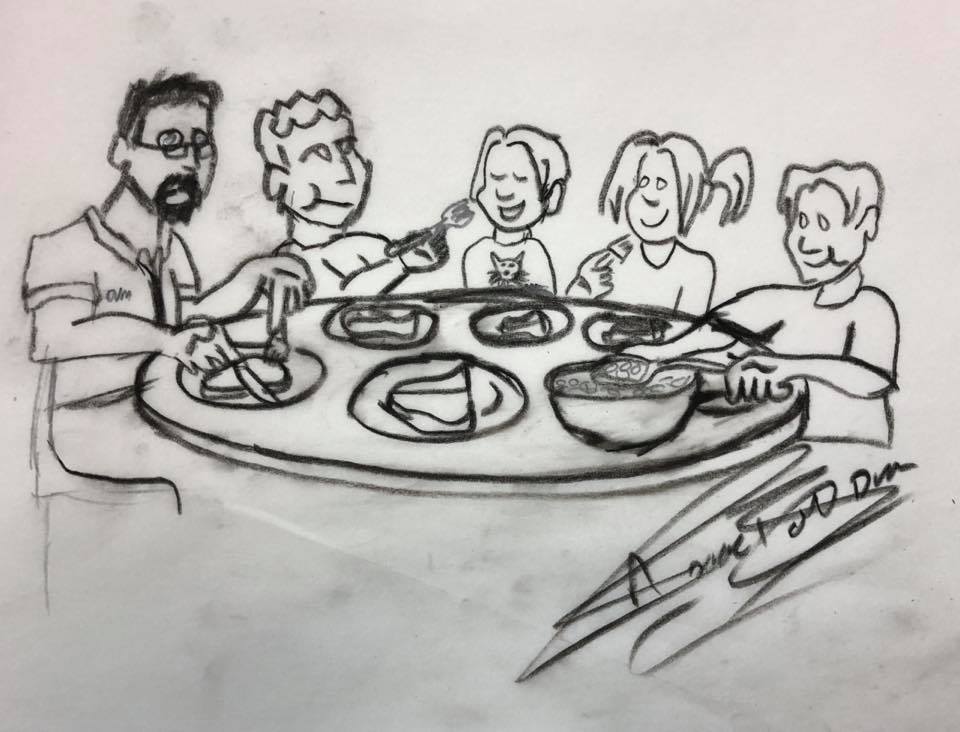
As I entered the kitchen, the table was covered in a smorgasbord of deliciousness. Fresh potatoes, olives, bread, ribeye steak and banana cream pie awaited.
We sat down and began to eat. We laughed and joked as we finished the delicious meal.
“Hey Doc, there is another piece of steak here, would you like some more?”, John asked.
“I sure would,” I replied as I began cutting the fresh ribeye.
“Do you like it Doc?”, John inquisitively asked.
“Yes sir!” I replied
“Good. You remember that old cow that had mastitis and was prolapsed? You said we couldn’t sell her so we butchered her instead.”
News like this is never good to receive between bites.
Instantly, my voracious appetite disappeared.
All I could think in about was that nasty prolapsed cow. That cow that was now in my stomach.
“Can I have another glass of root beer?”, I politely asked, as I finished the steak.
After all, John and Laura are salt of the earth people.
However, this is the only time I will ever eat steak at their house.
Times of severe stress, injury or fear can trigger the reflex: your blood pressure drops, your heart rate slows. This reaction is primeval stuff, buried deep within our brains. Medically, it goes by the name “vasovagal syncope.” Common folk like me simply call it fainting.
Being a veterinarian is not for the faint of heart. On any given day, I will treat a myriad of infirmities. The sight of blood, pus, maggots and trauma are part of a normal day at the clinic. I, fortunately, am not affected by this. I am able to reason and think clearly in situations like this and am able to immediately go about trying to fix the problem. I’ve seen some nasty stuff, but not once have I ever felt light headed with animal blood.
Human blood is a different story. Ironically, I cannot deal with human blood. The sight of it makes me queasy. I have fainted on a couple of occasions at the sight of my own blood. I find it strange that I am fine with animal blood but so unstable when it comes to people.
As luck would have it, on a number of occasions, clients have experienced medical emergencies as I worked on their pets. During one of these situations, I overheard a radio exchange between emergency responders and dispatch.
“He is with a veterinarian,” the dispatcher said.
“Oh good,” the emergency responder replied.
Upon hearing this, I exclaimed, “No, it’s not good! I don’t do human blood! You had better hurry up and get here!”
Keeping it together in such situations is difficult for me. Luckily, no one has died in these situations. However, I did experience a very close call a few years back.
Sheldon was a nice man. His gentle smile and blue eyes were reflective of his kind nature. He raised beautiful Charolais cattle. The pure white bulls he hauled into the clinic on this particular day were no exception. The massive 2000+ pound animals were there to be semen tested before the breeding season.
Sheldon walked with his cane along the side of the alley that led to the squeeze chute. He gently nudged the first bull as I closed the hydronic chute. He opened the side gate and stood directly behind the bull.
I asked about his farm and about the drive down to the clinic. He seemed happy and excited about the coming spring.
As I proceeded to work on the bull, I turned my back to reach for some supplies.
I then asked, “Sheldon, can you help me hold this?”
There was no reply.
“Sheldon,” I continued.
Still no response. I peered into the chute where he was standing just moments before and he was nowhere to be found. As I stood up and entered the side gate, I found Sheldon lying in the alley. His head was lying just inches from the back feet of a bull. Any sudden movements and the bull could easily crush his skull.
My blood pressure skyrocketed!
Instinctively, I picked him up and carried him out the side gate. He was non-responsive. I grabbed my stethoscope and listened to his heart. The rate and rhythm were irregular. He was clearly having a heart attack. I shouted for an assistant in the clinic. I asked her to dial 911 and get an ambulance there as soon as possible. I elevated his head and began the first aid I had been taught many times.
I sat with Sheldon until the ambulance arrived. His vitals continued to be irregular, but he continued to breath. As the EMTs arrived, they loaded him in the ambulance. As they pulled out of the clinic, despite having the light on and the sirens blaring, a car nearly side swiped the ambulance.
I stood there in awe. My body trembled as the stress finally caught up. I paced around the parking lot for nearly a half an hour until my nerves were under control and I was able to return to work.
Somehow Sheldon survived the ordeal. I visited him that night in the Payson hospital. He was his normal self as we joked about how bad he had scared me.
He thanked me for helping him.
“It is a good thing you knew what to do,” he continued, “I am lucky you were there.”
If he only knew how uncomfortable I am in situations like this. It took several days for me to be able to return to normal life. The thought of seeing him in the alley with such large animals on either side of him still haunts me to this day.
Fortunately, no other heart attacks have occurred on my watch since that day.
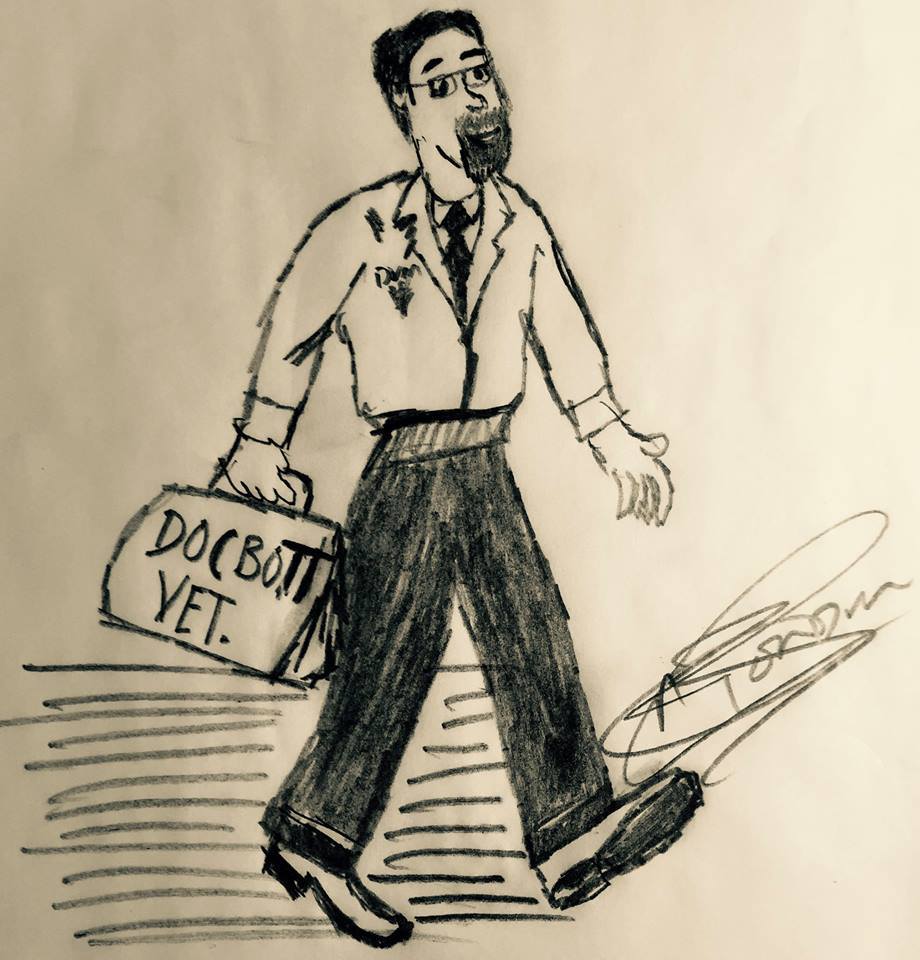
I can quickly fix even the most gruesome lacerations on an animal without a second thought, but when it comes to people, Doc Bott is not the person you want at your side.
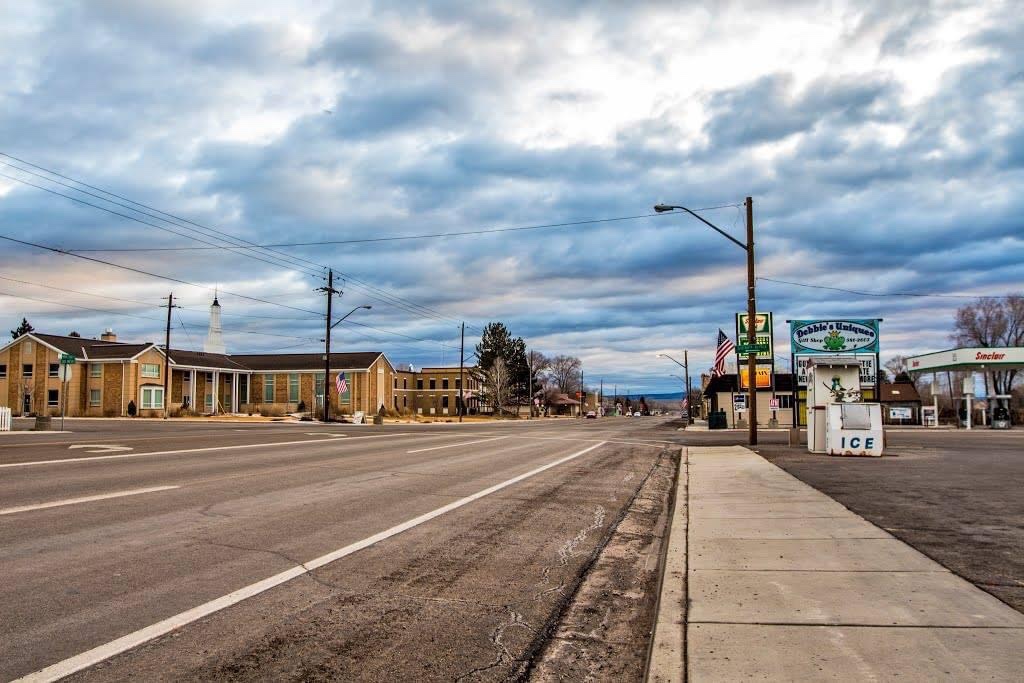
As a teenager growing up in the small town of Castle Dale, I looked forward to summers at the end of each school year. Summer meant freedom from both homework and sitting at a school desk.
For me, a perfect summer day would have to include vanilla ice cream, snow cones and strawberry shortcake. The tranquil Castle Valley evenings provided frequent opportunities to cook hot dogs, hamburgers and steaks on the grill, corn on the cob on the stove, and juicy Green River watermelon slabs with each meal.
Summertime also meant hard work. Apart from the irrigating and farm chores, there were a number of elderly widows in Castle Dale that would hire my siblings and I to mow their lawns each week during the summer.
Hazel was my favorite. Her small house stood just north of the new recreation center in Castle Dale. Hazel was like family to me. Her friendly demeanor and kindness was manifest each and every time I mowed her lawn.
She had a small but verdant lawn that surrounded her small gray house. Along the south end of her property, huge trees stood as sentinels protecting the house from the frequent Castle Valley wind. The deep green leaves of the tall trees overlooked a perfectly manicured garden with straight rows of Swiss char, chives, radishes, peas, carrots, spinach and lettuce.
Her lawn was difficult to mow. The frequent flowers and bushes required extreme care and precision with the lawn mower and edger. I would frequently graze her chives and the onion smell would instantly give away my error.
“On no, you hit my chives!” she would say. I anticipate that she planted larger quantities each year knowing that some would certainly fall prey to my mower.
After finishing the mowing, Hazel would prepare red punch and cookies. I would sit on a couch in her living room as I savored the snacks week after week. Hazel would ask about how my life was going and she would tell stories of her Seely and Livingston pioneer ancestors that helped settle Utah and build the iconic Salt Lake Temple.
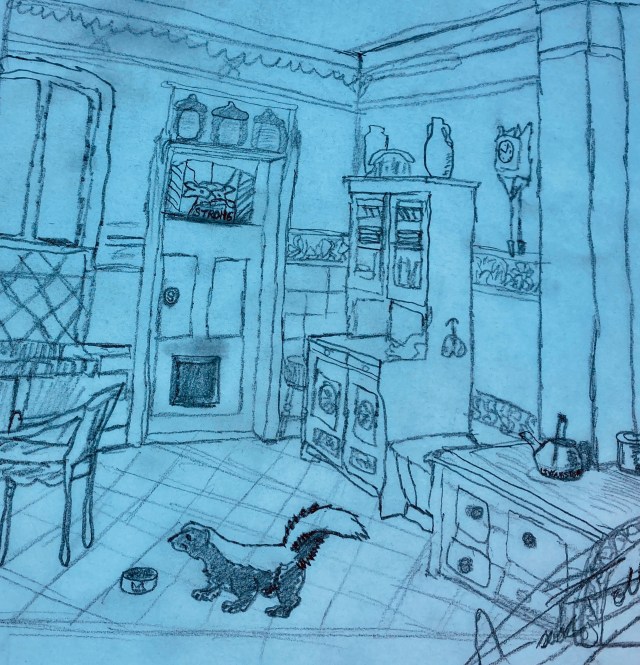
Hazel loved cats. She had a cat door that would lead out to the back yard from her kitchen. She would place a large bowl of cat food in the center of the kitchen and the cats could enter and leave as they please.
On this particular day, Hazel commented about how much cat food she had been going through. She noted that she would have to fill the cat dish 3 or 4 times a day and that each time she entered the kitchen, the bowl would be empty.
As I sat on the couch, I had a clear view of the cat bowl in the kitchen. As Hazel spoke, from the corner of my eye I noticed some movement near the bowl. As I turned my head and looked into the kitchen, the biggest skunk I had ever seen wobbled over to the food bowl and began gorging.
“Hazel!” I exclaimed. “That is not a cat, it is a big fat humongous skunk!”
“My laws!” she gasped. “Get it out of here!”
As I jumped up, the startled skunk made a dash for the door. Its overweight body condition inhibited it from any appreciable speed. The large belly nearly dragged on the ground as it meandered away. As it leaped for the cat door, the front half of the body exited perfectly, however, its back half didn’t quite make it. As the obese animal heaved its back end though the door, it simultaneously and voluminously sprayed the contents of its scent glands in my direction. This wallop of its defense mechanism filled the entire kitchen.
If you haven’t experienced the mephitic smell of a skunk from up close, the odeur fétide is actually a thick, volatile, oily liquid that obtains its pungency from sulfur-based thiols. There in nothing that smells worse than skunk spray inside your nose!
Hazel and I exited out the front door. We propped open the kitchen door and placed a fan on the floor to help air out the house. We laughed about it for hours.
Hazel passed away shortly after Memorial Day in 2003. I sure do miss her.
Each and every summer day brings back the fond memories of Hazel, the obese skunk, and the all-you-can-eat Mephitis buffet.
Just west of Castle Dale, Utah, the sky above Horn Mountain turns a beautiful cinnamon on clear summer nights as the sun sets over the place I call home. These summer nights smell of freshly cut grass and alfalfa, of sagebrush and lilacs.
If you are heading west along Bott Lane, just past the tall poplar trees, lies a piece of ground that was homesteaded by my great-great grandfather. This piece of land has passed from generation to generation, from fathers to sons, and has always remained in my family.
On the east side of this piece of land, a silhouette of a Ford Tractor and a Hesston Hydroswing Swather were visible on many beautiful summer evenings during my childhood. On the tractor, sat my uncle Jerry Bott.
Jerry was a giant of a man. He stood over 6’4”. His gentle demeanor and kind heart were his most precious of character traits. His soft voice and carefully chosen words were never cross or unkind. At least two times every day, I would be able to greet my uncle as I would enter his house before milking our cows. He became my constancy, my anchor, as I grew from a small child into the man I am today.
On this particular night almost 30 years ago, in 1990, my uncle Jerry was cutting the first crop of hay. The tall grass makes this cutting the most difficult on the equipment. Constant attention must be given to the rotating wheel and hay knives that were prone to clogging.
This time of year, hen Ringneck pheasants are on their nests. They sit so still that even the loud rumbling of a tractor and the ground tremors of the hay cutter leave her undeterred. Occasionally, these hens are injured or killed as they sit on their eggs. The nest, whether it be full of chirping hatchings or incubating eggs, is left to the merciless predators from the air and the nearby fortress of trees and Russian Olives that run along Cottonwood Creek.
As the sun faded behind the towering cliffs of Horn Mountain, I stood on my parents lawn, looking eagerly at the approaching two-toned tan GMC Sierra. My hero was coming home for the night.
As Jerry exited his truck, he held under his arm a brown paper grocery bag. His long stride headed towards me instead of his house across the street.
As he approached, he called my name.
“Isaac,” his low and gentle voice called, “I have something for you.”
He handed me the brown paper bag.
Inside, a green towel was wrapped gently around 8 medium sized olive colored eggs.
“These are pheasant eggs,” he continued, “and they need to be cared for.”
“Isaac, I know that you will do a good job at taking care of them.”
I looked in the sack as Jerry walked back across the street and into his house.
“How do you hatch pheasant eggs?”, I wondered as I entered my parent’s house.
My incubator was nothing special, just a Styrofoam box with a small heater inside. Knowing that peasant eggs incubate for 23 days, I set the temperature and humidity and carefully laid the eggs inside.
I faithfully turned the eggs three times a day for three weeks.
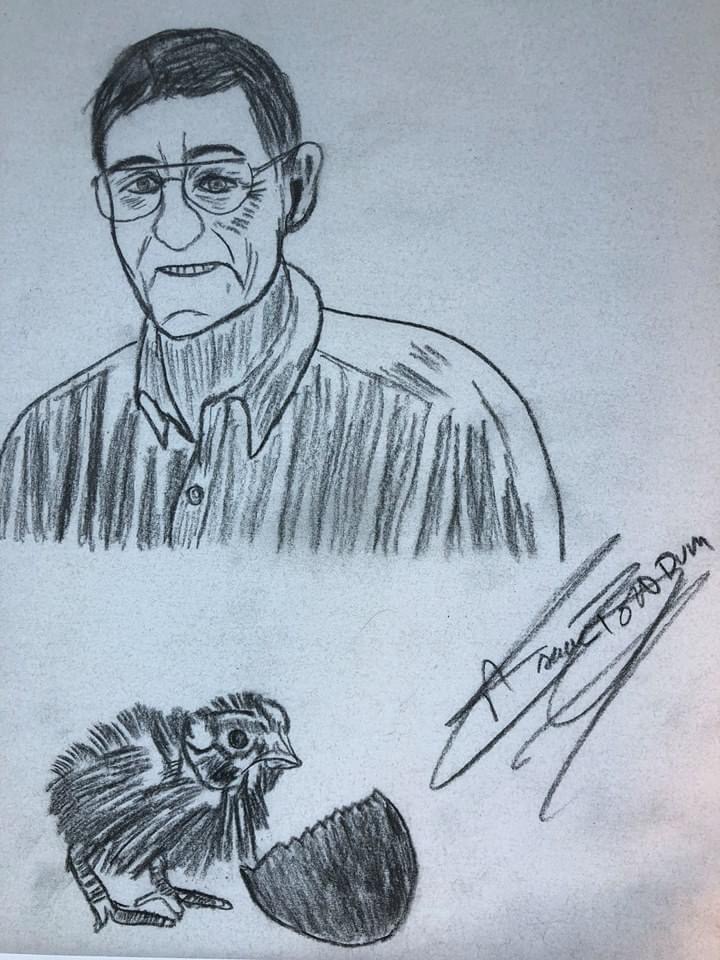
Somehow, the incubation was successful and the eggs all hatched out. The tan chicks had dark brown stripes that ran parallel along their backs.
I was overjoyed when I told my uncle Jerry about my accomplishment.
“Uncle Jerry,” I exclaimed, “I did it! The eggs hatched!”
“That is great!”, he responded, “Isaac, I knew you could do it.”
His response and validation filled my system with light and my soul with joy.
The world with all of its power and wisdom, with all the gilded glory and show, its libraries and evidence, shrink into complete insignificance when compared to the simple lesson of the fragility and value of life that my uncle Jerry taught me that warm summer evening.
Over the years, uncle Jerry repeated this phrase to me. As I graduated high school, college and eventually veterinary school, his reassurance illuminated my understanding of my potential and his unwavering love and support.
There are days that change the times and there is a time to say goodbye. My sweet uncle Jerry passed away in late 2016. His loss left a tear in the eye and a hole in the heart of all my family members.
There is a place beyond the clouds, in the cinnamon sky to the west of Castle Dale, where a precious angel flies.
Somethings never change. Yet, there are things that change us all. This experience changed me.
My uncle Jerry’s lesson, from long ago, was not lost on me.
Each and every day, I remember the immense value of life, as I attend to my four legged patients.
As lives are saved and others are lost, I remember how important it is for someone to take initiative and to tend to the responsibility to care for the helpless and to speak for those without a voice.
This is a lesson my dear uncle Jerry so effectively showed me how to apply and live, and it is a responsibility I take most sacredly.
Spring is a beautiful time of year at Mountain West Animal Hospital. As winter loses it overpowering grip, new life emerges. The smell of flowers, fresh green grass and the sound of birds chirping will invoke feelings of happiness in those yearning for warmer weather.
During springtime, a dichotomy of sorts is presented. While I love this time of year immensely, it’s arrival brings in the annual ritual of sniffling and sneezing, a runny nose and itchy eyes. Atopy, the genetic predisposition to allergies, has plagued my family for generations. We all have severe allergies to grass, alfalfa and flowers.
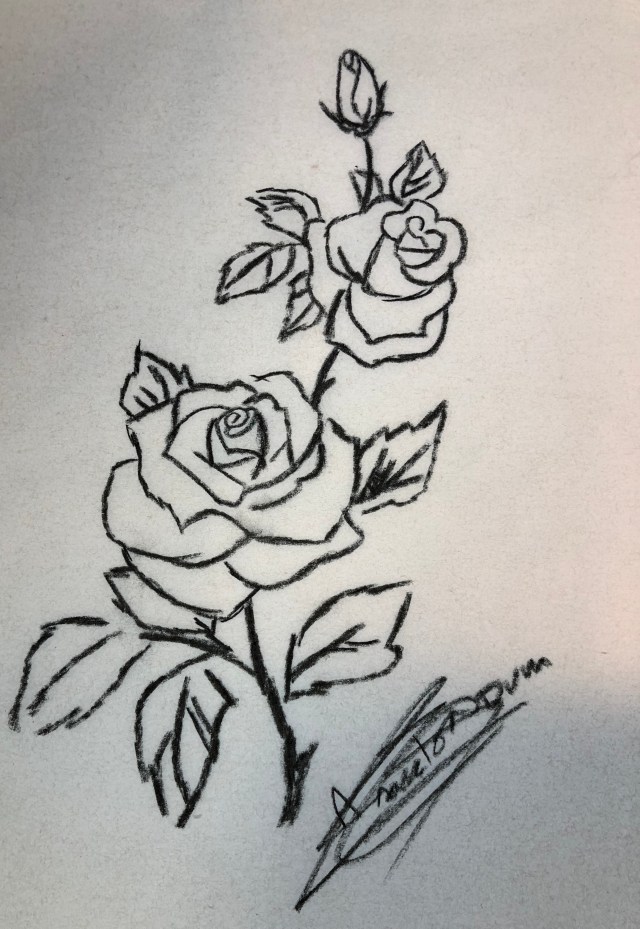
While growing up, a rosebush outside my bedroom window would bloom beautifully this time of year. This rosebush brought me seasonal misery and debilitating symptoms and endless nights of wheezing, sniffing and itchy red eyes. I hated that rosebush! I remember having such severe attacks, that I would lay in bed with a cold washcloth over my eyes, unable to sleep or do anything productive. On the worst of these nights, I scribbled a journal entry at the height of allergy season that simply read, “Today more allergies, oh I hate them.”
I have sympathy for my veterinary patients that suffer from allergies. All to frequently, they present in complete disarray. Instead of the runny noses, itchy eyes, sneezing or wheezing allergies mean to many people, pet allergies typically show up as scratching, chewing, rubbing, head-shaking or severe ear infections. Often dogs present with bleeding paws and open sores all over their body. These lesions are caused by continuous scratching. This insatiable itch drives them crazy. Every waking hour they spend trying to scratch the itch away.
Allergies are by far the most common illness I see as a veterinarian. It is sad to see pets suffering so. When pets suffer, they are at least as miserable as we are — and likely much more.
With each case, we try to provide suggestions specific to your pet, your region and your season, but in general, you can help your pet a great deal with an allergy-prevention regimen in the home.
Concurrently, you can limit the amount of dust and other irritants pets sweep up in their coats by vacuuming and using electrostatic cleaning products (such as Swiffers) on floor surfaces as well as using room or whole house filtration systems. And while you may have heard that frequent shampooing strips the skin of essential oils, veterinary dermatologists now recommend bathing pets at least every week (up to everyday for extremely at-risk, allergic pets) during the spring and summer to help wash allergens off the coat and skin before they can be absorbed and trigger an allergic reaction. Spray-on products or wipes for a dry bath will often do the trick and may be a great deal easier than bathing for some dogs and almost all cats.
Often it’s not just about airborne allergens or parasites: Pets suffer from food allergies as well. Allergy reactions to pet food are usually caused by proteins, and can include beef, egg, milk or cheese products, soy or even fish. If food allergies are suspected, your veterinarian will guide you through food-elimination trials to find the culprit, and recommend a diet that’s both nutritionally complete and contains pre-digested proteins. If your dog suffers from a food allergy but still needs to take medications, Greenies Pill Pockets Allergy Formula capsules may help. These are little pouches, made from peas and duck that put the treat into treatment, by providing a yummy pocket for a pill.
Please don’t let your pets suffer. Schedule an appointment and let’s work together to provide the life free of pain and suffering that each of your four-legged family members deserve.
With modern veterinary options and a world of new products to help, the pet with allergies can be managed better than ever before. And that means you and your pet will both sleep better, after you’ve ditched the itch.
My Take Tuesday: The Most Difficult Part of My Job
Death and dying are uncomfortable subjects. For some, it stirs up painful memories of past losses. For others, it is a reminder of our mortality or the mortality of those we love.
As I tend to the animals in my care, I will lose patients to death despite my best efforts. Often at these times, I am exposed to the emotions of the families who have loved them. For some, there are dramatic outbursts; for others, emotions will be put on hold for private moments.
As different as people are, so are their reactions. No right or wrong. I always try to respect and accept the fact that we all grieve and express grief in our own way and in our own time, and I try my best to be there to support my clients through this most difficult time.
I have to deal with death on a daily basis. Many of these are pets that need to be euthanized. It is among the most difficult aspects of my job. I see the sadness in family members eyes when they have to say good bye to their family member. I often tear up when the strong bond between the family and pet is obvious.
I cannot feel their pain. I did not have the years of interaction with their family member. I didn’t see the unique personality they are talking about. I only have treated this pet on a few occasions and our interactions usually lasted only a few minutes.
What I can show is empathy. My professional familiarity with death means I also know a great deal about grief — my own, of course, and also that of the families whose pets I have looked after throughout their lives.
Dealing with this on a daily basis for many years is difficult. Many veterinarians suffer from severe burnout and fatigue, and sadly a 4x higher suicide rate when compared to the general public.
Veterinarians encounter death frequently, along with some moral issues human doctors never face. Consider the client I need to counsel and help to choose between a costly operation for their pet or paying their mortgage — or worse, a beloved patient I operate on who, despite good care, still dies. Or another case where horrific animal abuse is evident.
When these stresses combine with long working hours and on-call pressures, it’s easy to see how anyone could melt down.
I try to hard to focus on the goodness of people who save animals, instead of the evil of those who hurt them. This helps tremendously. I count myself so fortunate to have the clients that I do. They are loyal and caring. They are kind. I take the trust they have in me very seriously and I do my best every day to be the very best veterinarian I can be.
The loss of a pet should not be taken lightly and it is not something most people get over quickly or easily – although many may think there is a social stigma not to grieve for animals as we do for humans. The fact is that the bond that is formed between people and their pets is in many cases even stronger than some of the bonds between people.
Although I do not fully understand the love you have for your pet, I do care about your feelings and try my best to show this with each interaction I have. This is particularly true when dealing with these difficult end of life decisions. If you have had to go trough this, my heart aches for you.
Losing a pet is tough. I mourn your loss.
I also strongly believe that the bond between human and animal continues, across the rainbow bridge, between this life and the next.
As a child, I grew up in Castle Dale, Utah. My family had a small farm where we raised sheep, cattle and chickens. We had several pastures which we would rotate the sheep and feeder calves. It was always fun when we turned the animals into a new pasture. Their first response was to run and jump and frolic at their new found freedom. I experimented and found this behavior to occur even when they were moved to a smaller pasture. This behavior consistently would occur with what seemed to be only one requirement – wide open space. This freed them from their paradigm. They respond the same way with grass, mud and even snow. Wide open space makes them run and jump and seemingly find energy and happiness.
I find myself, all too often, enclosed in a self imposed corral whose fences limit progression and success. I built these barriers and dare not venture outside these boundaries, lest I be consumed by predators. I think many of us live out our existence in such a fashion. It feels safe. If we never risk anything, we seemingly will never lose anything.
I submit that it is far more dangerous for us to remain inside these fences, never challenging ourselves, never truly reaching our full potentials. This meandering in mediocrity knows no true success. As Mark Twain stated, “20 years from now you will be more disappointed by the things you didn’t do than by the ones you did”. No growth occurs without challenge, and no challenge occurs without some level of uncertainty and presentation of incommodious circumstances.
With that, I throw off the bowlines. I set sail away from the safe harbor with the intent of catching the trade winds in my sails. I stand on the edge of the bough, letting my toes hang over just a bit. It is time to explore, dream and discover……
I love springtime in Utah County! The grass is leaving behind its dormant brown state and turning dark green, the flowers are blooming as if to welcome the longer days and the beautiful season filled with the sound of birds chirping and new life coming into the world. I love baby animals! From lambs to foals, from reindeer calves to baby chicks, Spring is filled with hope for the future.
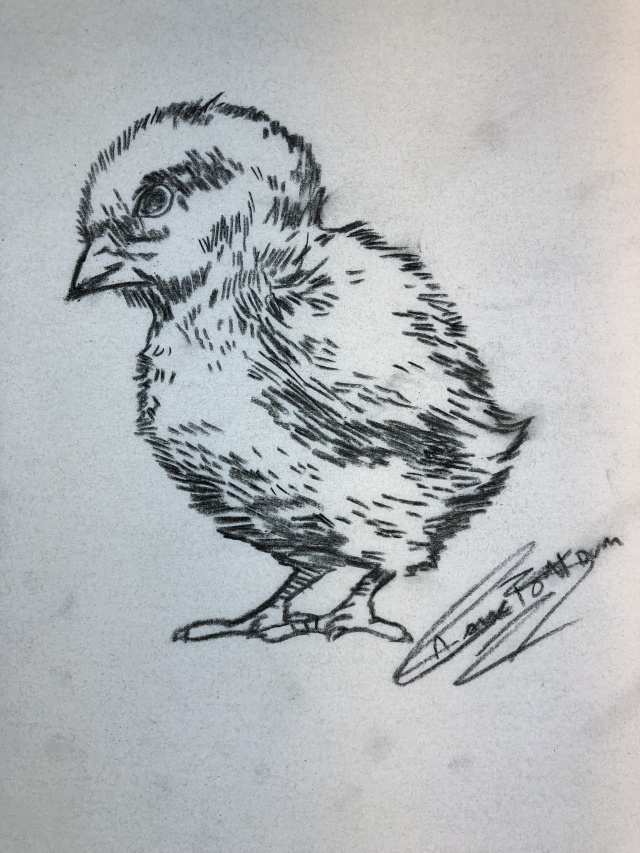
I recall days long ago in Castle Dale, UT. While growing up, we would receive day old chicks during the third week of April. I would await this day with all of the excitement a small child could muster.
In the basement of my parents house, my dad made a make shift brooder. This was made of a large cardboard box lined with newspaper and a heat lamp placed at just the right height to provide the needed warmth for the freshly hatched chicks. They would crowd around the light bulb and nestle tightly together as they slept. There was a constant chorus of peeping.
In a sense, I was a student as I sat and watched the starlings each morning. I learned through deliberate, diligent observation. I faithfully fed and watered the hatchlings each morning and night. I carefully placed fresh newspaper in the box with each feeding. I closely observed how they would eat selectively, picking out shiny pieces of corn before consuming the finely ground mash. As they drank, they would take just a few drops in their mouth and then lift their head upwards, pointing their beaks, and would swallow each drop of water. I learned how to tell if a chick was ill or otherwise isolated, and I would tend to these with as much care as a child could muster. I remember crying as some of the chicks didn’t make it. These experiences were my first real exposure to the frailty of life and the sting of death.
As the chicks grew and matured, I was allowed to go to the chicken coop to collect eggs. One by one, I set them in my basket, the brightest white with the deepest red, the palest green alongside the softest brown.
When I was a child, I frequently dreamed that I could fly. It felt so natural to come down the stairs as if on wings, swooping out the door, joining the wild birds and eagles that soar above Castle Valley. In one dream, I coasted over our chicken coop, and peered through windows of protective wire. I saw the hens, the roosters, the pheasants and the chukars all waking and stretching their wings, as if they wanted to fly alongside me. I woke up grounded, wishing the freedom of flight could be as easy for me.
I find that in today’s chaotic world, the simplest things are forgotten and over looked. The beauty of a sunrise, the fresh dew on a summer’s morning, the sound of a mountain creek, and the clean smell in the air after it rains: these simple things are there constantly, but we have to take the time out of our busy lives for deliberate and diligent observation. No matter our circumstances, no matter our challenges or trials, there is something each day to embrace and cherish.
Often, our mind conflates the world and our own interpretation of it without much thought. We simply assume that the way we see is the way it is. And once that way is verbalized, put into specific words with specific meanings, it becomes all the more difficult to parse. The challenge, is to recognize and appreciate all of the little moments of joy that come along and to enjoy this unpredictable journey of life.
When I am faced with a problem or challenge, I try to approach it like a young observant child. After all, the world never stops teaching us if we have the humility of a beginner’s mind and the generosity to share it with others. This is all we need to do.
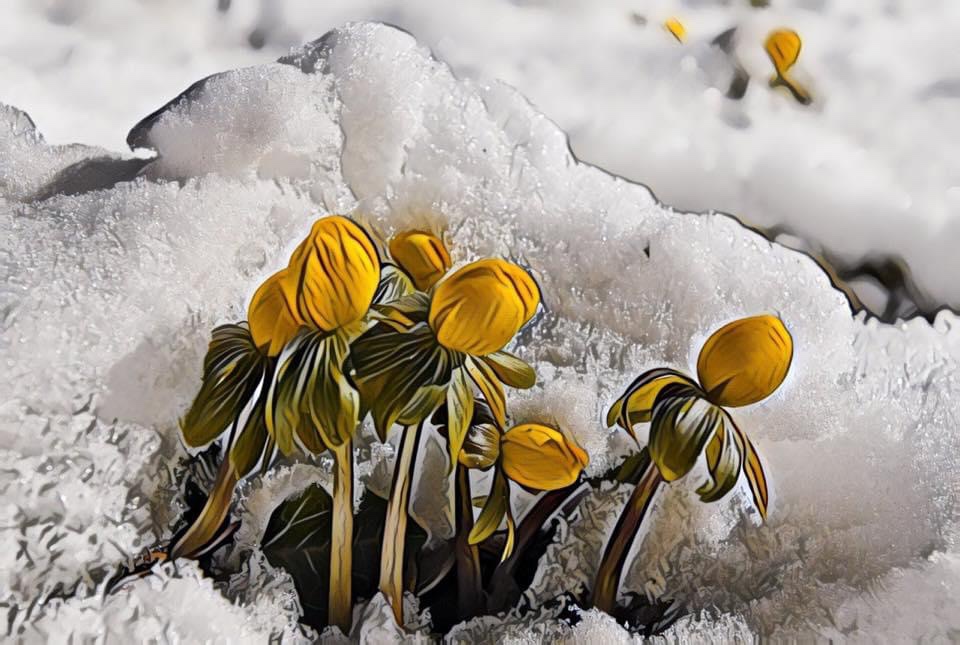
One of my favorite flowers is the Alpine Buttercup. Seen only by those who venture near or above the timberline, it follows the melting snow into the sunshine. In the early spring, it fights its way up through the cold hard earth. Along the snow banks high in the Rocky Mountains, this flower is the first to emerge, often blooming through the melting snow.
I have often wondered how this plant can be so hardy. Ranunculus acraeus is a plant of environmental extremes, hence the species name acraeus, meaning “on high”.
I often wonder what it would be like if we could switch roles with the buttercup. What if we could be as resilient as this small plant?
We would become this tender whitish-yellow chute. It hasn’t felt the suns warmth, the green is yet to come. This tender seedling pushes up through the cold hard ground.
The moment it emerges, it is subject to all of the dangers and injury that can befall anything alive and growing. A wandering deer passes by and steps on the tender plant and smashes it down. Yet, the chute pushes back up.
A hungry chipmunk discovers the plant and bites off its tender delicacy. Still out of it’s reservoir of power, the buttercup pushes up.
It struggles toward to the sun, despite the adversities that attack it.
Then one day it bursts into a tight yellow bud.
It affirms that underneath the old rotten layers of winter snow there is new good life.
My thoughts turn to an exchange in one of my favorite books, Edmond, who has suffered unspeakable torture and pain is addressing a young but courageous Albert. He says, “Life is a storm, my young friend. You will bask in the sunlight one moment, be shattered on the rocks the next. What makes you a man is what you do when that storm comes. You must look into that storm and shout… Do your worst, for I will do mine! Then the fates will know you as we know you.” (Alexandre Dumas, The Count of Monte Cristo)
The fleeting emotion we call happiness, is but a comparison of one state to another. And as such, those who have experienced extreme pain and grief, are most capable to experience supreme happiness.
Life is full of brambles and thorns. It has to be. There is no growth without challenge, and no challenge occurs without some level of uncertainty and presentation of incommodious circumstances.
A few years ago, during a severe winter storm, I passed a herd of bison standing in a large meadow on the side of the road. The storm was intense, with over 18 inches of accumulation in just a few hours. The bison, ironically, stood still in the middle of the meadow. In conditions that would kill entire herds of cattle, these majestic animals stand face first in the winter fury as the wind blows and the snow accumulates. They don’t turn their hindquarters into the wind, nor do they move with it. They stand and face the storms of life undaunted, stoic and valiant.
Perhaps we would do well to emulate the bison, as we face the uncertainties and challenges that we face in life. The storms of life will inevitably come, so why not face them? And face them with strength, determination, and power. Sure, it’ll feel uncomfortable at first, it may even be scary, but if we get comfortable with the feeling of being uncomfortable – that discomfort will begin to lessen.
I don’t know how long your storm will last or how intense it is. But I am confident we will all fare the storm better if we face it head on. Just breathe, put your head down and find a way through. We must have tough times to fully appreciate the good times that lie ahead.
Just like the Alpine Buttercup, we all contribute to the beauty of this world. We are an infinitesimal part of it. Still each of us, no matter how humble, no matter how lowly or simple, we all have a critical part to play.
It was a busy morning at the clinic. Mrs. Robins arrived right on time for her scheduled appointment. She was a long time client at the clinic and was always pleasant during my interactions with her. Her hair was white, and always perfectly styled. She greeted us warmly as she came through the front door. She carried a white fluffy cat inside a pink pet carrier.
Snowball was her name. Such a name is suggestive of a soft white fluff-ball, a sweet angelic and innocent kitten. She was due for her annual vaccinations and a wellness checkup.
However, this kitty’s name is what I would call a major misnomer. Clearly, this kitty received its name long before its true nature was known.
All too often, I hear the phrase, “Doc she is an angel at home. She is just the sweetest thing.” Mrs. Robins repeated the phrase verbatim as we entered the exam room.
Snowball was sitting peaceful in her carrier. As I peered through the door of her carrier, I noticed a couple of warning signs.
When a cat is distressed, it will crouch in a unique form with the legs and tail pulled in under the body. They will extend their neck, flattening the ears against the head.
Cat bites and scratches are painful and notoriously prone to infection. As a veterinarian, I have to be very careful and observant. A cat bite on my hand could literally make me useless – everything I do on a daily basis, from surgeries to physical examinations, requires extreme dexterity and use of my hands.
“Snowball doesn’t seem vary happy today,” I observed, “We need to be careful taking her out of her carrier.”
“Don’t worry doctor,” Mrs. Robins replied, as she swung open the carrier door, “She will come right out.”
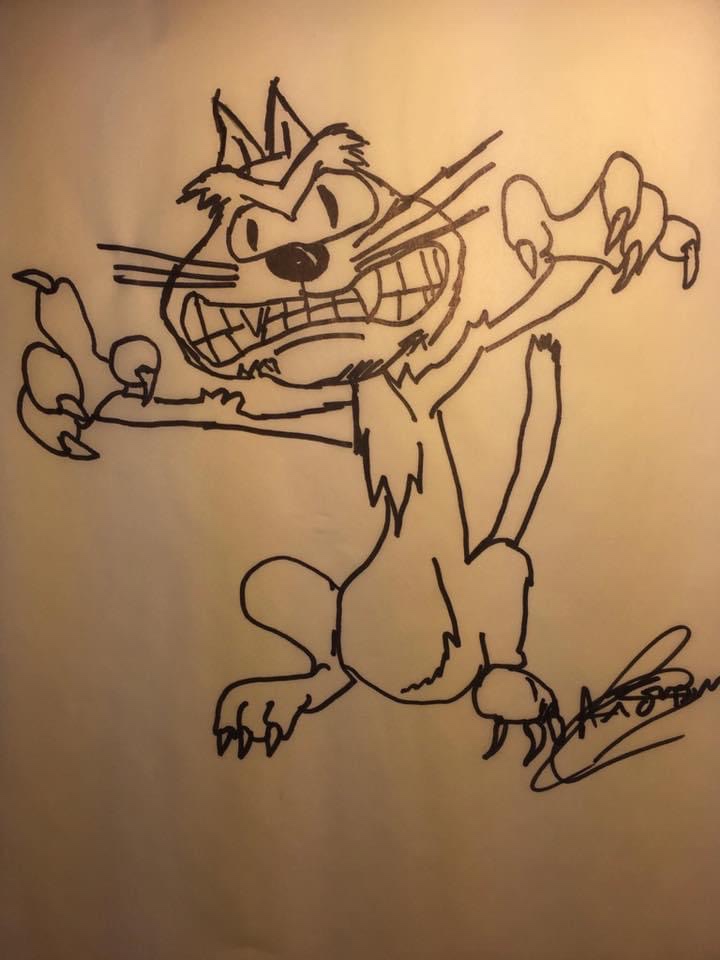
Snowballs exit from the carrier was reminiscent of a rodeo bull exiting the chute during the NFR. She came flying out, hissing and swiping at everything in her path.
She leaped from the table and landed directly on Mrs. Robin’s head. She immediately extended her claws on all four feet simultaneously and plunged them into poor Mrs. Robin’s scalp.
Almost in an instant, snowball fell from atop the terrified woman’s head. Clinging desperately to a white wig. As she hit the floor, she released the hair piece and hissed. Mrs. Robins reached down and grabbed the wig and placed it back on her head.
“Wow!” she exclaimed, “She is sure mad at you!”
Dealing with a spitting and hissing feline in a demonic rage is a dangerous predicament, and can present a formidable challenge to any individual, let alone one smelling of vet.
Snowball then looked at me, hunching her back, while aggressively growling and spitting. She leaped towards me, as I jumped back. Her trajectory was clearly aimed at my upper body, and as I moved, she adjusted her posture mid-air and redirected. Her extended claws sank into my pants. I felt her claws sink into my skin and she climbed upward and onto my lab coat. She came to a stop on top of my right shoulder. Ironically, a moment of tranquility ensued. The hissing stopped and she retracted her sharp claws.
Seeing this an an opportune time, I grabbed the rabies vaccine and removed the syringe cap. I had to be supremely careful that I wouldn’t be knocked or in some other way accidentally discharge the injection into Mrs Robins or myself. At last, I found a piece of leg and carefully thrust the needle through a felted mat of fluffy white hair and into the muscle beneath.
Snowball’s reaction was unremarkable. She did not hiss or spit. She didn’t even growl.
I gently placed her back on the examination table and finished the remainder of the vaccinations and the examination.
She purred as I looked into her eyes and examined her mouth.
She entered the carrier without any hesitation upon completion of the appointment. I stood dumbfounded, what I had just witnessed made little rational sense on any level. Aggression like this that is episodic and transient, is something even animal behavior experts don’t fully understand.
“Wow, Doctor, she must have just had a little rage she needed to take care of,” Mrs Robins stated, “She really is such a sweet little thing.”
I smiled as I glanced at the content Snowball, as she sat purring and comfortable inside her carrier.
My legs began to sting, as I felt a trickle of blood run down the front of my knee.
As Mrs Robins left, I noticed her white hair remained immaculate, and despite having been tossed around by a wild feline, not a single piece of hair was out of place.

 DocBott