My Take Tuesday: The Society for Theriogenology

My Take Tuesday: The Society for Theriogenology  

Greeting from 30,000 feet! This week I am writing from the air. As I peer out the plane window, I see a limitless sky. I love flying! I am en route to Omaha, Nebraska to attend the annual conference of the Society for Theriogenology. It is so nice to be able to attend an in-person veterinary conference. The past 18 months have made all of us miss out on so much that can only be felt through in-person human interaction. 

This conference is an annal event that I have attended since 2007. Each year the meeting is held in a different city around the country. I eagerly await this conference each summer. 

What is Theriogenology? Theriogenology is the branch of veterinary medicine concerned with reproduction, including the physiology and pathology of male and female reproductive systems of animals and the clinical practice of veterinary obstetrics, gynecology, and andrology. It is analogous to the OBGYN, Neonatologist and Andrologist of human medicine – all combined in a single broad specialization. From antelope to zebras, Theriogenologists work on all species of animals. It is a challenging, unique and rewarding discipline.

I became interested in theriogenology as an undergraduate at Southern Utah University. A professor and mentor named Dan Dail introduced me to this most unique area of veterinary medicine. I learned a lot from him. He entrusted me with a research project looking at the correlation of body condition scores and first service conception rates in heat synchronized beef cattle. His mentorship, along with this research contributed to my acceptance into veterinary school. 

At Washington State University, I had the privilege of working extensively with Ahmed Tibary, a world renowned theriogenologist.  He has made endless contributions in teaching, published books, chapters and scientific articles. His comparative approach taught me how to think and reason through difficult cases. He also entrusted me with the animals under his care. We published a significant amount of information on reproduction in alpacas. I remember with fondness my time working with him.

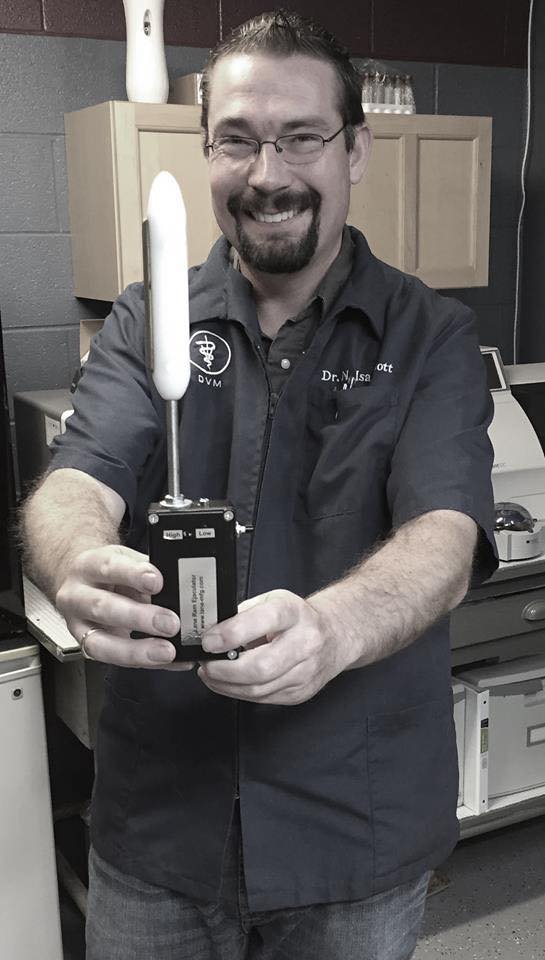
My theriogenology work has made me a better veterinarian. My clinical approach has been shaped and molded by the examples of so many mentors and teachers. What drives me is the comparative medicine; that’s what makes my brain move. Whether I am in the clinic working on dogs or cats, or out working with bighorn sheep, elk, alpacas or water buffalo, I am doing what I love.

Upon a cabinet in the lobby of Mountain West Animal Hospital, a small statue sits. The statue depicts a bull named Nandi.  Nandi is the white bull which symbolizes purity and justice in Hindu art and serves as the symbol of fertility in India. It is a Bos indicus bull anointed with gold and silver jewelry and its association in Hindu art and scriptures can be traced to the Indus Valley Civilization where dairy farming was the most important occupation. There are a numerous temples in India dedicated solely to Nandi.   

This statue was awarded to me after serving as president of the Society for Theriogenology in 2018. It is one of my most prized possessions. I am humbled by the opportunities that have came my way over the years as I have interacted with this unique group of veterinarians. 

Kindness is a commonality among veterinarians who are reproductive specialists. They are approachable and humble. In a profession where arrogance often is the norm, they are a refreshing example of the best of the best. They are among the leadership at nearly every veterinary school in North America. They are leaving a lasting impression on the profession. 

I am so proud to be a member of this group. 

This is by far my favorite conference to attend. I look forward to learning from the best in the world this week and I can’t wait to apply what I learn in my own veterinary practice. 

And that is my take.

N. Isaac Bott, DVM

My Take Tuesday: Mold-A-Rama, the Magical Manufacturing Marvel

I had the privilege of being raised on a small farm in Castle Dale, Utah. Living in a small town had its perks for sure, for one, I rarely had to tell my parents when I got in trouble at school; as fast as word spreads in a small town, someone had almost always beaten me to it and mom and dad knew knew all of the details before I could even get home.

I loved growing up in a small town. I treasure the many wonderful people who helped shape my education and point me on the path I am on today.

My parents would set aside a few days each year where we could get away from the daily farm chores and spend time together as a family. I always looked forward to the time when we were able to leave Emery County and travel to the big city.

Vacations while growing up were typically short, lasting only a couple of days. I have many fond memories of visits to all of the national parks in the state and overnight trips to Salt Lake City. The overnight trips to Salt Lake were often planned around business meetings for my dad. We would typically come up early Friday morning and return home late Saturday.

We would usually stay at the Red Lion hotel in downtown Salt Lake. This hotel is still there, but it is now a Hilton hotel. I still remember the hotel layout. The swimming pool was located on the second floor. We must have stayed there a dozen times growing up.

Breakfast was always west of the temple at a Denny’s restaurant. It was a short 5 block walk from the hotel. I remember enjoying these meals immensely, despite the food being typical greasy breakfast items.

Following breakfast on Saturday morning, we would make a trip to the zoo. As children, we loved visiting the Hogle Zoo. I particularly looked forward to the Mold-A-Rama machines. These peculiar machines would make wax animal figurines on demand. The process melted polyethylene pellets at about 225 degrees and then injected the resulting liquid into a two-piece mold. Before the plastic could completely cool, a blast of high-pressure air would push any remaining liquid out a drainage hole in the bottom of the mold, leaving the sculpture hollow. Next, antifreeze was pumped inside and then drained to cool and harden the waxy plastic shell. The mold separated and the finished figure was ready. The whole process took less than a minute to complete.

For a five year old kid, they were a magical manufacturing marvel. These figurines were of many different animals and colors. I remember getting a gorilla, a giraffe, a lion, and many others. I still remember the smell of the freshly molded wax. The animals were quite hot when the came out of the machine, necessitating a fair amount of cooling off by rapidly blowing on them from all sides. These were treasures to us. They would eventually crumble and fall apart, but they were placed on shelves in our rooms until that happened. There was something mystical and mysterious about owning a 4 inch mold of wax shaped like a gorilla.

Much of my love for animals was sparked by these trips to the zoo. In particular it instigated the comparative curiosity that has made my career so unique. I remember comparing different breeds of monkeys and apes, using the appearance of their hands, in particular their thumbs. I also wondered what was inside the camel’s humps, a question that took over 20 years to find the true answer, which came firsthand from the world’s foremost expert in this species. These trips led to my collecting zoo animal cards and reading about animal facts as a hobby.

It is impossible to look forward and connect the dots of the random chances in our lives, but looking back, I can see it clearly. It is interesting how these experiences all pointed to what I now do as a profession. I am glad I had the opportunity to go on these annual trips and for the wonderful memories that still remain.

And that is my take.

N. Isaac Bott, DVM

My Take Tuesday: The Making Of A Legend

My Take Tuesday: The Making Of A Legend

Dr Charles Leathers is the smartest person I have ever met. I had the privilege of meeting him during my first year of veterinary school. He taught the “Introduction to Pathology” class during my first spring semester. 

In early December of 2015, I traveled back to my alma matter as a guest lecturer. As always, I spent some time visiting with many of the professors that acted as mentors during my years as a veterinary student. I stopped in to speak with Dr Leathers on my last day at the school. He welcomed me in and spoke briefly with me. He was preparing for retirement after more than 30 years of teaching. 

I cannot imagine my veterinary school experience without Dr Leathers. His class stands out for all of the veterinarians who were fortunate enough to have learned from him. He had a unique style of teaching. I still remember exam questions from his class 10 years ago. His lectures were legendary. He used an overhead projector like a boss. His style was one of a kind. His teaching inspired us. His assignments challenged us.

An example of this was shared by my entire veterinary school class. Dr Leathers spoke clearly and concisely. He desired all of his students to share in this quality. Nearly all of us use what are called fillers in our conversations. Filler can consist of words, such as “like,” or “you know,” frequently combined in the phrase “like, you know . . .” In these instances, the words are essentially meaningless except as conversation cues. A related phenomenon is speech disfluency, when one pauses in mid-sentence to try to recall the rest of the thought. Most of us are unaware of the extent we use fillers. The best way to become self-aware is to record a conversation or speech. This was Dr Leather’s way of teaching us to be better. 

The task seemed simple. Prepare a 1 minute speech. Only 1 minute. It could be on anything you wanted to talk about. This 60 seconds of material needed to be memorized and presented to the 100+ member class. Each student’s speech was to be recorded. 

Our assignment was to then take the tape home and play it back. We were required to write down exactly what was said (including the ums, sighs, coughs, grunts, ands, and other filler words we inadvertently use while speaking). This task is not a pleasant one. For most of us, these sounds are probably more common than the words between them. Following this, we were to correct the transcription and submit a final document stating what we should have said in the absence of filler words. 

This exercise proved to be a learning experience. I became much more aware of my speech. I focused specifically on avoiding filler words. It changed the way I interacted with those around me. It helped me professionally. 

Dr Leather’s has taught and influenced thousands of veterinary students over the years. His legacy is unparalleled at Washington State University. I count myself privileged to have been taught by one of the best. 

My final question for this revered professor was simple. I asked,  “You have had a remarkable career. What advice would you give to young veterinarians just beginning this journey?”

His response is one that I will forever remember. 

“Just focus on your sphere of influence. Just do the best that you can and expect that others are doing the same.” 

I think it would be wise for all to follow this cogent and concise advice from Dr. Charles Leathers. 

And that is my take!

N. Isaac Bott, DVM
Spit Happens!

My Take Tuesday: Spit Happens

I received a call a while back regarding a sick llama. It was from a new client that wanted to know if I knew anything about llamas and alpacas. 

Calls like this are somewhat frequent. Asking a vet if they know anything about llamas is like asking a pediatrician if they know anything about 8 year olds. I responded, that I was indeed familiar with all camelids and had worked extensively with them as a veterinarian.

As I arrived at the farm, it was obvious that this wasn’t a typical llama ranch. It seemed as though I had traveled back in time to the 60’s. I was meandering into an apparent neighborhood of Hippie-ville. The van parked outside the gate looked just like the Mystery Machine from Scooby Doo. 

The bright colors were also painted on each of the barns and small buildings of the property and even covered the bases of the tall Chinese Elm trees.

One would not immediately equate going barefoot with farm life, I suppose, especially if the farm in question is shared with livestock. There are serious concerns regarding hook worm, and other parasites that could easily be transferred through the lack of shoes, and to be certain, stepping on manure barefoot has little appeal to the average person. However, a couple of barefooted and worry-free people were standing at the end of the driveway to greet me on this particular day.

One of the owners held a small white paper cup in her hands. As I greeted her, she held the cup up and asked me to take a sip.

“What is it?”, I asked, not fully anticipating the response I received.

“It is Holy Water”, she responded. “We always make the healer drink before the llama.”

Perhaps the shock of the colorful ambience and barefoot attendants clouded my judgement, what ever the reason, I grabbed the cup and took a small drink. Immediately, I realized my mistake, but could do nothing but swallow the mysterious potion. It was the most disgusting thing I had ever ingested. I smiled, and politely asked where the sick llama was located.

The large white llama was setting in a “kush” position, a term llama farmers use for sternal recumbency. As I approached, he raised his mouth in the air and pinned his ears back against his head.

I moved cautiously, as these signs are consistent with a llama that is going to spit at you. This nasty dark green elixir is actually not spit at all, but is the regurgitated contents from the first stomach compartment. The slew is a mixture of partially digested feed, stomach juice and miscellaneous microbes.

Llamas are well aware of a veterinarian’s never-ending quest to stick needles in them; and if provoked, they will spit copiously at you with unpleasant accuracy of aim.

There is a classic sound a llama will make before spitting. The unmistakable gurgling sound is followed by a distinct “pfffffpth”, as the stomach contents spew from the mouth.

The cause of the llama’s discomfort was a large Russian Olive thorn sticking out from the back of the left elbow. I gently reached down and removed the dagger like thorn.

It appeared as though I had escaped unscathed. The llama, with its ears still pinned back, watched me closely, but did not spit.

As I turned my head slightly, I began to speak with the owners. I explained the after care that would be required for a full recovery and encouraged them to remove the large Russian Olive plants that lined the south side of their pasture. I asked if they had any questions and turned back towards the llama.

My mouth was between words then the attack happened. The trajectory and accuracy were unparalleled. The llama spit with sharp-shooter accuracy, and the stomach contents went directly into my mouth.

I immediately began to gag. I then began to dry heave uncontrollably. The owners stood in awe as I struggled to rid my mouth of the fowl taste of fermented llama feed.

There is no amount of listerine that can remove the taste of llama spit. It will stay in your mouth for days.

“Are you alright?,” the bearded man asked.

“Yeah”, I muttered, as I looked up.

“You got to learn to keep your mouth closed, Doc”, he continued, “Especially if you are going to work on llamas.”

I didn’t know how to respond. After working on literally thousands of llamas and alpacas, this was the first time spit had actually entered my mouth.

I accepted my defeat and curiously inquired, “Can I have another sip of Holy Water?”

And that is my take!

N. Isaac Bott, DVM
Don’t worry Doc, she’s a tame cow

My Take Tuesday: Don’t worry Doc, She’s a Tame Cow

“Is the cow where you can catch her?,” was my first question.
Preston was a longtime client and on this particular day he had a cow that was having difficulty calving.

Responses to this question can vary. On this particular occasion the gentleman stated, “Don’t worry Doc, she is a tame cow. I raised her on a bucket.” He then gave a caveat, “Besides, she is too sick to run.”

“I really do not like trying to pull a calf without restraining the cow. I don’t want to get hurt,” I replied.

“We could even tie her up to one of the pillars in the barn,” he continued.

Now clearly, this should have raised a red flag. A 1800 pound snorting bovine is not to be taken lightly. The thought of working on her without a squeeze chute was ludicrous. Just think of the danger I would be subjecting myself to. A well placed kick could easily end my career.

“Can you please help me out, Doc?”, he begged.

Veterinarians all have a soft spot. We like to help people, and often we do so placing our own health and wellbeing on the back burner.

“I guess I could stop by,” I replied, “But please be sure to have a good rope handy.”

“You got it Doc!,” He promised.

When I arrived, Preston had the cow tied up to the center pillar of the barn. The massive beam was actually an old telephone pole.

The cow stood, chewing her cud as if nothing was amiss. A foot was clearly sticking out from the back end of the cow. From the appearance and position of the foot, I could immediately tell it was a back leg.

Delivering a breached calf is no easy feat. The size of the calf would make it impossible to turn around, and the best option was to attempt to pull the calf as it presented. The test for delivery of a calf in the backwards presentation but normal position and posture differ because the fetus should be first rotated 45-90 degrees by crossing the legs before attempting delivery to take advantage of the widest diameter of the cow’s pelvis.

Most experts say you should not apply more force than that of two strong men pulling by hand. But, if you’re alone in assisting a difficult birth, a calf jack can help generate the necessary force. Luckily I had my calf jack with me.

A calf jack is a long pole with a adapter that sits against the backside of the cow, just below the birth canal. There is a handle and jack that move along the entire length of the pole. OB chains are attached to the calve’s legs and then are attached to the jack. Extreme care must be taken to not apply too much pressure while using a calf jack. The health of the calf and mother could easily be compromised if the instrument is used improperly.

I attached the chains to the jack and gently began to tighten the slack. As I applied traction, the cow went crazy! She began to jump and kick and swing her head. I jumped back as fast as I could. She bellowed and began kicking her back legs in the air as if she were a rodeo bull.

The calf jack was firmly attached and stuck out straight nearly 6 feet from her rear end. This device became a formidable weapon and this cow knew exactly what to do. She was able swing it with extreme accuracy.

And boy did she ever swing it!

My OB bag was the first victim. It went flying through the air spreading instruments all over the barn. My water bucket next was launched vertically, covering all of us with fetal fluid and blood tinged warm water.

In a swift motion, the cow pivoted on her front feet, swinging her back end in an abrupt 180 turn. My back was turned to her when this happened and it caught me completely off guard. The calf jack, still sticking straight out from her backside, struck me about 2” below the back of my knees. This caused me to do a partial backflip. I landed on the soft bed of straw head-first.

“Preston!,” I shouted, “I thought you said she was tame!”

“Well, Doc, I ain’t never hooked one of those on her before!” he replied, with a look of bewilderment in his eyes.

Together we grabbed a large panel and placed it along side the raging bovine. She immediately calmed down and I returned to my job.

The calf was born alive! It was a precocious solid black bull calf with a stripe of white extending down his forehead. It weighed nearly 120 pounds!

“Good job Doc!” Preston exclaimed, “I was a little worried there for a minute!”

“So was I,” I replied, “So was I.”

The pain in my calves finally set in as I walked back to my truck. I had a battle wound that took weeks to heal – a linear bruise left by the unforgiving calf jack stuck to the backside of a most formidable and sinister cow.

And that is My Take!

N. Isaac Bott, DVM

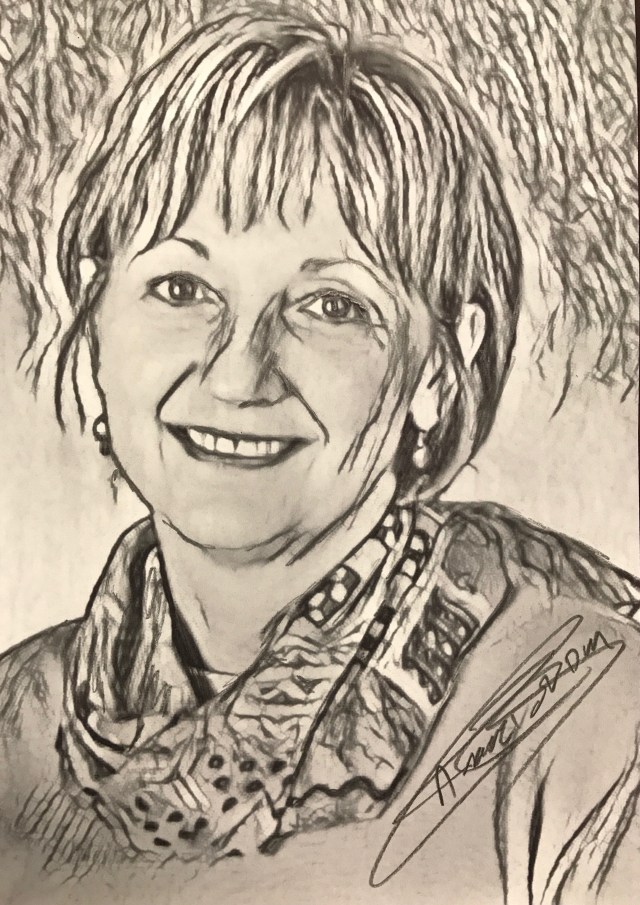
Shonna Dean Peterson

This week’s My Take comes from a special sheltered corner in the fleshy tablet of my heart.

As I write this, I am physically in a beautiful costal city in southern Mexico. Mentally, I am in a small tiny town along Highway 10, in central Utah, an alkaline oasis called Emery. 

Yesterday, as the wheels of the plane touched down here in Mexico, I received the devastating news that my sweet grandma, Shonna Peterson had passed away. 

News like this hurts like hell because that is exactly what it is.

I struggle to find the words that can adequately express the profound sadness that I feel and the immense hole that her passing has left behind. 

There are 19 people on this earth that are privileged to call this wonderful woman our grandma. Although each of us are vastly different, she loved each and every  one of us equally and unconditionally. 

Certainly, enough tears have fallen from each of us to flood the muddy creek that winds down the Wasatch Plateau and through the canyons and gullies of the blue clay hills near Emery. 

I have had the privilege to have my grandma be part of my life for over 40 years. Some of my earliest memories are of setting on her lap and listening to her soothing voice. 

As a young child, I looked forward to each and every visit to Emery to visit my grandma. With each visit, I literally felt the love she had for me as I entered her house, 

During the summers of my youth, I would raise lambs to show at the yearly stock show in Ferron. The sunny, long hot July days were brutal. I remember many of these difficult days were ameliorated by my grandma pulling up in her tan Buick. Inside, she always had a cooler full of soda pop and snacks. 

There are hundreds of memories that I have of my grandma coming to the rescue. 

Looking back now, during most of these times, she was working full time and had just barely completed her long days work. Most of us would immediately head home to clear our minds and to get some rest.

However, none of us are Shonna Peterson.  

She worked all day, and then afterwards she worried about others before giving any thought to herself. She taught me what unconditional love was, without saying a word. 

She married her high school sweetheart in 1949. Together, they raised 6 beautiful daughters. My grandparents have spent over 7 decades by each other’s side. 

My grandma had a very unique perspective about life. One of my favorite teachings from her pertained to being happy with what you have. So much happiness in the world seems to be conditional; “If I had this or that…….. then, and only then will I will be happy.”

Grandma’s words were succinct, “You may not have the very best, but whatever you have is the BEST YOU HAVE and you need too take care of it the very best you can.”  

Grandma taught me to be happy right now. She taught me to enjoy the moment and to be satisfied with what was in front of me.

The last time I saw my grandma was just two weeks ago. As I gave her a good bye hug, I held on a little longer than I normally would. I gazed at her beautiful face. I memorized each and every wrinkle and mark. I know that each one was forged through her worry and love for each of her children, grand children and great grand children. I wept as I realized that there was one for me too. 

As I looked into her eyes, I told her that I loved her. She told me that she loved me too and that she had been thinking about me a lot lately. She then wrapped her arms around me and placed her head on my chest. In this pose, my last photo with her was taken. 

As the tears stream down my face, I miss my sweet grandma. Her love for me was real. It was raw and it would roar for me if required. It will stay with me in quietness and will forever be my comfort. 

After all, real love will celebrate with you, and raise you up. It will keep you going when the world is against you. It will triumph at the end of each and every day. 

Thank you for teaching me this grandma Shonnie.

Thank you for kissing the scars I hid from others, and for helping me turn the pages of my life that hurt so bad to read. I love you. Always and forever. 

My only request grandma, is that you please wait for me so that one day we can walk together across the stars.

Love, 

Isaac

The Red Handkerchief

My Take Tuesday: The Red Handkerchief

As a veterinarian, I all too often find myself in precarious situations.

Upon graduating from veterinary school in 2009, I moved back home here to Utah. My first job out of school was right here in Utah County.

It was not unusual for me to be called to attend a dozen or more lame and injured cows on a particular day. You might arrive to find them in a paddock with no sorting pen and therefore no means of restraining them for treatment. What are you going to do? Unfortunately, farmers often have the attitude that you’re the vet, they’ve called you out to do the job, so they expect you just to get to it. Often these cattle facilities left much to be desired. A few broken palates, some bent powder river panels and a welded together squeeze chute constitute pretty decent working conditions.

Usually some unsatisfactory compromise could be sorted out which would reinforce the fact that you were not half as good as their old vets.

Max was no exception. He stool 6’1″ and was as skinny as a bean pole. He always had a runny, drizzly nose, and he kept a red handkerchief in the front pocket of his bib overalls. Max didn’t want a new young vet working on his cows. He was used to the old school way, and had no reason to change.

I was greeted on one of these farm visits by this familiar refrain: “We used to use old Doc SoandSo. Have you heard of him? Best dairy vet in the county. Of course, you’re new and not used to dealing with dairy cows down here are you?”

Perhaps I am unduly sensitive, but being told you’re second best before you’ve even begun is either irritating or depressing—depending on how your day has been. This day tipped more toward the irritating side.

Suzy was the name of his milk cow. She was a tall Holstein crossbreed cow. On this particular day, Miss Suzy stood in the knee deep pasture staring at us as we entered the field. She was swollen up like an engorged wood tick. On her left side, her stomach was protruding so far that she was as wide as she was long. The diagnosis, even from afar was obvious. 

She was bloated.

Bloat is a digestive disorder characterized by an accumulation of gas in the first two compartments of a ruminant’s stomach (the rumen and reticulum). Production of gas (primarily carbon dioxide and methane) is a normal result of fermentation processes. The gas is usually discharged by belching (erutication) but, if the animal is unable to remove the excess gas, pressure builds up in the rumen-reticulum exerting pressure on the diaphragm which prevents the animal from inhaling, and bloat occurs. The most common type of bloat is frothy bloat where gas builds up in a foam or froth above the rumen contents and the normal belching is inhibited.

Imagine a 40 gallon tub of partially digested green stomach contents. The pressure of this stomach is such that when it is alleviated, it is similar to popping a balloon, this disgusting smelly concoction will spew in a fashion similar to the Old Faithful Geyser.

Before we could even isolate her in the corner to begin treatment, Max decided he needed to blow his nose. As he pulled out his bright red handkerchief, he flipped it with his wrist and positioned it to evacuate his proboscis. Suzy caught sight of this red temptation and came charging full speed – like a freight train – straight for us. She was bellowing and blowing snot in a fit of rage.

In a situation like this, it doesn’t matter how quick you are. The only relevant assessment of speed is how fast you are in relation to the other person in the pasture. I figured I could beat Max to the gate, but would feel guilty in so doing.

I braced myself for the impact. Max yelled, “Hey Now!”

Suzy collapsed just steps before she reached us. The massive pressure caused by the bloat had cut off her air supply. She lay in a heap in front of us.

The treatment for bloat in a case like this is to relieve the pressure as fast as possible. An incision in made through the left side of the abdomen and the rumen is decompressed. In a situation like this, you only have a few seconds to act. My surgical instruments were in my tool box over by the gate. I knew there wasn’t time to retrieve them.

I reached in my pocket and pulled out my Old Timer pocket knife. I made a quick incision with the sharp point. 

Immediately, air began spewing out. It sounded like removing a valve stem from a car tire. It whistled as the massive stomach returned to normal size. Shortly thereafter, Miss Suzy was back on her feet and back to her normal self.

As I prepared to leave, Max commented, “Hey Doc, I guess you are alright after all.”

Max then pulled out the red handkerchief and blew his nose as he inquired, “How much do I owe you?”

And that is my take!

N. Isaac Bott, DVM

The Capricious Caprine

My Take Tuesday: The Capricious Caprine

We are all familiar with the classic Norwegian folk tale of the “Three Billy Goats Gruff.” The captivating children’s story follows an “eat me when I am fatter” plot. The intelligent goats cleverly deceive the hungry troll to access the greener pastures on the other side of the bridge. This species is often overlooked, but its importance on world agriculture is tremendous.

Goats are one of the oldest domesticated species, and have been used for their milk, meat, hair, and skins over much of the world. Goats have an intensely inquisitive and intelligent nature; they will explore anything new or unfamiliar in their surroundings. They do so primarily with their prehensile upper lip and tongue. This is why they investigate items such as buttons, rope, or clothing (and nearly anything else!) by nibbling at them, occasionally even eating them.

Goats will test fences, either intentionally or simply because they are handy to climb. If any of the fencing can be spread, pushed over or down, or otherwise be overcome, the goats will escape. Due to their high intelligence, once they have discovered a weakness in the fence, they will exploit it repeatedly.

To help illustrate my point, I will share with you a lesson I learned as a teenager growing up in the small town of Castle Dale, Utah.

One summer I was entrusted with the care of a small herd of goats belonging to a disabled veteran. Each morning and afternoon, I would travel down Main Street to the small white house on the corner near the hardware store. The most vocal and dominant goat in the group I affectionately called “General Custer” because of a small unusual patch of hair extending forward from his beard.

General Custer could escape his pen without leaving any evidence as to where the weak spot in the fence was located. Several times a week I would find the devious billy goat in the yard of the house nibbling on the freshly bloomed flowers. Each time this event occurred, I would take him back to his pen, where he would remain, albeit temporarily, satisfied.

One morning I got in my car, a 1979 white Buick LeSabre, and started the one mile drive down Main Street. As I proceeded, I noticed a large group of people gathered outside the only tavern in the small town of 1,500 residents. I noticed several men laughing and looking down the sidewalk. As I approached, I noticed a goat standing next to the front door. The goat had a rope halter on and was tied to a power pole on the sidewalk in front of the building. I continued driving, not giving a second thought to what I had just witnessed; after all, I had seen similar things growing up in a small town.

As I arrived at the small house to feed the goats, I immediately noticed that the General was not in the pen. I began looking around the yard for the wayward caprine. He was nowhere to be found.

As I frantically began running through the possibilities in my mind, I remembered the goat that was tied up at the bar. I jumped back in the car and drove as quickly as possible back to where the goat was tied up previously. The crowd had entered the bar and General Custer stood calmly tethered to the pole, chewing his cud and very much unaware of his situation. I jumped out of the car and quickly untied the escapee. I did not have any way to haul General Custer and the 1/2 mile walk back to the house would be awful leading a goat. The large back seat of the Buick would have to do. I placed the general inside the car and headed back down Main Street with the billy goat bleating at every car and pedestrian we passed.

Naturally, the stench in the days following the incident with General Custer was such that the windows needed to remain down while traveling. It took months to rid the car of the goat eau de toilette that so effectively had permeated the back seat.

I was proud of myself. The General had escaped and wandered several blocks down a busy road and still came away unscathed. I had no concern for the inebriated witnesses at the bar; after all, it would be hard to believe the story in the best of circumstances.

The following week when I received the weekly local newspaper in the mail, I was astounded to read the headline on the front page of the Emery Country Progress. A picture of the tied up General was under the headline, “Goat on the Loose”. It seemed that a goat was found wandering the streets of town and that a group of concerned citizens had caught and tied up the animal. The article explained that the male goat had mysteriously disappeared before local animal control authorities had arrived.

Fortunately, someone had taken a picture to corroborate the unlikely story…

And that is my take.

N. Isaac Bott, DVM

Tempus Fugit

My Take Tuesday: Tempus Fugit

This month marks 12 years since my graduation from veterinary school. I can’t believe how fast time has flown by!

Over the course of the past twelve years, I have many accomplishments that I am proud of. It has been a most remarkable journey. 

It seems like just last week when I was saying farewell to some of my dearest friends and colleagues. Members of my class have traveled all over the world and have already left an impressive mark on the field of veterinary medicine. Many have completed residences and internships. 

Some are clinical pathologists, oncologists, zoo veterinarians, cow calf specialists, internal medicine and equine specialists, mixed animal practice owners, epidemiologists and USDA food supply veterinarians.

I am fortunate to have spent my veterinary school years surrounded by such exceptional people. Looking back at my journey, I never would have imagined what the first decade would entail. I have been knocked down several times but have tried to get back up each time and move forward. 

Hard time times have come before, and they are bound to come again. When they come, I grit my teeth, bow my head and ride straight into the wind.  Each struggle has been followed by myriads of opportunities. 

Timing and chance have tremendous bearing on each of our lives and careers. I have had successes and experiences that were not in my wildest dreams when I graduated. I have performed veterinary work in 8 countries, 27 US states, performed reproductive work on 39 different species, performed over 60,000 small animal examinations and have helped build a successful veterinary practice. I have also published 4 scientific articles and just recently authored my first textbook chapter.

I cannot think of a profession that is more rewarding. I have had the opportunity to travel to many far away places to share some of the successes I have had with today’s veterinary students. I very much enjoy the opportunity to do this. I always encourage students to be different and to follow their hearts. My advice to them is to always seek self-discovery and self-improvement. There is very little satisfaction when comparing oneself to others. So much time is wasted when trying to be better than someone else. The true test of success is measured when looking at your own improvement and progress. Are you better than you used to be? If you focus on being your best-self your potential is unlimited. When using others as a comparison, there will always be someone bigger, better or stronger.

Each of us are unique. Look at your thumb. Your thumbprint is a testament to your uniqueness. Your individual thumbprint is different than any of the billions of individuals that are alive today. No one ever has, or ever will have the same thumbprint. Your identity is as unique as your thumbprint. Your perspective and personality are not shared by any other person. These traits are arrows in our quiver of individual contribution. Why is it so difficult to acknowledge this? Self awareness is the key to harnessing and honing this uniqueness in an effective fashion. As we become self aware, we are able to visualize, assess, nock, draw back and place a precise arrow in the bullseye of our desired target.

Thank you to my many mentors who have guided me and made me what I am today.

I look forward with optimism at the journey ahead. I have found my passion. I love what I do.

And that is my take!

N. Isaac Bott, DVM

Sheep and Stoicism

My Take Tuesday: Sheep and Stoicism

Sheep can be stubborn. I remember as a child trying to herd our small group of ewes to a nearby pasture. Although it was only about a hundred yards away, it didn’t go well. As I turned the sheep out, they all began running in every direction. There was pure chaos. I ended up covered in sheep snot, lying on my back looking up at the blue sky. The sheep were all over town. Not one of them ended up in the desired pasture.

Not long after this, my very wise great uncle, Boyd Bott, taught me an important lesson. The trick was simple: “You can’t herd sheep. You have to lead them.” It is a lesson I will never forget.

Taking a pail of grain and walking out in front of the sheep will yield an opposite response than that described above. The sheep will literally run after you and follow where ever you want them to go. Every time I had to move the sheep from this time forward, it was easy.

Sheep have a strong instinct to follow the sheep in front of them. When one sheep decides to go somewhere, the rest of the flock usually follows, even if it is not a good decision. Humans are the same way. In the bible, humans are often compared to sheep. I find this comparison very accurate. We are stubborn. We resist when we are pushed. We follow when we are lead.

There is no better way to learn patience than having a small herd of sheep. They require much attention, protection and care.

Next time you find your patience running thin, think of exercising oversight instead of compulsion. It will most certainly yield a better result.

And that is my take.

N. Isaac Bott, DVM

This photo is of Dr. Bott holding a newborn lamb on his family farm in 1985.