Snowball

My Take Tuesday: Snowball

It was a busy morning at the clinic. Mrs. Robins arrived right on time for her scheduled appointment. She was a long time client at the clinic and was always pleasant during my interactions with her. Her hair was white, and always perfectly styled. She greeted us warmly as she came through the front door. She carried a white fluffy cat inside a pink pet carrier.

Snowball was her name. Such a name is suggestive of a soft white fluff-ball, a sweet angelic and innocent kitten. She was due for her annual vaccinations and a wellness checkup.

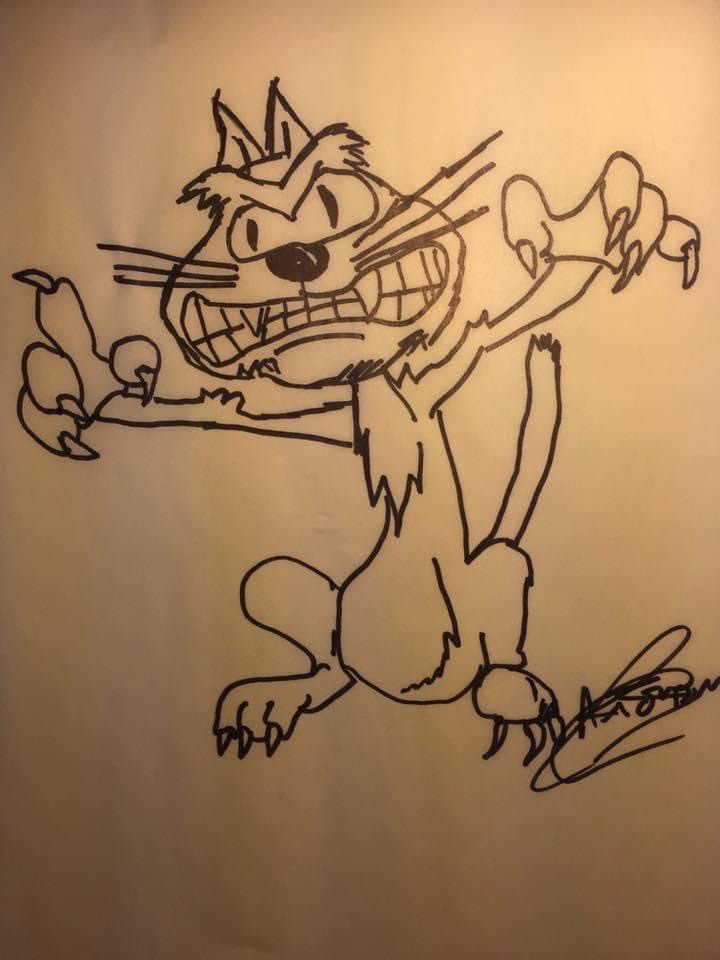
However, this kitty’s name is what I would call a major misnomer. Clearly, this kitty received its name long before its true nature was known.

All too often, I hear the phrase, “Doc she is an angel at home. She is just the sweetest thing.” Mrs. Robins repeated the phrase verbatim as we entered the exam room.

Snowball was sitting peaceful in her carrier. As I peered through the door of her carrier, I noticed a couple of warning signs.

When a cat is distressed, it will crouch in a unique form with the legs and tail pulled in under the body. They will extend their neck, flattening the ears against the head.

Cat bites and scratches are painful and notoriously prone to infection. As a veterinarian, I have to be very careful and observant. A cat bite on my hand could literally make me useless – everything I do on a daily basis, from surgeries to physical examinations, requires extreme dexterity and use of my hands.

“Snowball doesn’t seem very happy today,” I observed, “We need to be careful taking her out of her carrier.”

“Don’t worry doctor,” Mrs. Robins replied, as she swung open the carrier door, “She will come right out.”

Snowballs exit from the carrier was reminiscent of a rodeo bull exiting the chute during the NFR. She came flying out, hissing and swiping at everything in her path.

She leaped from the table and landed directly on Mrs. Robin’s head. She immediately extended her claws on all four feet simultaneously and plunged them into poor Mrs. Robin’s scalp.

Almost in an instant, snowball fell from atop the terrified woman’s head. Clinging desperately to a white wig. As she hit the floor, she released the hair piece and hissed. Mrs. Robins reached down and grabbed the wig and placed it back on her head.

“Wow!” she exclaimed, “She is sure mad at you!”

Dealing with a spitting and hissing feline in a demonic rage is a dangerous predicament, and can present a formidable challenge to any individual, let alone one smelling like a veterinarian.

Snowball then looked at me, hunching her back, while aggressively growling and spitting. She leaped towards me, as I jumped back. Her trajectory was clearly aimed at my upper body, and as I moved, she adjusted her posture mid-air and redirected. Her extended claws sank into my pants. I felt her claws sink into my skin and she climbed upward and onto my lab coat. She came to a stop on top of my right shoulder. Ironically, a moment of tranquility ensued. The hissing stopped and she retracted her sharp claws.

Seeing this an an opportune time, I grabbed the rabies vaccine and removed the syringe cap. I had to be supremely careful that I wouldn’t be knocked or in some other way accidentally discharge the injection into Mrs Robins or myself. At last, I found a piece of leg and carefully thrust the needle through a felted mat of fluffy white hair and into the muscle beneath.

Snowball’s reaction was unremarkable. She did not hiss or spit. She didn’t even growl.

I gently placed her back on the examination table and finished the remainder of the vaccinations and the examination.

She purred as I looked into her eyes and examined her mouth.

She entered the carrier without any hesitation upon completion of the appointment. I stood dumbfounded, what I had just witnessed made little rational sense on any level. Aggression like this that is episodic and transient, is something even animal behavior experts don’t fully understand.

“Wow, Doc, she must have just had a little rage she needed to get out of her system,” Mrs Robins stated, “She really is such a sweet little thing.”

I smiled as I glanced at the content Snowball, as she sat purring and comfortable inside her carrier.

My legs began to sting, as I felt a trickle of blood run down the front of my knee.

As Mrs. Robins left, I noticed her white hair remained immaculate, and despite having been tossed and trampled around by a wild feline, not a single piece of hair was out of place.

And that is my take!

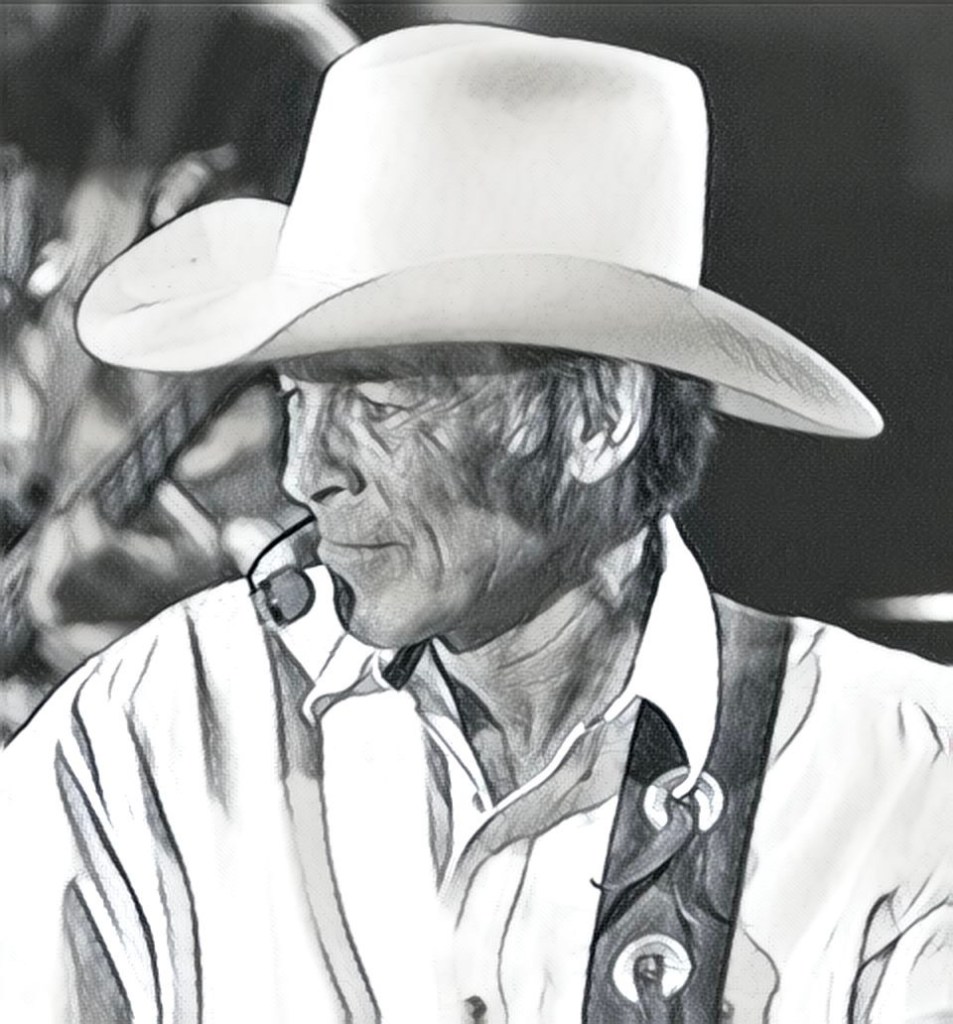
N. Isaac Bott, DVM
Skunked

My Take Tuesday: Skunked

A few months back, a Boy Scout troop stopped by the clinic at the end of the day for a tour. As I showed them around and answered their questions, I couldn’t help but reminisce about my time as a boy scout.

The year was 1995.

Boy scout troop 306 of the Castle Dale 1st Ward embarked on a week long 50 mile hike during the month of July. The hike began on a Monday at Ferron reservoir and ended on Saturday at Indian Creek Campground in the beautiful Manti Lasal National Forest.

As a 14 year old kid, I was just like most of the other boys in my troop: wholly naive and completely unaware of my ignorance. My sense of adventure far outweighed sound logic and I was prone to encounter trouble because of my mischievous nature. My little brother Caleb and my best friend Zac were my partners in crime and were witnesses to myriads of situations that shaped our imaginative Boy Scout days working on merit badges, monthly camp outs and high adventure events that eventually led to each of us earning the rank of Eagle Scout. These experiences consequently helped make us into the men we are today.

On the second night of this long hike, we made camp at a place called Cove Lake. This beautiful lake is just a few miles from the scenic skyline drive and is nestled in a large grove of Douglas Fir and Ponderosa pines.

As Boy Scouts do, we set out to set up camp and explore the lake. We soon found out that we were not the only species inhabiting the camp on this particular night. We shared the campsite with one of the most widely distributed mammals in North America, Mephitis mephitis, or the common striped skunk. The fecund creatures were everywhere. As we floated around the lake on a makeshift raft, we could see dozens of them around the waters edge.

We clearly had a dilemma. Almost immediately, the skunks began ransacking our tents and food supply. These smelly striped critters were endlessly curious about the bipedal invasive species that had entered their territory.

Passive in nature, skunks will avoid contact with humans and domestic animals; however, when challenged they are amply prepared to protect themselves.

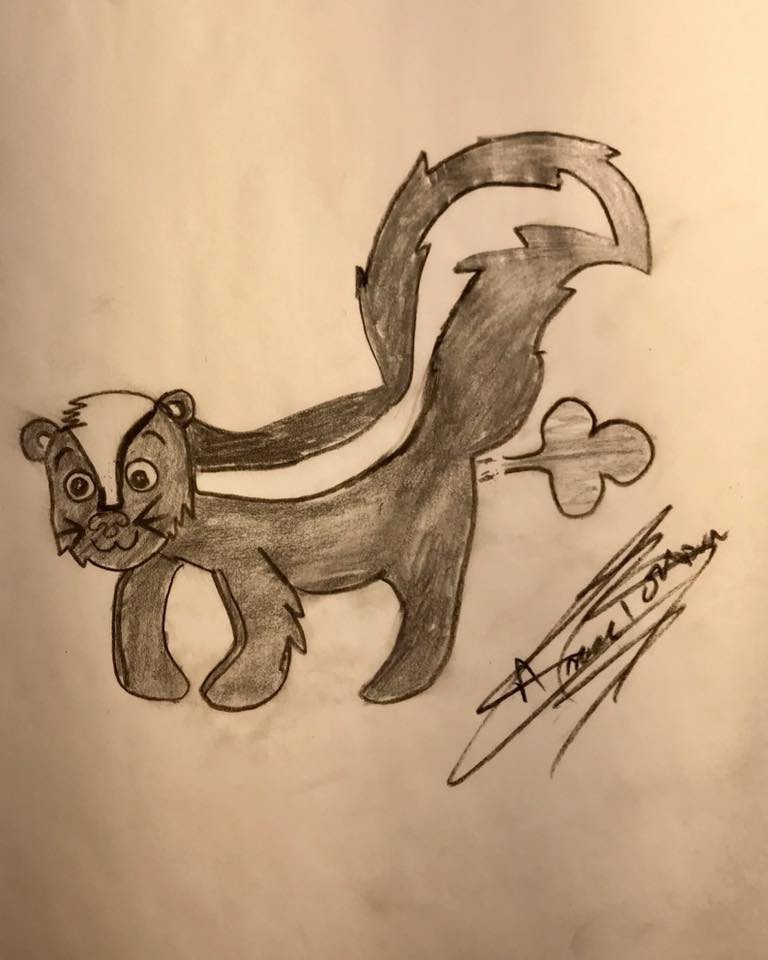
If a skunk feels threatened, it will give a warning which includes hissing, stomping of feet, and elevation of the tail. Failure to heed the warning signs will result in the unlucky aggressor being sprayed with the skunk’s anal gland secretions. Skunks are highly accurate in their aim and can spray 7 to 15 feet away!

A dozen rambunctious boys were immediately perceived as a threat by the striped beast. They seemed to coordinate the invasion of the camp, approaching from all directions.

A scout watching the skunk rodeo spoke to me, “Hey Isaac, if you hold a skunk by its tail it can’t spray you.”

The notion had some truthiness to it, after all, if it can’t plant its feet it likely wouldn’t be able to empty its scent glands.

Without any further thought, I reached out and grabbed the nearest skunk by the tail. I lifted it directly in the air and held it suspended with my arms straight out.

The little guy simply twirled slightly and lined his backside to my face and fiercely sprayed with all that he had.

It went directly in my mouth and up my nose. It covered my entire face and some even got in my eyes.

I immediately began vomiting uncontrollably. By eyes burned and my vision became blurry.

What a lesson! Take my word for it, a skunk can certainly spray when it’s feet aren’t off the ground. This equivocated logic is dangerous.

As Mark Twain once observed, “It ain’t what you don’t know that gets you into trouble. It’s what you know for sure that just ain’t so.”

The odeur fetide that I experienced is actually a thick, volatile, oily liquid that obtains its pungency from sulfur-based thiols. There in nothing that smells worse than skunk spray inside your nose!

It took weeks before I stopped smelling skunk.

Frantically, I raided the food tent in search of cans of tomato juice. I found 8 cans and a can opener. I then took a tomato shower. I scrubbed my head in it, my whole body was covered in tomatoes. You haven’t lived until you take a shower in tomato sauce.

The rest of the week proved to be much less adventurous. I was forced to sleep in my own tent and I walked behind everyone else along the trails.

Now when I see a skunk, I give it plenty of space. And I tell everyone that I can that contrary to popular myth, a skunk can spray even when being held off the ground by its tail!

And that is my take!

N. Isaac Bott, DVM
The Fragility of Life

My Take Tuesday: The Fragility of Life

Just west of Castle Dale, Utah, the sky above Horn Mountain turns a beautiful cinnamon on clear summer nights as the sun sets over the place that I call home. These summer nights smell of freshly cut grass and alfalfa, of roses and cottonwood trees, of sagebrush and lilacs.

If you are heading west along Bott Lane, just past the tall poplar trees, lies a piece of ground that was homesteaded by my great-great grandfather. This piece of land has passed from generation to generation, from fathers to sons, and has always remained in my family.

On the east side of this piece of land, a silhouette of a Ford Tractor and a Hesston Hydroswing Swather were visible on many beautiful summer evenings during my childhood. On the tractor, sat my uncle Jerry Bott.

Jerry was a giant of a man. He stood over 6’4”. His gentle demeanor and kind heart were his most precious of character traits. His soft voice and carefully chosen words were never cross or unkind. At least two times every day, I would be able to greet my uncle as I would enter his house before milking our cows. He became my constancy, my anchor, as I grew from a small child into the man I am today.

On this particular night almost 30 years ago, in 1990, my uncle Jerry was cutting the first crop of hay. The tall grass makes this cutting the most difficult on the equipment. Constant attention must be given to the rotating wheel and hay knives that were prone to clogging.

This time of year, hen Ringneck pheasants are on their nests. They sit so still that even the loud rumbling of a tractor and the ground tremors of the hay cutter leave her undeterred. Occasionally, these hens are injured or killed as they sit on their eggs. The nest, whether it be full of chirping hatchings or incubating eggs, is left to the merciless predators from the air and the nearby fortress of trees and Russian Olives that run along Cottonwood Creek.

As the sun faded behind the towering cliffs of Horn Mountain, I stood on my parents’ lawn, looking eagerly at the approaching two-toned tan GMC Sierra. My hero was coming home for the night.

As Jerry exited his truck, he held under his arm a brown paper grocery bag. His long stride headed towards me instead of his house across the street.

As he approached, he called my name.

“Isaac,” his low and gentle voice called, “I have something for you.”

He handed me the brown paper bag.

Inside, a green towel was wrapped gently around 8 medium sized olive-colored eggs.

“These are pheasant eggs,” he continued, “and they need to be cared for.”

“Isaac, I know that you will do a good job at taking care of them.”

I looked in the sack as Jerry walked back across the street and into his house.

“How do you hatch pheasant eggs?”, I wondered as I entered my parent’s house.

My incubator was nothing special, just a Styrofoam box with a small heater inside. Knowing that peasant eggs incubate for 23 days, I set the temperature and humidity and carefully laid the eggs inside.

I faithfully turned the eggs three times a day for three weeks.

Somehow, the incubation was successful, and the eggs all hatched out. The tan chicks had dark brown stripes that ran parallel along their backs.

I was overjoyed when I told my uncle Jerry about my accomplishment.

“Uncle Jerry,” I exclaimed, “I did it! The eggs hatched!”

“That is great!”, he responded, “Isaac, I knew you could do it.”

His response and validation filled my system with light and my soul with joy.

The world with all of its power and wisdom, with all the gilded glory and show, its libraries and evidence, shrink into complete insignificance when compared to the simple lesson of the fragility and value of life that my uncle Jerry taught me that warm summer evening.

Over the years, uncle Jerry often repeated this encouragement as I navigated the brambles and thorns of life. When I graduated high school, then college and eventually veterinary school, his reassurance illuminated my understanding of my potential and his unwavering love and support. He gently counseled me, “Isaac, find your passion. Cultivate it. Work hard and be the best that you can be. And then share it with the world.”

There are days that change the times and there is a time to say goodbye. My sweet uncle Jerry passed away in late 2016. His loss left a tear in the eye and a hole in the heart of all my family members.

There is a place beyond the clouds, in the cinnamon sky to the west of Castle Dale, where a precious angel resides.

Somethings never change. Yet, there are things that change us all. This experience changed me.

My uncle Jerry’s lesson, from long ago, was not lost on me.

Each and every day, I remember the immense value of life, as I attend to my four-legged patients.

As lives are saved and others are lost, I remember how important it is for someone to take initiative and to tend to the responsibility to care for the helpless and to speak for those without a voice.

This is a lesson my dear uncle Jerry so effectively showed me how to apply and live, and it is a responsibility I take most sacredly.

And that is my take.

N. Isaac Bott, DVM

Kissing A Camel

My Take Tuesday: Kissing a Camel

During the month of November, a few years back, I had the opportunity to travel to Williams, AZ. 

Nestled amongst the Ponderosa pines and Douglas-firs of Arizona’s Kaibab National Forest, Williams is a magical place this time of year. The Christmas season is already in full swing there. All of the restaurants along the historic Route 66, are decorated and lit up with colorful Christmas lights. The scenery is breathtaking, and the atmosphere is most jovial.  

Just 8 miles east of Williams you will find the Grand Canyon Deer Farm. Originally established in 1969, this exceptional educational treasure – owned and operated by Randy and Pat George since March 1987 – offers a terrific interactive animal experience for adults and children alike. Initially opened as a Deer Farm the business has expanded over the years and has now became a fully-fledged Petting Zoo with over 100 animals including Bison, Camels, Goats, Llamas, Elk, Porcupines, Fallow Deer, Mule Deer, Reindeer, Coatimundis, Miniature Donkeys, A Zonkey, Pot Bellied Pigs and Wallabies. 

While there, I performed two artificial insemination procedures on their female resident reindeer. We were also generously treated by Pat to a VIP experience with the animals. As a veterinarian, it will come as no surprise that I love animals. Spending time looking at different animals and watching their behavior is my favorite thing to do. The Grand Canyon Deer Farm is a unique experience, as it allows you to pet and feed myriads of these animals. My children especially enjoyed the up-close interaction with the animals. 

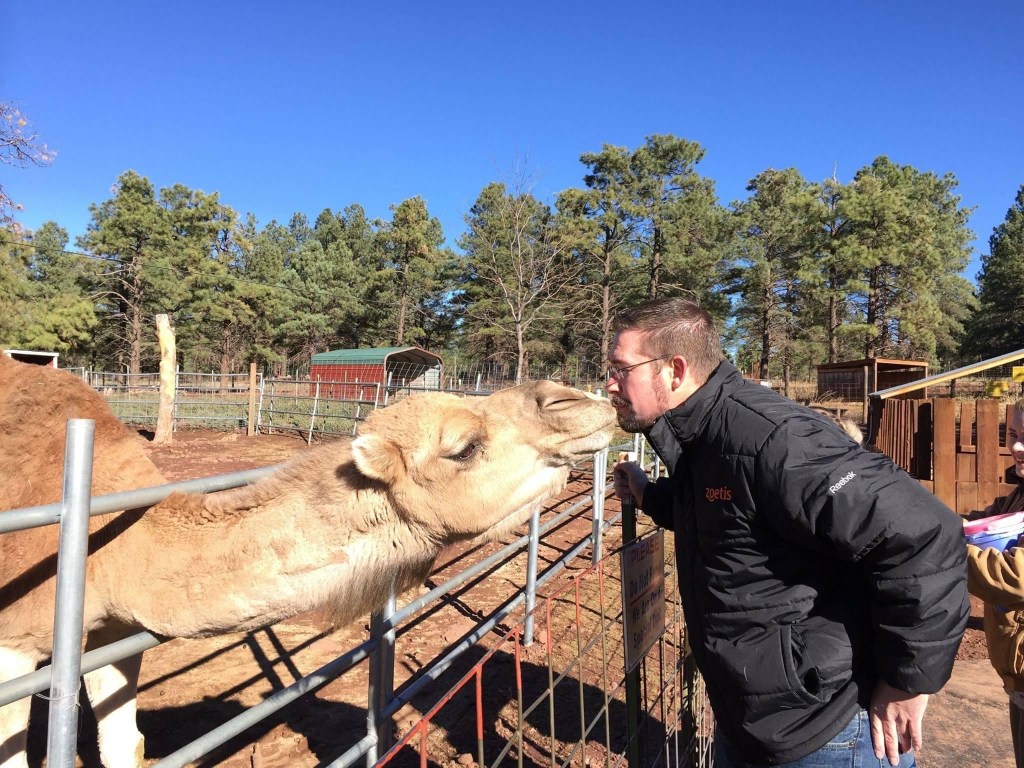
“Hey dad, I just kissed a camel!” Those were the first words I heard from my young daughter’s mouth as she came running up to me. The excitement in her voice made me pay attention. “You what? A camel?” I asked. “Yes dad,” she responded, “You need to do it. Come here.”  

The procedure is simple. Place a carrot in your mouth. Stand near the perimeter of the pen. Lean in gently. The camel will reach out and gentle take the carrot from your mouth. In the process, the camel’s lips will definitely touch yours! As camels do not have upper incisors, there is no danger of getting injured during this activity. 

This is a place everyone should have on their bucket list. When visiting the Grand Canyon or even Las Vegas, making the trip to Williams to visit the Grand Canyon Deer Farm is definitely worth it! 

And that is my take!

N. Isaac Bott, DVM
The Value of a Mentor

My Take Tuesday: The Value of a Mentor

During the last year of most veterinary school programs, time is set aside for students to spend away from the veterinary school immersed in clinical practice in what is known as a preceptorship. At Washington State University, this is a four-credit (four-week) guided preceptorship experience. 

I didn’t have the luxury of visiting the list of clinics that provided a mixed-animal (a clinic that treats large and small animals) preceptorship because of my chaotic schedule of rotations at the veterinary school. Instead, I sat in an office and read over a binder of information about the possible selections. A new clinic had just been added to the book that was offering a guided preceptorship for the first time. The name of the clinic was Mt. Spokane Veterinary Hospital. It was located north of Spokane, in Mead, right off Newport Highway. I had a gut feeling that this would be the best place for me to complete my preceptorship. I would be the very first student preceptor at the clinic. 

Of all of the training I have received during my career as a veterinarian, I count the four weeks spent at Mt. Spokane Veterinary Hospital as the most influential and consequential in where I am today. 

I found the team at the hospital very welcoming and nurturing. Every team member made me feel welcome from day one. I quickly learned of the flow of the hospital and began assisting in appointments and surgeries. 

Drs. Randy Scott and Luther McConnel were very generous with their time. 

Having a student dampens the efficiency of the clinic as it requires much time and patience. Busy veterinary practices can be extremely intense to the exclusion of student education. I found their practice to be the exact opposite. The case load was vast and diverse, but they took the time to make sure I felt involved and that I was learning about the routine cases that rarely present to veterinary school teaching hospitals. 

Veterinary school does not provide much surgical experience. We learn anatomy and have extensive classroom training on tissue handling and surgery, but actual hands-on surgery is something that is typically acquired away from the veterinary school. 

During my month working with Dr. Scott, I had the opportunity to tweak and refine my surgical skills. Dr. Scott never criticized me, rather he gave me pointers on how to hold surgical instruments and how to precisely use a scalpel and place suture knots. He did this in a manner that was constructive and not condescending. He created an environment of learning. He saw something in me that I did not see. He taught me to trust my skill and my ability as I entered the real world as a practicing veterinarian. He became a trusted mentor. 

Dr. Randy Scott is a truly unselfish person who helped me with little in return. He was genuinely altruistic. He built my confidence, encouraged me to grow, and patiently watched me fall and regain my balance. He saw something in me that I didn’t even know I possessed. 

The word “mentor” as applied to such a person has its roots in Greek mythology. In the Odyssey, Mentor was a character who advised and protected Odysseus’ son Telemachus. A 1699 novel called Les Aventures de Télémaque (“The Adventures of Telemachus”), introduced a character named Mentor who served as Telemachus’ tutor. Mentor was the hero of the story, and turned out to be Minerva, the goddess of wisdom, in disguise. The modern usage of the term “mentor” seems to have arisen from that book.

A great mentor wants you to succeed, and he or she will actively support your success with words and action. The great mentor will never be envious or feel threatened by your growth; he or she will congratulate you on your triumphs and help you recover from your setbacks. The generous mentor will make connections or offer resources that could be useful to you whenever he or she can. Most important, a generous mentor believes in your potential, and communicates that to you freely and with hope. The generous mentor supports you to become the person you want to become.

How grateful I am for the mentorship I received under Dr. Randy Scott. Looking back at all the opportunities I’ve had as veterinarian have pivoted on the training that I received from him. My first veterinary work on deer, elk and moose all began during my time at his clinic. I would have never had the courage to work with reindeer without this essential knowledge base. My surgical skill, from the way I hold my suture and my needle drivers, to the way I perform orthopedic surgery, all began and were nurtured under his mentorship. He taught me that what we did was small and beautiful- but that the animals we helped were precious.

Over the years, I have remained close with Dr. Scott. He has even stopped in to visit my veterinary hospital in Springville. He has done so much for me and taught me so much about science, about life, about everything. My biggest fear has always been in letting him down. I work my hardest so that he can be proud of me and to show him that his trust in me was not wasted. 

The true test of one’s character comes when there exists no sphere of recognition potential, no roar and support of a crowd and no chance of fame or fortune. Being simply motivated by the genuine desire to help others, never entertaining the thought of self-interest, is the defining characteristic of a good mentor. 

If you are lucky, and few of us are, at some point in your life you acquire a good mentor. Timing and chance aligned in my life and I was able to find one. I will forever count this mentor as a cherished and dear friend. 

And that is my take,

N. Isaac Bott, DVM

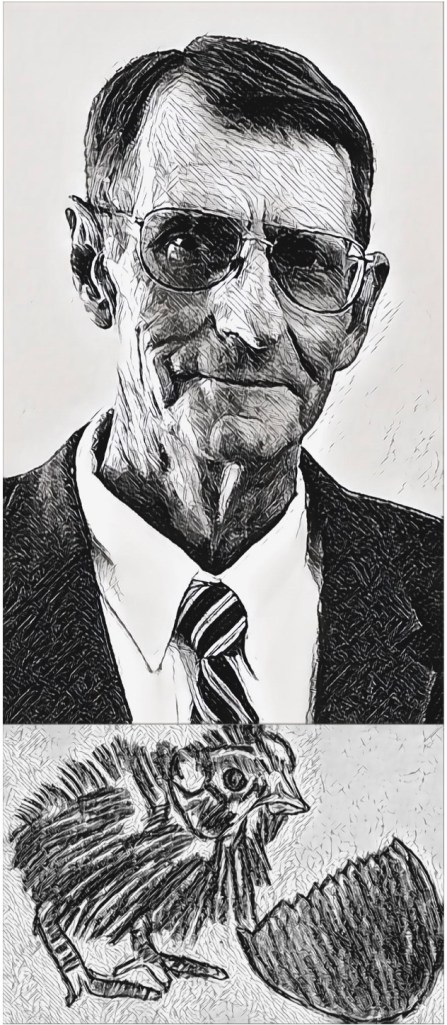
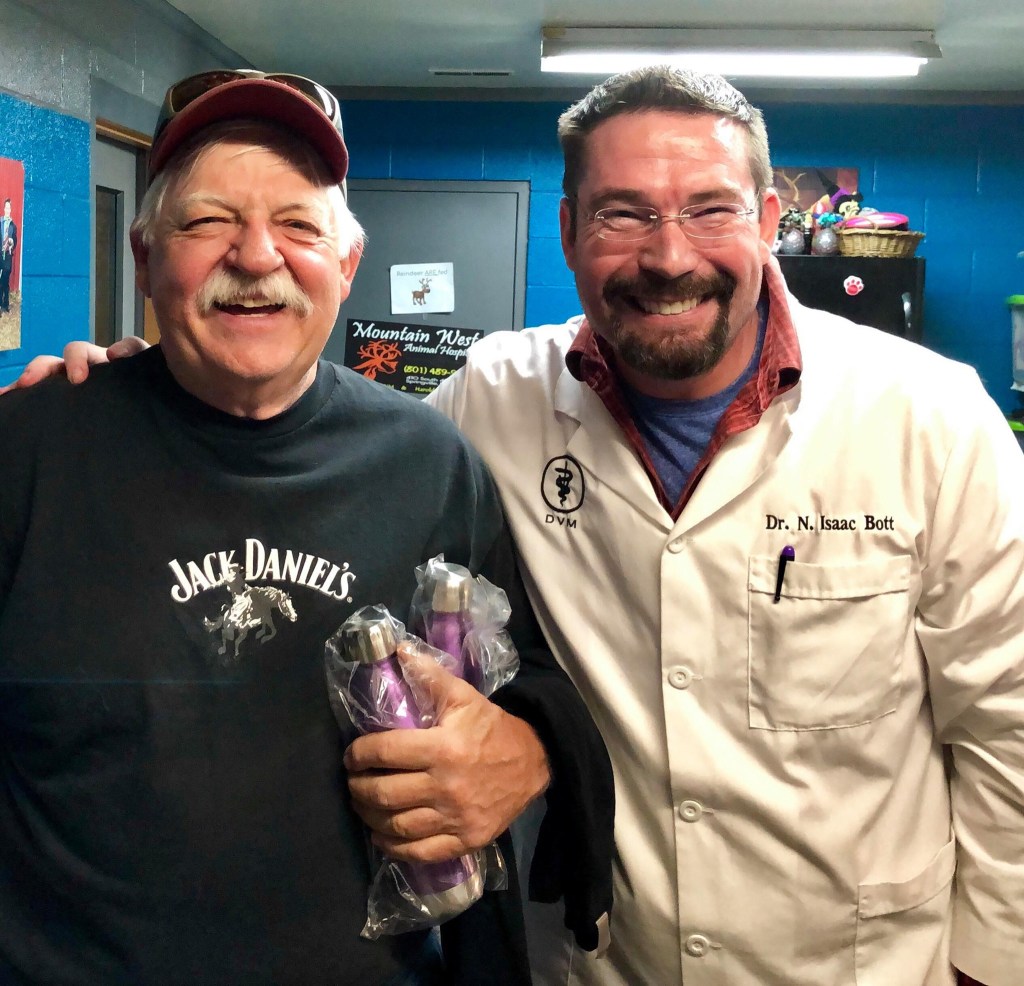
Pictured are Dr. Randy Scott and I at Mountain West Animal Hospital

The Itch is On!

My Take Tuesday: The Itch Is On!

Spring is a beautiful time of year in Utah County! As winter loses it overpowering grip, new life emerges. The smell of flowers, fresh green grass and the sound of birds chirping will invoke feelings of happiness in those yearning for warmer weather.

During springtime, a dichotomy of sorts is presented. While I love this time of year immensely, its arrival brings in the annual ritual of sniffling and sneezing, a runny nose and itchy eyes. Atopy, the genetic predisposition to allergies, has plagued my family for generations. We all have severe allergies to grass, alfalfa and flowers.

While growing up, a rosebush outside my bedroom window would bloom beautifully this time of year. This rosebush brought me seasonal misery and debilitating symptoms and endless nights of wheezing, sniffing and itchy red eyes. I hated that rosebush! I remember having such severe attacks, that I would lay in bed with a cold washcloth over my eyes, unable to sleep or do anything productive. On the worst of these nights, I scribbled a journal entry at the height of allergy season that simply read, “Today more allergies, oh I hate them.”

I have sympathy for my veterinary patients that suffer from allergies. All to frequently, they present in complete disarray. Instead of the runny noses, itchy eyes, sneezing or wheezing allergies mean to many people, pet allergies typically show up as scratching, chewing, rubbing, head-shaking or severe ear infections. Often dogs present with bleeding paws and open sores all over their body. These lesions are caused by continuous scratching. This insatiable itch drives them crazy. Every waking hour they spend trying to scratch the itch away.

Allergies are by far the most common illness I see as a veterinarian. It is sad to see pets suffering so. When pets suffer, they are at least as miserable as we are — and likely much more.

With each case, we try to provide suggestions specific to your pet, your region and your season, but in general, you can help your pet a great deal with an allergy-prevention regimen in the home.

Concurrently, you can limit the amount of dust and other irritants pets sweep up in their coats by vacuuming and using electrostatic cleaning products (such as Swiffers) on floor surfaces as well as using room or whole house filtration systems. And while you may have heard that frequent shampooing strips the skin of essential oils, veterinary dermatologists now recommend bathing pets at least every week (up to everyday for extremely at-risk, allergic pets) during the spring and summer to help wash allergens off the coat and skin before they can be absorbed and trigger an allergic reaction. Spray-on products or wipes for a dry bath will often do the trick and may be a great deal easier than bathing for some dogs and almost all cats.

Often, it’s not just about airborne allergens or parasites: Pets suffer from food allergies as well. Allergy reactions to pet food are usually caused by proteins, and can include beef, egg, milk or cheese products, soy or even fish. If food allergies are suspected, your veterinarian will guide you through food-elimination trials to find the culprit and recommend a diet that’s both nutritionally complete and contains pre-digested proteins. If your dog suffers from a food allergy but still needs to take medications, Greenies Pill Pockets Allergy Formula capsules may help. These are little pouches, made from peas and duck that facilitate medication administration by providing a yummy pocket for a pill.

Please don’t let your pets suffer. Schedule an appointment and let’s work together to provide the life free of pain and suffering that each of your four-legged family members deserve.

With modern veterinary options and a world of new products to help, the pet with allergies can be managed better than ever before. And that means you and your pet will both sleep better, after you’ve stopped the itch.

And that is my take!

N. Isaac Bott, DVM
Why did you become a veterinarian?

My Take Tuesday: Why did you become a veterinarian?

I hear this question on a regular basis. Each veterinarian has a story about why he or she decided to pursue a career in veterinary medicine. Most veterinarians share a commonality – that they have always wanted to be a veterinarian as long as they can remember. My story is a little bit different. I have always loved animals but didn’t decide to become a veterinarian until the age of 21.

To tell my story, I must start at the beginning.

I was raised on a small farm in Castle Dale, UT. My first responsibilities as a child were to feed the chickens and gather the eggs. I began this task at 6 years of age. Each year we would purchase a variety of baby chicks from Murray McMurray hatchery. They would arrive at the post office on a scheduled day. I would wait with eager anticipation for this time. To me it was just like Christmas.

My dad would let each of us pick out a chick that was “ours”. I would always name mine. I first experienced the remarkable human – animal bond with my chickens. I cried when they died. As a child, chickens became my favorite animal, and remain so until today.

Even though I spent my entire childhood around animals, I did not put much thought into becoming a veterinarian. In high school, I took an aptitude test. The test results suggested that I would not make a good veterinarian. I was not introverted. According to that particular test, I could not be successful as a veterinarian. Assuming that these tests were accurate, I pushed the veterinary idea out of my head and considered a law degree.

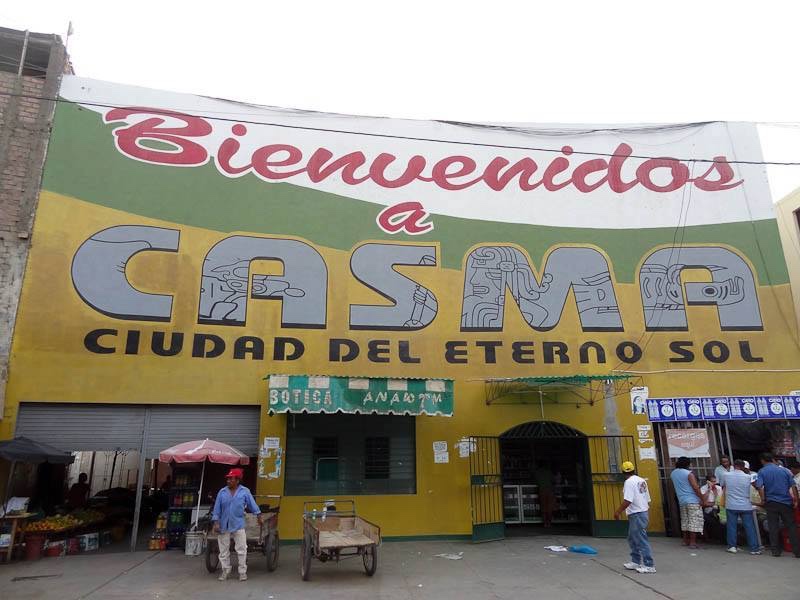
After I graduated from high school, I spent the next two years in Peru. I was immersed in a culture so much different from the one I was used to. It took nearly a year for me to adjust and to speak fluent Spanish. I remember walking down the street in Casma, Peru one day and seeing a group of men in the process of castrating a bull. It was a sight that I will never forget. They were beating the testicles with a large stick in an effort to destroy the testicular tissue and render the bull sterile. The brutality was sickening. I remember feeling so sorry for the bull.

That night I laid in bed thinking about why they would castrate a bull in such a barbaric fashion. I realized that perhaps that was the only way they knew how. Maybe they didn’t know any better. I decided at that moment that I would do all I could to teach these farmers a better way. Having a farming background, I was very familiar with animal husbandry and felt confident that I could help educate the farmers in this part of the world.

My first patient was a pig named Walter. He was a family pet that lived in a house in Casma. Walter had an attitude and his owners needed to have him castrated. I had a friend named Duilio Davelos that owned a pharmacy in town. I visited him and purchased some lidocaine, suture, iodine and alcohol. The procedure went flawlessly. Walter recovered very quickly. News spread of the event. Soon after, I began sending my free time on Monday’s castrating pigs. I found that these farmers were open to learning new methods. The supplies were very inexpensive, and my services were free.

Next came chickens. Because of my time spent as a child taking care of baby chicks, I was able to teach basic poultry care and even help make incubators to boost production. I soon began helping with llama and alpaca herds. Soon, other curious Americans participated in this. In fact, a human dermatologist raised in Provo, UT had his first surgical experience South of Trujillo, Peru castrating pigs! It was very fulfilling to be able to help people out in this fashion. I felt like I was really accomplishing something. I was giving them something that would change the way they would treat their animals. No longer would they brutally castrate their animals without local anesthetic. They also knew how to surgically prep the skin, which eliminated so many post-operative infections. I was helping people by helping their pets. It made me so happy.

As my time in Peru came to a close, I boarded a plane in Lima and headed back to the USA. As I sat in my seat, I reflected on the past two years. My thoughts kept returning to the animal services I rendered. It was in that moment, high in the air, that I decided to become a veterinarian. I landed in Utah, and a few weeks later began my first college classes. After 8 1/2 years or arduous study, my goal was reached, and I became a veterinarian.

I often reflect on the decision I made. I look at how happy I am now. I love what I do. I love helping people by helping their animals. I have never had a boring day, nor have I ever regretted this career decision. I really feel like it is what I was meant to do.

So much in life happens by chance. I was fortunate to have my agricultural upbringing. It prepared me for the future. It is impossible to look forward and connect the dots of the random chances in our lives, but looking back, I can see it clearly.

I am glad that I had the chance to provide animal care in a faraway place and how that opportunity led me down this remarkable path I am on today. I cannot imagine doing anything else.

And that is my take!

N. Isaac Bott, DVM
The Llama Que Se Llama Lloyd

My Take Tuesday: The Llama que se llama Lloyd

It was a typical Sunday afternoon; I was taking advantage of the quiet afternoon by sitting down on the couch. The phone startled me just as I was getting to the good part of one of my favorite movies.

I hit pause as I picked up my cell phone and gave my usual salutation, “Hello, this is Dr. Bott.”

“Hey Doc! I need you to come check on my llama. He’s gone absolutely berserk!”

I could hear panic in her voice as she continued, “He just ate my blouse from the clothesline.
Yesterday, he spit right in my eye. He keeps biting Susie and Dolly, thems my other llamas, and he keeps attacking anyone that enters his pen!”

The potent potion of human personality makes taking calls like this very unpredictable, and my experience has shown that some of the most colorful of souls happen to also have llamas.

She continued, “I tried using lavender oil to calm him, but he bit my finger!”

“Oh my!” I replied.

Over time, the term “berserk” has been used rather freely to describe llamas or alpacas that deviate from the expected behavioral norm.

I could tell this client was truly terrified of the llama and needed immediate assistance.

My next questions were precise, “Is your llama male?”

She replied, “Ya’ darn tootin’ he is.”

I quickly followed up with, “Is he castrated?”

“No, we ain’t got around to it.”

In my experience, nothing will calm a crazy macho llamoid like castration. When possible, castration should be performed before the male attains puberty.

As I drove south on I-15, I reviewed in my mind the condition known as berserk llama syndrome or berserk male syndrome (as it is more pronounced in males). It is a psychological condition suffered by human-raised llamas and alpacas that can cause them to exhibit dangerously aggressive behavior towards humans. The term has been overused, however, and is sometimes inappropriately applied to llamas with aggressive personalities that are not truly “berserk”. The condition is a result of the llama imprinting on its human handlers to such a degree that it considers them to be fellow llamas. Imprinting can be caused by bottle feeding and by isolation from other llamas.

Male llamas suffering from this condition become dangerous when this behavior is directed toward humans. This behavior can be so aggressive that these males sometimes have to be euthanized.

As I turned down the road onto the farm, a large white llama could be seen running the perimeter of the pen. His vocalization, a high shrill mixed with a gurgling, guttural sound, pierced the solitude in the cab of my pickup. It was immediately obvious, that Lloyd the Llama was very upset.

Lloyd had distinctively long hair, known as fiber in llamas and alpacas, around his face. If it weren’t for his long banana shaped ears, he could easily be confused for an alpaca.
Llamas are pseudo-ruminants – they chew their cud similar to cattle. The spit that llamas produce is actually ingesta from their first stomach compartment. This foul-smelling stuff is very unpleasant. Because of my previous llama adventures, I know that it tastes horrible, and it stings when it hits your skin or eyes.

As I approached the fence to meet Mrs. Jones, I heard the unmistakable ‘Pffffffffft” that accompanies a huge ball of llama spit. Before I could react, the large gob of green nastiness spattered across my face.

Imprecations are sure to follow something like this, even from the calmest of veterinarians.

“We need to sedate Lloyd,” I explained to Mrs. Jones, “We should look at his teeth and also castrate him while he is asleep.”

Mrs. Jones had no problem with my proposed battle plan. As she stated, “Maybe he will calm down if we chop his balls off!”

For some reason, I always have giggled when a grown up speaks like this. I smiled as I filled my syringe with the Camelid Cocktail of Anesthesia.
Administering an intramuscular injection on Lloyd proved to be no easy task. Both Mrs. Jones and I received another round of llama spit and multiple kicks from his agile hind legs.

Soon Lloyd sat down and peacefully fell asleep.
As I opened his mouth, I noticed the nidus of his outbursts. His premolars, known in this species as fighting teeth, were actually growing into the sensitive skin inside his cheek.

The fix was simple, the fighting teeth were removed. As per Mrs. Jones request, he was also castrated.

Lloyd woke up a new llama. He calmly allowed Mrs. Jones to lead him back into his pen.

“That’s my boy!” She exclaimed as Lloyd rubbed his face gently on her check.

It was no short of a miracle. Lloyd wasn’t berserk, he was simply in pain.

My job as a veterinarian would be so much easier if I could have the luxury of simply asking, “Where does it hurt?”

Even though animals can’t talk, they certainly can communicate with us if we are willing and observant enough to listen.

I will never forget this important lesson that I learned from Lloyd the Llama.

And That is My Take!
N. Isaac Bott, DVM

Where the Daffodils Grow

My Take Tuesday: Where the Daffodils Grow 

On 22 August 1877 Brigham Young issued a formal call for settlers to locate in Castle Valley. This was the last such directive from the “Great Colonizer” before his death just 7 days later. If you have ever visited Emery County, you come away with the realization that the best was saved for last.

Castle Valley is a state of extremes, from the mystical beauty of the towering Wasatch Mountains to the west to the highest order of desolation in the San Rafael Desert on the east. Even there, among the sage brush and cedars, a pristine beauty beckons the attentive eye. 

My great- great grandfather – Boye Petersen heeded Brigham Young’s call and was one of the original settlers of Castle Dale. He homesteaded the West Farm – a 48 acre piece of land that our family still owns today. The straight road it is on connects Castle Dale with Orangeville and is aptly named Bott Lane. 

Growing up in Castle Dale helped me develop three unique character traits that have proven useful throughout my life.  I developed a strong work ethic, a vivid imagination and a unique self-awareness. This is home. There is something about Emery County that heals my soul. It is my constancy and my serene sanctuary where I can reflect and recharge. Even though I now reside two hours north in Utah County, I still feel connected and drawn to the well worn paths of my youth and the Blue Clay Hills just south of Castle Dale. I have Trail Mountain lightning running though my veins and the Castle Valley thunder pounding in my chest. 

Winters in Castle Valley can be brutal. The snow and ice seem to linger. Farm chores like milking and feeding cows are much more difficult the longer the winter draws on. Piles of cow manure freeze as solid as stone and the ground around water troughs turns into a sheet of ice. One cannot help but feel a longing for warmer weather and new life.

In late winter, each morning and afternoon, I would leave my parents’ house and cross the street on my way to the corral. I would walk along a shaded well-worn path along the east and south side of my uncle Jerry’s house. Between the edge of the house and the sidewalk, green stems would suddenly poke through the frozen ground. The first sight of these unassuming leaves beckons to the attentive eye that the worst of winter is passed and that spring is soon to follow. 

The leaves and stems grow quickly, symbolizing rebirth and new beginnings. They bloom with their cheery yellow hues. Each one is perfect, a golden trumpet amid a fanfare of halo petal. 

Daffodils are majestic, but so delicate, and they wave like tomorrow is guaranteed. After a few short weeks, they are gone, not returning for the remainder of the year. 

The Latin name for daffodil is Narcissus. It is believed to be named after the son of the river god from Greek mythology. 

Its blooming happiness may be fleeting but at the very least, it’s still enjoyed by those observant enough to see its beauty. They stand rooted, soaking in the sunshine and taking in yesterday’s rain through their fine roots. 

Daffodils remind me of my sweet uncle Jerry. He passed away in 2016. He was a gentle giant and, along with his twin brother Jeffry, are the kindest people I have even known. 

As the snow melts and the days get longer, the geese will return as a symbol of change. And once again natures palate will color Castle Valley. 

When the canyon rivers and mountain streams flow, spring will follow at last, in Castle Dale, UT, where the daffodils grow. 

And that is my take. 

N. Isaac Bott, DVM

My First Surgery

My Take Tuesday: My First Surgery


I was raised on a small farm in Castle Dale, UT. We raised Guernsey milk cows, Suffolk sheep and many varieties of chickens and pheasants. My daily chores included feeding the chickens and gathering the eggs.


One day after school, I walked into the barn that housed the chickens. The barn was divided into three equal rooms. The first room is where we would store stacked straw bales. The second and third rooms were where the chickens and pheasants were kept.On this particular day, I found our calico cat nestled with her newborn kittens. She was lying right next to the straw stack, on the ground near the chicken coop door. There were seven in all. As an 8 year old, and still to this day, new babies of any kind are an exciting experience. I dropped down and began counting the tiny kittens. I was so thrilled! As I handled the small kittens, I noticed that something wasn’t quite right.

The umbilical cord from one of kittens was wrapped tightly around a leg of each of the kittens. If I picked one kitten up, the entire litter would follow as if they were chained together. I tried to remove the cord with my fingers, but it was far too tight. Even as a little kid, I knew that something had to be done.


In Castle Dale at this time, we did not have a veterinarian. The only veterinary services available were on Thursdays when a veterinarian would travel from Richfield. It was early afternoon, so my dad was not going to be home from work for a couple of hours. I had to figure something out for myself.


I reached in my pocket and pulled out my Swiss Army knife. It was one that had a myriad of blades, nearly all of them never used, and a tooth pick and small set of tweezers in the handle. I opened the smallest cutting blade and bent down. I very carefully cut the umbilical cords from each of the kittens. I used some iodine to keep the procedure as clean as possible.


The procedure was a success. All of the kittens survived.


Fortunately, I no longer use my Swiss Army knife for surgeries. Although my surgical skills have been refined and perfected, I still have the curiosity and passion that that 8 year old displayed. I love being a veterinarian. The satisfaction I felt that day long ago is repeated every time I am able to help save a life.

I look back on my first surgical experience with fondness. It was one of the important milestones in my path to becoming who I am today.

And that is my take!

N. Isaac Bott, DVM

I am pictured here with these kittens in 1988