Father’s Day

Father’s Day

The giant snowflakes gently fell in perfect rhythm. Even though it was 6:00 AM, I could see clearly through the winter whiteness. This particular winter during the 1980’s in Castle Dale was incredibly harsh. Nearly 18” of snow had fallen over the past 24 hours. The field across the street from my parents house was covered in a thick blanket of white. I bundled up as I prepared to leave the house to do the morning farm chores.

My dad led the way as we headed across the street to the corals. The deep snow proved to be a challenge for my short legs. I jumped and lengthened my stride as I placed my feet inside my father’s footprints. As long as I followed his steps, the path seemed manageable

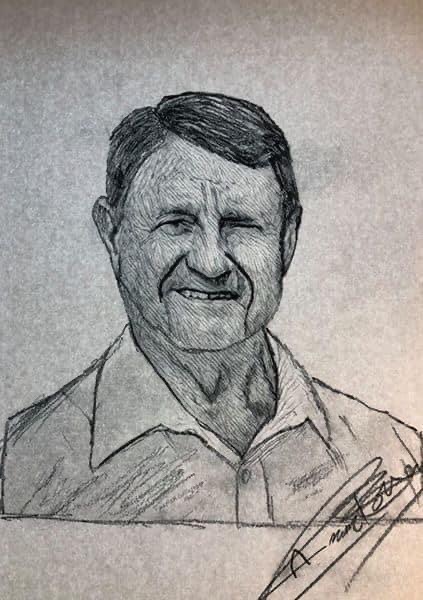
My dad is a giant of a man. I remember attending a Cub Scout pack meeting as a young boy. At this meeting, a plank was placed on the floor and a 16 penny nail was started in the center. A competition was held where all of the father’s in the room had a chance to hit the nail as hard as they could. Some were able to drive the nail in completely with 2 or 3 hits. When my dad’s turn came around, he buried the nail with a single swing of the hammer. I remember thinking how amazing that was! He could loosen old rusty bolts with a quick flick of his wrist, he could throw a bale of hay on top of a haystack and no one could use a shovel like him. In my eyes as a young boy, he seemed to be able to do anything. My dad has been my hero as far back as I can remember.

I remember a time where he had learned that a man living in town did not have a bed in his house to sleep on. My dad went and purchased a brand new bed with his own money and delivered it to this man that he didn’t even know. Years later, this man told me that this act was the kindest thing that anyone had ever done for him in his life. My dad taught me how to care for others less fortunate time and time again through his example.

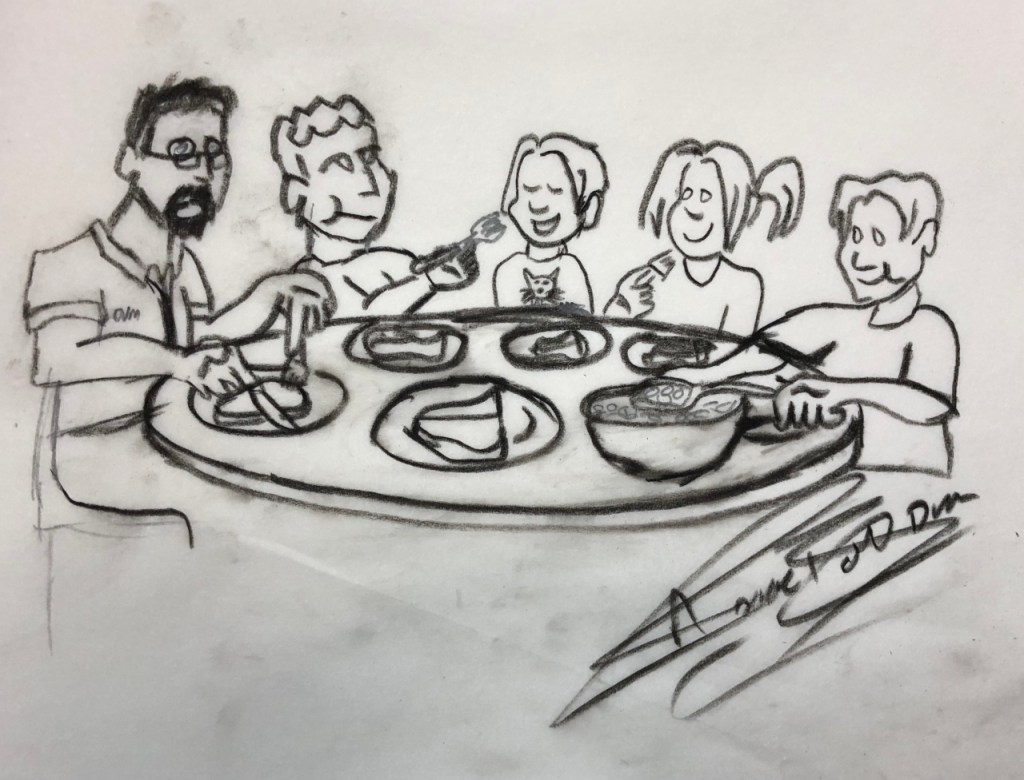
Each summer, my dad would set aside time to take each of his five children camping with him individually. We would get to chose the destination of this one on one time. I remember the cold air and the damp grass. I remember the smell of the air. I remember eating Pringles and sitting by a campfire. I remember eating small boxes of Cocoa Krispies and catching fish.

Oh how I looked forward to my annual camping trip with dad! My favorite spot was in Upper Joe’s Valley. This overnight camping trip always provided an escape from the every day chores and busy summer days.

Despite working 7-5 every day, somehow dad would find the time in his incredibly busy schedule to take each one of us individually every single year. This was dad‘s way of showing us how much he cared. Although he loved each of us equally, during these outings we all felt very special. I remember every single trip and I cherish these memories.

I remember one particular time when I was working at the cemetery. The volume of work there had overwhelmed me. There was so much to do and I couldn’t get it done. Dad, after working all day at a thankless and stressful job, came to the cemetery and cut the individual daisy flowers off of the dozen or so bushes in the flower bed. This tedious process took several hours. I was thankful that night, but now looking back, tears come to my eyes. I know how tired and worn out I am after working all day. How did he have the energy to do all that he did?

In today’s world fathers come and go. Having a stable father is a rarity. My dad was always there to work with us. I remember many times going out to the farm with dad and being so stressed I couldn’t function, and after a few hours of digging ditch anything that was bothering me would disappear. Growing up, I was taught how to do good work and to be proud of my accomplishments. My dad did this, not by leaving a list of chores to be accomplished, but by working right there alongside us,

A statue on my dad’s dresser depicts a father with a small child sitting on his knee. The inscription reads, “Any man can be a father, but it takes someone special to be a daddy.” My daddy’s example was not lost on me. His unconditional love has inspired each of his 5 children to be the best that we can be

I have often wondered exactly what is the measure of a man? Is it the softness of his heart? Is it the hardness of his hands? Is it in the words he speaks or the legacy he leaves?

When the storms of life have blown and tossed me around, I have always been able to think about the example my dad set for me. He has walked the same path, has wished upon the same stars and he has worried about the same things. This brings me so much comfort. It helps me tremendously when I have to make tough decisions.

One of the most unfortunate things in my life is that it has taken me years to realize how essential my father’s role was to build my character, my ethics and most importantly, my happiness. His blood runs through my veins and his example is in my soul, and although my life has been a poor attempt to imitate his example, I am doing the very best I can.

This Father’s Day, I still find myself trying to follow my father’s footprints in the deep snow. He is my constancy and my mentor, my rock and my friend. He is my hero!

Thank you dad for your unconditional love. Thank you for your guidance. Thank you for teaching me how to work, to love and for teaching me how to treat others with kindness.

Happy Father’s Day!

N. Isaac Bott, DVM

The Making Of A Legend

My Take Tuesday: The Making Of A Legend

Dr Charles Leathers is the smartest person I have ever met. I had the privilege of meeting him during my first year of veterinary school. He taught the “Introduction to Pathology” class during my first spring semester in the College of Veterinary Medicine at Washington State University.

In early December of 2015, I traveled back to my alma matter as a guest lecturer. As always, I spent some time visiting with many of the professors that acted as mentors during my years as a veterinary student. I stopped in to speak with Dr Leathers on my last day at the school. He welcomed me in and spoke briefly with me. He was preparing for retirement after more than 30 years of teaching.

I cannot imagine my veterinary school experience without Dr Leathers. His class stands out for all of the veterinarians who were fortunate enough to have learned from him. He had a unique style of teaching. I still remember exam questions from his class 10 years ago. His lectures were legendary. He used an overhead projector like a boss. His style was one of a kind. His teaching inspired us. His assignments challenged us.

An example of this was shared by my entire veterinary school class. Dr Leathers spoke clearly and concisely. He desired all of his students to share in this quality. Nearly all of us use what are called fillers in our conversations. Filler can consist of words, such as “like,” or “you know,” frequently combined in the phrase “like, you know . . .” In these instances, the words are essentially meaningless except as conversation cues. A related phenomenon is speech disfluency, when one pauses in mid-sentence to try to recall the rest of the thought. Most of us are unaware of the extent we use fillers. The best way to become self-aware is to record a conversation or speech. This was Dr Leather’s way of teaching us to be better.

The task seemed simple. Prepare a 1 minute speech. Only 1 minute. It could be on anything you wanted to talk about. This 60 seconds of material needed to be memorized and presented to the 100+ member class. Each student’s speech was to be recorded.

Our assignment was to then take the tape home and play it back. We were required to write down exactly what was said (including the ums, sighs, coughs, grunts, ands, and other filler words we inadvertently use while speaking). This task is not a pleasant one. For most of us, these sounds are probably more common than the words between them. Following this, we were to correct the transcription and submit a final document stating what we should have said in the absence of filler words.

This exercise proved to be a learning experience. I became much more aware of my speech. I focused specifically on avoiding filler words. It changed the way I interacted with those around me. It helped me professionally.

Dr Leather’s has taught and influenced thousands of veterinary students over the years. His legacy is unparalleled at Washington State University. I count myself privileged to have been taught by one of the best.

My final question for this revered professor was simple. I asked, “You have had a remarkable career. What advice would you give to young veterinarians just beginning this journey?”

His response is one that I will forever remember.

“Just focus on your sphere of influence. Just do the best that you can and expect that others are doing the same.”

I think it would be wise for all to follow this cogent and concise advice from Dr. Charles Leathers.

And that is my take!

N. Isaac Bott, DVM

Kaycee

My Take Tuesday: Kaycee

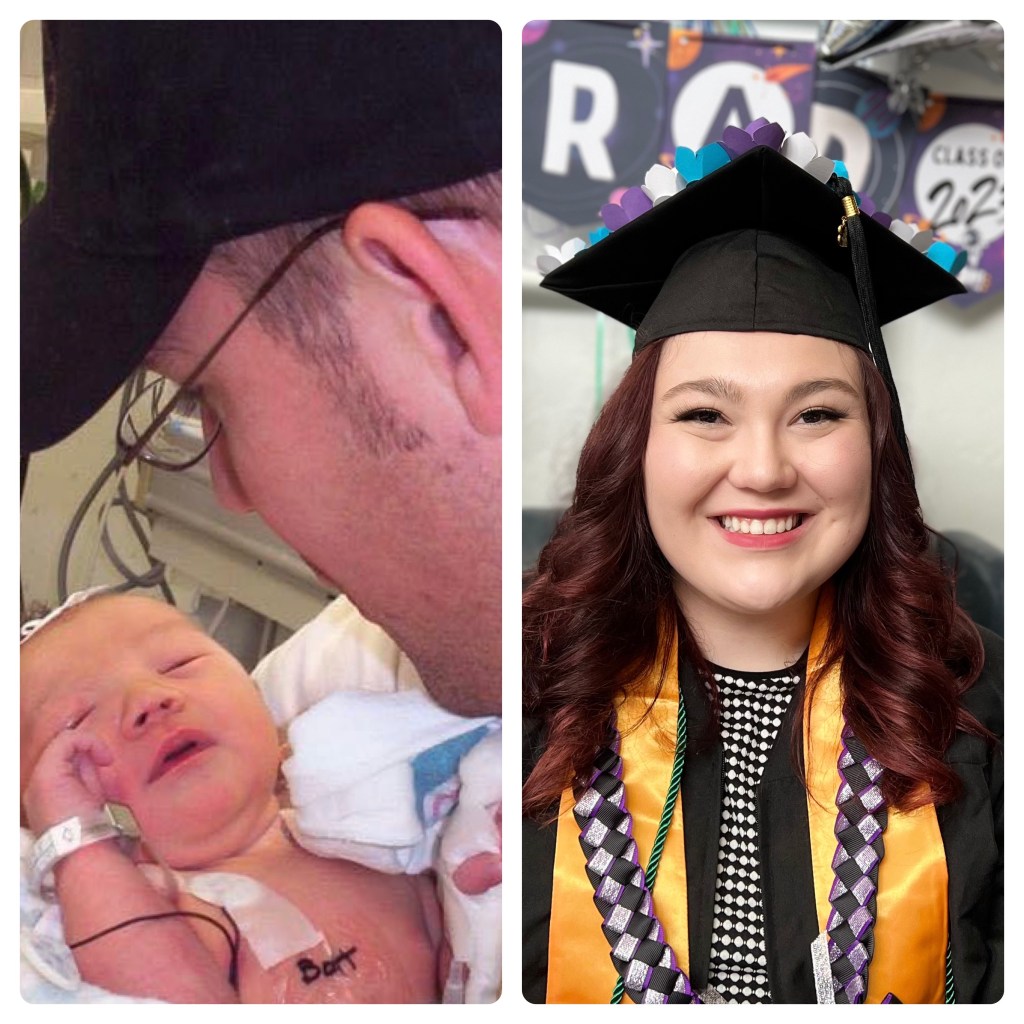
18 years ago, on June 6, 2005, my life changed forever. On that day, I became a father. This unforgettable day was filled with both joy and fear. My daughter, Kaycee, was born in the early morning hours. Soon after her arrival, doctors determined that she had a bacterial infection and subsequent septicemia. She was immediately rushed off to the NICU. This was a very scary time for her parents. You feel so helpless. We trusted in the doctors and the highly skilled nurses. After several hours, I was allowed to visit her in the NICU.

When I first held her, I was filled with overwhelming feelings of joy, love, and fear. I was so elated to finally have my daughter in my arms. Seeing her tiny and fragile body was both miraculous and heartbreaking. She had monitors, bandage tape, IVs and wires all over. As I held her tiny fragile body and looked at her face, I fell absolutely in love.  Realizing how precious and fragile life was, I vowed to be the best father I could be.

Every subsequent night for the next 4 years, I would sing a Chris LeDoux song to Kaycee as she fell asleep. The song is called Daily Bread. 

The lyrics say:

“Lord I ain’t been a prayin man

I figure the whole worlds in your hands

Ask and you shall receive you say

So give me her love my daily bread

You can take everything I own

Every single seed I’ve sown

Still I know I come out ahead

If I have her love my Daily Bread

She is a raindrop in a drought.

She’s my faith when I’m in doubt

Like a river needs a riverbed

I need her love my daily bread

I don’t know why she’s chosen me

I live my life so selfishly

But I know until my dying breath

I’ll need her love my daily bread

And I know that I’m not worthy

But give me her love my daily bread”

Kaycee has grown up to be a smart, beautiful, and driven young woman. She is resilient and determined. Despite having faced more obstacles than most her age, her spirit and positive attitude continue to amaze me.

Kaycee, I am so proud of you and of all of your accomplishments. You have so much to offer this world, and I am so honored to be your father. Happy 18th birthday! I love you!

And that is my take!

N. Isaac Bott, DVM
The Macabre Mite

My Take Tuesday: The Macabre Mite

As a veterinarian, I see and treat a variety of pet diseases. Skin diseases are very common at my practice. Some of these skin conditions are caused by parasites. I recently diagnosed a pet with a condition called sarcoptic mange. Sarcoptic mange is caused by a parasitic mite (Sarcoptes scabiei) that burrows just beneath the surface of the skin. 

Sarcoptes scabiei mites bury into the skin of healthy adult dogs and puppies and feed on material in and on the skin. Sarcoptic mange is also known as scabies and is zoonotic, which means it is transmissible from pets to people. 

Mites are distant relatives of ticks, spiders, scorpions and other arachnids. Over 48,000 species have been described. Sarcoptic mange (scabies) is an infectious and contagious type of mange mite often picked up from other dogs or unclean environments.  

Symptoms of sarcoptic mange may include intense itching, scabbing and hair loss of most commonly thinly haired areas of the coat such as the ears, elbows, legs and abdomen. While diagnosis is made by performing a skin scrape, these mites are often difficult to find. However, when I see them, they are unforgettable. 

I imagine that many horror movies were inspired by staring at this mite under a microscope. Even though we see it commonly, seeing it under a microscope makes me itch. A lot. Just writing about it makes my scalp and arms itch. 

Just watch this short video clip. 

Does this not make you itch? 

And that is my take!

N. Isaac Bott, DVM

Tempus Fugit

My Take Tuesday: Tempus Fugit

This past week marked 14 years since my graduation from veterinary school. I can’t believe how fast time has flown by!

Over the course of the past fourteen years, I have had many accomplishments that I am proud of. It has been a most remarkable journey.

It seems like just last week when I was saying farewell to some of my dearest friends and colleagues. Members of my class have traveled all over the world and have already left an impressive mark on the field of veterinary medicine. Many have completed residences and internships.

Some are private practitioners. Some are clinical pathologists, oncologists, zoo veterinarians, surgeons, cow calf specialists, internal medicine and equine specialists, mixed animal practice owners, epidemiologists, FDA oversight veterinarians and USDA food supply veterinarians. I am fortunate to have spent my veterinary school years surrounded by such exceptional people.

Looking back at my journey, I could not have dreamed of the adventures and opportunities that awaited me in my first decade of veterinary practice. It has been an exhilarating ride. I have been knocked down several times during this journey. With each failure, I have tried to get back up, dust myself off and move forward. Hard time times have come before, and they are bound to come again. When they come, I grit my teeth, bow my head and ride straight into the wind. Each struggle has been followed by myriads of opportunities. One cannot fully appreciate the highs of life without experiencing the lows. As Ernest Hemingway aptly observed, “Night is always darker before the dawn and life is the same, the hard times will pass, everything will get better, and sun will shine brighter than ever.”

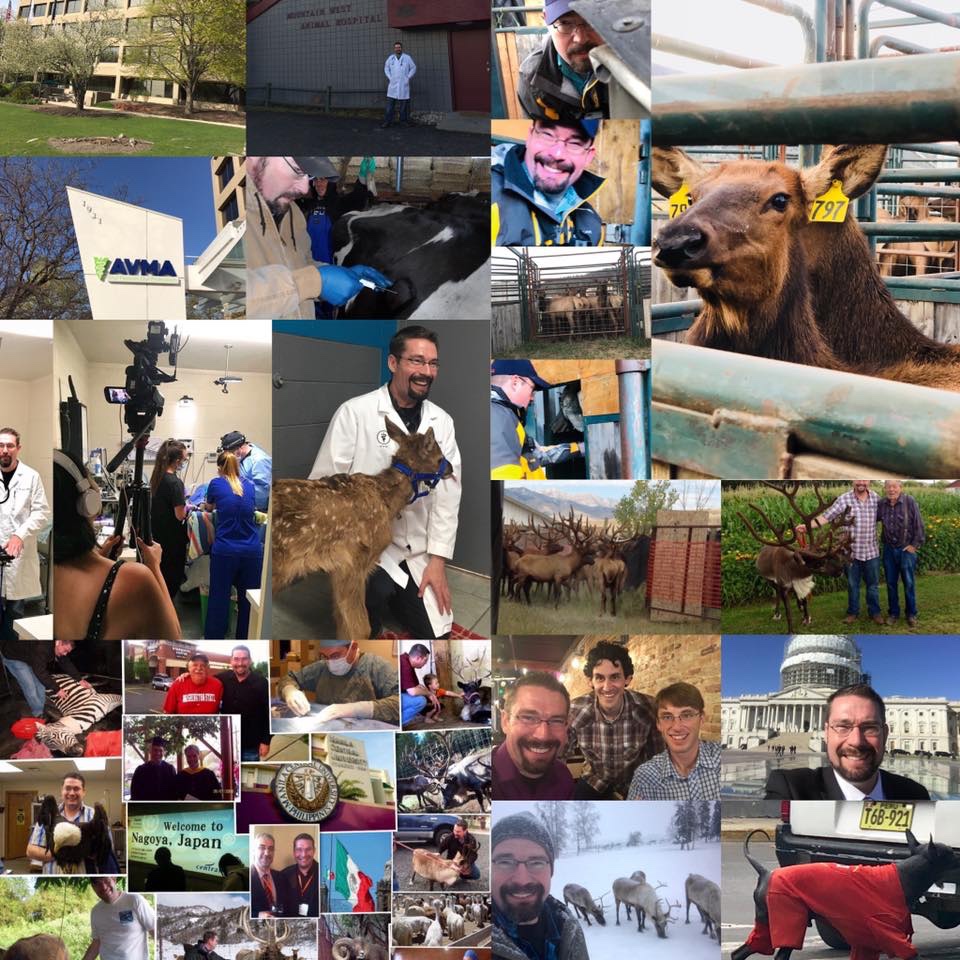
Timing and chance have tremendous bearing on each of our lives and careers. I have had successes and experiences that were not in my wildest dreams when I graduated. I have performed veterinary work in 8 countries, 27 US states, performed reproductive work on 39 different species, performed over 70,000 small animal examinations and have helped build a successful private veterinary practice. I have also published 10 scientific papers and just recently authored my first textbook chapter.

I cannot think of a profession that is more rewarding. I have had the opportunity to travel to many faraway places to share some of the successes I have had with today’s veterinary students. I very much enjoy the opportunity to do this. I always encourage students to be different and to follow their hearts. My advice to them is to always seek self-discovery and self-improvement. There is very little satisfaction when comparing oneself to others. So much time is wasted when trying to be better than someone else. The true test of success is measured when looking at your own improvement and progress. Are you better than you used to be? If you focus on being your best-self your potential is unlimited. When using others as a comparison, there will always be someone bigger, better or stronger.

Each of us are unique. Look at your thumb. Your thumbprint is a testament to your uniqueness. Your individual thumbprint is different than any of the billions of individuals that are alive today. No one ever has, or ever will have the same thumbprint. Your identity is as unique as your thumbprint. Your perspective and personality are not shared by any other person. These traits are arrows in our quiver of individual contribution. Why is it so difficult to acknowledge this? Self-awareness is the key to harnessing and honing this uniqueness in an effective fashion. As we become self-aware, we are able to visualize, assess, nock, draw back and place a precise arrow in the bullseye of our desired target.

Thank you to my many mentors who have guided me and made me what I am today.

I look forward with optimism at the journey ahead. I have found my passion. I love what I do.

And that is my take!
N. Isaac Bott, DVM
Hazel and the Skunk

My Take Tuesday: Hazel and the Skunk

As a teenager growing up in the small town of Castle Dale, I looked forward to summers at the end of each school year. Summer meant freedom from both homework and sitting at a school desk. 

For me, a perfect summer day would have to include vanilla ice cream, snow cones and strawberry shortcake. The tranquil Castle Valley evenings provided frequent opportunities to cook hot dogs, hamburgers and steaks on the grill, corn on the cob on the stove, and juicy Green River watermelon slabs with each meal. 

Summertime also meant hard work. Apart from the irrigating and farm chores, there were a number of elderly widows in Castle Dale that would hire my siblings and I to mow their lawns each week during the summer. 

Hazel was my favorite. Her small house stood just north of the new recreation center in Castle Dale. Hazel was like family to me. Her friendly demeanor and kindness were manifest each and every time I mowed her lawn. 

She had a small but verdant lawn that surrounded her small gray house. Along the south end of her property, huge trees stood as sentinels protecting the house from the frequent Castle Valley wind. The deep green leaves of the tall trees overlooked a perfectly manicured garden with straight rows of Swiss chard, chives, radishes, peas, carrots, spinach and lettuce. 

Her lawn was difficult to mow. The frequent flowers and bushes required extreme care and precision with the lawn mower and edger. I would frequently graze her chives and the onion smell would instantly give away my error. 

“On no, you hit my chives!” she would say. I anticipate that she planted larger quantities each year knowing that some would certainly fall prey to my mower. 

After finishing the mowing, Hazel would prepare red punch and cookies. I would sit on a couch in her living room as I savored the snacks week after week. Hazel would ask about how my life was going, and she would tell stories of her Seely and Livingston pioneer ancestors that helped settle Utah and build the iconic Salt Lake Temple. 

Hazel loved cats. She had a cat door that would lead out to the back yard from her kitchen. She would place a large bowl of cat food in the center of the kitchen and the cats could enter and leave as they please. 

On this particular day, Hazel commented about how much cat food she had been going through. She noted that she would have to fill the cat dish 3 or 4 times a day and that each time she entered the kitchen, the bowl would be empty. 

As I sat on the couch, I had a clear view of the cat bowl in the kitchen. As Hazel spoke, from the corner of my eye I noticed some movement near the bowl. As I turned my head and looked into the kitchen, the biggest skunk I had ever seen wobbled over to the food bowl and began gorging. 

“Hazel!” I exclaimed. “That is not a cat, it is a big fat humongous skunk!” 

“My laws!” she gasped. “Get it out of here!” 

As I jumped up, the startled skunk made a dash for the door. Its overweight body condition inhibited it from any appreciable speed. The large belly nearly dragged on the ground as it meandered away. As it leaped for the cat door, the front half of the body exited perfectly, however, its back half didn’t quite make it. As the obese animal heaved its back end though the door, it simultaneously and voluminously sprayed the contents of its scent glands in my direction. This wallop of its defense mechanism filled the entire kitchen. 

If you haven’t experienced the mephitic smell of a skunk from up close, the odeur fétide is actually a thick, volatile, oily liquid that obtains its pungency from sulfur-based thiols. There in nothing that smells worse than skunk spray inside your nose! 

Hazel and I exited out the front door. We propped open the kitchen door and placed a fan on the floor to help air out the house. We laughed about it for hours. 

Hazel passed away shortly after Memorial Day in 2003. I sure do miss her. 

Each and every summer day brings back the fond memories of Hazel, the obese skunk, and the all-you-can-eat Mephitis buffet. 

And that is my take!

N. Isaac Bott, DVM
Chris LeDoux

My Take Tuesday: Chris LeDoux

Wednesday, March 9, 2005 was a typical day. During this stage of my life, I was finishing up coursework and getting ready to graduate from Southern Utah University. My classes ended at noon and I found myself with some time free in the afternoon and decided to go shopping for a new chest of drawers. 

I jumped in my Chevy S-10 and headed south on Main Street in Cedar City, Utah.  I noticed remnants of a recent snowstorm lingered on either side of the road piled up along the sidewalks. Per usual, I listened to KONY country when driving around town. A Chris LeDoux song came over the waves. Instinctively, I cranked up the volume and listened to the tune. As the song ended a second Chris LeDoux song began to play. Hearing a Chris LeDoux song on the radio is not an everyday occurrence. A radio station playing two songs in a row was unheard of. My heart sank. I knew something had happened. As the second song finished, the DJ announced that earlier in the day, Chris LeDoux had lost his battle to a rare form of cancer called cholangiocarcinoma.  

Chris was a man’s man. Anything he did, he did well. He wasn’t born with extraordinary talent, but with hard work and dedication he became extraordinary.  He was an award-winning sculpture, a world champion bareback rider and a world-class country music musician. Chris worked hard at everything he did.

Chris’ music was a constancy during my youth. When I was working on the farm, I often would listen to his songs. One song talked about digging and tamping postholes and stretching the wires tight. Another detailed the intricacies of irrigating alfalfa. His lyrics seemed to represent a lot of what I knew in life. Still to this day, as I’ve had the opportunity to travel, I often find lyrics that mention the cities and places that I visit from Spokane to Manhattan, Salt Lake to Seattle, up north from Billings to the Yukon River and down south from Fort Worth to San Antonio.

I had the opportunity to see Chris perform dozens of times in concert. He was such a gentleman and the best performer I have ever seen. Today marks 18 years since his passing. 

In his last studio album, Chris recorded a song called The Ride. The lyrics describe facing death with dignity and grace. They say, 

“Well, I know some day farther down the road

I’ll come to the edge of the great unknown

There’ll stand a black horse riderless

And I wonder if I’m ready for this

So, I’ll saddle him up and he’ll switch his tail

And I’ll tip my hat and bid farewell

And lift my song into the air

That I learned at that dusty fair

Sit tall in the saddle, Hold your head up high

Keep your eyes fixed where the trail meets the sky

And live like you ain’t afraid to die

And don’t be scared, just enjoy your ride”

Thanks, Chris, for living a great life and for teaching this cipher from Castle Dale, UT so many lessons about life through your determination, example and lyrics. Good ride cowboy! Good ride!

And that is my take!

N. Isaac Bott, DVM
Snowball

My Take Tuesday: Snowball

It was a busy morning at the clinic. Mrs. Robins arrived right on time for her scheduled appointment. She was a long time client at the clinic and was always pleasant during my interactions with her. Her hair was white, and always perfectly styled. She greeted us warmly as she came through the front door. She carried a white fluffy cat inside a pink pet carrier.

Snowball was her name. Such a name is suggestive of a soft white fluff-ball, a sweet angelic and innocent kitten. She was due for her annual vaccinations and a wellness checkup.

However, this kitty’s name is what I would call a major misnomer. Clearly, this kitty received its name long before its true nature was known.

All too often, I hear the phrase, “Doc she is an angel at home. She is just the sweetest thing.” Mrs. Robins repeated the phrase verbatim as we entered the exam room.

Snowball was sitting peaceful in her carrier. As I peered through the door of her carrier, I noticed a couple of warning signs.

When a cat is distressed, it will crouch in a unique form with the legs and tail pulled in under the body. They will extend their neck, flattening the ears against the head.

Cat bites and scratches are painful and notoriously prone to infection. As a veterinarian, I have to be very careful and observant. A cat bite on my hand could literally make me useless – everything I do on a daily basis, from surgeries to physical examinations, requires extreme dexterity and use of my hands.

“Snowball doesn’t seem very happy today,” I observed, “We need to be careful taking her out of her carrier.”

“Don’t worry doctor,” Mrs. Robins replied, as she swung open the carrier door, “She will come right out.”

Snowballs exit from the carrier was reminiscent of a rodeo bull exiting the chute during the NFR. She came flying out, hissing and swiping at everything in her path.

She leaped from the table and landed directly on Mrs. Robin’s head. She immediately extended her claws on all four feet simultaneously and plunged them into poor Mrs. Robin’s scalp.

Almost in an instant, snowball fell from atop the terrified woman’s head. Clinging desperately to a white wig. As she hit the floor, she released the hair piece and hissed. Mrs. Robins reached down and grabbed the wig and placed it back on her head.

“Wow!” she exclaimed, “She is sure mad at you!”

Dealing with a spitting and hissing feline in a demonic rage is a dangerous predicament, and can present a formidable challenge to any individual, let alone one smelling like a veterinarian.

Snowball then looked at me, hunching her back, while aggressively growling and spitting. She leaped towards me, as I jumped back. Her trajectory was clearly aimed at my upper body, and as I moved, she adjusted her posture mid-air and redirected. Her extended claws sank into my pants. I felt her claws sink into my skin and she climbed upward and onto my lab coat. She came to a stop on top of my right shoulder. Ironically, a moment of tranquility ensued. The hissing stopped and she retracted her sharp claws.

Seeing this an an opportune time, I grabbed the rabies vaccine and removed the syringe cap. I had to be supremely careful that I wouldn’t be knocked or in some other way accidentally discharge the injection into Mrs Robins or myself. At last, I found a piece of leg and carefully thrust the needle through a felted mat of fluffy white hair and into the muscle beneath.

Snowball’s reaction was unremarkable. She did not hiss or spit. She didn’t even growl.

I gently placed her back on the examination table and finished the remainder of the vaccinations and the examination.

She purred as I looked into her eyes and examined her mouth.

She entered the carrier without any hesitation upon completion of the appointment. I stood dumbfounded, what I had just witnessed made little rational sense on any level. Aggression like this that is episodic and transient, is something even animal behavior experts don’t fully understand.

“Wow, Doc, she must have just had a little rage she needed to get out of her system,” Mrs Robins stated, “She really is such a sweet little thing.”

I smiled as I glanced at the content Snowball, as she sat purring and comfortable inside her carrier.

My legs began to sting, as I felt a trickle of blood run down the front of my knee.

As Mrs. Robins left, I noticed her white hair remained immaculate, and despite having been tossed and trampled around by a wild feline, not a single piece of hair was out of place.

And that is my take!

N. Isaac Bott, DVM
Skunked

My Take Tuesday: Skunked

A few months back, a Boy Scout troop stopped by the clinic at the end of the day for a tour. As I showed them around and answered their questions, I couldn’t help but reminisce about my time as a boy scout.

The year was 1995.

Boy scout troop 306 of the Castle Dale 1st Ward embarked on a week long 50 mile hike during the month of July. The hike began on a Monday at Ferron reservoir and ended on Saturday at Indian Creek Campground in the beautiful Manti Lasal National Forest.

As a 14 year old kid, I was just like most of the other boys in my troop: wholly naive and completely unaware of my ignorance. My sense of adventure far outweighed sound logic and I was prone to encounter trouble because of my mischievous nature. My little brother Caleb and my best friend Zac were my partners in crime and were witnesses to myriads of situations that shaped our imaginative Boy Scout days working on merit badges, monthly camp outs and high adventure events that eventually led to each of us earning the rank of Eagle Scout. These experiences consequently helped make us into the men we are today.

On the second night of this long hike, we made camp at a place called Cove Lake. This beautiful lake is just a few miles from the scenic skyline drive and is nestled in a large grove of Douglas Fir and Ponderosa pines.

As Boy Scouts do, we set out to set up camp and explore the lake. We soon found out that we were not the only species inhabiting the camp on this particular night. We shared the campsite with one of the most widely distributed mammals in North America, Mephitis mephitis, or the common striped skunk. The fecund creatures were everywhere. As we floated around the lake on a makeshift raft, we could see dozens of them around the waters edge.

We clearly had a dilemma. Almost immediately, the skunks began ransacking our tents and food supply. These smelly striped critters were endlessly curious about the bipedal invasive species that had entered their territory.

Passive in nature, skunks will avoid contact with humans and domestic animals; however, when challenged they are amply prepared to protect themselves.

If a skunk feels threatened, it will give a warning which includes hissing, stomping of feet, and elevation of the tail. Failure to heed the warning signs will result in the unlucky aggressor being sprayed with the skunk’s anal gland secretions. Skunks are highly accurate in their aim and can spray 7 to 15 feet away!

A dozen rambunctious boys were immediately perceived as a threat by the striped beast. They seemed to coordinate the invasion of the camp, approaching from all directions.

A scout watching the skunk rodeo spoke to me, “Hey Isaac, if you hold a skunk by its tail it can’t spray you.”

The notion had some truthiness to it, after all, if it can’t plant its feet it likely wouldn’t be able to empty its scent glands.

Without any further thought, I reached out and grabbed the nearest skunk by the tail. I lifted it directly in the air and held it suspended with my arms straight out.

The little guy simply twirled slightly and lined his backside to my face and fiercely sprayed with all that he had.

It went directly in my mouth and up my nose. It covered my entire face and some even got in my eyes.

I immediately began vomiting uncontrollably. By eyes burned and my vision became blurry.

What a lesson! Take my word for it, a skunk can certainly spray when it’s feet aren’t off the ground. This equivocated logic is dangerous.

As Mark Twain once observed, “It ain’t what you don’t know that gets you into trouble. It’s what you know for sure that just ain’t so.”

The odeur fetide that I experienced is actually a thick, volatile, oily liquid that obtains its pungency from sulfur-based thiols. There in nothing that smells worse than skunk spray inside your nose!

It took weeks before I stopped smelling skunk.

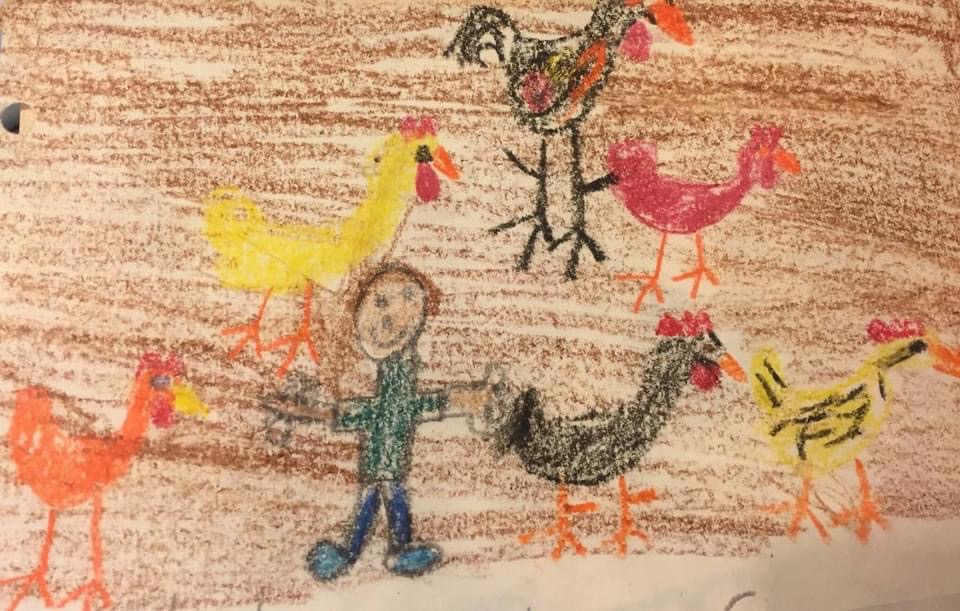
Frantically, I raided the food tent in search of cans of tomato juice. I found 8 cans and a can opener. I then took a tomato shower. I scrubbed my head in it, my whole body was covered in tomatoes. You haven’t lived until you take a shower in tomato sauce.

The rest of the week proved to be much less adventurous. I was forced to sleep in my own tent and I walked behind everyone else along the trails.

Now when I see a skunk, I give it plenty of space. And I tell everyone that I can that contrary to popular myth, a skunk can spray even when being held off the ground by its tail!

And that is my take!

N. Isaac Bott, DVM

The Fragility of Life

My Take Tuesday: The Fragility of Life

Just west of Castle Dale, Utah, the sky above Horn Mountain turns a beautiful cinnamon on clear summer nights as the sun sets over the place that I call home. These summer nights smell of freshly cut grass and alfalfa, of roses and cottonwood trees, of sagebrush and lilacs.

If you are heading west along Bott Lane, just past the tall poplar trees, lies a piece of ground that was homesteaded by my great-great grandfather. This piece of land has passed from generation to generation, from fathers to sons, and has always remained in my family.

On the east side of this piece of land, a silhouette of a Ford Tractor and a Hesston Hydroswing Swather were visible on many beautiful summer evenings during my childhood. On the tractor, sat my uncle Jerry Bott.

Jerry was a giant of a man. He stood over 6’4”. His gentle demeanor and kind heart were his most precious of character traits. His soft voice and carefully chosen words were never cross or unkind. At least two times every day, I would be able to greet my uncle as I would enter his house before milking our cows. He became my constancy, my anchor, as I grew from a small child into the man I am today.

On this particular night almost 30 years ago, in 1990, my uncle Jerry was cutting the first crop of hay. The tall grass makes this cutting the most difficult on the equipment. Constant attention must be given to the rotating wheel and hay knives that were prone to clogging.

This time of year, hen Ringneck pheasants are on their nests. They sit so still that even the loud rumbling of a tractor and the ground tremors of the hay cutter leave her undeterred. Occasionally, these hens are injured or killed as they sit on their eggs. The nest, whether it be full of chirping hatchings or incubating eggs, is left to the merciless predators from the air and the nearby fortress of trees and Russian Olives that run along Cottonwood Creek.

As the sun faded behind the towering cliffs of Horn Mountain, I stood on my parents’ lawn, looking eagerly at the approaching two-toned tan GMC Sierra. My hero was coming home for the night.

As Jerry exited his truck, he held under his arm a brown paper grocery bag. His long stride headed towards me instead of his house across the street.

As he approached, he called my name.

“Isaac,” his low and gentle voice called, “I have something for you.”

He handed me the brown paper bag.

Inside, a green towel was wrapped gently around 8 medium sized olive-colored eggs.

“These are pheasant eggs,” he continued, “and they need to be cared for.”

“Isaac, I know that you will do a good job at taking care of them.”

I looked in the sack as Jerry walked back across the street and into his house.

“How do you hatch pheasant eggs?”, I wondered as I entered my parent’s house.

My incubator was nothing special, just a Styrofoam box with a small heater inside. Knowing that peasant eggs incubate for 23 days, I set the temperature and humidity and carefully laid the eggs inside.

I faithfully turned the eggs three times a day for three weeks.

Somehow, the incubation was successful, and the eggs all hatched out. The tan chicks had dark brown stripes that ran parallel along their backs.

I was overjoyed when I told my uncle Jerry about my accomplishment.

“Uncle Jerry,” I exclaimed, “I did it! The eggs hatched!”

“That is great!”, he responded, “Isaac, I knew you could do it.”

His response and validation filled my system with light and my soul with joy.

The world with all of its power and wisdom, with all the gilded glory and show, its libraries and evidence, shrink into complete insignificance when compared to the simple lesson of the fragility and value of life that my uncle Jerry taught me that warm summer evening.

Over the years, uncle Jerry often repeated this encouragement as I navigated the brambles and thorns of life. When I graduated high school, then college and eventually veterinary school, his reassurance illuminated my understanding of my potential and his unwavering love and support. He gently counseled me, “Isaac, find your passion. Cultivate it. Work hard and be the best that you can be. And then share it with the world.”

There are days that change the times and there is a time to say goodbye. My sweet uncle Jerry passed away in late 2016. His loss left a tear in the eye and a hole in the heart of all my family members.

There is a place beyond the clouds, in the cinnamon sky to the west of Castle Dale, where a precious angel resides.

Somethings never change. Yet, there are things that change us all. This experience changed me.

My uncle Jerry’s lesson, from long ago, was not lost on me.

Each and every day, I remember the immense value of life, as I attend to my four-legged patients.

As lives are saved and others are lost, I remember how important it is for someone to take initiative and to tend to the responsibility to care for the helpless and to speak for those without a voice.

This is a lesson my dear uncle Jerry so effectively showed me how to apply and live, and it is a responsibility I take most sacredly.

And that is my take.

N. Isaac Bott, DVM