Airport Security

My Take Tuesday: Airport Security

I tend to be very careful and cautious in my decision making. Most days are uneventful and pass smoothly. However, every once in a while, I will have one of those epic days where I make 4 bad decisions before 9:00 AM.

They say hindsight is 20/20. Looking back, it was clearly a mistake.

I hurriedly prepared my luggage, assuring that everything would fit in a carry on. I have a perfect record, in all of my travels I have never had my luggage lost. Taking a single carry-on bag is the only way to assure your luggage gets to your destination on international flights.

The destination this trip, was the Philippines, and it was my first trip to Asia. I had been called to travel there to assist in establishing both Water Buffalo and deer reproduction programs in this far away country.

I placed my required instruments, long forceps and miscellaneous items used for freezing semen delicately in my bag. The last piece of equipment was something called an electro-ejaculator.

In the practice of veterinary medicine, it is common to collect semen from domestic ruminants using electro-ejaculation.

This instrument is an electric probe that is inserted into the rectum of an animal, adjacent to the prostate gland. The probe delivers an AC voltage, usually 12–24 volts. The probe is activated for 1–2 seconds, referred to as a stimulus cycle. Ejaculation usually occurs after 2–3 stimulus cycles. The instrument fits in your hand and runs on a traditional 9 volt battery, the exact battery most smoke alarms use. It is a valuable tool when collecting semen from agricultural and wild animals.

It fit, without a problem, in my suitcase.

Salt Lake City International Airport was busy on this particular day. The lines extended over the sky bridge and nearly to the parking garage.

I passed through the metal detector and my bag went through the usual belt driven scanner. As I waited for my bag to come out, the operator of the scanner lowered his head and spoke into his mouthpiece. What he said was inaudible, but the response it triggered was anything but quiet.

I was circled by at least 10 TSA agents and hurried off to the far right end of the security entrance. If there ever was a suspicious item, this was it.

A tall gruff man asked, “Sir, do you have any prohibited items in your bag?”

Now clearly, they know the answer to this question before they ask it. On a prior trip, I had left a small pocket knife in my bag. They asked the same thing, and I had completely forgot it was in my bag.

My answer then was, “I don’t’ think so?”

Fortunately, they allowed me to mail my pocket knife home and the delay was minimal.

Clearly today it was not going to be as easy.

“I have a medical device called an electro-ejaculator in my bag”, I tried to explain.

One of the TSA workers removed the device. Clearly red flags were raised, and rightly so. Here is an electronic device with a push button, a red light and metal tongs protruding from the probe.

The gruff man demanded, “What is this and why do you have it?”

“It is used to collect semen from animals,” I explained, “you insert this end in the rectum and push this button. It then applies current over the prostate, and ejaculation occurs.”

The gruff man’s face went from viable anger to disgust in less than two seconds.

“What? Ewwwww!!! Are you serious?”, he continued, “Why would you ever do that to an animal?”

“I am a veterinarian”, I explained, “And my expertise is in animal reproduction.”

“Wow kid, I thought my job was tough,” he replied, laughing this time.

Fortunately for me, the device was labeled as such and my story was collaborated. I was allowed to pass.

En route to Manila, we stopped in Narita, Japan. Even though it was just a connecting flight, I had to pass through a security line once again before continuing on to the Philippines. Once again, a huge mess unfolded as I tried to explain in English why I would have such a dangerous looking device in my bag.

There are a couple dozen airport security officers around the world who now know, albeit unwillingly, what an electro-ejaculator is and how it is used.

After an eventful and productive stay in the Philippines, I entered the airport in Manilla, excited to be going home. As I stepped up to the counter, the ticket agent asked, “Sir, do you have any bags you would like to check?”

“Yes, I sure do”, I quickly replied.

I made my way to the gate and sat down to await my flight. I was relieved that I didn’t have to once again explain what was in my luggage. It appeared my trip home would be uneventful.

All of the sudden, over the loud speaker I hear the following announcement, “Passenger Nathan Isaac Bott, please report to the security desk immediately!”…………

And that is my take.

N. Isaac Bott, DVM

Halloween

My Take Tuesday: Halloween

I love this time of year! The cool fall breeze, the crisp chill to the air, the brilliant, gilded glory of the golden aspen and cottonwood leaves, the deep red of the sugar maple and scrub oak bushes all bring out the best of nature’s canvas and bring a profound sense of relaxation to my senses. With all of the sadness in the world today, we are in desperate need of a new beginning, a comforting time to reset, a beauty that comes around every year in the form of autumn. 

This is the season of the harvest moon, pumpkins, football games and corn mazes. The smell of the first fire in a wood burning stove, and the taste of hot apple cider all create an olfactory bonanza and take me back to days of long ago. I think about my childhood, pumpkin pie, Halloween carnivals at Castle Dale Elementary, and the magic in a young boy’s hopes and dreams.

Nostalgia can be like a fun-house mirror, so any claims that “back in my day, we went trick-or-treating until midnight,” while kids these days are forced to make do with half an hour of highly supervised trick-or-treating before sunset, are surely a benign distortion.

Still, it seems like the tradition of going door-to-door demanding candy is not quite what it used to be. Over the past couple of years, as Halloween has come and gone, large “trunk or treating” events (in which community members circle up their cars, fling their trunks open, decorate them, and fill them with candy, and then have their kids make the rounds in a parking lot) have slowly replaced the door-to-door adventures I so fondly recall. 

I remember one year especially well. The late October wind was serene and tranquil as the bold orange sun faded into the seemingly empty autumn evening sky west of Ferron, Utah. Crisp shades of red, yellow, and orange from fallen leaves, formed a thin layer over the verdant lawns of the neighborhood.

I set out with my friend Jake Bulkley on an epic trick-or-treat adventure in the small town of Ferron, Utah. I remember walking along 500 South carrying brightly colored plastic buckets filled with what seemed like endless supplies of Sour Patch Kids, Jaw Breakers, Lemon Heads, Candy Corn and Reese’s Peanut Cups. We felt like we had a successful candy haul until Jake’s younger sisters arrived home carrying pillowcases filled to the brim with candy. They had followed the exact same route, but somehow ended up with ten-fold the amount of candy. It was at the moment that I realized that trick or treating was for children younger than me. Jake and I decided our time would be better spent doorbell ditching and performing other typical teenage boy pranks. Jake and I still laugh to this day about our mischievous fall adventures we had while attending San Rafael Junior High.

Halloween for me is still filled with unpredictable adventures. As a veterinarian, I encounter more black cats than the average person. October 31st is always a busy day at Mountain West Animal Hospital. Although this is a fun holiday for us, Halloween can be precarious for our four-legged family members. Keeping our pets safe is a year-round job, requiring special attention during the holidays and special occasions. Pets chew up and eat things humans never would think of consuming. Here are a few pointers to keep your pets safe this Halloween:

1. Don’t feed your pets Halloween candy, especially if it contains xylitol (a common sugar substitute found in sugar-free candies and gum); or chocolate. 

2. Make sure your pet is properly identified (microchip, collar and ID tag) in case s/he escapes through the open door while you’re distracted with trick-or-treaters.

3. Keep lit candles and jack-o-lanterns out of reach of pets.

4. If you plan to put a costume on your pet, make sure it fits properly and is comfortable, doesn’t have any pieces that can easily be chewed off, and doesn’t interfere with your pet’s sight, hearing, breathing, opening its mouth, or moving. Take time to get your pet accustomed to the costume before Halloween, and never leave your pet unsupervised while he/she is wearing a costume.

5. Keep glow sticks and glow jewelry away from your pets. Although the liquid in these products isn’t likely toxic, it tastes really bad and makes pets salivate excessively and act strangely.

6. If your pet is wary of strangers or has a tendency to bite, put him/her in another room during trick-or-treating hours or provide him/her with a safe hiding place.

7. Keep your pet inside. This is the easiest way to keep them safe.

Have a safe and fun Halloween!

And that is my take!

N. Isaac Bott, DVM

The Deluxe Fish Hotel

My Take Tuesday: The Deluxe Fish Hotel

A few years back, I spent a day deep sea fishing with some of my best friends in the Gulf of Mexico. We traveled nearly 80 miles from Venice, Louisiana, out into the deep ocean. We were fishing for Yellowfin Tuna.

I found it interesting that our fishing guide knew right where to go. Instead of fishing in the deep open ocean, we spent the day fishing near a number of large man made oil rigs. Fish, it turns out, are turning the underwater portions of the rigs into the equivalent of apartment towers. They congregate in the masses near these huge man made structures. Smaller fish seek these rigs out for protection, while larger predator species stay close by to consume these large quantities of smaller fish that hide near the base of the structure.

The main reason, apparently, is the rig superstructures stretch all the way from the surface to the sea floor and thus provide a huge area that becomes the undersea equivalent of a tall building. The platform structures support a diverse community of invertebrates that, along with floating resources such as plankton, provide the base of the food web supporting fish associated with the platform.

For decades, scientists have studied why life is so abundant near these abandoned oil rigs. One researcher surveyed 16 rigs annually over a 15-year period, and found that they hosted 10 times the amount of fish as other natural marine environments around the world, such as reefs and estuaries. The California rigs even had seven times the aquatic population of the rich ecosystems around reefs in the south Pacific.

Even the natural habitat with the greatest fish density — a coral reef in French Polynesia — was nowhere near as populated as the oil rigs that were studied.

This study shows that man-made structures actually can enhance natural habitats.

The 2010 Deepwater Horizon oil spill disaster in the Gulf of Mexico made us all a lot more wary of the environmental impacts of offshore oil exploration. This study gives us another perspective on how man made structures can benefit certain ecosystems and enhance natural habitats.

This insight is adding momentum to efforts to convert some of these rigs into artificial reefs once they are decommissioned. Blue Latitudes, an organization founded in 2014 by two young scientists, is trying to increase awareness of the value of rigs as permanent homes for sea life.

I am not advocating an increase in deep sea drilling, but it would certainly be a good idea to figure out what specific features of these structures help fish to flourish, and then use this information to help enhance these endangered ecosystems.

And that is my take.

N. Isaac Bott, DVM

Veterinary Technician Appreciation Week

My Take Tuesday: Veterinary Technician Appreciation Week

Being in the veterinary industry is hard work. Every day in filled with ups and down, happiness and sadness, and life and death situations. We end each workday exhausted and worn out emotionally.

Since our patients cannot speak for themselves, we spend a great deal of time communicating with their human owners. To an extent we are treating owners as much as patients. This requires a level of genuine empathy and professionalism that few people possess.

Behind every good veterinarian is a team of hard-working, caring individuals invested in the task of helping people help their pets. I am fortunate to be surrounded by a wonderful team at Mountain West Animal Hospital.

If you’ve ever experienced an emergency with your pets’ health or safety, you know how meaningful it is to have a knowledgeable and compassionate professional to care for them!

Veterinary technicians are the unsung heroes of your pet’s veterinary care team. Without these devoted professionals, my office would be a sea of chaos and confusion. These highly trained individuals do everything from greeting clients and answering phones to restraining pets, drawing blood, taking radiographs, assisting with surgical procedures, filling prescriptions, comforting grieving pet owners, and cleaning kennels.

I simply cannot get through the day without my dedicated team at Mountain West Animal Hospital. They provide the individualized care and compassion that make our clinic so unique.

Most people do not realize the emotional toll this job can take. They don’t see us crying after we euthanize a patient we have treated for years. They don’t see the hard work that goes on behind the scenes. They don’t know what it’s like caring for a pet who is suffering near death and the triumph of pulling it back from that edge and going on to live several more years. They don’t see the mistreated or neglected pets that so often walk through our doors.

They don’t know about the scars and scratches, bumps and bruises, sore muscles and back pain. They don’t know about the blood, diarrhea and vomit that they daily clean up.

There are many heroes that never stand in the spotlight, never hear the roar of the crowd and never receive the recognition they deserve.

Pictured are four of my heroes. They are my right hand and my left. They work in a high-stress environment, putting in long hours, caring for ill and anxious pets, cleaning messes, and putting themselves at risk of physical harm. They do this because they care. They care about each of our clients and their four-legged family members. Thank you for putting your health and safety on the line to help increase mine. Thank you for being such amazing advocates for our patients and for being such an incredible support system for our veterinarians and our clients.

This week is National Veterinary Technician Appreciation Week.

Katie is our full time licensed Veterinary Technician. Jordan is our office manager. Jay and Sara are our veterinary assistants. They are the who make it possible Dr. LeMonds, Dr. King, Dr. Davis and I to perform our tasks seamlessly.

Please join me in thanking these girls for the wonderful work they do at Mountain West Animal Hospital.

They are amazing!

And that is my take!

N. Isaac Bott, DVM

Community

My Take Tuesday: Community

It was a cold mid-February day on the Palouse. I had traveled to Pullman this day for an interview at Washington State University. My chances were slim. I was applying for a nonresident position in the College of Veterinary Medicine’s class of 2009. My palms began to sweat as questions were asked about my qualifications and application. Organic Chemistry. Yeah, I had received my lowest grade in this class during undergrad and knew that I would be asked about it. I did my best to answer the question in a satisfactory manner. 

The next question was unexpected. 

“Isaac, what purpose does a veterinarian serve in a community?”

I paused as I thought about this inquiry. 

My mind returned to my teenage years when I served on the Youth City Council for the small town of Castle Dale, UT. This rewarding time allowed me to give back to the community that formed so much of who I am today. 

My answer was as follows: “A veterinarian has the obligation to be an example and a good citizen. The amount of good accomplished through this entirely depends on the effort a veterinarian puts into the community. Effort is reciprocated many times over when someone donates their time and talents through community service.” 

I promised that, if I were lucky enough to become a veterinarian, I would do my best to give back to the community that I reside and practice in.  

They apparently accepted this answer and a few months later I began veterinary school.

I have done my best to keep the promise I made in that interview nearly 19 years ago. I have grown to love Springville, the surrounding Utah Valley community and enjoy running my own small business. I look forward to coming to work each day.

Several years ago, I began volunteering at local rescues and animal shelters through a variety of services. One service is providing low-cost vaccination and licensing clinics in local communities. We have been able to provide vaccines for over 1000 pets in Utah County this year alone. This requires us to close the clinic over a dozen Saturdays we would normally work. Despite this, we are extremely grateful for our understanding clients that remain loyal without this periodic Saturday availability. 

I also have helped train Animal Control Officers and animal shelter employees from all over the state the technique of humane euthanasia. This requires both in-class and hands-on training to properly learn to administer intramuscular and intravenous injections. 

These opportunities have been so rewarding for me! I very much enjoy getting to know all of the people that dedicate their lives to caring for those without a voice. The immense joy that I have felt volunteering my time has rejuvenated my passion for veterinary medicine and has helped my become a more patient, kind and caring person. 

Earlier this year, I was invited to speak at the annual conference for the Utah Animal Control Officer Association. An awards banquet was held in the evening of the opening day of the conference. I was completely surprised to receive the association’s 2023 Volunteer of the Year Award.

This award is something that I am very proud of. It has been such an honor for me to work with such wonderful people. From my team at Mountain West Animal Hospital to every single animal control officer and shelter employee, I thank you for your often overlooked efforts that you make every single day. Many of the lives you change are the animals that you care for. You make the world a better place and I salute you for it. 

Volunteering your time to support a cause you are passionate about is something you will never regret. It will enrich your life, familiarize you with your community, and connect you to people and ideas that will positively impact your perspective for the rest of your life. Helping your community is an opportunity for you to grow as a person and to better understand how you fit into the world around you.

I am excited for the future and for further opportunities to be able to share my knowledge and expertise with this wonderful community. I am my happiest when I am helping others. 

I encourage everyone to consider serving the community in your respective spheres of influence. It is something that will provide you with unparalleled contentment and sense of purpose. 

And that is my take!

N. Isaac Bott, DVM

The Disgruntled Veterinarian

My Take Tuesday: The Disgruntled Veterinarian

Veterinarians are some of the most kind and compassionate people on the planet. They are hard workers, and are some of the best people I have ever met.


As with any profession, there are occasional outliers.


When considering the prospect of attending veterinary school, I visited a veterinary clinic, here in Utah County, one day as an undergraduate.


I introduced myself to the veterinarian and asked a little about his experience as a veterinarian. As soon as I began asking questions about which veterinary school to attend, he interrupted me.


“Hey kid, why do you want to be a veterinarian?”, he asked.


I gave the answer I had given so many times. I replied, “Because I love working with animals. I also like working with people and this profession will allow me to help people by helping their animals.”


“What are you? You stupid #%$@>?”, he continued, “What are you going to do when those animals you love bite you and kick you? And what about those people that do not respect you and your expertise and expect you to work miracles? They are far from loyal and they couldn’t care less about you! Get a life kid. This ain’t for you!”


Wow! I couldn’t believe what I was hearing. Here was a veterinarian that was clearly dissatisfied with life in general.

After years of grueling work and what he deemed as little professional reciprocity, he had become very cynical. He made it very clear, anyone wanting to be a veterinarian was making a huge mistake. His goal was to dissuade any would be veterinarian that entered the doors of his practice from making the same mistake he did.

To put is delicately, this guy was the east end of a horse facing west.


Looking back, I feel sorry for him. My experience as a veterinarian has been the complete opposite.


The clients I work with are very loyal. My interactions with them are nearly all positive and they love their pets. They follow my recommendations and are always willing to provide the care that their pets need and deserve.


I am glad I did not heed his advice.


Mark Twain eloquently counseled, “Keep away from people who try to belittle your ambitions. Small people always do that, but the really great make you feel that you, too, can become great.”


I am thankful for those who encouraged me. Who supported me. Who believed in me long before I believed in myself.


Their contributions have led me to where I am today.

And That is My Take

N. Isaac Bott, DVM

Yo quiero bite you!

My Take Tuesday: Yo quiero bite you!

Often “the question” comes up during a routine appointment. Curiosity is naturally sparked with my response.

The question is, succinctly put, “Doc, what breed of dog bites you the most?”

The answer is unequivocally the chihuahua. Of the dozens of bites that I have received, a vast majority came from chihuahuas.

Chihuahuas are comical, entertaining, and loyal little dogs, absolutely brimming with personality – often a quirky and eccentric personality unmatched by any other breed.

Some of my sweetest patients are chihuahuas. They are affectionate and loving.

But every once in a while, a mean one comes along.

While a bite from a Chihuahua isn’t going to inflict the same damage as a bite from a larger dog like a Vizsla or a Boxer, it can still leave a painful wound that’s prone to infection. There’s an old myth that a dog’s mouth is cleaner than a human’s mouth, but this isn’t true. Whenever a pet bites, there is significant risk of infection.

While Chihuahuas are not naturally more aggressive than any other breed, they seem to be prone to react with aggression out of fear. Veterinarians are often the target of such aggression, simply because dogs are fearful of unfamiliar people and situations.

As a recent graduate, I was learning how to diagnose, treat and cure the routine cases that present daily. I had only been a veterinarian for about a month when I learned my lesson.

It was a routine appointment. Annual vaccinations and a wellness exam were needed. As I entered the room, Chispa, sat on the table glaring at me. As I reached down to auscultate the heart and lungs, Chispa absolutely went ballistic. Within 5 seconds, she had peed and soiled all over the tabletop. Instinctively, I reached for a muzzle. As I attempted to place the muzzle on her, she absolutely lost it.

Just like a loud clap of thunder that follows a flash of lightning; when I am bit by a dog, imprecations are sure to follow.

Chispa sunk her needle like teeth into my right hand and bit me again and again.

Before I could even mutter the phrase, “Oh S#*!”, this little devil had bitten me three times.

Her only goal seemed to be to inflict as much damage as possible to the man in a white coat that was reaching for her.

Blood poured down my hand. I sat stunned. I have fast reflexes; after all, I dodge bites and scratches on a daily basis.

What was different about this experience? Perhaps it was in the name. “Chispa” is a Spanish word meaning “spark”. Certainly, the fiery personality and name fit this small canine.

The rapidity of the attack taught me a lesson. I am much more careful now when dealing with seemingly innocent small pets. I do my best to reduce the fear and anxiety that accompanies a visit to the veterinarian.

And I am especially careful with pets that have incendiary names such as Diablo, Fuego, Demonio, Pyro, Hades, and believe it or not, Fluffy.

And that is my take!

N. Isaac Bott, DVM
The Attribute of Adaptability

My Take Tuesday: The Attribute of Adaptability

The Rocky Mountain elk (Cervus canadensis nelsoni) became the official state animal of Utah in 1971. Elk are also known as wapiti. This term originates from the Shawnee and Cree word ‘waapiti’, meaning ‘white rump’. Elk are members of the deer family and associate closely with the deer and moose of Utah. They are among the most gregarious of deer species and herds can exceed 500 animals.

Elk, no matter what time of year, are a remarkable sight. So large in stature, these animals have become an admired icon of the American West. They are amazingly adaptable and can live almost anywhere—forests, deserts, mountains, and plains. They eat a wide variety of plants. Their typical diet consists of grasses (year-round), woody plants (winter) and forbs (summer). This adaptability is unique and ensures the species survival. In this state, they can be found along Skyline Drive at elevations over 11,000 feet and in the desert landscapes of the vast San Rafael Swell. They seem to be as comfortable among the cedar trees and sage brush as they are in the Quaking Aspen and Douglas Fir forests.

As a child growing up near the Manti LaSal National Forest, I frequently encountered these animals in the wild. I remember camping in the crisp early fall. The tranquility of those nights is unparalleled. The silence was only occasionally broken by the phenomenon known as bugling. This distinctive vocalization begins deep and resonant and becomes a high-pitched squeal that is held for several seconds before ending in a succession of grunts. It is a sound that will hasten the heart rate of even the most seasoned of outdoorsmen. The noise echoes through the pines, across the valley and down the canyons. Such an experience is breathtaking.

As a veterinarian, I am privileged to be able to work with a number of herds of elk. I very much enjoy this. Pictured is a herd of elk near Birdseye, UT.

This animal is a symbol of power and strength. It is also a symbol of ultimate freedom.

We can learn a lot from elk. If we were as adaptable as this species, we would thrive in any situation where we are placed. We would be unafraid, undaunted, valiant and courageous.

When I am confronted with changes in life, I always think of the magestic Rocky Mountain elk.

And that is my take.
N. Isaac Bott, DVM

9/11

9/11

Today marks 22 years since the fateful events of Sept. 11, 2001.

Alan Jackson’s poignant lyrics ask the simple question, “Where were you when the world stopped turning that September day?”

It was a beautiful morning in Trujillo, Peru. I was crammed inside of a small Tico model taxi. As we passed through the Monserrate neighborhood, I peered out the window at the solid brick buildings with their brilliant shades of brown and white. At this stage in my life, I was completing two years of service as a missionary for the Church of Jesus Christ of Latter-Day Saints. As we headed to the headquarters of the mission, the taxi driver turned up the radio.

After two years in Peru, I had mastered the Spanish language. This language is referred to in Peru as Castellano. I could sense urgency in the voice of the newscaster as the broadcast came across the radio. As he described the horrors that occurred that morning, he used the verb “clavar” (meaning “to nail”) in reference to the airplanes hitting the World Trade Centers. I remember the feelings of panic and despair that came over me after hearing the news.

Over the next few weeks, I would daily be approached by random people that could tell that I was from the United Sates. These wonderful people would express their heartfelt condolences about the tragic attack that occurred and about how Peru had experienced the horror of terrorism during the 1990’s.

Being on foreign soil was difficult on that day in 2001. I will forever be grateful for the kind hearts of the Peruvian people that reached out and made me feel comforted despite the uncertainty of what was going on back home.

At one extreme man is indeed a vicious killer. He has the capacity to destroy entire civilizations. He can spread the bloody dead and dying over miles of landscape without a touch of remorse. He can kill women and children for no better reason than that they worship a different god.

Yet this mammal called man will risk his life to save a stranger’s child, or to rescue a dog who’s fallen into the river, and to save a small helpless kitten in distress. I salute those engaged in this good cause and stand with them in this dangerous world.

May we never forget the lives lost and the sacrifices made by the first responders and military personal that responded without question to the events on that September Day.

And that is my take!

N. Isaac Bott, DVM
My Life: I Appreciate It

My Take Tuesday- My Life: I Appreciate It

In March of 1980, a busy young couple worked tirelessly as they went to school and managed an apartment just west of Old Main near the Utah State University campus. The mother worked tirelessly in doting support of her husband. The father went to school full time and also worked long shifts at a local cheese factory. Their first child, a boy, was just beginning to walk and life seemed to be going smoothly. These lean days of struggle brought this couple even closer together as they faced the brambles and thorns, challenges and difficulties most couples experience just starting out. Their dreams of the future were one step closer with each passing day.

Early one morning, the mother began to experience significant stomach pain. This sharp pain in the lower right side of her abdomen was unbearable. The worried young father rushed her to the hospital.

A diagnosis of appendicitis was made and emergency surgery was required. The skilled surgeon performed the appendectomy without any complications.

As the surgeon explored the abdomen during the surgery, he noticed that this young mother was pregnant. This was completely unexpected. The medications used for general anesthesia were not approved for use in pregnancy, in fact studies showed that they caused birth defects when used during the first trimester.

The doctor stepped out of the surgery room to speak with the young father. He told him that his wife was pregnant and that the anesthesia used posed significant risk to the heath of the baby. Birth defects and serious developmental problems were likely to occur. The likelihood of these complications was so great that the doctor recommended that the pregnancy be terminated.

The weight of the world was on the shoulders of this young couple. They were tasked with making such a difficult decision about the pregnancy and the potential outcome. Considering the future consequences of this decision must have been so stressful for each of them. The health of the young mother and the possible complications were carefully considered.

In the end, they chose to keep the baby and face the uncertainty of what was to come.

On September 4th, 1980, a healthy baby boy was born. The baby was free from any birth defects and the young mother did well following the scheduled caesarian section.

The child grew up normally and, along with his 4 siblings, has strived to contribute positively to this world.

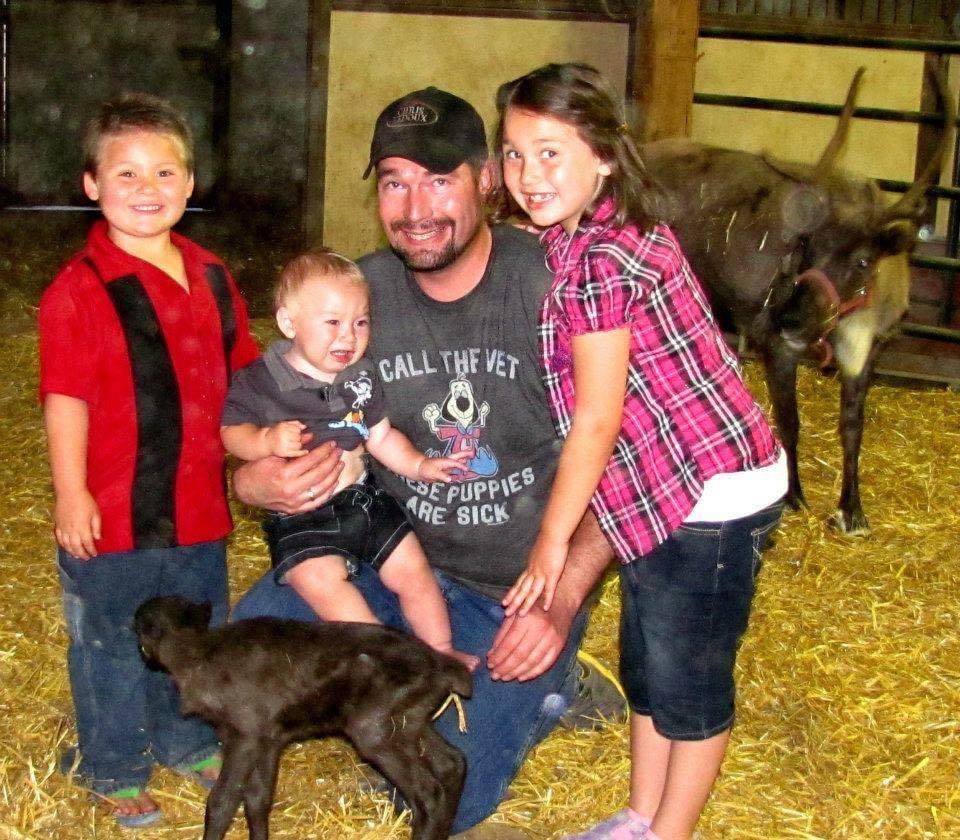
I catch a glimpse of that baby born 43 years ago yesterday, each morning when I look in the mirror.

How grateful I am that my parents made the choice continue with the pregnancy despite the risk. My very life was in their hands and, thankfully, they chose the path of uncertainty and risk.

My life has been filled with wonderful opportunities and experiences and I appreciate each and every day.

And that is my take!

N. Isaac Bott, DVM