Why Did You Become a Veterinarian?

My Take Tuesday: Why did you become a veterinarian?

“Why did you become a veterinarian?” I receive this question on a regular basis. While many veterinarians recall a lifelong ambition to enter the field, my journey took a different path. Although I always had a deep affection for animals, it wasn’t until I turned 21 that I chose to pursue veterinary medicine.

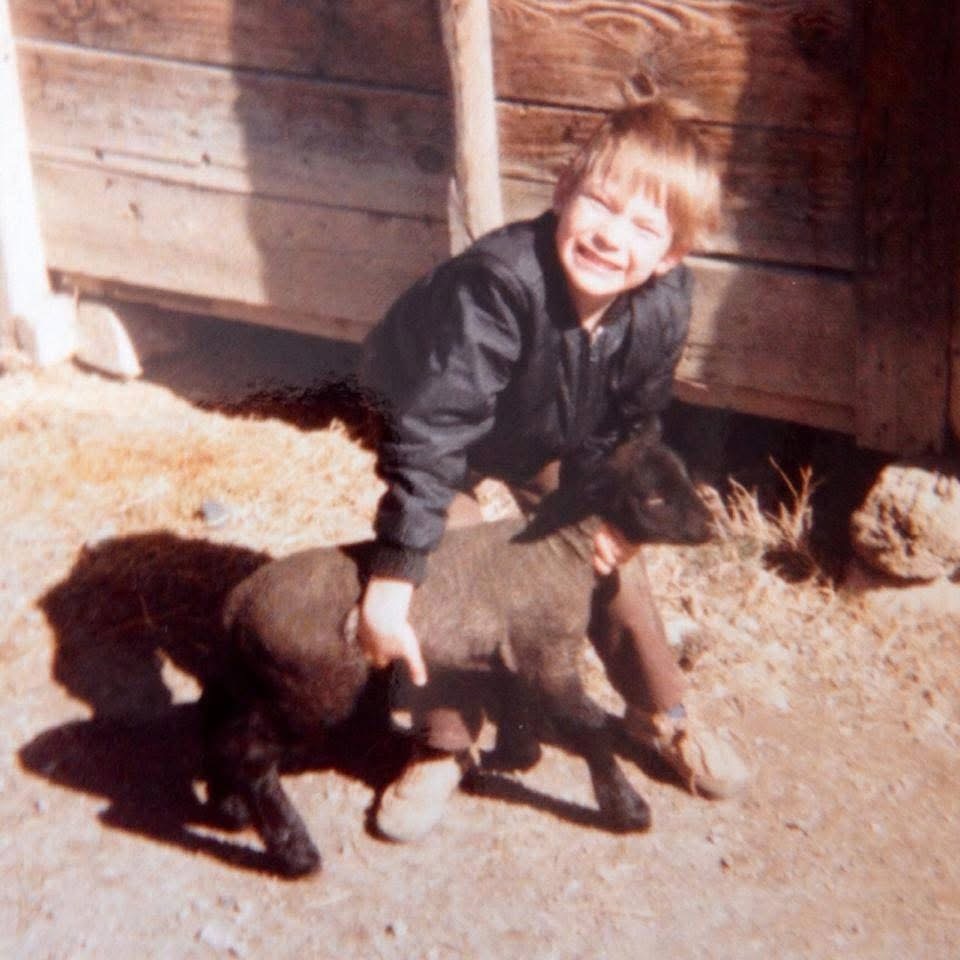
Growing up on a small farm in Castle Dale, Utah, my earliest responsibilities included feeding chickens and gathering eggs, tasks I began at the age of six. Each year, we eagerly awaited the arrival of baby chicks from Murray McMurray Hatchery, their delivery at the post office akin to Christmas morning. My father allowed each of us to select a chick to call our own; I always named mine. Through these chickens, I first experienced the profound human-animal bond. I cherished each one, rejoiced when they began laying eggs, and mourned their eventual passing. Chickens became my favorite animal during childhood, a sentiment that endures to this day.

Despite a childhood surrounded by animals, I hadn’t seriously considered becoming a veterinarian. In high school, an aptitude test suggested I wouldn’t excel in the profession due to my extroverted nature, implying that introversion was a key trait for veterinary success. Trusting the test’s accuracy, I dismissed the idea and contemplated a career in law.

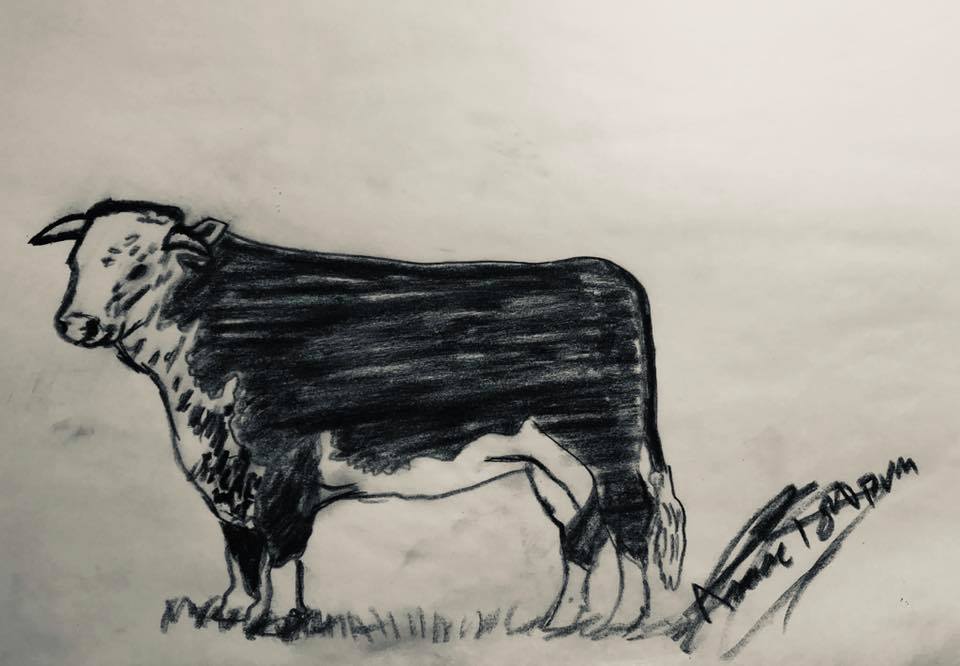
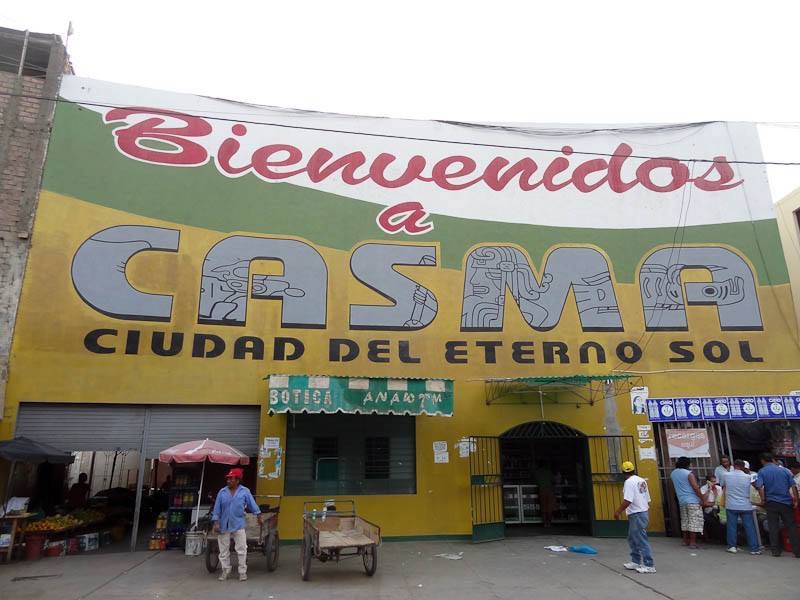
After high school, I spent two years in Peru, immersing myself in a vastly different culture and achieving fluency in Spanish. One day in Casma, I witnessed a group of men castrating a bull by beating its testicles with a large stick—a brutal method that left me feeling deep sympathy for the animal. That night, I pondered their reasons and realized they might not know of a more humane approach. Determined to make a difference, I resolved to educate these farmers on better animal husbandry practices.

My first patient was Walter, a pet pig in Casma with a challenging disposition, whose owners sought castration. With supplies from my friend Duilio Davelos’s pharmacy—lidocaine, suture, iodine, and alcohol—I performed the procedure successfully. Walter’s swift recovery led to word spreading, and soon I spent my Mondays castrating pigs for local farmers, who were receptive to learning new methods. The supplies were affordable, and my service was free. 

Next, I applied my childhood experience with chickens to teach basic poultry care and assist in building incubators to boost production. I also began working with llama and alpaca herds. Other missionaries joined these efforts; notably, a human dermatologist from Provo, Utah, had his first surgical experience castrating pigs near Trujillo, Peru. Helping people by improving their animals’ well-being was immensely fulfilling. Introducing local anesthetics and proper surgical preparation reduced post-operative infections, enhancing both animal welfare and farmers’ livelihoods.

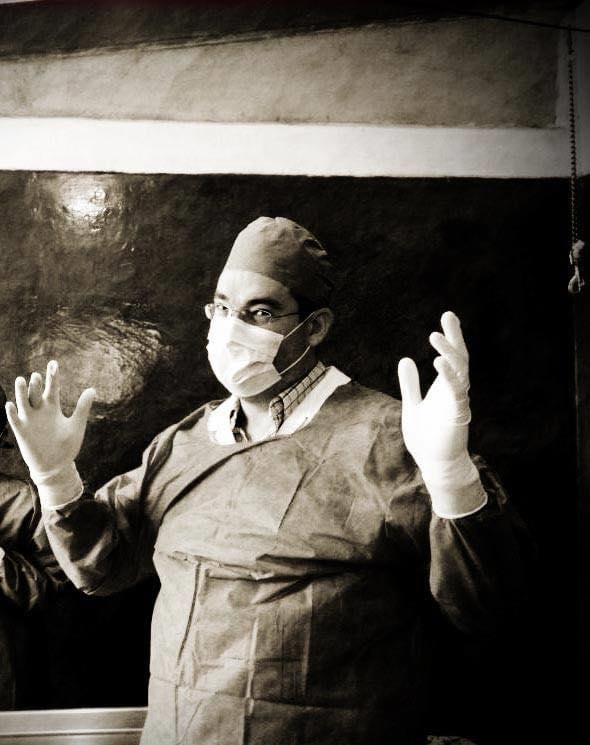
As my time in Peru concluded, I reflected on these experiences during the flight home. High above the ground, I decided to become a veterinarian. Upon returning to Utah, I promptly enrolled in college, and after eight and a half years of rigorous study, I achieved my goal.

Looking back, I am grateful for my agricultural upbringing, which unknowingly prepared me for this path. Life’s events often seem random, but in retrospect, the connections become clear. I’m thankful for the opportunity to provide animal care in a distant place, an experience that led me to the remarkable career I enjoy today. I cannot imagine doing anything else.

And that is my take!

N. Isaac Bott, DVM

The Late Night Call

My Take Tuesday: Late Night Call

The phone rang sharply at 2:03 a.m., breaking the stillness of the night. Groggily, I swung my legs out of bed and grabbed the phone. “Hello?”

Calls like this are all too familiar. Emergencies seem to favor the early hours, as if animals know to wait until the rest of the world is sound asleep.

“Hey, Doc, can you come out to my place?”

“What’s going on?” I asked, blinking the sleep from my eyes.

“It’s one of my ewes,” he said, his voice edged with urgency. “She’s got five hooves sticking out of her backside!”

“I’ll be there shortly,” I replied, already pulling on warm clothes. Calls like this always seem to come in January, when the thermometer stubbornly hovers below zero.

I started my truck and headed out into the frosty darkness.

Mr. Johnson, the caller, has been a client for years. A skilled and resourceful sheep farmer, he knows his way around most situations. He calls me only when it’s truly necessary. Farmers like him are becoming rarer every year, as large corporations continue to push small, independent operations out of the industry.

These changes threaten not just farmers but also the heart of what I love most about veterinary medicine: the personal connection. Helping people like Mr. Johnson—who pour their lives into their animals—is what makes this work so rewarding.

When I reached the Johnson ranch, my headlights caught the weathered barn, its patched and missing slats a testament to its age. By day, it’s a familiar sight for travelers along I-15, a humble monument to Utah’s rural heritage.

Inside, the barn was quiet except for the soft rustling of straw. Mr. Johnson greeted me at the door, his breath misting in the frigid air.

“Doc, Hazel’s making hot chocolate for you,” he said warmly. “Thanks for coming out in the middle of the night.”

He led me to the ewe, who was clearly in distress. Her eyes were wide with exhaustion, and five tiny hooves protruded awkwardly from her back end.

Kneeling beside her, I got to work. A trick I’d learned during a trip to Auburn University came to mind: a small dose of epinephrine administered intravenously would relax her uterus. It worked like a charm.

With steady hands, I pushed the hooves back inside and began carefully sorting through the tangle of limbs. After a moment, I felt a head, then a tail, then another head.

“Well, we’ve got at least three in here,” I said, glancing at Mr. Johnson, who stood anxiously nearby.

One by one, I delivered the lambs. The first, a large, jet-black buck, weighed nearly 18 pounds. The second and third, smaller ewes, were light in color and quick to move. Just as I thought the work was done, I felt another little body.

“Four!” I exclaimed, gently pulling the final lamb—a tiny buck—into the world.

All four lambs survived the delivery, their fragile bodies trembling as they took their first breaths. Hazel and Mr. Johnson worked quickly, rubbing them down with warm towels and coaxing them to breathe.

“We’ve never had four at once!” Hazel said, her voice full of wonder. “Looks like we’ll be bottle-feeding for a while.”

With the lambs nestled in the straw beside their mother, I finally accepted the hot chocolate Hazel had made. I watched as the lambs, wobbly and unsteady, took their first steps.

After making sure everyone was stable, I thanked the Johnsons and headed back to my truck. As I drove away, my headlights swept across the barn and onto the snow-covered tree line. A bare tree stood stark against the darkness, its branches coated in ice that glittered like crystal in the light. The barbed wire fences shimmered with frost, stretching endlessly into the stillness of the winter night.

In that moment, I paused, struck by the quiet beauty of it all. Here, in this simple, aging barn, was a scene of life, perseverance, and grace—a reminder of how profound the ordinary can be.

Driving home, I reflected on the privilege of my work. While the world sleeps, I get to bring life into it, witness resilience, and be part of something far greater than myself.

In a world consumed by chasing “more,” I’m reminded that true contentment lies in freedom — freedom to imagine, to serve, to cherish the journey. And for me, the journey of being a veterinarian is the greatest reward of all.

And that’s my take.

N. Isaac Bott, DVM

December’s End

December’s End

As this month’s series of Facebook posts on reindeer concludes, I hope you’ve gained a deeper appreciation for this extraordinary species. Over 100,000 people have followed these posts in December, discovering the wonders and challenges reindeer face in today’s world.

When we think of reindeer and caribou, we often imagine vast herds migrating across the endless tundra of the holo-Arctic regions. Yet few are aware of the South Selkirk caribou—a herd that, for thousands of years, migrated across the southern Canadian border into Washington and Idaho.

Sadly, this herd—the last wild caribou in the contiguous United States—is now on the brink of extinction. Once part of a thriving population of southern mountain caribou spanning the Pacific Northwest, the South Selkirk herd has been decimated by habitat loss and human activity.

In 2009, the herd numbered about 50, living in a habitat stretching from British Columbia to Washington and Idaho. By 2016, their numbers had dropped to just 12, despite decades of conservation efforts. By 2018, only three animals remained, and the following year, a single female was all that was left.

Today, urgent measures are being taken to protect this lone survivor and to restore what was once a robust and vital herd.

As humans, we are but one of millions of species inhabiting this planet. Each species—no matter how small or seemingly insignificant—is a masterpiece of nature, a vital thread in the tapestry of life. Every one of them is worth saving.

N. Isaac Bott, DVM

An Enemy’s Christmas

An Enemy’s Christmas

The snow fell in silent harmony, each flake a dancer in an endless waltz from the heavens. By evening, Castle Dale, Utah, lay cloaked in a pristine blanket of white, the stillness broken only by the faint crunch of tires as our old green Chevy Suburban crept down a narrow, snow-covered road.

Inside the car, the magic of the evening was lost on me. At twelve years old, I sat sullenly in the back seat, my arms crossed in defiance. I didn’t want to be there.

In the rear of the Suburban, boxes of Christmas presents—wrapped with care and stacked neatly in empty Sunkist orange crates—shifted softly with each turn. The sound, a gentle whisper against the car’s stillness, grated on my nerves. It was a quiet reminder of the task I resented so deeply.

“Why them?” I muttered under my breath, the words heavy with bitterness.

To my young mind, no reason could justify this errand. Just weeks earlier, the family to whom we were delivering these gifts had penned a cruel letter to the local newspaper, a public rebuke aimed squarely at my father. I had read it myself, the words slicing deep, leaving wounds that felt fresh even now.

“Mom, why would they write such mean things about Dad?” I had asked, my voice laced with confusion and anger.

“I don’t know, Isaac,” my mother had replied gently, her tone even but tinged with sadness. “Sometimes people lash out because they’re hurting. It doesn’t make it right, but it’s what they do.”

“Well, it’s dumb,” I snapped, the injustice stoking my indignation. “None of it was true.”

Anger felt justified, even righteous. It shielded me from the vulnerability of hurt. The very idea of extending kindness to those who had wounded us seemed absurd, even offensive.

Yet here we were, delivering Christmas to them.

As the car came to a stop, the silence outside was profound. Snow muffled the world, insulating it in a cocoon of stillness. My father’s voice broke the quiet.

“Daniel, Isaac,” he said, his voice soft but firm. “I need you to carry these boxes to the porch, knock, and then leave quickly. Don’t let them see you.”

My brother and I exchanged wary glances. Doorbell-ditching was a skill we had perfected in the innocence of childhood mischief. But this—this felt different.

The cold bit at my cheeks as I stepped into the night, the boxes heavy in my arms. The frigid air sharpened my senses, but my heart felt dulled, weighed down by resentment. My brother and I worked quickly, arranging the crates carefully on the porch. I raised a fist and knocked loudly, the sound reverberating in the stillness. Then we ran, retreating to the shadows where we watched, breathless and hidden.

The porch light flickered on, and moments later, a small, jubilant voice shattered the quiet.

“WOW! Look at what Santa brought us!”

I froze, the warmth in the child’s voice catching me off guard.

“See? I told you he wouldn’t forget us!”

More voices joined in—children’s voices, bright with excitement. From behind the frosted window, shadows danced as little hands carried the boxes inside. For a moment, we watched in silence, the glow of the porch light casting long shadows over the snow. Then, just as suddenly as it had come on, the light clicked off, and the house was still again.

The world was silent, but inside me, something stirred. The bitterness I had carried so fiercely began to thaw, replaced by an unfamiliar warmth—a feeling I could neither name nor fully understand.

Back in the car, I stared out the window, my thoughts heavy. My parents spoke softly, their words weaving through the quiet as they reflected on the power of love—the kind of love that gives freely, without expectation or condition.

Their words took root in my heart, drawing me to a scripture I had heard many times but was only now beginning to grasp:
“You have heard that it was said, ‘Love your neighbor and hate your enemy.’ But I tell you, love your enemies and pray for those who persecute you.” (Matthew 5:43–44).

That night, those words became real to me.

I don’t remember a single gift I received that Christmas. But I will never forget the glow of the porch light, the sound of those children’s voices, and the quiet realization that love—when given freely—has the power to transform even the hardest of hearts.

Thirty-two years have passed since that snowy Christmas Eve, yet its lesson remains etched in my soul. Outside my family, no one ever knew who left those gifts. But the truth I learned that night endures: love is not earned; it is given. It is steady and unwavering, reaching across divides, bridging wounds, and softening hearts.

Charley Pride captured it beautifully:
“He tells me money doesn’t matter,
Nor the color of your skin.
We could stumble or even fall, and still get up again.
‘Cause it ain’t about the deeds, good or bad, that we have done—
All we have to do is love to be disciples of the Son.”

This Christmas, I hope we pause to notice the beauty in life’s simple moments—a quiet snowfall, a radiant sunset, the warmth of family. And I hope we choose love, especially when it’s hardest. For when we give love, even to those who have wronged us, we open our hearts to something far greater: peace, healing, and grace.

The toys and clothes of my childhood have long since disappeared, but the memories remain. Christmas was never about what we received; it was about who we became.

That snowy night in Castle Dale taught me this enduring truth: the heart of Christmas is not found in receiving but in giving—freely, generously, and with love.

Merry Christmas.
N. Isaac Bott, DVM

White Lightning

My Take Tuesday: White Lightning

Reindeer rarely encounter complications during birth. Nature has endowed these remarkable animals with incredible vitality, allowing newborn calves to stand within minutes of being born.

Despite this resilience, predation remains the leading cause of death in newborn calves. To mitigate this risk, reindeer cows synchronize their birthing cycles. By delivering their young at the same time, the herd overwhelms predators with sheer numbers, reducing the chance of individual losses. This natural strategy is fascinating but poses unique challenges for domesticated herds. Occasionally, calves are born prematurely with underdeveloped lungs—a condition that often proves fatal.

As a veterinarian, I perform numerous artificial inseminations on reindeer each year. The calves born through this process are especially valuable, and they receive meticulous care to give them the best possible chance of survival.

A few summers ago, a particularly memorable calf was born. He was a striking young male with a distinctive white marking on his nose, and we were instantly smitten. His charm was undeniable, and he quickly became a favorite among all of us.

However, it soon became clear that something was wrong. The calf struggled to breathe, a telltale sign of underdeveloped lungs. Premature calves often lack surfactant, a critical substance that reduces surface tension in the lungs and stabilizes the alveoli (the tiny air sacs responsible for oxygen exchange). Surfactant production typically begins in the womb, but when calves are born prematurely, this process may be incomplete, making every breath a challenge.

Treatment options for surfactant deficiency in veterinary medicine are limited. Synthetic surfactant therapy, while effective, is prohibitively expensive and must be administered within six hours of birth. Without it, the best alternative is placing the calf in an oxygen chamber—similar to those used for human neonates—while providing intensive supportive care.

We carefully placed the little calf in the oxygen chamber and monitored him closely. Feeding was required every two to three hours, and the first several hours were touch and go. But gradually, his tiny lungs began to strengthen, and his breathing improved.

Against the odds, this determined calf survived. We named him White Lightning, a tribute to the bold white stripe on his nose.

That summer day, we witnessed a small miracle. As the photos show, our entire team celebrated his recovery. Even my youngest son, KW, who had a lingering fear of reindeer, joined in—though his enthusiasm was a bit reserved in the picture. (I’m happy to report that KW has since overcome his fear!)

And that’s my take!

N. Isaac Bott, DVM

Ran Over by a Reindeer

My Take Tuesday: Ran Over by a Reindeer!

Most of the reindeer photos I share feature Sven and Yuki, the resident reindeer at Mountain West Animal Hospital. They’re crowd favorites—gentle, photogenic, and absolutely adore kids. Sven even has a quirky fondness for the color pink!

But don’t be fooled by their charm. Male reindeer can turn into completely different creatures during the breeding season. As their testosterone levels rise, their personalities shift dramatically. This hormonal surge triggers the hardening of their antlers and the shedding of the velvet that covers them. While the process can look gory, with fresh blood visible on the antlers, it’s not painful—the antlers lose sensation once the velvet starts peeling off.

Unfortunately, this same testosterone-fueled transformation also makes them highly aggressive.

A few years ago, I got a call from a reindeer farmer in northern Utah. One of his males had injured the base of its antler, and with August heat and fresh blood, the risk of infection—or worse, maggots—was high.

When I arrived, I could tell immediately that the bull was in full rut. For context, this is when a male reindeer is at his most dangerous: grunting, snorting, and completely unpredictable. I had just left the office and, like the nerd I am, had stuffed an external hard drive into my front pocket—a detail that would later prove life-saving.

The bull wasn’t thrilled about being caught. It took three of us to restrain him while I treated his injury. His massive antlers were like weapons, powerful enough to toss us into the air with ease.

Just as I finished the procedure, the bull broke loose. He immediately turned and charged straight at me. I barely had time to react. Before I knew it, I was on the ground, the wind knocked out of me. The impact had left me gasping for air, my diaphragm temporarily paralyzed. When I finally managed a breath, an intense pain radiated through the left side of my chest.

As I gathered myself, I reached into my pocket and pulled out the shattered remains of my external hard drive. It had absorbed the brunt of the antler’s impact, likely saving me from a punctured lung or far worse. I walked away with two cracked ribs and a story to tell—but no lasting damage.

This experience taught me an unforgettable lesson: rutting reindeer are not to be trusted. They are, without question, the most dangerous animals I’ve ever worked with—far more fearsome than even the most ill-tempered Jersey dairy bull.

So, if you ever see a male reindeer grunting, snorting, and peeing on himself, do yourself a favor: back away—fast.

You’ve been warned.

And that’s my take!

N. Isaac Bott, DVM

Thanksgiving Dinner in Emery, Utah

My Take Tuesday: Thanksgiving Dinner in Emery, Utah

2021 was a difficult year. That summer, my maternal grandparents quietly departed this world just 40 days apart, a few months shy of celebrating their 72nd wedding anniversary. Words fail to fully capture the profound sadness I still carry or the immense void their passing left. Life is a strange mix of beauty and fragility—perfect in one moment, then suddenly bittersweet. Without warning, the icy hand of death finds every door. What remains are memories, and how I long for one more hug, one more visit, one more meal—especially one more Thanksgiving.

The sense of smell is uniquely tied to memory, perhaps more than any other sense. For me, the aroma of turkey roasting in the oven instantly transports me back to the Thanksgivings of my childhood. With that first scent, I’m whisked away to my grandparents’ home in Emery, Utah, surrounded by love, laughter, and the timeless magic of family.

Grandma’s cooking was unmatched. Her kitchen was a symphony of scents—freshly baked rolls, savory stuffing, creamy potatoes, and roasted butternut squash. Each dish had its own delicious aroma, but together, they combined into a fragrance that defined Thanksgiving. It greeted us the moment we opened the door, wrapping us in warmth and anticipation. Those dishes, crafted from generations-old family recipes, weren’t just food—they were love served on a plate.

I can still see my spot at the table, facing south, surrounded by siblings and cousins. The sounds of adults laughing and chatting in the kitchen mixed with the irresistible smells and the hum of a cozy home. When I close my eyes, I can vividly picture the Thanksgivings at Hugh and Shonna Peterson’s house.

The joyful chaos of family life filled every corner—conversations overlapping, laughter spilling from room to room. The stokermatic furnace added a faint, nostalgic scent of burning coal, anchoring the homey atmosphere. We ate with abandon, savoring every bite, but it wasn’t just the food that nourished us. It was the shared experience, the constancy of tradition, and the deep connection of family.

After dinner, I often played card games with Grandma or joined my cousins to watch football or laugh at James Arrington’s one-man show on VHS. Later, I’d drift back to the kitchen’s warm glow to hear Grandpa share one of his stories.

No one told stories like Hugh Peterson. His sharp memory and playful embellishments brought history to life, holding us spellbound. His laughter was contagious, his joy tangible. With a twinkle in his eye, he transported us to another time, leaving us in stitches, tears of laughter streaming down our faces. Grandpa’s stories were more than entertainment—they were gifts of wisdom, humor, and love.

Those dinners in Emery, Utah, remain among my most cherished memories. In a world often consumed by chaos, they are a reminder of what truly matters. The simplicity and warmth of those gatherings ground me, serving as a reminder of life’s true treasures—family, love, and shared moments.

Life is fleeting. Joy often comes in small, overlooked moments: the glow of a sunset, the scent of freshly cut grass, the silence of a snowfall, or the amber moon rising over the Wasatch Mountains. These are life’s gifts, available to those willing to pause and notice.

Since yesterday is gone and tomorrow isn’t guaranteed, let’s make this Thanksgiving count. Spend time with those you love. Laugh until it hurts, hold on to what matters, and live fully in the moment. Cherish the people who accept you, support your dreams, and stand by you through life’s trials.

And that is my take.

N. Isaac Bott, DVM

Black Friday

My Take Tuesday: Black Friday

It was a beautiful Friday in late November. The animals were standing, by the thousands, crowded in the isle. The primitive fight or flight instinct had clearly pushed towards the fight response on this day. This mammal known as man is best avoided on the day after Thanksgiving. In years past, I stood in these massive lines just to get a good deal, after all, nothing says “America” like fighting over a TV at Walmart.

But this Black Friday was different. I spent the day not in crowded stores but driving to farms in Utah County, tending to sick animals. What started as a promising day quickly took a turn for the worse.

The mare’s name was Dollar – a stunning sorrel who had recently delivered a healthy filly.

Shortly after foaling, she developed severe lameness in all four of her feet. Her condition quickly deteriorated, and she was barely able to walk when I arrived. To make matters worse, Dollar had developed severe colic, a term referring to abdominal pain in horses. Her intense pain was caused by gut spasms and every few minutes she would suddenly drop to the ground and roll.

I examined her carefully, noting her distress. To help alleviate her pain, I administered a mild sedative intravenously and passed a tube through her nose into her stomach, pumping in a half-gallon of mineral oil. The next step was pain management.

For colic cases like Dollar’s, veterinarians typically use non-steroidal anti-inflammatories (NSAIDs) like phenylbutazone (commonly called “Bute”) or flunixin meglumine (marketed as “Banamine”).  That day, I opted for Banamine.

With the needle in my right hand and the syringe in my shirt pocket, I held off the jugular vein with my left hand. Dollar didn’t flinch as I quickly slipped the needle into her vein. With dark blood slowly dripping out the needle hub, I reattached the syringe and steadied my hand against her neck. Just then, a gut spasm hit, Dollar jumped up and staggered sideways. I quickly sidestepped to remain in a position where I could inject the medicine.

Without warning, and before I had injected any appreciable amount of Banamine, she reared up on her back legs. I retracted the needle immediately and instinctively stepped backwards. The momentum of her rearing up and me pulling back made me momentarily struggle with my balance. I then pulled my right arm abruptly to the side of my body to avoid falling over. As I did so, the large bore 18-gauge needle plunged over an inch and a half straight into the right side of my abdomen. The needle entered about 6” to the right of my navel and 3” below my last rib. I felt intense pain as the needle cut through my skin, subcutaneous fat, and abdominal muscle. The hub of the needle was nestled flush against my brown Carhartt Jacket. During my split-second of inattentiveness approximately 2 ml of Banamine was injected directly into my abdominal cavity.

Grimacing, I yanked the needle out. Blood spotted my jacket. The mare’s owner stared, wide-eyed.

“Are you ok?” he inquired, “Did you just stab yourself?”

“I sure did,” I groaned.

The pain was excruciating—a fiery, unrelenting burn that felt like a branding iron pressed against my abdomen. I collapsed onto the barn floor, hoping the agony would subside. After about half an hour, I mustered enough strength to finish treating Dollar properly. Then, I climbed into my truck and drove straight to the doctor’s office.

There are some veterinary drugs which are fatal when injected into humans; fortunately for me Banamine isn’t one of them. Although it relieves pain when administered intravenously in horses, I learned that day that when administered outside a vein, the effects are the total opposite.

It stung far worse than any insect sting or abdominal pain I have experienced.

“You what?”, The doctor blurted out, “How much did you inject?”

My physician is unique. His father is a veterinarian. He was raised at a veterinary clinic and spend his youth helping his father in a general mixed-animal practice. Fortunately, he knew exactly what Banamine was and what he needed to do to treat me.

After ensuring I’d be fine, he gave me some parting advice, chuckling as he said, “Hey Doc, next time, keep the needle pointed away from yourself!”

I most certainly learned a painful lesson that Back Friday.

And that is my take.

N. Isaac Bott, DVM

Veterinarian of the Year

My Take Tuesday: Veterinarian of the Year

A couple of weeks ago, I had the privilege of speaking at a state veterinary conference, where I presented on llama and alpaca veterinary care, discussed camelid theriogenology, and participated in a roundtable on social media and marketing. Engaging with fellow veterinarians, paraprofessionals, and students is something I truly cherish. Veterinary medicine is a remarkable profession filled with incredible people, and these moments of collaboration and shared learning remind me of why I love this field so deeply.

During the annual business meeting of the Utah Veterinary Medical Association, I was genuinely surprised and deeply honored to receive the 2024 Utah Veterinarian of the Year Award. I had no idea this was coming, and in that moment, emotion overwhelmed me. Accepting this award with a heart full of gratitude, I couldn’t hold back the tears.

Reflecting on my journey, I think back to where it all began—a tiny town in Utah called Castle Dale. With a population of just 1,500, it’s a place that doesn’t have a stoplight, a movie theater, or even a grocery store open on Sundays. Surrounded by wide-open blue clay hills and a deep blue sky, I grew up with space to dream and a sense of purpose fostered by my surroundings. In Castle Dale, I developed a strong work ethic, a vivid imagination, and a unique sense of self. My parents instilled in each of their children the importance of hard work and resilience. They loved us unconditionally, encouraged us to always do our best, and taught us to find strength in setbacks and humility in success.

My path to this award has been one of learning, dedication, and a deep commitment to ethical care and the well-being of animals. Veterinary medicine is not easy; it requires long hours, intense emotional investment, and a deep sense of responsibility with every diagnosis and procedure. But moments like these—whether it’s a professional accolade or a simple thank-you note from a grateful client—remind me that the effort is seen and appreciated. These acknowledgments affirm that the sacrifices made, the challenges overcome, and the compassion shown truly make a difference.

Receiving the 2024 Utah State Veterinarian of the Year Award is both a humbling and profound honor. This recognition is not only for me but also for all those who have stood by me—my colleagues, mentors, friends, clients, and family. Each of you has been part of this journey, and I am deeply grateful for the trust, encouragement, and opportunities you have given me.

This honor also brings a renewed sense of responsibility to live up to the standards this award represents. As I continue on this path, I am committed to furthering the mission of veterinary care, to never stop learning, and to always prioritize the health and well-being of the animals and communities I serve.

And that is My Take.

N. Isaac Bott, DVM

A Scar

My Take Tuesday: A Scar

Last year, after a long day at work, I slipped while using a knife and cut a large section of skin off the tip of my left middle finger. The pain was excruciating as I drove to the urgent care clinic. Because of the location and size of the wound, suturing it closed wasn’t an option. I was stuck wearing a large band-aid on my finger for the next few weeks. The occasional throbbing and tingling sensation reminded me throughout each day to be careful as I examined pets and went about my usual routine. I certainly have a good scar on the tip of my finger from this injury.

My left hand has been injured many times during my lifetime. Each of these injuries has left a unique scar. Each represent the best healing scenario for the injury sustained. Each scar has taught me how to deal with pain, how to be strong and each leave a detailed memory about how and when each injury happened. The most prominent of these scars is on my pointer finger. 

You can see it if you look close enough, each time I extend my left hand with my palm down. It runs nearly perpendicular to the axis of my index finger.

Scars are a physical reminder of our own survival. They tell a story about places that you’ve been. They are tangible roadmaps to life’s lessons learned.

Every time I notice the scar on my finger, my mind travels back to my senior year of veterinary school in 2008. My best friends from veterinary school, Dan and Travis, were with me on this wild adventure.

It was a beautiful November day in Emmett, Idaho. The crisp fall air and dark yellow leaves of the cottonwood trees reminded me why this was my favorite time of the year.

During my last year of veterinary school, an entire month was spent at the Caine Veterinary Teaching Center in Caldwell, ID. This provided hands on training in a variety of agricultural species. Our days were spent on massive dairy operations, in the classroom and at livestock auctions.

On this particular day the sale yard was full. Cattle of every breed, gender and size were being sold and sorted through the sale barn.

My tasks were simple: 1) Vaccinate the females between 4-10 months of age. 2) Diagnose pregnancy in adult females. 3) An occasional bull calf would also need to be castrated.

Often cattle are sold because of their disposition. Wild, aggressive and flighty cattle are difficult to handle. Studies have shown a lower pregnancy rate among beef cattle that are flighty. Farmers are quick to cull cows that exhibit these traits. Therefore, wild and crazy cattle are prevalent at a livestock auction. Extreme care must be taken to avoid injury.

Facilities to process cattle make all of the difference for a veterinarian. It is very dangerous to attempt to process cattle in a rickety old squeeze chute. Unfortunately, too many sale barns have cattle handling facilities that leave much to be desired.

A black Angus calf entered the chute. I had castrated many calves before this and was very comfortable with the procedure. To facilitate castration, I entered the squeeze chute behind the calf. I reached down and made an incision. The calf immediately jumped and kicked. His right hind leg hit my right hand with incredible accuracy. The knife, still held securely in my right hand, plunged downward. The blade entered the index finger of my left hand, right between the first and second knuckles. The blade sank deep, and only stopped as it hit the bone in my finger.

The pain was immediate. I quickly exited the chute, holding my left hand tightly. Blood poured down my hand and dropped on the ground. The professor asked, “What happened?”

“I cut myself,” I responded.

As I stepped away from the squeeze chute, I glanced down at my finger. The open wound gushed blood. I immediately became lightheaded and nearly fainted as I stumbled to the truck.

I wrapped my finger tightly and headed to the nearest urgent care clinic. The throbbing pain seems to peak with each heartbeat.

After a couple hours and a few sutures, I was back at the sale yard. The remainder of the day went smoothly.

I will forever carry a reminder of that November day in Emmett, Idaho. Although time tends to color our memories optimistically, I still remember the painful lesson I learned that day.

Such is life. The ups and downs leave us battered and scarred. But with time, things get better. The pain won’t always be there and someday we will look back at each scrape and scratch and be reminded that scars are beautiful.

And that is my take!

N. Isaac Bott, DVM