Tempus Fugit

My Take Tuesday: Tempus Fugit

This week marks sixteen years since I graduated from veterinary school. Sixteen years. And still, it feels both like a lifetime ago and like it happened just yesterday.

I remember standing shoulder-to-shoulder with some of the most brilliant, compassionate, and driven individuals I’ve ever known. We were full of hope, determination—and caffeine—ready to take on the world with our hearts in our hands and stethoscopes around our necks.

Today, those classmates are scattered across the globe, leaving indelible marks on veterinary medicine—as oncologists, internal medicine specialists, zoo vets, epidemiologists, clinical pathologists, mixed animal practice owners, and tireless advocates for animal and public health. Their impact is extraordinary. I feel a quiet pride in having walked beside them during those formative years.

As for me—I could never have predicted the journey these sixteen years would bring.

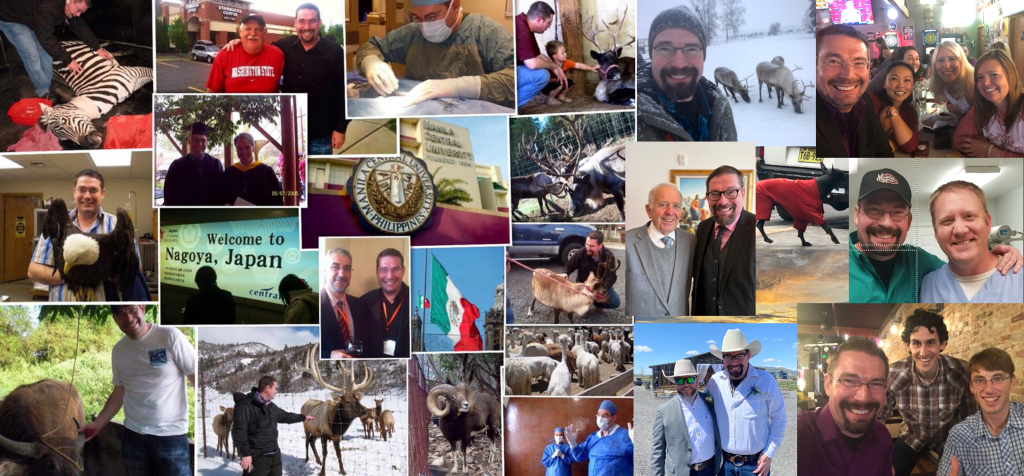
I’ve had the rare privilege of consulting in eight countries and twenty-seven U.S. states. I’ve worked with thirty-nine different species in reproduction alone, completed over 50,000 small animal exams, published scientific papers, and recently authored my first textbook chapter. I’ve helped build a thriving practice. And along the way, I’ve been challenged, humbled, mentored, and inspired.

Yet above all these milestones, it’s the quiet, ordinary moments that have brought the most joy. The wag of a tail after a hard-won recovery. The warm look of relief on a client’s face. The first breath of a newborn calf in the early dawn. These are the miracles disguised as routine. And if there’s one lesson that rises above the rest, it’s this: the secret isn’t chasing the extraordinary—but finding it in the everyday. 

This profession has demanded much—but it has given more. It has taught me how to listen, how to persevere, how to hold both life and death in the same gentle hands. It has filled my days with purpose and meaning. The path hasn’t always been smooth, but it has always been sacred.

One of my greatest joys has been mentoring and speaking with veterinary students across the country. I often tell them: lean into what makes you different. Don’t look outward for validation—look inward for authenticity. Success isn’t measured by being better than others; it’s measured by becoming better than who you were yesterday.

Just glance at your thumb. That spiral of ridges—your fingerprint—is a singular marvel, unmatched in all of human history. A quiet reminder that no one else can offer the world what you can. Your perspective, your voice, your courage, your way of caring—these are your tools. Learn to use them with intention, and you’ll never lack direction.

To my mentors and colleagues—thank you for shaping me. To the clients and animals who trust me—thank you for teaching me. The work is often hard, but the joy runs deep. I still love what I do. I’m living my passion, and I step into each new day with gratitude and wonder.

Tempus fugit—time flies. But what a remarkable flight it’s been.

And that is my take.
N. Isaac Bott, DVM

The Gift of a Mother

My Take Tuesday: The Gift of a Mother

Some people are kind for appearances. Some are kind when it’s easy. Some are kind in exchange for praise. But my mother, Colleen Bott, is kind because it’s etched into her soul.

Her kindness is quiet and constant. It doesn’t seek recognition or applause. It simply is—moving through the world with quiet dignity, changing lives with a gentle touch, a thoughtful word, or a warm meal delivered before you even knew you were in need. Her kindness is not something she chooses each day; it is as natural to her as breathing.

Leap year holds a special kind of magic in our family. My mom was born on February 29, 1956, and every four years we mark the occasion with extra zest—making up for the birthdays that hide between calendar pages. And in the in-between years—like this one—we celebrate her on February 28th, never letting the absence of a date diminish the depth of our love and gratitude.

Of all the gifts a mother can give, none is more enduring than the gift of time. And my mother gave us that—freely, unconditionally, and with a heart full of love.

I remember one summer when she built us a clubhouse—not from wood or nails, but from a foldable card table and a piece of fabric. To an outsider, it might have seemed simple. But to us, it was a kingdom. With a mesh window and a perfectly hemmed doorway, it became the headquarters of the Circle-Four Clubhouse—a sanctuary of imagination filled with toy cars, He-Man figures, Legos, and Muscle Men. It was love, made visible through her creativity and care.

When I dreamed of climbing the tallest mountain, she packed my lunch. When I was sick, she stayed beside me. When I lost my way, she lit the path ahead—not with force or fanfare, but with her quiet, unwavering presence.

Her love does not boast. It does not demand. It does not tire.

It simply remains—ever-present, ever-true.

She never raised her voice to shape my destiny, nor pushed me toward grand ambition. Instead, she simply loved me—deeply, fiercely, and without condition. And in the safety of that love, I found the courage to chase dreams I hadn’t yet dared to claim.

Her presence doesn’t fill a room; it fills a heart. She’s the kind of woman who remembers your favorite dessert, notices when your eyes are heavy, and listens—even when your words falter. She gives everything, expects nothing, and somehow, still offers more.

How fortunate we are to have been raised by her. There is nothing she would not do for someone she loves. Her smile, when turned toward you, has the power to brighten even the darkest day. And when she says, “I love you, Isaac,” it reaches into the deepest part of me and reminds me that I am never alone.

One of the most formative lessons she ever taught me came not through reprimand, but through grace. As a boy, I once made a terrible mess with salt dough —spreading the mixture far beyond the cutting board and deep into the carpet. I panicked. “She’ll be so upset,” I thought. But when my mom walked into the room, she simply smiled and said, “Wow! When you play with salt dough, you really go all out!” I whispered, “I’m so sorry.” She knelt beside me and gently said, “Isaac, I will never get mad at you for making a mess. I’ll only be upset if you don’t clean it up.”

In that moment, I understood that I didn’t have to earn her love. It was already mine. Unconditional. Unshakable. It became the emotional foundation upon which I have built my life.

Over the years, I’ve made many messes—navigating life the best I could. And each time I stumbled, her love remained. She reminded me that messes can be cleaned up, and that she would always be there—steady, smiling, and full of grace.

She has been with me through every season—my valleys and my summits, my fears and my triumphs. Her wisdom, her faith, her patience—they are woven into every good part of me.

She lives what she believes. She practices what she preaches. Her life is the lesson. Her love, the message.

The writer of Proverbs 31 describes a woman of noble character, saying, “Her children rise up and call her blessed.” As her son, I gently say: she is my hero.

Mom, you are grace in motion.

You are strength wrapped in gentleness.

You are love—unconditional, unwavering, and unforgettable.

Thank you for every whispered prayer, every quiet sacrifice, and every moment you made me feel like the most important person in the world.

I love you with every part of me.

And that is My Take.

N. Isaac Bott, DVM

Snowball

My Take Tuesday: Snowball

It was a brisk morning at the clinic, the kind where steam rises from coffee cups and everything feels just a little too hurried. Appointments were stacked back-to-back, and the phone hadn’t stopped ringing since the doors opened.

Right on the dot, Mrs. Robins arrived.

She was one of our long-standing clients, the sort who never missed an appointment and always brought a quiet warmth with her. Her silver-white hair—immaculately set—seemed to mirror the gentleness in her voice. In her arms, she carried a pink pet carrier with a small white face peering through the bars.

“This is Snowball,” she said, smiling as if she were introducing royalty. “She’s just the sweetest thing. An angel at home.”

Now, in veterinary work, there are phrases you learn to greet with quiet skepticism. “She’s never done that before” is one. “He just wants to say hi” is another. And “She’s an angel at home”—well, that one in particular often precedes a bit of drama.

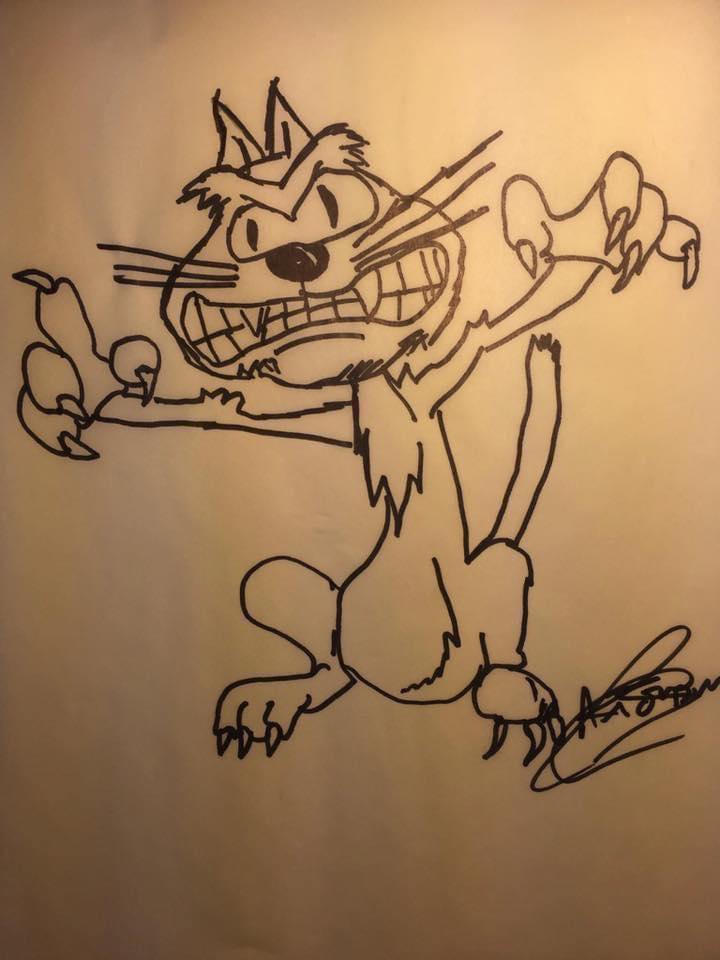
I crouched to peer into the carrier. Snowball stared back at me with unblinking yellow eyes. Her ears flattened slightly. Her body was coiled into that unmistakable feline crouch—legs tucked, muscles taut, tail wrapped tightly as if restraining her own temper.

“She doesn’t seem terribly happy today,” I said.

“Oh, nonsense,” Mrs. Robins replied cheerfully, flipping open the carrier door. “She’ll come right out.”

And come out she did—like a bullet from a gun.

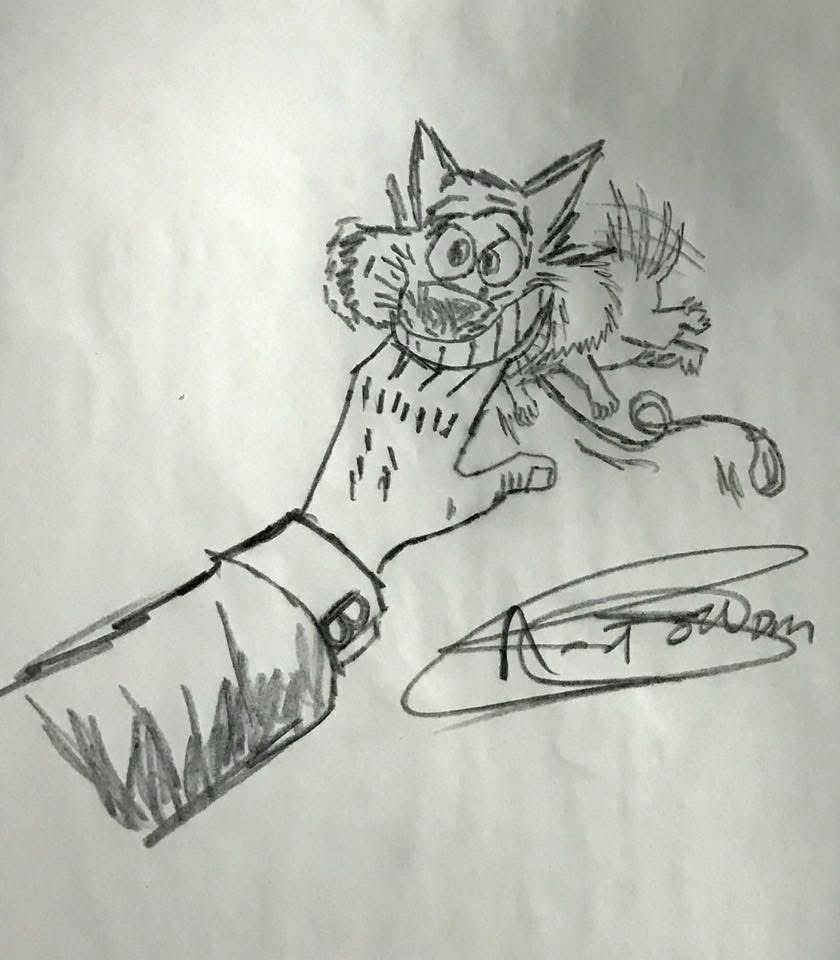
There was no time to react. One moment she was in the carrier, and the next she was airborne, a blur of white fur and furious motion. She landed squarely on Mrs. Robins’ head. All four claws engaged like grappling hooks into her scalp. In the blink of an eye, Snowball fell from her perch, still clinging tightly to what turned out to be Mrs. Robbin’s white wig.

It would’ve been funny if it hadn’t been so alarming. Her claws dug in like tiny ice picks, and Mrs. Robins, remarkably composed, simply reached down, detached the struggling cat, and replaced her hairpiece with a gentle pat.

“She’s sure mad at you!” she said, without a trace of irritation.

Before I could respond, Snowball turned her fiery gaze on me. There was a pause—brief, tense, and oddly theatrical. Then she launched again.

She hit me mid-thigh, clambering up the front of my trousers like a mountaineer ascending Everest. I winced as her claws found purchase. By the time she reached my shoulder, she had settled in like a bird of prey.

And just like that, it was over.

No hissing. No growling. Just silence.

She perched calmly on my shoulder, perfectly still, as if nothing had happened. Her tail curled neatly around my neck.

I moved slowly—very slowly—and reached for the rabies vaccine. One false move and I’d have a new earring. But Snowball didn’t so much as blink. She allowed the injection with saintly poise, not a twitch or twitch of protest. I finished the rest of her exam as she sat quietly, purring under my stethoscope.

When it was all done, she stepped lightly back into the carrier on her own.

I stood there for a moment, stunned. This cat, who had just conducted a full-scale assault on two humans and one wig, was now as docile as a lamb.

There are bursts of animal behavior we still don’t fully understand—moments of sudden intensity, like a summer storm that appears without warning and vanishes just as quickly.

Mrs. Robins smiled as she lifted the carrier. “She must’ve just had a little rage to get out of her system,” she said. “She really is the sweetest thing.”

I nodded, still watching Snowball, who looked back at me with wide, innocent eyes—as though none of it had ever happened.

Then I felt it: a sting in my leg. I looked down to find a small trickle of blood inching down my shin.

Mrs. Robins walked out into the morning, her white hair once again perfectly in place. Snowball, for all appearances, was a model of serenity.

Snowball can sure keep you guessing. But Mrs. Robins? That woman is unshakeable.

And that is my take.

N. Isaac Bott, DVM

The Llama que se llama Lloyd

My Take Tuesday: The Llama Que Se Llama Lloyd


It was a quiet Sunday afternoon, and I had just settled onto the couch, ready to enjoy the best part of one of my favorite movies. The peace was short-lived. My phone rang, jolting me from the comfort of cinematic escapism.

“Hello, this is Dr. Bott,” I answered, slipping into my professional tone.

“Hey Doc! I need you to come check on my llama. He’s gone absolutely berserk!”

There was panic in her voice. “He just ate my blouse off the clothesline. Yesterday, he spit right in my eye. He keeps biting Susie and Dolly—those are my other llamas—and he’s been attacking anyone who dares step into his pen!”

If I’ve learned one thing in veterinary medicine, it’s that calls involving llamas often come with a unique flavor of urgency. Perhaps it’s the temperament of the animals, or perhaps it’s the humans who choose them—but either way, the stories tend to be unforgettable.

“And I even tried calming him with lavender oil!” she added, “but he bit my finger!”

“Oh my,” I replied, masking the mix of concern and curiosity already brewing in my mind.

The term berserk has been applied rather liberally over the years to llamas or alpacas that behave outside the norm. But from her description, I sensed this wasn’t just a dramatic overstatement—this was a legitimate call for help.

“Is your llama male?” I asked, shifting gears to triage.

“Ya’ darn tootin’ he is.”

“Is he castrated?”

“No, we ain’t got around to it yet.”

Aha. In my experience, few things will settle down a wild-eyed macho llama like timely castration—especially if performed before puberty. Intact males, particularly those imprinted on humans, can become dangerously aggressive. This condition is often referred to as berserk male syndrome—a misdirected dominance behavior rooted in confusion about whether their handlers are rivals… or fellow llamas.

As I headed south on I-15, I reviewed the condition in my head. True berserk male syndrome is rare but serious. It often arises when young male llamas are bottle-fed or raised without appropriate interaction with their own species. They grow up believing humans are part of their herd.

As I turned down the gravel road leading to the client’s farm, I saw him.

Lloyd.

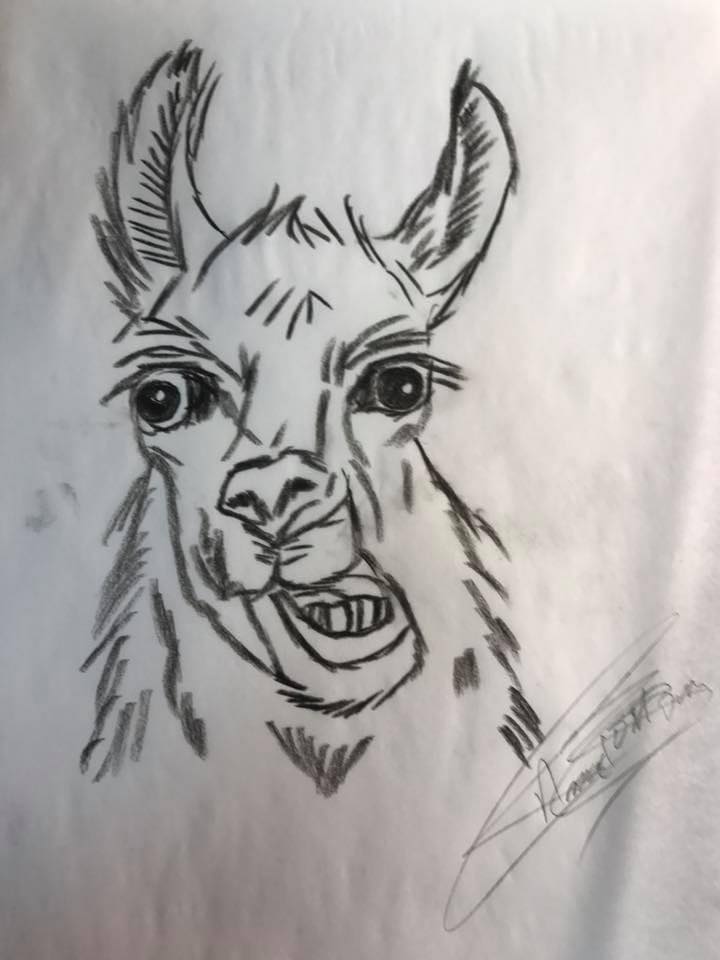
A tall, fiber-covered llama with a fierce expression and a gait that seemed to challenge the earth beneath him. His screeching alarm call—a high-pitched shrill overlaid with a guttural rumble—echoed through the stillness. He bolted along the fence line, wild-eyed and furious.

Lloyd had the long banana-shaped ears of a llama, but with his thick facial fiber, he could’ve passed for an alpaca in disguise. As I stepped out of the truck to greet Mrs. Jones, I was promptly baptized with a full-face projectile of regurgitated cud.

Veterinary medicine keeps you humble.

Between coughs and wipes, I explained our plan: “We need to sedate Lloyd. I’d like to examine his teeth, and—as you’ve requested—castrate him while he’s under.”

Mrs. Jones didn’t hesitate. “Maybe he’ll calm down if we chop his balls off!”

No matter how many years I’ve been doing this, that line always makes me chuckle—especially coming from a straight-faced rancher.

Administering the tranquilizer took some teamwork—and endurance. We were both doused in more spit and absorbed a few solid kicks before the sedative finally took hold. Lloyd laid down and drifted off to sleep.

Upon examining his mouth, I found the culprit: his fighting teeth—sharp premolars used for dominance displays—had grown into the soft tissue of his cheek. Every chew, every bite, had been laced with pain.

With the offending teeth safely removed and the castration complete, Lloyd awoke a new man—or rather, a calmer camelid.

He walked gently beside Mrs. Jones as she led him back to the pen. She beamed as Lloyd nuzzled her cheek for the first time in weeks.

“That’s my boy,” she whispered, wiping a tear with her free hand.

It wasn’t berserk male syndrome. It wasn’t bad behavior. It was pain—pure and simple.

If only animals could tell us where it hurts. But they can’t, not in words. Instead, they rely on behaviors, however bizarre or “berserk,” to speak for them. And it’s our job—whether as veterinarians, caretakers, or pet owners—to listen.

Lloyd reminded me of that.

And that is my take.


N. Isaac Bott, DVM

The Cowboy

My Take Tuesday: The Cowboy

He is as tough as steel.

From 1970 to 1973, he was stationed in East Germany, tasked with slipping across the border into West Germany to capture reconnaissance photographs. The danger was ever-present. On one mission, his vehicle was narrowly missed by active gunfire. He lived every day under threat—but never flinched.

After his military service, he went on to serve 29 distinguished years with the Utah Highway Patrol. He became the head of the Utah County service office and was later appointed lieutenant commander of the Mounted Patrol during the 2002 Winter Olympics in Salt Lake City. He also served as bodyguard to Utah governors Norman Bangerter and Scott Matheson. His storied career is the kind of life most people only read about—an extraordinary journey carved from courage, loyalty, and grit.

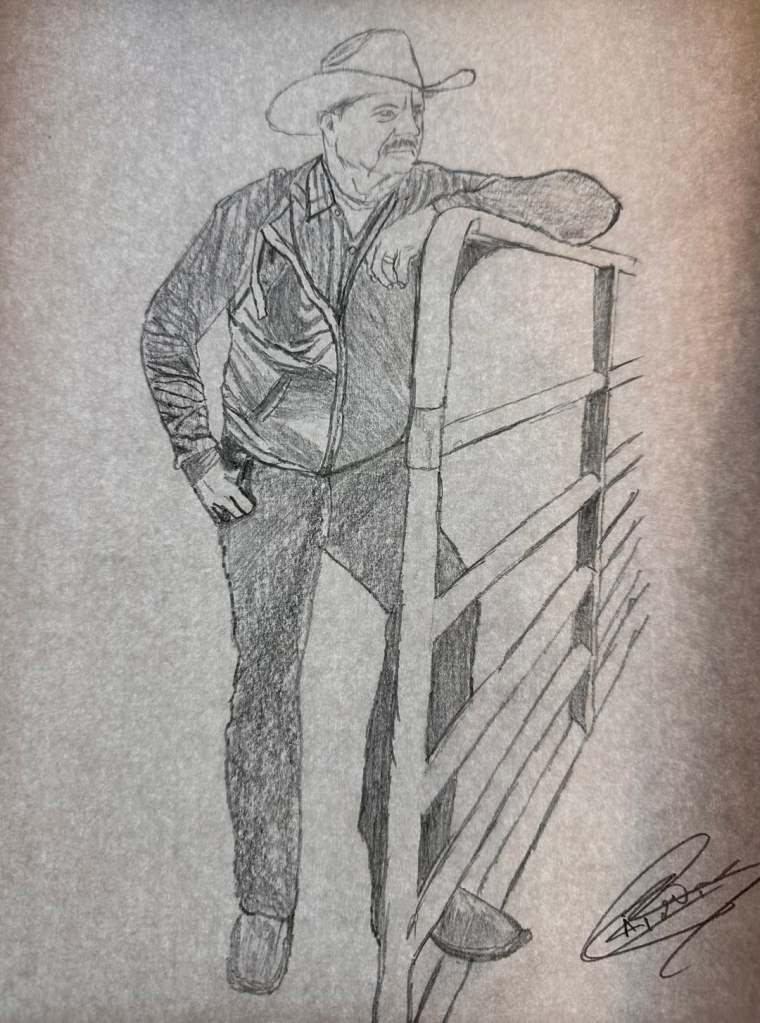
As a child, I was enamored with He-Man action figures. My favorite was Man-At-Arms—the armored commander of the royal guard, fiercely loyal to He-Man himself. He had sharp brown eyes and a mustache, and in my young mind, he embodied strength, leadership, and unwavering dedication.

The first time I met Ken Peay, I felt like I was meeting Man-At-Arms in real life. He was everything that childhood hero stood for—loyal, strong, hardworking, and steadfast. A doting father. A quiet, tireless cowboy. A man of principle.

Somehow, this giant of a man became my friend.

Ken has volunteered hundreds of hours helping care for the reindeer herd at Mountain West Animal Hospital. He is the only person I trust implicitly with those animals. His calm demeanor and observant eye bring peace to even the most nervous reindeer.

Twice, I needed help transporting reindeer from western Oregon to Utah. Both times, Ken dropped everything. He drove his own truck, pulled a gooseneck trailer, and made the 900-mile trek to Eugene and back. He never hesitated. He just quietly showed up and did what needed to be done.

I could write dozens of stories like this—examples of selflessness, loyalty, and kindness. Ken is one of the finest men I have ever known. He is the best of the best, and I love him dearly.

Years ago, Governor Matheson succumbed to a vicious cancer called multiple myeloma—a relentless disease that attacks the bone marrow and immune system. In late 2023, Ken was diagnosed with the same cruel affliction.

But true to form, he faced it head-on. With the grit of a cowboy, he pulled on his boots, tipped his hat low, and endured months of brutal treatment. He weathered the side effects with stoicism and strength. And when it came time for a stem cell transplant, he bore the burden with quiet courage. Day by day, hour by hour, he began to heal. Slowly, he started to regain his strength.

Ken’s fight has taught me something: that toughness is not the absence of pain—it’s the refusal to surrender to it.

We all face storms. Sometimes they roll in quietly. Other times they hit like a freight train. They come in the form of illness, loss, relationship strain, or overwhelming change. For many, these storms feel like too much. The temptation to give up is real.

But I’ve learned from Ken—and from nature itself—that there’s another way.

A few winters ago, I passed a herd of bison standing in an open meadow during a fierce snowstorm. The wind howled. Snow fell in heavy sheets. And yet the bison did not run. They did not turn away. They faced the storm head-on.

In conditions that would kill entire herds of cattle, the bison stood firm, staring into the wind with a kind of calm defiance. There was wisdom in their stance—an ancient understanding that storms cannot be outrun, only endured.

Perhaps that’s the lesson: when life sends its blizzards, don’t turn your back. Stand your ground. Let the wind hit your face and the snow sting your skin. Be brave enough to feel the cold, and strong enough to keep going.

We don’t know how long the storm will last. But I believe we all weather it better when we face it together—with courage, determination, and a little borrowed strength from those who inspire us.

Ken, thank you for teaching me what it means to stand tall in the storm. You are a true cowboy—resilient, loyal, and strong.

I’m grateful for the good days ahead. And I’m grateful for the lessons you’ve etched on my heart.

And that is my take.

N. Isaac Bott, DVM

Courage To Change Course

My Take Tuesday: The Courage to Change Course

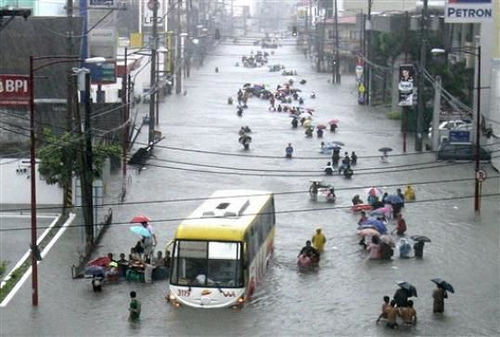
In late September of 2011, Typhoon Pedring struck the Philippines with unrelenting force. Torrential rain inundated streets, while sustained winds of over 120 miles per hour leveled anything in their path. The storm would leave a lasting mark—not only on the country, but on my understanding of risk, instinct, and the wisdom of changing direction.

That morning, I was working in a small laboratory, meticulously freezing water buffalo semen—a delicate, hours-long process. As the storm approached, I chose to finish the task, calculating that I could complete it just before the worst of the typhoon arrived. It was a decision made in haste—and one I would soon regret.

When I finally stepped outside, floodwaters were already racing through the streets. I flagged down a motorcycle taxi, a common vehicle in the Philippines with a motorcycle front and a narrow sidecar in the back. At 6’2”, I barely fit. My knees were tucked against my chest, the cab barely ten inches off the ground. It was an uncomfortable squeeze on a good day—this was not a good day.

As we began moving, water surged higher. The engine sputtered and strained, and before long, the vehicle lost contact with the road. We were floating—adrift in fast-moving floodwaters, completely at the mercy of the current. The driver panicked. I was helpless.

Moments later, the taxi slammed into a concrete railing on a large bridge, stopping just short of a deadly drop. Miraculously, the driver regained control and steered us to safety. I arrived at the hotel drenched, shaken, and profoundly grateful. The storm continued to pour, delivering more than 24 inches of rain in a single day.

A few days later, I boarded a flight out of Manila. As we cruised at 30,000 feet above the Philippine archipelago, turbulence hit hard. A fellow passenger, unbuckled, was flung from his seat into the overhead compartment. Then came the captain’s chilling announcement:

“We are approaching Typhoon Pedring. If we stay on this course, the storm will tear this aircraft apart.”

Cries of panic followed. Moments later, lightning struck the plane. The damage was minimal, but the danger was real. The pilot calmly changed course, and thanks to his judgment, we made it safely to Nagoya, Japan, and eventually home.

That flight remains etched in my memory—not just because of the storm, but because of the pilot’s clarity. He understood the limits of both aircraft and self. His willingness to course-correct saved lives.

In our culture, we often equate quitting with failure. We grow up believing every outcome must be classified as either success or defeat. I’ve lived by that metric, pushing forward when wisdom might have advised retreat. But I’ve since learned that success sometimes requires stepping back, reevaluating, and shifting direction.

Mountaineer Ed Viesturs knows this lesson well. In his book No Shortcuts to the Top, he recounts turning back just 300 feet from a summit, recognizing the risk was too great. He would return later to complete the climb. Viesturs went on to become the first American to summit all 14 of the world’s highest peaks—each over 26,000 feet. His story illustrates a powerful truth: perseverance matters, but discernment saves lives.

The road to success is rarely linear. It’s steep, uneven, and often humbling. Failure, when properly understood, is not a dead end—it’s a redirection. It can guide us toward wiser decisions and greater resilience, if we’re willing to listen.

As the Greek poet Hesiod wrote:

“Badness you can get easily, in quantity: the road is smooth, and it lies close by. But in front of excellence the immortal gods have put sweat, and long and steep is the way to it, and rough at first. But when you come to the top, then it is easy, even though it is hard.”

I learned a difficult lesson that rainy day in the Philippines: when instincts whisper—listen. When signs point to danger—change course. There is no weakness in that. In fact, there may be nothing braver.

And that is my take.

N. Isaac Bott, DVM

The Universal Human Animal Bond

My Take Tuesday: The Universal Human-Animal Bond

A few years ago, I had the privilege of spending several weeks in Mexico as a veterinary ambassador. What I experienced there left an indelible mark on my heart—not only as a veterinarian, but as a human being.

Our team began in the outskirts of Querétaro, where we set up a pop-up wellness clinic beneath a row of tents. From dawn until dusk, we vaccinated dogs and cats—each animal brought with care and hope by the people who loved them. In the days that followed, we continued in Guadalajara, where we served even more families. Over the span of three long, hot days, we provided vaccinations and preventive care to the beloved pets of more than 1,800 households.

We met with every individual, one by one. We listened to their questions, learned about their animals, and shared knowledge about preventive care. These were some of the longest, most physically demanding days of my career—but the joy and gratitude that filled those hours far outweighed any fatigue. It was profoundly moving.

What struck me most was not just the volume of pets we treated—it was the universal love people had for their animals. In each village, families brought their dogs and cats however they could: tucked gently into shopping bags, wrapped in cloth, or carried tenderly in their arms. Some children waited in line for hours under the scorching sun, determined to ensure their furry companions received care. I saw in their eyes the same love and concern I see every day in my own community back home.

In many places we visited, the cultural understanding of pet care differed from what we’re used to. For example, many families viewed leashes as cruel and instead guided their dogs by lifting their front legs and walking them gently on their hind limbs. It was clear these animals were cherished—and remarkably patient.

The scenes were humbling. Lines stretched around city blocks. Families waited without complaint. The sense of devotion, even in the face of scarcity, was unmistakable. It was a powerful reminder: the human-animal bond knows no borders. It is stitched into the hearts of people everywhere, regardless of language, culture, or circumstance.

I believe that when we serve others, we are always given something in return. In Mexico, I went to give—but I came home with more than I could have imagined. The reciprocity of service is real: the effort we expend is returned to us tenfold, not in material things, but in connection, fulfillment, and purpose.

Veterinary medicine is more than a profession—it is a calling rooted in compassion. It asks us to advocate for those who cannot speak for themselves. It requires not only clinical skill, but also heart. To truly make a difference, one must care deeply—not just for animals, but for the people who love them.

Dr. Seuss, through the voice of the Lorax, once said: “Unless someone like you cares a whole awful lot, nothing is going to get better. It’s not.” In this line, I find truth that echoes through the work we do each day.

At Mountain West Animal Hospital, this belief forms the core of everything we do. We care—deeply. We stand for life, for dignity, and for the right of every animal to live free of pain and suffering. Our mission is not just to heal, but to uplift—to honor the human-animal bond wherever we find it.

Because that bond, in all its beauty and universality, is one of the most profound connections we will ever know.

And that is my take.

N. Isaac Bott, DVM

The Itch Is On!

My Take Tuesday: The Itch Is On!

Springtime in Utah County is breathtaking. As winter finally releases its overpowering grip, new life emerges all around us. The fresh scent of blooming flowers, the vibrant green of new grass, and the cheerful songs of birds awaken a sense of joy in those of us longing for warmer days.

But spring comes with a certain irony. While I love this season dearly, it also ushers in the annual ritual of sniffling, sneezing, runny noses, and itchy eyes. In my family, atopy—the genetic tendency toward allergies—has been an unwelcome companion for generations. We’re all highly allergic to grass, alfalfa, and flowers.

Growing up, I had a love-hate relationship with spring. Outside my bedroom window stood a rosebush that bloomed spectacularly each year. To most, it was a beautiful sight. To me, it was seasonal misery. That rosebush triggered relentless allergy attacks: nights spent wheezing, sniffling, and rubbing my red, swollen eyes. I remember lying in bed with a cold washcloth pressed over my face, unable to sleep, study, or do much of anything. One particularly bad night, I scrawled in my journal, “Today: more allergies. Oh, I hate them.”

It’s no wonder I feel deep sympathy for my veterinary patients who suffer from allergies. Unlike people, pets typically don’t sneeze or rub their eyes; instead, they scratch, chew, lick, rub, shake their heads, or develop chronic ear infections. Many arrive at my clinic with bleeding paws and raw, open sores from constant scratching. The insatiable itch drives them mad. Every waking hour becomes a battle they can’t win.

Allergies are, without question, one of the most common and challenging conditions I see as a veterinarian. It’s heartbreaking to witness their suffering, and often they are even more miserable than we can imagine.

Fortunately, there’s hope. With a thoughtful allergy-prevention regimen and modern veterinary care, we can significantly improve their quality of life.

Here are a few key steps you can take to help your pet:

Control the environment. Vacuum frequently and use electrostatic cleaning products (like a Swiffer) to remove dust and allergens from floors and surfaces. Air purifiers or whole-house filtration systems can reduce airborne irritants.

Bathe regularly. Contrary to the old belief that frequent bathing dries out the skin, veterinary dermatologists now recommend bathing allergic pets weekly—or even daily in severe cases—during spring and summer. Regular baths wash away allergens before they’re absorbed into the skin. Dry shampoos, sprays, and wipes can be great alternatives, especially for dogs who dislike baths or for cats who typically won’t tolerate them.

Consider food allergies. Allergic reactions to pet food are often caused by proteins such as beef, eggs, dairy, soy, or fish. If food allergies are suspected, your veterinarian can guide you through an elimination diet trial. These trials help pinpoint the culprit and lead to a diet that’s both nutritionally complete and hypoallergenic, often with pre-digested proteins. If your dog needs medications and has food sensitivities, Greenies Pill Pockets Allergy Formula (made from peas and duck) are a helpful option for administering pills without triggering a reaction.

Explore new treatments. One of the most promising advancements in veterinary dermatology is immunotherapy. Cytopoint is an injectable treatment designed to target Interleukin-31, a protein that triggers itching in allergic dogs. By neutralizing this protein, Cytopoint can provide significant, lasting relief from itching for many dogs.

If your pet suffers from allergies, don’t wait. Schedule an appointment with your veterinarian and work together to create a treatment plan. Every pet deserves a life free from pain and suffering, and with the options available today, we can manage allergies better than ever before.

When you stop the itch, everyone sleeps better.

And that’s my take!

N. Isaac Bott, DVM

Forget Me Not

My Take Tuesday: Forget Me Not

High in the beautiful mountains of Alaska grows a tiny, unassuming flower. It’s easy to miss, blending quietly into the surrounding vegetation. But if you pause—if you truly look—you’ll find a remarkable little masterpiece.

Its dark green stems and leaves are like any other plant. But its blossoms set it apart: delicate petals of sky-blue, capturing the brilliance of a cloudless summer day. Small though it is, this flower lingers in the memory. Fittingly, it’s called the “Forget Me Not.”

A few years ago, I visited a sprawling cemetery. I wandered quietly through the endless rows of marble headstones, many dating back to the 18th and 19th centuries. Moss clung to their bases, and time had softened the names and dates carved into the stone until many were barely legible.

I stood among thousands of graves. And I wondered: Who were these people? What lives did they lead? What stories did they leave behind? A few are still remembered. Most, I realized, are not.

As I read those fading inscriptions, I found myself asking: Is this what will become of me? When I, too, go the way of all living things, will I be remembered? Will I leave a legacy worth remembering?

My thoughts turned to the small cemetery in Castle Dale, Utah—the little town where I was raised. It’s a place that’s easy to overlook. But for me, it holds deep meaning. The cemetery sits on the north end of Center Street. One summer, when I was in high school, I worked there as a caretaker. Week after week, I mowed the lawn and trimmed the grass around each headstone with quiet reverence.

Many of my own ancestors are buried there. My great-great-grandmother. My great-grandparents. My grandparents. A beloved uncle. Even an infant cousin. They all rest in that sacred ground.

My great-grandfather died long before I was born. But I have a photograph of him—smiling faintly as he sits on the grass in a pair of worn bib overalls. Though aged and weary, his character shines through that old photo. It brings to mind something Thomas Edison once said: “I have friends in overalls whose friendship I would not swap for the favor of all the kings of the world.”

My grandfather passed when I was just three years old. What I know of him comes mostly from the stories others have told me. He served as the county clerk for more than two decades. Like his father before him, he was a dryland farmer who worked tirelessly to provide for his six children. The land they worked—season after season, year after year—still belongs to our family today.

My uncle Jerry passed away in 2016. I owe him my life. When I was five years old, I stood in the doorway of his kitchen, holding one of his favorite pink wintergreen candies. I popped one into my mouth, and it lodged in my throat. I couldn’t breathe. Without hesitation, Jerry calmly walked over, gave me a firm push on the stomach, and sent the candy flying across the room. To know Jerry Bott was to know one of the finest people I have ever met. He was the embodiment of loyalty, charity, and love.

Their graves lie side by side on the south end of the cemetery’s middle section. Each of them lived lives of quiet courage and unwavering kindness. They treated others with respect, offered helping hands, spoke honest words, and smiled freely. Through long years and hard miles, they gave their best. And when life’s storms came, they stood and faced them with grace and strength.

As long as my heart beats, they will not be forgotten.

They continue to inspire me. Their legacy calls me to be a better father, a better friend, and a better man.

Like the tiny Forget Me Not—humble and easily overlooked—each of us, no matter how small or unnoticed we may seem, has an important role to play in the great tapestry of life and in the legacy we leave behind.

And that is my take.

N. Isaac Bott, DVM

The Attribute of Adaptability

My Take Tuesday: The Attribute of Adaptability

In 1971, the Rocky Mountain elk (Cervus canadensis nelsoni) was rightfully named the official state animal of Utah. Known also as wapiti—a word gifted to us by the Shawnee and Cree, meaning “white rump”—this noble creature stands as one of the great icons of the American West. A member of the deer family, the elk holds kinship with the mule deer and the moose that roam our wild places. Yet among these, the elk is perhaps the most gregarious, gathering in herds that can number over 500, moving as one across vast and varied landscapes.

The elk is a sight that stirs the soul in any season. Towering and regal, these animals are more than just symbols of strength—they are living embodiments of adaptability and grace. Few creatures move so effortlessly between worlds. Whether wandering the dense forests, crossing windswept plains, ascending rugged mountains, or traversing sunbaked deserts, the elk adapts and endures. Their diet is as varied as the lands they inhabit: grazing on grasses throughout the year, browsing woody plants in winter’s grip, and feeding on tender forbs in the warmth of summer. It is this adaptability that has secured their place in the wild for countless generations.

Here in Utah, they range from the lofty heights above Skyline Drive, at elevations surpassing 11,000 feet, to the red rock canyons and open desert expanses of the San Rafael Swell. They are as at ease beneath the towering quaking aspens and Douglas firs as they are among the twisted junipers and fragrant sagebrush of our state’s arid lands.

As a boy growing up near the Manti-La Sal National Forest, I was blessed with frequent glimpses of these majestic creatures. I remember autumn nights spent camping beneath a canopy of stars, the air crisp and still. In that sacred silence, there would often rise a sound unlike any other—the haunting bugle of a bull elk. It begins as a deep, resonant call, rising swiftly into a high, ethereal whistle before cascading into a series of low grunts. It echoes through pine-clad ridges, sweeps across broad valleys, and rolls down winding canyons. Even the most seasoned woodsman feels his heart quicken at that sound. It is nature’s anthem—raw, wild, and beautiful. To hear it is to feel something ancient awaken within you.

As a veterinarian, I now have the distinct honor of working with several herds of elk. Each encounter deepens my reverence for these animals. They are more than their strength and size; they embody resilience, freedom, and the unbreakable will to endure. Pictured here is a herd near Birdseye, Utah—a breathtaking reminder of the wild heritage we are privileged to witness and protect.

The elk is a symbol of power and perseverance, but also of freedom in its purest form. From them, we learn the wisdom of adaptability. Were we to embrace even a measure of their ability to adjust and thrive, we too would be unshaken by life’s changes. We would be courageous, steadfast, and bold—undaunted by the unknown.

When I am faced with life’s uncertainties, I often think of the majestic Rocky Mountain elk—standing tall against the piercing wind, unyielding, and at home in any land.

And that is my take.

N. Isaac Bott, DVM