The Adroit Veterinarian

mexico-adventure

My Take Tuesday: The Adroit Veterinarian

A few years ago, I had the privilege of visiting a small animal shelter in Cuautla, Mexico. The streets in rural Mexico are full of unclaimed pets. This shelter provides refuge and care for many of these pets.

I will never forget the long car ride. As the rickety old micro-bus careened the dirt roads that led to the shelter, I peered out the window at the green trees and fields that adorned this small piece of heaven. As we passed a small panadería, the familiar sweet smell of bread, churros and pastries filled the air and permeated our senses.

As we arrived at the shelter, a large chainlink fence provided a barrier to the outside world. Inside, lay an expansive series of buildings and kennels. The perfectly manicured lawns provided a sanctuary to hundreds of homeless pets. As I exited the vehicle, I noticed a dog racing excitedly across the grass. It carried behind it a set of training wheels, a custom made wheel chair, that allowed freedom of movement for its paralyzed back legs. I could feel the excitement of this young dog, as it scampered, worry-free across its beautiful sanctuary. I was overcome with a sense of gratitude, and I knew I was standing in a special place.

On this particular day, my assignment was to help spay 10 dogs that were living at the shelter. As I entered the surgery suite, my heart sank. The cement walls were painted dark brown. A single window facing to the north, provided all of the lighting for the room. As I scanned the walls for a light switch, I realized that electricity was a luxury not available in this part of the world.

I remember thinking, “How can I spay these pets without electricity? How can I even see what I am doing? I can’t do this.”

Modern veterinary medicine has changed the face of the profession. Electronic monitoring equipment provides real-time blood pressure, an EKG, oxygen saturation, temperature and allows close monitoring of all vital systems during a surgery. Anesthetic gases, like Isoflurane and Sevoflurane, provide a safe surgical experience and make recovery much less complicated. A surgery room light, a necessary tool, allows visualization of the surgical site and facilitates the entire process.

None of these luxuries were available.

As I prepared to begin surgery, only a single surgery gown was available, and my 6’2” frame far exceeded its size. My large hands could barely fit into the small size 6.5 latex surgical gloves provided. My severe allergy to latex worried me as I pulled the tight gloves over my hands.

The stainless steel surgery table sat low to the ground and could not be adjusted. I had to bend over as I prepared the surgical site. The only surgical monitoring that could be performed was with the use of a simple stethoscope. Injectable drugs were the only available modality to administer general anesthesia.

I took a deep breath. “I can do this,” I reassured myself, “you need to rely on your skills and trust you can do this successfully.”

I nervously began the first incision, as a bead of sweat poured down my forehead.

Each surgery went well. All recovered well without complications.

It is easy to work with the latest in veterinary technology. Digital radiology, surgical monitoring equipment, laser and electrosurgical units provide reliability and safety and are a must in today’s modern practice. I rely on each of them on a daily basis at Mountain West Animal Hospital.

As I left the animal sanctuary, I breathed a sigh a relief. I had learned so much from this experience. It was something that will forever be etched in my memory.

If I were to have to select a single event that has made me the veterinarian I am today, it would be this day in Mexico. I learned to rely on my skill and judgement. I learned that a truly great veterinarian can perform in both a state of the art facility and also in a small cement building without electricity while in a third world setting.

Although the methodology differs, the result remains the same.

I will forever be grateful for this capacitation at a serene sanctuary in a far away place.

And that is my take.

N. Isaac Bott, DVM
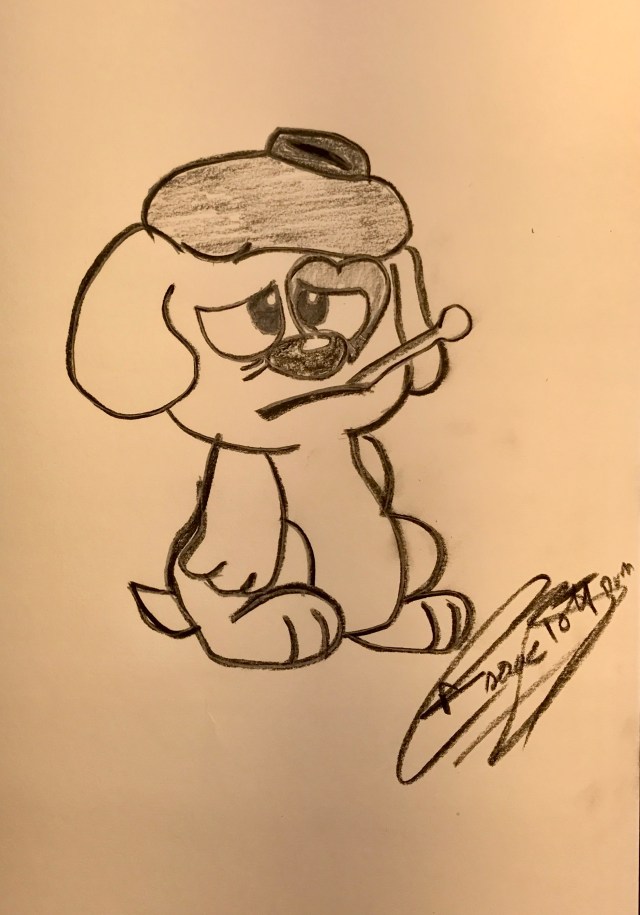
Here I am pictured before the start of the first surgery. Notice the ill-fitting gloves and surgery gown – beneath the surgical mask is a very large, albeit nervous, smile.

Sheep and Stoicism

12670538_593223764175535_4489393571454637027_n-2

My Take Tuesday: Sheep and Stoicism

Sheep can be stubborn. I remember as a child trying to herd our small group of ewes to a nearby pasture. Although it was only about a hundred yards away, it didn’t go well. As I turned the sheep out, they all began running in every direction. There was pure chaos. I ended up covered in sheep snot, lying on my back looking up at the blue sky. The sheep were all over town. Not one of them ended up in the desired pasture.

Not long after this, my very wise great uncle, Boyd Bott, taught me an important lesson. The trick was simple: “You can’t herd sheep. You have to lead them.” It is a lesson I will never forget.

Taking a pail of grain and walking out in front of the sheep will yield an opposite response than that described above. The sheep will literally run after you and follow where ever you want them to go. Every time I had to move the sheep from this time forward, it was easy.

Sheep have a strong instinct to follow the sheep in front of them. When one sheep decides to go somewhere, the rest of the flock usually follows, even if it is not a good decision. Humans are the same way. In the bible, sheep are often compared to people. I find this comparison very accurate. We are stubborn. We resist when we are pushed. We follow when we are lead.

There is no better way to learn patience than having a small herd of sheep. They require much attention, protection and care.

Next time you find your patience running thin, think of exercising oversight instead of compulsion. It will most certainly yield a better result.

And that is my take.

N. Isaac Bott, DVM
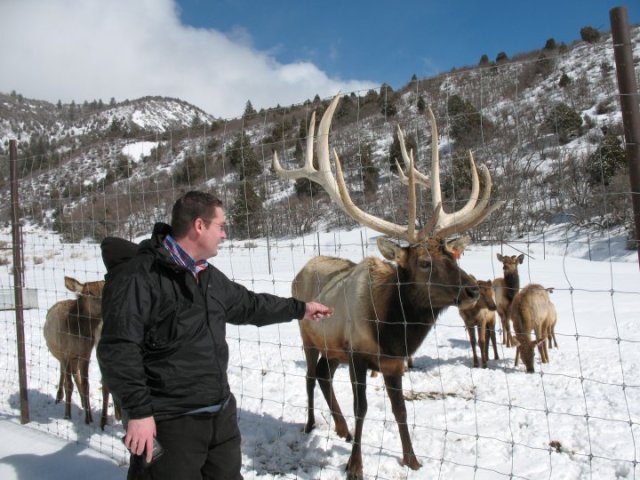
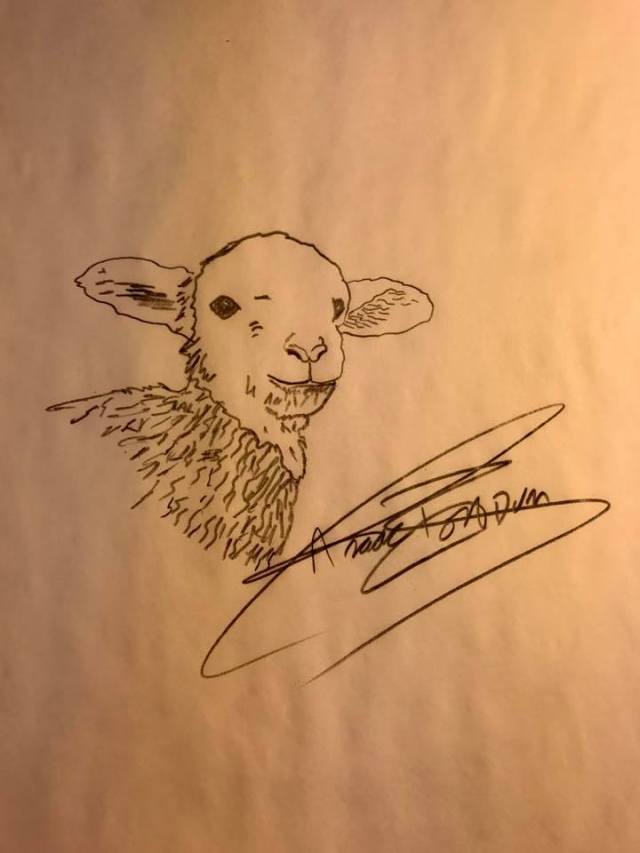
This photo is of Dr. Bott holding a newborn lamb on his family farm in 1985.


A Scar

img_4197

My Take Tuesday: A Scar

You can definitely see it if you look close enough, each time I extend my left hand with my palm down. It runs nearly perpendicular to the axis of my index finger. 

Scars are a physical reminder of our own survival. They tell a story about places that you’ve been. They are tangible roadmaps to life’s lessons learned.

Every time I notice the scar on my finger, my mind travels back to my senior year of veterinary school in 2008. My best friends from veterinary school, Dan and Travis, were with me on this wild adventure.

It was a beautiful November day in Emmett, Idaho. The crisp fall air and dark yellow leaves of the cottonwood trees reminded me why this was my favorite time of the year.

During my last year of veterinary school, an entire month was spent at the Caine Veterinary Teaching Center in Caldwell, ID. This provided hands on training in a variety of agricultural species. Our days were spent on massive dairy operations, in the classroom and at livestock auctions.

On this particular day the sale yard was full. Cattle of every breed, gender and size were being sold and sorted through the sale barn.

My tasks were simple: 1) Vaccinate the females between 4-10 months of age. 2) Diagnose pregnancy in adult females. 3) An occasional bull calf would also need to be castrated.

Often cattle are sold because of their disposition. Wild, aggressive and flighty cattle are difficult to handle. Studies have shown a lower pregnancy rate among beef cattle that are flighty. Farmers are quick to cull cows that exhibit these traits. Therefore, wild and crazy cattle are prevalent at a livestock auction. Extreme care must be taken to avoid injury.

Facilities to process cattle make all of the difference for a veterinarian. It is very dangerous to attempt to process cattle in a rickety old squeeze chute. Unfortunately, too many sale barns have cattle handling facilities that leave much to be desired.

A black Angus calf entered the chute. I had castrated many calves before this and was very comfortable with the procedure. To facilitate castration, I entered the squeeze chute behind the calf. I reached down and made an incision. The calf immediately jumped and kicked. His right hind leg hit my right hand with incredible accuracy. The knife, still held securely in my right hand, plunged downward. The blade entered the index finger of my left hand, right between the first and second knuckles. The blade sank deep, and only stopped as it hit the bone in my finger.

The pain was immediate. I quickly exited the chute, holding my left hand tightly. Blood poured down my hand and dropped on the ground. The professor asked, “What happened?”

“I cut myself,” I responded.

As I stepped away from the squeeze chute, I glanced down at my finger. The open wound gushed blood. I immediately became light headed and nearly fainted as I stumbled to the truck.

I wrapped my finger tightly and headed to the nearest urgent care clinic. The throbbing pain seems to peak with each heartbeat.

After a couple hours and a few sutures, I was back at the sale yard. The remainder of the day went smoothly.

I will forever carry a reminder of that November day in Emmett, Idaho. Although time tends to color our memories optimistically, I still remember the painful lesson I learned that day.

Such is life. The ups and downs leave us battered and scarred. But with time, things get better. The pain won’t always be there and someday we will look back at each scrape and scratch and be reminded that scars are beautiful.

And that is my take!

N. Isaac Bott, DVM

Don’t worry Doc, She’s a tame cow

img_3875

My Take Tuesday: Don’t worry Doc, She’s a tame cow
 
“Is the cow where you can catch her?,” was my first question.
Preston was a longtime client and on this particular day he had a cow that was having difficulty calving.
 
Responses to this question can vary. On this particular occasion the gentleman stated, “Don’t worry Doc, she is a tame cow. I raised her on a bucket.” He then gave a caveat, “Besides, she is too sick to run.”
 
“I really do not like trying to pull a calf without restraining the cow. I don’t want to get hurt,” I replied.
 
“We could even tie her up to one of the pillars in the barn,” he continued.
 
Now clearly, this should have raised a red flag. A 1800 pound snorting bovine is not to be taken lightly. The thought of working on her without a squeeze chute was ludicrous. Just think of the danger I would be subjecting myself to. A well placed kick could easily end my career.
 
“Can you please help me out, Doc?”, he begged.
 
Veterinarians all have a soft spot. We like to help people, and often we do so placing our own health and wellbeing on the back burner.
 
“I guess I could stop by,” I replied, “But please be sure to have a good rope handy.”
 
“You got it Doc!,” He promised.
 
When I arrived, Preston had the cow tied up to the center pillar of the barn. The massive beam was actually an old telephone pole.
 
The cow stood, chewing her cud as if nothing was amiss. A foot was clearly sticking out from the back end of the cow. From the appearance and position of the foot, I could immediately tell it was a back leg.
 
Delivering a breached calf is no easy feat. The size of the calf would make it impossible to turn around, and the best option was to attempt to pull the calf as it presented. The test for delivery of a calf in the backwards presentation but normal position and posture differ because the fetus should be first rotated 45-90 degrees by crossing the legs before attempting delivery to take advantage of the widest diameter of the cow’s pelvis.
 
Most experts say you should not apply more force than that of two strong men pulling by hand. But, if you’re alone in assisting a difficult birth, a calf jack can help generate the necessary force. Luckily I had my calf jack with me.
 
A calf jack is a long pole with a adapter that sits against the backside of the cow, just below the birth canal. There is a handle and jack that move along the entire length of the pole. OB chains are attached to the calve’s legs and then are attached to the jack. Extreme care must be taken to not apply too much pressure while using a calf jack. The health of the calf and mother could easily be compromised if the instrument is used improperly.
 
I attached the chains to the jack and gently began to tighten the slack. As I applied traction, the cow went crazy! She began to jump and kick and swing her head. I jumped back as fast as I could. She bellowed and began kicking her back legs in the air as if she were a rodeo bull.
 
The calf jack was firmly attached and stuck out straight nearly 6 feet from her rear end. This device became a formidable weapon and this cow knew exactly what to do. She was able swing it with extreme accuracy.
 
And boy did she ever swing it!
 
My OB bag was the first victim. It went flying through the air spreading instruments all over the barn. My water bucket next was launched vertically, covering all of us with fetal fluid and blood tinged warm water.
 
In a swift motion, the cow pivoted on her front feet, swinging her back end in an abrupt 180 turn. My back was turned to her when this happened and it caught me completely off guard. The calf jack, still sticking straight out from her backside, struck me about 2” below the back of my knees. This caused me to do a partial backflip. I landed on the soft bed of straw head-first.
 
“Preston!,” I shouted, “I thought you said she was tame!”
 
“Well, Doc, I ain’t never hooked one of those on her before!” he replied, with a look of bewilderment in his eyes.
 
Together we grabbed a large panel and placed it along side the raging bovine. She immediately calmed down and I returned to my job.
 
The calf was born alive! It was a precocious solid black bull calf with a stripe of white extending down his forehead. It weighed nearly 120 pounds!
 
“Good job Doc!” Preston exclaimed, “I was a little worried there for a minute!”
 
“So was I,” I replied, “So was I.”
 
The pain in my calves finally set in as I walked back to my truck. I had a battle wound that took weeks to heal – a linear bruise left by the unforgiving calf jack stuck to the backside of a most formidable and sinister cow.
 
And that is My Take!
 
N. Isaac Bott, DVM

The Most Difficult Part of My Job

18301672_814794602018449_551480192654118401_n


My Take Tuesday: The Most Difficult Part of My Job

Death and dying are uncomfortable subjects. For some, it stirs up painful memories of past losses. For others, it is a reminder of our mortality or the mortality of those we love.

As I tend to the animals in my care, I will lose patients to death despite my best efforts. Often at these times, I am exposed to the emotions of the families who have loved them. For some, there are dramatic outbursts; for others, emotions will be put on hold for private moments.

As different as people are, so are their reactions. No right or wrong. I always try to respect and accept the fact that we all grieve and express grief in our own way and in our own time, and I try my best to be there to support my clients through this most difficult time.

I have to deal with death on a daily basis. Many of these are pets that need to be euthanized. It is among the most difficult aspects of my job. I see the sadness in family members eyes when they have to say good bye to their family member. I often tear up when the strong bond between the family and pet is obvious.

I cannot feel their pain. I did not have the years of interaction with their family member. I didn’t see the unique personality they are talking about. I only have treated this pet on a few occasions and our interactions usually lasted only a few minutes.

What I can show is empathy. My professional familiarity with death means I also know a great deal about grief — my own, of course, and also that of the families whose pets I have looked after throughout their lives.

Dealing with this on a daily basis for many years is difficult. Many veterinarians suffer from severe burnout and fatigue, and sadly a 4x higher suicide rate when compared to the general public.

Veterinarians encounter death frequently, along with some moral issues human doctors never face. Consider the client I need to counsel and help to choose between a costly operation for their pet or paying their mortgage — or worse, a beloved patient I operate on who, despite good care, still dies. Or another case where horrific animal abuse is evident.

When these stresses combine with long working hours and on-call pressures, it’s easy to see how anyone could melt down.

I try to hard to focus on the goodness of people who save animals, instead of the evil of those who hurt them. This helps tremendously. I count myself so fortunate to have the clients that I do. They are loyal and caring. They are kind. I take the trust they have in me very seriously and I do my best every day to be the very best veterinarian I can be.

The loss of a pet should not be taken lightly and it is not something most people get over quickly or easily – although many may think there is a social stigma not to grieve for animals as we do for humans. The fact is that the bond that is formed between people and their pets is in many cases even stronger than some of the bonds between people.

Although I do not fully understand the love you have for your pet, I do care about your feelings and try my best to show this with each interaction I have. This is particularly true when dealing with these difficult end of life decisions. If you have had to go trough this, my heart aches for you.

Losing a pet is tough. I mourn your loss.

I also strongly believe that the bond between human and animal continues, across the rainbow bridge, between this life and the next.

And That is My Take
N. Isaac Bott, DVM

The Tale of the Tail

fullsizerender-52.jpg

My Take Tuesday: The Tale of the Tail

While growing up on a small farm in Castle Dale, my usual day began at 5:00 AM. My family owned 2 Guernsey milk cows. Their names were Mahana and Mokey. Dairy cows are milked either two or three times a day on most dairy farms. We elected the twice daily milkings which we spaced out evenly in a 24 hour time frame. My older brother and I would take turns milking each of them. I would milk Mahana in the morning and Mokey in the evening.

Although born as twins, each cow had distinct capricious personalities. Dealing with Mokey was a roll of the dice. She was unpredictable and instantly agitated. She was able to place a forward kick from her rear right leg precisely in the milk bucket or the center of my shin as she desired. Her eyes bulged out the side of her head, she always had a wild look and seemed to be able to track every move I made before it happened.

Mahana was docile and aware of her surrounding at all times, she could transition from tranquility to rage in a split second. She seemed to be swooshing her tail constantly. Her tail would connect against the side of my face. Although frequent bombardment from flies would initiate this torture, she quickly learned that her tail was a weapon capable of inflicting pain and discomfort. She would constantly whip my face with the coarse hairs at the end of her tail, which was analogous to a lashing from a bullwhip. Accumulations of feces and mud made on the distal end of her normally soft tail hair would transform her tail into a rigid and most dangerous weapon. After enduring this month after month, I decided that it was time to do something about it. The tail needed to be controlled and contained… But how?

Tail docking was out of the question, although an inconvenience for me, her tail was important for her, particularly during the warm months of summer when flies and other biting insects abound.

My first idea was to shave the dangerous hair off the end of the tail. This would clearly remove the most painful part of the ordeal. I used an old pair of electric clippers and shaved the tail.

That afternoon, I sat down on the milking stool and began the normal routine, assuming my intervention would be successful. Almost immediately, her tail came flying towards me. Unable to duck out of the way I just leaned into it. The shaved tail landed across my cheek and left a large welt. It felt like I had been slapped with a stiff garden hose. The pain was considerably greater than that caused by the tail hair. I realized that I had unknowingly created an even more formidable weapon.

My second idea was to develop an anchor to which I would tie the tail. This would prohibit the tail from reaching my face. I searched for an object to which I could anchor her tail to. I found a cinderblock that seemed to fit the part.

Having been a boy scout for years, I knew how to tie a good knot. I used orange bailing twine to tie the secure knots connecting the tail to the cinderblock anchor. There was no way the knot was going to come undone.

Many may wonder just how strong a cow’s tail really is. How much weight can it lift? Well, that day I learned a painful lesson, and I can attest that a cow’s tail can indeed easily lift and swing a cinderblock.

The solution to the problem was simply anchoring the tail to the back leg of the cow. Ironically, it took a cinder block to lead my simple mind to the even simpler solution.

And that is my take!

N. Isaac Bott, DVM

Up A Tree

IMG_9088

My Take Tuesday: Up A Tree

In the early spring, when the ice and snow begin to disappear, most of the fields in Utah County are a muddy disgusting mess. A farmer would be wise to avoid calving their cattle during this time. A clean environment required for calving is impossible to find in a swampy, muddy field.

Dwane is not a typical farmer. To him, this is the perfect time of year for calving. His solution to the muddy disgusting mess in his pasture was simple: A four wheeler.

Each morning he would ride around the cow pasture to check on his pregnant stock. On this particular day, had spotted one cow calving and could see the infant’s nose and one foot exposed. Circumstances such as this require help from DocBott.

“Hey Doc, I need some help with one of my cows,” Dwane stated matter-of-factly, “She is kind of a wild one, so I don’t dare work on her by myself.”

I know better than to get myself into a situation like this. There is no way it can end well. Unfortunately, as it often goes, I gave in and headed towards Dwane’s place in Palmyra.

Dwane sat, on his Honda four wheeler at the gate. Every inch of the machine was covered in dark brown mud. As I looked into the field, I could see a few cows standing literally knee deep in mud.

“What a mess!”, I exclaimed, “Dwane, you really need to get a barn if you are going to calve out this time of year.”

“Yeah, I know,” he replied, “But you know how beef prices are this year.”

He did have a point, unpredictable and forceful influences that have negligible affect on most businesses, can dramatically alter the beef industry.  From changing product demand, rising input costs and market  fluctuations, to weather patterns and even consumer nutrition and lifestyle trends, farmers and ranchers must balance a long list of variables in order to be successful. The beef industry is not for the faint of heart.

“Where is she?,” I asked.

“Hop on, Doc, I will take you to her”

Out in the center of the field, along side a large cottonwood tree, the big Angus cow was comfortably sitting. As we approached her on the four wheeler, the wide eyed cow jumped up on her feet. Almost instantly, out popped the calf.

“Wow!” Dwane explained, that was easier than I thought it would be.

“It sure was,” I replied.

We should have just kept driving on the four wheeler at this point. The mother and newborn were both  apparently healthy. There was no reason to stay, except that Dwane felt this was an opportune time to put a tag in the calf’s ear while we were near.

We dismounted and quietly approached the new born calf. Dwane reached down and quickly placed the tag in the left ear of the calf. The small calf let out a quiet but deliberate “moooooo”.

No sooner had the calf opened its mouth, the cow charged. She hit Dwane squarely in the chest. He immediately flew backwards towards the tree. He quickly jumped up and raced behind the tree, trying to use its massive trunk as a shield from the raging bovine.

I raced behind the tree as she bellowed and snorted.  I looked at Dwane and he looked at me. We both knew there was only one way out – and that was up! We both climbed as fast as we could. Our mud covered rubber boots slid as we tried to climb the massive tree.

A large low hanging branch provided support as we held on and climbed on top of the life saving perch.

“Are you ok?” I asked

“Yeah,” Dwane replied between gasps, “I thought we were both dead!”

“Me too!” I agreed.

Fortunately, we have cell phones in today’s world, if not for that, Dwane and I would have had to stay in the tree for who knows how long.

“Just look for a four wheeler and a savage cow circling a tree,” I heard Dwane say as he grinned.

As we rode out of the pasture, he commented, “Hey Doc, I think I just might get that barn after all.”

“That sounds like a great idea,” I agreed, “I ain’t much of a tree climber!”

And that is my take.

N. Isaac Bott, DVM
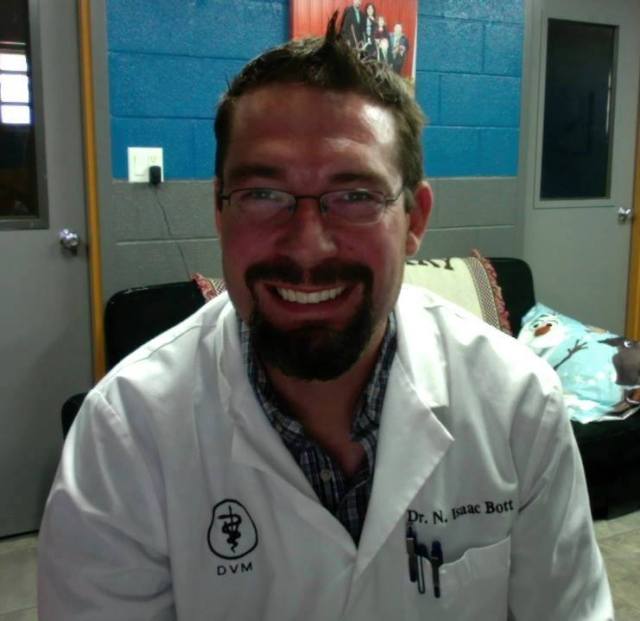
Yo Quiero Bite You


My Take Tuesday: Yo quiero bite you!
Often “the question” comes up during a routine appointment. Curiosity is naturally sparked with my response.
The question is, succinctly put, “Doc, what breed of dog bites you the most?”
The answer is unequivocally the chihuahua. Of the dozens of bites that I have received, a vast majority came from chihuahuas.
Chihuahuas are comical, entertaining, and loyal little dogs, absolutely brimming with personality – often a quirky and eccentric personality unmatched by any other breed. Some of my sweetest patients are chihuahuas. They are affectionate and loving.
But every once in a while, a mean one comes along.
While a bite from a Chihuahua isn’t going to inflict the same damage as a bite from a larger dog like a pit bull or boxer, it can still leave a painful wound that’s prone to infection. There’s an old myth that a dog’s mouth is cleaner than a human’s mouth, but this isn’t a true. Whenever a pet bites, there is significant risk of infection.
While Chihuahuas are not naturally more aggressive than any other breed, they seem to be prone to react with aggression out of fear. Veterinarians are often the target of such aggression, simply because dogs are fearful of unfamiliar people and situations.
As a recent graduate, I was learning how to diagnose, treat and cure the routine cases that present daily. I had only been a veterinarian for about a month when I learned my lesson.
It was a routine appointment. Annual vaccinations and a wellness exam were needed. As I entered the room, Chispa, sat on the table glaring at me. As I reached down to auscult the heart and lungs, Chispa absolutely went ballistic. Within 5 seconds, she had peed and soiled all over the table top. Instinctively, I reached for a muzzle. As I attempted to place the muzzle on her, she absolutely lost it.
Just like a loud clap of thunder that follows a flash of lightning; when I am bit by a dog, imprecations are sure to follow.
Chispa sunk her needle like teeth into my right hand and bit me again and again.
Before I could even mutter the phrase, “Oh S#*!”, this little devil had bitten me three times.
Her only goal seemed to be to inflict as much damage as possible to the man in a white coat that was reaching for her.
Blood poured down my hand. I sat stunned. I have fast reflexes; after all, I dodge bites and scratches on a daily basis.
What was different about this experience? Perhaps it was in the name. “Chispa ” is a Spanish word meaning “spark”. Certainly, the fiery personality and name fit this small canine.
The rapidity of the attack taught me a lesson. I am much more careful now when dealing with seemingly innocent small pets. I do my best to reduce the fear and anxiety that accompanies a visit to the veterinarian.
And I am especially careful with pets that have incendiary names such as Diablo, Fuego, Demonio and, believe it or not, Fluffy.
And that is my take!
N. Isaac Bott, DVM

Snowball

IMG_7155 4

My Take Tuesday: Snowball

It was a busy morning at the clinic. Mrs. Robins arrived right on time for her scheduled appointment. She was a long time client at the clinic and was always pleasant during my interactions with her. Her hair was white, and always perfectly styled. She greeted us warmly as she came through the front door. She carried a white fluffy cat inside a pink pet carrier.

Snowball was her name. Such a name is suggestive of a soft white fluff-ball, a sweet angelic and innocent kitten. She was due for her annual vaccinations and a wellness checkup.

However, this kitty’s name is what I would call a major misnomer.  Clearly, this kitty received its name long before its true nature was known.

All too often, I hear the phrase, “Doc she is an angel at home. She is just the sweetest thing.”  Mrs. Robins repeated the phrase verbatim as we entered the exam room.

Snowball was sitting peaceful in her carrier. As I peered through the door of her carrier, I noticed a couple of warning signs.

When a cat is distressed, it will crouch in a unique form with the legs and tail pulled in under the body. They will extend their neck, flattening the ears against the head.

Cat bites and scratches are painful and notoriously prone to infection. As a veterinarian, I have to be very careful and observant. A cat bite on my hand could literally make me useless – everything I do on a daily basis, from surgeries to physical examinations, requires extreme dexterity and use of my hands.

“Snowball doesn’t seem very happy today,” I observed, “We need to be careful taking her out of her carrier.”

“Don’t worry doctor,” Mrs. Robins replied, as she swung open the carrier door, “She will come right out.”

Snowballs exit from the carrier was reminiscent of a rodeo bull exiting the chute during the NFR. She came flying out, hissing and swiping at everything in her path.

She leaped from the table and landed directly on Mrs. Robin’s head. She immediately extended her claws on all four feet simultaneously and plunged them into poor Mrs. Robin’s scalp.

Almost in an instant, snowball fell from atop the terrified woman’s head. Clinging desperately to a white wig. As she hit the floor, she released the hair piece and hissed. Mrs. Robins reached down and grabbed the wig and placed it back on her head.

“Wow!” she exclaimed, “She is sure mad at you!”

Dealing with a spitting and hissing feline in a demonic rage is a dangerous predicament, and can present a formidable challenge to any individual, let alone one smelling of vet.

Snowball then looked at me, hunching her back, while aggressively growling and spitting. She leaped towards me, as I jumped back. Her trajectory was clearly aimed at my upper body, and as I moved, she adjusted her posture mid-air and redirected. Her extended claws sank into my pants. I felt her claws sink into my skin and she climbed upward and onto my lab coat. She came to a stop on top of my right shoulder. Ironically, a moment of tranquility ensued. The hissing stopped and she retracted her sharp claws.

Seeing this an an opportune time, I grabbed the rabies vaccine and removed the syringe cap. I had to be supremely careful that I wouldn’t be knocked or in some other way accidentally discharge the injection into Mrs Robins or myself. At last, I found a piece of leg and carefully thrust the needle through a felted mat of fluffy white hair and into the muscle beneath.

Snowball’s reaction was unremarkable. She did not hiss or spit. She didn’t even growl.

I gently placed her back on the examination table and finished the remainder of the vaccinations and the examination.

She purred as I looked into her eyes and examined her mouth.

She entered the carrier without any hesitation upon completion of the appointment. I stood dumbfounded, what I had just witnessed made little rational sense on any level. Aggression like this that is episodic and transient, is something even animal behavior experts don’t fully understand.

“Wow, Doc, she must have just had a little rage she needed to get out of her system,” Mrs Robins stated, “She really is such a sweet little thing.”

I smiled as I glanced at the content Snowball, as she sat purring and comfortable inside her carrier.

My legs began to sting, as I felt a trickle of blood run down the front of my knee.

As Mrs Robins left, I noticed her white hair remained immaculate, and despite having been tossed around and trampled by a wild feline, not a single piece of hair was out of place.

And that is my take!

N. Isaac Bott, DVM


The Charismatic Chameleon 

FullSizeRender 44

It was a beautiful spring morning on the Palouse. The beautiful rolling hills and contrasting colors make this region of the country so unique. As I left my apartment, I took a moment to bask in bright sun of this gorgeous brisk spring morning, permeated with the scent of recent rain. Songbirds filled the air with music that would thrill the greatest maestros, and warblers and finches flashed their dazzling colors in the bushes outside my apartment.

I was an excited 4th year veterinary student just weeks from graduation. As I drove to the veterinary school, I reflected on the past 4 years. A flood of memories entered my mind as I smiled and felt a sense of accomplishment, these were some of the most difficult years of my life and the end was in sight.

This particular weekend, it was my turn to take the emergency call at the veterinary teaching hospital. I had spoken extensively with classmates about what exactly to expect to present throughout the weekend. Each indicated that many dogs and cats would likely present with a variety of ailments. I fully expected to see a variety of routine cases dealing with the perfidious parasites, bothersome bacteria and mysterious maladies that present daily in the life of a veterinarian.

I was not prepared for what was to follow.

Throughout the weekend, a variety of cases presented, none of which were dogs or cats, and none of which I would ever consider routine.

The first case was a hairless rat. This was followed by a parakeet with a broken and bleeding blood feather. A raptor presented with a wing injury and a duck with a fish hook stuck in its bill.

Still another anomaly followed as a boa constrictor presented with a prolapsed cloaca.

At this point in my education, I had virtually no experience with exotic animals. I am terrified of snakes and absolutely did not know the first thing to do with a prolapsed cloaca. I barely knew what a cloaca was!

Fortunately, an exotic animal clinician was a phone call away and she was able to talk me through each case. I learned a lot as I treated each animal and did my best to make each owner and pet comfortable.

Just when I thought I had everything under control, a young woman walked through the front doors of the hospital caring a white box. Small circular 1” holes were cut in each side of the cardboard box.

“I have a chameleon that is sick,” she nervously said with obvious fear and concern in her voice.

I placed my face against the box and peered through one of the small holes. A huge eyeball was all that I could see. Its unflinching stare was somewhat startling.

“He is huge!”, I exclaimed.

“No he isn’t,” she replied, with her voice raising, “He is actually smaller than most.”

“I am sorry,” I replied, “I haven’t ever seen a real chameleon.”

“Oh great, go figure, not only do I have to deal with a student, but I lucked out and got one that clearly doesn’t know what he is doing!” She was clearly upset at this point, as she sighed and shook her head.

Assertiveness has its place, but it is not always a virtue when you are on the receiving end.

“I am sorry,” I began, “Although I am inexperienced, I will call someone that is very competent with chameleons and we will take care of him. I promise I will do my best.”

She seemed to calm down somewhat after this and handed me the white box. I carried the box into the treatment area and immediately opened the lid and peered in. The chameleon stood perched on a branch, clinging with each of its 4 feet. It’s deep green color mimicked the leaves that were placed throughout the box.

I gently removed the little guy and placed him in the glass aquarium type pen used to hospitalize reptilian patients.

Almost immediately, his deep greed color began to fade as he miraculously turned brown, almost identical to the ambience of his new surroundings.

I reached for the phone and dialed the number of the on call exotic expert. I immediately rattled off the details of the case (age, sex, presenting complaint, clinical signs and examination findings). I then explained that I had ZERO experience with this species and that I needed detailed instructions.

Her first question took me off guard.

“Is he pale?” she inquired.

Immediately, I thought to myself, “You’ve got to be kidding me!”

“I am not sure,” I replied. “He was green in his box and then he turned brown when I moved him into the hospital. Now he is looking like a mix of brown and gray.”

“How in the hell can you tell if a chameleon is pale?,” I inquired.

Fortunately, this clinician sensed the frustration in my voice and laughed. She was very patient as she began to explain exactly what I needed to look for.

She talked me through how to administer fluids to a reptile. This is accomplished differently that with other species. Instead of finding a vein and administering the fluids intravenously, they are administered in the common body cavity called the coelomic cavity. I spent the entire night treating this unique patient and monitoring its progress.

Somehow, the chameleon survived. I learned a great deal throughout the remainder of the weekend. Not a single dog or cat ever presented, but I gained confidence and experience with each of the exotic animals that continued to present.

But still to this day, I still have no idea how to tell if a chameleon is pale.

And that is my take!

N. Isaac Bott, DVM