Human Blood

img_3847.jpg


Times of severe stress, injury or fear can trigger the reflex: your blood pressure drops, your heart rate slows. This reaction is primeval stuff, buried deep within our brains. Medically, it goes by the name “vasovagal syncope.” Common folk like me simply call it fainting.

Being a veterinarian is not for the faint of heart. On any given day, I will treat a myriad of infirmities. The sight of blood, pus, maggots and trauma are part of a normal day at the clinic. I, fortunately, am not affected by this. I am able to reason and think clearly in situations like this and am able to immediately go about trying to fix the problem. I’ve seen some nasty stuff, but not once have I ever felt light headed with animal blood.

Human blood is a different story. Ironically, I cannot deal with human blood. The sight of it makes me queasy. I have fainted on a couple of occasions at the sight of my own blood. I find it strange that I am fine with animal blood but so unstable when it comes to people.

As luck would have it, on a number of occasions, clients have experienced medical emergencies as I worked on their pets. During one of these situations, I overheard a radio exchange between emergency responders and dispatch.

“He is with a veterinarian,” the dispatcher said.

“Oh good,” the emergency responder replied.

Upon hearing this, I exclaimed, “No, it’s not good! I don’t do human blood! You had better hurry up and get here!”

Keeping it together in such situations is difficult for me. Luckily, no one has died in these situations. However, I did experience a very close call a few years back.

Sheldon was a nice man. His gentle smile and blue eyes were reflective of his kind nature. He raised beautiful Charolais cattle. The pure white bulls he hauled into the clinic on this particular day were no exception. The massive 2000+ pound animals were there to be semen tested before the breeding season.

Sheldon walked with his cane along the side of the alley that led to the squeeze chute. He gently nudged the first bull as I closed the hydronic chute. He opened the side gate and stood directly behind the bull.

I asked about his farm and about the drive down to the clinic. He seemed happy and excited about the coming spring.

As I proceeded to work on the bull, I turned my back to reach for some supplies.

I then asked, “Sheldon, can you help me hold this?”

There was no reply.

“Sheldon,” I continued.

Still no response. I peered into the chute where he was standing just moments before and he was nowhere to be found. As I stood up and entered the side gate, I found Sheldon lying in the alley. His head was lying just inches from the back feet of a bull. Any sudden movements and the bull could easily crush his skull. My blood pressure skyrocketed!

Instinctively, I picked him up and carried him out the side gate. He was non-responsive. I grabbed my stethoscope and listened to his heart. The rate and rhythm were irregular. He was clearly having a heart attack. I shouted for an assistant in the clinic. I asked her to dial 911 and get an ambulance there as soon as possible. I elevated his head and began the first aid I had been taught many times.

I sat with Sheldon until the ambulance arrived. His vitals continued to be irregular, but he continued to breath. As the EMTs arrived, they loaded him in the ambulance. As they pulled out of the clinic, despite having the light on and the sirens blaring, a car nearly side swiped the ambulance.

I stood there in awe. My body trembled as the stress finally caught up. I paced around the parking lot for nearly a half an hour until my nerves were under control and I was able to return to work.

Somehow Sheldon survived the ordeal. I visited him that night in the Payson hospital. He was his normal self as we joked about how bad he had scared me.

He thanked me for helping him.

“It is a good thing you knew what to do,” he continued, “I am lucky you were there.”

If he only knew how uncomfortable I am in situations like this. It took several days for me to be able to return to normal life. The thought of seeing him in the alley with such large animals on either side of him still haunts me to this day.

Fortunately, no other heart attacks have occurred on my watch since that day.

I can quickly fix even the most gruesome lacerations on an animal without a second thought, but when it comes to people, Doc Bott is not the person you want at your side.

And that is my take!

N. Isaac Bott, DVM

My First Surgery


My Take Tuesday: My First Surgery
I was raised on a small farm in Castle Dale, UT. We raised Guernsey milk cows, Suffolk sheep and many varieties of chickens and pheasants. My daily chores included feeding the chickens and gathering the eggs.
One day after school, I walked into the barn that housed the chickens. The barn was divided into three equal rooms. The first room is where we would store stacked straw bales. The second and third rooms were where the chickens and pheasants were kept.
On this particular day, I found our calico cat nestled with her newborn kittens. She was lying right next to the straw stack, on the ground near the chicken coop door. There were seven in all. As an 8 year old, and still to this day, new babies of any kind are an exciting experience. I dropped down and began counting the tiny kittens. I was so thrilled! As I handled the small kittens, I noticed that something wasn’t quite right. The umbilical cord from one of kittens was wrapped tightly around a leg of each of the kittens. If I picked one kitten up, the entire litter would follow as if they were chained together. I tried to remove the cord with my fingers, but it was far too tight. Even as a little kid, I knew that something had to be done.
In Castle Dale at this time, we did not have a veterinarian. The only veterinary services available were on Thursdays when a veterinarian would travel from Richfield. It was early afternoon, so my dad was not going to be home from work for a couple of hours. I had to figure something out for myself.
I reached in my pocket and pulled out my Swiss Army knife. It was one that had a myriad of blades, nearly all of them never used, and a tooth pick and small set of tweezers in the handle. I opened the smallest cutting blade and bent down. I very carefully cut the umbilical cords from each of the kittens. I used some iodine to keep the procedure as clean as possible.
The procedure was a success. All of the kittens survived.
Fortunately, I no longer use my Swiss Army knife for surgeries. Although my surgical skills have been refined and perfected, I still have the curiosity and passion that that 8 year old displayed. I love being a veterinarian. The satisfaction I felt that day long ago is repeated every time I am able to help save a life.
I look back on my first surgical experience with fondness. It was one of the important milestones in my path to becoming who I am today.
And that is my take!

N. Isaac Bott, DVM
Pictured is Dr. Bott with kittens in 1988

Halloween

IMG_2759

My Take Tuesday: Halloween
I love this time of year! The cool fall breeze, the crisp chill to the air, the brilliant gilded glory of the golden aspen and cottonwood leaves, the smell of the first fire in a wood burning stove, and the taste of hot apple cider. It takes me back to days of long ago. I think about my childhood, pumpkin pie, Halloween carnivals at Castle Dale Elementary, and the magic in a young boy’s hopes and dreams.
I remember one year especially well. I set out with my friend Jake Bulkley on an epic trick-or-treat adventure in the small town of Ferron, Utah. I remember walking along 500 South carrying brightly colored plastic buckets filled with what seemed like endless supplies of Sour Patch Kids, Candy Corn and Reese’s Cups. We felt like we had a successful candy haul until Jake’s younger sisters arrived home carrying pillowcases filled to the brim with candy. They followed the same route, but somehow ended up with ten-fold the amount of candy. Jake and I still laugh to this day about our mischievous fall adventures we had while attending San Rafael Junior High.
Halloween for me is still filled with unpredictable adventures. As a veterinarian, I encounter more black cats than the average person. October 31st is always a busy day at Mountain West Animal Hospital. Although this is a fun holiday for us, Halloween can be precarious for our four-legged family members. Here are a few pointers to keep your pets safe today:
1. Don’t feed your pets Halloween candy, especially if it contains chocolate or xylitol (a common sugar substitute found in sugar-free candies and gum);
2. Make sure your pet is properly identified (microchip, collar and ID tag) in case she/he escapes through the open door while you’re distracted with trick-or-treaters;
3. Keep lit candles and jack-o-lanterns out of reach of pets;
4. If you plan to put a costume on your pet, make sure it fits properly and is comfortable, doesn’t have any pieces that can easily be chewed off, and doesn’t interfere with your pet’s sight, hearing, breathing, opening its mouth, or moving. Take time to get your pet accustomed to the costume before Halloween, and never leave your pet unsupervised while he/she is wearing a costume;
5. Keep glow sticks and glow jewelry away from your pets. Although the liquid in these products isn’t likely toxic, it tastes really bad and makes pets salivate excessively and act strangely;
6. If your pet is wary of strangers or has a tendency to bite, put him/her in another room during trick-or-treating hours or provide him/her with a safe hiding place;
7. Keep your pet inside. This is the easiest way to keep them safe.
Have a safe and fun Halloween!
And that is my take!
N. Isaac Bott, DVM
Yo Quiero Bite You!

img_8819-1


Often “the question” comes up during a routine appointment. Curiosity is naturally sparked with my response.

The question is, succinctly put, “Doc, what breed of dog bites you the most?”

The answer is unequivocally the chihuahua. Of the dozens of bites that I have received, a vast majority came from chihuahuas.

Chihuahuas are comical, entertaining, and loyal little dogs, absolutely brimming with personality – often a quirky and eccentric personality unmatched by any other breed.
Some of my sweetest patients are chihuahuas. They are affectionate and loving.

But every once in a while, a mean one comes along.

While a bite from a Chihuahua isn’t going to inflict the same damage as a bite from a larger dog like a pit bull or boxer, it can still leave a painful wound that’s prone to infection. There’s an old myth that a dog’s mouth is cleaner than a human’s mouth, but this isn’t a true. Whenever a pet bites, there is significant risk of infection.

While Chihuahuas are not naturally more aggressive than any other breed, they seem to be prone to react with aggression out of fear. Veterinarians are often the target of such aggression, simply because dogs are fearful of unfamiliar people and situations.

As a recent graduate, I was learning how to diagnose, treat and cure the routine cases that present daily. I had only been a veterinarian for about a month when I learned my lesson.

It was a routine appointment. Annual vaccinations and a wellness exam were needed. As I entered the room, Chispa, sat on the table glaring at me. As I reached down to auscult the heart and lungs, Chispa absolutely went ballistic. Within 5 seconds, she had peed and soiled all over the table top. Instinctively, I reached for a muzzle. As I attempted to place the muzzle on her, she absolutely lost it.

Just like a loud clap of thunder that follows a flash of lightning; when I am bit by a dog, imprecations are sure to follow.

Chispa sunk her needle like teeth into my right hand and bit me again and again.

Before I could even mutter the phrase, “Oh S#*!”, this little devil had bitten me three times.

Her only goal seemed to be to inflict as much damage as possible to the man in a white coat that was reaching for her.

Blood poured down my hand. I sat stunned. I have fast reflexes; after all, I dodge bites and scratches on a daily basis.

What was different about this experience? Perhaps it was in the name. “Chispa ” is a Spanish word meaning “spark”. Certainly, the fiery personality and name fit this small canine.

The rapidity of the attack taught me a lesson. I am much more careful now when dealing with seemingly innocent small pets. I do my best to reduce the fear and anxiety that accompanies a visit to the veterinarian.

And I am especially careful with pets that have incendiary names such as Diablo, Fuego, Demonio and, believe it or not, Fluffy.

And that is my take!

N. Isaac Bott, DVM
Uniqueness

thumbnail
 
 
This morning I returned home from speaking with veterinary students at Washington State University. I very much enjoy the opportunity to do this. I am able to learn so much from them and also give them some advice on how to become successful veterinarians.
 
It has been 8 1/2 years since my graduation from veterinary school. I can’t believe how fast time has flown by! It seems like just last week when I was saying farewell to some of my dearest friends and colleagues. Members of my class have traveled all over the world and have already left an impressive mark on the field of veterinary medicine. Many have completed residences and internships. Some are clinical pathologists, oncologists, zoo veterinarians, cow calf specialists, internal medicine and equine specialists, mixed animal practice owners and USDA food supply veterinarians. I am fortunate to have spent my veterinary school years surrounded by such exceptional people.
 
Looking back at my journey, I never would have imagined what the first eight years would entail. I have been knocked down several times, but have tried to get back up and move forward. Each struggle has been followed by myriads of opportunities. Timing and chance have tremendous bearing on each of our lives and careers. I have had successes and experiences that were not in my wildest dreams when I graduated. I cannot think of a profession that is more rewarding. I have had the opportunity to travel to many far away places to share some of the successes I have had with today’s veterinary students.
 
I always encourage students to be different and to follow their hearts. My advice to them is to always seek self-discovery and self-improvement. There is very little satisfaction when comparing oneself to others. So much time is wasted when trying to be better than someone else. The true test of success is measured when looking at your own improvement and progress. Are you better than you used to be? If you focus on being your best-self your potential is unlimited. When using others as a comparison, there will always be someone bigger, better or stronger.
 
Each of us are unique. Look at your thumb. Your thumbprint is a testament to your uniqueness. Your individual thumbprint is different than any of the billions of individuals that are alive today. No one ever has, or ever will have the same thumbprint. Your identity is as unique as your thumbprint. Your perspective and personality are not shared by any other person. These traits are arrows in our quiver of individual contribution. Why is it so difficult to acknowledge this? Self awareness is the key to harnessing and honing this uniqueness in a effective fashion. As we become self aware, we are able to visualize, assess, nock, draw back and place a precise arrow in the bullseye of our desired target.
 
Thank you to my many mentors who have guided me and made me what I am today.
 
I look forward with optimism at the journey ahead. I have followed my heart and intuition. It has been an exhilarating ride. I am excited for what the future holds. I have found my passion. I love what I do.
 
And that is my take!
 
N. Isaac Bott, DVM
Growing Up


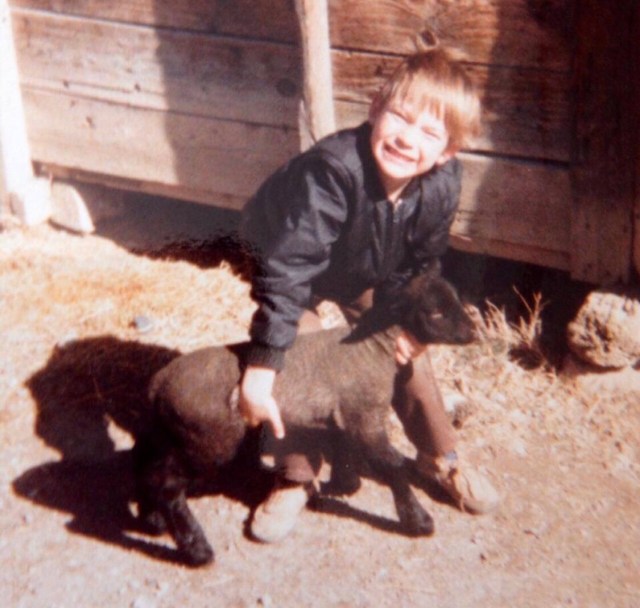
I had the privilege of being raised on a small farm in Castle Dale, Utah. Living in a small town had its perks for sure, for one, I rarely had to tell my parents when I got in trouble at school; as fast as word spreads in a small town, someone had almost always beat me to it and mom and dad knew before I could get even get home.
I loved growing up in a small town. I treasure the many wonderful people who helped shape my education and point me on the path I am on today.
My parents would set aside a few days each year where we could get away from the daily farm chores and spend time together as a family. I always looked forward to the time when we were able to leave Emery County and travel to the big city.
Vacations while growing up were typically short, lasting only a couple of days. I have many fond memories of visits to all of the national parks in the state and overnight trips to Salt Lake City. The overnight trips to Salt Lake were often planned around business meetings for my dad. We would typically come up early Friday morning and return home late Saturday.
We would usually stay at the Red Lion hotel in downtown Salt Lake. This hotel is still there, but is now called the Double Tree. I still remember the hotel layout. The swimming pool was located on the second floor. We must have stayed there a dozen times growing up.
Breakfast was always west of the temple at a Denny’s restaurant. It was a short 5 block walk from the hotel. I remember enjoying these meals immensely, despite the food being typical greasy breakfast items.
Following breakfast on Saturday morning, we would make a trip to the zoo. As children, we loved visiting the Hogle Zoo. I particularly looked forward to the Mold-A-Rama machines. These peculiar machines would make wax animal figurines on demand. For a five year old kid, they were magic. These figurines were of many different animals and colors. I remember getting a gorilla, a giraffe, a lion, and many others. I still remember the smell of the freshly molded wax. The animals were quite hot when the came out of the machine, necessitating a fair amount of cooling of by rapidly blowing on them from all sides. These were treasures to us. They would eventually crumble and fall apart, but they were placed on shelves in our rooms until that happened.
Much of my love for animals was sparked by these trips to the zoo. In particular it instigated the comparative curiosity that has made my career so unique. I remember comparing different breeds of monkeys and apes, using the appearance of their hands, in particular their thumbs. I also wondered what was inside the camel’s humps, a question that took over 20 years to find the true answer, which came firsthand from the world’s foremost expert in this species. These trips led to my collecting zoo animal cards and reading about animal facts as a hobby.
It is interesting, looking back now, how these experiences all pointed to what I now do as a profession. I am glad I had the opportunity to go on these annual trips and for the wonderful memories that still remain.
And that is my take.
N. Isaac Bott, DVM

The Courage to Change Course

FullSizeRender 8

In late September of 2011, a major typhoon hit the Philippines. Torrential rainfall flooded the streets and sustained winds exceeding 120 mph decimated everything in the path of the storm. Typhoon Pedring taught me an important lesson regarding the perils that Mother Nature can present.

I sat watching the sheets of rain falling down from the window of a small laboratory. I had spent the morning freezing water buffalo semen, an extensive process that takes several hours to complete. I made the decision to hurry and finish the job before heading back to the hotel. The storm was set to hit just about 4:00, just about the time the project would be complete. I thought it was worth the risk to just hurry and get things finished up. Little did I know that the massive storm was fast approaching and already bearing down on the small village.

As I peered out into the pouring rain, water quickly began to run down the streets. It was clear that the storm had arrived and that I had better get back to the hotel as soon as possible. I worried that perhaps I had made a foolish choice by remaining at the lab.

I flagged down a motorcycle taxi and gave him the address of the hotel. These taxis are popular in the Philippines. This unique form of transportation has a motorcycle in the front and two wheels in the back with a compartment containing a small seat that will hold two average sized Filipinos. My 6’2″ frame does not fit well in these taxis. I have to crouch down and lift my knees up to just fitting the seat. The ground clearance of the cab portion is only around 10 inches. The ride proved to be most uncomfortable.

As we headed down the street, the water continued to rise. The engine began to squeal as the driver desperately tried to maneuver through the fast moving water. The water poured through the open door and across the floor of the compartment I was riding in. There was no way I could readjust my position, as my knees were nearly touching my chest. All of the sudden, the raging water picked up the motorcycle taxi and carried it swiftly down the street. The driver began to panic, the tires were no longer touching the ground and we were floating in the wrong direction and had absolutely no control of our direction of travel. I was stuck and was absolutely helpless.

The taxi slammed against a cement railing along the side of a very large bridge. We were just a few feet away from plunging over the edge to certain death. Thankfully, the driver was able to get traction and maneuver the taxi out of the precarious situation and we safely continued on to the hotel. I arrived, soaking wet, in shock and very much grateful to be alive. The rain continued to pour down for the remainder of the day. Over 24 inches fell within a 24 hour period.

As soon as the storm passed, I boarded a flight from Manila en route to Utah via Nagoya, Japan. As we cruised at 30,000 feet just north of the Philippine Islands, severe turbulence began to toss our plane around. An unassuming passenger that was unbuckled was thrust so hard from his seat that his head hit the baggage compartment. It was clear that something was not right.

In the chaos, the pilot announced the following, “We are approaching Typhoon Pedring and if we continue on this course, this storm will rip this plane apart.” People could be heard screaming following this announcement. I couldn’t believe that the pilot would even suggest that the plane was in danger of coming apart. Just when things couldn’t possibly get worst, a lightning strike hit the plane. The damage was minimal, thankfully, and the pilot was able to change course and get us safely to Nagoya and then on to the USA.

Looking back now, I am grateful that the experienced pilot had the wisdom to know his own limitations along with the capacity of the airplane. His judgement, undoubtedly saved the lives of all on board.

In today’s society, there seems to be a misconception that quitting is failing.

We grow up categorizing each situation we encounter as being either a success or a failure.

Believe me, I’ve spent years of my life unwilling to quit things. Those who are stubborn will often go far — too far — to ensure it’s not a failure. But that is not always a smart choice. I submit that truly successful professionals often find that there is a time to reassess readjust, and if needed correct the course they are on.

Truly incredible individuals can vouch for this with stories of perseverance, resilience and success. I have also found that if you believe failure is the easy way out, quitting can often be far more difficult than continuing.

I recently read a book titled No Shortcuts to the Top. The book was written by Ed Viesturs. Ed has climbed Mount Everest six times and is the only American to have climbed all 14 of the world’s highest mountain peaks without the use of supplemental oxygen. Each of these mountains tower at least 26,000 feet above sea level.

On one climb Ed actually had to climb one mountain twice. The first time, he was forced to turn back back just 300 feet from the top as he did not feel that he could honestly claim the summit. In the pages of his book, he vividly describes fatal errors in judgment made by his fellow climbers as well as a few of his own close calls and gallant rescues.

Nothing in life comes easily. Success requires hard work. This path to success if filled with difficult choices, triumphs and even devastating failure. However, these failures are opportunistic pathways that, if they are navigated carefully, will lead to future success.

As Hesiod, the Greek poet so eloquently put, ‘Badness you can get easily, in quantity: the road is smooth, and it lies close by. But in front of excellence the immortal gods have put sweat, and long and steep is the way to it, and rough at first. But when you come to the top, then it is easy, even though it is hard.”

I learned a lesson the hard way on a rainy day in the Philippines. Since then, if my instincts are telling me something, I know it is best to trust them and listen.

And that is my take.

N. Isaac Bott, DVM

Pictured is a view of a street during the severe flooding during Typhoon Pedring in the Philippines

 The Deluxe Fish Hotel


A couple of years ago, I spent a day deep sea fishing with some of my best friends in the Gulf of Mexico. We traveled nearly 80 miles from Venice, Louisiana, out into the deep ocean. We were fishing for Yellowfin Tuna.
 
I found it interesting that our fishing guide knew right where to go. Instead of fishing in the deep open ocean, we spent the day fishing near a number of large man made oil rigs. Fish, it turns out, are turning the underwater portions of the rigs into the equivalent of apartment towers. They congregate in the masses near these huge man made structures. Smaller fish seek these rigs out for protection, while larger predator species stay close by to consume these large quantities of smaller fish that hide near the base of the structure.
 
The main reason, apparently, is the rig superstructures stretch all the way from the surface to the sea floor and thus provide a huge area that becomes the undersea equivalent of a tall building. The platform structures support a diverse community of invertebrates that, along with floating resources such as plankton, provide the base of the food web supporting fish associated with the platform.
 
For decades, scientists have studied why life is so abundant near these abandoned oil rigs. One researcher surveyed 16 rigs annually over a 15-year period, and found that they hosted 10 times the amount of fish as other natural marine environments around the world, such as reefs and estuaries. The California rigs even had seven times the aquatic population of the rich ecosystems around reefs in the south Pacific.
 
Even the natural habitat with the greatest fish density — a coral reef in French Polynesia — was nowhere near as populated as the oil rigs that were studied.
This study shows that man-made structures actually can enhance natural habitats.
 
The 2010 Deepwater Horizon oil spill disaster in the Gulf of Mexico made us all a lot more wary of the environmental impacts of offshore oil exploration. This study gives us another perspective on how man made structures can benefit certain ecosystems and enhance natural habitats.
 
This insight is adding momentum to efforts to convert some of these rigs into artificial reefs once they are decommissioned. Blue Latitudes, an organization founded in 2014 by two young scientists, is trying to increase awareness of the value of rigs as permanent homes for sea life.
 
I am not advocating an increase in deep sea drilling, but it would certainly be a good idea to figure out what specific features of these structures help fish to flourish, and then use this information to help enhance these endangered ecosystems.
 
And that is my take.
N. Isaac Bott, DVM

The Parsimonious Pyometra

FullSizeRender 62

Apart from preventing unwanted pregnancy, routine spaying of female dogs has been historically recommended for two reasons: 1) Reduce the incidence of mammary cancer, and 2) Prevent the female from developing pyometra later in life. This is caused by a bacterial infection of the uterus resulting in a potentially fatal infection.

The word pyometra can be divided into two root words: Pyo meaning pus and Metra referring to the uterus. A pyometra starts after a dog goes through a heat cycle, usually within about 2 to 5 weeks. A pyometra develops due to repeated prolonged exposure of the estrogen-primed uterus to progesterone (estrogen increases the number of progesterone receptors in the endometrium). Female dogs are prone to uterine disease due to the unique nature of cycling in this species. As infection develops in the uterus, the uterus fills with pus. The most common bacteria isolated in these cases is E coli. The uterus with a pyometra can be huge! I have surgically removed an infected uterus weighing over 11 pounds from a 56 pound Golden Retriever.

The clinical signs associated with this disease are anorexia, depression, drinking and urinating more frequently, abdominal distention, and sometimes a vaginal discharge is noted. Vomiting and diarrhea may also be present, especially late in the course of the disease. If any of these clinical signs are noted in your pet – immediate veterinary consultation is imperative.

Females that develop pyometra have an underlying condition called cystic endometrial hyperplasia. Most intact females older than 5-6 years have some degree of this. The vast majority of cases are treated by removing the infected uterus and ovaries. This surgery is very difficult and much more expensive than a traditional spay. There are many more post-operative complications that may arise that are not associated with a routine spay.

These include:
Peritonitis – infection of the abdomen
Disseminated intravascular coagulation – a clotting disorder that is often fatal
Sepsis – occurs when chemicals released in the bloodstream to fight an infection trigger inflammation throughout the body. This can cause a cascade of changes that damage multiple organ systems, leading them to fail, sometimes even resulting in death.

It is simple to avoid this. Females not intended for breeding should be spayed at a young age. Females used for breeding should be closely monitored by both the owner and the veterinarian.

If you are hesitant to spay your pet because of the cost of the routine surgery, you must consider the cost of an emergency pyometra surgery also. Such a surgery is at least 3-5 times higher than what a routine spay would be.

At Mountain West Animal Hospital, we discuss both the benefits and detriments of routine spays and neuters and strive to help you make the best decision for the health and well-being of your individual pet. You can count on us as a trusted partner in the care of your four legged family member.

N. Isaac Bott, DVM

The Attribute of Adaptability

27034_346381043639_3004788_n

 
The Rocky Mountain elk (Cervus canadensis) became the official State Animal of Utah in 1971. Called ‘wapiti’ by the Shawnee Indians, elk are members of the deer family and associate closely with the deer and moose of Utah. 

Elk, no matter what time of year, are a remarkable sight. So large in stature, these animals have become an admired icon of the American West. Elk are amazingly adaptable and can live almost anywhere—forests, deserts, mountains, and plains. They eat a wide variety of plants. Their typical diet consists of grasses (year-round), woody plants (winter) and forbs (summer). This adaptability is unique and ensures the species survival.
 
As a child growing up near the Manti LaSal National Forest, I frequently encountered these animals in the wild. I remember camping in the crisp early fall. The tranquility of those nights is unparalleled. The silence was only occasionally broken by the high pitched shrill of a bull elk – a guttural cry unique to this species. It is a sound that will hasten the heart rate of even the most seasoned of outdoorsmen. The sound echoes through the pines. Such an experience is breathtaking.
 
As a veterinarian, I am privileged to be able to work with a number of herds of elk. I very much enjoy this.
 
This animal is a symbol of power and strength. It is also a symbol of ultimate freedom.
 
We can learn a lot from elk. If we were as adaptable as this species, we would thrive in any situation where we are placed. We would be unafraid, undaunted, valiant and courageous.
When I am confronted with changes in life, I always think of the majestic elk.
 
And that is my take.
 
N. Isaac Bott, DVM