Father’s Day

Father’s Day

The giant snowflakes gently fell in perfect rhythm. Even though it was 6:00 AM, I could see clearly through the winter whiteness. This particular winter during the 1980’s in Castle Dale was incredibly harsh. Nearly 18” of snow had fallen over the past 24 hours. The field across the street from my parents house was covered in a thick blanket of white. I bundled up as I prepared to leave the house to do the morning farm chores.

My dad led the way as we headed across the street to the corals. The deep snow proved to be a challenge for my short legs. I jumped and lengthened my stride as I placed my feet inside my father’s footprints. As long as I followed his steps, the path seemed manageable

My dad is a giant of a man. I remember attending a Cub Scout pack meeting as a young boy. At this meeting, a plank was placed on the floor and a 16 penny nail was started in the center. A competition was held where all of the father’s in the room had a chance to hit the nail as hard as they could. Some were able to drive the nail in completely with 2 or 3 hits. When my dad’s turn came around, he buried the nail with a single swing of the hammer. I remember thinking how amazing that was! He could loosen old rusty bolts with a quick flick of his wrist, he could throw a bale of hay on top of a haystack and no one could use a shovel like him. In my eyes as a young boy, he seemed to be able to do anything. My dad has been my hero as far back as I can remember.

I remember a time where he had learned that a man living in town did not have a bed in his house to sleep on. My dad went and purchased a brand new bed with his own money and delivered it to this man that he didn’t even know. Years later, this man told me that this act was the kindest thing that anyone had ever done for him in his life. My dad taught me how to care for others less fortunate time and time again through his example.

Each summer, my dad would set aside time to take each of his five children camping with him individually. We would get to chose the destination of this one on one time. I remember the cold air and the damp grass. I remember the smell of the air. I remember eating Pringles and sitting by a campfire. I remember eating small boxes of Cocoa Krispies and catching fish.

Oh how I looked forward to my annual camping trip with dad! My favorite spot was in Upper Joe’s Valley. This overnight camping trip always provided an escape from the every day chores and busy summer days.

Despite working 7-5 every day, somehow dad would find the time in his incredibly busy schedule to take each one of us individually every single year. This was dad‘s way of showing us how much he cared. Although he loved each of us equally, during these outings we all felt very special. I remember every single trip and I cherish these memories.

I remember one particular time when I was working at the cemetery. The volume of work there had overwhelmed me. There was so much to do and I couldn’t get it done. Dad, after working all day at a thankless and stressful job, came to the cemetery and cut the individual daisy flowers off of the dozen or so bushes in the flower bed. This tedious process took several hours. I was thankful that night, but now looking back, tears come to my eyes. I know how tired and worn out I am after working all day. How did he have the energy to do all that he did?

In today’s world fathers come and go. Having a stable father is a rarity. My dad was always there to work with us. I remember many times going out to the farm with dad and being so stressed I couldn’t function, and after a few hours of digging ditch anything that was bothering me would disappear. Growing up, I was taught how to do good work and to be proud of my accomplishments. My dad did this, not by leaving a list of chores to be accomplished, but by working right there alongside us,

A statue on my dad’s dresser depicts a father with a small child sitting on his knee. The inscription reads, “Any man can be a father, but it takes someone special to be a daddy.” My daddy’s example was not lost on me. His unconditional love has inspired each of his 5 children to be the best that we can be

This Father’s Day, I still find myself trying to follow my father’s footprints in the deep snow. He is my constancy and my mentor, my rock and my friend. He is my hero!

Happy Father’s Day dad!

N. Isaac Bott, DVM

Sheep On the Loose!

IMG_0267


My Take Tuesday: Sheep on the Loose! 

The morning was colder than expected. I zipped up my jacket as I climbed out of my truck ready to begin a day of veterinary appointments. The clouds scuttled across the sky, the sun breaking out in bursts as I made my way through the make-shift corrals that are a common sight in Utah County. A single tree, standing along the fence caught my eye as I crossed the fence. I marveled at the beauty of the crisp copper leaves falling off the lone tree that sway gently in the Autumn wind. 

A single golden leaf pirouetted down an invisible spiral of breeze, spinning through the air as it let itself be carried down. It shook slightly, as if it could have been whisked away any second by the grip of an icy wind, but it kept floating down the twirling course. It blew past my face and landed lightly on the ground, the shiny, vibrant color standing out against the ambers and bronzes beneath it.

Sheep are short-day breeders. The breeding season coincides with the decreasing day length each fall brings. Today’s appointment is a routine breeding soundness evaluation of a group of Rambouillet rams. 

The Rambouillet breed of sheep originated more than two centuries ago, in 1786, when Louis XVI of France purchased over 300 animals from Spain’s famed Merino flocks, which were producers of the world’s finest wool.  

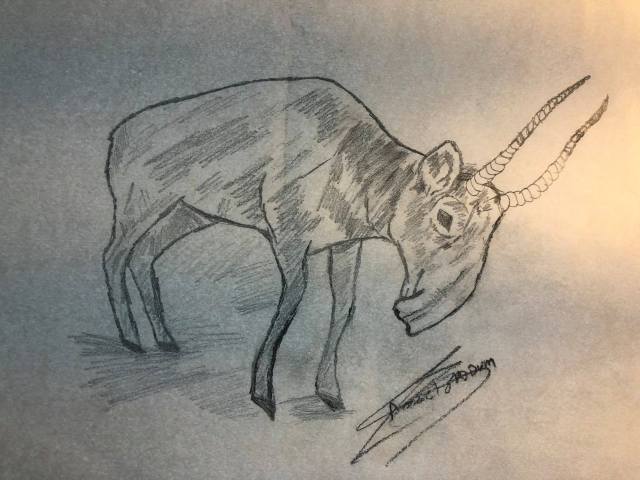
The males of this breed have characteristic large curved horns that are well developed with wide spirals. They weigh around 300 pounds at maturity. 

A large horse trailer was backed up against the gate of the pen, with about two feet of space between the edge of the the fence and the trailer. I could hear the deep bleating and baaing of a dozen rams echoing from inside the aluminum trailer. 

I stood in the small gap between the fence and the trailer in an effort to stop any rams from escaping the enclosure. As the gate was opened, the the first ram paused and then ran quickly from the trailer, giving a bounding leap as he landed on the ground. The remainder of the rams followed in perfect succession, pausing and bounding in unison. 

The last ram exited the trailer and hesitated as it approached the rest of the herd. He turned his massive frame slightly as he looked in my direction. Suddenly, without warning, he lowered his stout head and neck and charged. 

I braced myself for the impact. Anticipating a blow to the legs, I lowered my body into a football stance. This massive ram, in a fit of ovine rage, leaped over my head and landed harmlessly on the gravel patch surrounding the pen. 

He then let out a low “Baaaaaaaa”, as if to beckon the remaining rams to follow his lead. This flock mentality is a sure thing, meaning that if one sheep finds an escape route then the entire flock will follow. The remainder of the herd stampeded towards me in a frenzy. The lead ram lowering his head in apparent contestation head bunting stance. I knew that an attempt to stop a charging ram of this bold carriage would be futile. I stepped aside and yielded as the rams charged through the small alley on their way to apparent freedom. 

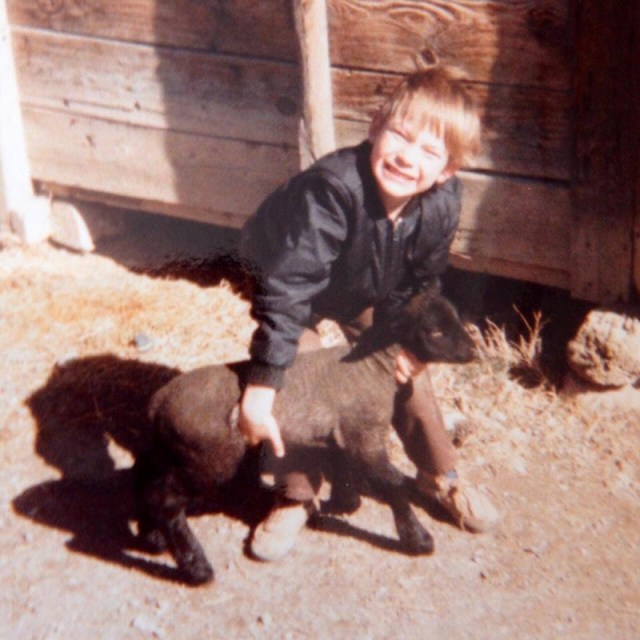
I grew up around sheep. My family had a small flock that provided me with valuable insight into sheep behavior and husbandry. One of the valuable lessons I learned is to always have a perimeter fence in case as a backup when working with sheep. 

Sheep are a prey species, and their only defense is to flee. The flock of rams fled in unison down the gravel path. They all stoped abruptly as they arrived at the closed perimeter gate. Accepting their defeat, they turned and charged back through the alley and into their original pen. 

The remainder of the morning was uneventful. Each examination revealed a healthy ram and the group was cleared for the upcoming breeding season. 

As I walked back to my truck, I step through the golden brown carpet of leaves, as they crunch under foot and quiver in gusts of the October wind. 

The deep sound of the rams bleating in concert echoed from the horse trailer. The cool breeze scattered the leaves in all directions and sent a chill down my spine. I took a deep breath and was warmed instantly by the smell of a nearby wood burning stove. 

I sighed, relishing the feeling of fall. It was something I’d have to wait a whole year to experience again. 

And that is my take!

N. Isaac Bott, DVM

Why Did You Become a Veterinarian?

img_4976

My Take Tuesday: Why did you become a veterinarian?

I hear this question on a regular basis. Each veterinarian has a story about why he or she decided to pursue a career in veterinary medicine. Most veterinarians share a commonality – that they have always wanted to be a veterinarian as long as they can remember. My story is a little bit different. I have always loved animals, but didn’t decide to become a veterinarian until the age of 21.

To tell my story, I must start at the beginning.

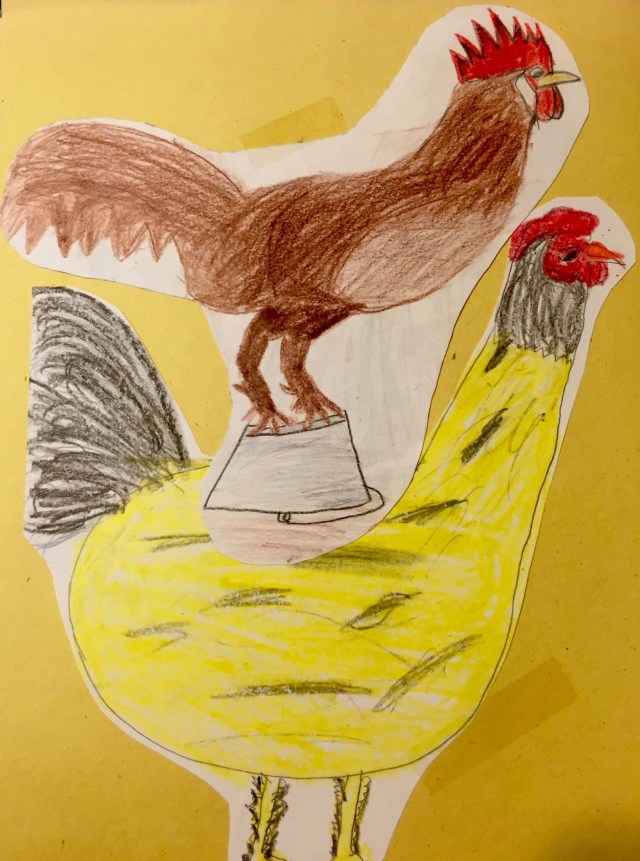
I was raised on a small farm in Castle Dale, UT. My first responsibilities as a child were to feed the chickens and gather the eggs. I began this task at 6 years of age. Each year we would purchase a variety of baby chicks from Murray McMurray hatchery. They would arrive at the post office on a scheduled day. I would wait with eager anticipation for this time. To me it was just like Christmas. My dad would let each of us pick out a chick that was “ours”. I would always name mine. I first experienced the remarkable human – animal bond with my chickens. I cried when they died. As a child, chickens became my favorite animal, and remain so until today.

Even though I spent my entire childhood around animals, I did not put much thought into becoming a veterinarian. In high school, I took an aptitude test. The test results suggested that I would not make a good veterinarian. I was not introverted. According to that particular test, I could not be successful as a veterinarian. Assuming that these tests were accurate, I pushed the veterinary idea out of my head and considered a law degree.

After I graduated from high school, I spent the next two years in Peru. I was immersed in a culture so much different from the one I was used to. It took nearly a year for me to adjust and to speak fluent Spanish. I remember walking down the street in Casma, Peru one day and seeing a group of men in the process of castrating a bull. It was a sight that I will never forget. They were beating the testicles with a large stick in an effort to destroy the testicular tissue and render the bull sterile. The brutality was sickening. I remember feeling so sorry for the bull.
That night I laid in bed thinking about why they would castrate a bull in such a barbaric fashion. I realized that perhaps that was the only way they knew how. Maybe they didn’t know any better. I decided at that moment that I would do all I could to teach these farmers a better way. Having a farming background, I was very familiar with animal husbandry and felt confident that I could help educate the farmers in this part of the world.

My first patient was a pig named Walter. He was a family pet that lived in a house in Casma. Walter had an attitude and his owners needed to have him castrated. I had a friend named Duilio Davelos that owned a pharmacy in town. I visited him and purchased some lidocaine, suture, iodine and alcohol. The procedure went flawlessly. Walter recovered very quickly. News spread of the event. Soon after, I began sending my free time on Monday’s castrating pigs. Farmers actually were open to learning. The supplies were very inexpensive and my services were free.

Next came chickens. Because of my time spent as a child taking care of baby chicks, I was able to teach basic poultry care and even help make incubators to boost production. I soon began helping with llama and alpaca herds. Soon, other curious Americans participated in this. In fact, a human dermatologist raised in Provo, UT had his first surgical experience South of Trujillo, Peru castrating pigs! It was very fulfilling to be able to help people out in this fashion. I felt like I was really accomplishing something. I was giving them something that would change the way they would treat their animals. No longer would they brutally castrate their animals without local anesthetic. They also knew how to surgically prep the skin, which eliminated so many post operative infections. I was helping people by helping their pets. It made me so happy.

As my time in Peru came to a close, I boarded a plane in Lima and headed back to the USA. As I sat in my seat, I reflected on the past two years. My thoughts kept returning to the animal services I rendered. It was in that moment, high in the air, that I decided to become a veterinarian. I landed in Utah, and a few weeks later began my first college classes. After 8 1/2 years or arduous study, my goal was reached and I became a veterinarian.

I often reflect on the decision I made. I look at how happy I am now. I love what I do. I love helping people by helping their animals. I have never had a boring day, nor have I ever regretted this career decision. I really feel like it is what I was meant to do.

So much in life happens by chance. I was fortunate to have my agricultural upbringing. It prepared me for the future. It is impossible to look forward and connect the dots of the random chances in our lives, but looking back, I can see it clearly.

I am glad that I had the chance to provide animal care in a far away place and how that opportunity led me down this remarkable path I am on today. I cannot imagine doing anything else.

And that is my take!

N. Isaac Bott, DVM

My First Surgery

My Take Tuesday: My First Surgery

I was raised on a small farm in Castle Dale, UT. We raised Guernsey milk cows, Suffolk sheep and many varieties of chickens and pheasants. My daily chores included feeding the chickens and gathering the eggs.

One day after school, I walked into the barn that housed the chickens. The barn was divided into three equal rooms. The first room is where we would store stacked straw bales. The second and third rooms were where the chickens and pheasants were kept.

On this particular day, I found our calico cat nestled with her newborn kittens. She was lying right next to the straw stack, on the ground near the chicken coop door. There were seven in all. As an 8 year old, and still to this day, new babies of any kind are an exciting experience. I dropped down and began counting the tiny kittens. I was so thrilled! As I handled the small kittens, I noticed that something wasn’t quite right. The umbilical cord from one of kittens was wrapped tightly around a leg of each of the kittens. If I picked one kitten up, the entire litter would follow as if they were chained together. I tried to remove the cord with my fingers, but it was far too tight. Even as a little kid, I knew that something had to be done.

In Castle Dale at this time, we did not have a veterinarian. The only veterinary services available were on Thursdays when a veterinarian would travel from Richfield. It was early afternoon, so my dad was not going to be home from work for a couple of hours. I had to figure something out for myself.

I reached in my pocket and pulled out my Swiss Army knife. It was one that had a myriad of blades, nearly all of them never used, and a tooth pick and small set of tweezers in the handle. I opened the smallest cutting blade and bent down. I very carefully cut the umbilical cords from each of the kittens. I used some iodine to keep the procedure as clean as possible.

The procedure was a success. All of the kittens survived.

Fortunately, I no longer use my Swiss Army knife for surgeries. Although my surgical skills have been refined and perfected, I still have the curiosity and passion that that 8 year old displayed. I love being a veterinarian. The satisfaction I felt that day long ago is repeated every time I am able to help save a life.

I look back on my first surgical experience with fondness. It was one of the important milestones in my path to becoming who I am today.

And that is my take!

N. Isaac Bott, DVM

Pictured is Dr. Bott with two of the kittens from this story in 1988

Tempus Fugit

1382419_10152088664378640_1620565877_n

My Take Tuesday: Tempus fugit

This May marks 10 years since my graduation from veterinary school. I can’t believe how fast time has flown by! 

Over the course of the past ten years, I have many accomplishments that I am proud of. It has been a most remarkable journey. I have performed veterinary work in 8 countries, 21 US states, performed reproductive work on 39 different species, seen over 50,000 small animal appointments and built a successful veterinary practice.

It seems like just last week when I was saying farewell to some of my dearest friends and colleagues. Members of my class have traveled all over the world and have already left an impressive mark on the field of veterinary medicine. Many have completed residences and internships. Some are clinical pathologists, oncologists, zoo veterinarians, cow calf specialists, internal medicine and equine specialists, mixed animal practice owners, epidemiologists and USDA food supply veterinarians. 

I am fortunate to have spent my veterinary school years surrounded by such exceptional people. Looking back at my journey, I never would have imagined what the first decade  would entail. I have been knocked down several times, but have tried to get back up and move forward. Each struggle has been followed by myriads of opportunities. Timing and chance have tremendous bearing on each of our lives and careers. I have had successes and experiences that were not in my wildest dreams when I graduated. 

I cannot think of a profession that is more rewarding. I have had the opportunity to travel to many far away places to share some of the successes I have had with today’s veterinary students. I very much enjoy the opportunity to do this. I always encourage students to be different and to follow their hearts. My advice to them is to always seek self-discovery and self-improvement. There is very little satisfaction when comparing oneself to others. So much time is wasted when trying to be better than someone else. The true test of success is measured when looking at your own improvement and progress. Are you better than you used to be? If you focus on being your best-self your potential is unlimited. When using others as a comparison, there will always be someone bigger, better or stronger. 

Each of us are unique. Look at your thumb. Your thumbprint is a testament to your uniqueness. Your individual thumbprint is different than any of the billions of individuals that are alive today. No one ever has, or ever will have the same thumbprint. Your identity is as unique as your thumbprint. Your perspective and personality are not shared by any other person. These traits are arrows in our quiver of individual contribution. Why is it so difficult to acknowledge this? Self awareness is the key to harnessing and honing this uniqueness in an effective fashion. As we become self aware, we are able to visualize, assess, nock, draw back and place a precise arrow in the bullseye of our desired target.

Thank you to my many mentors who have guided me and made me what I am today.

I look forward with optimism at the journey ahead. I have found my passion. I love what I do.

And that is my take!

N. Isaac Bott, DVM

The Charismatic Chameleon

My Take Tuesday: The Charismatic Chameleon

It was a beautiful spring morning on the Palouse. The beautiful rolling hills and contrasting colors make this region of the country so unique. As I left my apartment, I took a moment to bask in bright sun of this gorgeous brisk spring morning, permeated with the scent of recent rain. Songbirds filled the air with music that would thrill the greatest maestros, and warblers and finches flashed their dazzling colors in the bushes outside my apartment.

I was an excited 4th year veterinary student just weeks from graduation. As I drove to the veterinary school, I reflected on the past 4 years. A flood of memories entered my mind as I smiled and felt a sense of accomplishment, these were some of the most difficult years of my life and the end was in sight.

This particular weekend, it was my turn to take the emergency call at the veterinary teaching hospital. I had spoken extensively with classmates about what exactly to expect to present throughout the weekend. Each indicated that many dogs and cats would likely present with a variety of ailments. I fully expected to see a variety of routine cases dealing with the perfidious parasites, bothersome bacteria and mysterious maladies that present daily in the life of a veterinarian.

I was not prepared for what was to follow.

Throughout the weekend, a variety of cases presented, none of which were dogs or cats, and none of which I would ever consider routine.

The first case was a hairless rat. This was followed by a parakeet with a broken and bleeding blood feather. A raptor presented with a wing injury and a duck with a fish hook stuck in its bill.

Still another anomaly followed as a boa constrictor presented with a prolapsed cloaca.

At this point in my education, I had virtually no experience with exotic animals. I am terrified of snakes and absolutely did not know the first thing to do with a prolapsed cloaca. I barely knew what a cloaca was!

Fortunately, an exotic animal clinician was a phone call away and she was able to talk me through each case. I learned a lot as I treated each animal and did my best to make each owner and pet comfortable.

Just when I thought I had everything under control, a young woman walked through the front doors of the hospital caring a white box. Small circular 1” holes were cut in each side of the cardboard box.

“I have a chameleon that is sick,” she nervously said with obvious fear and concern in her voice.

I placed my face against the box and peered through one of the small holes. A huge eyeball was all that I could see. Its unflinching stare was somewhat startling.

“He is huge!”, I exclaimed.

“No he isn’t,” she replied, with her voice raising, “He is actually smaller than most.”

“I am sorry,” I replied, “I haven’t ever seen a real chameleon.”

“Oh great, go figure, not only do I have to deal with a student, but I lucked out and got one that clearly doesn’t know what he is doing!” She was clearly upset at this point, as she sighed and shook her head.

Assertiveness has its place, but it is not always a virtue when you are on the receiving end.

“I am sorry,” I began, “Although I am inexperienced, I will call someone that is very competent with chameleons and we will take care of him. I promise I will do my best.”

She seemed to calm down somewhat after this and handed me the white box. I carried the box into the treatment area and immediately opened the lid and peered in. The chameleon stood perched on a branch, clinging with each of its 4 feet. It’s deep green color mimicked the leaves that were placed throughout the box.

I gently removed the little guy and placed him in the glass aquarium type pen used to hospitalize reptilian patients.

Almost immediately, his deep greed color began to fade as he miraculously turned brown, almost identical to the ambience of his new surroundings.

I reached for the phone and dialed the number of the on call exotic expert. I immediately rattled off the details of the case (age, sex, presenting complaint, clinical signs and examination findings). I then explained that I had ZERO experience with this species and that I needed detailed instructions.

Her first question took me off guard.

“Is he pale?” she inquired.

Immediately, I thought to myself, “You’ve got to be kidding me!”

“I am not sure,” I replied. “He was green in his box and then he turned brown when I moved him into the hospital. Now he is looking like a mix of brown and gray.”

“How in the hell can you tell if a chameleon is pale?,” I inquired.

Fortunately, this clinician sensed the frustration in my voice and laughed. She was very patient as she began to explain exactly what I needed to look for.

She talked me through how to administer fluids to a reptile. This is accomplished differently that with other species. Instead of finding a vein and administering the fluids intravenously, they are administered in the common body cavity called the coelomic cavity. I spent the entire night treating this unique patient and monitoring its progress.

Somehow, the chameleon survived. I learned a great deal throughout the remainder of the weekend. Not a single dog or cat ever presented, but I gained confidence and experience with each of the exotic animals that continued to present.

But still to this day, I still have no idea how to tell if a chameleon is pale.

And that is my take!

N. Isaac Bott, DVM

Don’t worry Doc, he won’t bite

My Take Tuesday: Don’t worry Doc, he won’t bite

“Don’t worry Doc, he won’t bite.” 

If ever a red flag was raised, these simple words would surely do it. I worry every time I hear the phrase. It reminds me of the required vet school class that covered the autonomic nervous system. The fight or flight impulse is part of that system. And in most cases, the fight response prevails. Invariably, when someone says this, I am going to be bitten.

It was a routine appointment, simple annual vaccinations. It should have gone smoothly.

As I administered the last vaccination, all seemed to be going smoothly. When all of the sudden, this unseeingly sweet little dog became, without warning, a biting, raging canine tornado.

This form of aggression can be defined by the word “IATROGENIC”. The definition of this fancy word is simple, it was caused by ME. This little guy was furious, and come hell or high water, he was going to let me have it.

His attack was swift. He had sunk his teeth deep into my left hand. I instinctively pulled back as he loosened his grip. I thought for a brief moment that it was over, but before I could remove my hand, he chomped down a second time.

Blood poured from my lacerated fingers.

The owner looked up, shook her head, and said, “Come to think of it, he did that to the last vet also.”

“Gee thanks,” I muttered.

If anyone ever tells you, “Don’t worry, he won’t bite.”

Take it from me – BEWARE!

You are about to be bitten!

And That is My Take

N. Isaac Bott, DVM

Airport Security

13600293_636620396502538_1658534798890608176_n

My Take Tuesday: Airport Security

They say hindsight is 20/20. Looking back, it was clearly a mistake.

I hurriedly prepared my luggage, assuring that everything would fit in a carry on. I have a perfect record, in all of my travels I have never had my luggage lost. Taking a single carry-on bag is the only way to assure your luggage gets to your destination on international flights.

The destination this trip, was the Philippines, and it was my first trip to Asia. I had been called to travel there to assist in establishing both Water Buffalo and deer reproduction programs in this far away country.

I placed my required instruments, long forceps and miscellaneous items used for freezing semen delicately in my bag. The last piece of equipment was something called an electro-ejaculator.

In the practice of veterinary medicine, it is common to collect semen from domestic ruminants using electro-ejaculation.

This instrument is an electric probe that is inserted into the rectum of an animal, adjacent to the prostate gland. The probe delivers an AC voltage, usually 12–24 volts. The probe is activated for 1–2 seconds, referred to as a stimulus cycle. Ejaculation usually occurs after 2–3 stimulus cycles. The instrument fits in your hand and runs on a traditional 9 volt battery, the exact battery most smoke alarms use. It is a valuable tool when collecting semen from agricultural and wild animals.

It fit, without a problem, in my suitcase.

Salt Lake City International Airport was busy on this particular day. The lines extended over the sky bridge and nearly to the parking garage.

I passed through the metal detector and my bag went through the usual belt driven scanner. As I waited for my bag to come out, the operator of the scanner lowered his head and spoke into his mouthpiece. What he said was inaudible, but the response it triggered was anything but quiet.

I was circled by at least 10 TSA agents and hurried off to the far right end of the security entrance. If there ever was a suspicious item, this was it.

A tall gruff man asked, “Sir, do you have any prohibited items in your bag?”

Now clearly, they know the answer to this question before they ask it. On a prior trip, I had left a small pocket knife in my bag. They asked the same thing, and I had completely forgot it was in my bag. My answer then was, “I don’t’ think so?” Fortunately, they allowed me to mail my pocket knife home and the delay was minimal.

Clearly today it was not going to be as easy.

“I have a medical device called an electro-ejaculator in my bag”, I tried to explain. One of the TSA workers removed the device. Clearly red flags were raised, and rightly so. Here is an electronic device with a push button, a red light and metal tongs protruding from the probe. The gruff man demanded, “What is this and why do you have it?”

“It is used to collect semen from animals,” I explained, “you insert this end in the rectum and push this button. It then applies current over the prostate, and ejaculation occurs.”

The gruff man’s face went from viable anger to disgust in less than two seconds.

“What? Ewwwww!!! Are you serious?”, he continued, “Why would you ever do that to an animal?”

“I am a veterinarian”, I explained, “And my expertise is in animal reproduction.”

“Man kid, I thought my job was tough,” he replied, laughing this time.

Fortunately for me, the device was labeled as such and my story was collaborated. I was allowed to pass.

En route to Manila, we stopped in Narita, Japan. Even though it was just a connecting flight, I had to pass through a security line once again before continuing on to the Philippines. Once again, a huge mess unfolded as I tried to explain in English why I would have such a dangerous looking device in my bag.

There are a couple dozen airport security officers around the world who now know, albeit unwillingly, what an electro-ejaculator is and how it is used.

After an eventful and productive stay in the Philippines, I entered the airport in Manilla, excited to be going home. As I stepped up to the counter, the ticket agent asked, “Sir, do you have any bags you would like to check?”

“Yes, I sure do”, I quickly replied.

I made my way to the gate and sat down to await my flight. I was relieved that I didn’t have to once again explain what was in my luggage. It appeared my trip home would be uneventful.

All of the sudden, over the loud speaker I hear the following announcement, “Passenger Nathan Isaac Bott, please report to the security desk immediately!”…………

And that is my take.

N. Isaac Bott, DVM

The Fragility of Life

IMG_6717

My Take Tuesday: The Fragility of Life

Just west of Castle Dale, Utah, the sky above Horn Mountain turns  a beautiful cinnamon on clear summer nights as the sun sets over the place I call home. These summer nights smell of freshly cut grass and alfalfa, of sagebrush and lilacs.

If you are heading west along Bott Lane, just past the tall poplar trees, lies a piece of ground that was homesteaded by my great-great grandfather. This piece of land has passed from generation to generation, from fathers to sons, and has always remained in my family.

On the east side of this piece of land, a silhouette of a Ford Tractor and a Hesston Hydroswing Swather were visible on many beautiful summer evenings during my childhood. On the tractor, sat my uncle Jerry Bott.

Jerry was a giant of a man. He stood over 6’4”. His gentle demeanor and kind heart were his most precious of character traits. His soft voice and carefully chosen words were never cross or unkind. At least two times every day, I would be able to greet my uncle as I would enter his house before milking our cows. He became my constancy, my anchor, as I grew from a small child into the man I am today.

On this particular night almost exactly 28 years ago, in 1990, my uncle Jerry was cutting the first crop of hay. The tall grass makes this cutting the most difficult on the equipment. Constant attention must be given to the rotating wheel and hay knives that were prone to clogging.

This time of year, hen Ringneck pheasants are on their nests. They sit so still that even the loud rumbling of a tractor and the ground tremors of the hay cutter leave her undeterred. Occasionally, these hens are injured or killed as they sit on their eggs. The nest, whether it be full of chirping hatchings or incubating eggs, is left to the merciless predators from the air and the nearby fortress of trees and Russian Olives that run along Cottonwood Creek.

As the sun faded behind the towering cliffs of Horn Mountain, I stood on my parents lawn, looking eagerly at the approaching two-toned tan GMC Sierra. My hero was coming home for the night.

As Jerry exited his truck, he held under his arm a brown paper grocery bag. His long stride headed towards me instead of his house across the street.

As he approached, he called my name.

“Isaac,” his low and gentle voice called, “I have something for you.”

He handed me the brown paper bag.

Inside, a green towel was wrapped gently around 8 medium sized olive colored eggs.

“These are pheasant eggs,” he continued, “and they need to be cared for.”

“Isaac, I know that you will do a good job at taking care of them.”

I looked in the sack as Jerry walked back across the street and into his house.

“How do you hatch pheasant eggs?”, I wondered as I entered my parent’s house.

My incubator was nothing special, just a Styrofoam box with a small heater inside. Knowing that peasant eggs incubate for 23 days, I set the temperature and humidity and carefully laid the eggs inside.

I faithfully turned the eggs three times a day for three weeks.

Somehow, the incubation was successful and the eggs all hatched out. The tan chicks had dark brown stripes that ran parallel along their backs.

I was overjoyed when I told my uncle Jerry about my accomplishment.

“Uncle Jerry,” I exclaimed, “I did it! The eggs hatched!”

“That is great!”, he responded, “Isaac, I knew you could do it.”

His response and validation filled my system with light and my soul with joy.

The world with all of its power and wisdom, with all the gilded glory and show, its libraries and evidence, shrink into complete insignificance when compared to the simple lesson of the fragility and value of life that my uncle Jerry taught me that warm summer evening.

Over the years, uncle Jerry repeated this phrase to me. As I graduated high school, college and eventually veterinary school, his reassurance illuminated my understanding of my potential and his unwavering love and support.

There are days that change the times and there is a time to say goodbye. My sweet uncle Jerry passed away in late 2016. His loss left a tear in the eye and a hole in the heart of all my family members.

There is a place beyond the clouds, in the cinnamon sky to the west of Castle Dale, where a precious angel flies.

Somethings never change. Yet, there are things that change us all. This experience changed me.

My uncle Jerry’s lesson, from long ago, was not lost on me.

Each and every day, I remember the immense value of life, as I attend to my four legged patients.

As lives are saved and others are lost, I remember how important it is for someone to take initiative and to tend to the responsibility to care for the helpless and to speak for those without a voice.

This is a lesson my dear uncle Jerry so effectively showed me how to apply and live, and it is a responsibility I take most sacredly.

And that is my take.

N. Isaac Bott, DVM

The Itch Is On!

IMG_6996
My Take Tuesday: Allergies – The Itch Is On!
 
Spring is a beautiful time of year at Mountain West Animal Hospital. As winter loses it overpowering grip, new life emerges. The smell of flowers, fresh green grass and the sound of birds chirping will invoke feelings of happiness in those yearning for warmer weather.
During springtime, a dichotomy of sorts is presented. While I love this time of year immensely, it’s arrival brings in the annual ritual of sniffling and sneezing, a runny nose and itchy eyes. Atopy, the genetic predisposition to allergies, has plagued my family for generations. We all have severe allergies to grass, alfalfa and flowers.
 
While growing up, a rosebush outside my bedroom window would bloom beautifully this time of year. This rosebush brought me seasonal misery and debilitating symptoms and endless nights of wheezing, sniffing and itchy red eyes. I hated that rosebush! I remember having such severe attacks, that I would lay in bed with a cold washcloth over my eyes, unable to sleep or do anything productive. On the worst of these nights, I scribbled a journal entry at the height of allergy season that simply read, “Today more allergies, oh I hate them.”
 
I have sympathy for my veterinary patients that suffer from allergies. All to frequently, they present in complete disarray. Instead of the runny noses, itchy eyes, sneezing or wheezing allergies mean to many people, pet allergies typically show up as scratching, chewing, rubbing, head-shaking or severe ear infections. Often dogs present with bleeding paws and open sores all over their body. These lesions are caused by continuous scratching. This insatiable itch drives them crazy. Every waking hour they spend trying to scratch the itch away.
Allergies are by far the most common illness I see as a veterinarian. It is sad to see pets suffering so. When pets suffer, they are at least as miserable as we are — and likely much more.
 
With each case, we try to provide suggestions specific to your pet, your region and your season, but in general, you can help your pet a great deal with an allergy-prevention regimen in the home.
 
Concurrently, you can limit the amount of dust and other irritants pets sweep up in their coats by vacuuming and using electrostatic cleaning products (such as Swiffers) on floor surfaces as well as using room or whole house filtration systems. And while you may have heard that frequent shampooing strips the skin of essential oils, veterinary dermatologists now recommend bathing pets at least every week (up to everyday for extremely at-risk, allergic pets) during the spring and summer to help wash allergens off the coat and skin before they can be absorbed and trigger an allergic reaction. Spray-on products or wipes for a dry bath will often do the trick and may be a great deal easier than bathing for some dogs and almost all cats.
 
But it’s not just about airborne allergens or parasites: Pets suffer from food allergies as well. Allergy reactions to pet food are usually caused by proteins, and can include beef, egg, milk or cheese products, soy or even fish. If food allergies are suspected, your veterinarian will guide you through food-elimination trials to find the culprit, and recommend a diet that’s both nutritionally complete and contains pre-digested proteins. If your dog suffers from a food allergy but still needs to take medications, Greenies Pill Pockets Allergy Formula capsules may help. These are little pouches, made from peas and duck that put the treat into treatment, by providing a yummy pocket for a pill.
 
Please don’t let your pets suffer. Schedule an appointment and let’s work together to provide the life free of pain and suffering that each of your four-legged family members deserve.
 
With modern veterinary options and a world of new products to help, the pet with allergies can be managed better than ever before. And that means you and your pet will both sleep better, after you’ve ditched the itch.
 
And that is my take!
N. Isaac Bott, DVM