Father’s Day

Father’s Day

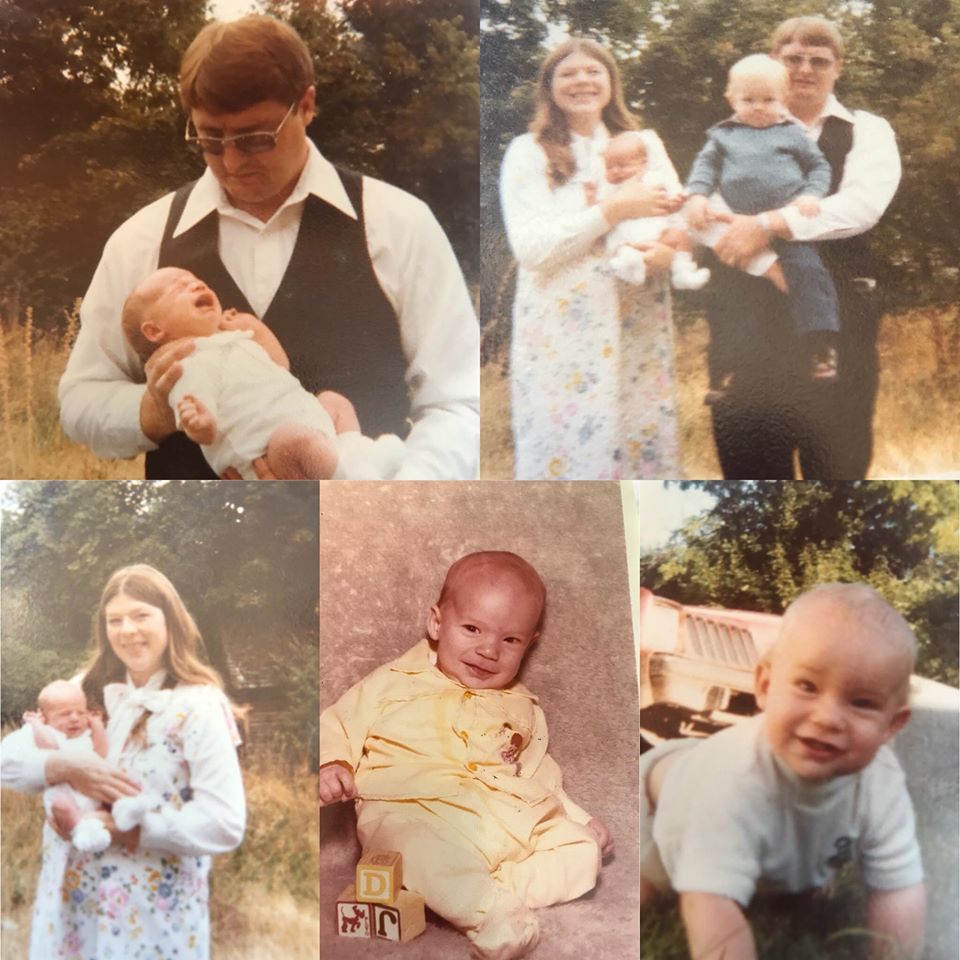
The giant snowflakes gently fell in perfect rhythm. Even though it was 6:00 AM, I could see clearly through the winter whiteness.  This particular winter during the 1980’s in Castle Dale was incredibly harsh. Nearly 18” of snow had fallen over the past 24 hours. The field across the street from my parents house was covered in a thick blanket of white. I bundled up as I prepared to leave the house to do the morning farm chores. 

My dad led the way as we headed across the street to the corals. The deep snow proved to be a challenge for my short legs. I jumped and lengthened my stride as I placed my feet inside my father’s footprints. As long as I followed his steps, the path seemed manageable 

My dad is a giant of a man. I remember attending a Cub Scout pack meeting as a young boy. At this meeting, a plank was placed on the floor and a 16 penny nail was started in the center. A competition was held where all of the father’s in the room had a chance to hit the nail as hard as they could. Some were able to drive the nail in completely with 2 or 3 hits. When my dad’s turn came around, he buried the nail with a single swing of the hammer. I remember thinking how amazing that was! He could loosen old rusty bolts with a quick flick of his wrist, he could throw a bale of hay on top of a haystack and no one could use a shovel like him. In my eyes as a young boy, he seemed to be able to do anything. My dad has been my hero as far back as I can remember.

I remember a time where he had learned that a man living in town did not have a bed in his house to sleep on. My dad went and purchased a brand new bed with his own money and delivered it to this man that he didn’t even know. Years later, this man told me that this act was the kindest thing that anyone had ever done for him in his life. My dad taught me how to care for others less fortunate time and time again through his example.

Each summer, my dad would set aside time to take each of his five children camping with him individually. We would get to chose the destination of this one on one time. I remember the cold air and the damp grass. I remember the smell of the air. I remember eating Pringles and sitting by a campfire. I remember eating small boxes of Cocoa Krispies and catching fish. 

Oh how I looked forward to my annual camping trip with dad! My favorite spot was in Upper Joe’s Valley. This overnight camping trip always provided an escape  from the every day chores and busy summer days. 

Despite working 7-5 every day, somehow dad would find the time in his incredibly busy schedule to take each one of us individually every single year. This was dad‘s way of showing us how much he cared. Although he loved each of us equally, during these outings we all felt very special. I remember every single trip and I cherish these memories. 

I remember one particular time when I was working at the cemetery. The volume of work there had overwhelmed me. There was so much to do and I couldn’t get it done. Dad, after working all day at a thankless and stressful job, came to the cemetery and cut the individual daisy flowers off of the dozen or so bushes in the flower bed. This tedious process took several hours. I was thankful that night, but now looking back, tears come to my eyes. I know how tired and worn out I am after working all day. How did he have the energy to do all that he did?

In today’s world fathers come and go. Having a stable father is a rarity. My dad was always there to work with us. I remember many times going out to the farm with dad and being so stressed I couldn’t function, and after a few hours of digging ditch anything that was bothering me would disappear. Growing up,  I was taught how to do good work and to be proud of my accomplishments. My dad did this, not by leaving a list of chores to be accomplished, but by working right there alongside us, 

A statue on my dad’s dresser depicts a father with a small child sitting on his knee. The inscription reads, “Any man can be a father, but it takes someone special to be a daddy.” My daddy’s example was not lost on me. His unconditional love has inspired each of his 5 children to be the best that we can be

I have often wondered exactly what is the measure of a man? Is it the softness of his heart? Is it the hardness of his hands? Is it in the words he speaks or the legacy he leaves?

When the storms of life have blown and tossed me around, I have always been able to think about the example my dad set for me. He has walked the same path, you has wished upon the same stars and he has worried about the same things. This brings me so much comfort. It helps me tremendously when I have to make tough decisions. 

One of the most unfortunate things in my life is that it has taken me years to realize how essential my father’s role was to build my character, my ethics and most importantly, my happiness. His blood runs through my veins and his example is in my soul, and although my life has been a poor attempt to imitate his example, I am doing the very best I can.

This Father’s Day, I still find myself trying to follow my father’s footprints in the deep snow. He is my constancy and my mentor, my rock and my friend. He is my hero!

Thank you dad for your unconditional love. Thank you for your guidance. Thank you for teaching me how to work, to love and for teaching me how to treat others with kindness. 

Happy Father’s Day! 

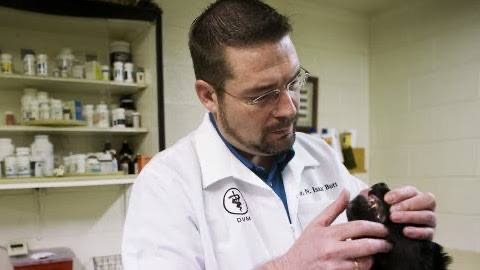
N. Isaac Bott, DVM

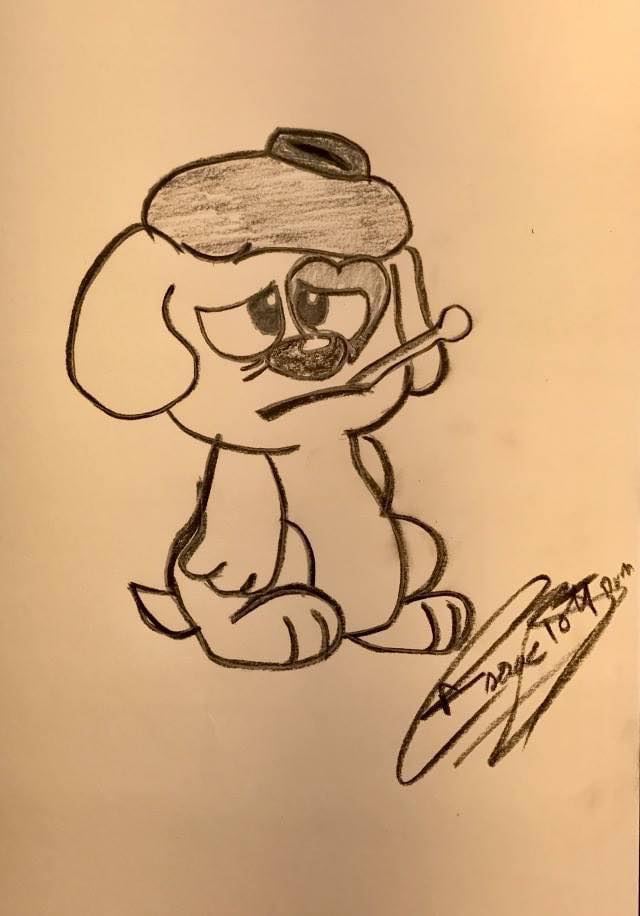
Don’t worry Doc, he won’t bite

My Take Tuesday: Don’t worry Doc, he won’t bite

“Don’t worry Doc, he won’t bite.”

If ever a red flag was raised, these simple words would surely do it. I worry every time I hear the phrase. It reminds me of the required vet school class that covered the autonomic nervous system. The fight or flight impulse is part of that system. And in most cases, the fight response prevails. Invariably, when someone says this, I am going to be bitten.

It was a routine appointment, simple annual vaccinations. It should have gone smoothly.

As I administered the last vaccination, all seemed to be going smoothly. When all of the sudden, this unseeingly sweet little dog became, without warning, a biting, raging canine tornado.

This form of aggression can be defined by the word “IATROGENIC”. The definition of this fancy word is simple, it was caused by ME. This little guy was furious, and come hell or high water, he was going to let me have it.

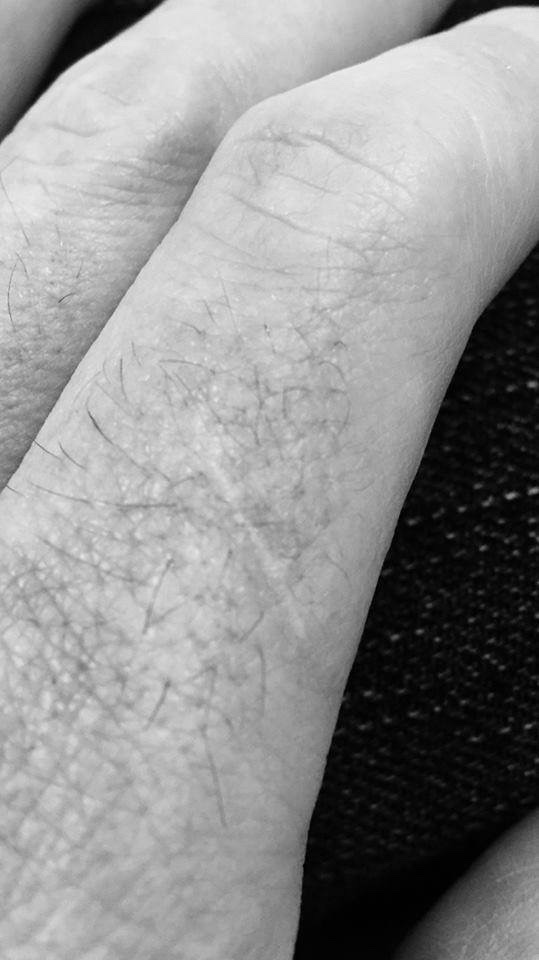
His attack was swift. He had sunk his teeth deep into my left hand. I instinctively pulled back as he loosened his grip. I thought for a brief moment that it was over, but before I could remove my hand, he chomped down a second time.

Blood poured from my lacerated fingers.

The owner looked up, shook her head, and said, “Come to think of it, he did that to the last vet also.”

“Gee thanks,” I muttered.

If anyone ever tells you, “Don’t worry, he won’t bite.”

Take it from me – BEWARE!

You are about to be bitten!

And That is My Take

N. Isaac Bott, DVM

The Universal Human Animal Bond

My Take Tuesday: The Universal Human Animal Bond

A few years ago, I had the opportunity to spend several weeks in Mexico working as a veterinary ambassador. It was an incredible experience.

The first week, we traveled to the outskirts of a city called Queretaro. We sat up a set of tents and hosted an animal wellness clinic. We spent an entire day vaccinating dogs and cats.

The next two days were spent in Guadalajara. Here we also set up vaccine clinics. Over the three day period we vaccinated the pets of over 1,800 families. We spent time with each individual and answered questions about the pets they had and educated them on preventive care and how to assure a long and happy life for their 4 legged family members. These are among the longest days I have had as a veterinarian. It was exhausting to speak to so many people. However, the exhaustion was insignificant compared to the happiness I experienced by helping in these activities. 

When we look at veterinary medicine on a global basis, people everywhere are attached to their pets and want their pets to be healthy. In the villages where we held our clinics, people couldn’t imagine putting their dogs on a leash; they would consider that cruel. If they want their dogs to walk somewhere, they pick up the dog’s front legs and walk them on their hind legs. The dogs are amazingly patient with this practice.

Lines each day extended around the block. Hundreds of people stood in line for hours under the hot sun to receive the services we were providing. Dozens of children brought their beloved pets, often in a grocery bag or carried safely in their arms, to be vaccinated and dewormed. They showed the same love towards their pets as anyone I have ever seen back home. The Human-Animal Bond is the same across borders – it is the same in the hearts of people everywhere. The happiness I experienced while performing these vaccine clinics was inexplicable.

It is commensurate with service to experience reciprocity. What effort we exert is returned many fold. I find the satisfaction of such service to be rewarding beyond comparison.

Veterinary medicine is a unique profession. What motivates us is the important services that we provide. There has to be a love of service and of reaching the hearts of the people who own the pets. I concur with what Dr Seuss conveyed through the character the Lorax, “Unless someone like you cares a whole awful lot, nothing is going to get better. It’s not.”

At Mountain West Animal Hospital, we care. We value life. We are advocates for those who have no voice. We believe that all animals have the right to a life free of pain and suffering. Everything we do is centered around this principle. We strive to provide the care that pets need and deserve.

And that is my take.
N. Isaac Bott, DVM

Hazel and the Skunk

My Take Tuesday: Hazel and the Skunk

As a teenager growing up in the small town of Castle Dale, I looked forward to summers at the end of each school year. Summer meant freedom from both homework and sitting at a school desk.

For me, a perfect summer day would have to include vanilla ice cream, snow cones and strawberry shortcake. The tranquil Castle Valley evenings provided frequent opportunities to cook hot dogs, hamburgers and steaks on the grill, corn on the cob on the stove, and juicy Green River watermelon slabs with each meal.

Summertime also meant hard work. Apart from the irrigating and farm chores, there were a number of elderly widows in Castle Dale that would hire my siblings and I to mow their lawns each week during the summer.

Hazel was my favorite. Her small house stood just north of the new recreation center in Castle Dale. Hazel was like family to me. Her friendly demeanor and kindness was manifest each and every time I mowed her lawn.

She had a small but verdant lawn that surrounded her small gray house. Along the south end of her property, huge trees stood as sentinels protecting the house from the frequent Castle Valley wind. The deep green leaves of the tall trees overlooked a perfectly manicured garden with straight rows of Swiss char, chives, radishes, peas, carrots, spinach and lettuce.

Her lawn was difficult to mow. The frequent flowers and bushes required extreme care and precision with the lawn mower and edger. I would frequently graze her chives and the onion smell would instantly give away my error.

“On no, you hit my chives!” she would say. I anticipate that she planted larger quantities each year knowing that some would certainly fall prey to my mower.

After finishing the mowing, Hazel would prepare red punch and cookies. I would sit on a couch in her living room as I savored the snacks week after week. Hazel would ask about how my life was going and she would tell stories of her Seely and Livingston pioneer ancestors that helped settle Utah and build the iconic Salt Lake Temple.

Hazel loved cats. She had a cat door that would lead out to the back yard from her kitchen. She would place a large bowl of cat food in the center of the kitchen and the cats could enter and leave as they please.

On this particular day, Hazel commented about how much cat food she had been going through. She noted that she would have to fill the cat dish 3 or 4 times a day and that each time she entered the kitchen, the bowl would be empty.

As I sat on the couch, I had a clear view of the cat bowl in the kitchen. As Hazel spoke, from the corner of my eye I noticed some movement near the bowl. As I turned my head and looked into the kitchen, the biggest skunk I had ever seen wobbled over to the food bowl and began gorging.

“Hazel!” I exclaimed. “That is not a cat, it is a big fat humongous skunk!”

“My laws!” she gasped. “Get it out of here!”

As I jumped up, the startled skunk made a dash for the door. Its overweight body condition inhibited it from any appreciable speed. The large belly nearly dragged on the ground as it meandered away. As it leaped for the cat door, the front half of the body exited perfectly, however, its back half didn’t quite make it. As the obese animal heaved its back end though the door, it simultaneously and voluminously sprayed the contents of its scent glands in my direction. This wallop of its defense mechanism filled the entire kitchen.

If you haven’t experienced the mephitic smell of a skunk from up close, the odeur fétide is actually a thick, volatile, oily liquid that obtains its pungency from sulfur-based thiols. There in nothing that smells worse than skunk spray inside your nose!

Hazel and I exited out the front door. We propped open the kitchen door and placed a fan on the floor to help air out the house. We laughed about it for hours.

Hazel passed away shortly after Memorial Day in 2003. I sure do miss her.

Each and every summer day brings back the fond memories of Hazel, the obese skunk, and the all-you-can-eat Mephitis buffet.

And that is my take!

N. Isaac Bott, DVM
Sheep on the Loose

My Take Tuesday: Sheep on the Loose!

The morning was colder than expected. I zipped up my jacket as I climbed out of my truck ready to begin a day of veterinary appointments. The clouds scuttled across the sky, the sun breaking out in bursts as I made my way through the make-shift corrals that are a common sight in Utah County. A single tree, standing along the fence caught my eye as I crossed the fence. I marveled at the beauty of the crisp copper leaves falling off the lone tree that sway gently in the Autumn wind.

A single golden leaf pirouetted down an invisible spiral of breeze, spinning through the air as it let itself be carried down. It shook slightly, as if it could have been whisked away any second by the grip of an icy wind, but it kept floating down the twirling course. It blew past my face and landed lightly on the ground, the shiny, vibrant color standing out against the ambers and bronzes beneath it.

Sheep are short-day breeders. The breeding season coincides with the decreasing day length each fall brings. Today’s appointment is a routine breeding soundness evaluation of a group of Rambouillet rams.

The Rambouillet breed of sheep originated more than two centuries ago, in 1786, when Louis XVI of France purchased over 300 animals from Spain’s famed Merino flocks, which were producers of the world’s finest wool.

The males of this breed have characteristic large curved horns that are well developed with wide spirals. They weigh around 300 pounds at maturity.

A large horse trailer was backed up against the gate of the pen, with about two feet of space between the edge of the the fence and the trailer. I could hear the deep bleating and baaing of a dozen rams echoing from inside the aluminum trailer.

I stood in the small gap between the fence and the trailer in an effort to stop any rams from escaping the enclosure. As the gate was opened, the the first ram paused and then ran quickly from the trailer, giving a bounding leap as he landed on the ground. The remainder of the rams followed in perfect succession, pausing and bounding in unison.

The last ram exited the trailer and hesitated as it approached the rest of the herd. He turned his massive frame slightly as he looked in my direction. Suddenly, without warning, he lowered his stout head and neck and charged.

I braced myself for the impact. Anticipating a blow to the legs, I lowered my body into a football stance. This massive ram, in a fit of ovine rage, leaped over my head and landed harmlessly on the gravel patch surrounding the pen.

He then let out a low “Baaaaaaaa”, as if to beckon the remaining rams to follow his lead. This flock mentality is a sure thing, meaning that if one sheep finds an escape route then the entire flock will follow. The remainder of the herd stampeded towards me in a frenzy. The lead ram lowering his head in apparent contestation head bunting stance. I knew that an attempt to stop a charging ram of this bold carriage would be futile. I stepped aside and yielded as the rams charged through the small alley on their way to apparent freedom.

I grew up around sheep. My family had a small flock that provided me with valuable insight into sheep behavior and husbandry. One of the valuable lessons I learned is to always have a perimeter fence in case as a backup when working with sheep.

Sheep are a prey species, and their only defense is to flee. The flock of rams fled in unison down the gravel path. They all stoped abruptly as they arrived at the closed perimeter gate. Accepting their defeat, they turned and charged back through the alley and into their original pen.

The remainder of the morning was uneventful. Each examination revealed a healthy ram and the group was cleared for the upcoming breeding season.

As I walked back to my truck, I step through the golden brown carpet of leaves, as they crunch under foot and quiver in gusts of the October wind.

The deep sound of the rams bleating in concert echoed from the horse trailer. The cool breeze scattered the leaves in all directions and sent a chill down my spine. I took a deep breath and was warmed instantly by the smell of a nearby wood burning stove.

I sighed, relishing the feeling of fall. It was something I’d have to wait a whole year to experience again.

And that is my take!

N. Isaac Bott, DVM
Tempus Fugit

My Take Tuesday: Tempus Fugit

This month marks 11 years since my graduation from veterinary school. I can’t believe how fast time has flown by!

Over the course of the past eleven years, I have many accomplishments that I am proud of. It has been a most remarkable journey. I have performed veterinary work in 8 countries, 21 US states, performed reproductive work on 39 different species, performed over 55,000 small animal examinations and have helped build a successful veterinary practice.

It seems like just last week when I was saying farewell to some of my dearest friends and colleagues. Members of my class have traveled all over the world and have already left an impressive mark on the field of veterinary medicine. Many have completed residences and internships. Some are clinical pathologists, oncologists, zoo veterinarians, cow calf specialists, internal medicine and equine specialists, mixed animal practice owners, epidemiologists and USDA food supply veterinarians.

I am fortunate to have spent my veterinary school years surrounded by such exceptional people. Looking back at my journey, I never would have imagined what the first decade would entail. I have been knocked down several times, but have tried to get back up and move forward. Each struggle has been followed by myriads of opportunities. Timing and chance have tremendous bearing on each of our lives and careers. I have had successes and experiences that were not in my wildest dreams when I graduated.

I cannot think of a profession that is more rewarding. I have had the opportunity to travel to many far away places to share some of the successes I have had with today’s veterinary students. I very much enjoy the opportunity to do this. I always encourage students to be different and to follow their hearts. My advice to them is to always seek self-discovery and self-improvement. There is very little satisfaction when comparing oneself to others. So much time is wasted when trying to be better than someone else. The true test of success is measured when looking at your own improvement and progress. Are you better than you used to be? If you focus on being your best-self your potential is unlimited. When using others as a comparison, there will always be someone bigger, better or stronger.

Each of us are unique. Look at your thumb. Your thumbprint is a testament to your uniqueness. Your individual thumbprint is different than any of the billions of individuals that are alive today. No one ever has, or ever will have the same thumbprint. Your identity is as unique as your thumbprint. Your perspective and personality are not shared by any other person. These traits are arrows in our quiver of individual contribution. Why is it so difficult to acknowledge this? Self awareness is the key to harnessing and honing this uniqueness in an effective fashion. As we become self aware, we are able to visualize, assess, nock, draw back and place a precise arrow in the bullseye of our desired target.

Thank you to my many mentors who have guided me and made me what I am today.

I look forward with optimism at the journey ahead. I have found my passion. I love what I do.

And that is my take!

N. Isaac Bott, DVM
The Belligerent Bovine

My Take Tuesday: The Belligerent Bovine

January in Utah is a beautiful time of the year. The land is white. The peaks are white. The roofs tops of all of the houses and barns turn white. All is lost in the colorless landscape in which a sense of peace takes over, the long nights settle in, the land is asleep and the world is put down to rest. Then suddenly, without just cause, comes a blast of bitter blizzards, and winter deepens her grip.

It was a cold morning. The air burned my face as I stepped out my front door. When temperatures reach twenty below zero, your nostrils sting and burn with each breath. Still, despite the extreme cold, there is a stillness and quiet peace that overwhelm you during the Utah January nights. The quiet midnight drive to respond to emergency calls provides a time for me to reflect and think. In my busy life, I often have little time alone and I cherish those infrequent moments.

The call on this particular night was a cow with a laceration. Somehow this massive Hereford had tangled herself up in a barb wire fence. As I arrived, the gaping wound was dripping fresh red blood. Steam would rise from the scarlet snow beneath as the blood trickled down alongside the squeeze chute.

It was obvious that sutures would need to be placed.

A test of a veterinarian’s ability could be most easily assessed by watching him or her suture a laceration in -20 temperatures. It is indeed on of the most arduous of tasks.

As I pulled out my box of supplies, I noticed that a majority of the drugs were frozen solid. Fortunately, the lidocaine remained aqueous. I pulled out a large syringe and began injecting the local anesthetic along the periphery of the lesion. The old cow bellowed as I injected the Lidocaine. It was clear that she was very unhappy with her predicament.

I placed the sutures in a simple interrupted pattern. A break was taken between each suture placement as the stinging cold weather rendered my fingers numb and stiff. In a futile attempt, I tried exhaling on my frozen fingers hoping that they regain some function. This made the numbness much worse.

As I placed the last suture, the cow lunged forward in the squeeze chute. Her massive belly pinned my fingers against the side of the squeeze chute. A sharp pain shot up my arm as I jumped and pulled my hand back.

“Alright,” I exclaimed, “Turn her lose. We are done.”

As soon as the head gate opened, this massive Hereford jumped forward and exited the chute bellowing and swinging her head. She ran straight ahead for about 20 yards at which time she paused. She then turned around and set her focus on me.

I immediately knew I was in trouble. I quickly grabbed my tools and began running for the fence. 1800 pounds of solid animal came thundering towards me.

After a short run, with the bellowing cow in close pursuit, I reached the lodge pole pine fence that surrounded the corral. I dared not look back as I scampered over the fence. I could hear the angry cow snarling and could feel the sound of each hoof pounding the ground as she bounded towards me.

I made it across the fence safely. Upon reaching thee other side I peered back at the massive cow. She stood facing the fence, head down, with a most bewildered look in her eyes. My heart pounded uncontrollably and I began to shake. This was one angry cow!

Immediately, my squished hand began to throb. The feeling in my fingers returned and I walked back to my truck.

As I drove away, I was very much relived to be leaving the belligerent bovine far behind. This was a close call and I was very fortunate to have made it out of the pen without any serious harm.

As I headed down the cold frozen highway, my mind returned to my time as a veterinary school student. In the large animal section of the Veterinary Teaching Hospital at Washington State University there was a magnetic sign that could be placed on the pen of a fractious animal. The sign read, “Fractious cow can make it to gate in 2.5 seconds. Can you?”

It would be fitting to have such a sign to hang near the squeeze chute on this particular Utah County farm.

And that is my take.

N. Isaac Bott, DVM

“Doc, Whatever She’s Got, I’ve Got The Same Thing Too”

My Take Tuesday: “Doc, whatever she’s got, I’ve got the same thing too!”

Animals and people dictate what happens every day for me. Simple routine appointments can turn out to be complex once the unpredictable yet potent potion of human personality is added to the mix.

A few months back an elderly woman came in to the clinic. Her cat had been suffering for weeks with non-stop itching. As I examined the cat I noticed that this itch was insatiable. The poor cat had scratched and irritated nearly every inch of its body in an effort to satisfy the intense itch. The scratching was so intense, that nearly her entire body was covered with bleeding sores.

A diagnosis of mites was made after taking a skin scrape and looking at it under a microscope. This particular mite is elusive and difficult to find even for the most experienced veterinary dermatologists. However, it is highly contagious.

As I began speaking with the owner about the severity of the diagnosis and the need for immediate treatment, I could tell that her mind was wandering. She was clearly not focusing on what I was saying. I politely asked if I had said something that did not make sense or if she had any questions. Often, the open ended questions will allow a client to discuss their concerns, however, I was not prepared for what happened next.

“Doc, do you think I have what she has?”, her voice was inquisitive.

“Excuse me?”, I replied, “What do you mean?”

Before I could say another word, this elderly woman dropped her pants. Literally right to the floor. Her legs were covered in large red lesions. They actually looked like checker boards. I learned that day, albeit involuntarily, what “granny panties” look like.

I am easily embarrassed, and when this happens my face turns a deep red. I stammered, “I…. I’m… a… I am sorry ma’am, you will have to go to your doctor for that.”

I quickly prepared the medication to send home and finished the appointment with the caveat, “For human use, this has not been approved.”

The beet-red shade on my face persisted even after I exited the exam room.

As crazy as this may seem, I have had worse things happen while going about my daily appointments. However, those are saved for another My Take Tuesday.

My job is never boring. The two legged creatures that come in keep it from ever being so.

And that is my take.

N. Isaac Bott, DVM

The Fragility of Life

57852323_1275532082611363_5787946538529456128_n.jpg

My Take Tuesday: The Fragility of Life

Just west of Castle Dale, Utah, the sky above Horn Mountain turns a beautiful cinnamon on clear summer nights as the sun sets over the place I call home. These summer nights smell of freshly cut grass and alfalfa, of sagebrush and lilacs.

If you are heading west along Bott Lane, just past the tall poplar trees, lies a piece of ground that was homesteaded by my great-great grandfather. This piece of land has passed from generation to generation, from fathers to sons, and has always remained in my family.

On the east side of this piece of land, a silhouette of a Ford Tractor and a Hesston Hydroswing Swather were visible on many beautiful summer evenings during my childhood. On the tractor, sat my uncle Jerry Bott.

Jerry was a giant of a man. He stood over 6’4”. His gentle demeanor and kind heart were his most precious of character traits. His soft voice and carefully chosen words were never cross or unkind. At least two times every day, I would be able to greet my uncle as I would enter his house before milking our cows. He became my constancy, my anchor, as I grew from a small child into the man I am today.

On this particular night almost 30 years ago, in 1990, my uncle Jerry was cutting the first crop of hay. The tall grass makes this cutting the most difficult on the equipment. Constant attention must be given to the rotating wheel and hay knives that were prone to clogging.

This time of year, hen Ringneck pheasants are on their nests. They sit so still that even the loud rumbling of a tractor and the ground tremors of the hay cutter leave her undeterred. Occasionally, these hens are injured or killed as they sit on their eggs. The nest, whether it be full of chirping hatchings or incubating eggs, is left to the merciless predators from the air and the nearby fortress of trees and Russian Olives that run along Cottonwood Creek.

As the sun faded behind the towering cliffs of Horn Mountain, I stood on my parents lawn, looking eagerly at the approaching two-toned tan GMC Sierra. My hero was coming home for the night.

As Jerry exited his truck, he held under his arm a brown paper grocery bag. His long stride headed towards me instead of his house across the street.

As he approached, he called my name.
“Isaac,” his low and gentle voice called, “I have something for you.”

He handed me the brown paper bag. Inside, a green towel was wrapped gently around 8 medium sized olive colored eggs.

“These are pheasant eggs,” he continued, “and they need to be cared for.”

“Isaac, I know that you will do a good job at taking care of them.”

I looked in the sack as Jerry walked back across the street and into his house.

“How do you hatch pheasant eggs?”, I wondered as I entered my parent’s house.
My incubator was nothing special, just a Styrofoam box with a small heater inside. Knowing that peasant eggs incubate for 23 days, I set the temperature and humidity and carefully laid the eggs inside.

I faithfully turned the eggs three times a day for three weeks.

Somehow, the incubation was successful and the eggs all hatched out. The tan chicks had dark brown stripes that ran parallel along their backs.

I was overjoyed when I told my uncle Jerry about my accomplishment.

“Uncle Jerry,” I exclaimed, “I did it! The eggs hatched!”

“That is great!”, he responded, “Isaac, I knew you could do it.”

His response and validation filled my system with light and my soul with joy.

The world with all of its power and wisdom, with all the gilded glory and show, its libraries and evidence, shrink into complete insignificance when compared to the simple lesson of the fragility and value of life that my uncle Jerry taught me that warm summer evening.

Over the years, uncle Jerry repeated this phrase to me. As I graduated high school, college and eventually veterinary school, his reassurance illuminated my understanding of my potential and his unwavering love and support.

There are days that change the times and there is a time to say goodbye. My sweet uncle Jerry passed away in late 2016. His loss left a tear in the eye and a hole in the heart of all my family members.

There is a place beyond the clouds, in the cinnamon sky to the west of Castle Dale, where a precious angel flies.

Somethings never change. Yet, there are things that change us all. This experience changed me.

My uncle Jerry’s lesson, from long ago, was not lost on me.

Each and every day, I remember the immense value of life, as I attend to my four legged patients.

As lives are saved and others are lost, I remember how important it is for someone to take initiative and to tend to the responsibility to care for the helpless and to speak for those without a voice.

This is a lesson my dear uncle Jerry so effectively showed me how to apply and live, and it is a responsibility I take most sacredly.

And that is my take.
N. Isaac Bott, DVM

Spit Happens!

46789499_1175858089245430_7731974390262267904_n-2.jpg

My Take Tuesday: Spit Happens
 
I received a call a few weeks back regarding a sick llama. It was from a new client that wanted to know if I knew anything about llamas and alpacas. Calls like this are somewhat frequent. Asking a vet if they know anything about llamas is like asking a pediatrician if they know anything about 8 year olds. I responded, that I was indeed familiar with all camelids and had worked extensively with them as a veterinarian.
 
As I arrived at the farm, it was obvious that this wasn’t a typical llama ranch. It seemed as though I had traveled back in time to the 60’s. I was meandering into an apparent neighborhood of Hippie-ville. The van parked outside the gate looked just like the Mystery Machine from Scooby Doo. The bright colors were also painted on each of the barns and small buildings of the property and even covered the bases of the tall Chinese Elm trees.
 
One would not immediately equate going barefoot with farm life, I suppose, especially if the farm in question is shared with livestock. There are serious concerns regarding hook worm, and other parasites that could easily be transferred through the lack of shoes, and to be certain, stepping on manure barefoot has little appeal to the average person. However, a couple of barefooted and worry-free people were standing at the end of the driveway to greet me on this particular day.
 
One of the owners held a small white paper cup in her hands. As I greeted her, she held the cup up ad asked me to take a sip.
 
“What is it?”, I asked, not fully anticipating the response I received.
 
“It is Holy Water”, she responded. “We always make the healer drink before the llama.”
 
Perhaps the shock of the colorful ambience and barefoot attendants clouded my judgement, what ever the reason, I grabbed the cup and took a small drink. Immediately, I realized my mistake, but could do nothing but swallow the mysterious potion. It was the most disgusting thing I had ever ingested. I smiled, and politely asked where the sick llama was located.
 
The large white llama was setting in a “kush” position, a term llama farmers use for sternal recumbency. As I approached, he raised his mouth in the air and pinned his ears back against his head.
 
I moved cautiously, as these signs are consistent with a llama that is going to spit at you. This nasty dark green elixir is actually not spit at all, but is the regurgitated contents from the first stomach compartment. The slew is a mixture of partially digested feed, stomach juice and miscellaneous microbes.
 
Llamas are well aware of a veterinarian’s never-ending quest to stick needles in them; and if provoked, they will spit copiously at you with unpleasant accuracy of aim.
There is a classic sound a llama will make before spitting. The unmistakable gurgling sound is followed by a distinct “pfffffpth”, as the stomach contents spew from the mouth.
 
The cause of the llama’s discomfort was a large Russian Olive thorn sticking out from the back of the left elbow. I gently reached down and removed the dagger like thorn.
It appeared as though I had escaped unscathed. The llama, with its ears still pinned back, watched me closely, but did not spit.
 
As I turned my head slightly, I began to speak with the owners. I explained the after care that would be required for a full recovery and encouraged them to remove the large Russian Olive plants that lined the south side of their pasture. I asked if they had any questions and turned back towards the llama.
 
My mouth was between words then the attack happened. The trajectory and accuracy were unparalleled. The llama spit with sharp-shooter accuracy, and the stomach contents went directly into my mouth.
 
I immediately began to gag. I then began to dry heave uncontrollably. The owners stood in awe as I struggled to rid my mouth of the fowl taste of fermented llama feed.
 
There is no amount of listerine that can remove the taste of llama spit. It will stay in your mouth for days.
 
“Are you alright?,” the bearded man asked.
 
“Yeah”, I muttered, as I looked up.
 
“You got to learn to keep your mouth closed, Doc”, he continued, “Especially if you are going to work on llamas.”
 
I didn’t know how to respond. After working on literally thousands of llamas and alpacas, this was the first time spit had actually entered my mouth.
 
I accepted my defeat and curiously inquired, “Can I have another drink of Holy Water?”
 
And that is my take!
N. Isaac Bott, DVM