Choosing the Right Pet

My Take Tuesday: Choosing the Right Pet

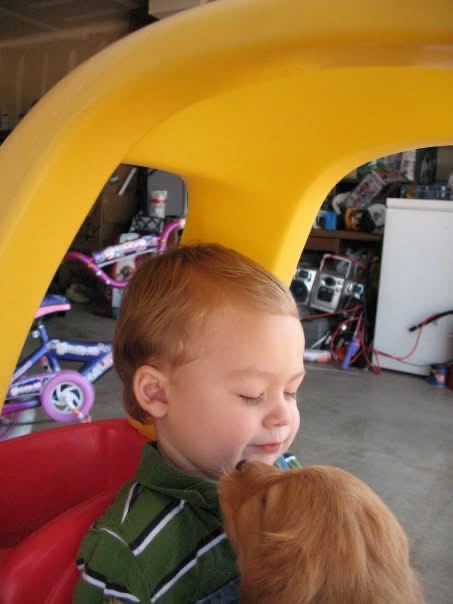
One of the most important decisions a family can make is bringing a new pet into their lives. It’s a joyful choice, but also one that deserves thoughtful consideration. Too often, pets are selected on impulse—because of a cute face, a childhood memory, or a passing trend. But unlike toys or hobbies, pets are living beings who rely on us completely. Their health, happiness, and very lives are shaped by the decisions we make at the start.

Different animals—and even different breeds within the same species—come with unique needs. A Border Collie, for example, is brimming with energy, bred for generations to herd sheep across open pastures. Without a daily outlet for that energy, he may invent his own activities—chewing, digging, or redecorating your living room. On the other end of the spectrum, a Bulldog may be content with a short walk and a nap by your side but will require careful attention to breathing and heat tolerance. The exercise requirements, grooming needs, and even temperaments of different breeds should weigh heavily in the decision.

I’ve seen the consequences firsthand when the match between pet and family isn’t quite right. One that stands out was a dog who ended up in my exam room more often than in his family’s living room. He was anxious, reactive, and ultimately not a good fit for the household. Most of his struggles came back to a lack of early socialization and training. It’s an important reminder: your pet is very much a product of the time, energy, and consistency you invest in them. Breed tendencies may set the stage, but it’s your commitment that writes the story.

It’s not only about breed tendencies, either. Lifestyle, home environment, and family dynamics matter just as much. A busy family that’s gone from morning until night may find a high-energy dog overwhelmed with loneliness and mischief. A cat might be a better fit—independent yet affectionate. Similarly, a small apartment may not be ideal for a Great Dane, no matter how gentle they are.

At the heart of this decision is responsibility. When we bring a pet home, we are making a promise—a promise to feed, exercise, train, provide medical care, and offer companionship for their entire life. Depending on the species, that could mean 10, 15, or even 20 years of commitment. Our pets cannot choose for themselves. They depend on us to make wise, informed decisions on their behalf.

So, before you welcome a new four-legged friend into your family, pause and think. Research the breed. Consider your lifestyle. Be honest about your time, space, and energy. The right pet can bring immeasurable joy, laughter, and love. But only if we, as caretakers, begin with the right choice.

Because in the end, this isn’t just about finding a pet. It’s about honoring the trust of a life that will depend on you completely. Be thoughtful. Be wise. Be responsible.

And that is My Take.
N. Isaac Bott, DVM
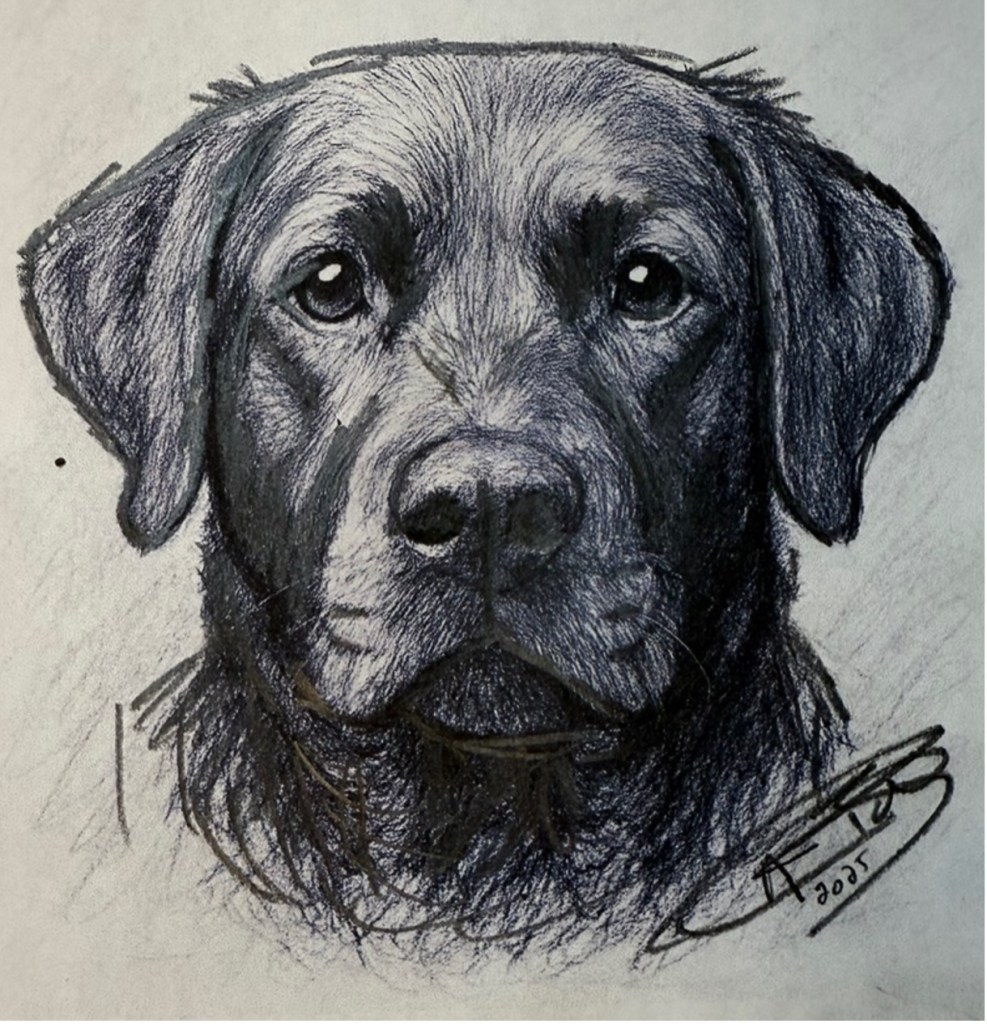
Luther (A Black Lab’s Love)

Sunday Stanza: Luther
(A Black Lab’s Love)

He came like a shadow, silent and sure,
A wagging tail, a heart so pure.
Ebony coat, eyes deep and kind,
A guardian soul with a steadfast mind.

He wasn’t fancy-bred or leash-proud slick,
Just a black lab pup, sturdy and quick.
The kind of dog that don’t ask for much—
A bowl, a bed, and a good hand’s touch.

With Rebekah, he carved out his place,
Beside every footstep, he matched her pace.
Through winding trails and morning runs,
He chased the wind, kissed by the sun.

On roller blades, bikes, or feet flying fast,
He never fell behind, never let her past.
Just one goal in his loyal stride:
To stay beside her, to never divide.

He wasn’t just a dog; he was more—
A quiet protector, a heart at the door.
Through childhood laughs and growing pains,
He stood his post through sun and rain.

Now, he wasn’t just some backyard hound—
He was Rebekah’s shadow on solid ground.
He stood between her and whatever came near,
With the quiet courage that comes without fear.

He loved her fiercely, no words required,
Devotion deep, never tired.
And she, in turn, gave back that grace,
With every hug, every whispered praise.

Fourteen years of fur and heart,
Never once were they apart.
Now he rests where good dogs go,
Near where Kudo and Belle lie below.

When wind stirs the stillness and dusk paints the skies,
You just might catch Luther, in the corner of your eyes—
Still keeping watch, still trotting true,
Still loving his girl like good dogs do.

DocBott

Chickens

My Take Tuesday: Chickens

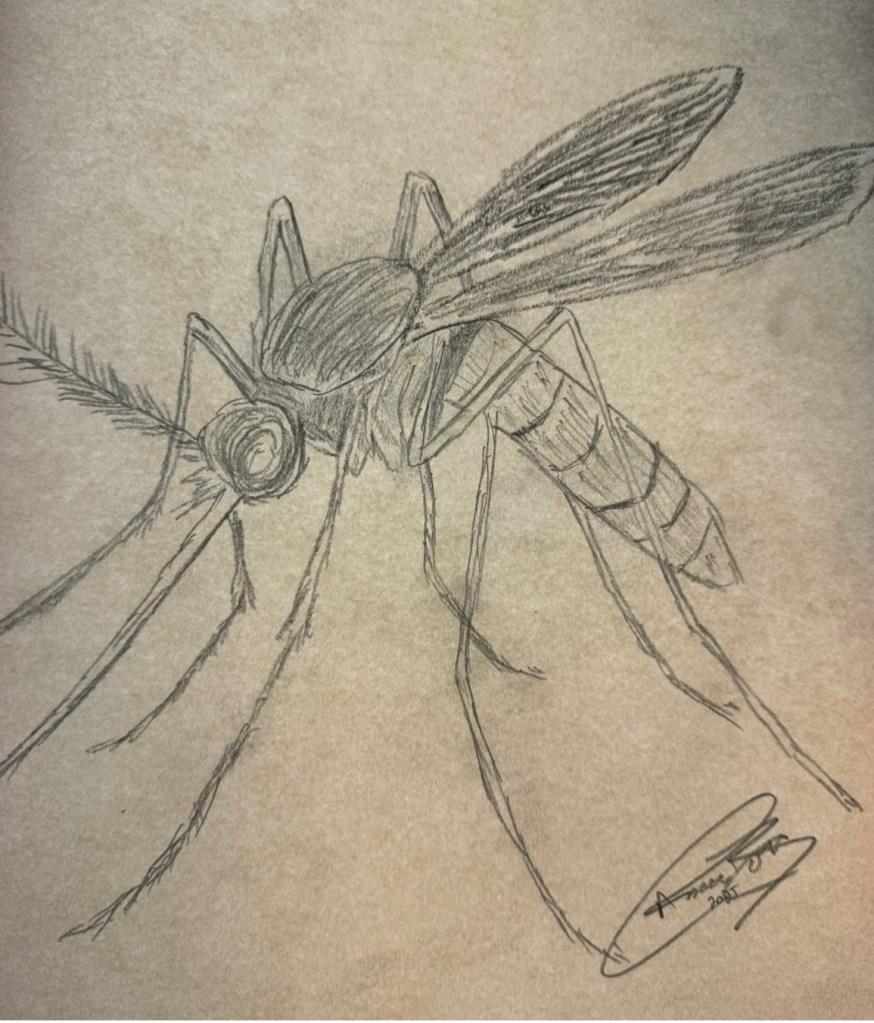
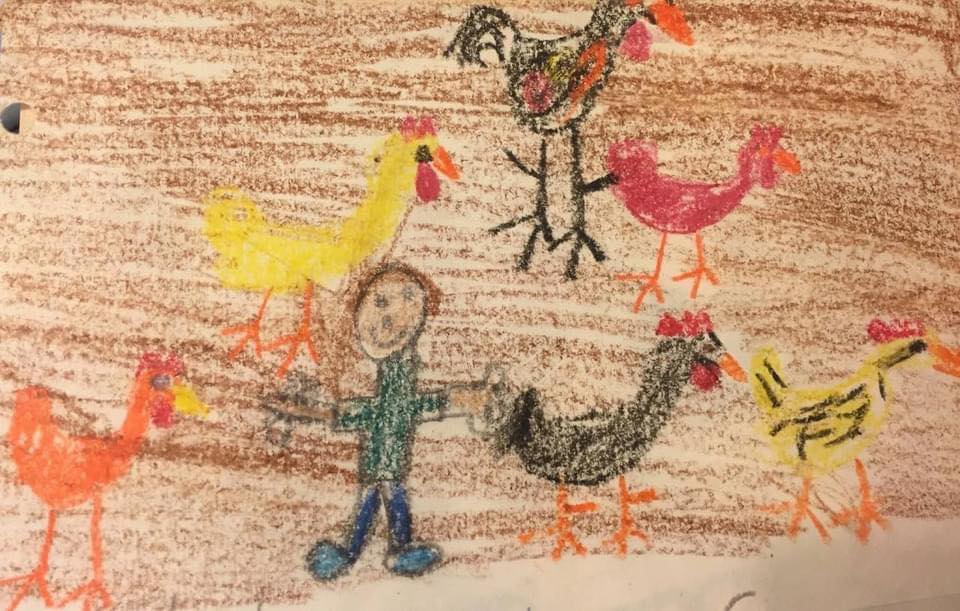
If you went to elementary school with me, you probably remember my chicken obsession. While other kids were sketching superheroes or race cars, I filled my pages with hens and roosters. Every art project turned into a poultry portrait—hundreds of them, all mediocre, all mine. Thankfully, my teachers were patient enough to let me draw to my heart’s content, even if my artistic ability never quite lived up to my enthusiasm.

Each year, the highlight of my spring arrived in the form of the Murray McMurray Hatchery catalog. Glossy pages showcased every imaginable breed—silkies, frizzles, bantams, and standards—each with its own unique traits: comb type, feathering, temperament, productivity. I pored over those descriptions for hours, weighing the pros and cons as carefully as a Wall Street investor. My parents allowed me to choose one chick per year, and that single decision felt monumental.

Picking the right chicken is no small task. Climate, egg or meat production, foraging ability, predator awareness, broodiness, even personality—all must be considered. I took the process seriously, and in doing so, learned to research, compare, and commit.

One of the most fascinating things about chickens is how they reach our homes in the first place. Here in the U.S., the postal system has, for decades, delivered day-old chicks across the country by Priority Mail. At first glance, it seems cruel—tiny birds shipped without food or water. But nature has built in an incredible adaptation: just before hatching, a chick absorbs the last of the yolk’s nutrients, giving it enough sustenance to survive up to three days. In the nest, this allows the mother hen to wait until all her eggs hatch before leading her brood away. What looks like a logistical miracle is really biology at its finest.

And chickens aren’t just fascinating biologically—they’re surprisingly intelligent. Like humans, they see in full color. Studies show they grasp object permanence (knowing something exists even when it’s out of sight), recognize more than 100 individual faces, and can remember them months later. They even demonstrate self-control for future rewards—something once thought unique to primates. Some research suggests they understand numerosity and can perform simple arithmetic. In short, there’s a lot more going on behind those beady eyes than most people realize.

Even now, chickens remain my favorite animals. After a long day at the clinic, I’ll often stand in the back yard, just watching my flock forage and explore. Their curiosity and social quirks never fail to bring me peace.

I often think back to those carefree days in elementary school—crayons in hand, sketching chickens at my desk. Time paints those memories in brighter colors, but the joy was real then, and it’s real now. My drawings may have been clumsy, but they captured something important: a fascination that has never left me.

And that is My Take.

N. Isaac Bott, DVM
The Castration of Smokestack Jack

Sunday Stanza: The Castration of Smokestack Jack

Now I’ve stitched up bulls and I’ve birthed stuck sheep,
I’ve wrestled a mean llama that wouldn’t fall asleep.
But the tale that I tell—of blood, sweat, and fate—
Begins with a horse…and ends south of his gait.

The gelding was named old Smokestack Jack,
A 1200-pound bomb with hooves and a back
Like a freight train fused to a lightning bolt—
He’d never been cut, but he sure had his jolt.

I showed up calm with my tools in hand—
A syringe full of dreams and a castration plan.
The owners stood by with hope and a prayer,
While Jack gave a snort that said, “Don’t you dare.”

First came the syringe with a little xylazine,
To chill his spirit and dull the sheen.
Then butorphanol, a dose refined—
To fog up the sharpness of that equine mind.

Then in came ketamine—quick and true,
The drug of choice when the sky ain’t blue.
But mercy, it’s just a roll of the dice—
Will he lie down sweet… or take out a slice?

You try to steer him, soft as a song,
But twelve hundred pounds won’t sway for long.
He wobbled and leaned, then dropped like a brick—
I dove for his head so he wouldn’t get nicked.

And there he laid, in all his pride,
With two bold apples on either side.
I found my emasculators, strong and clean,
And muttered my mantra: “Nut to nut—know what I mean.”

You clamp that tool, and you hold your breath,
While the seconds crawl on like the angel of death.
One minute… two… you’re counting slow—
Then snip-snap gone, like a late-night show.

Blood’s expected, but not too much—
Just a cowboy ballet with a surgical touch.
I stepped back proud, like I’d wrangled the moon,
But the rodeo started awful soon.

’Cause when they wake up, they don’t send a card—
They just jerk and launch like a rocket straight upward.
Jack shot up like the Fourth of July,
Kicked dust in my teeth and stars in my eye.

The owners were gasping, their dog dashed off,
While I stood there wheezing, tryin’ not to cough.
But old Jack was fine—just lighter behind—
A new way of walking and gentler in mind.

So, here’s to the cutters, the vet, and the crew,
Who ride that fine line ’tween guts and glue.
It ain’t for the faint, or the posh, or the neat—
It’s a dance with danger…but stay your feet.

DocBott

The Everyday Joy

My Take Tuesday: The Everyday Joy

There is a quiet kind of joy that settles into your soul when you are doing the work you were meant to do.

Most mornings, before the sun rises over the Utah mountains, I’m already slipping on my cowboy boots—mud-stained and worn, molded now to the shape of a life spent in motion. I grab my stethoscope, my bag, my keys, and head out into a world brimming with fur, feathers, hooves, and hope.

Veterinary medicine isn’t just what I do. It’s who I am.

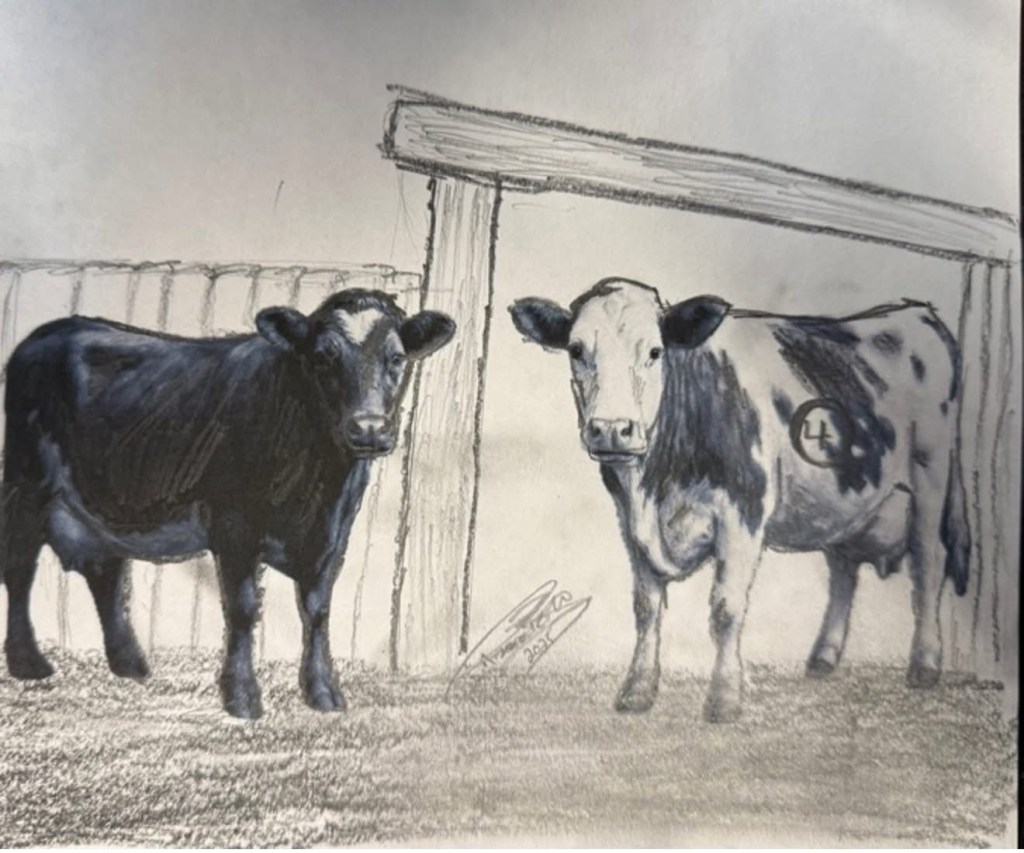
Some days begin in the back of a barn, where the cold air bites and a newborn calf draws its first breath under my hands. Other days start in the exam room, where a child clutches a beloved Labrador, eyes wide with worry. And in between—between the emergencies and the quiet check-ups, between the farm calls and the clinic rush—I get to witness the everyday miracles that make this life so rich.

I’ve delivered llamas in driving snow, sutured deep wounds beneath the unforgiving glare of headlights, and knelt beside a tearful family saying goodbye to a friend they’d had for 15 years. I’ve stood in pastures under the stars, my breath rising like smoke, listening to the steady beat of a healthy heart after a long night of doubt.

There is a profound kind of grace in these moments. They aren’t flashy. They don’t get applause. But they matter. They always matter.

Even in the hardest moments—the ones that steal your breath and sting your eyes—there is joy. Because to be there, truly present, for the full arc of an animal’s life… to be trusted with beginnings and endings and everything in between… that is a privilege I will never take lightly.

Joy lives in the eyes of a child hugging a freshly-healed puppy. It lives in the subtle wag of a tail, in the quiet gratitude of a farmer who doesn’t say much, but whose handshake says everything. It lives in the precise moment a life is saved—and in the reverent silence when one is gently, lovingly let go.

There is a sacred rhythm in veterinary life: the hum of an early morning truck engine, the shuffle of boots on a clinic floor, the steady pulse of a heart monitor, the rustle of straw beneath an anxious animal. I have come to see these not as mundane details, but as music. This is my symphony, and every day brings a new stanza.

Yes, it is hard. Yes, there are heartbreaks. But even in those moments, joy finds a way in—because to walk with people through love and loss is a privilege. To be trusted with the care of what they treasure most is an honor.

This work is never routine. It is real, raw, and sometimes relentlessly exhausting. But every syringe I fill, every suture I place, every hand I hold—weaves another thread into a tapestry of purpose. I didn’t choose this profession for the paycheck or prestige. I chose it because it gives me meaning. And meaning, I’ve learned, is the soil where true joy grows.

This work is rarely easy. It asks everything of you—your time, your energy, your heart. And yet, somehow, it gives more than it takes. It has given me purpose. It has given me perspective. And perhaps most importantly, it has given me stories—each one stitched into the fabric of who I am.

Thank you to the animals who have trusted me, the people who have invited me into their lives during their most vulnerable hours, the dusty roads, the late nights, the long drives, and the moments of stillness in between.

I have loved my work. Deeply. Completely.

And it has loved me right back—in the most beautiful, unexpected ways.

And that is my take!

N. Isaac Bott, DVM

The Oath I Carry

Sunday Stanza: The Oath I Carry

I don’t hang my hat where the marble floors shine,
But where feeders creak and the work smells like pine.
Where calves are born in the glow of dawn,
And the weak hold on until strength draws on.

The clinic is clean, the instruments aligned,
But the soul of this job ain’t sterilized shine.
It’s in fence-line talks and horse trailer dust,
In prayers whispered quiet when the case’s a bust.

I’ve hauled myself through blizzards and heat,
Boots caked in the mire and manure on my seat.
I’ve fought for lives deep into the night,
Through shadowed stalls and flickering light.

There’s a silence that speaks in the lamb’s first cry,
In the mother who stands, though she looked sure to die.
There’s courage in small things—stitches and scans,
And in wiping your brow with manure-cracked hands.

The world doesn’t see what a vet becomes—
Not just tendons and tubes and dental drums—
But the keeper of trust, of loss and grace,
Of the life in a heartbeat, the look on a face.

They think it’s just science—drugs, charts, and steel,
But there’s faith in this work that no book can reveal.
Like standing tall when hope runs thin,
Then crying alone as the grief sinks in.

I pledged my heart in muck and fleece,
To guard the wild, the worn, the peace.
And ever since that oath was sworn aloud,
It’s carved in me deep — humble and proud.

I answer when the call comes through,
Even if it’s late and the sky’s lost its blue.
This life ain’t perfect, but it fits me true—
Where the oath I carry is all that I do.

DocBott

The Plasticity of Parturition

My Take Tuesday: The Plasticity of Parturition

There are places in this world where the horizon rolls on forever, where the wind speaks in whispers and shouts, and where survival is written not in words, but in the hoofprints of millions.

The Mongolian gazelle (Procapra gutturosa) is one such story written across the vast pages of the Eastern Steppe. With a heart-shaped patch of white on its rump and legs built for the long haul, this medium-sized antelope travels as part of one of the last great migratory herds on Earth. Over 1.5 million strong, these gazelle roam across the largest intact grassland in the world, following forage like a compass follows north.

Herds of 100,000 are a common sight here—rivers of muscle and instinct moving across a sea of grass. But it’s during calving season, brief and explosive, that something near miraculous unfolds. Within just two weeks, as many as 400,000 females converge. And in a span of four days, the vast majority will give birth.

This is not coincidence. It’s a calculated gamble written deep into the species’ biology. By synchronizing birth, they overwhelm the predators. A jackal or wolf can only take so many. The sheer abundance of newborns creates a survival buffer. But that’s not the only purpose. The timing also gives the young enough weeks under summer sun to grow strong before the cruel winter arrives.

Some scientists believe this synchronization isn’t just about tooth and claw—it’s also tied to the land itself. To the grass. To the moment when the forage is richest when plants hit their peak in nutrition. It’s nature’s version of perfect timing, aligning birth with the buffet.

And the gazelle aren’t alone. Reindeer, caribou, alpacas, wildebeest—even banded mongooses—show similar patterns. The induction of parturition, the triggering of birth, varies from species to species, but the cast of characters remains familiar: progesterone, estrogen, prostaglandins, oxytocin. Hormones whispering when it’s time.

These adaptations serve both mother and child. Evolution, it seems, has no interest in waste. It sharpens both ends of the blade.

We’re only beginning to understand the depths of these reproductive rhythms. Over thousands of years, such traits have meant the difference between life and extinction. Now, as we seek to conserve endangered species and improve agricultural production, this knowledge becomes more than curiosity—it becomes a toolkit.

If we can better grasp the interplay of reproduction with behavior, nutrition, stress, and genetics, there’s no telling what doors it might open. Perhaps even for our own species.

And that is my take.

N. Isaac Bott, DVM

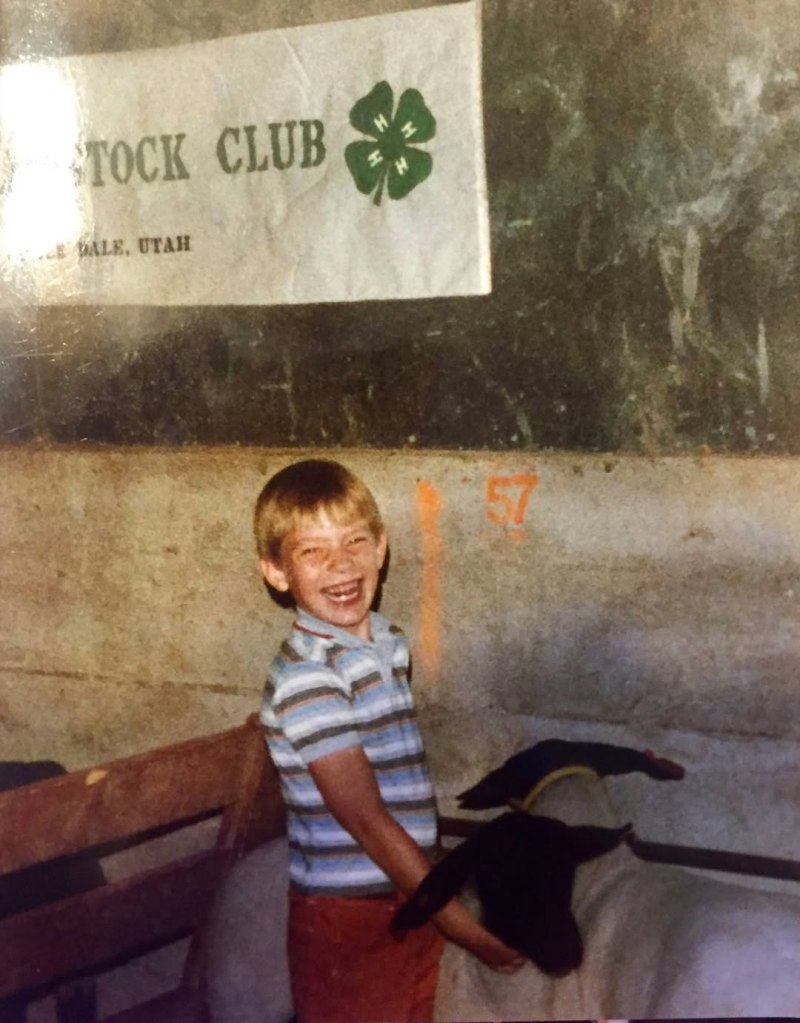
Castle Dale

Sunday Stanza: Castle Dale

Where the San Rafael whispers to cottonwood trees,
And the wind hums tales on a warm desert breeze,
Lies a town built on shell and an honest day’s sweat—
A place that remembers, a place won’t forget.

The Wasatch Plateau stands watch in the western sky,
Snow-capped in winter, come summer, bone-dry.
Its majestic ridges catch sunsets in lavender flame,
While Cottonwood Creek gentle echoes Castle Dale’s name.

The cliffs rise like castles, in rust-red and gold,
Time-chiseled by silence, majestic and bold.
Juniper clings to the hillsides like kin,
Rooted in rock, defying the wind.

The fields are a patchwork of alfalfa and hay,
And tractors still rumble at the close of the day.
The scent of sagebrush and dry diesel smoke
Is better than perfume for Castle Dale folk.

Cottonwood Creek snakes like a sidewinder’s trail,
Just shy of defiant and too tough to fail.
It waters the cottonwoods and willows patches lazy and slow—
And teaches young kids where the rainbow trout won’t go.

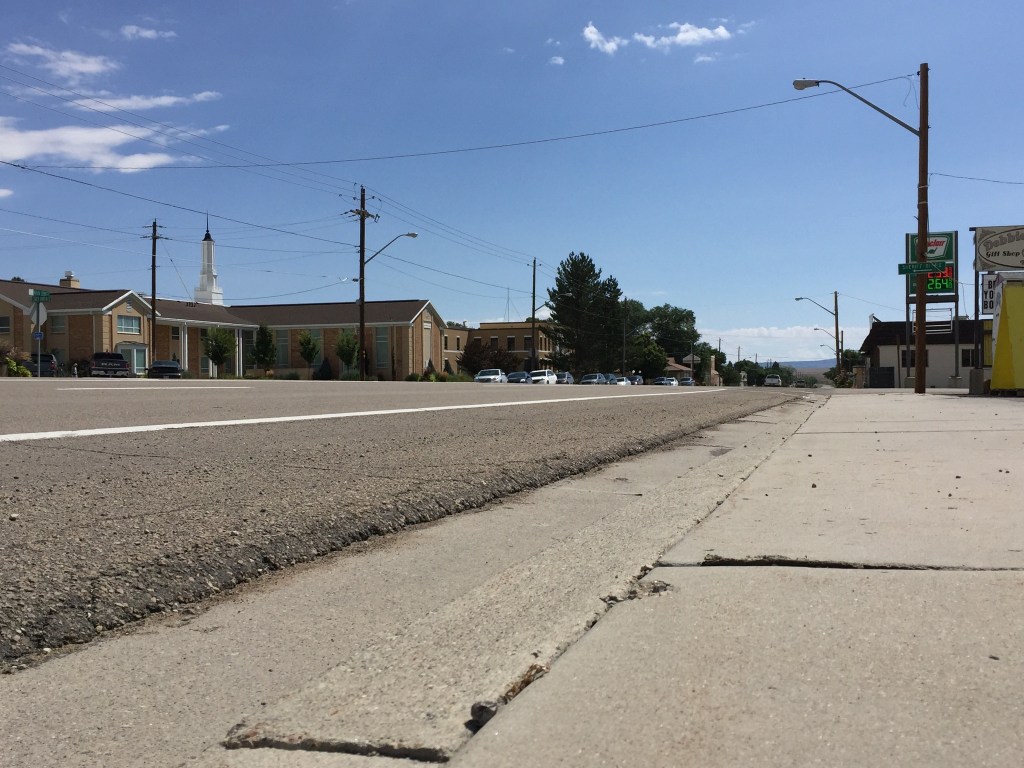
The Main Street’s a page from a bygone day,
Where the post office gossip still makes its own hay.
You wave at each truck, though you might not know Jack—
But you nod just the same with a tip of your hat.

Horses still graze near the old power line,
And cattle still bellow at around quarter-past nine.
Fences lean slightly, but still do their part,
Like the people who built them—with grit and with heart.

Now I’ve seen some high places and traveled a spell,
But none quite so grounded or humble as well.
For all of life’s lessons and truths tried and true—
Castle Dale taught me most of the ones that I knew.

So, if you should wander, just slow your ol’ trot,
You’ll know you’ve arrived at the end of a thought.
Where the stars still remember each cowboy and tale—
And the Creator carved a monument and named it Castle Dale.

At dusk, when the sun dips its hat to the west,
And the stars settle in for a long evening rest,
The silence says more than a thousand loud cheers—
This town’s carved in clay and etched in my years.

Now, if Heaven’s got sagebrush, blue clay, and cows,
And fences that lean like the ones in this town,
If the sun takes its sweet time settling down,
Then Heaven’s just west of this small little town.

DocBott

Where the Stars Kiss the Mountain

My Take Tuesday: Where the Stars Kiss the Mountain

There’s a place hidden high in the Manti-La Sal National Forest, nestled quietly between East and Trail Mountains, where time slows and wonder still whispers on the wind. It’s called Flat Canyon.

The first time I stood beneath its sky, I felt the hush of something holy. The stars didn’t simply appear—they arrived. One by one, they lit the firmament like lanterns hung by angels, until the heavens burned in full chorus. In Flat Canyon, the stars don’t just sparkle—they descend. They seem to lean in and kiss the mountain crests, brushing the ridge with celestial breath.

There’s no cell reception here, no glowing streetlamp to compete with ancient starlight. Just mountain air, cool and pure, and the kind of darkness that lets light show its true brilliance. You don’t just observe the stars in Flat Canyon—you become part of the sky.

The canyon floor is silent but for the breeze in the pines, the gentle fluttering of the aspen leaves, the occasional hoot of an owl, and the bugle of a bull elk. It’s the kind of silence that isn’t empty, but full — Brimming with memory, majesty, and meaning.

We spend so much of our lives looking down—at screens, at schedules, at the next step ahead. But in Flat Canyon, surrounded by peaks and pine, you can’t help but look up. And when you do, you remember what awe feels like.

We often search for beauty in faraway places—grander, more exotic destinations. But sometimes, wonder waits right here in Utah, high above the noise, in a quiet canyon where the stars kiss the mountain.

And that is My Take!

N. Isaac Bott, DVM

In His Valley Still

In His Valley, Still

The mountains hold a silent grace,
Reflected on the water’s face,
A quiet breath, a sacred swell,
Where story, sky, and calmness dwell.

The pines remember, so does stone,
This valley never stands alone.
It speaks in echoes, soft and low,
Of those who shaped its silent glow.

So let the clouds drift where they may,
Let light and water softly play—
For Joe’s Valley is more than lake or land,
It’s memory, carved by steady hand.

The stillness here runs mountain deep,
Where sky and water fall asleep.
A mirror held in nature’s hand,
Reflecting more than sky or land.

And at its heart, a quiet name—
Not etched in glory, gold, or fame,
But one who gave, and stood, and stayed:
Oral Eugene—his mark remains.

Did he walk here in twilight’s hush,
Where cotton clouds in stillness brush?
Did he believe this work would be
A gift of calm for you and me?

The trees bear witness, so does clay,
To hands that shaped the water’s way.
This lake, this light, this sacred span—
They hold the soul of one good man.

No crowds, no clocks, no rush, no race,
Just beauty wrapped in open space,
A holy hush, a sacred view—
Joe’s Valley knows what’s real and true.

DocBott