Tempus Est Brevis

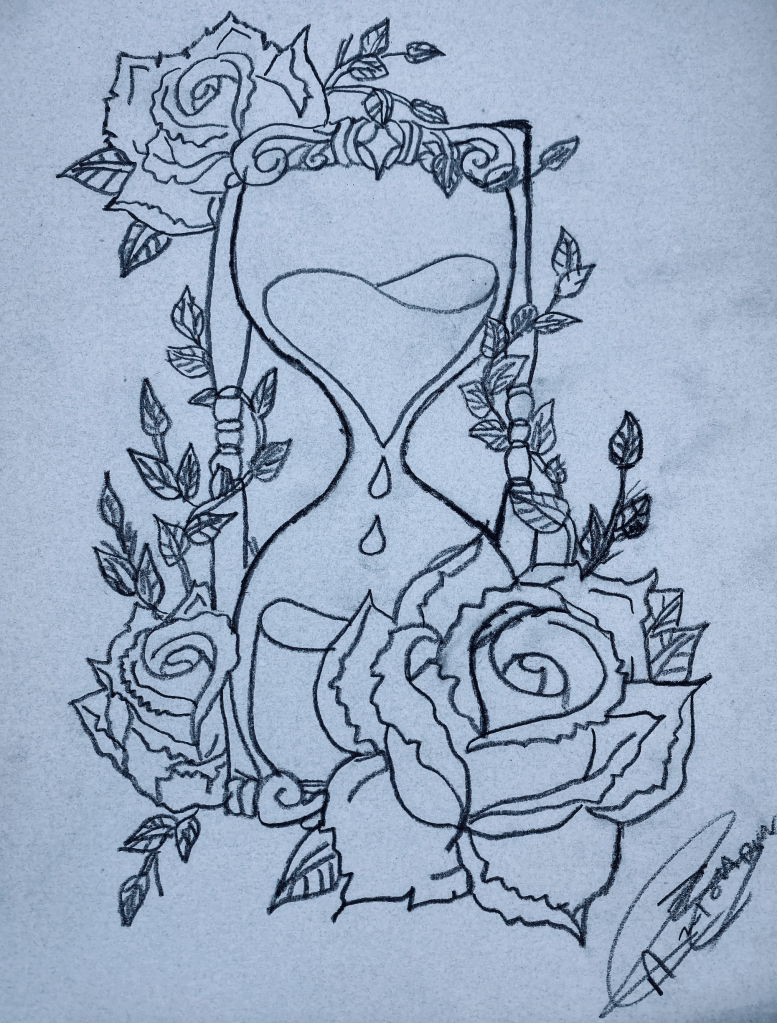
My Take Tuesday: Tempus Est Brevis 

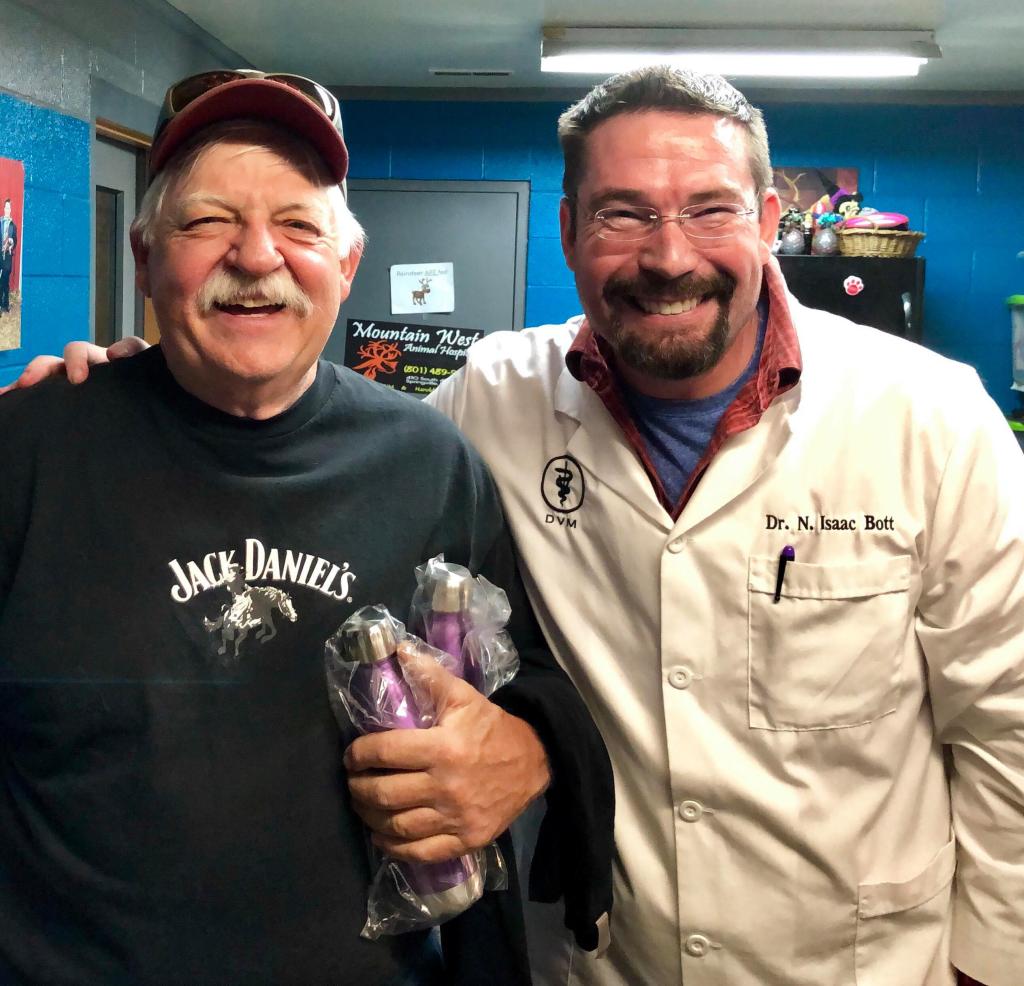
In 1977, a small building was built on the west end of Springville. The inconspicuous edifice was the only structure on the south side of 400 South, just west of the train tracks. Open green fields on all sides extended all the way, uninterrupted to the nearby city of Spanish Fork. Mountain West Animal Hospital began its long history of providing quality veterinary services to the surrounding community since its humble beginnings over 43 years ago. 

As I reflect on the legacy of the business started so long ago by Dr. Harold Davis, I am amazed at the growth of the surrounding community. The open green fields of long ago are now dotted with new developments. Some nostalgia is inevitable as I look at old photos of the clinic in the late 1970s. 

This pandemic has been difficult for us all. Our lives have changed in ways few of us could have imagined at the start of 2020. Yet, time marches steadily on, and life remains as fragile as ever. Death has also abruptly impacted many of us. So many loyal clients and beloved patients of Mountain West Animal Hospital have passed away during these last few months. 

This past weekend, I received the news that a dear client and friend died unexpectedly after a brief illness. Tears streamed down my face as I spoke with the sister of this wonderful woman on Saturday afternoon. 

Glenna Wyeth was one of the very first clients to visit the new clinic in 1977. Over the following four decades, she continued to loyally bring her pets in to see Dr. Davis. She had dozens and dozens of cats and dogs that she lovingly took care of over the years. She gave her best to each of them. She provided them with wonderful lives and she loved each of them dearly. 

When I purchased the clinic in January of 2014, I felt a tremendous amount of pressure. I resolved to try my best to take care of the clients and patients that had been so loyal for so many years. Glenna was one of the very first clients that I met after purchasing Mountain West Animal Hospital. She accepted me without hesitation and made me feel welcomed at the clinic. Each interaction I have since had with her have been the same. She felt like a family member. 

The longer I practice veterinary medicine, the more obvious it becomes to me that my job is as much about communication with the two-legged clients as it is about the care I provide for dogs and cats. I give my all with each interaction and loyal clients have a special place in my heart. Caring is contagious. I feel reciprocity with these wonderful people that trust me with the care of their pets. 

Glenna wouldn’t want any praise like this, but I give it for me. Her death has caused me to reexamine my own life, and to try to find better ways to live it. As lives are saved and others are lost, I remember how important it is for someone to take initiative and to tend to the responsibility to care for the helpless and to speak for those without a voice.

There are days that change the times and there is a time to say goodbye. Glenna, I send my love to you. I tip my hat to you for your insatiable desire to help end suffering in pets, and for the dedicated love and attention you have provided to each of the four-legged family members that have lived in your home. 

Even though now you are called to round up the stray animals in heaven, I can see you with even a wider smile on your face surrounded by tail-wagging dogs and cats.

When all is said and done, loyalty is all too often a matter of convenience. It is readily available when self-interests are fulfilled and benefit is mutualistic or even comensalistic. The true test of character is when, no matter what the cost, loyalty is shown when there exists no sphere of recognition potential, no roar and support of a crowd and no chance of fame or fortune. Glenna, you were loyal. You taught me so much about how I could improve myself, without saying a word. You trusted me and I will always be grateful for that. 

The tears that fall from my eyes are not just for you, but are also for those of us that have to continue on without your physical presence, without the sound of your laugh and the sight of your contagious smile. 

Rest in peace, Glenna. Your influence will forever remain in my heart. 

And that is my take.

N. Isaac Bott, DVM

Where the Daffodils Grow

My Take Tuesday: Where the Daffodils Grow 

On 22 August 1877 Brigham Young issued a formal call for settlers to locate in Castle Valley. This was the last such directive from the “Great Colonizer” before his death just 7 days later. If you have ever visited Emery County, you come away with the realization that the best was saved for last.

Castle Valley is a state of extremes, from the mystical beauty of the towering Rocky Mountains to the west to the highest order of desolation in the San Rafael Desert on the east. Even there, among the sage brush and cedars, a pristine beauty beckons the attentive eye. 

My great- great grandfather – Boye Petersen heeded Brigham Young’s call and was one of the original settlers of Castle Dale. He homesteaded the West Farm – a 48 acre piece of land that our family still owns today. The straight road it is on connects Castle Dale with Orangeville and is aptly named Bott Lane. 

Growing up in  Castle Dale provided three character traits that have proven to be  useful.  I developed a strong work ethic, a vivid imagination and a unique self awareness. This is home. There is something about Emery County that heals my soul. It is my constancy and my serene sanctuary where I can reflect and recharge. Even though I now reside two hours north in Utah County, I still feel connected and drawn to the well worn paths of my youth and the Blue Clay Hills just south of Castle Dale. I have Trail Mountain lightning running though my veins and the Castle Valley thunder pounding in my chest. 

Winters in Castle Valley can be brutal. The snow and ice seem to linger. Farm chores like milking and feeding cows are much more difficult the longer the winter draws on. Piles of cow manure freeze as solid as stone and the ground around water troughs turns into a sheet of ice. One cannot help but feel a longing for warmer weather and new life.

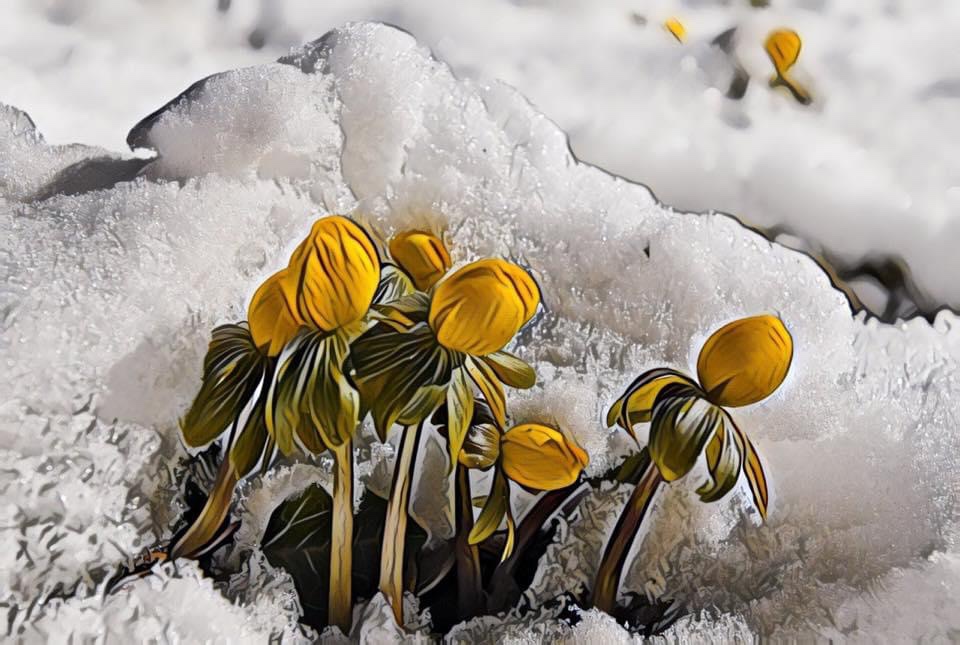
In late winter, each morning and afternoon, I would leave my parents house and cross the street on my way to the corral. I would walk along a shaded well-worn path along the east and south side of my uncle Jerry’s house. Between the edge of the house and the sidewalk, green stems would suddenly poke through the frozen ground. The first sight of these unassuming leaves beckons to the attentive eye that the worst of winter is passed and that spring is soon to follow. 

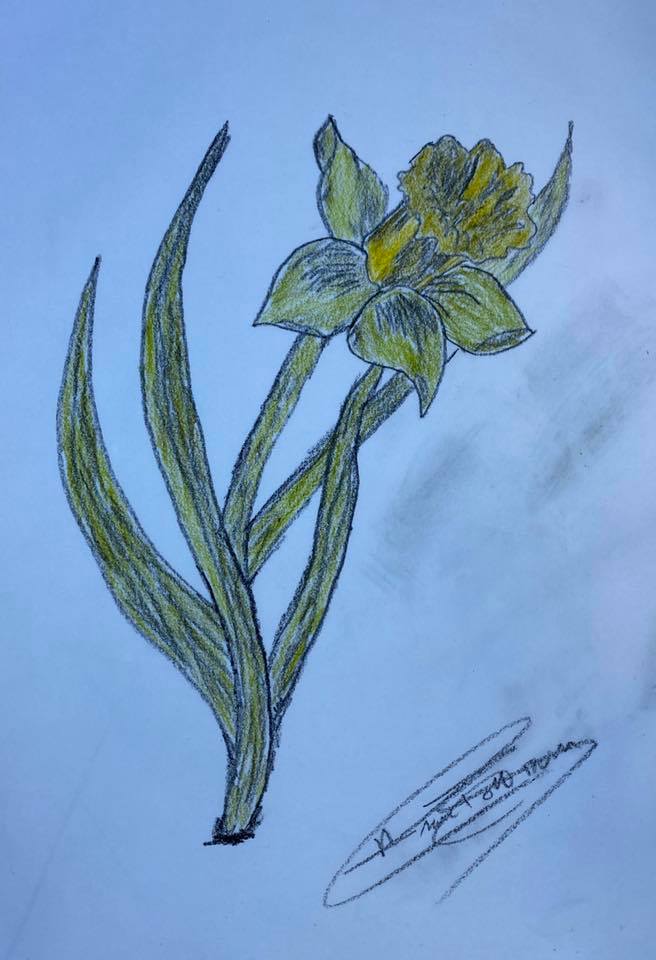
The leaves and stems grow quickly, symbolizing rebirth and new beginnings. They bloom with their cheery yellow hues. Each one is perfect, a golden trumpet amid a fanfare of halo petal. 

Daffodils are majestic, but so delicate, and they wave like tomorrow is guaranteed. After a few short weeks, they are gone, not returning for the remainder of the year. 

The Latin name for daffodil is Narcissus. It is believed to be named after the son of the river god from Greek mythology. 

Its blooming happiness may be fleeting but at the very least, it’s still enjoyed by those observant enough to see its beauty. They stand rooted, soaking in the sunshine and taking in yesterday’s rain through their fine roots. 

Daffodils remind me of my sweet uncle Jerry. He passed away in 2016. He was a gentle giant and, along with his twin brother Jeffry, are the kindest people I have even known. 

As the snow melts and the days get longer, the geese will return as a symbol of change. And once again natures palate will color Castle Valley. 

When the canyon rivers and mountain streams flow, spring will follow at last, in Castle Dale, UT, where the daffodils grow. 

And that is my take. 

N. Isaac Bott, DVM

My First Surgery

My Take Tuesday: My First Surgery

I was raised on a small farm in Castle Dale, UT. We raised Guernsey milk cows, Suffolk sheep and many varieties of chickens and pheasants. My daily chores included feeding the chickens and gathering the eggs.

One day after school, I walked into the barn that housed the chickens. The barn was divided into three equal rooms. The first room is where we would store stacked straw bales. The second and third rooms were where the chickens and pheasants were kept.

On this particular day, I found our calico cat nestled with her newborn kittens. She was lying right next to the straw stack, on the ground near the chicken coop door. There were seven in all. As an 8 year old, and still to this day, new babies of any kind are an exciting experience. I dropped down and began counting the tiny kittens. I was so thrilled! As I handled the small kittens, I noticed that something wasn’t quite right. The umbilical cord from one of kittens was wrapped tightly around a leg of each of the kittens. If I picked one kitten up, the entire litter would follow as if they were chained together. I tried to remove the cord with my fingers, but it was far too tight. Even as a little kid, I knew that something had to be done.

In Castle Dale at this time, we did not have a veterinarian. The only veterinary services available were on Thursdays when a veterinarian would travel from Richfield. It was early afternoon, so my dad was not going to be home from work for a couple of hours. I had to figure something out for myself.

I reached in my pocket and pulled out my Swiss Army knife. It was one that had a myriad of blades, nearly all of them never used, and a tooth pick and small set of tweezers in the handle. I opened the smallest cutting blade and bent down. I very carefully cut the umbilical cords from each of the kittens. I used some iodine to keep the procedure as clean as possible.

The procedure was a success. All of the kittens survived.

Fortunately, I no longer use my Swiss Army knife for surgeries. Although my surgical skills have been refined and perfected, I still have the curiosity and passion that that 8 year old displayed. I love being a veterinarian. The satisfaction I felt that day long ago is repeated every time I am able to help save a life.

I look back on my first surgical experience with fondness. It was one of the important milestones in my path to becoming who I am today.

And that is my take!

N. Isaac Bott, DVM

I am pictured here with kittens in 1988

Doc, whatever she’s got, I’ve got the same thing too!

My Take Tuesday: “Doc, whatever she has, I’ve got the same thing too!”

Animals and people dictate what happens every day for me. Simple routine appointments can turn out to be complex once the unpredictable yet potent potion of human personality is added to the mix.

A few months back an elderly woman came in to the clinic. Her cat had been suffering for weeks with non-stop itching. As I examined the cat I noticed that this itch was insatiable. The poor cat had scratched and irritated nearly every inch of its body in an effort to satisfy the intense itch. The scratching was so intense, that nearly her entire body was covered with bleeding sores.

A diagnosis of mites was made after taking a skin scrape and looking at it under a microscope. This particular mite is elusive and difficult to find even for the most experienced veterinary dermatologists. However, it is highly contagious.

As I began speaking with the owner about the severity of the diagnosis and the need for immediate treatment, I could tell that her mind was wandering. She was clearly not focusing on what I was saying. I politely asked if I had said something that did not make sense or if she had any questions. Often, the open ended questions will allow a client to discuss their concerns, however, I was not prepared for what happened next.

“Doc, do you think I have what she has?”, her voice was inquisitive. “Excuse me?”, I replied, “What do you mean?” Before I could say another word, this elderly woman dropped her pants. Literally right to the floor. Her legs were covered in large red lesions. They actually looked like checker boards. I learned that day, albeit involuntarily, what “granny panties” look like.

I am easily embarrassed, and when this happens my face turns a deep red. I stammered, “I…. I’m… a… I am sorry ma’am, you will have to go to your doctor for that”. The beet-red shade on my face persisted even after I exited the room.

As crazy as this may seem, I have had worse things happen while going about my daily appointments. However, those are saved for another My Take Tuesday.

My job is never boring. The two legged creatures that come in keep it from ever being so.

And that is my take.

N. Isaac Bott, DVM

Forget Me Not

My Take Tuesday: Forget Me Not

There is a flower that grows in the beautiful mountains of Alaska. It is a tiny plant that is easily overlooked, it’s small and unassuming stature is easily lost as the surrounding vegetation is observed. However, on closer look, this flower is a remarkable example of nature’s masterpiece. The dark green stems and leaves are much like those of other plants, but its flowers are what make this flower unforgettable. The sky blue pedals perfectly match the beauty of a clear, cloudless day. The tiny flower displays a most unique and unforgettable beauty. It is a true marvel of creation and is aptly named, “Forget Me Not.”

A couple of years ago, I visited a massive cemetery. I walked quietly along the long never-ending rows of marble headstones. Many were from the 18th and 19th century. Moss was visible along the base of many of the markers. Names and dates, weathered and worn, were fading on many of them.

As I looked around, the headstones numbered in the thousands. Who were these people? What were they like? What is their story? Only a handful are remembered, and unfortunately, most are largely forgotten.

I pondered as I read the inscriptions. I questioned, “Is this what is to come of me? When I go the way of all living things, will I be remembered? Will I leave a legacy?”

My mind turned to the small cemetery in the town where I was raised. Castle Dale, Utah is a small place, one easily overlooked by most. The cemetery is located on the north end of Center Street. I spent a summer during high school working as a caretaker there. Each week, I would mow the lawn. Care was taken as the grass was trimmed around each and every headstone.

Many of my ancestors are buried in the cemetery in Castle Dale. My great great grandmother, my great grandparents, grandparents, a beloved uncle and an infant cousin all rest in this special place.

My great grandfather passed away long before I was born. I have a picture of him smiling and sitting on the grass in a pair of bib overalls. He is aged and tired, but his character is still evident in the old photograph. It reminds me of a wise observation that Thomas Edison made concisely by stating, “I have friends in overalls whose friendship I would not swap for the favor of all of the kings of the world.”

My grandfather died when I was only three years old. My memories of him are largely limited to what others have told me. He served as county clerk for over two decades. Like his father, he was a dry land farmer. He worked tirelessly to provide for his six children. The ground he and his father tilled and planted year after year, still remains in the family today.

My uncle passed away in 2016. I owe my very life to my uncle Jerry. Once, as a curious 5 year old, I was standing in the doorway to his kitchen. Jerry had a bag of those pink chalky wintergreen disc candies. I placed one in my mouth, and somehow got it lodged inside my trachea. He must have sensed my panic, but he calmly walked over and gave a firm push on my stomach and the piece of candy shot across the room. If you are lucky enough to know my uncle Jerry Bott, then you have the privilege of knowing the best person I have ever met. There is no better example of loyalty, charity and love than he was.

All three of their graves are located next to each other in the south side of the middle section. Each lived wonderful lives. Each treated their fellow men in kind with an honest word, a helping hand and a smile. With the years and the long hard miles, each always did their best. When the storms of life broke loose, each valiantly fought with courage.

As long as my heart beats, each will never be forgotten.

They inspire me still. Their legacy invites me to be a better father, a better friend, and a better man.

Like the small unassuming Forget Me Not flower, each of us, no matter how small or inconspicuous we are, have an important part to contribute to the tapestry of our posterity and the majesty of creation and life.

And that is my take.

N. Isaac Bott, DVM

The Late Night Call

My Take Tuesday: Late Night Call

The phone rang at exactly 2:03 AM. I jumped out of bed and sleepily answered, “Hello?”.

Calls like this often come in the early morning hours. Animals, it seems, have the worst troubles while we are sleeping.

“Hey Doc, can you come out to my place?”

“What’s going on?”, I responded, wiping the sleep from my eyes.

“It is one of my ewes, Doc, she has 5 hooves sticking out of her backside!”, he explained with a dramatic tone.

“Alright, I will be right there”, I replied, as I quickly changed my clothes and dressed for the outside temperatures. Situations like this seem to always occur in January, when the temperature is below zero.

I fired up my pickup truck and headed down the road.

Mr. Johnson was a long time client and a good sheep man. He knows enough to get through most situations and is good about calling me before all hope is lost.

Farmers like Mr. Johnson are becoming more and more rare. Large corporate companies have taken over so much of the agriculture industry and have forced the small guys out, sending along the notion that each individual animal has value simply because it lives. The loss of both equates to a disappearance of my favorite part of being a mixed animal veterinarian – the interactions I have with people. The ability to help individual people through service for their animals is the hallmark and joy of being a successful veterinarian.

Bravery and survival are sojourners, and Mr Johnson still fights daily to stay afloat and continue his 100+ year family legacy of sheep farming.

As I pulled into the Johnson ranch, my headlights hit the west side of the weathered old barn. Missing slats checkered the barn wood walls and added variety to the relic that can be seen during the day from the busy interstate, I-15.

As I stepped into the barn, Mr. Johnson greeted me warmly. “Hazel is making some hot chocolate for you Doc, we sure do appreciate you coming out in the middle of the night like this.”

He pointed me to the Suffolk ewe. She was indeed in distress, and sure enough, 5 legs and small hooves were protruding from her back side.

I calmly knelt down behind her and began my work. A trip a couple of years back to Auburn University provided me with a valuable trick in a situation like this. A small dose of Epinepherine was administered intravenously, and almost instantaneously, her uterus relaxed.

I gently pushed each of the legs back in and blindly felt around with my hand. A head was readily palpable, as was a tail, and a second head.

“Well, we at least have three!”, I exclaimed as Mr. Johnson anxiously looked on.

I continued to palpate until I was certain that I had two front feet from the same lamb and began the delivery. The first lamb was a large buck, nearly 18 pounds and jet black. The second and third were both ewes and were smaller and lighter in color. I then reached back in, and to my amazement, pulled out a 4th lamb. The last one was a buck and was much smaller in size compared to its birthmates.

All four lambs immediately began moving after being delivered. Mr. Johnson and Hazel gently rubbed each of them with warm towels as they coaxed them to breath.

After the delivery, mother and each of the quadruplets were doing remarkable well.

“We have never had 4 babies at once!”, Hazel exclaimed, “It looks like we will be busy bottle feeding!”

I sipped on my hot chocolate as I watched the newly born lambs stand for the first time.

I thanked the Johnsons as I pulled away.

As my headlights again hit the barn wall and then the straight long driveway of the Johnson ranch, the lights hit a barren tree along the fence line. The branches were covered in small ice and snow fragments that sparkled in the headlights. As I peered out my window, the barb wire strands seemed to glisten and sparkle as I traveled down the roadway.

I sat in amazement. Here is a simple ranch with a barn that is falling apart, yet on this cold winter night, it was a quiet serene paradise.

I pondered how fortunate I am. While the rest of the world is in bed, I have the privilege of bringing life into the world and seeing the majesty of God’s creation.

In this acquisitive world we must learn that in our lives we can’t have everything. But if we have freedom of spirit: to imagine, to question, to explore; then we have everything we need. To travel hopefully is a better thing than to arrive. The journey is the reward. I love being a veterinarian!

And that is my Take!

N. Isaac Bott, DVM

An Enemy’s Christmas

An Enemy’s Christmas

The quarter sized snowflakes fell in unison. The rhythm and pace quickened as the precipitation accumulated. Over six inches of total snow arrived in just a few hours on that particular Christmas Eve in the small town of Castle Dale, Utah.

I was in a somewhat grumpy mood, as we loaded up the old green Chevy Suburban and headed down the road.

The destination this night was a small house on the other side of town. Boxes of presents were neatly wrapped and stacked in empty orange boxes. With each turn, I could hear them slide gently back and forth in the back of the vehicle.

“Why them?” I asked.

In my 12 year old mind I did not understand why we were taking Christmas presents to this particular family. If someone ever had a reason to dislike another, I figured the events of the past few months would justify the bitterness I felt.

Just a few weeks prior, a scathing letter was published in the local newspaper that was critical of my father. I remember reading it one afternoon as I sat at the kitchen table.

“Mom, why would they say such mean things?” I inquired earnestly.

“I am not sure Isaac,” my mother replied, “Perhaps they just needed to vent and get what they were feeling out. It probably made them feel better writing it down.”

“Well,” I interjected, “It’s dumb. Not a word of what they said was true.”

Hating an enemy is what comes naturally. We hate in an effort to not allow them to continue to hurt us.

Inside I seethed. No one. No one. No one can say such vile things about my dad. The simple fact that Mom and Dad didn’t seem at all bothered by it made me even more upset.

Yet, here we were, delivering Christmas to this very family.

“They just don’t deserve it,” I thought to myself.

As we turned off the main road and headed up the narrow road that lead up the hill, we crept along quietly. No lights. No sound. The snowfall helped damper out any audible signal of an approaching vehicle.

“Daniel and Isaac,” my dad quietly said, “I want you two to place these and knock on the door.

He continued, “Be quick. Run and hide and come back to the car without being seen.”

Daniel and I knew this would be the easy part. We were experts at doorbell ditching.

The delivery went flawlessly. We were out of sight when the porch light turned on and the front door opened.

“WOW!”, the small child’s voice pierced the snowy solitude, “Look at what Santa Claus brought us!”

The next statement pierced my heart.

“See, I knew he wouldn’t forget us!”

Several excited young voices joined in unison as the boxes were picked up and carried into the house. Then, in the blink of an eye, the porch light turned back off and the tranquility of a beautiful winter’s night returned.

A warm feeling overcame me as we arrived back at the car. The feelings of anger and resentment I had felt just moments before were no longer there. In their place was a feeling of love and what the true meaning of Christmas really is. We talked about how important it is to help and love others as we drove back home.

I thought about a bible passage that I had read so many times. “You have heard that it was said, ‘Love your neighbor and hate your enemy.’ But I tell you, love your enemies and pray for those who persecute you.” (Matthew 5:43-44) Certainly, this is not an idea that was taught only by Christ. Buddha, Gandhi, and many other great people and religions have nearly identical teachings.

It is a funny thing that I don’t remember much about any of the presents we received that year. I do, however, remember everything about giving Christmas to someone I considered an enemy.

28 years have now passed. Not a soul, besides my parents and siblings, knew who delivered the presents on that Christmas Eve.

The lesson I learned from my parents that year was not wasted on me.

Love is what makes all the difference. Herein is love, not that we first loved God, but that he loved us. Regardless of our acts, this love in unconditional. Poor or rich, young or old, religious or agnostic, His love remains as constant as the North Star.

I can assure you this is what Jesus really meant. And those words are just as true today as they have ever been. Has there ever been a time in our society where we needed to put this into practice more than now? 

In one of the last recordings that the late Charley Pride released, he eloquently observes,

“He tells me money doesn’t matter

Nor the color of your skin

We could stumble or even fall, and still get up again

Cuz it ain’t about the deeds, good or bad that we have done

All we have to do is love to be disciples of the Son.”

May each of us take a moment to enjoy the simple things today. As long as there is a sunset, there will be always be moments of joy and gladness for each of us. May we love each other, even those that have wronged us. Giving this love will open our hearts and allow us to experience a new level of happiness.

I recollect with fondness the traditions my family shared. The presents are gone. The shoes and clothes are all worn out, but the memories remain. The true meaning of Christmas is, after all, about love. Our Christmases were centered around family. We were together. How grateful I am for that. A quick trip down memory lane rapidly brings back the joy and love I felt on that special Christmas Eve while growing up in Castle Dale.

Merry Christmas!

N. Isaac Bott, DVM

The Christmas Cactus

My Take Tuesday: The Christmas Cactus

I never did get to meet my paternal grandmother. Her name was Caroline Westover Bott. She died several years before I was born. I wish I could have gotten to know her. I have heard stories about her humorous personality and just how kind and sweet she was.

Her favorite plant was called a Christmas cactus. This plant is a long lived plant with flat, segmented stems. Most of the year its appearance is fairly unassuming. It seems to be just a regular potted green in the corner of the living room.

Around Christmas, however, something magical happens.

With care, this plain looking plant will blossom with beautiful pink flowers. Because of this festive seasonal bloom, the Christmas cactus is a tradition in many European and North American homes during the holidays.

After my grandmother died, her husband and children continued to take care of her Christmas cactus.

Caring for this plant is much more intense than other common house plants. Despite its name, the Christmas cactus is not a desert plant, but rather has its origins in the tropical rain forests of South America.

In fall, night temperatures around 50-55 degrees will trigger Christmas cactus to form flower buds. A carefully monitored balance of darkness and sunlight will give you beautiful blooms in time for the holidays. My uncle Jerry faithfully took care of this plant year after year until he died in 2016.

One of my favorite Christmas memories is setting around this plant on Christmas morning and opening presents. I will forever treasure this family time and the pleasant memories that remain.

Another unique feature of this segmented plant is its ability to propagate. By transplanting a cutting of at least three stem segments into a small pot of soil (preferably taken from the pot of the parent plant). At least one segment is then buried. With care and time the plant will take root.

A couple of years before my uncle Jerry passed away, he gave me a small transplant from this Christmas cactus that belonged to my grandma. As it brilliantly bloomed during this holiday season, I longed to spend time with my loved ones that have passed away. I am so grateful for this tangible legacy that will continue to live on and be passed on to my children. It is my own little piece of a holiday tradition that lives on all year long. I cherish my Christmas cactus and the family ties it symbolizes.

And that is my take!

N. Isaac Bott, DVM

Operation Santa Claus

Operation Santa Claus

For many decades, Operation Santa Claus was home to the largest herd of domesticated reindeer in the lower 48 states. The ranch was nestled along the eastern side of Oregon’s Cascade Range, in the High Desert town of Redmond, Oregon.

The ranch dates to the early ’50s when John Zumstein of Redmond brought a small herd of reindeer from Alaska. These were the first reindeer to be imported from Alaska. The herd readily adapted well to the Oregon climate.

In the 1980’s, the ranch was acquired by Mike and Cindy Gillaspie. Through the years, the ranch has evolved from a kind of “mom and pop” operation that entered animals in local parades to reindeer supplier for such clients as Disneyland, the Los Angeles Zoo, films (“Ernest Saves Christmas,” for one) and dozens of commercials. Operation Santa Claus has served as the premier source of reindeer stock and rentals for many years.

A couple of years ago, the last of the reindeer left this historic ranch. As Mike and Cindy Gillaspie prepared for retirement, they sold the remainder of their animals and moved on to a new chapter in their lives.

The last two reindeer from the ranch in Redmond were transported to Springville to live the remainder of their lives at Mountain West Animal Hospital. They have adapted well to the Utah climate.

As the era of Operation Santa Claus closes, a new page is turned. I am so grateful to have been able to visit this iconic ranch many times and to be able to call the owners my friends.

Yuki is pregnant this winter and she will give birth in late spring. A tangible legacy of Operation Santa Claus will forever be at Mountain West Animal Hospital.

N. Isaac Bott, DVM

Why Reindeer?

My Take Tuesday: Why Reindeer?

Curiosity is often sparked when clients learn about some of my work with reindeer and also when they see the massive antlers of our resident reindeer. This always begs the question… Why reindeer?

The day was March 28, 2010. I was driving on I-15 heading up to Cottonwood Heights. The next morning I was to begin a new job at an animal hospital in West Jordan. I was as nervous as I could be about the new change. As I was driving, I received a call from a concerned individual. The caller explained that his pet was thought to be pregnant and that confirmation was needed. It was then explained to me that the said pet was a reindeer. Now, as a veterinarian, I deal with a lot of animals, everything from antelope to zebras. However, I never anticipated working with reindeer. I had never even seen a live reindeer at this point in my life. But as I often do, I thought to myself, “Why not?” I told the caller I was just a few miles away and was happy to stop by.

I arrived just in time to witness the female reindeer, named Mischief, begin her labor. I was able to then help deliver a small female calf. The baby was so fragile! It was a solid jet black. I remember thinking that was such an unusual color when compared to her mother. The calf had difficulties initially. I had to administer medication to help with heart rate and for several days, the mother had to be milked and the calf had to be fed with a bottle. Mother also had difficulties after the birth. She had retained the placenta and required several days of medical intervention. Finally, after nearly a week, mother and baby began to thrive.

Over the course of the next several weeks, I would often stop by after work to check on the new mom and baby. The owner of the reindeer and I would often talk about how fascinating the experience had been for me. One night, he approached me about beginning an artificial insemination program for his reindeer herd. He had been searching for a veterinarian to attempt assisted reproduction in reindeer for over 10 years. He had not been able to find one. The idea excited me. I readily accepted the challenge.

I began researching the possibilities. I found that this had been studied and attempted dozens of times since 1973, without any appreciable success. In fact, The University of Alaska had received an $80,000 grant to begin a program. Their success rate was less than expected, and only one live reindeer calf was ever produced.

Our budget was small. We had only $2,000 to work with. We had to find out how to not only collect reindeer semen, but also how to freeze it in liquid nitrogen. We also had to learn how to heat synchronize the females and how to perform the insemination procedure. We had our work cut out.

After many failures and setbacks, in the spring of 2011 we were successful at producing the world’s first female reindeer calf by frozen/thawed artificial insemination.

We have produced dozens of calves since then. Our program involves a novel semen collection and cryopreservation system, estrous synchronization of females and trans-cervical artificial insemination. Because of our high post thaw semen motility and artificial insemination pregnancy rates, our program is arguably the most successful program in the world.

It is fun to reflect back on that random phone call I received while driving down the road. Many opportunities have opened up for me since that day.

Much of life is a consequence of timing. Thousands of years ago, an astute observer wrote, “I returned, and saw under the sun, that the race is not to the swift, nor the battle to the strong, neither yet bread to the wise, nor yet riches to men of understanding, nor yet favour to men of skill; but time and chance happeneth to them all.” (Ecclesiastes 9:11)

Time and chance aligned perfectly in this part of my career.

And that is my take!

N. Isaac Bott, DVM