The Fragility of Life

My Take Tuesday: The Fragility of Life

Just west of Castle Dale, Utah, the sky above Horn Mountain turns a beautiful cinnamon on clear summer nights as the sun sets over the place I call home. These summer nights smell of freshly cut grass and alfalfa, of sagebrush and lilacs.

If you are heading west along Bott Lane, just past the tall poplar trees, lies a piece of ground that was homesteaded by my great-great grandfather. This piece of land has passed from generation to generation, from fathers to sons, and has always remained in my family.

On the east side of this piece of land, a silhouette of a Ford Tractor and a Hesston Hydroswing Swather were visible on many beautiful summer evenings during my childhood. On the tractor, sat my uncle Jerry Bott.

Jerry was a giant of a man. He stood over 6’4”. His gentle demeanor and kind heart were his most precious of character traits. His soft voice and carefully chosen words were never cross or unkind. At least two times every day, I would be able to greet my uncle as I would enter his house before milking our cows. He became my constancy, my anchor, as I grew from a small child into the man I am today.

On this particular night almost 30 years ago, in 1990, my uncle Jerry was cutting the first crop of hay. The tall grass makes this cutting the most difficult on the equipment. Constant attention must be given to the rotating wheel and hay knives that were prone to clogging.

This time of year, hen Ringneck pheasants are on their nests. They sit so still that even the loud rumbling of a tractor and the ground tremors of the hay cutter leave her undeterred. Occasionally, these hens are injured or killed as they sit on their eggs. The nest, whether it be full of chirping hatchings or incubating eggs, is left to the merciless predators from the air and the nearby fortress of trees and Russian Olives that run along Cottonwood Creek.

As the sun faded behind the towering cliffs of Horn Mountain, I stood on my parents lawn, looking eagerly at the approaching two-toned tan GMC Sierra. My hero was coming home for the night.

As Jerry exited his truck, he held under his arm a brown paper grocery bag. His long stride headed towards me instead of his house across the street.

As he approached, he called my name.

“Isaac,” his low and gentle voice called, “I have something for you.”

He handed me the brown paper bag.

Inside, a green towel was wrapped gently around 8 medium sized olive colored eggs.

“These are pheasant eggs,” he continued, “and they need to be cared for.”

“Isaac, I know that you will do a good job at taking care of them.”

I looked in the sack as Jerry walked back across the street and into his house.

“How do you hatch pheasant eggs?”, I wondered as I entered my parent’s house.

My incubator was nothing special, just a Styrofoam box with a small heater inside. Knowing that peasant eggs incubate for 23 days, I set the temperature and humidity and carefully laid the eggs inside.

I faithfully turned the eggs three times a day for three weeks.

Somehow, the incubation was successful and the eggs all hatched out. The tan chicks had dark brown stripes that ran parallel along their backs.

I was overjoyed when I told my uncle Jerry about my accomplishment.

“Uncle Jerry,” I exclaimed, “I did it! The eggs hatched!”

“That is great!”, he responded, “Isaac, I knew you could do it.”

His response and validation filled my system with light and my soul with joy.

The world with all of its power and wisdom, with all the gilded glory and show, its libraries and evidence, shrink into complete insignificance when compared to the simple lesson of the fragility and value of life that my uncle Jerry taught me that warm summer evening.

Over the years, uncle Jerry repeated this phrase to me. As I graduated high school, college and eventually veterinary school, his reassurance illuminated my understanding of my potential and his unwavering love and support.

There are days that change the times and there is a time to say goodbye. My sweet uncle Jerry passed away in late 2016. His loss left a tear in the eye and a hole in the heart of all my family members.

There is a place beyond the clouds, in the cinnamon sky to the west of Castle Dale, where a precious angel flies.

Somethings never change. Yet, there are things that change us all. This experience changed me.

My uncle Jerry’s lesson, from long ago, was not lost on me.

Each and every day, I remember the immense value of life, as I attend to my four legged patients.

As lives are saved and others are lost, I remember how important it is for someone to take initiative and to tend to the responsibility to care for the helpless and to speak for those without a voice.

This is a lesson my dear uncle Jerry so effectively showed me how to apply and live, and it is a responsibility I take most sacredly.

And that is my take.

N. Isaac Bott, DVM
The Itch is on!

My Take Tuesday: Allergies – The Itch Is On!

Spring is a beautiful time of year at Mountain West Animal Hospital. As winter loses it overpowering grip, new life emerges. The smell of flowers, fresh green grass and the sound of birds chirping will invoke feelings of happiness in those yearning for warmer weather.

During springtime, a dichotomy of sorts is presented. While I love this time of year immensely, it’s arrival brings in the annual ritual of sniffling and sneezing, a runny nose and itchy eyes. Atopy, the genetic predisposition to allergies, has plagued my family for generations. We all have severe allergies to grass, alfalfa and flowers.

While growing up, a rosebush outside my bedroom window would bloom beautifully this time of year. This rosebush brought me seasonal misery and debilitating symptoms and endless nights of wheezing, sniffing and itchy red eyes. I hated that rosebush! I remember having such severe attacks, that I would lay in bed with a cold washcloth over my eyes, unable to sleep or do anything productive. On the worst of these nights, I scribbled a journal entry at the height of allergy season that simply read, “Today more allergies, oh I hate them.”

I have sympathy for my veterinary patients that suffer from allergies. All to frequently, they present in complete disarray. Instead of the runny noses, itchy eyes, sneezing or wheezing allergies mean to many people, pet allergies typically show up as scratching, chewing, rubbing, head-shaking or severe ear infections. Often dogs present with bleeding paws and open sores all over their body. These lesions are caused by continuous scratching. This insatiable itch drives them crazy. Every waking hour they spend trying to scratch the itch away.

Allergies are by far the most common illness I see as a veterinarian. It is sad to see pets suffering so. When pets suffer, they are at least as miserable as we are — and likely much more.

With each case, we try to provide suggestions specific to your pet, your region and your season, but in general, you can help your pet a great deal with an allergy-prevention regimen in the home.

Concurrently, you can limit the amount of dust and other irritants pets sweep up in their coats by vacuuming and using electrostatic cleaning products (such as Swiffers) on floor surfaces as well as using room or whole house filtration systems. And while you may have heard that frequent shampooing strips the skin of essential oils, veterinary dermatologists now recommend bathing pets at least every week (up to everyday for extremely at-risk, allergic pets) during the spring and summer to help wash allergens off the coat and skin before they can be absorbed and trigger an allergic reaction. Spray-on products or wipes for a dry bath will often do the trick and may be a great deal easier than bathing for some dogs and almost all cats.

Often it’s not just about airborne allergens or parasites: Pets suffer from food allergies as well. Allergy reactions to pet food are usually caused by proteins, and can include beef, egg, milk or cheese products, soy or even fish. If food allergies are suspected, your veterinarian will guide you through food-elimination trials to find the culprit, and recommend a diet that’s both nutritionally complete and contains pre-digested proteins. If your dog suffers from a food allergy but still needs to take medications, Greenies Pill Pockets Allergy Formula capsules may help. These are little pouches, made from peas and duck that put the treat into treatment, by providing a yummy pocket for a pill.

Please don’t let your pets suffer. Schedule an appointment and let’s work together to provide the life free of pain and suffering that each of your four-legged family members deserve.

With modern veterinary options and a world of new products to help, the pet with allergies can be managed better than ever before. And that means you and your pet will both sleep better, after you’ve ditched the itch.

And that is my take!

N. Isaac Bott, DVM

The Most Difficult Part of My Job

My Take Tuesday: The Most Difficult Part of My Job

Death and dying are uncomfortable subjects. For some, it stirs up painful memories of past losses. For others, it is a reminder of our mortality or the mortality of those we love.

As I tend to the animals in my care, I will lose patients to death despite my best efforts. Often at these times, I am exposed to the emotions of the families who have loved them. For some, there are dramatic outbursts; for others, emotions will be put on hold for private moments.

As different as people are, so are their reactions. No right or wrong. I always try to respect and accept the fact that we all grieve and express grief in our own way and in our own time, and I try my best to be there to support my clients through this most difficult time.

I have to deal with death on a daily basis. Many of these are pets that need to be euthanized. It is among the most difficult aspects of my job. I see the sadness in family members eyes when they have to say good bye to their family member. I often tear up when the strong bond between the family and pet is obvious.

I cannot feel their pain. I did not have the years of interaction with their family member. I didn’t see the unique personality they are talking about. I only have treated this pet on a few occasions and our interactions usually lasted only a few minutes.

What I can show is empathy. My professional familiarity with death means I also know a great deal about grief — my own, of course, and also that of the families whose pets I have looked after throughout their lives.

Dealing with this on a daily basis for many years is difficult. Many veterinarians suffer from severe burnout and fatigue, and sadly a 4x higher suicide rate when compared to the general public.

Veterinarians encounter death frequently, along with some moral issues human doctors never face. Consider the client I need to counsel and help to choose between a costly operation for their pet or paying their mortgage — or worse, a beloved patient I operate on who, despite good care, still dies. Or another case where horrific animal abuse is evident.

When these stresses combine with long working hours and on-call pressures, it’s easy to see how anyone could melt down.

I try to hard to focus on the goodness of people who save animals, instead of the evil of those who hurt them. This helps tremendously. I count myself so fortunate to have the clients that I do. They are loyal and caring. They are kind. I take the trust they have in me very seriously and I do my best every day to be the very best veterinarian I can be.

The loss of a pet should not be taken lightly and it is not something most people get over quickly or easily – although many may think there is a social stigma not to grieve for animals as we do for humans. The fact is that the bond that is formed between people and their pets is in many cases even stronger than some of the bonds between people.

Although I do not fully understand the love you have for your pet, I do care about your feelings and try my best to show this with each interaction I have. This is particularly true when dealing with these difficult end of life decisions. If you have had to go trough this, my heart aches for you.

Losing a pet is tough. I mourn your loss.

I also strongly believe that the bond between human and animal continues, across the rainbow bridge, between this life and the next.

And That is My Take
N. Isaac Bott, DVM

Freedom

My Take Tuesday: Freedom

As a child, I grew up in Castle Dale, Utah. My family had a small farm where we raised sheep, cattle and chickens. We had several pastures which we would rotate the sheep and feeder calves. It was always fun when we turned the animals into a new pasture. Their first response was to run and jump and frolic at their new found freedom. I experimented and found this behavior to occur even when they were moved to a smaller pasture. This behavior consistently would occur with what seemed to be only one requirement – wide open space. This freed them from their paradigm. They respond the same way with grass, mud and even snow. Wide open space makes them run and jump and seemingly find energy and happiness.

I find myself, all too often, enclosed in a self imposed corral whose fences limit progression and success. I built these barriers and dare not venture outside these boundaries, lest I be consumed by predators. I think many of us live out our existence in such a fashion. It feels safe. If we never risk anything, we seemingly will never lose anything.

I submit that it is far more dangerous for us to remain inside these fences, never challenging ourselves, never truly reaching our full potentials. This meandering in mediocrity knows no true success. As Mark Twain stated, “20 years from now you will be more disappointed by the things you didn’t do than by the ones you did”. No growth occurs without challenge, and no challenge occurs without some level of uncertainty and presentation of incommodious circumstances.

With that, I throw off the bowlines. I set sail away from the safe harbor with the intent of catching the trade winds in my sails. I stand on the edge of the bough, letting my toes hang over just a bit. It is time to explore, dream and discover……

And that is my take.
N. Isaac Bott, DVM
Baby Chicks

My Take Tuesday: Baby Chicks

I love springtime in Utah County! The grass is leaving behind its dormant brown state and turning dark green, the flowers are blooming as if to welcome the longer days and the beautiful season filled with the sound of birds chirping and new life coming into the world. I love baby animals! From lambs to foals, from reindeer calves to baby chicks, Spring is filled with hope for the future. 

I recall days long ago in Castle Dale, UT. While growing up, we would receive day old chicks during the third week of April. I would await this day with all of the excitement a small child could muster. 

In the basement of my parents house, my dad made a make shift brooder. This was made of a large cardboard box lined with newspaper and a heat lamp placed at just the right height to provide the needed warmth for the freshly hatched chicks. They would crowd around the light bulb and nestle tightly together as they slept. There was a constant chorus of peeping. 

In a sense, I was a student as I sat and watched the starlings each morning. I learned through deliberate, diligent observation. I faithfully fed and watered the hatchlings each morning and night. I carefully placed fresh newspaper in the box with each feeding. I closely observed how they would eat selectively, picking out shiny pieces of corn before consuming the finely ground mash. As they drank, they would take just a few drops in their mouth and then lift their head upwards, pointing their beaks, and would swallow each drop of water. I learned how to tell if a chick was ill or otherwise isolated, and I would tend to these with as much care as a child could muster. I remember crying as some of the chicks didn’t make it. These experiences were my first real exposure to the frailty of life and the sting of death. 

As the chicks grew and matured, I was allowed to go to the chicken coop to collect eggs. One by one, I set them in my basket, the brightest white with the deepest red, the palest green alongside the softest brown. 

When I was a child, I frequently dreamed that I could fly. It felt so natural to come down the stairs as if on wings, swooping out the door, joining the wild birds and eagles that soar above Castle Valley. In one dream, I coasted over our chicken coop, and peered through windows of protective wire. I saw the hens, the roosters, the pheasants and the chukars all waking and stretching their wings, as if they wanted to fly alongside me.  I woke up grounded, wishing the freedom of flight could be as easy for me. 

I find that in today’s chaotic world, the simplest things are forgotten and over looked. The beauty of a sunrise, the fresh dew on a summer’s morning, the sound of a mountain creek, and the clean smell in the air after it rains: these simple things are there constantly, but we have to take the time out of our busy lives for deliberate and diligent observation. No matter our circumstances, no matter our challenges or trials, there is something each day to embrace and cherish. 

Often, our mind conflates the world and our own interpretation of it without much thought. We simply assume that the way we see is the way it is. And once that way is verbalized, put into specific words with specific meanings, it becomes all the more difficult to parse. The challenge, is to recognize and appreciate all of the little moments of joy that come along and to enjoy this unpredictable journey of life. 

When I am faced with a problem or challenge, I try to approach it like a young observant child. After all, the world never stops teaching us if we have the humility of a beginner’s mind and the generosity to share it with others. This is all we need to do. 

Everything else is inconsequential.

And that is my take!

N. Isaac Bott, DVM

The Alpine Buttercup

My Take Tuesday: The Alpine Buttercup

One of my favorite flowers is the Alpine Buttercup. Seen only by those who venture near or above the timberline, it follows the melting snow into the sunshine. In the early spring, it fights its way up through the cold hard earth. Along the snow banks high in the Rocky Mountains, this flower is the first to emerge, often blooming through the melting snow.

I have often wondered how this plant can be so hardy. Ranunculus acraeus is a plant of environmental extremes, hence the species name acraeus, meaning “on high”.

I often wonder what it would be like if we could switch roles with the buttercup. What if we could be as resilient as this small plant?

We would become this tender whitish-yellow chute. It hasn’t felt the suns warmth, the green is yet to come. This tender seedling pushes up through the cold hard ground.

The moment it emerges, it is subject to all of the dangers and injury that can befall anything alive and growing. A wandering deer passes by and steps on the tender plant and smashes it down. Yet, the chute pushes back up.

A hungry chipmunk discovers the plant and bites off its tender delicacy. Still out of it’s reservoir of power, the buttercup pushes up.

It struggles toward to the sun, despite the adversities that attack it.

Then one day it bursts into a tight yellow bud.

It affirms that underneath the old rotten layers of winter snow there is new good life.

My thoughts turn to an exchange in one of my favorite books, Edmond, who has suffered unspeakable torture and pain is addressing a young but courageous Albert. He says, “Life is a storm, my young friend. You will bask in the sunlight one moment, be shattered on the rocks the next. What makes you a man is what you do when that storm comes. You must look into that storm and shout… Do your worst, for I will do mine! Then the fates will know you as we know you.” (Alexandre Dumas, The Count of Monte Cristo)

The fleeting emotion we call happiness, is but a comparison of one state to another. And as such, those who have experienced extreme pain and grief, are most capable to experience supreme happiness.

Life is full of brambles and thorns. It has to be. There is no growth without challenge, and no challenge occurs without some level of uncertainty and presentation of incommodious circumstances.

A few years ago, during a severe winter storm, I passed a herd of bison standing in a large meadow on the side of the road. The storm was intense, with over 18 inches of accumulation in just a few hours. The bison, ironically, stood still in the middle of the meadow. In conditions that would kill entire herds of cattle, these majestic animals stand face first in the winter fury as the wind blows and the snow accumulates. They don’t turn their hindquarters into the wind, nor do they move with it. They stand and face the storms of life undaunted, stoic and valiant.

Perhaps we would do well to emulate the bison, as we face the uncertainties and challenges that we face in life. The storms of life will inevitably come, so why not face them? And face them with strength, determination, and power. Sure, it’ll feel uncomfortable at first, it may even be scary, but if we get comfortable with the feeling of being uncomfortable – that discomfort will begin to lessen.

I don’t know how long your storm will last or how intense it is. But I am confident we will all fare the storm better if we face it head on. Just breathe, put your head down and find a way through. We must have tough times to fully appreciate the good times that lie ahead.

Just like the Alpine Buttercup, we all contribute to the beauty of this world. We are an infinitesimal part of it. Still each of us, no matter how humble, no matter how lowly or simple, we all have a critical part to play.

We only must recognize our role and take it on.

Either we bloom, or we sadly wither away.

And that is my take.
N. Isaac Bott, DVM
Snowball

My Take Tuesday: Snowball

It was a busy morning at the clinic. Mrs. Robins arrived right on time for her scheduled appointment. She was a long time client at the clinic and was always pleasant during my interactions with her. Her hair was white, and always perfectly styled. She greeted us warmly as she came through the front door. She carried a white fluffy cat inside a pink pet carrier.

Snowball was her name. Such a name is suggestive of a soft white fluff-ball, a sweet angelic and innocent kitten. She was due for her annual vaccinations and a wellness checkup.

However, this kitty’s name is what I would call a major misnomer. Clearly, this kitty received its name long before its true nature was known.

All too often, I hear the phrase, “Doc she is an angel at home. She is just the sweetest thing.” Mrs. Robins repeated the phrase verbatim as we entered the exam room.

Snowball was sitting peaceful in her carrier. As I peered through the door of her carrier, I noticed a couple of warning signs.

When a cat is distressed, it will crouch in a unique form with the legs and tail pulled in under the body. They will extend their neck, flattening the ears against the head.

Cat bites and scratches are painful and notoriously prone to infection. As a veterinarian, I have to be very careful and observant. A cat bite on my hand could literally make me useless – everything I do on a daily basis, from surgeries to physical examinations, requires extreme dexterity and use of my hands.

“Snowball doesn’t seem vary happy today,” I observed, “We need to be careful taking her out of her carrier.”

“Don’t worry doctor,” Mrs. Robins replied, as she swung open the carrier door, “She will come right out.”

Snowballs exit from the carrier was reminiscent of a rodeo bull exiting the chute during the NFR. She came flying out, hissing and swiping at everything in her path.

She leaped from the table and landed directly on Mrs. Robin’s head. She immediately extended her claws on all four feet simultaneously and plunged them into poor Mrs. Robin’s scalp.

Almost in an instant, snowball fell from atop the terrified woman’s head. Clinging desperately to a white wig. As she hit the floor, she released the hair piece and hissed. Mrs. Robins reached down and grabbed the wig and placed it back on her head.

“Wow!” she exclaimed, “She is sure mad at you!”

Dealing with a spitting and hissing feline in a demonic rage is a dangerous predicament, and can present a formidable challenge to any individual, let alone one smelling of vet.

Snowball then looked at me, hunching her back, while aggressively growling and spitting. She leaped towards me, as I jumped back. Her trajectory was clearly aimed at my upper body, and as I moved, she adjusted her posture mid-air and redirected. Her extended claws sank into my pants. I felt her claws sink into my skin and she climbed upward and onto my lab coat. She came to a stop on top of my right shoulder. Ironically, a moment of tranquility ensued. The hissing stopped and she retracted her sharp claws.

Seeing this an an opportune time, I grabbed the rabies vaccine and removed the syringe cap. I had to be supremely careful that I wouldn’t be knocked or in some other way accidentally discharge the injection into Mrs Robins or myself. At last, I found a piece of leg and carefully thrust the needle through a felted mat of fluffy white hair and into the muscle beneath.

Snowball’s reaction was unremarkable. She did not hiss or spit. She didn’t even growl.

I gently placed her back on the examination table and finished the remainder of the vaccinations and the examination.

She purred as I looked into her eyes and examined her mouth.

She entered the carrier without any hesitation upon completion of the appointment. I stood dumbfounded, what I had just witnessed made little rational sense on any level. Aggression like this that is episodic and transient, is something even animal behavior experts don’t fully understand.

“Wow, Doctor, she must have just had a little rage she needed to take care of,” Mrs Robins stated, “She really is such a sweet little thing.”

I smiled as I glanced at the content Snowball, as she sat purring and comfortable inside her carrier.

My legs began to sting, as I felt a trickle of blood run down the front of my knee.

As Mrs Robins left, I noticed her white hair remained immaculate, and despite having been tossed around by a wild feline, not a single piece of hair was out of place.

And that is my take!

N. Isaac Bott, DVM

The Value of a Mentor

My Take Tuesday: The Value of a Mentor

During the last year of most veterinary school programs, time is set aside for students to spend away from the veterinary school immersed in clinical practice in what is known as a preceptorship. At Washington State University, this is a four-credit (four-week) guided preceptorship experience. 

I didn’t have the luxury of visiting the list of clinics that provided a mixed-animal (a clinic that treats large and small animals) preceptorship because of my chaotic schedule of rotations at the veterinary school. Instead, I sat in an office and read over a binder of information about the possible selections. A new clinic had just been added to the book that was offering a guided preceptorship for the first time. The name of the clinic was Mt. Spokane Veterinary Hospital. It was located north of Spokane, in Mead, right off Newport Highway. I had a gut feeling that this would be the best place for me to complete my preceptorship. I would be the very first student preceptor at the clinic. 

Of all of the training I have received during my career as a veterinarian, I count the four weeks spent at Mt. Spokane Veterinary Hospital as the most influential and consequential in where I am today. 

I found the team at the hospital very welcoming and nurturing. Every team member made me feel welcome from day one. I quickly learned of the flow of the hospital and began assisting in appointments and surgeries. 

Drs. Randy Scott and Luther McConnel were very generous with their time. Having a student dampens the efficiency of the clinic as it requires much time and patience. Busy veterinary practices can be extremely intense to the exclusion of student education. I found their practice to be the exact opposite. The case load was vast and diverse, but they took the time to make sure I felt involved and that I was learning about the routine cases that rarely present to veterinary school teaching hospitals. 

Veterinary school does not provide much surgical experience. We learn anatomy and have extensive classroom training on tissue handling and surgery, but actual hands-on surgery is something that is typically acquired away from the veterinary school. 

During my month working with Dr. Scott, I had the opportunity to tweak and refine my surgical skills. Dr. Scott never criticized me, rather he gave me pointers on how to hold surgical instruments and how to precisely use a scalpel and place suture knots. He did this in a manner that was constructive and not condescending. He created an environment of learning. He saw something in me that I did not see. He taught me to trust my skill and my ability as I entered the real world as a practicing veterinarian. He became a trusted mentor. 

Dr. Randy Scott is a truly unselfish person who helped me with little in return. He was genuinely altruistic. He built my confidence, encouraged me to grow, and patiently watched me fall and regain my balance. He saw something in me that I didn’t even know I possessed. 

The word “mentor” as applied to such a person has its roots in Greek mythology. In the Odyssey, Mentor was a character who advised and protected Odysseus’ son Telemachus.  A 1699 novel called Les Aventures de Télémaque (“The Adventures of Telemachus”), introduced a character named Mentor who served as Telemachus’ tutor. Mentor was the hero of the story, and turned out to be Minerva, the goddess of wisdom, in disguise. The modern usage of the term “mentor” seems to have arisen from that book.

 A great mentor wants you to succeed, and he or she will actively support your success with words and action. The great mentor will never be envious or feel threatened by your growth; he or she will congratulate you on your triumphs and help you recover from your setbacks. The generous mentor will make connections or offer resources that could be useful to you whenever he or she can. Most important, a generous mentor believes in your potential, and communicates that to you freely and with hope. The generous mentor supports you to become the person you want to become.

How grateful I am for the mentorship I received under Dr. Randy Scott. Looking back at all the opportunities I’ve had as veterinarian have pivoted on the training I received from him. My first veterinary work on deer, elk and moose all began during my time at his clinic. I would have never had the courage to work with reindeer without this essential knowledge base. My surgical skill, from the way I hold my suture and my needle drivers, to the way I perform orthopedic surgery, all began and were nurtured under his mentorship. He taught me that what we did was small and beautiful- but that the animals we helped were precious.

Over the years, I have remained close with Dr. Scott. He has even stopped in to visit my veterinary hospital in Springville. He has done so much for me and taught me so much about science, about life, about everything. My biggest fear has always been in letting him down. I work my hardest so that he can be proud of me and to show him that his trust in me was not wasted. 

The true test of one’s character comes when there exists no sphere of recognition potential, no roar and support of a crowd and no chance of fame or fortune. Being simply motivated by the genuine desire to help others, never entertaining the thought of self-interest, is the defining characteristic of a good mentor. 

If you are lucky, and few of us are, at some point in your life you acquire a good mentor. Timing and chance aligned in my life and I was able to find one. I will forever count this mentor as a cherished and dear friend. 

And that is my take,

N. Isaac Bott, DVM

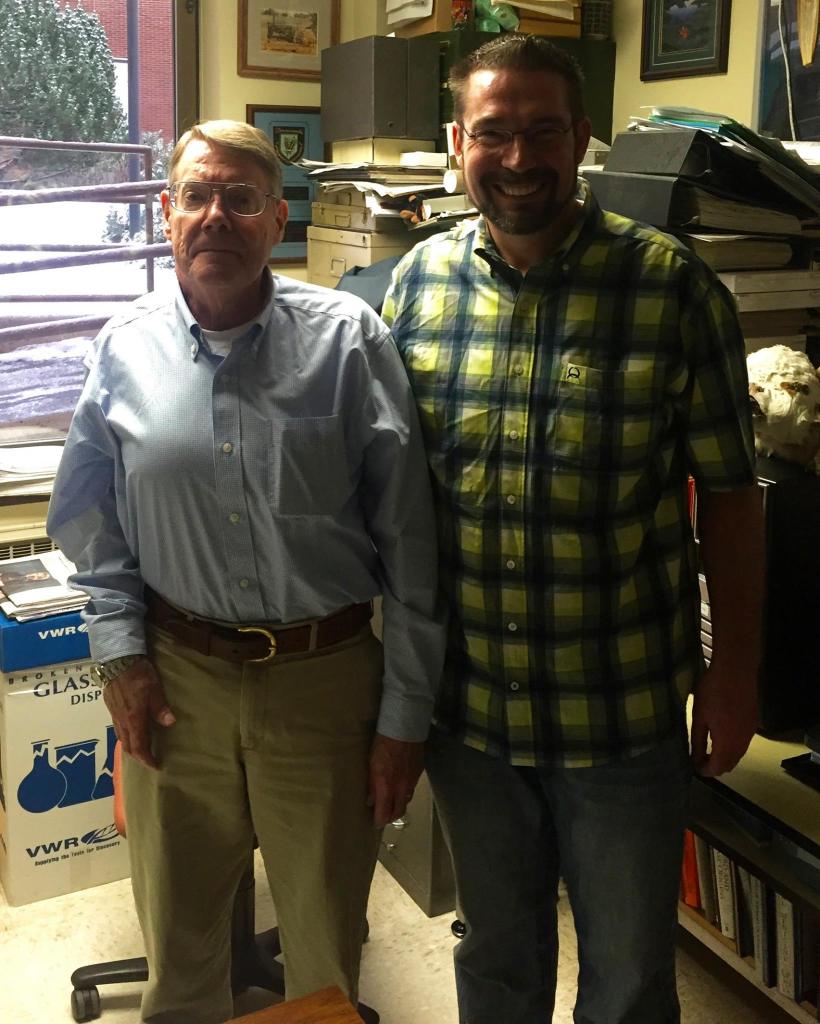
Pictured is Dr. Randy Scott and I at Mountain West Animal Hospital

The Courage to Change Course

My Take Tuesday: The Courage to Change Course

In late September of 2011, a major typhoon hit the Philippines. Torrential rainfall flooded the streets and sustained winds exceeding 120 mph decimated everything in the path of the storm. Typhoon Pedring taught me an important lesson regarding the perils that Mother Nature can present.

I sat watching the sheets of rain falling down from the window of a small laboratory. I had spent the morning freezing water buffalo semen, an extensive process that takes several hours to complete. I made the decision to hurry and finish the job before heading back to the hotel. The storm was set to hit just about 4:00, just about the time the project would be complete. I thought it was worth the risk to just hurry and get things finished up. Little did I know that the massive storm was fast approaching and already bearing down on the small village.

As I peered out into the pouring rain, water quickly began to run down the streets. It was clear that the storm had arrived and that I had better get back to the hotel as soon as possible. I worried that perhaps I had made a foolish choice by remaining at the lab.

I flagged down a motorcycle taxi and gave him the address of the hotel. These taxis are popular in the Philippines. This unique form of transportation has a motorcycle in the front and two wheels in the back with a compartment containing a small seat that will hold two average sized Filipinos. My 6’2″ frame does not fit well in these taxis. I have to crouch down and lift my knees up to just fitting the seat. The ground clearance of the cab portion is only around 10 inches. The ride proved to be most uncomfortable.

As we headed down the street, the water continued to rise. The engine began to squeal as the driver desperately tried to maneuver through the fast moving water. The water poured through the open door and across the floor of the compartment I was riding in. There was no way I could readjust my position, as my knees were nearly touching my chest. All of the sudden, the raging water picked up the motorcycle taxi and carried it swiftly down the street. The driver began to panic, the tires were no longer touching the ground and we were floating in the wrong direction and had absolutely no control of our direction of travel. I was stuck and was absolutely helpless.

The taxi slammed against a cement railing along the side of a very large bridge. We were just a few feet away from plunging over the edge to certain death. Thankfully, the driver was able to get traction and maneuver the taxi out of the precarious situation and we safely continued on to the hotel. I arrived, soaking wet, in shock and very much grateful to be alive. The rain continued to pour down for the remainder of the day. Over 24 inches fell within a 24 hour period.

As soon as the storm passed, I boarded a flight from Manila en route to Utah via Nagoya, Japan. As we cruised at 30,000 feet just north of the Philippine Islands, severe turbulence began to toss our plane around. An unassuming passenger that was unbuckled was thrust so hard from his seat that his head hit the baggage compartment. It was clear that something was not right.

In the chaos, the pilot announced the following, “We are approaching Typhoon Pedring and if we continue on this course, this storm will rip this plane apart.” People could be heard screaming following this announcement. I couldn’t believe that the pilot would even suggest that the plane was in danger of coming apart. Just when things couldn’t possibly get worst, a lightning strike hit the plane. The damage was minimal, thankfully, and the pilot was able to change course and get us safely to Nagoya and then on to the USA.

Looking back now, I am grateful that the experienced pilot had the wisdom to know his own limitations along with the capacity of the airplane. His judgement, undoubtedly saved the lives of all on board.

In today’s society, there seems to be a misconception that quitting is failing.

We grow up categorizing each situation we encounter as being either a success or a failure.

Believe me, I’ve spent years of my life unwilling to quit things. Those who are stubborn will often go far — too far — to ensure it’s not a failure. But that is not always a smart choice. I submit that truly successful professionals often find that there is a time to reassess readjust, and if needed correct the course they are on.

Truly incredible individuals can vouch for this with stories of perseverance, resilience and success. I have also found that if you believe failure is the easy way out, quitting can often be far more difficult than continuing.

I recently read a book titled No Shortcuts to the Top. The book was written by Ed Viesturs. Ed has climbed Mount Everest six times and is the only American to have climbed all 14 of the world’s highest mountain peaks. Each of these mountains tower at least 26,000 feet above sea level.

On one climb Ed actually had to climb one mountain twice. The first time, he was forced to turn back back just 300 feet from the top as he did not feel that he could honestly claim the summit. In the pages of his book, he vividly describes fatal errors in judgment made by his fellow climbers as well as a few of his own close calls and gallant rescues.

Nothing in life comes easily. Success requires hard work. This path to success if filled with difficult choices, triumphs and even devastating failure. However, these failures are opportunistic pathways that, if they are navigated carefully, will lead to future success.

As Hesiod, the Greek poet so eloquently put, ‘Badness you can get easily, in quantity: the road is smooth, and it lies close by. But in front of excellence the immortal gods have put sweat, and long and steep is the way to it, and rough at first. But when you come to the top, then it is easy, even though it is hard.”

I learned a lesson the hard way on a rainy day in the Philippines. Since then, if my instincts are telling me something, I know it is best to trust them and listen.

And that is my take.

N. Isaac Bott, DVM
Pictured is a view of a street during the severe flooding during Typhoon Pedring in the Philippines

The Charismatic Chameleon

My Take Tuesday: The Charismatic Chameleon

It was a beautiful spring morning on the Palouse. The beautiful rolling hills and contrasting colors make this region of the country so unique. 

As I left my apartment, I took a moment to bask in bright sun of this gorgeous brisk spring morning, permeated with the scent of recent rain. Songbirds filled the air with music that would thrill the greatest maestros, and warblers and finches flashed their dazzling colors in the bushes outside my apartment.

I was an excited 4th year veterinary student just weeks from graduation. As I drove to the veterinary school, I reflected on the past 4 years. A flood of memories entered my mind as I smiled and felt a sense of accomplishment, these were some of the most difficult years of my life and the end was in sight.

This particular weekend, it was my turn to take the emergency call at the veterinary teaching hospital. I had spoken extensively with classmates about what exactly to expect to present throughout the weekend. Each indicated that many dogs and cats would likely present with a variety of ailments. I fully expected to see a variety of routine cases dealing with the perfidious parasites, bothersome bacteria and mysterious maladies that present daily in the life of a veterinarian.

I was not prepared for what was to follow.

Throughout the weekend, a variety of cases presented, none of which were dogs or cats, and none of which I would ever consider routine.

The first case was a hairless rat. This was followed by a parakeet with a broken and bleeding blood feather. A raptor presented with a wing injury and a duck with a fish hook stuck in its bill.

Still another anomaly followed as a boa constrictor presented with a prolapsed cloaca.

At this point in my education, I had virtually no experience with exotic animals. I am terrified of snakes and absolutely did not know the first thing to do with a prolapsed cloaca. I barely knew what a cloaca was!

Fortunately, an exotic animal clinician was a phone call away and she was able to talk me through each case. I learned a lot as I treated each animal and did my best to make each owner and pet comfortable.

Just when I thought I had everything under control, a young woman walked through the front doors of the hospital caring a white box. Small circular 1” holes were cut in each side of the cardboard box.

“I have a chameleon that is sick,” she nervously said with obvious fear and concern in her voice.

I placed my face against the box and peered through one of the small holes. A huge eyeball was all that I could see. Its unflinching stare was somewhat startling.

“He is huge!”, I exclaimed.

“No he isn’t,” she replied, with her voice raising, “He is actually smaller than most.”

“I am sorry,” I replied, “I haven’t ever seen a real chameleon.”

“Oh great, go figure, not only do I have to deal with a student, but I lucked out and got one that clearly doesn’t know what he is doing!” She was clearly upset at this point, as she sighed and shook her head.

Assertiveness has its place, but it is not always a virtue when you are on the receiving end.

“I am sorry,” I began, “Although I am inexperienced, I will call someone that is very competent with chameleons and we will take care of him. I promise I will do my best.”

She seemed to calm down somewhat after this and handed me the white box. I carried the box into the treatment area and immediately opened the lid and peered in. The chameleon stood perched on a branch, clinging with each of its 4 feet. It’s deep green color mimicked the leaves that were placed throughout the box.

I gently removed the little guy and placed him in the glass aquarium type pen used to hospitalize reptilian patients.

Almost immediately, his deep greed color began to fade as he miraculously turned brown, almost identical to the ambience of his new surroundings.

I reached for the phone and dialed the number of the on call exotic expert. I immediately rattled off the details of the case (age, sex, presenting complaint, clinical signs and examination findings). I then explained that I had ZERO experience with this species and that I needed detailed instructions.

Her first question took me off guard.

“Is he pale?” she inquired.

Immediately, I thought to myself, “You’ve got to be kidding me!”

“I am not sure,” I replied. “He was green in his box and then he turned brown when I moved him into the hospital. Now he is looking like a mix of brown and gray.”

“How in the world can you tell if a chameleon is pale?,” I inquired.

Fortunately, this clinician sensed the frustration in my voice and laughed. She was very patient as she began to explain exactly what I needed to look for.

She talked me through how to administer fluids to a reptile. This is accomplished differently that with other species. Instead of finding a vein and administering the fluids intravenously, they are administered in the common body cavity called the coelomic cavity. I spent the entire night treating this unique patient and monitoring its progress.

Somehow, the chameleon survived. I learned a great deal throughout the remainder of the weekend. Not a single dog or cat ever presented, but I gained confidence and experience with each of the exotic animals that continued to present.

But still to this day, I have no idea how to tell if a chameleon is pale.

And that is my take!

N. Isaac Bott, DVM