9/11

My Take Tuesday: 9/11

This Saturday marks 20 years since the fateful events of Sept. 11, 2001. 

Alan Jackson’s poignant lyrics ask the simple question, “Where were you when the world stopped turning that September day?”

It was a beautiful morning in Trujillo, Peru. I was crammed inside of a small Tico model taxi. As we passed through the Monserrate neighborhood, I peered out the window at the solid brick buildings with their brilliant shades of brown and white. At this stage in my life, I was completing two years of service as a missionary for the Church of Jesus Christ of Latter-Day Saints. As we headed to the headquarters of the mission, the taxi driver turned up the radio.

After two years in Peru, I had mastered the Spanish language. This language is referred to in Peru as Castellano. I could sense urgency in the voice of the newscaster as the broadcast came across the radio. As he described the horrors that occurred that morning, he used the verb “clavar” (meaning “to nail”) in reference to the airplanes hitting the World Trade Centers. I remember the feelings of panic and despair that came over me after hearing the news.

Over the next few weeks, I would daily be approached by random people that could tell that I was from the United Sates. These wonderful people would express their heartfelt condolences about the tragic attack that occurred and about how Peru had experienced the horror of terrorism during the 1990’s.

Being on foreign soil was difficult on that day in 2001. I will forever be grateful for the kind hearts of the Peruvian people that reached out and made me feel comforted despite the uncertainty of what was going on back home.

At one extreme man is indeed a vicious killer. He has the capacity to destroy entire civilizations. He can spread the bloody dead and dying over miles of landscape without a touch of remorse. He can kill women and children for no better reason than that they worship a different god.

Yet this mammal called man will risk his life to save a stranger’s child, or to rescue a dog who’s fallen into the river, and to save a small helpless kitten in distress. I salute those engaged in this good cause and stand with them in this dangerous world.

May we never forget the lives lost and the sacrifices made by the first responders and military personal that responded without question to the events on that September Day. 

And that is my take!

N. Isaac Bott, DVM

My Life: I Appreciate It

In March of 1980, a busy young couple worked tirelessly as they went to school and managed an apartment just west of Old Main near the Utah State University campus. The mother worked tirelessly in doting support of her husband. The father went to school full time and also worked long shifts at a local cheese factory. Their first child, a boy, was just beginning to walk and life seemed to be going smoothly. These lean days of struggle brought this couple even closer together as they faced the brambles and thorns, challenges and difficulties most couples experience just starting out. Their dreams of the future were one step closer with each passing day.

Early one morning, the mother began to experience significant stomach pain. This sharp pain in the lower right side of her abdomen was unbearable. The worried young father rushed her to the hospital.

A diagnosis of appendicitis was made and emergency surgery was required. The skilled surgeon performed the appendectomy without any complications.

As the surgeon explored the abdomen during the surgery, he noticed that this young mother was pregnant. This was completely unexpected. The medications used for general anesthesia were not approved for use in pregnancy, in fact studies showed that they caused birth defects when used during the first trimester.

The doctor stepped out of the surgery room to speak with the young father. He told him that his wife was pregnant and that the anesthesia used posed significant risk to the heath of the baby. Birth defects and serious developmental problems were likely to occur. The likelihood of these complications was so great that the doctor recommended that the pregnancy be terminated.

The weight of the world was on the shoulders of this young couple. They were tasked with making such a difficult decision about the pregnancy and the potential outcome. Considering the future consequences of this decision must have been so stressful for each of them. The health of the young mother and the possible complications were carefully considered.

In the end, they chose to keep the baby and face the uncertainty of what was to come.

On September 4th, 1980, a healthy baby boy was born. The baby was free from any birth defects and the young mother did well following the scheduled caesarian section.

The child grew up normally and, along with his 4 siblings, has strived to contribute positively to this world.

I catch a glimpse of that baby born 41 years ago this Saturday, each morning when I look in the mirror.

How grateful I am that my parents made the choice continue with the pregnancy despite the risk. My very life was in their hands and, thankfully, they chose the path of uncertainty and risk.

My life has been filled with wonderful opportunities and experiences and I appreciate each and every day.

And that is my take!

N. Isaac Bott, DVM

Chickens

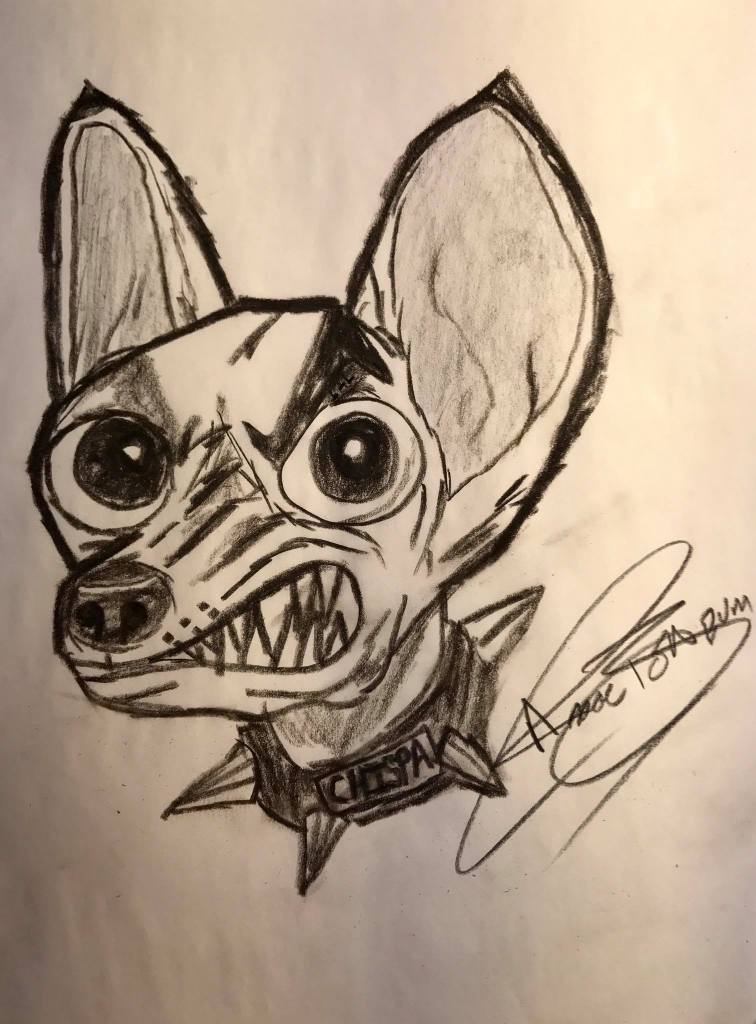
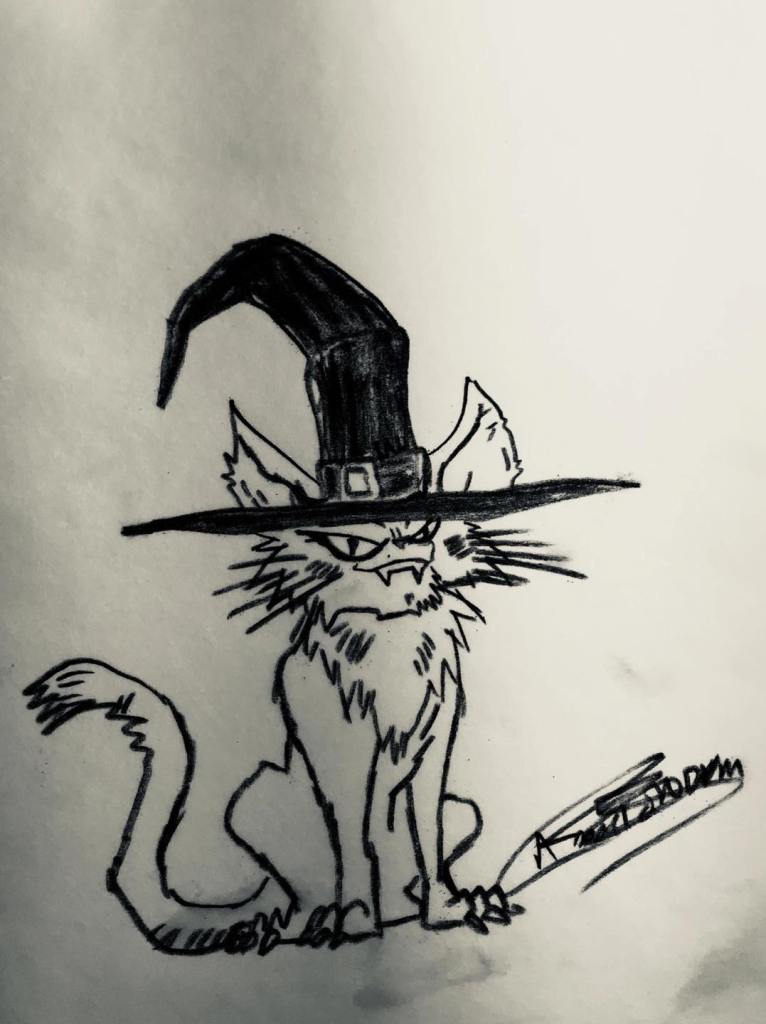
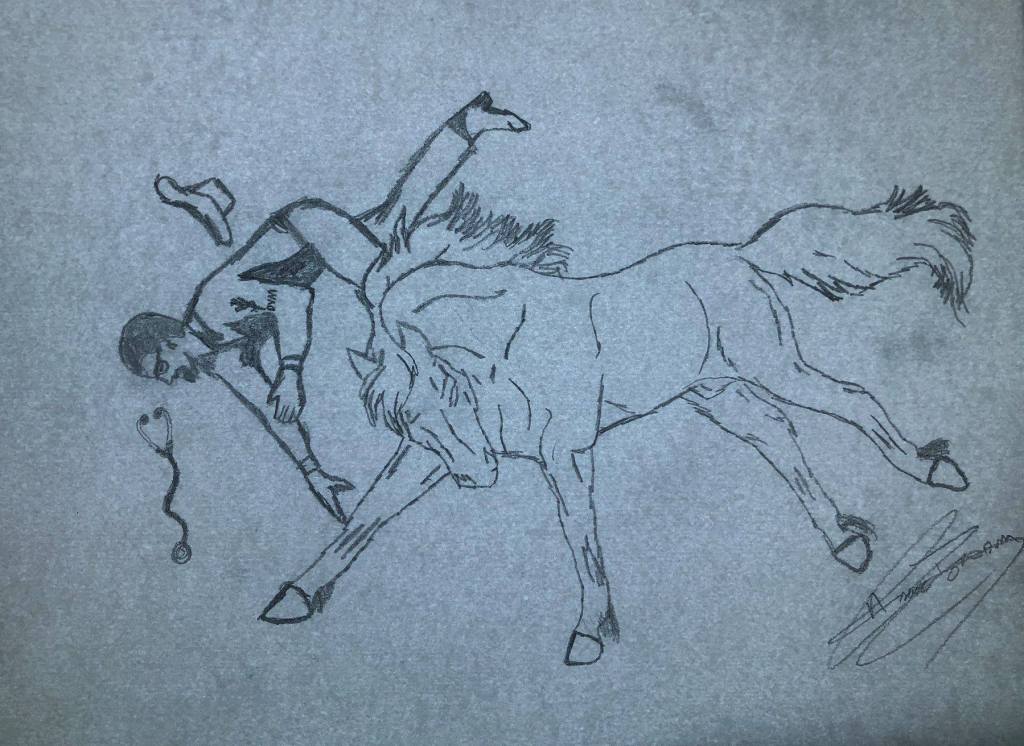
If you attended elementary school with me, you will probably remember my obsession with chickens. As a child, I would draw chickens as I sat at my school desk. Given the many drawing projects that elementary age children have, I drew hundreds of mediocre pictures of my pet chickens. Fortunately, my teachers were patient and supportive. Although my artistic abilities left much to be desired, I was free to draw to my hearts content.

We would receive an annual catalog from Murray McMurray Hatchery. This catalog would depict every conceivable breed of chicken and give a short description of the desirable traits each possessed: comb type, leg feathering, silky, frizzle, bantam, standard, etc. I would spend hours and hours looking through this catalog. Each year, I was allowed to choose a single baby chick of the breed of my choosing. I took this choice seriously.

There are a range of things that one needs to consider when deciding what breed of chicken to have. These include the climate in which you live, whether you are raising backyard chickens for eggs or meat production, their temperament, foraging capability, predator awareness, and broodiness. I meticulously studied each breed and made my selection each year.

Here in the United States, the postal system accepts boxes filled with day-old chicks and delivers them coast to coast with overnight delivery. The chicks travel by Priority Mail and often have no food or water in their cardboard carrier to sustain them. How can this happen? Just prior to hatching, a chick absorbs all the remaining nutrients from within its egg. With this nourishment, the chick can survive for up to three days without food or water. This makes it possible to ship them by mail. In the nest, this process allows the mother to wait for the hatching of other chicks in her clutch before tending to the early hatchers: If chicks required immediate attention, the mother would leave with those that hatched first and the unhatched chicks would perish. This is a fascinating adaptation!

Like humans, chickens have full color vision, and are able to perceive red, green and blue light. 

Several studies on visual cognition and spatial orientation in chickens (including young chicks) demonstrate that they are capable of such visual feats as completion of visual occlusion, biological motion perception, and object and spatial (even geometric) representations. One of the cognitive capacities most extensively explored in this domain is object permanence, that is, the ability to understand that something exists even when out of sight.

Other recent scientific studies tell us that chickens recognize over 100 individual faces even after several months of separation. They also confirm that chickens consider the future and practice self-restraint for the benefit of some later reward, something previously believed to be exclusive to humans and other primates. They possess some understanding of numerosity and share some very basic arithmetic capacities with other animals. These findings fascinate me. 

To this day, chickens remain my favorite animals. I can sit for hours and watch my flock as they forage and explore the property behind the clinic.  

I look back with fondness on the days spent coloring and drawing chickens with crayons.

Memories are painted optimistically with passing years. I miss the worry-free days sitting at a desk in elementary school.

I will forever treasure these pictures and the pleasant memories associated with them.

And that is my take!

N. Isaac Bott, DVM

Sheep on the Loose!


The morning was colder than expected.

I zipped up my jacket as I climbed out of my truck ready to begin a day of veterinary appointments. The clouds scuttled across the sky, the sun breaking out in bursts as I made my way through the make-shift corrals that are a common sight in Utah County. A solo tree, standing along the property line caught my eye as I crossed the fence. I marveled at the beauty of the crisp copper leaves falling off the lone tree that sway gently in the Autumn wind.
A single golden leaf pirouetted down an invisible spiral of breeze, spinning through the air as it let itself be carried down. It shook slightly, as if it could have been whisked away any second by the grip of an icy wind, but it kept floating down the twirling course. It blew past my face and landed lightly on the ground, the shiny, vibrant color standing out against the ambers and bronzes beneath it.


Sheep are short-day breeders. The breeding season coincides with the decreasing day length each fall brings. Today’s appointment is a routine breeding soundness evaluation of a group of Rambouillet rams.


The Rambouillet breed of sheep originated more than two centuries ago, in 1786, when Louis XVI of France purchased over 300 animals from Spain’s famed Merino flocks, which were produced the world’s finest wool.
The males of this breed have characteristic large curved horns that are well developed with wide spirals. They weigh around 300 pounds at maturity.


A large horse trailer was backed up against the gate of the pen, with about two feet of space between the edge of the the fence and the trailer. I could hear the deep bleating and baaing of a dozen rams echoing from inside the aluminum trailer.


I stood in the small gap between the fence and the trailer in an effort to stop any rams from escaping the enclosure. As the gate was opened, the the first ram paused and then ran quickly from the trailer, giving a bounding leap as he landed on the ground. The remainder of the rams followed in perfect succession, pausing and bounding in unison.


The last ram exited the trailer and hesitated as it approached the rest of the herd. He turned his massive frame slightly as he looked in my direction. Suddenly, without warning, he lowered his stout head and neck and charged.
I braced myself for the impact. Anticipating a blow to the legs, I lowered my body into a football stance. This massive ram, in a fit of ovine rage, leaped over my head and landed harmlessly on the gravel patch surrounding the pen.


He then let out a low “Baaaaaaaa”, as if to beckon the remaining rams to follow his lead. This flock mentality is a sure thing, meaning that if one sheep finds an escape route then the entire flock will follow. The remainder of the herd stampeded towards me in a frenzy. The lead ram lowering his head in apparent contestation head bunting stance. I knew that an attempt to stop a charging ram of this bold carriage would be futile. I stepped aside and yielded as the rams charged through the small alley on their way to apparent freedom.


I grew up around sheep. My family had a small flock that provided me with valuable insight into sheep behavior and husbandry. One of the valuable lessons I learned is to always have a perimeter fence as a backup when working with sheep.


Sheep are a prey species, and their only defense is to flee. The flock of rams fled in unison down the gravel path. They all stoped abruptly as they arrived at the closed perimeter gate. Accepting defeat, they turned and charged back through the alley and into their original pen.


The remainder of the morning was uneventful. Each examination revealed a healthy ram and the group was cleared for the upcoming breeding season.


As I walked back to my truck, I stepped through the golden brown carpet of leaves, as they crunched under foot and quivered in gusts of the autumn wind.


The deep sound of the rams bleating in concert echoed from the horse trailer. The cool breeze scattered the leaves in all directions and sent a chill down my spine. I took a deep breath and was warmed instantly by the smell of a nearby wood burning stove.


I sighed, relishing the feeling of fall. It was something I’d have to wait a whole year to experience again.


And that is my take!

N. Isaac Bott, DVM

My Take Tuesday: The Disgruntled Veterinarian


Veterinarians are some of the most kind and compassionate people on the planet. They are hard workers, and are some of the best people I have ever met.


As with any profession, there are occasional outliers.


When considering the prospect of attending veterinary school, I visited a veterinary clinic, here in Utah County, one day as an undergraduate.


I introduced myself to the veterinarian and asked a little about his experience as a veterinarian. As soon as I began asking questions about which veterinary school to attend, he interrupted me.


“Hey kid, why do you want to be a veterinarian?”, he asked.


I gave the answer I had given so many times. I replied, “Because I love working with animals. I also like working with people and this profession will allow me to help people by helping their animals.”


“What are you? You stupid #%$@>?”, he continued, “What are you going to do when those animals you love bite you and kick you? And what about those people that do not respect you and your expertise and expect you to work miracles? They are far from loyal and they couldn’t care less about you! Get a life kid. This ain’t for you!”


Wow! I couldn’t believe what I was hearing. Here was a veterinarian that was clearly dissatisfied with life in general.

After years of grueling work and what he deemed as little professional reciprocity, he had become very cynical. He made it very clear, anyone wanting to be a veterinarian was making a huge mistake. His goal was to dissuade any would be veterinarian that entered the doors of his practice from making the same mistake he did.
To put is delicately, this guy was the south end of a horse facing north.


I feel sorry for him, looking back. My experience as a veterinarian has been the complete opposite.


The clients I work with are very loyal. My interactions with them are nearly all positive and they love their pets. They follow my recommendations and are always willing to provide the care that their pets need and deserve.


I am glad I did not heed his advice.


Mark Twain eloquently counseled, “Keep away from people who try to belittle your ambitions. Small people always do that, but the really great make you feel that you, too, can become great.”


I am thankful for those who encouraged me. Who supported me. Who believed in me long before I believed in myself.


Their contributions have led me to where I am today.

And That is My Take

N. Isaac Bott, DVM

My Take Tuesday: Airport Security

They say hindsight is 20/20. Looking back, it was clearly a mistake.

I hurriedly prepared my luggage, assuring that everything would fit in a carry on. I have a perfect record, in all of my travels I have never had my luggage lost. Taking a single carry-on bag is the only way to assure your luggage gets to your destination on international flights.

The destination this trip, was the Philippines, and it was my first trip to Asia. I had been called to travel there to assist in establishing both Water Buffalo and deer reproduction programs in this far away country.

I placed my required instruments, long forceps and miscellaneous items used for freezing semen delicately in my bag. The last piece of equipment was something called an electro-ejaculator.

In the practice of veterinary medicine, it is common to collect semen from domestic ruminants using electro-ejaculation.

This instrument is an electric probe that is inserted into the rectum of an animal, adjacent to the prostate gland. The probe delivers an AC voltage, usually 12–24 volts. The probe is activated for 1–2 seconds, referred to as a stimulus cycle. Ejaculation usually occurs after 2–3 stimulus cycles. The instrument fits in your hand and runs on a traditional 9 volt battery, the exact battery most smoke alarms use. It is a valuable tool when collecting semen from agricultural and wild animals.

It fit, without a problem, in my suitcase.

Salt Lake City International Airport was busy on this particular day. The lines extended over the sky bridge and nearly to the parking garage.

I passed through the metal detector and my bag went through the usual belt driven scanner. As I waited for my bag to come out, the operator of the scanner lowered his head and spoke into his mouthpiece. What he said was inaudible, but the response it triggered was anything but quiet.

I was circled by at least 10 TSA agents and hurried off to the far right end of the security entrance. If there ever was a suspicious item, this was it.

A tall gruff man asked, “Sir, do you have any prohibited items in your bag?”

Now clearly, they know the answer to this question before they ask it. On a prior trip, I had left a small pocket knife in my bag. They asked the same thing, and I had completely forgot it was in my bag. My answer then was, “I don’t’ think so?” Fortunately, they allowed me to mail my pocket knife home and the delay was minimal.

Clearly today it was not going to be as easy.

“I have a medical device called an electro-ejaculator in my bag”, I tried to explain. One of the TSA workers removed the device. Clearly red flags were raised, and rightly so. Here is an electronic device with a push button, a red light and metal tongs protruding from the probe. The gruff man demanded, “What is this and why do you have it?”

“It is used to collect semen from animals,” I explained, “you insert this end in the rectum and push this button. It then applies current over the prostate, and ejaculation occurs.”

The gruff man’s face went from viable anger to disgust in less than two seconds.

“What? Ewwwww!!! Are you serious?”, he continued, “Why would you ever do that to an animal?”

“I am a veterinarian”, I explained, “And my expertise is in animal reproduction.”

“Man kid, I thought my job was tough,” he replied, laughing this time.

Fortunately for me, the device was labeled as such and my story was collaborated. I was allowed to pass.

En route to Manila, we stopped in Narita, Japan. Even though it was just a connecting flight, I had to pass through a security line once again before continuing on to the Philippines. Once again, a huge mess unfolded as I tried to explain in English why I would have such a dangerous looking device in my bag.

There are a couple dozen airport security officers around the world who now know, albeit unwillingly, what an electro-ejaculator is and how it is used.

After an eventful and productive stay in the Philippines, I entered the airport in Manilla, excited to be going home. As I stepped up to the counter, the ticket agent asked, “Sir, do you have any bags you would like to check?”

“Yes, I sure do”, I quickly replied.

I made my way to the gate and sat down to await my flight. I was relieved that I didn’t have to once again explain what was in my luggage. It appeared my trip home would be uneventful.

All of the sudden, over the loud speaker I hear the following announcement, “Passenger Nathan Isaac Bott, please report to the security desk immediately!”…………

And that is my take.

N. Isaac Bott, DVM

Hugh Peterson

My Take Tuesday: Hugh Peterson

This past week, while attending a veterinary conference in Nebraska, I received the devastating news that my only remaining grandparent had passed away. This news came just as I was preparing to address the conference attendees during the annual storytelling night and banquet. 

As the tears began to flow, I worried that I would not be able get up in front of a room of people. Just then, a calming feeling came over me. It felt like my grandpa was sitting right there in the room. Grandpa was the best storyteller I have ever known. His blood runs through my veins. I composed myself, and gave the very best performance I could give, in dedication to him. 

For those lucky enough to know Hugh Peterson, he was a wonderful person with a huge heart, a brilliant mind, and a most unique sense of humor. 

While in the first grade, Grandpa was mischievous. He and a couple of other boys were standing near the merry-go-round one day during recess. A group of girls riding on the merry-go-round noticed these boys trying to look up their dresses. One of the girls grabbed rock and flung it at the boys. It was a solid hit to my grandpa’s head. The girl that threw the rock became my grandma. Their story began on that day in 1937. 

They were married in 1949. They spent just shy of 72 years together. My beloved grandma passed away just last month. My grandpa only lasted 40 days without her.  

My grandpa was a remarkable man. He was a farmer, coal miner, and a father to six beautiful daughters.

I have never met anyone that can tell a story like Hugh Peterson. His excellent memory wove a tapestry of nostalgia. With each word we would move closer to the edge of our seats. With a smile on his face, and just a tad of embellishment, he told a story like a boss. He frequently made us all literally laugh until we cried.

As a teenager, I met a coal miner that had worked in the same mine as Grandpa. I told him my grandpa had worked there and that he may know who he was. When I told him Hugh Peterson was my grandpa, I noticed a tear stream down his cheek. 

“He was the best foreman I ever worked for.” He then paused, “Your grandpa is an honest and wonderful man. I would trust him with my own life.”

He then told me of a story about Grandpa working as a foreman in the coal mine. His crew had a set of twins that worked together. A mining inspector came in and was asking about the perfectly parallel tire tracks in the soft dirt that entered the underground portal, my grandpa said, “Oh, the twins were rolling some tires this morning.” Everyone, including the inspector, laughed uncontrollably when he said this. 

Grandpa had a small white pickup truck when I was a child. His Chevy Luv was his calling card in the 80’s. It was an iconic vehicle and the only one like it in the small town of Emery. I loved riding in the back of the truck. Grandpa would drive us around the block every time we went to visit. All of the grandkids loved this! I remember one particular ride, when Grandpa slowed down and put the truck in neutral on 200 North. He rolled his window down and said it was having mechanical issues. We all got out and pushed it. A dozen 5-12 year old kids make for a great team, we pushed the truck for a few feet and then grandpa said, “Oh wow! You fixed it! Jump in!” The smile on his face as we got into the back of the truck was one of absolute joy and happiness.  

The last time I saw my grandfather was at my grandmother’s viewing; just a few weeks ago. He was seated next to my mother in front of the casket. As I went through the line and spoke with each of my wonderful aunts, I wept as I looked at my grandfather. His spouse, of nearly 72 years, was gone. His mind, weathered from the long years of his life, could not comprehend the passing of his north star, his one and only constancy. 

As I passed through the line, his eyes met mine. As only Hugh Peterson could, he made a motion with both of his arms. He clenched his fists and extended his arms in unison. This is a signal both of us would make to each other over the past 25 years. If either of us made this motion, it meant that we were nervous. 

My family loved to play games. My aunts and cousins would raise all kind of noise as they played card games and Pit. I remember one Thanksgiving, as my grandparents house filled with laughter and noise from a Pit game, my grandpa mentioned to me that he was nervous. I felt the same way. I am really a very shy person, just like my grandfather was. He mentioned to me that all off this noise made him nervous and on edge. I then motioned to him the very signal that became our calling card. The extension of the arms and the clenching of the fists. 

The last time I saw my grandpa, he recognized me. Despite the deterioration of his memory, he remembered who I was. This is a wonderful last memory for me to have of this wonderful man who is a mountain to me.

He never ran from a battle

And when he was thrown from the saddle, 

He would get back up and be ready for more. 

Just like fine wine and good leather

He only got better and better

The more that he was weathered and worn

They just don’t make cowboys like him anymore

He was not afraid to work in the coal dust and the dirt

And he always put his wife and six daughters first

And with my everything I’ll be the best that I can be

Just trying to live up to his wonderful legacy

Grandpa Papookas, I love you. Thank you for being such a loving and kind soul. Thank you for teaching me to forgive imperfections and how to love unconditionally. Give Grandma a hug. Please remember me and watch over me and my family from that place high in the sky, just out of sight, between the rainbows and the rain. 

Love, 

Isaac

My Take Tuesday: The Society for Theriogenology

My Take Tuesday: The Society for Theriogenology  

Greeting from 30,000 feet! This week I am writing from the air. As I peer out the plane window, I see a limitless sky. I love flying! I am en route to Omaha, Nebraska to attend the annual conference of the Society for Theriogenology. It is so nice to be able to attend an in-person veterinary conference. The past 18 months have made all of us miss out on so much that can only be felt through in-person human interaction. 

This conference is an annal event that I have attended since 2007. Each year the meeting is held in a different city around the country. I eagerly await this conference each summer. 

What is Theriogenology? Theriogenology is the branch of veterinary medicine concerned with reproduction, including the physiology and pathology of male and female reproductive systems of animals and the clinical practice of veterinary obstetrics, gynecology, and andrology. It is analogous to the OBGYN, Neonatologist and Andrologist of human medicine – all combined in a single broad specialization. From antelope to zebras, Theriogenologists work on all species of animals. It is a challenging, unique and rewarding discipline.

I became interested in theriogenology as an undergraduate at Southern Utah University. A professor and mentor named Dan Dail introduced me to this most unique area of veterinary medicine. I learned a lot from him. He entrusted me with a research project looking at the correlation of body condition scores and first service conception rates in heat synchronized beef cattle. His mentorship, along with this research contributed to my acceptance into veterinary school. 

At Washington State University, I had the privilege of working extensively with Ahmed Tibary, a world renowned theriogenologist.  He has made endless contributions in teaching, published books, chapters and scientific articles. His comparative approach taught me how to think and reason through difficult cases. He also entrusted me with the animals under his care. We published a significant amount of information on reproduction in alpacas. I remember with fondness my time working with him.

My theriogenology work has made me a better veterinarian. My clinical approach has been shaped and molded by the examples of so many mentors and teachers. What drives me is the comparative medicine; that’s what makes my brain move. Whether I am in the clinic working on dogs or cats, or out working with bighorn sheep, elk, alpacas or water buffalo, I am doing what I love.

Upon a cabinet in the lobby of Mountain West Animal Hospital, a small statue sits. The statue depicts a bull named Nandi.  Nandi is the white bull which symbolizes purity and justice in Hindu art and serves as the symbol of fertility in India. It is a Bos indicus bull anointed with gold and silver jewelry and its association in Hindu art and scriptures can be traced to the Indus Valley Civilization where dairy farming was the most important occupation. There are a numerous temples in India dedicated solely to Nandi.   

This statue was awarded to me after serving as president of the Society for Theriogenology in 2018. It is one of my most prized possessions. I am humbled by the opportunities that have came my way over the years as I have interacted with this unique group of veterinarians. 

Kindness is a commonality among veterinarians who are reproductive specialists. They are approachable and humble. In a profession where arrogance often is the norm, they are a refreshing example of the best of the best. They are among the leadership at nearly every veterinary school in North America. They are leaving a lasting impression on the profession. 

I am so proud to be a member of this group. 

This is by far my favorite conference to attend. I look forward to learning from the best in the world this week and I can’t wait to apply what I learn in my own veterinary practice. 

And that is my take.

N. Isaac Bott, DVM

My Take Tuesday: Mold-A-Rama, the Magical Manufacturing Marvel

I had the privilege of being raised on a small farm in Castle Dale, Utah. Living in a small town had its perks for sure, for one, I rarely had to tell my parents when I got in trouble at school; as fast as word spreads in a small town, someone had almost always beaten me to it and mom and dad knew knew all of the details before I could even get home.

I loved growing up in a small town. I treasure the many wonderful people who helped shape my education and point me on the path I am on today.

My parents would set aside a few days each year where we could get away from the daily farm chores and spend time together as a family. I always looked forward to the time when we were able to leave Emery County and travel to the big city.

Vacations while growing up were typically short, lasting only a couple of days. I have many fond memories of visits to all of the national parks in the state and overnight trips to Salt Lake City. The overnight trips to Salt Lake were often planned around business meetings for my dad. We would typically come up early Friday morning and return home late Saturday.

We would usually stay at the Red Lion hotel in downtown Salt Lake. This hotel is still there, but it is now a Hilton hotel. I still remember the hotel layout. The swimming pool was located on the second floor. We must have stayed there a dozen times growing up.

Breakfast was always west of the temple at a Denny’s restaurant. It was a short 5 block walk from the hotel. I remember enjoying these meals immensely, despite the food being typical greasy breakfast items.

Following breakfast on Saturday morning, we would make a trip to the zoo. As children, we loved visiting the Hogle Zoo. I particularly looked forward to the Mold-A-Rama machines. These peculiar machines would make wax animal figurines on demand. The process melted polyethylene pellets at about 225 degrees and then injected the resulting liquid into a two-piece mold. Before the plastic could completely cool, a blast of high-pressure air would push any remaining liquid out a drainage hole in the bottom of the mold, leaving the sculpture hollow. Next, antifreeze was pumped inside and then drained to cool and harden the waxy plastic shell. The mold separated and the finished figure was ready. The whole process took less than a minute to complete.

For a five year old kid, they were a magical manufacturing marvel. These figurines were of many different animals and colors. I remember getting a gorilla, a giraffe, a lion, and many others. I still remember the smell of the freshly molded wax. The animals were quite hot when the came out of the machine, necessitating a fair amount of cooling off by rapidly blowing on them from all sides. These were treasures to us. They would eventually crumble and fall apart, but they were placed on shelves in our rooms until that happened. There was something mystical and mysterious about owning a 4 inch mold of wax shaped like a gorilla.

Much of my love for animals was sparked by these trips to the zoo. In particular it instigated the comparative curiosity that has made my career so unique. I remember comparing different breeds of monkeys and apes, using the appearance of their hands, in particular their thumbs. I also wondered what was inside the camel’s humps, a question that took over 20 years to find the true answer, which came firsthand from the world’s foremost expert in this species. These trips led to my collecting zoo animal cards and reading about animal facts as a hobby.

It is impossible to look forward and connect the dots of the random chances in our lives, but looking back, I can see it clearly. It is interesting how these experiences all pointed to what I now do as a profession. I am glad I had the opportunity to go on these annual trips and for the wonderful memories that still remain.

And that is my take.

N. Isaac Bott, DVM

My Take Tuesday: The Making Of A Legend

My Take Tuesday: The Making Of A Legend

Dr Charles Leathers is the smartest person I have ever met. I had the privilege of meeting him during my first year of veterinary school. He taught the “Introduction to Pathology” class during my first spring semester. 

In early December of 2015, I traveled back to my alma matter as a guest lecturer. As always, I spent some time visiting with many of the professors that acted as mentors during my years as a veterinary student. I stopped in to speak with Dr Leathers on my last day at the school. He welcomed me in and spoke briefly with me. He was preparing for retirement after more than 30 years of teaching. 

I cannot imagine my veterinary school experience without Dr Leathers. His class stands out for all of the veterinarians who were fortunate enough to have learned from him. He had a unique style of teaching. I still remember exam questions from his class 10 years ago. His lectures were legendary. He used an overhead projector like a boss. His style was one of a kind. His teaching inspired us. His assignments challenged us.

An example of this was shared by my entire veterinary school class. Dr Leathers spoke clearly and concisely. He desired all of his students to share in this quality. Nearly all of us use what are called fillers in our conversations. Filler can consist of words, such as “like,” or “you know,” frequently combined in the phrase “like, you know . . .” In these instances, the words are essentially meaningless except as conversation cues. A related phenomenon is speech disfluency, when one pauses in mid-sentence to try to recall the rest of the thought. Most of us are unaware of the extent we use fillers. The best way to become self-aware is to record a conversation or speech. This was Dr Leather’s way of teaching us to be better. 

The task seemed simple. Prepare a 1 minute speech. Only 1 minute. It could be on anything you wanted to talk about. This 60 seconds of material needed to be memorized and presented to the 100+ member class. Each student’s speech was to be recorded. 

Our assignment was to then take the tape home and play it back. We were required to write down exactly what was said (including the ums, sighs, coughs, grunts, ands, and other filler words we inadvertently use while speaking). This task is not a pleasant one. For most of us, these sounds are probably more common than the words between them. Following this, we were to correct the transcription and submit a final document stating what we should have said in the absence of filler words. 

This exercise proved to be a learning experience. I became much more aware of my speech. I focused specifically on avoiding filler words. It changed the way I interacted with those around me. It helped me professionally. 

Dr Leather’s has taught and influenced thousands of veterinary students over the years. His legacy is unparalleled at Washington State University. I count myself privileged to have been taught by one of the best. 

My final question for this revered professor was simple. I asked,  “You have had a remarkable career. What advice would you give to young veterinarians just beginning this journey?”

His response is one that I will forever remember. 

“Just focus on your sphere of influence. Just do the best that you can and expect that others are doing the same.” 

I think it would be wise for all to follow this cogent and concise advice from Dr. Charles Leathers. 

And that is my take!

N. Isaac Bott, DVM