Forget Me Not

My Take Tuesday: Forget Me Not

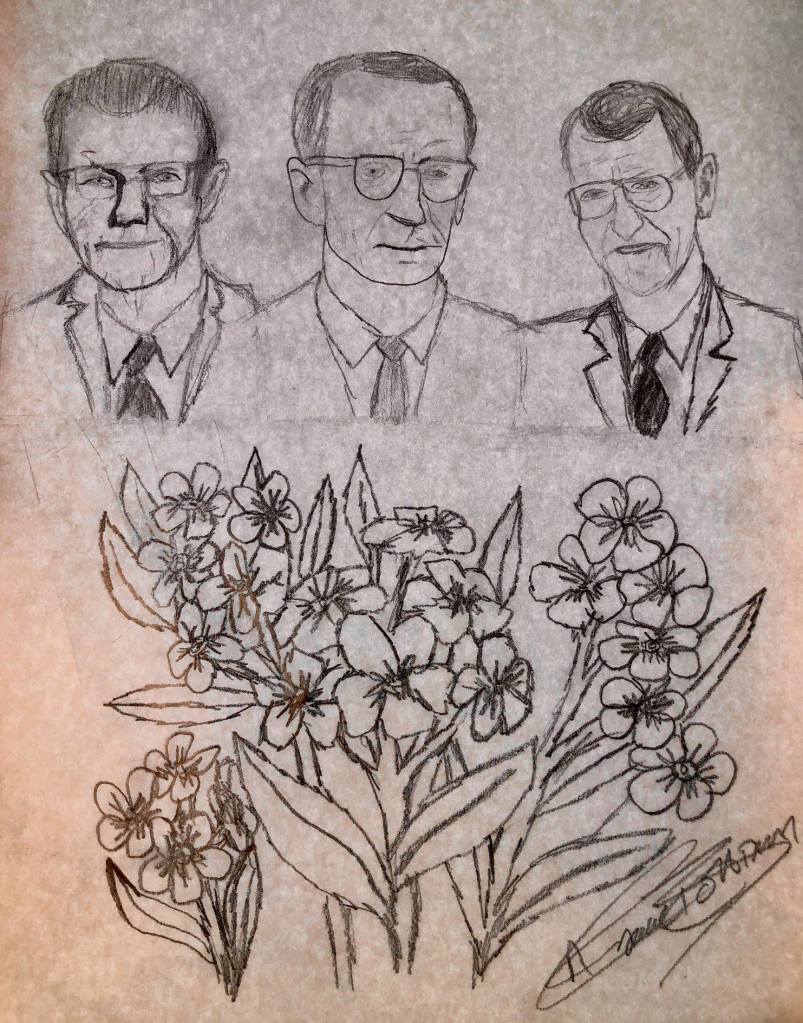
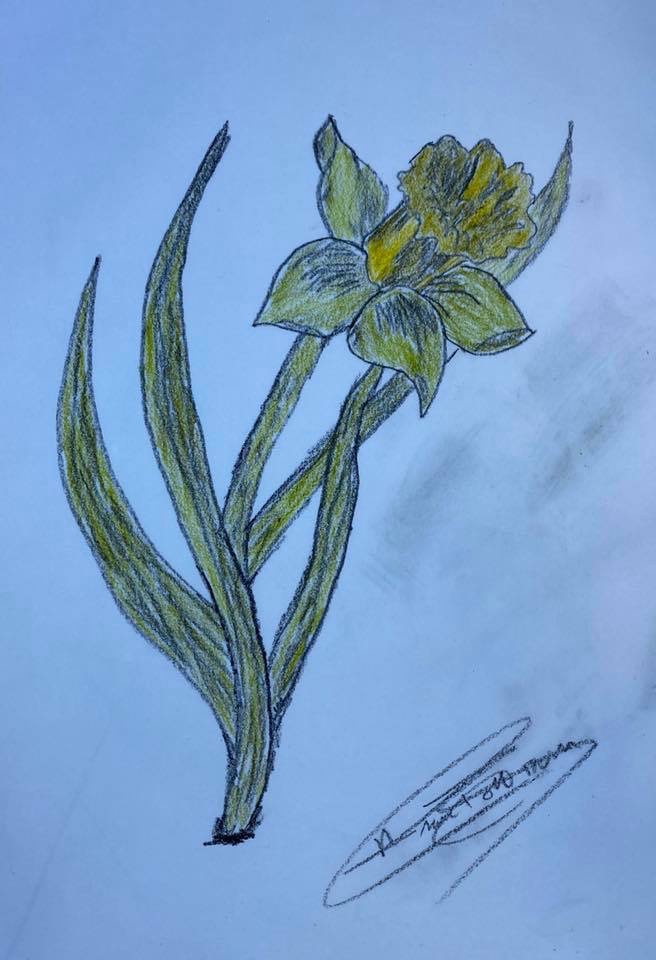
There is a flower that grows in the beautiful mountains of Alaska. It is a tiny plant that is easily overlooked, it’s small and unassuming stature is easily lost as the surrounding vegetation is observed. However, on closer look, this flower is a remarkable example of nature’s masterpiece. 

The dark green stems and leaves are much like those of other plants, but its flowers are what make this flower unforgettable. The sky-blue pedals perfectly match the beauty of a clear, cloudless day. The tiny flower displays a most unique and unforgettable beauty. It is a true marvel of creation and is aptly named, “Forget Me Not.” 

A couple of years ago, I visited a massive cemetery. I walked quietly along the long never-ending rows of marble headstones. Many were from the 18th and 19th century. Moss was visible along the base of many of the markers. Names and dates, weathered and worn, were fading on many of them. 

As I looked around, the headstones numbered in the thousands. Who were these people? What were they like? What is their story? Only a handful are remembered, and unfortunately, most are largely forgotten. 

I pondered as I read the inscriptions. I questioned, “Is this what is to come of me? When I go the way of all living things, will I be remembered? Will I leave a legacy?” 

My mind turned to the small cemetery in the town where I was raised. Castle Dale, Utah is a small place, one easily overlooked by most. The cemetery is located on the north end of Center Street. I spent a summer during high school working as a caretaker there. Each week, I would mow the lawn. Care was taken as the grass was trimmed around each and every headstone. 

Many of my ancestors are buried in the cemetery in Castle Dale. My great great grandmother, my great grandparents, grandparents, a beloved uncle and an infant cousin all rest in this special place. 

My great grandfather passed away long before I was born. I have a picture of him smiling and sitting on the grass in a pair of bib overalls. He is aged and tired, but his character is still evident in the old photograph. It reminds me of a wise observation that Thomas Edison made concisely by stating, “I have friends in overalls whose friendship I would not swap for the favor of all of the kings of the world.” 

My grandfather died when I was only three years old. My memories of him are largely limited to what others have told me. He served as county clerk for over two decades. Like his father, he was a dry land farmer. He worked tirelessly to provide for his six children. The ground he and his father tilled and planted year after year, still remains in the family today. 

My uncle passed away in 2016. I owe my very life to my uncle Jerry. Once, as a curious 5-year-old, I was standing in the doorway to his kitchen. Jerry had a bag of those pink chalky wintergreen disc candies. I placed one in my mouth, and somehow got it lodged inside my trachea. He must have sensed my panic, but he calmly walked over and gave a firm push on my stomach and the piece of candy shot across the room. If you are lucky enough to know my uncle Jerry Bott, then you have the privilege of knowing the best person I have ever met. There is no better example of loyalty, charity and love than he was. 

All three of their graves are located next to each other in the south side of the middle section. Each lived wonderful lives. Each treated their fellow men in kind with an honest word, a helping hand and a smile. With the years and the long hard miles, each always did their best. When the storms of life broke loose, each valiantly fought with courage. 

As long as my heart beats, each will never be forgotten. 

They inspire me still. Their legacy invites me to be a better father, a better friend, and a better man.

Like the small unassuming Forget Me Not flower, each of us, no matter how small or inconspicuous we are, have an important part to contribute to the tapestry of our posterity and the majesty of creation and life. 

And that is my take.

N. Isaac Bott, DVM
The Christmas Cactus

My Take Tuesday: The Christmas Cactus

I never did get to meet my paternal grandmother. Her name was Caroline Westover Bott. She died several years before I was born. I wish I could have gotten to know her. I have heard stories about her humorous personality and her kind and sweet nature.

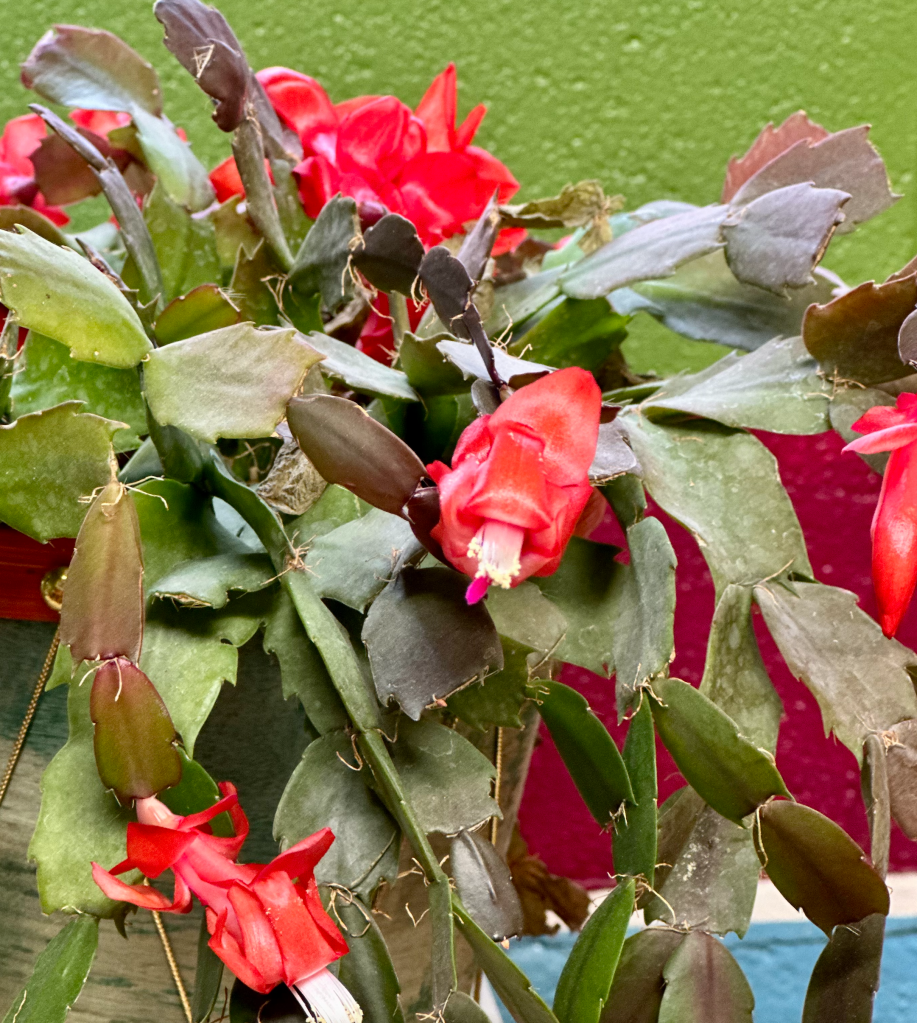
Her favorite plant was called a Christmas cactus. This plant is a long-lived plant with flat, segmented stems. Most of the year its appearance is fairly unassuming. It seems to be just a regular potted green in the corner of the living room.

Around Christmas, however, something magical happens.

With care, this plain looking plant will blossom with beautiful pink flowers. Because of this festive seasonal bloom, the Christmas cactus is a tradition in many European and North American homes during the holidays.

After my grandmother died, her husband and children continued to take care of her Christmas cactus.

Caring for this plant is much more intense than other common house plants. Despite its name, the Christmas cactus is not a desert plant, but rather has its origins in the tropical rain forests of South America.

In fall, night temperatures around 50-55 degrees will trigger Christmas cactus to form flower buds. A carefully monitored balance of darkness and sunlight will give you beautiful blooms in time for the holidays. My uncle Jerry faithfully took care of this plant year after year until he died two years ago.

One of my favorite Christmas memories is setting around this plant on Christmas morning and opening presents. I will forever treasure this family time and the pleasant memories that remain.

Another unique feature of this segmented plant is its ability to propagate. By transplanting a cutting of at least three stem segments into a small pot of soil (preferably taken from the pot of the parent plant). At least one segment is then buried. With care and time the plant will take root.

A couple of years before my uncle Jerry passed away, he gave me a small transplant from this Christmas cactus that belonged to my grandma. As it brilliantly bloomed during this holiday season, I longed to spend time with my loved ones that have passed away. I am so grateful for this tangible legacy that will continue to live on and be passed on to my children. It is my own little piece of a holiday tradition that lives on all year long. I cherish my Christmas cactus and the family ties it symbolizes.

And that is My Take!

N. Isaac Bott, DVM

White Lightning

My Take Tuesday: White Lightning

Reindeer rarely have difficulty giving birth. Fortunately, nature has provided this species with amazing vitality. Young calves stand within minutes of being born.

Predation is the primary cause of death in newborn calves. To minimize this, cows synchronize their birthing. If all of the calves are born at the same time, fewer are killed by predators. Gestation length can vary as much as 45 days to accomplish this. Such synchrony is fascinating, but provides considerable challenges with domesticated herds. Occasionally, calves are born premature and lung development is not complete. Sadly, many of these calves die.

As a veterinarian, I perform a considerable number of artificial inseminations on reindeer each year. The calves produced by this procedure are especially valuable. Intense care is given to newborns to ensure the best chances of survival.

A few years back, a young male calf was born during the summer. He had a unique white marking on his nose. This calf was a charmer. We all instantly fell in love with him.

On examination, the calf showed considerable effort in his breathing. His lungs were not working as they should. Research has shown that these calves lack a chemical called Surfactant. Surfactant reduces the surface tension of fluid in the lungs and helps make the small air sacs in the lungs (alveoli) more stable. This keeps them from collapsing when an individual exhales. In preparation for breathing air, fetuses begin making surfactant while still in the the uterus. With some reindeer calves, this production is incomplete when they are born.

Treatment consists of replacement surfactant therapy. This is often not feasible in veterinary medicine because of the high cost of synthetic surfactant. When is is available, it must be administered within 6 hours of birth to be effective.

The second treatment is placing the calf in an incubator (very similar to ones used with human neonates) and administering oxygen. Some calves will improve with this treatment. We placed him inside the oxygen chamber and waited. Feeding was required every 2-3 hours. The first few hours were touch and go, but little by little, improvement was noted. His tiny lungs slowly began to function properly.

Fortunately, such was the case with this beautiful calf. We named him White Lightning, reflecting the distinctive white stripe on his nose.

Miraculously, on this hot summer day, a life was saved. As you can see in the photos, we were all happy to pose with the calf, with the exception of my youngest son, KW. He fortunately has overcome his fear of reindeer. 🙂

And That is My Take!
N. Isaac Bott, DVM

Ran Over by a Reindeer!

My Take Tuesday: Ran Over by a Reindeer!

Many of the pictures I post are of Mountain West Animal Hospital’s resident reindeer. They are very docile and love the attention. Sven and Yuki will pose for photos and love little children. Sven even has a fondness for the color pink.

However, not all reindeer are like this. A male reindeer’s personality changes dramatically as the breeding season approaches. Rising testosterone levels in the male reindeer are responsible for the hardening and cleaning off of the antlers. This cleaning off of the velvet has an abrupt onset. Although fresh blood is noted on the antlers as the velvet comes off, the condition is NOT PAINFUL. There is no sensation in the antlers at this point.

Testosterone will make an otherwise tame male become a raging, grunting and aggressive mess.

A couple of years ago, I received a call from a reindeer farmer in northern Utah. He had a male reindeer that has injured the base of his antler. August heat and fresh blood are a recipe for complications due to either a severe bacterial infection and/or disgusting maggots.

I arrived at the farm and immediately realized that the bull was in full rut. I had just left the office and, like a true nerd, had placed an external hard drive for my computer in my front pocket.

The bull was not very happy to be caught. It took three of us to restrain him while I treated his injury. His massive antlers could easily lift us off the ground and fling us in any direction desired.

Just as I finished the treatment, he broke lose. He immediately turned toward me. I had very little time to react. I stood there with empty syringes and iodine in my hands, helpless and very much vulnerable. His attack was swift. A single charge knocked me on the ground.

I lay there struggling to catch my breath. The sudden impact of the ground on my back left me with temporary paralysis of the diaphragm which made it difficult to take a breath. When I finally did breathe, I was bombarded with excruciating pain over the left side of my chest. I reached into my pocket and removed the external hard drive. It was shattered.

I was very much defeated and beaten, but overall ok after I got on my feet. The pain was caused from two cracked ribs. Other than that, I had no further damage from the incident.

I learned my lesson that day. Rutting reindeer cannot be trusted. They are the most dangerous animal I have ever worked with. They make a Jersey dairy bull seem like a young puppy.

I am glad I had the external hard drive in my pocket. The antlers would have easily punctured my lung and inflicted life-threatening injuries.

If you ever see a male reindeer grunting, snorting and peeing on itself – STAY AWAY!

You have been warned.

And that is my take!

N. Isaac Bott, DVM

Why Reindeer?

My Take Tuesday: Why Reindeer?

Curiosity is often sparked when clients learn about some of my work with reindeer and also when they see the massive antlers of our resident reindeer. This always begs the question… Why reindeer?

The day was March 28, 2010. I was driving on I-15 heading up to Cottonwood Heights. The next morning, I was to begin a new job at an animal hospital in West Jordan. I was as nervous as I could be about the new change. As I was driving, I received a call from a concerned individual. The caller explained that his pet was thought to be pregnant, and that confirmation was needed. It was then explained to me that the said pet was a reindeer. Now, as a veterinarian, I deal with a lot of animals, everything from antelope to zebras. However, I never anticipated working with reindeer. I had never even seen a live reindeer at this point in my life. But as I often do, I thought to myself, “Why not?” I told the caller I was just a few miles away and was happy to stop by.

I arrived just in time to witness the female reindeer, named Mischief, begin her labor. I was able to then help deliver a small female calf. The baby was so fragile! It was a solid jet black. I remember thinking that was such an unusual color when compared to her mother. The calf had difficulties initially. I had to administer medication to help with heart rate and for several days, the mother had to be milked and the calf had to be fed with a bottle. Mother also had difficulties after the birth. She had retained the placenta and required several days of medical intervention. Finally, after nearly a week, mother and baby began to thrive.

Over the course of the next several weeks, I would often stop by after work to check on the new mom and baby. The owner of the reindeer and I would often talk about how fascinating the experience had been for me. One night, he approached me about beginning an artificial insemination program for his reindeer herd. He had been searching for a veterinarian to attempt assisted reproduction in reindeer for over 10 years. He had not been able to find one. The idea excited me. I readily accepted the challenge.

I began researching the possibilities. I found that this had been studied and attempted dozens of times since 1973, without any appreciable success. In fact, The University of Alaska had received an $80,000 grant to begin a program. Their success rate was less than expected, and only one live reindeer calf was ever produced.

Our budget was small. We had only $2,000 to work with. We had to find out how to not only collect reindeer semen, but also how to freeze it in liquid nitrogen. We also had to learn how to heat synchronize the females and how to perform the insemination procedure. We had our work cut out.

After many failures and setbacks, in the spring of 2011 we were successful at producing the world’s first female reindeer calf by frozen/thawed artificial insemination.

We have produced dozens of calves since then. Our program involves a novel semen collection and cryopreservation system, estrous synchronization of females and trans-cervical artificial insemination. Because of our high post thaw semen motility and artificial insemination pregnancy rates, our program is arguably the most successful program in the world.

It is fun to reflect back on that random phone call I received while driving down the road. Many opportunities have opened up for me since that day.

Much of life is a consequence of timing. Thousands of years ago, an astute observer wrote, “I returned, and saw under the sun, that the race is not to the swift, nor the battle to the strong, neither yet bread to the wise, nor yet riches to men of understanding, nor yet favor to men of skill; but time and chance happeneth to them all.” (Ecclesiastes 9:11)

Time and chance aligned perfectly in this part of my career.

And that is my take!

N. Isaac Bott, DVM

Black Friday

My Take Tuesday: Black Friday

It was a beautiful Friday in late November. The animals were standing, by the thousands, crowded in the isle. The primitive fight or flight instinct had clearly pushed towards the fight response on this particular day. This mammal known as man is best avoided on the day after Thanksgiving. In years past, I stood in these massive lines just to get a good deal, after all, nothing says “America” like fighting over a TV at Walmart.

This particular Black Friday, however, was spent driving to and from farms in Utah County tending to a variety of sick animals. What began as a perfect day, quickly took a turn for the worse.

The Mare’s name was Dollar. She was a beautiful sorrel. She had recently given birth to a healthy young filly. 

Shortly after foaling, she developed severe lameness in all four of her feet. Her condition quickly deteriorated, and she was barely able to walk when I arrived. To make matters worse, Dollar had developed severe colic, a term referring to abdominal pain in horses. Her intense pain was caused by gut spasms and every few minutes she would suddenly drop to the ground and roll.

Upon arrival, I performed a thorough physical examination. I then administered a mild intravenous sedative and passed a tube through her nose and into her stomach. I then pumped in a half-gallon of mineral oil.

The next treatment in a case like this is to administer a non-steroidal anti-inflammatory to help with the pain. The two most common drugs that veterinarians use in this case are phenylbutazone (commonly called Bute) and flunixin meglumine (brand name is Banamine).

For me on this particular day, I reached for a bottle of Banamine. With the needle in my right hand and the syringe in my shirt pocket, I held off the jugular vein with my left hand. Dollar didn’t flinch as I quickly slipped the needle into her vein. With dark blood slowly dripping out the needle hub, I reattached the syringe and steadied my hand against her neck. Just then, a gut spasm hit, Dollar jumped up and staggered sideways. I quickly sidestepped in an effort to remain in a position where I could inject the medicine.

Without warning, and before I had injected any appreciable amount of Banamine, she reared up on her back legs. I retracted the needle immediately and instinctively stepped backwards. The momentum of her rearing up and me pulling back made me momentarily struggle with my balance. I then pulled my right arm abruptly to the side of my body to avoid falling over. As I did so, the large bore 18-gauge needle plunged over an inch and a half straight into the right side of my abdomen. The needle entered about 6” to the right of my navel and 3” below my last rib. I felt intense pain as the needle cut through my skin, subcutaneous fat, and abdominal muscle. The hub of the needle was nestled flush against my brown Carhartt Jacket. During my split-second of inattentiveness approximately 2 mls of Banamine was injected directly into my abdominal cavity.

Immediately, I grimaced in pain. The owner of the mare looked at me as I pulled the bloody needle from my abdomen. 

“Are you ok?” he inquired, “Did you just stab yourself?”

“I sure did,” I groaned.

The pain was incredible. It was so severe, that I actually laid right down in the stall and waited for the stinging to subside. It felt as though some one was burning with a branding iron.

After nearly a half an hour, I was able to stand up and walk back over to the mare and administer the Banamine properly. I then climbed in my truck and immediately headed to the doctor’s office.

There are some veterinary drugs which are fatal when injected into humans; fortunately for me Banamine isn’t one of them. Although it relieves pain when administered intravenously in horses, I learned that day that when administered outside a vein, the effects are the total opposite.

It stung far worse than any insect sting or abdominal pain I have experienced.

“You what?”, The doctor blurted out, “How much did you inject?”

My physician is unique. His father is a veterinarian. He was raised at a veterinary clinic and spend his youth helping his father in a general mixed-animal practice. Fortunately, he knew exactly what Banamine was and what he needed to do to treat me.

Afterwards, he laughed as he reminded me, “Hey Doc, keep that needle pointed away from you next time!”

I most certainly learned a painful lesson that Back Friday.

And that is my take.

N. Isaac Bott, DVM
Thanksgiving in Emery, Utah

My Take Tuesday: Thanksgiving Dinner in Emery, Utah

2021 was a brutal year. During the summer, my maternal grandparents quietly left this world just 40 days apart. They were just a few months away from their 72nd anniversary. I struggle to find the words that can adequately express the profound sadness that I still feel and the immense hole that their passing has left behind. Life can be beautiful and perfect at one moment, and then in a flash become bittersweet. Without warning, the icy hand of death knocks eventually at every door. Memories are all that remain. I long for one more hug, one more visit, one more meal, or even better one last Thanksgiving. 

The sense of smell is closely linked with memory, probably more so than any of our other senses. Those with full olfactory function may be able to think of smells that evoke particular memories; for me, the smell of turkey in the oven takes me back to Thanksgivings of long ago. As this homeward journey begins, I find myself seated at a table in my grandparents’ house in Emery, UT.

Grandma made the best food! The fresh baked rolls, the stuffing, the potatoes, roasted butternut squash – each dish renders a unique and enticing smell. With the ever-more ready turkey roasting in the oven, these combine, creating a signature fragrance greeting guests the moment they step through the front door. We salivate as we anxiously await the assortment of generations of family recipes cooked to perfection.

I remember exactly where I sat at the table, facing south, sitting across from my siblings and cousins. The sounds of the adults in the kitchen enjoying a home cooked meal as the delectable smells, good conversation, and the comfortable atmosphere make me feel at peace. As I close my eyes, I readily am able to conjure a significant mental image of Thanksgiving dinners at the home of Hugh and Shonna Peterson.

The joyous bustle and the incessant hum of conversation combine to create a warm atmosphere. The stokermatic furnace in the living room, with its gentle smell of burning coal, adds to the homey ambiance. As we reminisce and laugh, we give our diets a hall pass, stuffing ourselves in a way we would never dream of the other 364 days of the year. But more than the food we savor, it is the scent of the feast that we love and the constancy of family that makes us so complete.

After eating, I would usually end up playing card games with grandma or sitting with my cousins around the TV, watching a football game or laughing hysterically at the James Arrington one man show on VHS.

Later on, I return to the warm glow of the kitchen, just in time to hear my grandpa telling a story from his younger days. I have never met anyone that can tell a story quite like Hugh Peterson. His excellent memory weaves a tapestry of nostalgia. With each word we move closer to the edge of our seats. With a smile on his face, and just a tad of embellishment, he tells a story like a boss. He makes us all literally laugh until we cry.

I will forever cherish these memories and conversations around the dinner table in Emery, Utah. They will invariably remain a refreshing change from the chaos of everyday life. I will always treasure the Peterson Family Thanksgivings as some of my most precious memories.

Life is full of little moments of joy, so fleeting, that they are often unappreciated. In today’s extremely fast-paced world, our busy lives often keep us from enjoying the simplest of life’s pleasures. Like you feel just good enough to appreciate a sunset, the smell of freshly cut grass, the peaceful quiet feeling that abounds after a fresh snowfall, or the bright amber moon rising in the east above the Wasatch Mountains. These tranquil moments are only enjoyed by those who are observant enough to notice them in this chaotic life. 

Since yesterdays are gone, and tomorrows are never promised, let’s make this Thanksgiving count. Spend time with family and friends. Let us love and laugh and live in the moment. Be sure to spend time with the people in your life who want you to be in theirs. Cherish the people in your life who accept you for who you are, support you in the things you chose to do and, no matter what, are there for you.    

And that is my take.

N. Isaac Bott, DVM

Yo Quiero Bite You

My Take Tuesday: Yo quiero bite you!

Often “the question” comes up during a routine appointment. Curiosity is naturally sparked with my response.

The question is, succinctly put, “Doc, what breed of dog bites you the most?”

The answer is unequivocally the chihuahua. Of the dozens of bites that I have received, a vast majority came from chihuahuas.

Chihuahuas are comical, entertaining, and loyal little dogs, absolutely brimming with personality – often a quirky and eccentric personality unmatched by any other breed.
Some of my sweetest patients are chihuahuas. They are affectionate and loving.

But every once in a while, a mean one comes along.

While a bite from a Chihuahua isn’t going to inflict the same damage as a bite from a larger dog like a Vizsla or a Boxer, it can still leave a painful wound that’s prone to infection. There’s an old myth that a dog’s mouth is cleaner than a human’s mouth, but this isn’t true. Whenever a pet bites, there is significant risk of infection.

While Chihuahuas are not naturally more aggressive than any other breed, they seem to be prone to react with aggression out of fear. Veterinarians are often the target of such aggression, simply because dogs are fearful of unfamiliar people and situations.

As a recent graduate, I was learning how to diagnose, treat and cure the routine cases that present daily. I had only been a veterinarian for about a month when I learned my lesson.

It was a routine appointment. Annual vaccinations and a wellness exam were needed. As I entered the room, Chispa, sat on the table glaring at me. As I reached down to auscultate the heart and lungs, Chispa absolutely went ballistic. Within 5 seconds, she had peed and soiled all over the tabletop. Instinctively, I reached for a muzzle. As I attempted to place the muzzle on her, she absolutely lost it.

Just like a loud clap of thunder that follows a flash of lightning; when I am bit by a dog, imprecations are sure to follow.

Chispa sunk her needle like teeth into my right hand and bit me again and again.

Before I could even mutter the phrase, “Oh S#*!”, this little devil had bitten me three times.

Her only goal seemed to be to inflict as much damage as possible to the man in a white coat that was reaching for her.

Blood poured down my hand. I sat stunned. I have fast reflexes; after all, I dodge bites and scratches on a daily basis.

What was different about this experience? Perhaps it was in the name. “Chispa” is a Spanish word meaning “spark”. Certainly, the fiery personality and name fit this small canine.

The rapidity of the attack taught me a lesson. I am much more careful now when dealing with seemingly innocent small pets. I do my best to reduce the fear and anxiety that accompanies a visit to the veterinarian.

And I am especially careful with pets that have incendiary names such as Diablo, Fuego, Demonio, Pyro, Hades, and believe it or not, Fluffy.

And that is my take!
N. Isaac Bott, DVM

Airport Security

My Take Tuesday: Airport Security

I tend to be very careful and cautious in my decision making. Most days are uneventful and pass smoothly. However, every once in a while, I will have one of those epic days where I make 4 bad decisions before 9:00 AM.

They say hindsight is 20/20. Looking back, it was clearly a mistake.

I hurriedly prepared my luggage, assuring that everything would fit in a carry on. I have a perfect record, in all of my travels I have never had my luggage lost. Taking a single carry-on bag is the only way to assure your luggage gets to your destination on international flights.

The destination this trip, was the Philippines, and it was my first trip to Asia. I had been called to travel there to assist in establishing both Water Buffalo and deer reproduction programs in this far away country.

I placed my required instruments, long forceps and miscellaneous items used for freezing semen delicately in my bag. The last piece of equipment was something called an electro-ejaculator.

In the practice of veterinary medicine, it is common to collect semen from domestic ruminants using electro-ejaculation.

This instrument is an electric probe that is inserted into the rectum of an animal, adjacent to the prostate gland. The probe delivers an AC voltage, usually 12–24 volts. The probe is activated for 1–2 seconds, referred to as a stimulus cycle. Ejaculation usually occurs after 2–3 stimulus cycles. The instrument fits in your hand and runs on a traditional 9 volt battery, the exact battery most smoke alarms use. It is a valuable tool when collecting semen from agricultural and wild animals.

It fit, without a problem, in my suitcase.

Salt Lake City International Airport was busy on this particular day. The lines extended over the sky bridge and nearly to the parking garage.

I passed through the metal detector and my bag went through the usual belt driven scanner. As I waited for my bag to come out, the operator of the scanner lowered his head and spoke into his mouthpiece. What he said was inaudible, but the response it triggered was anything but quiet.

I was circled by at least 10 TSA agents and hurried off to the far right end of the security entrance. If there ever was a suspicious item, this was it.

A tall gruff man asked, “Sir, do you have any prohibited items in your bag?”

Now clearly, they know the answer to this question before they ask it. On a prior trip, I had left a small pocket knife in my bag. They asked the same thing, and I had completely forgot it was in my bag.

My answer then was, “I don’t’ think so?”

Fortunately, they allowed me to mail my pocket knife home and the delay was minimal.

Clearly today it was not going to be as easy.

“I have a medical device called an electro-ejaculator in my bag”, I tried to explain.

One of the TSA workers removed the device. Clearly red flags were raised, and rightly so. Here is an electronic device with a push button, a red light and metal tongs protruding from the probe.

The gruff man demanded, “What is this and why do you have it?”

“It is used to collect semen from animals,” I explained, “you insert this end in the rectum and push this button. It then applies current over the prostate, and ejaculation occurs.”

The gruff man’s face went from viable anger to disgust in less than two seconds.

“What? Ewwwww!!! Are you serious?”, he continued, “Why would you ever do that to an animal?”

“I am a veterinarian”, I explained, “And my expertise is in animal reproduction.”

“Wow kid, I thought my job was tough,” he replied, laughing this time.

Fortunately for me, the device was labeled as such and my story was collaborated. I was allowed to pass.

En route to Manila, we stopped in Narita, Japan. Even though it was just a connecting flight, I had to pass through a security line once again before continuing on to the Philippines. Once again, a huge mess unfolded as I tried to explain in English why I would have such a dangerous looking device in my bag.

There are a couple dozen airport security officers around the world who now know, albeit unwillingly, what an electro-ejaculator is and how it is used.

After an eventful and productive stay in the Philippines, I entered the airport in Manilla, excited to be going home. As I stepped up to the counter, the ticket agent asked, “Sir, do you have any bags you would like to check?”

“Yes, I sure do”, I quickly replied.

I made my way to the gate and sat down to await my flight. I was relieved that I didn’t have to once again explain what was in my luggage. It appeared my trip home would be uneventful.

All of the sudden, over the loud speaker I hear the following announcement, “Passenger Nathan Isaac Bott, please report to the security desk immediately!”…………

And that is my take.

N. Isaac Bott, DVM

A Scar

My Take Tuesday: A Scar

Last year, after a long day at work, I slipped while using a knife and cut a large section of skin off the tip of my left middle finger. The pain was excruciating as I drove to the urgent care clinic. Because of the location and size of the wound, suturing it closed wasn’t an option. I was stuck wearing a large band-aid on my finger for the next few weeks. The occasional throbbing and tingling sensation reminded me throughout each day to be careful as I examined pets and went about my usual routine. I certainly have a good scar on the tip of my finger from this injury.

My left hand has been injured many times during my lifetime. Each of these injuries has left a unique scar. Each represent the best healing scenario for the injury sustained. Each scar has taught me how to deal with pain, how to be strong and each leave a detailed memory about how and when each injury happened. The most prominent of these scars is on my pointer finger.

You can definitely see it if you look close enough, each time I extend my left hand with my palm down. It runs nearly perpendicular to the axis of my index finger.

Scars are a physical reminder of our own survival. They tell a story about places that you’ve been. They are tangible roadmaps to life’s lessons learned.

Every time I notice the scar on my finger, my mind travels back to my senior year of veterinary school in 2008. My best friends from veterinary school, Dan and Travis, were with me on this wild adventure.

It was a beautiful November day in Emmett, Idaho. The crisp fall air and dark yellow leaves of the cottonwood trees reminded me why this was my favorite time of the year.

During my last year of veterinary school, an entire month was spent at the Caine Veterinary Teaching Center in Caldwell, ID. This provided hands on training in a variety of agricultural species. Our days were spent on massive dairy operations, in the classroom and at livestock auctions.

On this particular day the sale yard was full. Cattle of every breed, gender and size were being sold and sorted through the sale barn.

My tasks were simple: 1) Vaccinate the females between 4-10 months of age. 2) Diagnose pregnancy in adult females. 3) An occasional bull calf would also need to be castrated.

Often cattle are sold because of their disposition. Wild, aggressive and flighty cattle are difficult to handle. Studies have shown a lower pregnancy rate among beef cattle that are flighty. Farmers are quick to cull cows that exhibit these traits. Therefore, wild and crazy cattle are prevalent at a livestock auction. Extreme care must be taken to avoid injury.

Facilities to process cattle make all of the difference for a veterinarian. It is very dangerous to attempt to process cattle in a rickety old squeeze chute. Unfortunately, too many sale barns have cattle handling facilities that leave much to be desired.

A black Angus calf entered the chute. I had castrated many calves before this and was very comfortable with the procedure. To facilitate castration, I entered the squeeze chute behind the calf. I reached down and made an incision. The calf immediately jumped and kicked. His right hind leg hit my right hand with incredible accuracy. The knife, still held securely in my right hand, plunged downward. The blade entered the index finger of my left hand, right between the first and second knuckles. The blade sank deep, and only stopped as it hit the bone in my finger.

The pain was immediate. I quickly exited the chute, holding my left hand tightly. Blood poured down my hand and dropped on the ground. The professor asked, “What happened?”

“I cut myself,” I responded.

As I stepped away from the squeeze chute, I glanced down at my finger. The open wound gushed blood. I immediately became light headed and nearly fainted as I stumbled to the truck.

I wrapped my finger tightly and headed to the nearest urgent care clinic. The throbbing pain seems to peak with each heartbeat.

After a couple hours and a few sutures, I was back at the sale yard. The remainder of the day went smoothly.

I will forever carry a reminder of that November day in Emmett, Idaho. Although time tends to color our memories optimistically, I still remember the painful lesson I learned that day.

Such is life. The ups and downs leave us battered and scarred. But with time, things get better. The pain won’t always be there and someday we will look back at each scrape and scratch and be reminded that scars are beautiful.

And that is my take!

N. Isaac Bott, DVM