Kent B. McKell, DDS

My Take Tuesday: Kent B. McKell, DDS

As a young child, I absolutely hated brushing my teeth. I remember wetting my toothbrush with a small amount of water to make it appear that it had recently been used and returning it to the stand near the bathroom sink. In my four-year-old mind, I thought the idea was foolproof. My astute mother figured this ploy out rather quickly and required that my older brother observe me brushing my teeth. Looking back now, I think my disdain for brushing my teeth was simply that it was boring. Playing with my newest He-Man toys required every spare moment possible, and it seemed like a waste of time to have to stand in one place for 120 everlasting seconds moving a toothbrush back and forth inside my mouth.  

This all changed once I learned to read. One morning, while looking at my red Oral-B toothbrush, I saw the name, “Kent B. Mckell, DDS” engraved in gold lettering. I knew who Dr. McKell was. His dental office was located on the corner of 600 N. and Center Street in Castle Dale, UT. He was a very nice man. During a recent visit with him, he told me that it was very important for me to brush my teeth every morning and night. This was a game changer for me; an esteemed and kind man asked me to do my best, and I wanted to be sure that I did not let him down. 

As a child, I had a significant speech impediment. I could not pronounce the letters “R” and “L”. I also stuttered horribly. I was completely unaware of these speech issues. Looking back at home videos, it is difficult to even understand anything that I said. The problem was so serious, that it took a couple of years of intense speech therapy to correct. 

Dr. McKell knew my name. He always warmly greeted me and asked how I was doing. He spoke to me, even as a 4-year-old child, like I was a friend of his. He never once grimaced or looked away as I spoke. He intently listened and made sure that in the moment that I was in his dental chair that I felt valued and respected. He heard what I said, not how I said it. He attentively and patiently responded to me with his charismatic demeanor and smile.  He had the unique ability to remember not only the names of all of his patients but also the small details of their lives. He knew the names of all of my siblings and would ask how each of them were doing at every visit. He was a hero to me. 

As I grew up, his generosity and kindness continued. After graduating from veterinary school, I had the opportunity to see him frequently and treat many animals on his farm. He was always happy to see me. He would ask about my family and would genuinely listen to everything that I said. Much of my bedside manner as a veterinarian is but a replication of the example he set for me.  

Exactly one year ago, sometime in between the flicker of a beautiful orange sunrise and a crimson fire sunset in Spanish Fork, UT, God reached out His tender hand and gently pulled this wonderful man home with Him. 

Castle Dale, UT is a small town. There is no stoplight, no movie theater, no shopping center, and it has a population of less than 1500 people. It is a place where the paved roads grow ever smaller as the wide open desolate country begins. It would seem that such a small place would have little significance in the world of today. However, this notion is a prevarication. Folks like Dr. McKell prevent it from ever being so. 

Dr. McKell was one of a kind. He was a champion in my life. If you were lucky enough to know him, chances are, he was a champion and hero in your life also. 

And that is My Take!

N. Isaac Bott, DVM

My Take Tuesday: Don’t worry Doc, She’s a Tame Cow

My Take Tuesday: Don’t worry Doc, She’s a Tame Cow

“Is the cow where you can catch her?,” was my first question.
Preston was a longtime client and on this particular day he had a cow that was having difficulty calving.

Responses to this question can vary. On this particular occasion the gentleman stated, “Don’t worry Doc, she is a tame cow. I raised her on a bucket.” He then gave a caveat, “Besides, she is too sick to run.”

“I really do not like trying to pull a calf without restraining the cow. I don’t want to get hurt,” I replied.

“We could even tie her up to one of the pillars in the barn,” he continued.

Now clearly, this should have raised a red flag. A 1800 pound snorting bovine is not to be taken lightly. The thought of working on her without a squeeze chute was ludicrous. Just think of the danger I would be subjecting myself to. A well placed kick could easily end my career.

“Can you please help me out, Doc?”, he begged.

Veterinarians all have a soft spot. We like to help people, and often we do so placing our own health and wellbeing on the back burner.

“I guess I could stop by,” I replied, “But please be sure to have a good rope handy.”

“You got it Doc!,” He promised.

When I arrived, Preston had the cow tied up to the center pillar of the barn. The massive beam was actually an old telephone pole.

The cow stood, chewing her cud as if nothing was amiss. A foot was clearly sticking out from the back end of the cow. From the appearance and position of the foot, I could immediately tell it was a back leg.

Delivering a breached calf is no easy feat. The size of the calf would make it impossible to turn around, and the best option was to attempt to pull the calf as it presented. The test for delivery of a calf in the backwards presentation but normal position and posture differ because the fetus should be first rotated 45-90 degrees by crossing the legs before attempting delivery to take advantage of the widest diameter of the cow’s pelvis.

Most experts say you should not apply more force than that of two strong men pulling by hand. But, if you’re alone in assisting a difficult birth, a calf jack can help generate the necessary force. Luckily I had my calf jack with me.

A calf jack is a long pole with a adapter that sits against the backside of the cow, just below the birth canal. There is a handle and jack that move along the entire length of the pole. OB chains are attached to the calve’s legs and then are attached to the jack. Extreme care must be taken to not apply too much pressure while using a calf jack. The health of the calf and mother could easily be compromised if the instrument is used improperly.

I attached the chains to the jack and gently began to tighten the slack. As I applied traction, the cow went crazy! She began to jump and kick and swing her head. I jumped back as fast as I could. She bellowed and began kicking her back legs in the air as if she were a rodeo bull.

The calf jack was firmly attached and stuck out straight nearly 6 feet from her rear end. This device became a formidable weapon and this cow knew exactly what to do. She was able swing it with extreme accuracy.

And boy did she ever swing it!

My OB bag was the first victim. It went flying through the air spreading instruments all over the barn. My water bucket next was launched vertically, covering all of us with fetal fluid and blood tinged warm water.

In a swift motion, the cow pivoted on her front feet, swinging her back end in an abrupt 180 turn. My back was turned to her when this happened and it caught me completely off guard. The calf jack, still sticking straight out from her backside, struck me about 2” below the back of my knees. This caused me to do a partial backflip. I landed on the soft bed of straw head-first.

“Preston!,” I shouted, “I thought you said she was tame!”

“Well, Doc, I ain’t never hooked one of those on her before!” he replied, with a look of bewilderment in his eyes.

Together we grabbed a large panel and placed it along side the raging bovine. She immediately calmed down and I returned to my job.

The calf was born alive! It was a precocious solid black bull calf with a stripe of white extending down his forehead. It weighed nearly 120 pounds!

“Good job Doc!” Preston exclaimed, “I was a little worried there for a minute!”

“So was I,” I replied, “So was I.”

The pain in my calves finally set in as I walked back to my truck. I had a battle wound that took weeks to heal – a linear bruise left by the unforgiving calf jack stuck to the backside of a most formidable and sinister cow.

And that is My Take!

N. Isaac Bott, DVM

My Take Tuesday: The John Steiner Award for Practitioner Excellence

My Take Tuesday: The John Steiner Award for Practitioner Excellence

Dr. John Steiner was an incredible veterinarian. He graduated from the College of Veterinary Medicine at Cornell in 1968. He practiced first in New York and later in Lexington, KY as a prominent veterinarian at the famous Hagyard Equine. He was a sought-after speaker at both national and international veterinary meetings. He was a diplomat of the American College of Theriogenologists, specializing in equine reproduction, and served as President of this organization in 2005-2006. He authored numerous scientific articles and book chapters on a variety of equine reproduction topics. He influenced the entire veterinary industry and practiced the highest standard of care.

In 2008, Dr. Steiner passed away tragically after he was struck by a horse he was treating. I remember receiving the devastating news. I was in a Theriogenology lab exercise preparing to collect semen from a stallion. The professor gave us the sad news just as class was beginning. We all huddled in a circle and paused for a moment of silence as we remembered this giant of a man and the humongous hole that was left with his passing.

Just a few months later, in January of 2009, the Society for Theriogenology (SFT) created the Dr. John Steiner Award for Practitioner Excellence. The intent of this award is to recognize veterinarians who epitomize the objectives of the Society for Theriogenology to establish and promote standards of excellence, to disseminate emerging information to veterinarians and students, to serve as a global resource for scientific exchange, to foster client education and awareness, and to encourage a network of collegial exchange.

The award requires a unanimous vote by the SFT Executive Board. The award is presented at the annual Theriogenology Conference. Past winners include Dr. Tom Riddle (one of the founders of Rood & Riddle equine in Lexington, KY), Dr. Gary Warner (a pioneer in bovine reproduction and sports medicine), Dr. Don Sanders (a prolific author of over a dozen books), Dr. Jimmy Alexander (a respected bovine reproductive specialist), Dr. Marty Greer (veterinarian of the year Westminister Kennel Club 2023), Dr. Pete Sheerin (a renowned equine reproduction specialist), Dr. Mike Thompson (a successful business owner from Holly Springs Mississippi) and the legendary Dr. John Myers from Vinita, Oklahoma. I consider each of these exemplary veterinarians as cherished friends.

This last weekend, I was surprised to be awarded this honor at the annual conference in Birmingham, Alabama. I was overcome with emotion as the announcement was made. As I accepted the award, nearly all of the past recipients were in the audience. I humbly spoke of the giants in the veterinary industry that were in our presence and the impact they have had on me.

I reflected on an observation that King Solomon made, ¨I returned, and saw under the sun, that the race is not to the swift, nor the battle to the strong, neither yet bread to the wise, nor yet riches to men of understanding, nor yet favour to men of skill; but time and chance happeneth to them all.¨ (Ecclesiastes 9:11)

My career has been a product of both time and chance. So many random opportunities have presented themselves along the way. I have been very fortunate. I have experienced both successes and failures, triumphs and defeats. It has been wonderful! I wouldn’t do anything different, as each experience has helped me become who I am. I am so grateful for the mentors and friends that have helped me along the way. I am but a product of their efforts.

I am especially grateful for the loyal clients of Mountain West Animal Hospital that have trusted me over their years with the care of their animals. Without their trust, I would not be able to accomplish anything. This trust is something that I hold most sacredly, and I do my absolute best to never take this trust for granted.

This is a wonderful profession! I love what I do. I have been extremely blessed. The past 14 years have been full of adventures all over the world with animals of all types. I have followed my heart and intuition. It has been an exhilarating ride. I am excited for what the future holds.

And that is my take!

N. Isaac Bott, DVM

The Society for Theriogenology

My Take Tuesday: The Society for Theriogenology

Greetings from Birmingham, Alabama! I am here to attend the annual conference of the Society for Theriogenology. It is so nice to be able to attend in-person veterinary conferences. The past few of years have made all of us miss out on so much that can only be experienced through in-person human interaction.

This conference is an annual event that I have attended since 2007. Each year the meeting is held in a different city around the country. I eagerly await this conference each summer.

What is Theriogenology? Theriogenology is the branch of veterinary medicine concerned with reproduction, including the physiology and pathology of male and female reproductive systems of animals and the clinical practice of veterinary obstetrics, gynecology, and andrology. It is analogous to the OBGYN, Neonatologist and Andrologist of human medicine – all combined in a single broad specialization. From antelope to zebras, Theriogenologists work on all species of animals. It is a challenging, unique and rewarding discipline.

I became interested in theriogenology as an undergraduate at Southern Utah University. A professor and mentor named Dan Dail introduced me to this most unique area of veterinary medicine. I learned a lot from him. He entrusted me with a research project looking at the correlation of body condition scores and first service conception rates in heat synchronized beef cattle. His mentorship, along with this research contributed to my acceptance into veterinary school.

At Washington State University, I had the privilege of working extensively with Ahmed Tibary, a world renowned theriogenologist. He has made endless contributions in teaching, published books, chapters and scientific articles. His comparative approach taught me how to think and reason through difficult cases. He also entrusted me with the animals under his care. We published a significant amount of information on reproduction in alpacas. I remember with fondness my time working with him.

My theriogenology work has made me a better veterinarian. My clinical approach has been shaped and molded by the examples of so many mentors and teachers. What drives me is the comparative medicine; that’s what makes my brain move. Whether I am in the clinic working on dogs or cats, or out working with bighorn sheep, elk, alpacas or water buffalo, I am doing what I love.

Upon a cabinet in the lobby of Mountain West Animal Hospital, a small statue sits. The statue depicts a bull named Nandi. Nandi is the white bull which symbolizes purity and justice in Hindu art and serves as the symbol of fertility in India. It is a Bos indicus bull anointed with gold and silver jewelry and its association in Hindu art and scriptures can be traced to the Indus Valley Civilization where dairy farming was the most important occupation. There are numerous temples in India dedicated solely to Nandi.

This statue was awarded to me after serving as president of the Society for Theriogenology in 2018. It is one of my most prized possessions. I am humbled by the opportunities that have come my way over the years as I have interacted with this unique group of veterinarians.

Kindness is a commonality among veterinarians who are reproductive specialists. They are approachable and humble. In a profession where arrogance often is the norm, they are a refreshing example of the best of the best. They are among the leadership at nearly every veterinary school in North America. They are leaving a lasting impression on the profession.

I am so proud to be a member of this group.

This is by far my favorite conference to attend. I look forward to learning from the best in the world this week and I can’t wait to apply what I learn at my own veterinary practice.

And that is my take.

N. Isaac Bott, DVM
The Dinner Guest

My Take Tuesday: The Dinner Guest

“Hey Doc, we would love to have you over for dinner on Sunday. We will be having some ribeye steaks and banana cream pie.”

Hearing two of my favorite foods in the same sentence excites me. Who could turn down such an invitation? John and Laura were very loyal clients and were a pleasure to be around.

“I would love to!”, I excitedly responded.

“Great! We will eat at 7”, John instructed, “you can come a little early and have some root beer and see that new shed I am building.”

“I’ll be there”, I promised.

On Sunday evening I pulled into the driveway at exactly 6:45. John was waiting for me at the gate. He held a large frosted mug of root beer in his hand.

“Here it is Doc, fresh made.”

I grabbed the mug and took a sip. The sweet vanilla taste satiated my senses.

“Now, that is good!”, I exclaimed.

John then proceeded to show me around the yard. Most of my time with John and Laura was spent on the ranch. It was a nice break to be able to see their home. The yard was perfectly manicured, as is expected from a master farmer and crop producer.

The smell of the blooming purple lilacs reminded me just how beautiful this time of year is.

“Come on in Doc,” Laura continued, “dinner is on the table.”

As I entered the kitchen, the table was covered in a smorgasbord of deliciousness. Fresh potatoes, olives, bread, ribeye steak and banana cream pie awaited.

We sat down and began to eat. We laughed and joked as we finished the delicious meal.

“Hey Doc, there is another piece of steak here, would you like some more?”, John asked.

“I sure would,” I replied as I began cutting the fresh ribeye.

“Do you like it Doc?”, John inquisitively asked.

“Yes sir!” I replied

“Good. You remember that old cow that had mastitis and was prolapsed? You said we couldn’t sell her so we butchered her instead.”

News like this is never good to receive between bites.

Instantly, my voracious appetite disappeared.

All I could think in about was that nasty prolapsed cow. That cow that was now in my stomach.

“Can I have another glass of root beer?”, I politely asked, as I finished the steak.

After all, John and Laura are salt of the earth people.

However, this is the only time I will ever eat steak at their house.

And that is my take!

N. Isaac Bott, DVM

Chickens

My Take Tuesday: Chickens

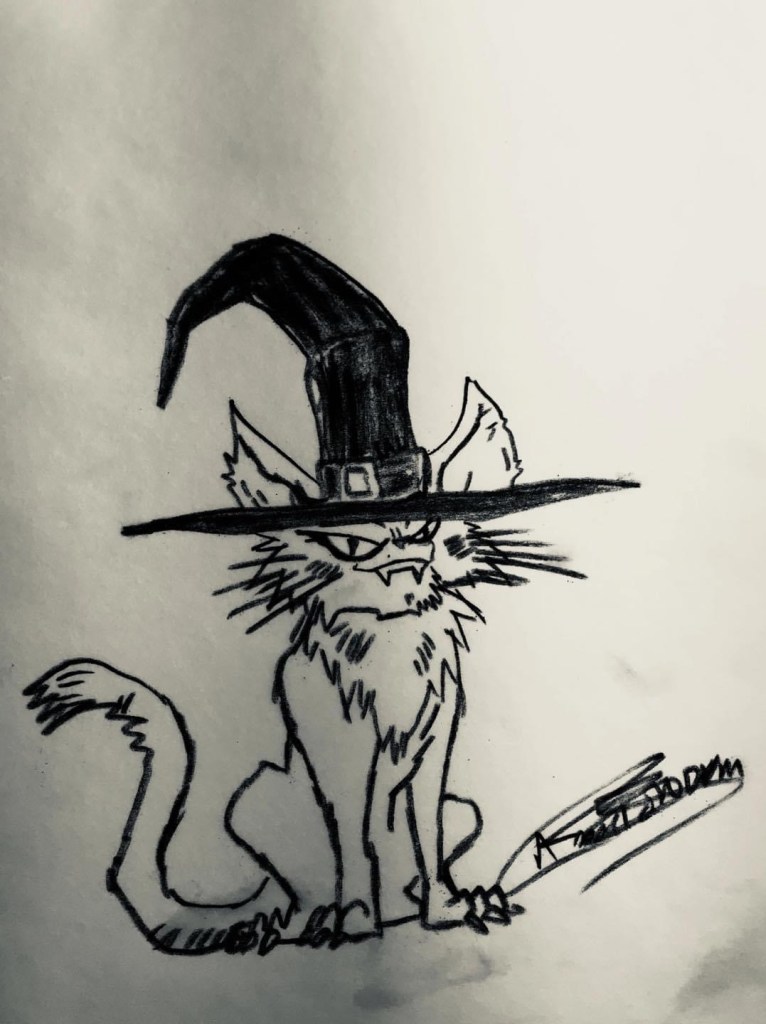
If you attended elementary school with me, you would probably remember my obsession with chickens. As a child, I would draw chickens as I sat at my school desk. Given the many drawing projects that elementary age children have, I drew hundreds of mediocre pictures of my pet chickens. Fortunately, my teachers were patient and supportive. Although my artistic abilities left much to be desired, I was free to draw to my heart’s content.

We would receive an annual catalog from Murray McMurray Hatchery. This catalog would depict every conceivable breed of chicken and give a short description of the desirable traits each possessed: comb type, leg feathering, silky, frizzle, bantam, standard, etc. I would spend hours and hours looking through this catalog. Each year, I was allowed to choose a single baby chick of the breed of my choosing. I took this choice seriously.

There are a range of things that one needs to consider when deciding what breed of chicken to have. These include the climate in which you live, whether you are raising backyard chickens for eggs or meat production, their temperament, foraging capability, predator awareness, and broodiness. I meticulously studied each breed and made my selection each year.

Here in the United States, the postal system accepts boxes filled with day-old chicks and delivers them coast to coast with overnight delivery. The chicks travel by Priority Mail and often have no food or water in their cardboard carrier to sustain them. How can this happen? Just prior to hatching, a chick absorbs all the remaining nutrients from within its egg. With this nourishment, the chick can survive for up to three days without food or water. This makes it possible to ship them by mail. In the nest, this process allows the mother to wait for the hatching of other chicks in her clutch before tending to the early hatchers: If chicks required immediate attention, the mother would leave with those that hatched first and the unhatched chicks would perish. This is a fascinating adaptation!

Like humans, chickens have full color vision, and are able to perceive red, green and blue light. 

Several studies on visual cognition and spatial orientation in chickens (including young chicks) demonstrate that they are capable of such visual feats as completion of visual occlusion, biological motion perception, and object and spatial (even geometric) representations. One of the cognitive capacities most extensively explored in this domain is object permanence, that is, the ability to understand that something exists even when out of sight.

Other recent scientific studies tell us that chickens recognize over 100 individual faces even after several months of separation. They also confirm that chickens consider the future and practice self-restraint for the benefit of some later reward, something previously believed to be exclusive to humans and other primates. They possess some understanding of numerosity and share some very basic arithmetic capacities with other animals. These findings fascinate me. 

To this day, chickens remain my favorite animals. I can sit for hours and watch my flock as they forage and explore the property behind the clinic.  

I look back with fondness on the days spent coloring and drawing chickens with crayons.

Memories are painted optimistically with passing years. I miss the worry-free days sitting at a desk in elementary school.

I will forever treasure these pictures and the pleasant memories associated with them.

And that is my take!
N. Isaac Bott, DVM

Mold-A-Rama

My Take Tuesday: Mold-A-Rama, the Magical Manufacturing Marvel

I had the privilege of being raised on a small farm in Castle Dale, Utah. Living in a small town had its perks for sure, for one, I rarely had to tell my parents when I got in trouble at school; as fast as word spreads in a small town, someone had almost always beaten me to it and mom and dad knew all of the details before I could even get home.

I loved growing up in a small town. I treasure the many wonderful people who helped shape my education and point me on the path I am on today.

My parents would set aside a few days each year where we could get away from the daily farm chores and spend time together as a family. I always looked forward to the time when we were able to leave Emery County and travel to the big city.

Vacations while growing up were typically short, lasting only a couple of days. I have many fond memories of visits to all of the national parks in the state and overnight trips to Salt Lake City. The overnight trips to Salt Lake were often planned around business meetings for my dad. We would typically come up early Friday morning and return home late Saturday.

We would usually stay at the Red Lion hotel in downtown Salt Lake. This hotel is still there, but it is now a Hilton hotel. I still remember the hotel layout. The swimming pool was located on the second floor. We must have stayed there a dozen times growing up.

Breakfast was always west of the temple at a Denny’s restaurant. It was a short 5 block walk from the hotel. I remember enjoying these meals immensely, despite the food being typical greasy breakfast items.

Following breakfast on Saturday morning, we would make a trip to the zoo. As children, we loved visiting the Hogle Zoo. I particularly looked forward to the Mold-A-Rama machines. These peculiar machines would make wax animal figurines on demand. The process melted polyethylene pellets at about 225 degrees and then injected the resulting liquid into a two-piece mold. Before the plastic could completely cool, a blast of high-pressure air would push any remaining liquid out a drainage hole in the bottom of the mold, leaving the sculpture hollow. Next, antifreeze was pumped inside and then drained to cool and harden the waxy plastic shell. The mold separated and the finished figure was ready. The whole process took less than a minute to complete.

For a five-year-old kid, they were a magical manufacturing marvel. These figurines were of many different animals and colors. I remember getting a gorilla, a giraffe, a lion, and many others. I still remember the smell of the freshly molded wax. The animals were quite hot when they came out of the machine, necessitating a fair amount of cooling off by rapidly blowing on them from all sides.

These were treasures to us. They would eventually crumble and fall apart, but they were placed on shelves in our rooms until that happened. There was something mystical and mysterious about owning a 4-inch mold of wax shaped like a gorilla.

Much of my love for animals was sparked by these trips to the zoo. In particular it instigated the comparative curiosity that has made my career so unique. I remember comparing different breeds of monkeys and apes, using the appearance of their hands, in particular their thumbs. I also wondered what was inside the camel’s humps, a question that took over 20 years to find the true answer, which came firsthand from the world’s foremost expert in this species. These trips led to my collecting zoo animal cards and reading about animal facts as a hobby.

It is impossible to look forward and connect the dots of the random chances in our lives, but looking back, I can see it clearly. It is interesting how these experiences all pointed to what I now do as a profession. I am glad I had the opportunity to go on these annual trips and for the wonderful memories that still remain.

And that is my take.

N. Isaac Bott, DVM
Father’s Day

Father’s Day

The giant snowflakes gently fell in perfect rhythm. Even though it was 6:00 AM, I could see clearly through the winter whiteness. This particular winter during the 1980’s in Castle Dale was incredibly harsh. Nearly 18” of snow had fallen over the past 24 hours. The field across the street from my parents house was covered in a thick blanket of white. I bundled up as I prepared to leave the house to do the morning farm chores.

My dad led the way as we headed across the street to the corals. The deep snow proved to be a challenge for my short legs. I jumped and lengthened my stride as I placed my feet inside my father’s footprints. As long as I followed his steps, the path seemed manageable

My dad is a giant of a man. I remember attending a Cub Scout pack meeting as a young boy. At this meeting, a plank was placed on the floor and a 16 penny nail was started in the center. A competition was held where all of the father’s in the room had a chance to hit the nail as hard as they could. Some were able to drive the nail in completely with 2 or 3 hits. When my dad’s turn came around, he buried the nail with a single swing of the hammer. I remember thinking how amazing that was! He could loosen old rusty bolts with a quick flick of his wrist, he could throw a bale of hay on top of a haystack and no one could use a shovel like him. In my eyes as a young boy, he seemed to be able to do anything. My dad has been my hero as far back as I can remember.

I remember a time where he had learned that a man living in town did not have a bed in his house to sleep on. My dad went and purchased a brand new bed with his own money and delivered it to this man that he didn’t even know. Years later, this man told me that this act was the kindest thing that anyone had ever done for him in his life. My dad taught me how to care for others less fortunate time and time again through his example.

Each summer, my dad would set aside time to take each of his five children camping with him individually. We would get to chose the destination of this one on one time. I remember the cold air and the damp grass. I remember the smell of the air. I remember eating Pringles and sitting by a campfire. I remember eating small boxes of Cocoa Krispies and catching fish.

Oh how I looked forward to my annual camping trip with dad! My favorite spot was in Upper Joe’s Valley. This overnight camping trip always provided an escape from the every day chores and busy summer days.

Despite working 7-5 every day, somehow dad would find the time in his incredibly busy schedule to take each one of us individually every single year. This was dad‘s way of showing us how much he cared. Although he loved each of us equally, during these outings we all felt very special. I remember every single trip and I cherish these memories.

I remember one particular time when I was working at the cemetery. The volume of work there had overwhelmed me. There was so much to do and I couldn’t get it done. Dad, after working all day at a thankless and stressful job, came to the cemetery and cut the individual daisy flowers off of the dozen or so bushes in the flower bed. This tedious process took several hours. I was thankful that night, but now looking back, tears come to my eyes. I know how tired and worn out I am after working all day. How did he have the energy to do all that he did?

In today’s world fathers come and go. Having a stable father is a rarity. My dad was always there to work with us. I remember many times going out to the farm with dad and being so stressed I couldn’t function, and after a few hours of digging ditch anything that was bothering me would disappear. Growing up, I was taught how to do good work and to be proud of my accomplishments. My dad did this, not by leaving a list of chores to be accomplished, but by working right there alongside us,

A statue on my dad’s dresser depicts a father with a small child sitting on his knee. The inscription reads, “Any man can be a father, but it takes someone special to be a daddy.” My daddy’s example was not lost on me. His unconditional love has inspired each of his 5 children to be the best that we can be

I have often wondered exactly what is the measure of a man? Is it the softness of his heart? Is it the hardness of his hands? Is it in the words he speaks or the legacy he leaves?

When the storms of life have blown and tossed me around, I have always been able to think about the example my dad set for me. He has walked the same path, has wished upon the same stars and he has worried about the same things. This brings me so much comfort. It helps me tremendously when I have to make tough decisions.

One of the most unfortunate things in my life is that it has taken me years to realize how essential my father’s role was to build my character, my ethics and most importantly, my happiness. His blood runs through my veins and his example is in my soul, and although my life has been a poor attempt to imitate his example, I am doing the very best I can.

This Father’s Day, I still find myself trying to follow my father’s footprints in the deep snow. He is my constancy and my mentor, my rock and my friend. He is my hero!

Thank you dad for your unconditional love. Thank you for your guidance. Thank you for teaching me how to work, to love and for teaching me how to treat others with kindness.

Happy Father’s Day!

N. Isaac Bott, DVM

The Making Of A Legend

My Take Tuesday: The Making Of A Legend

Dr Charles Leathers is the smartest person I have ever met. I had the privilege of meeting him during my first year of veterinary school. He taught the “Introduction to Pathology” class during my first spring semester in the College of Veterinary Medicine at Washington State University.

In early December of 2015, I traveled back to my alma matter as a guest lecturer. As always, I spent some time visiting with many of the professors that acted as mentors during my years as a veterinary student. I stopped in to speak with Dr Leathers on my last day at the school. He welcomed me in and spoke briefly with me. He was preparing for retirement after more than 30 years of teaching.

I cannot imagine my veterinary school experience without Dr Leathers. His class stands out for all of the veterinarians who were fortunate enough to have learned from him. He had a unique style of teaching. I still remember exam questions from his class 10 years ago. His lectures were legendary. He used an overhead projector like a boss. His style was one of a kind. His teaching inspired us. His assignments challenged us.

An example of this was shared by my entire veterinary school class. Dr Leathers spoke clearly and concisely. He desired all of his students to share in this quality. Nearly all of us use what are called fillers in our conversations. Filler can consist of words, such as “like,” or “you know,” frequently combined in the phrase “like, you know . . .” In these instances, the words are essentially meaningless except as conversation cues. A related phenomenon is speech disfluency, when one pauses in mid-sentence to try to recall the rest of the thought. Most of us are unaware of the extent we use fillers. The best way to become self-aware is to record a conversation or speech. This was Dr Leather’s way of teaching us to be better.

The task seemed simple. Prepare a 1 minute speech. Only 1 minute. It could be on anything you wanted to talk about. This 60 seconds of material needed to be memorized and presented to the 100+ member class. Each student’s speech was to be recorded.

Our assignment was to then take the tape home and play it back. We were required to write down exactly what was said (including the ums, sighs, coughs, grunts, ands, and other filler words we inadvertently use while speaking). This task is not a pleasant one. For most of us, these sounds are probably more common than the words between them. Following this, we were to correct the transcription and submit a final document stating what we should have said in the absence of filler words.

This exercise proved to be a learning experience. I became much more aware of my speech. I focused specifically on avoiding filler words. It changed the way I interacted with those around me. It helped me professionally.

Dr Leather’s has taught and influenced thousands of veterinary students over the years. His legacy is unparalleled at Washington State University. I count myself privileged to have been taught by one of the best.

My final question for this revered professor was simple. I asked, “You have had a remarkable career. What advice would you give to young veterinarians just beginning this journey?”

His response is one that I will forever remember.

“Just focus on your sphere of influence. Just do the best that you can and expect that others are doing the same.”

I think it would be wise for all to follow this cogent and concise advice from Dr. Charles Leathers.

And that is my take!

N. Isaac Bott, DVM

Kaycee

My Take Tuesday: Kaycee

18 years ago, on June 6, 2005, my life changed forever. On that day, I became a father. This unforgettable day was filled with both joy and fear. My daughter, Kaycee, was born in the early morning hours. Soon after her arrival, doctors determined that she had a bacterial infection and subsequent septicemia. She was immediately rushed off to the NICU. This was a very scary time for her parents. You feel so helpless. We trusted in the doctors and the highly skilled nurses. After several hours, I was allowed to visit her in the NICU.

When I first held her, I was filled with overwhelming feelings of joy, love, and fear. I was so elated to finally have my daughter in my arms. Seeing her tiny and fragile body was both miraculous and heartbreaking. She had monitors, bandage tape, IVs and wires all over. As I held her tiny fragile body and looked at her face, I fell absolutely in love.  Realizing how precious and fragile life was, I vowed to be the best father I could be.

Every subsequent night for the next 4 years, I would sing a Chris LeDoux song to Kaycee as she fell asleep. The song is called Daily Bread. 

The lyrics say:

“Lord I ain’t been a prayin man

I figure the whole worlds in your hands

Ask and you shall receive you say

So give me her love my daily bread

You can take everything I own

Every single seed I’ve sown

Still I know I come out ahead

If I have her love my Daily Bread

She is a raindrop in a drought.

She’s my faith when I’m in doubt

Like a river needs a riverbed

I need her love my daily bread

I don’t know why she’s chosen me

I live my life so selfishly

But I know until my dying breath

I’ll need her love my daily bread

And I know that I’m not worthy

But give me her love my daily bread”

Kaycee has grown up to be a smart, beautiful, and driven young woman. She is resilient and determined. Despite having faced more obstacles than most her age, her spirit and positive attitude continue to amaze me.

Kaycee, I am so proud of you and of all of your accomplishments. You have so much to offer this world, and I am so honored to be your father. Happy 18th birthday! I love you!

And that is my take!

N. Isaac Bott, DVM