Veterinary Technician Appreciation Week

My Take Tuesday: Veterinary Technician Appreciation Week

Being in the veterinary industry is hard work. Every day in filled with ups and down, happiness and sadness, and life and death situations. We end each workday exhausted and worn out emotionally.

Since our patients cannot speak for themselves, we spend a great deal of time communicating with their human owners. To an extent we are treating owners as much as patients. This requires a level of genuine empathy and professionalism that few people possess.

Behind every good veterinarian is a team of hard-working, caring individuals invested in the task of helping people help their pets. I am fortunate to be surrounded by a wonderful team at Mountain West Animal Hospital.

If you’ve ever experienced an emergency with your pets’ health or safety, you know how meaningful it is to have a knowledgeable and compassionate professional to care for them!

Veterinary technicians are the unsung heroes of your pet’s veterinary care team. Without these devoted professionals, my office would be a sea of chaos and confusion. These highly trained individuals do everything from greeting clients and answering phones to restraining pets, drawing blood, taking radiographs, assisting with surgical procedures, filling prescriptions, comforting grieving pet owners, and cleaning kennels.

I simply cannot get through the day without my dedicated team at Mountain West Animal Hospital. They provide the individualized care and compassion that make our clinic so unique.

Most people do not realize the emotional toll this job can take. They don’t see us crying after we euthanize a patient we have treated for years. They don’t see the hard work that goes on behind the scenes. They don’t know what it’s like caring for a pet who is suffering near death and the triumph of pulling it back from that edge and going on to live several more years. They don’t see the mistreated or neglected pets that so often walk through our doors.

They don’t know about the scars and scratches, bumps and bruises, sore muscles and back pain. They don’t know about the blood, diarrhea and vomit that they daily clean up.

There are many heroes that never stand in the spotlight, never hear the roar of the crowd and never receive the recognition they deserve.

Pictured are four of my heroes. They are my right hand and my left. They work in a high-stress environment, putting in long hours, caring for ill and anxious pets, cleaning messes, and putting themselves at risk of physical harm. They do this because they care. They care about each of our clients and their four-legged family members. Thank you for putting your health and safety on the line to help increase mine. Thank you for being such amazing advocates for our patients and for being such an incredible support system for our veterinarians and our clients.

This week is National Veterinary Technician Appreciation Week.

Katie is our full time licensed Veterinary Technician. Jordan is our office manager. Jay and Sara are our veterinary assistants. They are the who make it possible Dr. LeMonds, Dr. King, Dr. Davis and I to perform our tasks seamlessly.

Please join me in thanking these girls for the wonderful work they do at Mountain West Animal Hospital.

They are amazing!

And that is my take!

N. Isaac Bott, DVM

Community

My Take Tuesday: Community

It was a cold mid-February day on the Palouse. I had traveled to Pullman this day for an interview at Washington State University. My chances were slim. I was applying for a nonresident position in the College of Veterinary Medicine’s class of 2009. My palms began to sweat as questions were asked about my qualifications and application. Organic Chemistry. Yeah, I had received my lowest grade in this class during undergrad and knew that I would be asked about it. I did my best to answer the question in a satisfactory manner. 

The next question was unexpected. 

“Isaac, what purpose does a veterinarian serve in a community?”

I paused as I thought about this inquiry. 

My mind returned to my teenage years when I served on the Youth City Council for the small town of Castle Dale, UT. This rewarding time allowed me to give back to the community that formed so much of who I am today. 

My answer was as follows: “A veterinarian has the obligation to be an example and a good citizen. The amount of good accomplished through this entirely depends on the effort a veterinarian puts into the community. Effort is reciprocated many times over when someone donates their time and talents through community service.” 

I promised that, if I were lucky enough to become a veterinarian, I would do my best to give back to the community that I reside and practice in.  

They apparently accepted this answer and a few months later I began veterinary school.

I have done my best to keep the promise I made in that interview nearly 19 years ago. I have grown to love Springville, the surrounding Utah Valley community and enjoy running my own small business. I look forward to coming to work each day.

Several years ago, I began volunteering at local rescues and animal shelters through a variety of services. One service is providing low-cost vaccination and licensing clinics in local communities. We have been able to provide vaccines for over 1000 pets in Utah County this year alone. This requires us to close the clinic over a dozen Saturdays we would normally work. Despite this, we are extremely grateful for our understanding clients that remain loyal without this periodic Saturday availability. 

I also have helped train Animal Control Officers and animal shelter employees from all over the state the technique of humane euthanasia. This requires both in-class and hands-on training to properly learn to administer intramuscular and intravenous injections. 

These opportunities have been so rewarding for me! I very much enjoy getting to know all of the people that dedicate their lives to caring for those without a voice. The immense joy that I have felt volunteering my time has rejuvenated my passion for veterinary medicine and has helped my become a more patient, kind and caring person. 

Earlier this year, I was invited to speak at the annual conference for the Utah Animal Control Officer Association. An awards banquet was held in the evening of the opening day of the conference. I was completely surprised to receive the association’s 2023 Volunteer of the Year Award.

This award is something that I am very proud of. It has been such an honor for me to work with such wonderful people. From my team at Mountain West Animal Hospital to every single animal control officer and shelter employee, I thank you for your often overlooked efforts that you make every single day. Many of the lives you change are the animals that you care for. You make the world a better place and I salute you for it. 

Volunteering your time to support a cause you are passionate about is something you will never regret. It will enrich your life, familiarize you with your community, and connect you to people and ideas that will positively impact your perspective for the rest of your life. Helping your community is an opportunity for you to grow as a person and to better understand how you fit into the world around you.

I am excited for the future and for further opportunities to be able to share my knowledge and expertise with this wonderful community. I am my happiest when I am helping others. 

I encourage everyone to consider serving the community in your respective spheres of influence. It is something that will provide you with unparalleled contentment and sense of purpose. 

And that is my take!

N. Isaac Bott, DVM

The Disgruntled Veterinarian

My Take Tuesday: The Disgruntled Veterinarian

Veterinarians are some of the most kind and compassionate people on the planet. They are hard workers, and are some of the best people I have ever met.


As with any profession, there are occasional outliers.


When considering the prospect of attending veterinary school, I visited a veterinary clinic, here in Utah County, one day as an undergraduate.


I introduced myself to the veterinarian and asked a little about his experience as a veterinarian. As soon as I began asking questions about which veterinary school to attend, he interrupted me.


“Hey kid, why do you want to be a veterinarian?”, he asked.


I gave the answer I had given so many times. I replied, “Because I love working with animals. I also like working with people and this profession will allow me to help people by helping their animals.”


“What are you? You stupid #%$@>?”, he continued, “What are you going to do when those animals you love bite you and kick you? And what about those people that do not respect you and your expertise and expect you to work miracles? They are far from loyal and they couldn’t care less about you! Get a life kid. This ain’t for you!”


Wow! I couldn’t believe what I was hearing. Here was a veterinarian that was clearly dissatisfied with life in general.

After years of grueling work and what he deemed as little professional reciprocity, he had become very cynical. He made it very clear, anyone wanting to be a veterinarian was making a huge mistake. His goal was to dissuade any would be veterinarian that entered the doors of his practice from making the same mistake he did.

To put is delicately, this guy was the east end of a horse facing west.


Looking back, I feel sorry for him. My experience as a veterinarian has been the complete opposite.


The clients I work with are very loyal. My interactions with them are nearly all positive and they love their pets. They follow my recommendations and are always willing to provide the care that their pets need and deserve.


I am glad I did not heed his advice.


Mark Twain eloquently counseled, “Keep away from people who try to belittle your ambitions. Small people always do that, but the really great make you feel that you, too, can become great.”


I am thankful for those who encouraged me. Who supported me. Who believed in me long before I believed in myself.


Their contributions have led me to where I am today.

And That is My Take

N. Isaac Bott, DVM

Yo quiero bite you!

My Take Tuesday: Yo quiero bite you!

Often “the question” comes up during a routine appointment. Curiosity is naturally sparked with my response.

The question is, succinctly put, “Doc, what breed of dog bites you the most?”

The answer is unequivocally the chihuahua. Of the dozens of bites that I have received, a vast majority came from chihuahuas.

Chihuahuas are comical, entertaining, and loyal little dogs, absolutely brimming with personality – often a quirky and eccentric personality unmatched by any other breed.

Some of my sweetest patients are chihuahuas. They are affectionate and loving.

But every once in a while, a mean one comes along.

While a bite from a Chihuahua isn’t going to inflict the same damage as a bite from a larger dog like a Vizsla or a Boxer, it can still leave a painful wound that’s prone to infection. There’s an old myth that a dog’s mouth is cleaner than a human’s mouth, but this isn’t true. Whenever a pet bites, there is significant risk of infection.

While Chihuahuas are not naturally more aggressive than any other breed, they seem to be prone to react with aggression out of fear. Veterinarians are often the target of such aggression, simply because dogs are fearful of unfamiliar people and situations.

As a recent graduate, I was learning how to diagnose, treat and cure the routine cases that present daily. I had only been a veterinarian for about a month when I learned my lesson.

It was a routine appointment. Annual vaccinations and a wellness exam were needed. As I entered the room, Chispa, sat on the table glaring at me. As I reached down to auscultate the heart and lungs, Chispa absolutely went ballistic. Within 5 seconds, she had peed and soiled all over the tabletop. Instinctively, I reached for a muzzle. As I attempted to place the muzzle on her, she absolutely lost it.

Just like a loud clap of thunder that follows a flash of lightning; when I am bit by a dog, imprecations are sure to follow.

Chispa sunk her needle like teeth into my right hand and bit me again and again.

Before I could even mutter the phrase, “Oh S#*!”, this little devil had bitten me three times.

Her only goal seemed to be to inflict as much damage as possible to the man in a white coat that was reaching for her.

Blood poured down my hand. I sat stunned. I have fast reflexes; after all, I dodge bites and scratches on a daily basis.

What was different about this experience? Perhaps it was in the name. “Chispa” is a Spanish word meaning “spark”. Certainly, the fiery personality and name fit this small canine.

The rapidity of the attack taught me a lesson. I am much more careful now when dealing with seemingly innocent small pets. I do my best to reduce the fear and anxiety that accompanies a visit to the veterinarian.

And I am especially careful with pets that have incendiary names such as Diablo, Fuego, Demonio, Pyro, Hades, and believe it or not, Fluffy.

And that is my take!

N. Isaac Bott, DVM

The Attribute of Adaptability

My Take Tuesday: The Attribute of Adaptability

The Rocky Mountain elk (Cervus canadensis nelsoni) became the official state animal of Utah in 1971. Elk are also known as wapiti. This term originates from the Shawnee and Cree word ‘waapiti’, meaning ‘white rump’. Elk are members of the deer family and associate closely with the deer and moose of Utah. They are among the most gregarious of deer species and herds can exceed 500 animals.

Elk, no matter what time of year, are a remarkable sight. So large in stature, these animals have become an admired icon of the American West. They are amazingly adaptable and can live almost anywhere—forests, deserts, mountains, and plains. They eat a wide variety of plants. Their typical diet consists of grasses (year-round), woody plants (winter) and forbs (summer). This adaptability is unique and ensures the species survival. In this state, they can be found along Skyline Drive at elevations over 11,000 feet and in the desert landscapes of the vast San Rafael Swell. They seem to be as comfortable among the cedar trees and sage brush as they are in the Quaking Aspen and Douglas Fir forests.

As a child growing up near the Manti LaSal National Forest, I frequently encountered these animals in the wild. I remember camping in the crisp early fall. The tranquility of those nights is unparalleled. The silence was only occasionally broken by the phenomenon known as bugling. This distinctive vocalization begins deep and resonant and becomes a high-pitched squeal that is held for several seconds before ending in a succession of grunts. It is a sound that will hasten the heart rate of even the most seasoned of outdoorsmen. The noise echoes through the pines, across the valley and down the canyons. Such an experience is breathtaking.

As a veterinarian, I am privileged to be able to work with a number of herds of elk. I very much enjoy this. Pictured is a herd of elk near Birdseye, UT.

This animal is a symbol of power and strength. It is also a symbol of ultimate freedom.

We can learn a lot from elk. If we were as adaptable as this species, we would thrive in any situation where we are placed. We would be unafraid, undaunted, valiant and courageous.

When I am confronted with changes in life, I always think of the magestic Rocky Mountain elk.

And that is my take.
N. Isaac Bott, DVM

9/11

9/11

Today marks 22 years since the fateful events of Sept. 11, 2001.

Alan Jackson’s poignant lyrics ask the simple question, “Where were you when the world stopped turning that September day?”

It was a beautiful morning in Trujillo, Peru. I was crammed inside of a small Tico model taxi. As we passed through the Monserrate neighborhood, I peered out the window at the solid brick buildings with their brilliant shades of brown and white. At this stage in my life, I was completing two years of service as a missionary for the Church of Jesus Christ of Latter-Day Saints. As we headed to the headquarters of the mission, the taxi driver turned up the radio.

After two years in Peru, I had mastered the Spanish language. This language is referred to in Peru as Castellano. I could sense urgency in the voice of the newscaster as the broadcast came across the radio. As he described the horrors that occurred that morning, he used the verb “clavar” (meaning “to nail”) in reference to the airplanes hitting the World Trade Centers. I remember the feelings of panic and despair that came over me after hearing the news.

Over the next few weeks, I would daily be approached by random people that could tell that I was from the United Sates. These wonderful people would express their heartfelt condolences about the tragic attack that occurred and about how Peru had experienced the horror of terrorism during the 1990’s.

Being on foreign soil was difficult on that day in 2001. I will forever be grateful for the kind hearts of the Peruvian people that reached out and made me feel comforted despite the uncertainty of what was going on back home.

At one extreme man is indeed a vicious killer. He has the capacity to destroy entire civilizations. He can spread the bloody dead and dying over miles of landscape without a touch of remorse. He can kill women and children for no better reason than that they worship a different god.

Yet this mammal called man will risk his life to save a stranger’s child, or to rescue a dog who’s fallen into the river, and to save a small helpless kitten in distress. I salute those engaged in this good cause and stand with them in this dangerous world.

May we never forget the lives lost and the sacrifices made by the first responders and military personal that responded without question to the events on that September Day.

And that is my take!

N. Isaac Bott, DVM
My Life: I Appreciate It

My Take Tuesday- My Life: I Appreciate It

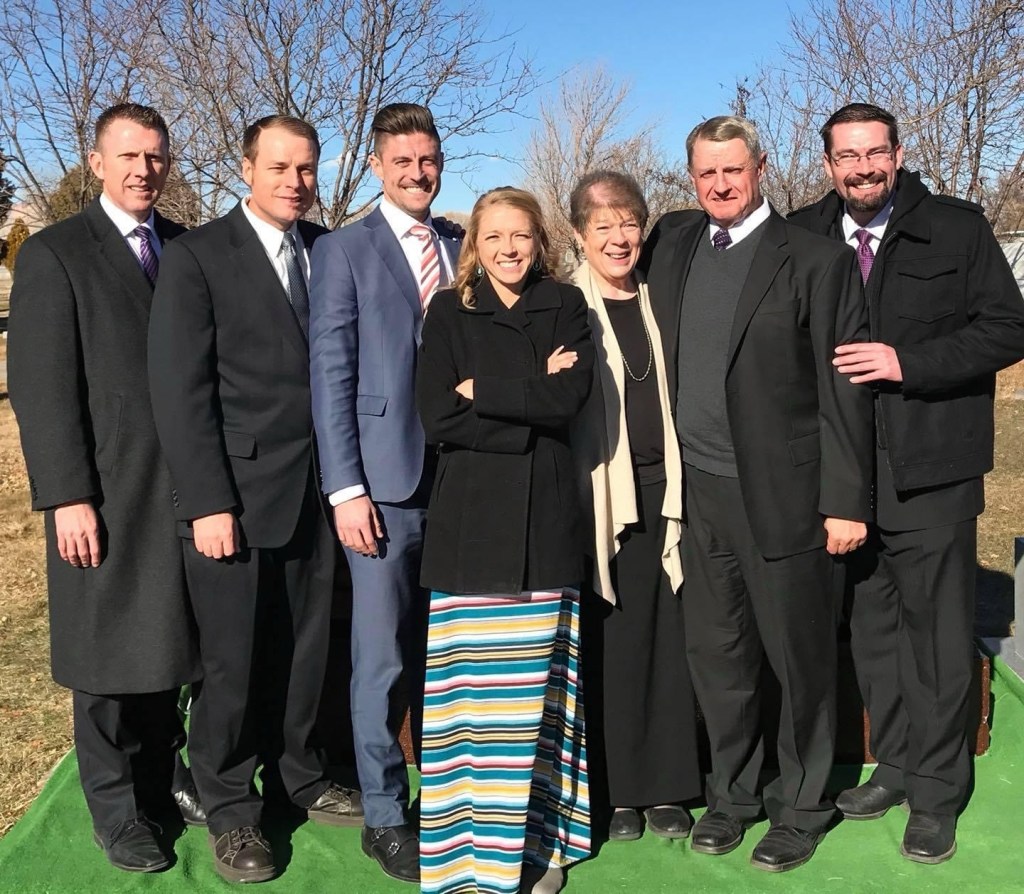
In March of 1980, a busy young couple worked tirelessly as they went to school and managed an apartment just west of Old Main near the Utah State University campus. The mother worked tirelessly in doting support of her husband. The father went to school full time and also worked long shifts at a local cheese factory. Their first child, a boy, was just beginning to walk and life seemed to be going smoothly. These lean days of struggle brought this couple even closer together as they faced the brambles and thorns, challenges and difficulties most couples experience just starting out. Their dreams of the future were one step closer with each passing day.

Early one morning, the mother began to experience significant stomach pain. This sharp pain in the lower right side of her abdomen was unbearable. The worried young father rushed her to the hospital.

A diagnosis of appendicitis was made and emergency surgery was required. The skilled surgeon performed the appendectomy without any complications.

As the surgeon explored the abdomen during the surgery, he noticed that this young mother was pregnant. This was completely unexpected. The medications used for general anesthesia were not approved for use in pregnancy, in fact studies showed that they caused birth defects when used during the first trimester.

The doctor stepped out of the surgery room to speak with the young father. He told him that his wife was pregnant and that the anesthesia used posed significant risk to the heath of the baby. Birth defects and serious developmental problems were likely to occur. The likelihood of these complications was so great that the doctor recommended that the pregnancy be terminated.

The weight of the world was on the shoulders of this young couple. They were tasked with making such a difficult decision about the pregnancy and the potential outcome. Considering the future consequences of this decision must have been so stressful for each of them. The health of the young mother and the possible complications were carefully considered.

In the end, they chose to keep the baby and face the uncertainty of what was to come.

On September 4th, 1980, a healthy baby boy was born. The baby was free from any birth defects and the young mother did well following the scheduled caesarian section.

The child grew up normally and, along with his 4 siblings, has strived to contribute positively to this world.

I catch a glimpse of that baby born 43 years ago yesterday, each morning when I look in the mirror.

How grateful I am that my parents made the choice continue with the pregnancy despite the risk. My very life was in their hands and, thankfully, they chose the path of uncertainty and risk.

My life has been filled with wonderful opportunities and experiences and I appreciate each and every day.

And that is my take!

N. Isaac Bott, DVM
Fleming’s Vest-Pocket Veterinary Adviser

My Take Tuesday: Fleming’s Vest-Pocket Veterinary Adviser

The year was 1904. The town of Emery, Utah had a population of around 560 people, nearly double what it has today. Emery has always been an agricultural community. Ranching and farming are as much a part of its scenery as the towering cliffs that overlook the small town. Visitors are often taken aback by the beauty and expanse of this beautiful country on the edge of the San Rafael Swell.

Louis W. Peterson made his living as a farmer. Life during this time could not have been easy. Lewis and his young wife experienced extreme heartbreak during their first few years together. Their only two children at the time would die from an whooping cough outbreak that indiscriminately killed so many in this small community in 1907.

The remote location of the town isolated it somewhat from other communities. The town had a fine yellow church house that had a large ballroom floor that served not only for Sunday worship services, but also for social gatherings. This building still stands in the center of town today.

Information came in the form of newspapers and books. Knowledge was a valuable asset that would set certain farmers apart. When information was available, these farmers were open to reading and learning. It was during this time that LW Peterson acquired a new book called, Fleming’s Vest-Pocket Veterinary Adviser.

This, now 119 year old, pocket sized handbook of veterinary information pertained to diseases of horses and cattle, and was designed to help farmers and stockman. It provided 192 pages of everything from birth to aging, to caring for illnesses, to poisonous weeds, maintenance, how to feed, and recipes for concoctions to treat a variety of ailments.

This book must have helped LW. He kept the book. He passed it down to his son, Kenneth Peterson, who passed it to his son Hugh Peterson.

My grandfather, Hugh Peterson, gave it to my mother, who gave it to me. This book is displayed prominently in the museum case in the reception area of Mountain West Animal Hospital.

The well worn pages of this book are fascinating to read through. Although veterinary science was in its infancy at this time, it is still interesting to read about treatments used. Without the luxuries of modern antibiotics, antiseptics, anesthetics and anti-inflammatories, these treatments were innovative for their time. The early 1900’s provided incredible advances in hygiene practices, preventive medicine concepts evolved, the first vaccines appeared, nutrition was studied and research was beginning to show which therapeutics actually worked, and why.

Perhaps some would consider this dated literature obsolete. Much of the information contained therein certainly would be considered so. I, however, consider it a treasure. I wonder if LW realized that, more than 60 years after his death, a veterinarian, carrying 1/16th of his DNA, would appreciate this book passed from generation to generation.

I will keep this book safe and pass it on to my children. Who knows, perhaps in another 100 years, it will still be seen as a valuable piece of family and veterinary history.

And that is my take.
N. Isaac Bott, DVM

The Red Handkerchief

My Take Tuesday: The Red Handkerchief

As a veterinarian, I all too often find myself in precarious situations.

Upon graduating from veterinary school in 2009, I moved back home here to Utah. My first job out of school was right here in Utah County.

It was not unusual for me to be called to attend a dozen or more lame and injured cows on a particular day. You might arrive to find them in a paddock with no sorting pen and therefore no means of restraining them for treatment. What are you going to do? Unfortunately, farmers often have the attitude that you’re the vet, they’ve called you out to do the job, so they expect you just to get to it. Often these cattle facilities left much to be desired. A few broken palates, some bent powder river panels and a welded together squeeze chute constitute pretty decent working conditions.

Usually, some unsatisfactory compromise could be sorted out which would reinforce the fact that you were not half as good as their old vets.

Max was no exception. He stood 6’1″ and was as skinny as a bean pole. He always had a runny, drizzly nose, and he kept a red handkerchief in the front pocket of his bib overalls. Max didn’t want a new young vet working on his cows. He was used to the old school way and had no reason to change.

I was greeted on one of these farm visits by this familiar refrain: “We used to use old Doc SoandSo. Have you heard of him? Best dairy vet in the county. Of course, you’re new and not used to dealing with dairy cows down here are you?”

Perhaps I am unduly sensitive but being told you’re second best before you’ve even begun is either irritating or depressing—depending on how your day has been. This day tipped more toward the irritating side.

Suzy was the name of his milk cow. She was a tall Holstein crossbreed cow. On this particular day, Miss Suzy stood in the knee-deep pasture staring at us as we entered the field. She was swollen up like an engorged wood tick. On her left side, her stomach was protruding so far that she was as wide as she was long. The diagnosis, even from afar was obvious.

She was bloated.

Bloat is a digestive disorder characterized by an accumulation of gas in the first two compartments of a ruminant’s stomach (the rumen and reticulum). Production of gas (primarily carbon dioxide and methane) is a normal result of fermentation processes. The gas is usually discharged by belching (eructation) but, if the animal is unable to remove the excess gas, pressure builds up in the rumen-reticulum exerting pressure on the diaphragm which prevents the animal from inhaling, and bloat occurs. The most common type of bloat is frothy bloat where gas builds up in a foam or froth above the rumen contents and the normal belching is inhibited.

Imagine a 40-gallon tub of partially digested green stomach contents. The pressure of this stomach is such that when it is alleviated, it is similar to popping a balloon, this disgusting smelly concoction will spew in a fashion similar to the Old Faithful Geyser.

Before we could even isolate her in the corner to begin treatment, Max decided he needed to blow his nose. As he pulled out his bright red handkerchief, he flipped it with his wrist and positioned it to evacuate his proboscis. Suzy caught sight of this red temptation and came charging full speed – like a freight train – straight for us. She was bellowing and blowing snot in a fit of rage.

In a situation like this, it doesn’t matter how quick you are. The only relevant assessment of speed is how fast you are in relation to the other person in the pasture. I figured I could beat Max to the gate but would feel guilty in so doing.

I braced myself for the impact. Max yelled, “Hey Now!”

Suzy collapsed just steps before she reached us. The massive pressure caused by the bloat had cut off her air supply. She lay in a heap in front of us.

The treatment for bloat in a case like this is to relieve the pressure as fast as possible. An incision in made through the left side of the abdomen and the rumen is decompressed. In a situation like this, you only have a few seconds to act. My surgical instruments were in my toolbox over by the gate. I knew there wasn’t time to retrieve them.

I reached in my pocket and pulled out my Old Timer pocketknife. I made a quick incision with the sharp point.

Immediately, air began spewing out. It sounded like removing a valve stem from a car tire. It whistled as the massive stomach returned to normal size. Shortly thereafter, Miss Suzy was back on her feet and back to her normal self.

As I prepared to leave, Max commented, “Hey Doc, I guess you are alright after all.”

Max then pulled out the red handkerchief and blew his nose as he inquired, “How much do I owe you?”

And that is my take!
N. Isaac Bott, DVM

Sheep on the Loose

My Take Tuesday: Sheep on the Loose

The morning was colder than expected.

I zipped up my jacket as I climbed out of my truck ready to begin a day of veterinary appointments. The clouds scuttled across the sky, the sun breaking out in bursts as I made my way through the make-shift corrals that are a common sight in Utah County. A solo tree, standing along the property line caught my eye as I crossed the fence. I marveled at the beauty of the crisp copper leaves falling off the lone tree that sway gently in the Autumn wind. A single golden leaf pirouetted down an invisible spiral of breeze, spinning through the air as it let itself be carried down. It shook slightly, as if it could have been whisked away any second by the grip of an icy wind, but it kept floating down the twirling course. It blew past my face and landed lightly on the ground, the shiny, vibrant color standing out against the ambers and bronzes beneath it.

Sheep are short-day breeders. The breeding season coincides with the decreasing day length each fall brings. Today’s appointments are routine breeding soundness evaluations on a group of Rambouillet rams.

The Rambouillet breed of sheep originated more than two centuries ago, in 1786, when Louis XVI of France purchased over 300 animals from Spain’s famed Merino flocks, which were produced the world’s finest wool. The males of this breed have characteristic large, curved horns that are well developed with wide spirals. They weigh around 300 pounds at maturity.

A large horse trailer was backed up against the gate of the pen, with about two feet of space between the edge of the fence and the trailer. I could hear the deep bleating and baaing of a dozen rams echoing from inside the aluminum trailer.

I stood in the small gap between the fence and the trailer in an effort to stop any rams from escaping the enclosure. As the gate was opened, the first ram paused and then ran quickly from the trailer, giving a bounding leap as he landed on the ground. The remainder of the rams followed in perfect succession, pausing and bounding in unison.

The last ram exited the trailer and hesitated as it approached the rest of the herd. He turned his massive frame slightly as he looked in my direction. Suddenly, without warning, he lowered his stout head and neck and charged. I braced myself for the impact. Anticipating a blow to the legs, I lowered my body into a football stance. This massive ram, in a fit of ovine rage, leaped over my head and landed harmlessly on the gravel patch surrounding the pen.

He then let out a low “Baaaaaaaa”, as if to beckon the remaining rams to follow his lead. This flock mentality is a sure thing, meaning that if one sheep finds an escape route then the entire flock will follow. The remainder of the herd stampeded towards me in a frenzy. The lead ram lowering his head in apparent contestation head bunting stance. I knew that an attempt to stop a charging ram of this bold carriage would be futile. I stepped aside and yielded as the rams charged through the small alley on their way to apparent freedom.

I grew up around sheep. My family had a small flock that provided me with valuable insight into sheep behavior and husbandry. One of the important lessons I learned is to always have a perimeter fence as a backup when working with sheep.

Sheep are a prey species, and their only defense is to flee. The flock of rams fled in unison down the gravel path. They all stopped abruptly as they arrived at the closed perimeter gate. Accepting defeat, they turned and charged back through the alley and into their original pen.

The remainder of the morning was uneventful. Each examination revealed a healthy ram, and the group was cleared for the upcoming breeding season.

As I walked back to my truck, I stepped through the golden-brown carpet of leaves, as they crunched under foot and quivered in gusts of the autumn wind.

The deep sound of the rams bleating in concert echoed from the horse trailer. The cool breeze scattered the leaves in all directions and sent a chill down my spine. I took a deep breath and was warmed instantly by the smell of a nearby wood burning stove.

I sighed, relishing the feeling of fall. It was something I’d have to wait a whole year to experience again.

And that is my take!

N. Isaac Bott, DVM