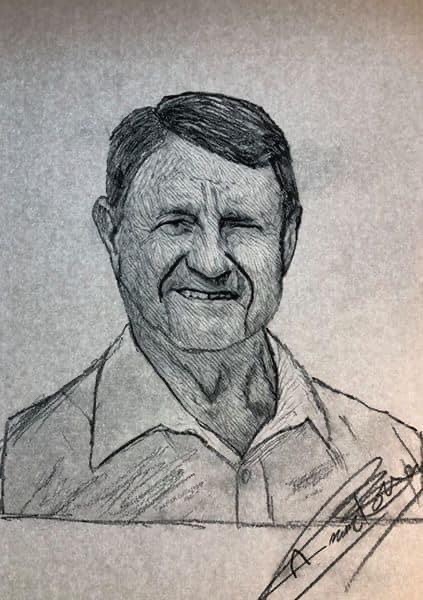
Spit Happens

My Take Tuesday: Spit Happens

I received a call a while back regarding a sick llama. It was from a new client that wanted to know if I knew anything about llamas and alpacas. 

Calls like this are somewhat frequent. Asking a vet if they know anything about llamas is like asking a pediatrician if they know anything about 8-year-olds. I responded that I was indeed familiar with all camelids and had worked extensively with them as a veterinarian.

As I arrived at the farm, it was obvious that this wasn’t a typical llama ranch. It appeared I had traveled back in time to the 60’s. I was meandering into an apparent neighborhood of Hippie-ville. The van parked outside the gate looked just like the Mystery Machine from Scooby Doo. 

The bright colors were also painted on each of the barns and small buildings of the property and even covered the bases of the tall Chinese Elm trees.

One would not immediately equate going barefoot with farm life, I suppose, especially if the farm in question is shared with livestock. There are serious concerns regarding hook worm, and other parasites that could easily be transferred through the lack of shoes, and to be certain, stepping on manure barefoot has little appeal to the average person. However, a couple of barefooted and worry-free people were standing at the end of the driveway to greet me on this particular day.

One of the owners held a small white paper cup in her hands. As I greeted her, she held the cup up and asked me to take a sip.

“What is it?”, I asked, not fully anticipating the response I received.

“It is Holy Water”, she responded. “We always make the healer drink before the llama.”

Perhaps the shock of the colorful ambience and barefoot attendants clouded my judgement, whatever the reason, I grabbed the cup and took a small drink. Immediately, I realized my mistake, but could do nothing but swallow the mysterious potion. It was the most disgusting thing I had ever ingested. I smiled, and politely asked where the sick llama was located.

The large white llama was setting in a “cush” position, a term llama farmers use for sternal recumbency. As I approached, he raised his mouth in the air and pinned his ears back against his head.

I moved cautiously, as these signs are consistent with a llama that is going to spit at you. This nasty dark green elixir is not spit at all but is the regurgitated contents from the first stomach compartment. The slew is a mixture of partially digested feed, stomach juice and miscellaneous microbes.

Llamas are well aware of a veterinarian’s never-ending quest to stick needles in them; and if provoked, they will spit copiously at you with unpleasant accuracy of aim.

There is a classic sound a llama will make before spitting. The unmistakable gurgling sound is followed by a distinct “pfffffpth”, as the stomach contents spew from the mouth.

The cause of the llama’s discomfort was a large Russian Olive thorn sticking out from the back of the left elbow. I gently reached down and removed the dagger like thorn.

It appeared as though I had escaped unscathed. The llama, with its ears still pinned back, watched me closely, but did not spit.

As I turned my head slightly, I began to speak with the owners. I explained the aftercare that would be required for a full recovery and encouraged them to remove the large Russian Olive plants that lined the south side of their pasture. I asked if they had any questions and turned back towards the llama.

My mouth was between words then the attack happened. The trajectory and accuracy were unparalleled. The llama spit with sharp-shooter accuracy, and the stomach contents went directly into my mouth.

I immediately began to gag. I then began to dry heave uncontrollably. The owners stood in awe as I struggled to rid my mouth of the fowl taste of fermented llama feed.

There is no amount of Listerine that can remove the taste of llama spit. It will stay in your mouth for days.

“Are you alright?” the bearded man asked.

“Yeah”, I muttered, as I looked up.

“You got to learn to keep your mouth closed, Doc”, he continued, “Especially if you are going to work on llamas.”

I didn’t know how to respond. After working on literally thousands of llamas and alpacas, this was the first time spit had actually entered my mouth.

I accepted my defeat and curiously inquired, “Can I have another sip of Holy Water?”

And that is my take!

N. Isaac Bott, DVM

Chris LeDoux

Wednesday, March 9, 2005, was a typical day. During this stage of my life, I was finishing up coursework and getting ready to graduate from Southern Utah University. My classes ended at noon, and I found myself with some time free in the afternoon and decided to go shopping for a new chest of drawers.

I jumped in my Chevy S-10 and headed south on Main Street in Cedar City, Utah. I noticed remnants of a recent snowstorm lingered on either side of the road piled up along the sidewalks. Per usual, I listened to KONY country when driving around town. A Chris LeDoux song came over the waves. Instinctively, I cranked up the volume and listened to the tune. As the song ended a second Chris LeDoux song began to play. Hearing a Chris LeDoux song on the radio is not an everyday occurrence. A radio station playing two songs in a row was unheard of. My heart sank. I knew something had happened. As the second song finished, the DJ announced that earlier in the day, Chris LeDoux had lost his battle to a rare form of cancer called cholangiocarcinoma.

Chris was a man’s man. Anything he did, he did well. He wasn’t born with extraordinary talent, but with hard work and dedication he became extraordinary. He was an award-winning sculpture, a world champion bareback rider and a world-class country music musician.

Chris’ music was a constancy during my youth. When I was working on the farm, I often would listen to his songs. One song talked about digging and tamping postholes and stretching the wires tight. Another detailed the intricacies of irrigating alfalfa. His lyrics seemed to represent a lot of what I knew in life. Still to this day, as I’ve had the opportunity to travel, I often find lyrics that mention the cities and places that I visit from Spokane to Manhattan, Salt Lake to Seattle, up north from Billings to the Yukon River and down south from Fort Worth to San Antonio.

I had the opportunity to see Chris perform dozens of times in concert. He was such a gentleman and the best performer I have ever seen. Today marks 19 years since his passing.

In his last studio album, Chris recorded a song called The Ride. The lyrics describe facing death with dignity and grace.

“Well, I know some day farther down the road

I’ll come to the edge of the great unknown

There’ll stand a black horse riderless

And I wonder if I’m ready for this

So, I’ll saddle him up and he’ll switch his tail

And I’ll tip my hat and bid farewell

And lift my song into the air

That I learned at that dusty fair

Sit tall in the saddle, Hold your head up high

Keep your eyes fixed where the trail meets the sky

And live like you ain’t afraid to die

And don’t be scared, just enjoy your ride”

Thanks, Chris, for living a great life and for teaching this cipher from Castle Dale, UT so many lessons about life through your determination, example, and lyrics. Good ride cowboy! Good ride!

N. Isaac Bott, DVM

The Alpine Buttercup

My Take Tuesday: The Alpine Buttercup

One of my favorite flowers is the Alpine Buttercup. Seen only by those who venture near or above the timberline, it follows the melting snow into the sunshine. In the early spring, it fights its way up through the cold hard earth. Along the snow banks high in the Rocky Mountains, this flower is the first to emerge, often blooming through the melting snow.

I have often wondered how this plant can be so hardy. Ranunculus acraeus is a plant of environmental extremes, hence the species name acraeus, meaning “on high”.

I often wonder what it would be like if we could switch roles with the buttercup. What if we could be as resilient as this small plant?

We would become this tender whitish-yellow chute. It hasn’t felt the suns warmth, the green is yet to come. This tender seedling pushes up through the cold hard ground.

The moment it emerges, it is subject to all of the dangers and injury that can befall anything alive and growing. A wandering deer passes by and steps on the tender plant and smashes it down. Yet, the chute pushes back up.

A hungry chipmunk discovers the plant and bites off its tender delicacy. Still out of it’s reservoir of power, the buttercup pushes up.

It struggles toward to the sun, despite the adversities that attack it.

Then one day it bursts into a tight yellow bud.

It affirms that underneath the old rotten layers of winter snow there is new good life.

My thoughts turn to an exchange in one of my favorite books, Edmond, who has suffered unspeakable torture and pain is addressing a young but courageous Albert. He says, “Life is a storm, my young friend. You will bask in the sunlight one moment, be shattered on the rocks the next. What makes you a man is what you do when that storm comes. You must look into that storm and shout… Do your worst, for I will do mine! Then the fates will know you as we know you.” (Alexandre Dumas, The Count of Monte Cristo)

The fleeting emotion we call happiness, is but a comparison of one state to another. And as such, those who have experienced extreme pain and grief, are most capable to experience supreme happiness.

Life is full of brambles and thorns. It has to be. There is no growth without challenge, and no challenge occurs without some level of uncertainty and presentation of incommodious circumstances.

A few years ago, during a severe winter storm, I passed a herd of bison standing in a large meadow on the side of the road. The storm was intense, with over 18 inches of accumulation in just a few hours. The bison, ironically, stood still in the middle of the meadow. In conditions that would kill entire herds of cattle, these majestic animals stand face first in the winter fury as the wind blows and the snow accumulates. They don’t turn their hindquarters into the wind, nor do they move with it. They stand and face the storms of life undaunted, stoic and valiant.

Perhaps we would do well to emulate the bison, as we face the uncertainties and challenges that we face in life. The storms of life will inevitably come, so why not face them? And face them with strength, determination, and power. Sure, it’ll feel uncomfortable at first, it may even be scary, but if we get comfortable with the feeling of being uncomfortable – that discomfort will begin to lessen.

I don’t know how long your storm will last or how intense it is. But I am confident we will all fare the storm better if we face it head on. Just breathe, put your head down and find a way through. We must have tough times to fully appreciate the good times that lie ahead.

Just like the Alpine Buttercup, we all contribute to the beauty of this world. We are an infinitesimal part of it. Still each of us, no matter how humble, no matter how lowly or simple, we all have a critical part to play.

We only must recognize our role and take it on.

Either we bloom, or we sadly wither away.

And that is my take.

N. Isaac Bott, DVM

Snowball

My Take Tuesday: Snowball

It was a busy morning at the clinic. Mrs. Robins arrived right on time for her scheduled appointment. She was a long time client at the clinic and was always pleasant during my interactions with her. Her hair was white, and always perfectly styled. She greeted us warmly as she came through the front door. She carried a white fluffy cat inside a pink pet carrier.

Snowball was her name. Such a name is suggestive of a soft white fluff-ball, a sweet angelic and innocent kitten. She was due for her annual vaccinations and a wellness checkup.

However, this kitty’s name is what I would call a major misnomer. Clearly, this kitty received its name long before its true nature was known.

All too often, I hear the phrase, “Doc she is an angel at home. She is just the sweetest thing.” Mrs. Robins repeated the phrase verbatim as we entered the exam room.

Snowball was sitting peaceful in her carrier. As I peered through the door of her carrier, I noticed a couple of warning signs.

When a cat is distressed, it will crouch in a unique form with the legs and tail pulled in under the body. They will extend their neck, flattening the ears against the head.

Cat bites and scratches are painful and notoriously prone to infection. As a veterinarian, I have to be very careful and observant. A cat bite on my hand could literally make me useless – everything I do on a daily basis, from surgeries to physical examinations, requires extreme dexterity and use of my hands.

“Snowball doesn’t seem very happy today,” I observed, “We need to be careful taking her out of her carrier.”

“Don’t worry doctor,” Mrs. Robins replied, as she swung open the carrier door, “She will come right out.”

Snowballs exit from the carrier was reminiscent of a rodeo bull exiting the chute during the NFR. She came flying out, hissing and swiping at everything in her path.

She leaped from the table and landed directly on Mrs. Robin’s head. She immediately extended her claws on all four feet simultaneously and plunged them into poor Mrs. Robin’s scalp.

Almost in an instant, snowball fell from atop the terrified woman’s head. Clinging desperately to a white wig. As she hit the floor, she released the hair piece and hissed. Mrs. Robins reached down and grabbed the wig and placed it back on her head.

“Wow!” she exclaimed, “She is sure mad at you!”

Dealing with a spitting and hissing feline in a demonic rage is a dangerous predicament, and can present a formidable challenge to any individual, let alone one smelling like a veterinarian.

Snowball then looked at me, hunching her back, while aggressively growling and spitting. She leaped towards me, as I jumped back. Her trajectory was clearly aimed at my upper body, and as I moved, she adjusted her posture mid-air and redirected. Her extended claws sank into my pants. I felt her claws sink into my skin and she climbed upward and onto my lab coat. She came to a stop on top of my right shoulder. Ironically, a moment of tranquility ensued. The hissing stopped and she retracted her sharp claws.

Seeing this an an opportune time, I grabbed the rabies vaccine and removed the syringe cap. I had to be supremely careful that I wouldn’t be knocked or in some other way accidentally discharge the injection into Mrs Robins or myself. At last, I found a piece of leg and carefully thrust the needle through a felted mat of fluffy white hair and into the muscle beneath.

Snowball’s reaction was unremarkable. She did not hiss or spit. She didn’t even growl.

I gently placed her back on the examination table and finished the remainder of the vaccinations and the examination.

She purred as I looked into her eyes and examined her mouth.

She entered the carrier without any hesitation upon completion of the appointment. I stood dumbfounded, what I had just witnessed made little rational sense on any level. Aggression like this that is episodic and transient, is something even animal behavior experts don’t fully understand.

“Wow, Doc, she must have just had a little rage she needed to get out of her system,” Mrs Robins stated, “She really is such a sweet little thing.”

I smiled as I glanced at the content Snowball, as she sat purring and comfortable inside her carrier.

My legs began to sting, as I felt a trickle of blood run down the front of my knee.

As Mrs. Robins left, I noticed her white hair remained immaculate, and despite having been tossed and trampled around by a wild feline, not a single piece of hair was out of place.

And that is my take!

N. Isaac Bott, DVM

Where the Eagles Fly

My Take Tuesday: Where the Eagles Fly

Above the timberline, soaring over the lofty mountains of the Manti Lasal National Forest fly two bald eagles. The eagle flies higher than other birds, and its vantage point must exceed that of any other creature. An eagle’s eye is almost as large as a human’s but its sharpness is at least four times that of a person with perfect vision. The eagle can identify prey moving almost a mile away. That means that an eagle flying at an altitude of 1000 feet over open country could spot prey over an area of almost 3 square miles from a fixed position.

To glimpse the soaring splendor of a pair of majestic bald eagles is a rare and wonderful sight. These beautiful birds fly through the deep blue skies that surround Castle Valley.

For some unknown reason, this pair of eagles chose an unusual spot to call home and build their nest. Leaving behind the towering mountain cliffs and desolate desert that closely surround Castle Dale, they instead selected a small clump of Cottonwood trees located in the corner of an open dry land alfalfa patch.

I recall my father purchasing this land in the late 1980’s. We plowed the blue clay soil and planted alfalfa on the areas that were fertile enough to support crop production.

The very next year, while we were feeding cows, we noticed two bald eagles perched in the clump of Cottonwood trees at the bottom of the field. I recall thinking how unusual it was to see two bald eagles in the same tree.

During the next few months, these eagles built a massive nest. We watched as they carried sticks and bark from miles away. The nest was an engineering marvel, built high in the tree below the crown supported by large solid branch extending straight east. The nest was constructed of interwoven sticks. The interior was lined with grass, corn stalks, branches, and other material. The bowl was filled with soft materials and their own downy feathers.

I recall the first eaglets born on the farm. In a rare event, 3 offspring were hatched and successfully raised. I remember seeing the newborn eaglets. They are covered with gray down, and so light they almost appear white. It isn’t until years later that their characteristic white head feathers develop as they reach adulthood. The babies grow rapidly, adding about a half pound to a pound of body weight every week until they are about 9-10 weeks old.

Every spring, I watched as these birds hatched, learned to fly and left the nest. Year after year, decade after decade, this process repeated itself producing many successful offspring.

Each breeding season, material was added to the nest and it’s size increased by up to a foot in height and diameter each year. The nest became visible from great distances as its size increased.

The bald eagles were a welcome sight. Each year they would appear right before Christmas. I remember seeing them consistently every year while growing up. They stood perched, looking down on my every move. A feeling of safety and security ensued as these majestic guardians stood watch. Their presence inspired insight, bravery, and wisdom.

Although we all recognize the Bald Eagle as the national symbol of the United States, and as a proud icon of patriotism. I feel they could serve just as well or better as symbols of faithful monogamy. When one of these birds of prey finds his or her mate, the pair stays together for life. They are strong and independent; they are survivors. They are majestic and bold. They are a symbol of strength and determination.

The third week in February each year coincided each year with the return of the magnificent birds to the nest in the cottonwood trees south of town.

There is safety in constancy, and measured security in consistency. I am glad that high in the blue skies above Castle Dale, there is a welcoming place, where the eagles fly.

And that is my take.

N. Isaac Bott, DVM

I thought you were a salesman! 

My Take Tuesday: I thought you were a salesman! 

Sometimes the obvious is subjective. 

It was a beautiful spring morning. There wasn’t a cloud in the sky, and the red sun was just beginning to peek over the majestic Wasatch mountains. 

It was the perfect start to the day for most folks. My day however, had started much earlier. It was pregnancy examination day on the dairy. 

The diagnosis of pregnancy in cattle is made via trans-rectal palpation. A shoulder length glove is worn by the veterinarian. The glove is well lubricated and then the arm, at least up to the elbow, is inserted rectally. Signs such as asymmetrical uterine horns, fluid in the uterus, structures on the developing placenta, or size of the fetus indicate both the presence and stage of a pregnancy. This method is very reliable, and an experienced veterinarian can determine pregnancy as early as 35 days. 

This particular morning, I had performed this procedure on over 150 cows. I was tired but was only halfway finished. 

As I continued with the long line of cows, a gentleman in a cowboy hat came up to me. 

“What are you selling?” he asked. “Excuse me?” I responded. 

He continued, “what company are you with?” 

“I am Dr. Bott, the veterinarian,” I responded. 

“Oh,” he continued, “I thought you were a salesman.” 

I didn’t know how to respond to this. The situation became awkward really fast. 

I have yet to meet a salesman elbow deep inside a cow. 

If you ever do meet one, I would most definitely be skeptical. 

And That is My Take

N. Isaac Bott, DVM

Up a Tree

My Take Tuesday: Up A Tree

In the early spring, when the ice and snow begin to disappear, most of the fields in Utah County are a muddy disgusting mess. A farmer would be wise to avoid calving their cattle during this time. A clean environment required for calving is impossible to find in a swampy, muddy field.

Dwane is not a typical farmer. To him, this is the perfect time of year for calving. His solution to the muddy disgusting mess in his pasture was simple: A four-wheeler.
Each morning he would ride around the cow pasture to check on his pregnant stock. On this particular day, had spotted one cow calving and could see the infant’s nose and one foot exposed. Circumstances such as this usually require veterinary intervention.

“Hey Doc, I need some help with one of my cows,” Dwane stated matter-of-factly, “She is kind of a wild one, so I don’t dare work on her by myself.”

I know better than to get myself into a situation like this. There is no way it can end well. Unfortunately, as it often goes, I gave in and headed towards Dwane’s place in Palmyra.

Dwane sat, on his Honda four-wheeler at the gate. Every inch of the machine was covered in dark brown mud. As I looked into the field, I could see a few cows standing literally knee deep in mud.

“What a mess!”, I exclaimed, “Dwane, you really need to get a barn if you are going to calve out this time of year.”

“Yeah, I know,” he replied, “But you know how beef prices are this year.”

He did have a point, unpredictable and forceful influences that have negligible effect on most businesses, can dramatically alter the beef industry. From changing product demand, rising input costs and market fluctuations, to weather patterns and even consumer nutrition and lifestyle trends, farmers and ranchers must balance a long list of variables in order to be successful. The beef industry is not for the faint of heart.

“Where is she?” I asked.

“Hop on, Doc, I will take you to her”

Out in the center of the field, alongside a large cottonwood tree, the big Angus cow was comfortably sitting. As we approached her on the four-wheeler, the wide-eyed cow jumped up on her feet. Almost instantly, out popped the calf.

“Wow!” Dwane explained, that was easier than I thought it would be.

“It sure was,” I replied.

We should have just kept driving on the four-wheeler at this point. The mother and newborn were both apparently healthy. There was no reason to stay, except that Dwane felt this was an opportune time to put a tag in the calf’s ear while we were near.

We dismounted and quietly approached the newborn calf. Dwane reached down and quickly placed the tag in the left ear of the calf. The small calf let out a quiet but deliberate “moooooo”.

No sooner had the calf opened its mouth, the cow charged. She hit Dwane squarely in the chest. He immediately flew backwards towards the tree. He quickly jumped up and raced behind the tree, trying to use its massive trunk as a shield from the raging bovine.

I raced behind the tree as she bellowed and snorted. I looked at Dwane and he looked at me. We both knew there was only one way out – and that was up! We both climbed as fast as we could. Our mud-covered rubber boots slid as we tried to climb the massive tree.

A large low hanging branch provided support as we held on and climbed on top of the lifesaving perch.

“Are you ok?” I asked

“Yeah,” Dwane replied between gasps, “I thought we were both dead!”

“Me too!” I agreed.

Fortunately, we have cell phones in today’s world, if not for that, Dwane and I would have had to stay in the tree for who knows how long.

“Just look for a four-wheeler and a savage cow circling a tree,” I heard Dwane say as he grinned.

As we rode out of the pasture, he commented, “Hey Doc, I think I just might get that barn after all.”

“That sounds like a great idea,” I agreed, “I’m not much of a tree climber!”

And that is my take.
N. Isaac Bott, DVM

Full Circle

My Take Tuesday: Full Circle

It was a beautiful August day in 2005. The sun reflected off of the windows of the busses lined up in the parking lot as I stepped out of Bustad Hall. I could feel the sweat drip off the palms of my hands. As I walked across the parking lot, I lugged my suitcase behind. I was surrounded by unfamiliar faces. As I boarded the bus, I peered out the window at the long line of strangers. I nervously realized that I didn’t know a single person. 

As we headed north through the rolling wheat fields of the Palouse, I thought about the upcoming days. The destination was Ross Point, a beautiful camp nestled along the scenic Spokane River. The next several days were to be spent with my 100+ of my veterinary school classmates at an event called the Cougar Orientation Leadership Experience (COLE). 

This program challenges incoming students to define their personal strengths and goals, build community with fellow students and faculty and consider their evolution from students to outstanding professionals. Veterinary schools across the world have modeled their orientation programs after this unique visionary experience first conceived at Washington State University. 

The next several days were filled with challenge by choice activities. I remember getting to know the people that I would spend the next 4 years with. It was a pleasant experience and a time of preparation and reflection. It was so helpful to have this experience prior to beginning a rigorous four-year program of veterinary education. This camp helped acclimate me to professional school and set the foundation for cooperation and teamwork over the next four years. 

In 2017, I returned to the Cougar Orientation Leadership Experience at Ross Point. I joined the class of 2021 as they kicked off their 4 years of veterinary school. I gave talks about the ups and downs of veterinary school and the opportunities that lie ahead following their graduation. 

The experience was surreal. 19 years have flown by so quickly! In so many ways, it seems like just a few months ago, that I sat in the very seats the new students now occupied. 

I saw the excitement in their eyes. I caught a glimpse of the dreams they have. I interacted with them late into the evening each night. It was a treasured experience and a true honor for me to be able to spend time with such a tremendous group of students. 

Time moves so quickly. As I look back on the last 19 years, I see the tremendous growth that I have experienced. The thousands of long arduous hours spent studying while in school are now just a fleeting memory. The classmates who became some of my dearest friends, are now practicing all over the world. 

I have been very fortunate. I have had many opportunities to learn and grow. I have had successes and failures, triumphs and defeats. It has been wonderful! I wouldn’t do anything different, as each experience has helped me become who I am. 

I love what I do. I have been extremely blessed. The past 19 years have been full of adventures all over the world with animals of all types. I have followed my heart and intuition. It has been an exhilarating ride. I am excited for what the future holds.

And that is my take!

N. Isaac Bott, DVM

The Belligerent Bovine

My Take Tuesday: The Belligerent Bovine

January in Utah is a beautiful time of the year. The land is white. The peaks are white. The roofs tops of all of the houses and barns turn white. All is lost in the colorless landscape in which a sense of peace takes over, the long nights settle in, the land is asleep, and the world is put down to rest. Then suddenly, without just cause, comes a blast of bitter blizzards, and winter deepens her grip. 

It was a cold morning. The air burned my face as I stepped out my front door. When temperatures reach twenty below zero, your nostrils sting and burn with each breath. Still, despite the extreme cold, there is a stillness and quiet peace that overwhelm you during the Utah January nights. The quiet midnight drives to respond to emergency calls provide a time for me to reflect and think. In my busy life, I often have little time alone and I cherish those infrequent moments. 

The call on this particular night was a cow with a laceration. Somehow this massive Hereford had tangled herself up in a barb wire fence. As I arrived, the gaping wound was dripping fresh red blood. Steam would rise from the scarlet snow beneath as the blood trickled down alongside the squeeze chute. 

It was obvious that sutures would need to be placed. 

A test of a veterinarian’s ability could be most easily assessed by watching him or her suture a laceration in -20 temperatures. It is indeed one of the most arduous of tasks. 

As I pulled out my box of supplies, I noticed that a majority of the drugs were frozen solid. Fortunately, the lidocaine remained aqueous. I pulled out a large syringe and began injecting the local anesthetic along the periphery of the lesion. The old cow bellowed as I injected the Lidocaine. It was clear that she was very unhappy with her predicament. 

I placed the sutures in a simple interrupted pattern. A break was taken between each suture placement as the stinging cold weather rendered my fingers numb and stiff. In a futile attempt, I tried exhaling on my frozen fingers hoping that they regain some function. This made the numbness much worse. 

As I placed the last suture, the cow lunged forward in the squeeze chute. Her massive belly pinned my fingers against the side of the squeeze chute. A sharp pain shot up my arm as I jumped and pulled my hand back. 

“Alright,” I exclaimed, “Turn her lose. We are done.” 

As soon as the head gate opened, this massive Hereford jumped forward and exited the chute bellowing and swinging her head. She ran straight ahead for about 20 yards at which time she paused. She then turned around and set her focus on me.

I immediately knew I was in trouble. I quickly grabbed my tools and began running for the fence. 1800 pounds of solid animal came thundering towards me.

After a short run, with the bellowing cow in close pursuit, I reached the lodge pole pine fence that surrounded the corral. I dared not look back as I scampered over the fence. I could hear the angry cow snarling and could feel the sound of each hoof pounding the ground as she bounded towards me. 

I made it across the fence safely. Upon reaching the other side I peered back at the massive cow. She stood facing the fence, head down, with a most bewildered look in her eyes. My heart pounded uncontrollably, and I began to shake. This was one angry cow! 

Immediately, my squished hand began to throb. The feeling in my fingers returned and I walked back to my truck. 

As I drove away, I was very much relived to be leaving the belligerent bovine far behind. This was a close call, and I was very fortunate to have made it out of the pen without any serious harm. 

As I headed down the cold frozen highway, my mind returned to my time as a veterinary school student. In the large animal section of the Veterinary Teaching Hospital at Washington State University there was a magnetic sign that could be placed on the pen of a fractious animal. The sign read, “Fractious cow can make it to gate in 2.5 seconds. Can you?”

It would be fitting to have such a sign to hang near the squeeze chute on this particular Utah County farm. 

And that is my take. 

N. Isaac Bott, DVM

The Late Night Call

My Take Tuesday: Late Night Call

The phone rang at exactly 2:03 AM. I jumped out of bed and sleepily answered, “Hello?”.

Calls like this often come in the early morning hours. Animals, it seems, have the worst troubles while we are sleeping.

“Hey Doc, can you come out to my place?”

“What’s going on?”, I responded, wiping the sleep from my eyes.

“It is one of my ewes, Doc, she has 5 hooves sticking out of her backside!”, he explained with a dramatic tone.

“Alright, I will be right there”, I replied, as I quickly changed my clothes and dressed for the outside temperatures. Situations like this seem to always occur in January, when the temperature is below zero.

I fired up my pickup truck and headed down the road.
Mr. Johnson was a long time client and a good sheep man. He knows enough to get through most situations and is good about calling me before all hope is lost.

Farmers like Mr. Johnson are becoming more and more rare. Large corporate companies have taken over so much of the agriculture industry and have forced the small guys out, sending along the notion that each individual animal has value simply because it lives. The loss of both equates to a disappearance of my favorite part of being a mixed animal veterinarian – the interactions I have with people. The ability to help individual people through service for their animals is the hallmark and joy of being a successful veterinarian.

Bravery and survival are sojourners, and Mr Johnson still fights daily to stay afloat and continue his 100+ year family legacy of sheep farming.

As I pulled into the Johnson ranch, my headlights hit the west side of the weathered old barn. Missing slats checkered the barn wood walls and added variety to the relic that can be seen during the day from the busy interstate, I-15.

As I stepped into the barn, Mr. Johnson greeted me warmly.

“Hazel is making some hot chocolate for you Doc, we sure do appreciate you coming out in the middle of the night like this.”

He pointed me to the Suffolk ewe. She was indeed in distress, and sure enough, 5 legs and small hooves were protruding from her back side.

I calmly knelt down behind her and began my work. A trip a couple of years back to Auburn University provided me with a valuable trick in a situation like this. A small dose of Epinepherine was administered intravenously, and almost instantaneously, her uterus relaxed.

I gently pushed each of the legs back in and blindly felt around with my hand. A head was readily palpable, as was a tail, and a second head.

“Well, we at least have three!”, I exclaimed as Mr. Johnson anxiously looked on.

I continued to palpate until I was certain that I had two front feet from the same lamb and began the delivery. The first lamb was a large buck, nearly 18 pounds and jet black. The second and third were both ewes and were smaller and lighter in color. I then reached back in, and to my amazement, pulled out a 4th lamb. The last one was a buck and was much smaller in size compared to its birthmates.

All four lambs immediately began moving after being delivered. Mr. Johnson and Hazel gently rubbed each of them with warm towels as they coaxed them to breath.

After the delivery, mother and each of the quadruplets were doing remarkable well.

“We have never had 4 babies at once!”, Hazel exclaimed, “It looks like we will be busy bottle feeding!”

I sipped on my hot chocolate as I watched the newly born lambs stand for the first time.

I thanked the Johnsons as I pulled away.

As my headlights again hit the barn wall and then the straight long driveway of the Johnson ranch, the lights hit a barren tree along the fence line. The branches were covered in small ice and snow fragments that sparkled in the headlights. As I peered out my window, the barb wire strands seemed to glisten and sparkle as I traveled down the roadway.

I sat in amazement. Here is a simple ranch with a barn that is falling apart, yet on this cold winter night, it was a quiet serene paradise.

I pondered how fortunate I am. While the rest of the world is in bed, I have the privilege of bringing life into the world and seeing the majesty of God’s creation.

In this acquisitive world we must learn that in our lives we can’t have everything. But if we have freedom of spirit: to imagine, to question, to explore; then we have everything we need. To travel hopefully is a better thing than to arrive. The journey is the reward. I love being a veterinarian!

And that is my take!
N. Isaac Bott, DVM