As a veterinarian, I see and treat a variety of pet diseases. Skin diseases are very common at my practice. Some of these skin conditions are caused by parasites. I recently diagnosed a pet with a condition called sarcoptic mange. Sarcoptic mange is caused by a parasitic mite (Sarcoptes scabiei) that burrows just beneath the surface of the skin.
Sarcoptes scabiei mites bury into the skin of healthy adult dogs and puppies and feed on material in and on the skin. Sarcoptic mange is also known as scabies and is zoonotic, which means it is transmissible from pets to people.
Mites are distant relatives of ticks, spiders, scorpions and other arachnids. Over 48,000 species have been described. Sarcoptic mange (scabies) is an infectious and contagious type of mange mite often picked up from other dogs or unclean environments.
Symptoms of sarcoptic mange may include intense itching, scabbing and hair loss of most commonly thinly haired areas of the coat such as the ears, elbows, legs and abdomen. While diagnosis is made by performing a skin scrape, these mites are often difficult to find. However, when I see them, they are unforgettable.
I imagine that many horror movies were inspired by staring at this mite under a microscope. Even though we see it commonly, seeing it under a microscope makes me itch. A lot. Just writing about it makes my scalp and arms itch.
Mountain West Animal Hospital has once again been voted the Best Veterinary Center in Utah Valley for 2024. This is our 11th consecutive year receiving this honor.
This recognition comes thanks to a wonderful and dedicated team. I simply cannot get through the day without the extraordinary help of each one of them. They provide the individualized care and compassion that make our hospital so unique.
Our lead veterinary technician, Katie, and our veterinary assistants Jay and Sara are the unsung heroes of your pet’s veterinary care team. They take radiographs, perform dental cleanings, monitor anesthesia, fill prescriptions and a myriad of other tasks. Jordan, our office manager, runs the ins and outs of the day-to-day operations. Her job is so important, and she does a wonderful job showing kindness and empathy to all.
Without these devoted professionals, my office would be a sea of chaos and confusion. They are my right hand and my left. They work in a high-stress environment, putting in long hours, caring for ill and anxious pets, cleaning messes, and putting themselves at risk of physical harm. They do this because they care. They care about each of our clients and their four-legged family members.
Our doctors are each unique and are dedicated to the profession. Dr. LeMonds works tirelessly to treat and diagnose difficult cases. She provides excellent care to each patient that she sees and communicates the complex nature of medicine in a manner that clients can understand. Dr. King also helps at the clinic when scheduling permits. His kind demeanor is endearing to clients and his presence provides a sense of comfort that helps in the difficult end of life decisions that require extreme care and empathy.
Mountain West Animal Hospital was built in 1977. We have been serving the Springville community for nearly 45 years. Our founder, Dr. Harold J. Davis built this clinic and business with a solid foundation of honesty, a friendly atmosphere and the practice of quality veterinary medicine and surgery. Dr. Davis continues to work each Wednesday at the clinic, and his service is so appreciated.
Looking back at our heritage, we are proud to espouse the values that Dr. Davis first envisioned. Although the building has changed colors and we are constantly updating our technology, the business remains the same. Our mission is to provide the best possible veterinary care for our patients by maintaining and utilizing state of the art facilities and equipment, and by employing and developing a well-trained competent and caring staff. We strive to provide friendly, compassionate service to our clients in an atmosphere of professionalism, respect, and concern. We want your experience with us to be a good one.
We are deeply grateful to have been voted Best of Utah Valley once again in 2024.
We are all familiar with the classic Norwegian folk tale of the “Three Billy Goats Gruff.” The captivating children’s story follows an “eat me when I am fatter” plot. The intelligent goats cleverly deceive the hungry troll to access the greener pastures on the other side of the bridge. This species is often overlooked, but its importance on world agriculture is tremendous.
Goats are one of the oldest domesticated species, and have been used for their milk, meat, hair, and skins over much of the world. Goats have an intensely inquisitive and intelligent nature; they will explore anything new or unfamiliar in their surroundings. They do so primarily with their prehensile upper lip and tongue. This is why they investigate items such as buttons, rope, or clothing (and nearly anything else!) by nibbling at them, occasionally even eating them.
Goats will test fences, either intentionally or simply because they are handy to climb. If any of the fencing can be spread, pushed over or down, or otherwise be overcome, the goats will escape. Due to their high intelligence, once they have discovered a weakness in the fence, they will exploit it repeatedly.
To help illustrate my point, I will share with you a lesson I learned as a teenager growing up in the small town of Castle Dale, Utah.
One summer I was entrusted with the care of a small herd of goats belonging to a disabled veteran. Each morning and afternoon, I would travel down Main Street to the small white house on the corner near the hardware store. The most vocal and dominant goat in the group I affectionately called “General Custer” because of a small unusual patch of hair extending forward from his beard.
General Custer could escape his pen without leaving any evidence as to where the weak spot in the fence was located. Several times a week I would find the devious billy goat in the yard of the house nibbling on the freshly bloomed flowers. Each time this event occurred, I would take him back to his pen, where he would remain, albeit temporarily, satisfied.
One morning I got in my car, a 1979 white Buick LeSabre, and started the one mile drive down Main Street. As I proceeded, I noticed a large group of people gathered outside the only tavern in the small town of 1,500 residents. I noticed several men laughing and looking down the sidewalk. As I approached, I noticed a goat standing next to the front door. The goat had a rope halter on and was tied to a power pole on the sidewalk in front of the building. I continued driving, not giving a second thought to what I had just witnessed; after all, I had seen similar things growing up in a small town.
As I arrived at the small house to feed the goats, I immediately noticed that the General was not in the pen. I began looking around the yard for the wayward caprine. He was nowhere to be found.
As I frantically began running through the possibilities in my mind, I remembered the goat that was tied up at the bar. I jumped back in the car and drove as quickly as possible back to where the goat was tied up previously. The crowd had entered the bar and General Custer stood calmly tethered to the pole, chewing his cud and very much unaware of his situation. I jumped out of the car and quickly untied the escapee. I did not have any way to haul General Custer and the 1/2 mile walk back to the house would be awful leading a goat. The large back seat of the Buick would have to do. I placed the general inside the car and headed back down Main Street with the billy goat bleating at every car and pedestrian we passed.
Naturally, the stench in the days following the incident with General Custer was such that the windows needed to remain down while traveling. It took months to rid the car of the goat eau de toilette that so effectively had permeated the back seat.
I was proud of myself. The General had escaped and wandered several blocks down a busy road and still came away unscathed. I had no concern for the inebriated witnesses at the bar; after all, it would be hard to believe the story in the best of circumstances.
The following week when I received the weekly local newspaper in the mail, I was astounded to read the headline on the front page of the Emery Country Progress. A picture of the tied up General was under the headline, “Goat on the Loose”. It seemed that a goat was found wandering the streets of town and that a group of concerned citizens had caught and tied up the animal. The article explained that the male goat had mysteriously disappeared before local animal control authorities had arrived.
Fortunately, someone had taken a picture to corroborate the unlikely story…
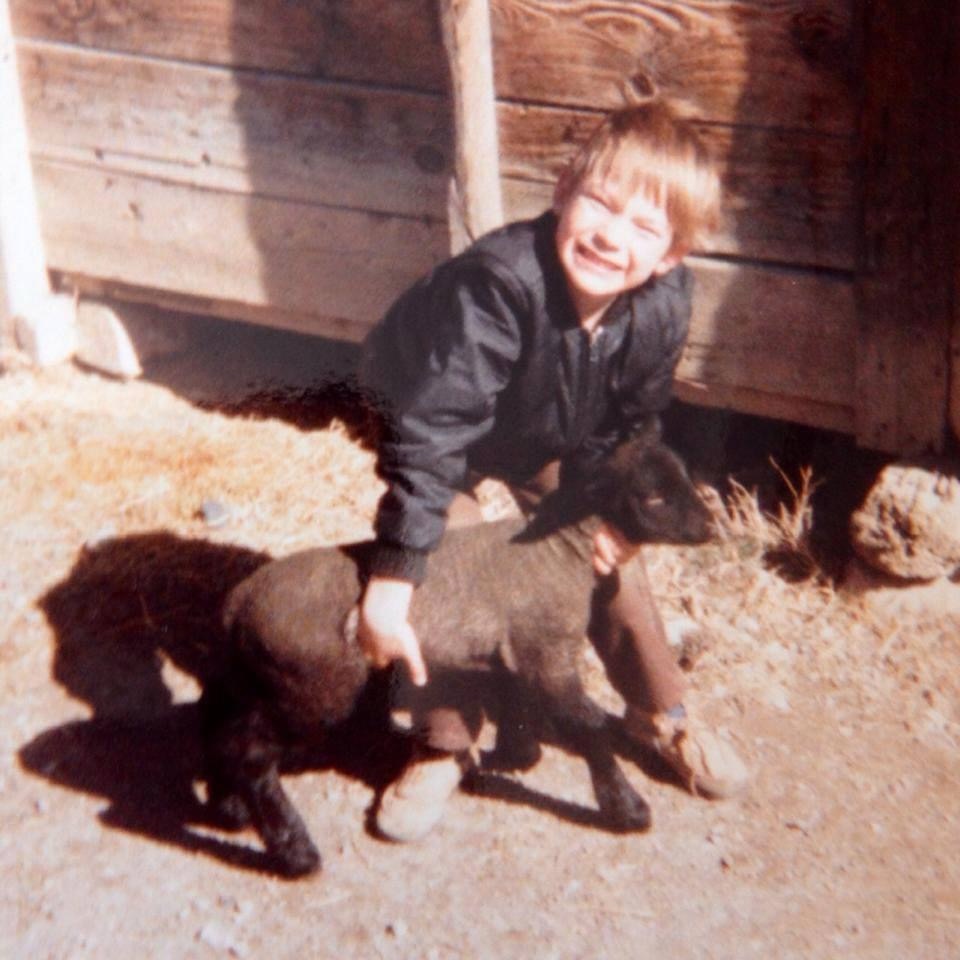
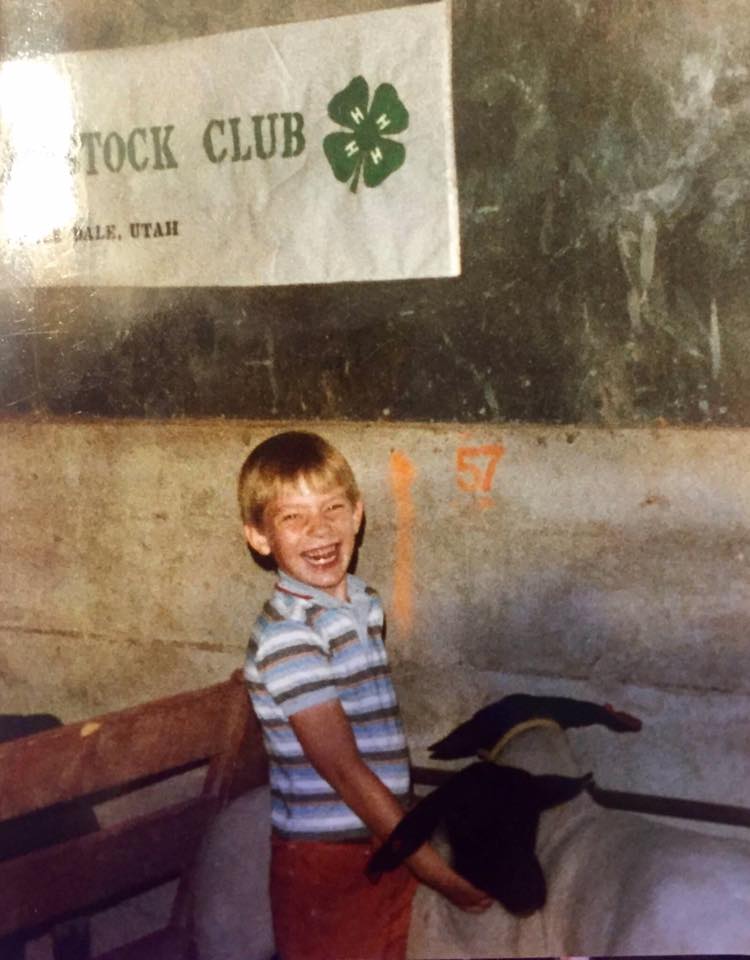
I was raised on a small farm in Castle Dale, UT. We raised Guernsey milk cows, Suffolk sheep and many varieties of chickens and pheasants. My daily chores included feeding the chickens and gathering the eggs.
One day after school, I walked into the barn that housed the chickens. The barn was divided into three equal rooms. The first room is where we would store stacked straw bales. The second and third rooms were where the chickens and pheasants were kept. On this day, I found our calico cat nestled with her newborn kittens. She was lying right next to the straw stack, on the ground near the chicken coop door. There were seven in all. As an 8-year-old, and still to this day, new babies of any kind are an exciting experience. I dropped down and began counting the tiny kittens. I was so thrilled! As I handled the small kittens, I noticed that something wasn’t quite right.
The umbilical cord from one of kittens was wrapped tightly around a leg of each of the kittens. If I picked one kitten up, the entire litter would follow as if they were chained together. I tried to remove the cord with my fingers, but it was far too tight. Even as a little kid, I knew that something had to be done.
In Castle Dale at this time, we did not have a veterinarian. The only veterinary services available were on Thursdays when a veterinarian would travel from Richfield. It was early afternoon, so my dad was not going to be home from work for a couple of hours. I had to figure something out for myself.
I reached in my pocket and pulled out my Swiss Army knife. It was one that had a myriad of blades, nearly all of them never used, and a toothpick and small set of tweezers in the handle. I opened the smallest cutting blade and bent down. I very carefully cut the umbilical cords from each of the kittens. I used some iodine to keep the procedure as clean as possible.
The procedure was a success. All the kittens survived.
Fortunately, I no longer use my Swiss Army knife for surgeries. Although my surgical skills have been refined and perfected, I still have the curiosity and passion that that 8-year-old displayed. I love being a veterinarian. The satisfaction I felt that day long ago is repeated every time I am able to help save a life.
I look back on my first surgical experience with fondness. It was one of the important milestones in my path to becoming who I am today.
My Take Tuesday: Why did you become a veterinarian?
I hear this question on a regular basis. Each veterinarian has a story about why he or she decided to pursue a career in veterinary medicine. Most veterinarians share a commonality – that they have always wanted to be a veterinarian as long as they can remember. My story is a little bit different. I have always loved animals but didn’t decide to become a veterinarian until the age of 21.
To tell my story, I must start at the beginning. I was raised on a small farm in Castle Dale, UT. My first responsibilities as a child were to feed the chickens and gather the eggs. I began this task at 6 years of age. Each year we would purchase a variety of baby chicks from Murray McMurray hatchery. They would arrive at the post office on a scheduled day. I would wait with eager anticipation for this time. To me it was just like Christmas. My dad would let each of us pick out a chick that was “ours”. I would always name mine. I first experienced the remarkable human – animal bond with my chickens. I loved every single one of them. I was elated when they began laying eggs and I cried when they each one eventually died. As a child, chickens became my favorite animal, and remain so until today.
Even though I spent my entire childhood around animals, I did not put much thought into becoming a veterinarian. In high school, I took an aptitude test. The test results suggested that I would not make a good veterinarian for one simple reason: I was not introverted. According to that particular test, an extrovert would likely not be successful as a veterinarian. Assuming that these tests were accurate, I pushed the veterinary idea out of my head and considered a law degree.
After I graduated from high school, I spent the next two years in Peru. I was immersed in a culture so much different from the one I was used to. It took nearly a year for me to adjust and to speak fluent Spanish. I remember walking down the street in Casma, Peru one day and seeing a group of men in the process of castrating a bull. It was a sight that I will never forget. They were beating the testicles with a large stick to destroy the testicular tissue and render the bull sterile. The brutality was sickening. I remember feeling so sorry for the bull.
That night I laid in bed thinking about why they would castrate a bull in such a barbaric fashion. I realized that perhaps that was the only way they knew how. Maybe they didn’t know any better. I decided at that moment that I would do all I could to teach these farmers a better way. Having a farming background, I was very familiar with animal husbandry and felt confident that I could help educate the farmers in this part of the world.
My first patient was a pig named Walter. He was a family pet that lived in a house in Casma. Walter had an attitude and his owners needed to have him castrated. I had a friend named Duilio Davelos that owned a pharmacy in town. I visited him and purchased some lidocaine, suture, iodine, and alcohol. The procedure went flawlessly.
Walter recovered very quickly. News spread of the event. Soon after, I began sending my free time on Monday’s castrating pigs. I found that these farmers were open to learning new methods. The supplies were very inexpensive, and my services were free. Next came chickens. Because of my time spent as a child taking care of baby chicks, I was able to teach basic poultry care and even help make incubators to boost production. I soon began helping with llama and alpaca herds. Soon, other curious missionaries participated in this. In fact, a human dermatologist raised in Provo, UT had his first surgical experience South of Trujillo, Peru castrating pigs! It was very fulfilling to be able to help people out in this fashion. I felt like I was really accomplishing something. I was giving them something that would change the way they would treat their animals. No longer would they brutally castrate their animals without local anesthetic. They also knew how to surgically prep the skin, which eliminated so many post-operative infections. I was helping people by helping their pets. It made me so happy.
As my time in Peru ended, I boarded a plane in Lima and headed back to the USA. As I sat in my seat, I reflected on the past two years. My thoughts kept returning to the animal services I rendered. It was in that moment, high in the air, that I decided to become a veterinarian. I landed in Utah, and a few weeks later began my first college classes. After 8 1/2 years or arduous study, my goal was reached, and I became a veterinarian.
I often reflect on the decision I made. I look at how happy I am now. I love what I do. I love helping people by helping their animals. I have never had a boring day, nor have I ever regretted this career decision. I really feel like it is what I was meant to do.
So much in life happens by chance. I was fortunate to have my agricultural upbringing. It prepared me for the future. It is impossible to look forward and connect the dots of the random chances in our lives, but looking back, I can see it clearly.
I am glad that I had the chance to provide animal care in a faraway place and how that opportunity led me down this remarkable path I am on today. I cannot imagine doing anything else.
Just west of Castle Dale, Utah, the sky above Horn Mountain turns a beautiful cinnamon on clear summer nights as the sun sets over the place that I call home. These summer nights smell of freshly cut grass and alfalfa, of roses and cottonwood trees, of sagebrush and lilacs.
If you are heading west along Bott Lane, just past the tall poplar trees, there is a piece of ground that was homesteaded by my great-great grandfather. This piece of land has passed from generation to generation, from fathers to sons, and has always remained in my family.
On the east side of this piece of land, a silhouette of a Ford Tractor and a Hesston Hydroswing Swather were visible on many beautiful summer evenings during my childhood. On the tractor, sat my uncle Jerry Bott.
Jerry was a giant of a man. He stood over 6’4”. His gentle demeanor and kind heart were his most precious of character traits. His soft voice and carefully chosen words were never cross or unkind. At least two times every day, I would be able to greet my uncle as I would enter his house before milking our cows. He became my constancy, my anchor, as I grew from a small child into the man I am today.
On this particular night almost 30 years ago, in 1990, my uncle Jerry was cutting the first crop of hay. The tall grass makes this cutting the most difficult on the equipment. Constant attention must be given to the rotating wheel and hay knives that were prone to clogging.
This time of year, hen Ringneck pheasants are on their nests. They sit so still that even the loud rumbling of a tractor and the ground tremors of the hay cutter leave her undeterred. Occasionally, these hens are injured or killed as they sit on their eggs. The nest, whether it be full of chirping hatchings or incubating eggs, is left to the merciless predators from the air and the nearby fortress of trees and Russian Olives that run along Cottonwood Creek.
As the sun faded behind the towering cliffs of Horn Mountain, I stood on my parents’ lawn, looking eagerly at the approaching two-toned tan GMC Sierra. My hero was coming home for the night.
As Jerry exited his truck, he held under his arm a brown paper grocery bag. His long stride headed towards me instead of his house across the street.
As he approached, he called my name.
“Isaac,” his low and gentle voice called, “I have something for you.”
He handed me the brown paper bag.
Inside, a green towel was wrapped gently around 8 medium sized olive-colored eggs.
“These are pheasant eggs,” he continued, “and they need to be cared for.”
“Isaac, I know that you will do a good job at taking care of them.”
I looked in the sack as Jerry walked back across the street and into his house.
“How do you hatch pheasant eggs?”, I wondered as I entered my parent’s house.
My incubator was nothing special, just a Styrofoam box with a small heater inside. Knowing that peasant eggs incubate for 23 days, I set the temperature and humidity and carefully laid the eggs inside.
I faithfully turned the eggs three times a day for three weeks.
Somehow, the incubation was successful, and the eggs all hatched out. The tan chicks had dark brown stripes that ran parallel along their backs.
I was overjoyed when I told my uncle Jerry about my accomplishment.
“Uncle Jerry,” I exclaimed, “I did it! The eggs hatched!”
“That is great!”, he responded, “Isaac, I knew you could do it.”
His response and validation filled my system with light and my soul with joy.
The world with all of its power and wisdom, with all the gilded glory and show, its libraries and evidence, shrink into complete insignificance when compared to the simple lesson of the fragility and value of life that my uncle Jerry taught me that warm summer evening.
Over the years, uncle Jerry often repeated this encouragement as I navigated the brambles and thorns of life. When I graduated high school, then college and eventually veterinary school, his reassurance illuminated my understanding of my potential and his unwavering love and support. He gently counseled me, “Isaac, find your passion. Cultivate it. Work hard and be the best that you can be. And then share it with the world.”
There are days that change the times and there is a time to say goodbye. My sweet uncle Jerry passed away in late 2016. His loss left a tear in the eye and a hole in the heart of all my family members.
There is a place beyond the clouds, in the cinnamon sky to the west of Castle Dale, where a precious angel resides.
It seems that that there are things that will never change. Yet, there are things that change us all. This experience absolutely changed me.
My uncle Jerry’s lesson, from long ago, was not lost on me.
Every day, I remember the immense value of life, as I attend to my four-legged patients.
As lives are saved and others are lost, I remember how important it is for someone to take initiative and to tend to the responsibility to care for the helpless and to speak for those without a voice.
This is a lesson my dear uncle Jerry so effectively showed me how to apply and live, and it is a responsibility I take most sacredly.
He was stationed in East Germany from 1970-1973. He was tasked with crossing over to West Germany to take reconnaissance photographs. The threat of capture was a constant. On one occasion, while in transit, his vehicle was narrowly missed by active fire.
Following Germany, he pursued a distinguished career of 29 years for the Utah Highway Patrol. He served as head of the Utah County service office. He also was assigned lieutenant commander of the Mounted Patrol of security during the 2002 Winter Olympics in Salt Lake City. He also was the bodyguard for Utah governors Bangerter and Matheson. His storied career is something regular people like me could only dream of accomplishing.
As a child, my favorite action figures were He-Man toys. I had quite the collection. My go-to was one named Man-At-Arms. He was the commander of the Royal Guard. He was fiercely loyal to He-Man. Man -At-Arms had piercing brown eyes and a mustache. I would spend hours and hours playing with these action figures.
The first time I met Ken Peay, I felt like I was meeting a real-life Man-At-Arms. I found him to be everything the hero of my childhood stood for. He was loyal, he was a doting father, and a hard-working farmer.
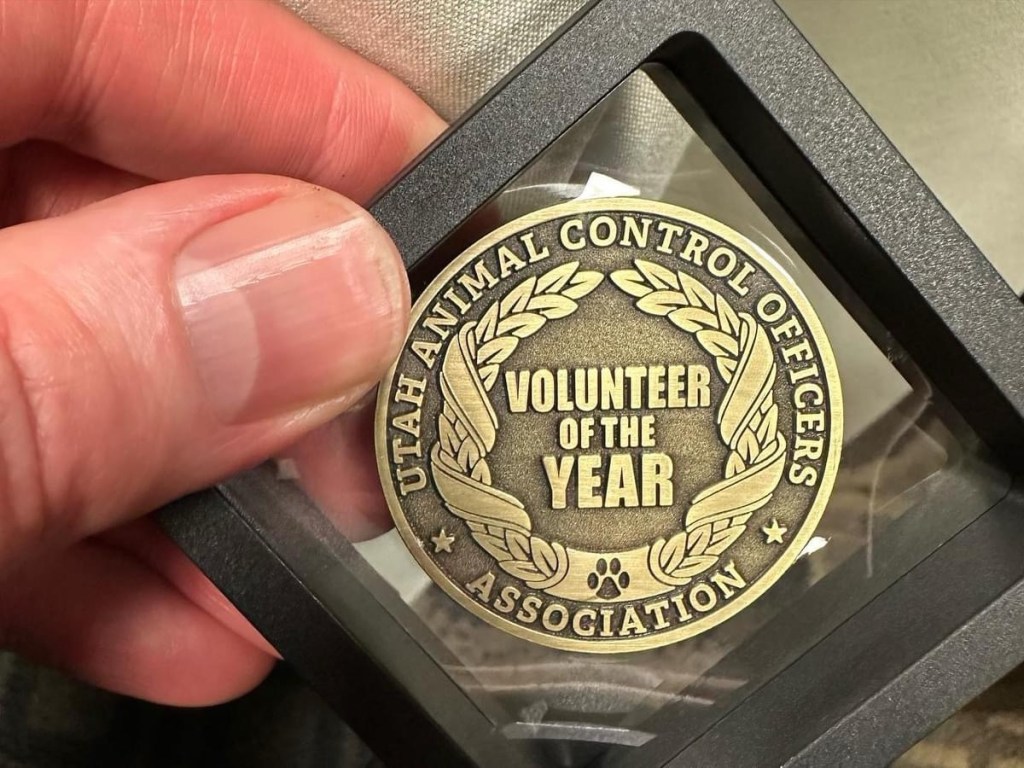
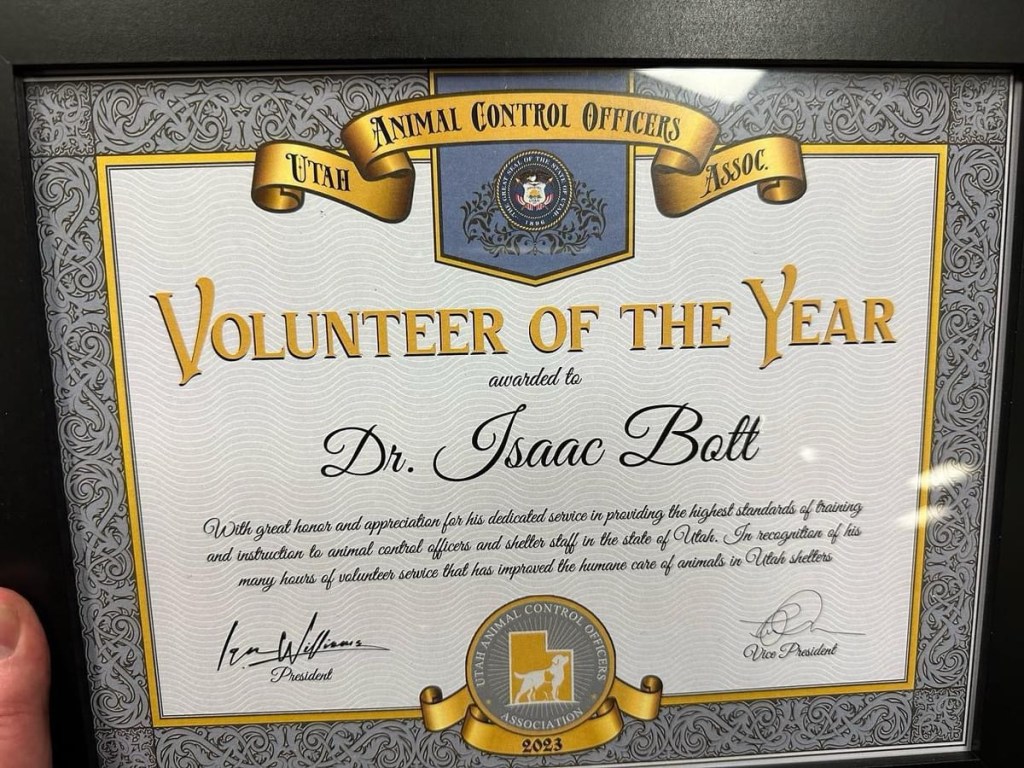
Somehow, this mountain of a man became my friend. He has volunteered hundreds of hours helping me care for the resident reindeer herd at Mountain West Animal Hospital. He is the only person I trust with these pets. His observant eye and gentle voice calm even the flightiest reindeer.
On two occasions, I needed help transporting reindeer to Utah from Western Oregon. He dropped everything. Not only that, but he also drove his own pickup truck and pulled a gooseneck trailer. He traveled to Eugene, Oregon and back to Utah. Over 900 miles each way. He made this trip TWICE.
I could write dozens and dozens of stories just like these. Ken is a wonderful and genuine person. The best of the best. I love him dearly.
Governor Matheson died in 1990 from a pernicious cancer called Multiple Myeloma. This unfair opponent rarely loses. It ravages the bone marrow and destroys the immune system.
Ken received this same diagnosis last year. He faced this giant with stoicism, with determination and with the toughness of a cowboy. He put his boots on, pulled his hat down tight and quietly endured the debilitating treatments and horrific side effects that accompany them. After several months of these relentless treatments, he went through the arduous process of receiving a stem cell transplant. Thankfully, the transplant was a success. Hour by hour, day by day Ken has steadily regained his strength. His toughness is an inspiration to me.
Many of us simply give up when faced with a seemingly insurmountable challenge. The desire to quit afflicts all of us. One day its summer. Fall suddenly is here and gone in a flash. And without warning, the icy hand of winter is knocking at your door. These challenges present in our relationships, our employment or in the day-to-day changes that life inevitably presents. While an ordinary man may face fear and quickly submit to its overwhelming presence, Ken faced it strait on.
A few years ago, during a severe winter storm, I passed a herd of bison standing in a large meadow on the side of the road. The storm was intense, with over 18 inches of accumulation is just a few hours. The bison, ironically, stood still in the middle of the meadow. In conditions that would kill entire herds of cattle, these majestic animals stand face first in the winter fury as the wind blows and the snow accumulates. They don’t turn their hindquarters into the wind, nor do they move with it. They stand and face the storms of life undaunted, stoic, and valiant.
Perhaps we would do well to emulate the bison, as we encounter the uncertainties and challenges that we face in life. The storms of life will inevitably come, so why not face them? And face them with strength, determination, and power. Sure, it’ll feel uncomfortable at first. It may even be scary. However, if we get comfortable with the feeling of being uncomfortable – that discomfort will begin to lessen.
I don’t know how long your storm will last or how intense it is. But I am confident we will all fare the storm better if we face it head on. Just breathe, put your head down and find a way through. We must have tough times to fully appreciate the good times that lie ahead.
Ken, thank you for teaching me this lesson. I look forward to the good times ahead.
During the last year of most veterinary school programs, time is set aside for students to spend away from the veterinary school immersed in clinical practice in what is known as a preceptorship. At Washington State University, this is a four-credit (four-week) guided preceptorship experience.
I didn’t have the luxury of visiting the list of clinics that provided a mixed-animal (a clinic that treats large and small animals) preceptorship because of my chaotic schedule of rotations at the veterinary school. Instead, I sat in an office and read over a binder of information about the possible selections. A new clinic had just been added to the book that was offering a guided preceptorship for the first time. The name of the clinic was Mt. Spokane Veterinary Hospital. It was located north of Spokane, in Mead, right off Newport Highway. I had a gut feeling that this would be the best place for me to complete my preceptorship. I would be the very first student preceptor at the clinic.
Of all the training I have received during my career as a veterinarian, I count the four weeks spent at Mt. Spokane Veterinary Hospital as the most influential and consequential in where I am today.
I found the team at the hospital very welcoming and nurturing. Every team member made me feel welcome from day one. I quickly learned of the flow of the hospital and began assisting in appointments and surgeries.
Drs. Randy Scott and Luther McConnel were very generous with their time. Having a student dampens the efficiency of the clinic as it requires much time and patience. Busy veterinary practices can be extremely intense to the exclusion of student education. I found their practice to be the exact opposite. The case load was vast and diverse, but they took the time to make sure I felt involved and that I was learning about the routine cases that rarely present to veterinary school teaching hospitals.
Veterinary school does not provide much surgical experience. We learn anatomy and have extensive classroom training on tissue handling and surgery, but actual hands-on surgery is something that is typically acquired away from the veterinary school.
During my month working with Dr. Scott, I had the opportunity to tweak and refine my surgical skills. Dr. Scott never criticized me, rather he gave me pointers on how to hold surgical instruments and how to precisely use a scalpel and place suture knots. He did this in a manner that was constructive and not condescending. He created an environment of learning. He saw something in me that I did not see. He taught me to trust my skill and my ability as I entered the real world as a practicing veterinarian. He became a trusted mentor.
Dr. Randy Scott is a truly unselfish person who helped me with little in return. He was genuinely altruistic. He built my confidence, encouraged me to grow, and patiently watched me fall and regain my balance. He saw something in me that I didn’t even know I possessed.
The word “mentor” as applied to such a person has its roots in Greek mythology. In the Odyssey, Mentor was a character who advised and protected Odysseus’ son Telemachus. A 1699 novel called Les Aventures de Télémaque (“The Adventures of Telemachus”), introduced a character named Mentor who served as Telemachus’ tutor. Mentor was the hero of the story, and turned out to be Minerva, the goddess of wisdom, in disguise. The modern usage of the term “mentor” seems to have arisen from that book.
A great mentor wants you to succeed, and he or she will actively support your success with words and action. The great mentor will never be envious or feel threatened by your growth; he or she will congratulate you on your triumphs and help you recover from your setbacks. The generous mentor will make connections or offer resources that could be useful to you whenever he or she can. Most important, a generous mentor believes in your potential, and communicates that to you freely and with hope. The generous mentor supports you to become the person you want to become.
How grateful I am for the mentorship I received under Dr. Randy Scott. Looking back at all the opportunities I’ve had as veterinarian have pivoted on the training I received from him. My first veterinary work on deer, elk and moose all began during my time at his clinic. I would have never had the courage to work with reindeer without this essential knowledge base. My surgical skill, from the way I hold my suture and my needle drivers, to the way I perform orthopedic surgery, all began and were nurtured under his mentorship. He taught me that what we did was small and beautiful- but that the animals we helped were precious.
Over the years, I have remained close with Dr. Scott. He has even stopped in to visit my veterinary hospital in Springville. He has done so much for me and taught me so much about science, about life, about everything. My biggest fear has always been in letting him down. I work my hardest so that he can be proud of me and to show him that his trust in me was not wasted.
The true test of one’s character comes when there exists no sphere of recognition potential, no roar and support of a crowd and no chance of fame or fortune. Being simply motivated by the genuine desire to help others, never entertaining the thought of self-interest, is the defining characteristic of a good mentor.
If you are lucky, and few of us are, at some point in your life you acquire a good mentor. Timing and chance aligned in my life, and I was able to find one. I will forever count this mentor as a cherished and dear friend.
And that is my take,
N. Isaac Bott, DVM
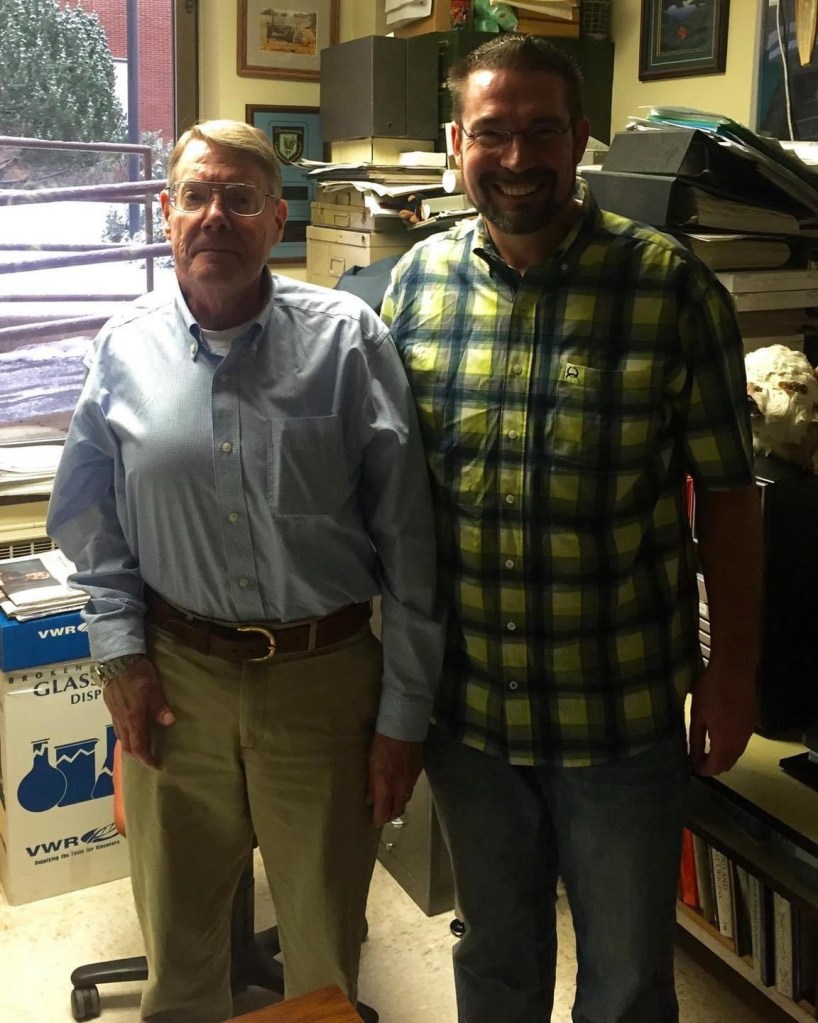
Pictured is Dr. Randy Scott and I at Mountain West Animal Hospital
On 22 August 1877 Brigham Young issued a formal call for settlers to locate in Castle Valley. This was the last such directive from the “Great Colonizer” before his death just 7 days later. If you have ever visited Emery County, you come away with the realization that the best was saved for last.
Castle Valley is a state of extremes, from the mystical beauty of the towering Wasatch Mountains to the west to the highest order of desolation in the San Rafael Desert on the east. Even there, among the sage brush and cedars, a pristine beauty beckons the attentive eye.
My great- great grandfather – Boye Petersen heeded Brigham Young’s call and was one of the original settlers of Castle Dale. He homesteaded the West Farm – a 48 acre piece of land that our family still owns today. The straight road it is on connects Castle Dale with Orangeville and is aptly named Bott Lane.
Growing up in Castle Dale helped me develop three unique character traits that have proven useful throughout my life. I developed a strong work ethic, a vivid imagination and a unique self-awareness. This is home. There is something about Emery County that heals my soul. It is my constancy and my serene sanctuary where I can reflect and recharge. Even though I now reside two hours north in Utah County, I still feel connected and drawn to the well-worn paths of my youth and the Blue Clay Hills just south of Castle Dale. I have Trail Mountain lightning running through my veins and the Castle Valley thunder pounding in my chest.
Winters in Castle Valley can be brutal. The snow and ice seem to linger. Farm chores like milking and feeding cows are much more difficult the longer the winter draws on. Piles of cow manure freeze as solid as stone and the ground around water troughs turns into a sheet of ice. One cannot help but feel a longing for warmer weather and new life.
In late winter, each morning and afternoon, I would leave my parents’ house and cross the street on my way to the corral. I would walk along a shaded well-worn path along the east and south side of my uncle Jerry’s house. Between the edge of the house and the sidewalk, green stems would suddenly poke through the frozen ground. The first sight of these unassuming leaves beckons to the attentive eye that the worst of winter is passed, and that spring is soon to follow.
The leaves and stems grow quickly, symbolizing rebirth and new beginnings. They bloom with their cheery yellow hues. Each one is perfect, a golden trumpet amid a fanfare of halo petal.
Daffodils are majestic, but so delicate, and they wave like tomorrow is guaranteed.
After a few short weeks, they are gone, not returning for the remainder of the year.
The Latin name for daffodil is Narcissus. It is believed to be named after the son of the river god from Greek mythology.
Its blooming happiness may be fleeting but at the very least, it’s still enjoyed by those observant enough to see its beauty. They stand rooted, soaking in the sunshine and taking in yesterday’s rain through their fine roots.
Daffodils remind me of my sweet uncle Jerry. He passed away in 2016. He was a gentle giant and, along with his twin brother Jeffry, are the kindest people I have ever known.
As the snow melts and the days get longer, the robins and sparrows will return as a symbol of change. And once again natures palate will color Castle Valley.
When the canyon rivers and mountain streams flow, spring will follow at last, in Castle Dale, UT, where the daffodils grow.
Spring is a beautiful time of year in Utah County! As winter loses it overpowering grip, new life emerges. The smell of flowers, fresh green grass and the sound of birds chirping will invoke feelings of happiness in those yearning for warmer weather.
During springtime, a dichotomy of sorts is presented. While I love this time of year immensely, its arrival brings in the annual ritual of sniffling and sneezing, a runny nose, and itchy eyes. Atopy, the genetic predisposition to allergies, has plagued my family for generations. We all have severe allergies to grass, alfalfa, and flowers.
While growing up, a rosebush outside my bedroom window would beautifully bloom each spring. This rosebush brought me seasonal misery and debilitating symptoms and endless nights of wheezing, sniffing and itchy red eyes. I hated that rosebush! I remember having such severe attacks, that I would lay in bed with a cold washcloth over my eyes, unable to sleep or do anything productive. On the worst of these nights, I scribbled a journal entry at the height of allergy season that simply read, “Today more allergies, oh I hate them.”
I have sympathy for my veterinary patients that suffer from allergies. All too frequently, they present in complete disarray. Instead of the runny noses, itchy eyes, sneezing, or wheezing allergies mean to many people, pet allergies typically show up as scratching, chewing, rubbing, head-shaking or severe ear infections. Often dogs present with bleeding paws and open sores all over their body. These lesions are caused by continuous scratching. This insatiable itch drives them crazy. Every waking hour they spend trying to scratch the itch away.
Allergies are by far the most common illness I see as a veterinarian. It is sad to see pets suffering so. When pets suffer, they are at least as miserable as we are — and likely much more.
With each case, we try to provide suggestions specific to your pet, your region, and your season, but in general, you can help your pet a great deal with an allergy-prevention regimen in the home.
Concurrently, you can limit the amount of dust and other irritants pets sweep up in their coats by vacuuming and using electrostatic cleaning products (such as a Swiffer) on floor surfaces as well as using room or whole house filtration systems. And while you may have heard that frequent shampooing strips the skin of essential oils, veterinary dermatologists now recommend bathing pets at least every week (up to everyday for extremely at-risk, allergic pets) during the spring and summer to help wash allergens off the coat and skin before they can be absorbed and trigger an allergic reaction. Spray-on products or wipes that provide a dry bath will often do the trick and may be a great deal easier than bathing for some dogs and almost all cats.
Often, it’s not just about airborne allergens or parasites: Pets suffer from food allergies as well. Allergy reactions to pet food are usually caused by proteins, and can include beef, egg, milk or cheese products, soy or even fish. If food allergies are suspected, your veterinarian will guide you through food-elimination trials to find the culprit and recommend a diet that’s both nutritionally complete and contains pre-digested proteins. If your dog suffers from a food allergy but still needs to take medications, Greenies Pill Pockets Allergy Formula capsules may help. These are little pouches, made from peas and duck that facilitate medication administration by providing a treat disguise for pill administration.
Recently, immunotherapeutic treatments have been released that target small inflammatory proteins called cytokines. Cytopoint is an injection for the management of itching from allergic skin disease. It targets Interleukin-31, a substance that causes itching when dogs have allergies, and works as an antibody, thus binding to and deactivating the cause of the itching sensation. This product provides significant relief to many of my patients.
Please don’t let your pets suffer. Schedule an appointment with your veterinarian and then work together to provide the life free of pain and suffering that each of your four-legged family members deserve.
With modern veterinary options and a world of new products to help, the pet with allergies can be managed better than ever before. And that means you and your pet will both sleep better, after you’ve stopped the itch.