
My Take Tuesday: The Courage to Change Course
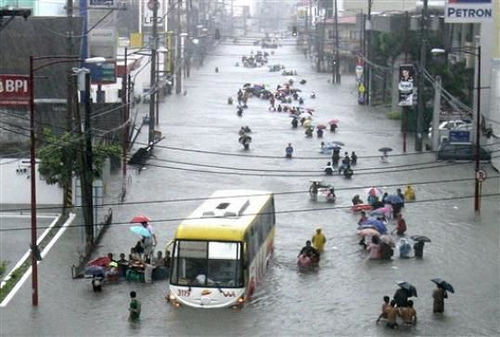
In late September of 2011, Typhoon Pedring struck the Philippines with unrelenting force. Torrential rain inundated streets, while sustained winds of over 120 miles per hour leveled anything in their path. The storm would leave a lasting mark—not only on the country, but on my understanding of risk, instinct, and the wisdom of changing direction.
That morning, I was working in a small laboratory, meticulously freezing water buffalo semen—a delicate, hours-long process. As the storm approached, I chose to finish the task, calculating that I could complete it just before the worst of the typhoon arrived. It was a decision made in haste—and one I would soon regret.
When I finally stepped outside, floodwaters were already racing through the streets. I flagged down a motorcycle taxi, a common vehicle in the Philippines with a motorcycle front and a narrow sidecar in the back. At 6’2”, I barely fit. My knees were tucked against my chest, the cab barely ten inches off the ground. It was an uncomfortable squeeze on a good day—this was not a good day.
As we began moving, water surged higher. The engine sputtered and strained, and before long, the vehicle lost contact with the road. We were floating—adrift in fast-moving floodwaters, completely at the mercy of the current. The driver panicked. I was helpless.
Moments later, the taxi slammed into a concrete railing on a large bridge, stopping just short of a deadly drop. Miraculously, the driver regained control and steered us to safety. I arrived at the hotel drenched, shaken, and profoundly grateful. The storm continued to pour, delivering more than 24 inches of rain in a single day.
A few days later, I boarded a flight out of Manila. As we cruised at 30,000 feet above the Philippine archipelago, turbulence hit hard. A fellow passenger, unbuckled, was flung from his seat into the overhead compartment. Then came the captain’s chilling announcement:
“We are approaching Typhoon Pedring. If we stay on this course, the storm will tear this aircraft apart.”
Cries of panic followed. Moments later, lightning struck the plane. The damage was minimal, but the danger was real. The pilot calmly changed course, and thanks to his judgment, we made it safely to Nagoya, Japan, and eventually home.
That flight remains etched in my memory—not just because of the storm, but because of the pilot’s clarity. He understood the limits of both aircraft and self. His willingness to course-correct saved lives.
In our culture, we often equate quitting with failure. We grow up believing every outcome must be classified as either success or defeat. I’ve lived by that metric, pushing forward when wisdom might have advised retreat. But I’ve since learned that success sometimes requires stepping back, reevaluating, and shifting direction.
Mountaineer Ed Viesturs knows this lesson well. In his book No Shortcuts to the Top, he recounts turning back just 300 feet from a summit, recognizing the risk was too great. He would return later to complete the climb. Viesturs went on to become the first American to summit all 14 of the world’s highest peaks—each over 26,000 feet. His story illustrates a powerful truth: perseverance matters, but discernment saves lives.
The road to success is rarely linear. It’s steep, uneven, and often humbling. Failure, when properly understood, is not a dead end—it’s a redirection. It can guide us toward wiser decisions and greater resilience, if we’re willing to listen.
As the Greek poet Hesiod wrote:
“Badness you can get easily, in quantity: the road is smooth, and it lies close by. But in front of excellence the immortal gods have put sweat, and long and steep is the way to it, and rough at first. But when you come to the top, then it is easy, even though it is hard.”
I learned a difficult lesson that rainy day in the Philippines: when instincts whisper—listen. When signs point to danger—change course. There is no weakness in that. In fact, there may be nothing braver.
And that is my take.
N. Isaac Bott, DVM
 DocBott