
My Take Tuesday: The Attribute of Adaptability
The Rocky Mountain elk (Cervus canadensis nelsoni) became the official State animal of Utah in 1971. Elk are also known as wapiti. Tis term originates from the Shawnee and Cree word ‘waapiti’, meaning ‘white rump’. Elk are members of the deer family and associate closely with the deer and moose of Utah.
Elk, no matter what time of year, are a remarkable sight. So large in stature, these animals have become an admired icon of the American West. Elk are amazingly adaptable and can live almost anywhere—forests, deserts, mountains, and plains. They eat a wide variety of plants. Their typical diet consists of grasses (year-round), woody plants (winter) and forbs (summer). This adaptability is unique and ensures the species survival.
As a child growing up near the Manti LaSal National Forest, I frequently encountered these animals in the wild. I remember camping in the crisp early fall. The tranquility of those nights is unparalleled. The silence was only occasionally broken by the phenomenon known as bugling. This distinctive vocalization begins deep and resonant and becomes a high-pitched squeal before ending in a succession of grunts. It is a sound that will hasten the heart rate of even the most seasoned of outdoorsmen. The noise echoes through the pines. Such an experience is breathtaking.
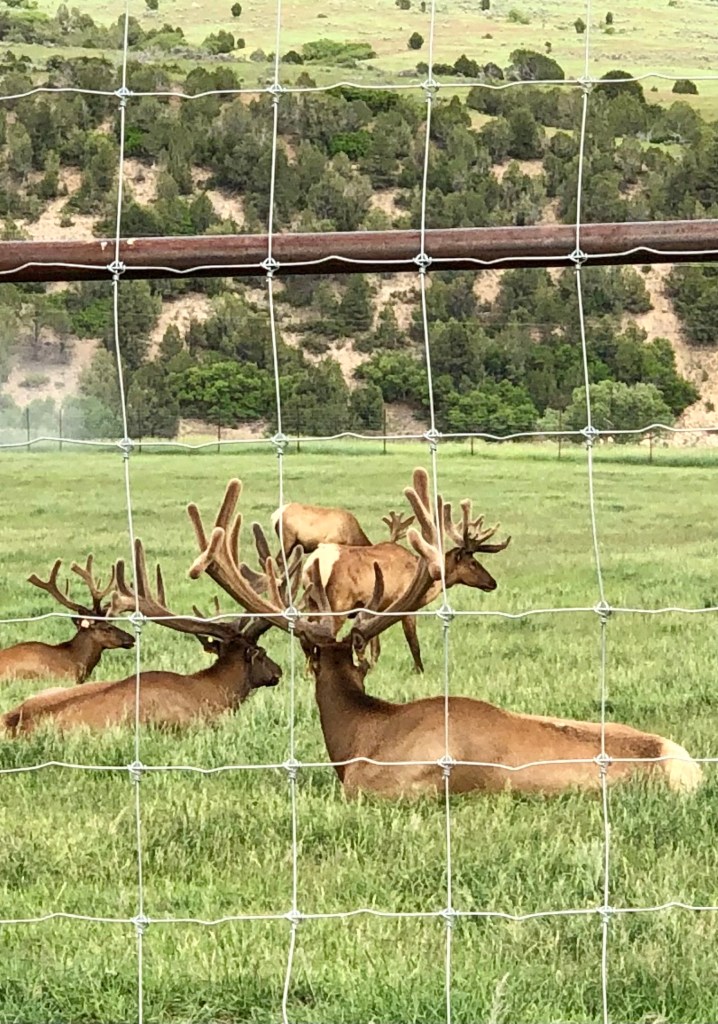
As a veterinarian, I am privileged to be able to work with a number of herds of elk. I very much enjoy this. Pictured is a herd of elk near Birdseye, UT.
This animal is a symbol of power and strength. It is also a symbol of ultimate freedom.
We can learn a lot from elk. If we were as adaptable as this species, we would thrive in any situation where we are placed. We would be unafraid, undaunted, valiant and courageous.
When I am confronted with changes in life, I always think of the majestic elk.
And that is my take.
N. Isaac Bott, DVM
 DocBott